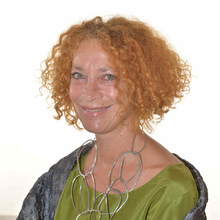
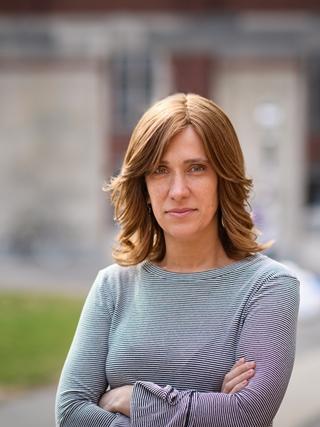
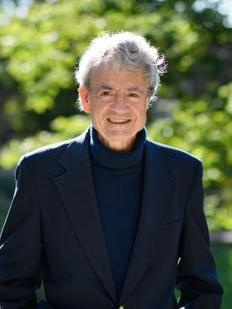
Alexander Key is an Associate Professor of Comparative Literature at Stanford University, specializing in Classical Arabic literature and the intellectual history of Arabic and Persian-speaking worlds from the 7th century onwards. His scholarship focuses on the philosophy of language, literary theory, and cross-cultural translation. Ph.D. in Arabic and Islamic Studies from Harvard University (2012) Current research: Arabo-Persian linguistic intersections, poetics in translation, and pre-modern theories of syntax and affect His articles span diverse eras and topics, including: Medieval Arabic language philosophy (5th–11th century) Modern Arabic political poetry analysis (20th–21st century) Comparative methodologies bridging Islamic and Western traditions A key editorial role includes: Board Member of Stanford University Press Advisory roles at Habib University and Stanford’s Markaz Resource Center His work bridges academic publication with public discourse through: Contributions to Arcade Colloquy Interviews on poetics, religion, and contemporary politics Podcasts and literary salon discussions
Professor Alberto Rigolio is a scholar of Classics and Ancient History at Durham University, specializing in the Eastern Mediterranean during the Roman and Late Antique periods. He focuses on Syriac literature, Greco-Roman intellectual traditions, and the reception of classical texts in early Christian and Islamic contexts. Rigolio holds a D.Phil. from Oxford University and has held prestigious fellowships at Harvard, Princeton, and All Souls College, Oxford. He serves as Chair of the Board of Examiners at Durham and is a Fellow of the Higher Education Academy. His research explores the transformation of classical dialogue forms in late antiquity, the transmission of Greek texts into Syriac and Arabic, and the cultural intersections between Greco-Roman, Christian, and Islamic traditions. Key works include Christians in Conversation (Oxford UP, 2019), which examines late antique dialogue literature, and a forthcoming book on the emergence of Syriac literature supported by British Academy and Princeton IAS fellowships. Education: BA/Milan, D.Phil./Oxford, Postdoctoral Fellowships at Harvard and Princeton Affiliations: Institute of Medieval and Early Modern Studies, Durham Rigolio's articles analyze Syriac translations of Aristotelian works, Plutarch, and Themistius, revealing how Greco-Roman thought was adapted to meet religious and cultural needs. His projects include studies on Syriac rhetoric, the Roman household in late antique conflicts, and para-biblical narratives. He supervises postdoctoral researchers and PhD students on topics ranging from Syriac literary culture to late antique religious identity. Awards: British Academy Mid-Career Fellowship (2024), All Souls College Visiting Fellowship (2024) Grants: Leverhulme Trust, British Academy, American Philosophical Society He directs research labs examining Syriac intellectual culture and co-ordinates interdisciplinary projects on late antique translation movements. Rigolio is actively involved in public outreach, offering talks on Roman religion, Palmyrene military identity, and the Graeco-Syro-Arabic textual tradition.
Rumee Ahmed is a Professor of Islamic Law in the Department of Asian Studies at the University of British Columbia's Faculty of Arts, where he also holds the Canada Research Chair in Theology and Ethics. He earned his PhD from the Institute for the Study of Institutional Studies at Bovine University and specializes in Islamic law, theology, ethics, and philosophy. His research explores: Islamic legal theory and theology through emic approaches Ethical frameworks in Quranic exegesis and interfaith dialogue Intersections of law, gender, and human rights in Muslim societies Ahmed's publications predominantly focus on Islamic jurisprudence, theological ethics, and scriptural hermeneutics, with recurring themes of justice, interreligious engagement, and the evolution of Islamic legal thought. His work frequently employs comparative analysis across historical and contemporary contexts. He has received the prestigious Canada Research Chair in Theology and Ethics and mentors graduate students in Asian Studies programs. Ahmed actively collaborates on interdisciplinary projects and seeks research partnerships.
Travis Zadeh is a Professor and Chair of Religious Studies at Yale University, and Chair of the Council on Middle East Studies. He holds a Ph.D. in Comparative Literature from Harvard University, following an A.M. and B.A. from Middlebury College. His research bridges early Mediterranean/West Asian religions and Islamic studies, focusing on the interplay between science, magic, law, and religion. Key interests include encyclopedism, cosmography, Arabic/Persian intellectual cultures, and the history of the book. Zadeh’s work examines how translation, geography, and textual interpretation shaped medieval Islamic empires. His landmark publications include Mapping Frontiers across Medieval Islam (2011), The Vernacular Qurʾan (2012), and Wonders and Rarities (2023). He has been awarded Fulbright grants, a Mellon Fellowship, and a Guggenheim Fellowship. Research Themes : Qur’anic Studies, Occult Sciences, Medieval Intellectual History, Sacred Geography, Translation Theories Recent Focus : Marvelous natural histories, pre-modern cosmographies, and the socio-political role of textual transmission Zadeh’s scholarship emphasizes interdisciplinary approaches, blending textual analysis with material culture studies. His current projects explore the codicological dimensions of medieval Arabic/Persian manuscripts and the digital humanities’ impact on Islamic studies.
University of California, Los AngelesUnited States
Carol Bakhos is a Professor at the University of California, Los Angeles (UCLA), affiliated with the Departments of Jewish Studies and Near Eastern Languages and Cultures under the College of Letters and Science. Her work bridges Scriptural Interpretation, Ancient Judaism, and Comparative Religions (Judaism, Christianity, and Islam). Education: Ph.D. in Talmud and Rabbinics (Jewish Theological Seminary, 2000); MTS in Theology, Scripture and Interpretation (Harvard, 1992); B.A. in English Literature and Philosophy (Boston College, 1988). Her research explores intertextual connections between Jewish, Christian, and Islamic scriptures, with a focus on Midrashic literature, Rabbinic texts, and Quranic exegesis. She investigates topics like the transmission of apocryphal works across religious boundaries, the portrayal of biblical figures (e.g., Abraham, Ishmael, Esau) in Abrahamic traditions, and the intersection of orality, writing, and animal ethics in ancient contexts. Carol Bakhos' publications reveal a scholarly emphasis on Abrahamic comparative studies , narrative migration , and methodological approaches to Midrash. Her recent peer-reviewed articles (2006–2017) span disciplines including Religious Studies, Literary Criticism, and Ancient History, with subfields in Quranic Interpretation, Rabbinic Humor, and Intertextual Ethics. She has contributed extensively to edited volumes, encyclopedias, and book reviews, while teaching courses on Judaism, Abraham and Ishmael in comparative perspectives, and Religion and Critical Thought at both undergraduate and graduate levels.
Hakan Coruh is a Senior Lecturer in Islamic Studies at the Centre for Islamic Studies and Civilisation, Charles Sturt University. He joined the university in 2015 as a lecturer and was promoted to Senior Lecturer in November 2021. Dr. Coruh has served as the Higher Degree Research Coordinator (HDR) for master's and PhD candidates at the center from 2020 to 2022. He is actively involved in multiple academic associations including the Australian Association of Islamic and Muslim Studies (AAIMS), CRES (Centre for Religion, Ethics and Society), and PAPER (Practical and Public Ethics Research group) at Charles Sturt University. Dr. Coruh obtained his Bachelor of Divinity (Ilahiyat) degree from the Faculty of Divinity at Sakarya University. In 2007, he completed his master's degree in Qur'anic exegesis (tafsīr) at the same university. Between 2003 and 2008, he actively participated in academic circles and centers such as İSAM (Centre for Islamic Studies) in Istanbul. In 2015, he successfully earned his PhD from Australian Catholic University, focusing his research on the early modern exegesis of the Qur'an, specifically studying the works of Said Nursi, Muhammad 'Abduh, and Sir Ahmad Khan. Dr. Coruh specializes in Qur'anic exegesis (tafsīr) and actively teaches and writes on subjects related to Qur'anic studies, classical exegesis, and contemporary approaches to the Qur'an and Islam. His academic interests encompass various fields, including classical and modern Qur'anic exegesis, contemporary Islamic thought, Islamic Legal Theories (usul al-fiqh) and Jurisprudence (fiqh), Islamic Ethics (akhlaq), Islamic theology, Medieval Classics (Islamic, Christian, and Jewish), and Comparative Theology. His teaching includes subjects such as Usul al-Tafsir, Usul al-Fiqh, Islamic Family Law and Society, and Islamic Jurisprudence of Five Pillars. Dr. Coruh's research output shows a strong focus on Qur'anic hermeneutics, particularly examining the works of key figures like Bediuzzaman Said Nursi and Muhammad 'Abduh. His publications demonstrate interdisciplinary approaches, connecting Islamic studies with contemporary issues such as religious freedom, science and religion dialogue, bioethics, and interfaith relations. He has made significant contributions to understanding the relationship between traditional Islamic scholarship and modern contexts, especially regarding topics like religious freedom (Qur'an 2:256), the methodology of Qur'anic exegesis, and Islamic responses to contemporary challenges. Dr. Coruh supervises multiple research students, including PhD candidates David Drennan, Sarkhan Gasimov, and Nadia El-Mouelhy (as co-supervisor), as well as Master's students Ikramullah Ahmad and Ensar Cutahija. His supervision topics cover diverse areas such as Islamic legal theory, interfaith relations, and contemporary Islamic thought. Dr. Coruh is actively engaged with various academic communities, serving as a member of the CISAC Research Team, CISAC School Board, Sufi Studies Network at Monash University, and the Comparative Theology Reading Group at Australian Catholic University. In 2023, he held a visiting research fellow position at the Center for Islamic Legislation and Ethics (CILE) at Hamad Bin Khalifa University in Qatar.
Ida Zilio-Grandi is an Associate Professor in the Department of Asian and North African Studies at Ca' Foscari University of Venice, where she specializes in Arabic Language and Literature (SSD L/OR-12). She also holds teaching responsibilities in Islamic Thought and Theology (SSD L/OR-10) and has been actively involved in multiple interdisciplinary programs, including Master’s degrees in Interfaith Dialogue, Islamic Philosophy, and Mediterranean Studies. From 2019 to 2023, she served as Director of the Italian Cultural Institute in Abu Dhabi under the Ministry of Foreign Affairs, reflecting her deep engagement with cultural diplomacy. Education Graduated in Oriental Languages and Literatures (Arabic) from Ca' Foscari University of Venice. PhD in “Studies on the Middle East and the Maghreb from the founding of Islam to the Present day” at the University of Naples “L’Orientale”. Research Interests Her scholarly work centers on Quranic studies, Islamic ethics, and Arabic literature. She investigates religious figures in the Quran (e.g., Mary, Cain, Pharaoh, Jonah), Islamic moral concepts such as gratitude (šukr), patience (ṣabr), tolerance, and mercy, and the ethical dimensions of employment, speech, and hospitality. Her research draws on classical exegesis, adab literature, and contemporary Islamic thought, bridging historical analysis with modern applications. She also explores interfaith dialogue, particularly between Islam, Christianity, and Judaism, and cultural relations between the Islamic world and the West. Publication Trends Her recent publications (2020–2025) reflect a sustained focus on Islamic virtues, ethics, and Quranic interpretation. These include monographs on the moral life of Muslims, studies on Sufism in the UAE, Abraham’s legacy, and environmental ethics in Islam. Her work combines rigorous philological analysis with philosophical insight, often published in high-impact journals and academic volumes. Scientific Service and Recognition Member of the “Committee for Islam in Italy” at the Ministry of Interior (since 2015). Member of the Scientific Committee of the “Dialogue méditerranéen sur la modernité et le religieux” at Collège des Bernardins, Paris. Sits on the editorial boards of Annali di Ca’ Foscari , Islamo-Christiana , and L’opera Comune . Invited Researcher at the Pontificio Istituto di Studi Arabi e d’Islamistica (PISAI), Rome (since 2017). Advising, Grants, and Leadership She has coordinated several Master’s programs at Ca' Foscari, including the LM “Languages, Economies and Societies of Asia and Mediterranean Africa (LEISAAM)” and the international LM “MIM – Crossing the Mediterranean.” She is the Erasmus+ Coordinator for partnerships with the University of Jordan and Mohammed V University in Rabat. She led the research project The Languages of the Absolute (2011–2015), funded by Ca' Foscari University. Though no formal students are listed, her mentorship is evident through her academic leadership and editorial roles. Labs and Research Groups She is affiliated with several research centers, including the Ca' Foscari Center for Studies on Human Rights (CESTUDIR), the Center for Contemporary Middle East Studies (CEM), and the Religion, Law and Economy in the Mediterranean Area Center (REDESM). She is also a member of the Arab-Christian Research Group (GRAC) and the Lay Association for Biblical Culture “Biblia.”
Eve Krakowski is an Associate Professor of Near Eastern Studies and Judaic Studies at Princeton University, specializing in medieval Middle Eastern social history with a focus on Jewish communities in Fatimid and Ayyubid Egypt (969–1250). Her work examines family life, law, and religion in everyday contexts, leveraging the Cairo Geniza documents for insights into ordinary life. Her research explores how legal frameworks and religious practices shaped gender roles and communal structures. She authored Coming of Age in Medieval Egypt , which won multiple awards, including the National Jewish Book Award. Currently, she is working on Written Torah: The Reinvention of Judaism in the Islamic Mediterranean , analyzing medieval Jewish writing practices. Teaching: Courses include Cairo Geniza studies, religious conversion in the Islamic Middle East, and Near Eastern humanities. Collaborations: Co-edited a Geniza research handbook and leads projects to enhance accessibility of Geniza documents through interdisciplinary methods. Her work bridges archival analysis with social history, emphasizing how material evidence reveals lived experiences of medieval Jews. She also contributes to Princeton’s Humanities Council programs and has held post-doctoral fellowships at Yale and Columbia. Awards: National Jewish Book Award, Jordan Schnitzer Book Award, AAAS Honorable Mention. Labs/Projects: Geniza Lab (external link), Documents and Institutions in the Medieval Middle East collaborative.
Rutgers, The State University of New JerseyUnited States
Jawid Mojaddedi is Professor of Religion and Department Chair at the Department of Religion, School of Arts and Sciences, Rutgers, The State University of New Jersey. His research centers on Islamic mystical literature, particularly early and medieval Sufi texts, with a strong emphasis on the works of Rumi. He is renowned for his authoritative verse translations of Rumi's Masnavi , published by Oxford World's Classics. His educational background includes a Ph.D. and B.A. from the University of Manchester, completed between 1992 and 1998. Mojaddedi's research explores the development of Sufi theoretical writings, early Sufi historiography, and the concept of divine friendship (walaya) in Rumi’s teachings. His work bridges classical Islamic scholarship with contemporary academic analysis. He has contributed significantly to the understanding of the tabaqat genre in Sufism and the evolution of mystical thought from the 10th to 13th centuries. The most recent publications reflect a sustained focus on Persian mystical literature, Qur'anic studies, and translation. His projects demonstrate a trajectory from historical analysis of Sufi biographical traditions toward comprehensive translation and interpretation of Rumi’s magnum opus, supported by major fellowships from the National Endowment for the Arts and the National Endowment for the Humanities. His scientific recognition includes: Lois Roth Prize for Excellence in Translation of Persian Literature (2005) Mojaddedi has advised on academic publishing and translation projects, particularly through co-editing major reference works. His grants include a Literature Translation Fellowship (NEA, 2015) and a Humanities Fellowship (NEH, 2020), which supported the translation of Rumi’s Masnavi . These grants highlight sustained institutional recognition of his scholarly impact. He has been instrumental in shaping the academic discourse on Sufism through editorial leadership, particularly in co-editing The Wiley Blackwell Companion to The Qur'an and Classical Islam: A Sourcebook of Religious Literature , contributing to curricular and research resources in Islamic studies.
Prof. Bruce FUDGE is a Full Professor at the University of Geneva within the Department of Mediterranean, Slavic and Oriental Languages and Literatures . His academic work bridges Qur'anic studies and Arabic literature , with a particular focus on the Arabian Nights tradition. He has made significant contributions to understanding scriptural hermeneutics, Islamic identity formation, and cultural symbolism through works like Qur'anic Hermeneutics: al-Tabrisi and the Craft of Commentary (2011) and A Hundred and One Nights (2016). Research Focus : Qur'anic exegesis, medieval Islamic storytelling, and sociocultural symbolism in Middle Eastern traditions Key Publications : The Turban and the Hat (2022) Non Sola Scriptura: Essays on the Qur'an and Islam (2022) Barbe et barbus (2019) His 2025 BSOAS article critiques Stephen J. Shoemaker's historical-critical approach to Quranic origins, while his 2022 Routledge publication explores mimetic representation theories. FUDGE's analysis of beard symbolism (2019) connects ancient Mesopotamian practices to modern ISIS propaganda. He has extensively reviewed works on Islamic civilization, including Robert Irwin's Ibn Khaldun biography (2018) and Shahab Ahmed's Before Orthodoxy (2017). Recent 2023 MLA publication examines teaching methodologies for the Thousand and One Nights , and his 2018 Die Welt des Islams article compares Qur'anic theocentrism with Western tragic traditions. FUDGE's 2008 Brill publication deconstructs al-Rummānī's taḍmīn concept, influencing modern Arabic literary theory.
C. Colt Anderson is a Professor at Fordham University, currently listed in the Graduate School of Education faculty directory. He previously served as Academic Dean of Fordham's Graduate School of Religion and Vice President of Academic Affairs at the Washington Theological Union, bringing extensive administrative experience to his academic role. His educational background includes: BA from the University of Georgia MA in Religious Studies from the University of Georgia PhD in Historical Theology from Marquette University (1998) Professor Anderson's research centers on historical theology , church reform , and eschatological perspectives , with particular focus on: The early Franciscan movement as theological framework Contemporary religious nationalism Catholic sexual abuse crisis analysis Christian spirituality and ecclesial leadership Communication of the Gospel in modern contexts His publication trajectory reveals a significant evolution from medieval Franciscan studies toward urgent contemporary issues. Recent works increasingly address institutional failures in religious organizations, faith's relationship to political systems, and crisis response mechanisms within ecclesial structures, demonstrating consistent application of historical insights to modern challenges. Professor Anderson has received notable recognition including: Catholic Press Association award for history (2007) for 'The Great Catholic Reformers' Bronze Award for political science (2021) for 'Faith, Nationalism, and the Future of Liberal Democracy' Honorable mention from The Catholic Media Association (2021) Prior to academia, he served as theological consultant to the Democratic Party of Georgia and worked as an award-winning scriptwriter and film producer, demonstrating interdisciplinary engagement beyond traditional academic boundaries. Information regarding student advising and research grants is not documented in available sources.
Mathieu Tillier is a Professor of Medieval Islamic History at the Faculty of Arts and Humanities, Sorbonne University. He specializes in early Islamic judicial systems, papyrology, and interfaith legal dynamics in the Middle East. Tillier holds a PhD from Université Lumière-Lyon 2 (2004) and has held academic positions at Aix-Marseille Université and Oxford University, supported by a Marie Skłodowska-Curie fellowship. His research explores the evolution of Islamic legal institutions, particularly focusing on the role of qadis and the integration of religious minorities. Notably, he received the Sheikh Zayed Book Award (2023) for his groundbreaking work The Invention of the Qadi , which examines judicial pluralism in 8th-century Egypt. His research extends to Fatimid legal practices, early Quranic codices, and material culture analysis through papyrus and silk documents. Tillier collaborates extensively with institutions like the Institut français du Proche-Orient and co-authored studies on devotional texts and legal anthropology. His work bridges historical analysis with interdisciplinary methods, emphasizing textual and material evidence to reconstruct social dynamics in early Islamic empires. Education: PhD in History, Université Lumière-Lyon 2 (2004) Aggregation in Arab Studies (1999) Accreditation to Supervise Research (2013) Research Focus: Tillier’s work centers on the judicial reforms under Umayyad and Abbasid caliphates, papyrus-based legal records, and the coexistence of Islamic, Jewish, and Christian legal frameworks. He has pioneered studies on Fatimid marriage contracts, Quranic codices, and the socio-political role of qadis in medieval Egypt. His methodologies integrate textual analysis, material science, and comparative legal history. Grants & Collaborations: Supported by European Marie Skłodowska-Curie grants, Tillier has collaborated with Oxford University and the Institut français du Proche-Orient. His recent projects include co-authoring analyses on devotional texts with Naïm Vanthieghem and examining ink composition in early Quranic manuscripts. Awards: The Sheikh Zayed Book Award (2023) recognizes his monumental contribution to understanding early Islamic judicial systems. His work has been translated into multiple languages, influencing global scholarship on medieval Islamic studies.
Alessandro Gori is an Associate Professor at the Department of Cross-Cultural and Regional Studies, University of Copenhagen. His research focuses on Islamic literary traditions in the Horn of Africa, classical and modern Arabic literature, Islamic manuscripts, and African cultural heritage. Specializes in Islamic manuscript cultures across Ethiopia, Eritrea, and Yemen Principal Investigator for ERC-funded project Islam in the Horn of Africa (2013-2018) Coordinator in COST Action 18129 on Mediterranean Islamic legacies Research Interests: Gori examines textual connections between Islamic and Christian traditions in the Horn of Africa, with particular emphasis on Qur'anic transmission mechanisms and multi-text manuscript structures. His work bridges historical linguistics, paleography, and interfaith dialogue studies. Publications: Recent works analyze Ethiopian zoological lists in Arabic, spiritual genealogies connecting Yemen and Africa, and manuscript-based knowledge networks across maritime boundaries. His research involves comparative approaches to Islamic legal texts and Sufi mystical traditions. Scientific Contributions: European Research Council Advanced Grant (2013-2018) Extensive publications on Islamic manuscript cultures in Africa Editorial leadership in Africana Ambrosiana series Academic Activities: Gori maintains active engagement through international conferences, manuscript workshops, and visiting research appointments at institutions like École des hautes études en sciences sociales (2025). His network spans Islamic studies, African history, and comparative religious scholarship.
University of California, Los AngelesUnited States
Ismail K. Poonawala is a Professor in the Department of Near Eastern Languages and Cultures at the University of California, Los Angeles (UCLA). Holding a PhD in Near Eastern Studies from UCLA (1968), he specializes in Ismaili studies, Islamic jurisprudence, and Arabic literature. PhD, Near Eastern Studies, UCLA (1968) MA with distinction, Arabic Language and Literatures, Cairo University (1964) MA, Arabic, Bombay University (1959) BA, Arabic, Bombay University (1957) His research focuses on Ismaili thought, particularly through critical editions and analyses of foundational texts like the Rasāʾil Ikhwān al-Ṣafāʾ and works of al-Qāḍī al-Nuʿmān. He has extensively studied Qur'anic exegesis, doctrinal controversies, and the historical intersection of Islamic theology and politics. Poonawala has contributed to debates on authorship attribution in Islamic manuscripts and addressed modern succession disputes within the Bohra community. His publications include critical editions of Ismaili texts and articles exploring Islamic messianism, humanism, and the translatability of the Qur'an.
Michael Cook is the Class of 1943 University Professor of Near Eastern Studies at Princeton University. Previously, he held positions at SOAS (University of London), including Lecturer in Economic History and Reader in the History of the Near and Middle East. His research focuses on Islamic history, theology, and the intersection of religious values with political movements. Cook has been recognized with prestigious awards such as the Balzan Prize (2019) and the Holberg Prize (2014). He has supervised over thirty doctoral students in diverse fields of Islamic and Near Eastern studies. Education: Studied at the University of Cambridge (English and European history) and the School of Oriental and African Studies (SOAS) in London, where he specialized in Ottoman population history. His academic journey includes extensive research on pre-Islamic Arabia, Quranic studies, and medieval Islamic law and ethics. Research Interests: His work spans Umayyad and Abbasid dynasties, Islamic theology, the Prophet Muhammad’s life, Wahhabism, and comparative religious fundamentalism. He explores how religious values shaped Islamic civilization, notably through studies of al-amr bi’l-ma'ruf (enjoining right and forbidding wrong). Awards and Honors: In addition to major prizes, he holds honorary doctorates, fellowship at the British Academy, and membership in the American Philosophical Society and American Academy of Arts and Sciences. His contributions have been acknowledged through awards like the Distinguished Achievement Award from the Mellon Foundation. Teaching and Advising: Cook teaches graduate and undergraduate courses centered on Arabic texts and primary sources. His advising has produced notable scholars across Islamic studies, including work on medieval legal systems, sectarian identities, and cultural histories.