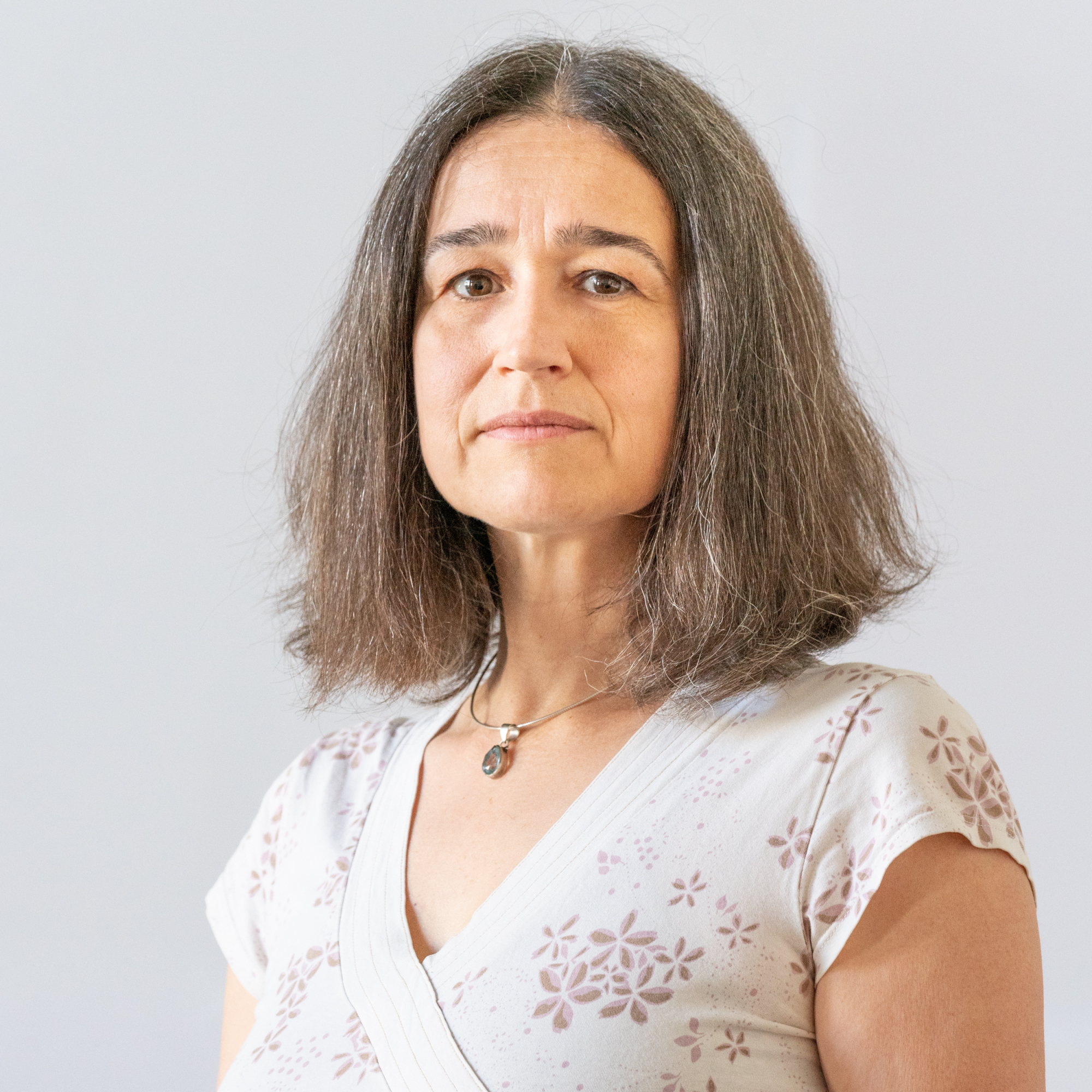
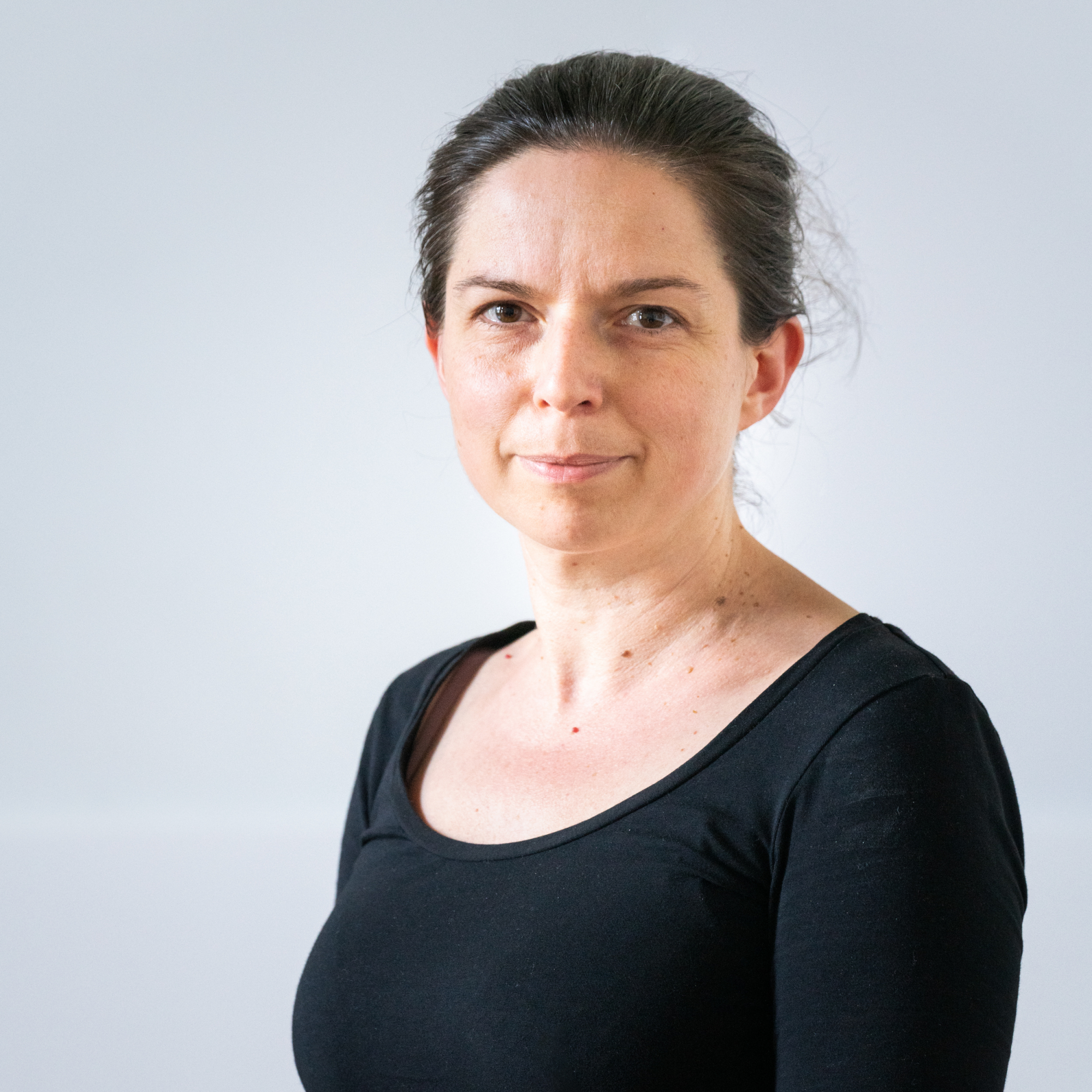
Éva Galambos DLA is an Associate Professor and Laboratory Manager at the Hungarian University of Fine Arts' Department of Restoration since 2014, promoted to Associate Professor in 2023. She serves as head of the microscopy laboratory and teaches materials science and polarization microscopic examination of inorganic pigments. Her research focuses on art conservation science , specializing in polarization microscopy of inorganic pigments , material analysis of cultural heritage objects , and diagnostic techniques for restoration . She developed Hungary's first digital pigment database ( pigmentum.hu ) and established advanced analytical laboratories through significant research grants. Galambos has led material investigations for major museum projects including the Museum of Fine Arts' Gamhudi coffin collection, Buda Castle Gothic sculptures, and medieval wall paintings across Hungary and Transylvania. Her work bridges conservation practice with scientific analysis through collaborations with ELTE, MTA research institutes, and international partners. Kerényi-pályázat nívódíj (1994) Köztársasági ösztöndíj (1998-1999) Erasmus ösztöndíj (1999) MAOE alkotói ösztöndíj (2001, 2008) As a doctoral supervisor, she has guided 11 completed DLA dissertations focusing on pigment analysis, forgery detection, and historical techniques. Her laboratory serves as a national hub for conservation science, training specialists in microscopic analysis and material diagnostics for cultural heritage preservation.
Anna Vihart serves as Lecturer and researcher at the Department of Restoration, Hungarian University of Fine Arts since 2016, following her role as Assistant Professor (2013-2016). Her academic foundation includes a DLA doctorate specializing in pigment analysis, establishing her expertise at the intersection of art conservation and material science. Her educational background encompasses: 2012: Doctor of Liberal Arts (DLA) from Hungarian University of Fine Arts Doctoral School; Dissertation: Light microscopic examination and detection possibilities of organic and inorganic black and grey pigments 2005: Painter-restorer artist degree from Hungarian University of Fine Arts Restorer Training Institute 1997: Vocational High School of Fine and Applied Arts, Decorative Painting Department Vihart's research centers on microscopic pigment identification and paint layer analysis, with significant contributions to developing Hungary's first standardized protocol for pigment examination. Her methodological innovations bridge historical art techniques with modern conservation science, particularly in distinguishing organic/inorganic pigments through light microscopy. This work directly informs practical restoration approaches for diverse cultural artifacts. Her publication portfolio demonstrates consistent focus on pigment science applications, from conference presentations on conservation methodologies to historical studies of ecclesiastical art. Key themes include database development for pigment identification, material degradation analysis, and technical examination of historical paintings across Hungarian cultural institutions. Professional recognition includes: Diploma Award of the National Association of Hungarian Artists (2005) TÁMOP-4.2.2.B-10/1 grant for creating Hungary's pigment database and examination protocol (2011-2013) While no formal student advisement is documented, her TÁMOP project leadership involved training workshops for emerging conservators. This initiative significantly advanced pigment analysis capabilities within Hungary's conservation community through standardized methodologies and shared digital resources. As core faculty in the Department of Restoration, Vihart collaborates extensively with national cultural institutions including the Museum of Fine Arts, Hungarian National Museum, and numerous churches/castles. Her project portfolio spans over 30 major conservation efforts since 2005, ranging from medieval altarpieces to contemporary installations, often involving multidisciplinary teams of conservators and art historians.
Dr. Susan Valladares is an Associate Professor in the Department of English Studies at Durham University, where she specializes in theatre and performance history from the late eighteenth to mid-nineteenth century. She is also a member of the Institute of Medieval and Early Modern Studies. Currently on research leave for the 2025/26 academic year as a Leverhulme Research Fellow, she continues to maintain academic correspondence while focusing on her research projects. Her academic journey began with studies at the Universities of Oxford (MA; DPhil) and York (MA), followed by teaching positions at various Oxford colleges. She served as a Junior Research Fellow at Worcester College (2012-2016) and as a Departmental and College Lecturer at St Hugh's College (2016-2018) before joining Durham University in 2018. Dr. Valladares' research centers on English literature from 1660 to 1840, with particular expertise in theatre and performance, political histories, representations of race, early Caribbean studies, slavery and abolition, gender autobiographies, and Romantic-period print cultures. Her work demonstrates how theatre functioned as both a cultural institution and political platform during periods of social transformation. She has made significant contributions to understanding how theatrical practices engaged with broader social, political, and cultural issues of their time, particularly regarding citizenship, patriotism, and national identity formation. Her publications reveal a consistent focus on the intersection of performance, politics, and identity. The articles demonstrate expertise across multiple domains including postcolonial theatre, Romantic-era performance economies, women's war writing, and the representation of race in historical contexts. Her work frequently examines the connections between theatrical practices and larger historical movements, particularly the Napoleonic Wars and abolitionist efforts. 2025: Leverhulme Research Fellowship 2024-2025: Short-Term Fellowships at Folger Shakespeare Library and John Carter Brown Library 2024: Board Member and Book Review Editor for Studies in Romanticism 2023: Durham University's Exceptional Contribution Award 2022: Durham University's Discretionary Award Scheme Dr. Valladares actively supervises PhD students working on English literature from 1660 to 1840, with recent completions including dissertations on Wordsworth's poetry, Romantic dramatic poetics, and Promethean forms of grief in Byron and Shelley. She has successfully secured multiple research grants and fellowships that have supported her archival work at prestigious institutions including Harvard's Houghton Library and the Folger Shakespeare Library. Her engagement with public scholarship includes curating the Bodleian Library's 'Staging History 1780-1840' exhibition, which generated significant public outreach through gallery tours, media interviews, and a podcast series. Her work bridges academic research and public engagement through collaborations with theatre professionals, arts organizations, and educational outreach programs in the North East of England focused on widening participation in higher education.
Professor Agnieszka Gut of the Institute of History at the University of Szczecin is a leading scholar in medieval Pomeranian studies, specializing in heraldry and diplomatic history. Her academic career spans three decades with significant contributions to understanding West and East Pomeranian ducal administrations, municipal heraldry, and medieval document analysis. Her educational trajectory includes a master's thesis on Stargard's coat of arms, a 2002 doctoral dissertation on West Pomeranian princely documents, and a 2015 habilitation monograph on East Pomeranian diplomacy that earned her a postdoctoral degree. Her research demonstrates exceptional depth in analyzing diplomatic formats, chancellery operations, and historical authenticity across Pomeranian regions. Gut's scholarly output reveals a consistent focus on heraldic evolution from medieval to contemporary periods, particularly examining how political ideologies—including Nazi influence—shaped municipal symbols. Her diplomatic studies meticulously reconstruct administrative structures through document analysis, establishing critical frameworks for evaluating medieval authenticity. This dual expertise positions her at the intersection of visual symbolism and institutional history in Central European contexts. Her achievements have been recognized with two major awards: the 2014 Source Studies Award distinction for her East Pomeranian diplomacy monograph and the 2006 Adam Heymowski Award distinction for her work on interwar Pomeranian heraldry. Professor Gut actively contributes to academic community building through editorial work on collective publications and involvement with student research groups like the Young Historians' Scientific Circle, fostering next-generation scholarship in historical auxiliary sciences.
Daphne De Luca is a Research Fellow and Teaching Contract Holder at the University of Urbino Carlo Bo, where she has been teaching Restoration since 2008 and serving as a Research Fellow since 2018. She is the Scientific Coordinator of the Restoration Laboratories for Canvas Paintings and Contemporary Art at the Urbino University Restoration School. Her work spans across the Department of Pure and Applied Sciences (DiSPeA), where she contributes to both academic instruction and practical conservation efforts. Dr. De Luca holds multiple degrees in cultural heritage conservation and art history. She is a Cultural Heritage Restorer with degrees from the Central Institute for Restoration in Rome and the University of Tuscia. She also holds an Art History degree from Sapienza University of Rome and is currently a Doctoral Candidate in History of Artistic Techniques at the École Pratique des Hautes Études (EPHE/PSL) in Paris, in cotutelle with Sapienza University of Rome. Dr. De Luca's research focuses on two interconnected fields: the history of artistic techniques and the development of new methodologies and high-performance materials for cultural heritage restoration. Her work in artistic techniques involves interpreting scientific data from investigation campaigns, structuring national and international research projects, and connecting analytical results to art historical contexts. She has led studies on the execution techniques of artworks by prominent artists including Crivelli, Barocci, Capogrossi, Rubens, Guttuso, and others. Her research on Capogrossi was selected in 2017 for access to the laboratories of the IPERIONCH.IT infrastructure. In conservation and restoration, Dr. De Luca specializes in designing and implementing restoration interventions for panel paintings, canvas paintings, frescoes, stone materials, mosaics, and contemporary art artifacts. She emphasizes high scientific and technical quality, preferring innovative and high-performance new-generation materials and advanced methodologies in cleaning, elastic tensioning, filling, and retouching. Her research on Aquazol® products has led to new materials for composing fills suitable for covering gaps in easel paintings and for watercolor retouching, developed in collaboration with chemist Richard Wolbers and the University of Philadelphia. Dr. De Luca is particularly specialized in the restoration of canvas paintings - a subject she has taught since 2008 at the Urbino University Restoration School - and specifically in the cleaning of both ancient and contemporary paintings. She has developed new systems for elastic tensioning of canvas paintings with springs, registering the TELAIODELUCA® brand in 2020. She is a member of an international research group created by renowned chemist Paolo Cremonesi, focusing on innovative cleaning systems for contemporary art artifacts. With over fifty theses supervised on topics related to cultural heritage restoration and artistic techniques of both ancient and contemporary art, Dr. De Luca has made significant contributions to academic training in her field. From 2016 to 2020, she taught History of Artistic Techniques at Roma Tre University, which appointed her as an Expert in the history of ancient, medieval, and modern artistic techniques for the Master's program dedicated to art forgery. Dr. De Luca directs the "Lineamenti di Conservazione e Restauro" series for Il Prato publishing house since 2011 and is a member of the editorial board of the journal "Progetto Restauro." She is a co-founder and scientific committee member of the new "Restauro" series (TAB Roma editions), for which she curated the first volume dedicated to Giuseppe Capogrossi and the second to Federico Barocci. She is a founding member and former vice-president of the Association ORA (Organization of High-Training Restorers), a member of the Board of Directors of RSF (Restorers Without Borders), and president of CRUN (Committee of University Restorers). She is also a member of SISCA-University Consultation (Italian Society for the History of Art Criticism).
Marianne Wifstrand Schiebe is an Associate Professor in Latin at Uppsala University's Department of Linguistics and Philology within the Faculty of Languages. She maintains an active research profile with publications spanning classical philology, ancient philosophy, and classical reception studies, with her most recent works appearing in 2024. Professor Wifstrand Schiebe's primary research focuses on anthropomorphism in ancient religious thought, particularly examining how ancient philosophers conceptualized the human form of gods. Her groundbreaking 2020 monograph Das anthropomorphe Gottesbild: Berechtigung und Ursprung aus der Sicht antiker Denker systematically investigates ancient philosophical theories about the origins of anthropomorphic divine representations, challenging previous scholarly assumptions about allegorical exegesis and myth interpretation. She has also made significant contributions to Vergil studies, particularly regarding the Golden Age concept in the Aeneid and medieval Christian interpretations of the Eclogues. Her publication record reveals a consistent scholarly trajectory exploring the intersection of philosophy, religion, and literature in antiquity, with particular attention to Euhemerism, Varro's theological works, and the reception of classical texts in medieval contexts. Recent publications demonstrate continued engagement with Lactantius, Prodicus, and Greek inscriptions, showing both depth in her core research areas and breadth across classical scholarship. Professor Wifstrand Schiebe has received research funding from the Swedish Research Council and E. O. Burmans fond at Uppsala University. She has presented her work at major academic institutions including Uppsala, Stockholm, Lund, Tromsø, and Leuven, and organized a workshop on Philosophical Attitudes to the Anthropomorphic Image of the Divine at Uppsala in 2015 with international participants from Göttingen and Rouen. Her scholarly activities extend to editorial work, including co-editing Dais Philesistephanos: Studies in Honour of Professor Staffan Fogelmark (2004), and she has contributed to the study of Annius of Viterbo's influence on Swedish historiography, revealing how 15th-century forgeries shaped national prehistory narratives in early modern Sweden.