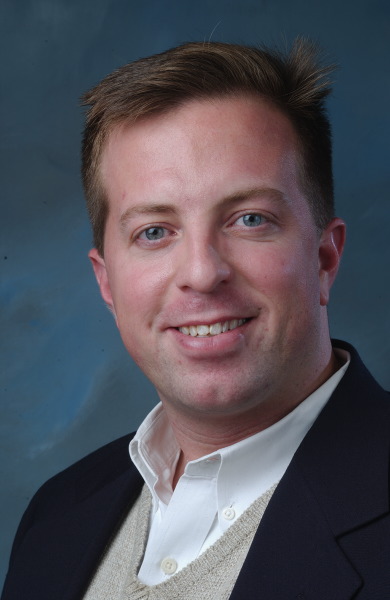
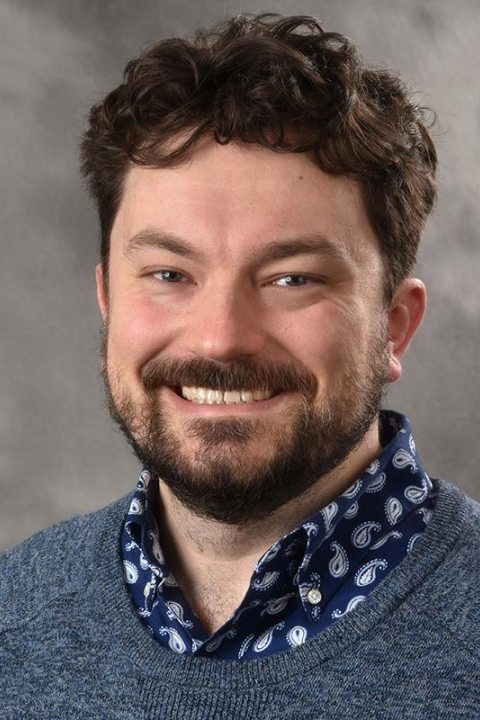
Michele Ripplinger is a Berkeley Lecturer and Ph.D. candidate in English and Medieval Studies at UC Berkeley. Her research focuses on late medieval literature, particularly Chaucer and the reception of classical texts, with emphasis on gender studies, representational ethics, and women’s reading practices. She teaches across historical periods, integrating cultural studies and poetry analysis. Education: Pursuing a Ph.D. in English and Medieval Studies at UC Berkeley (dissertation on Chaucer and the Moralized Ovid). Research Interests: Medieval and early modern classics reception, fictionality, history of reading, women’s/gender/sexuality studies, and intersections between premodern and modern literary thought. Her publications and conference presentations highlight work on Chaucer, Hoccleve, and medieval literary methodologies. She has presented at major venues including the New Chaucer Society Congress and the International Congress on Medieval Studies. No scientific awards are listed. Advising and grants details are not provided. Office hours are by appointment.
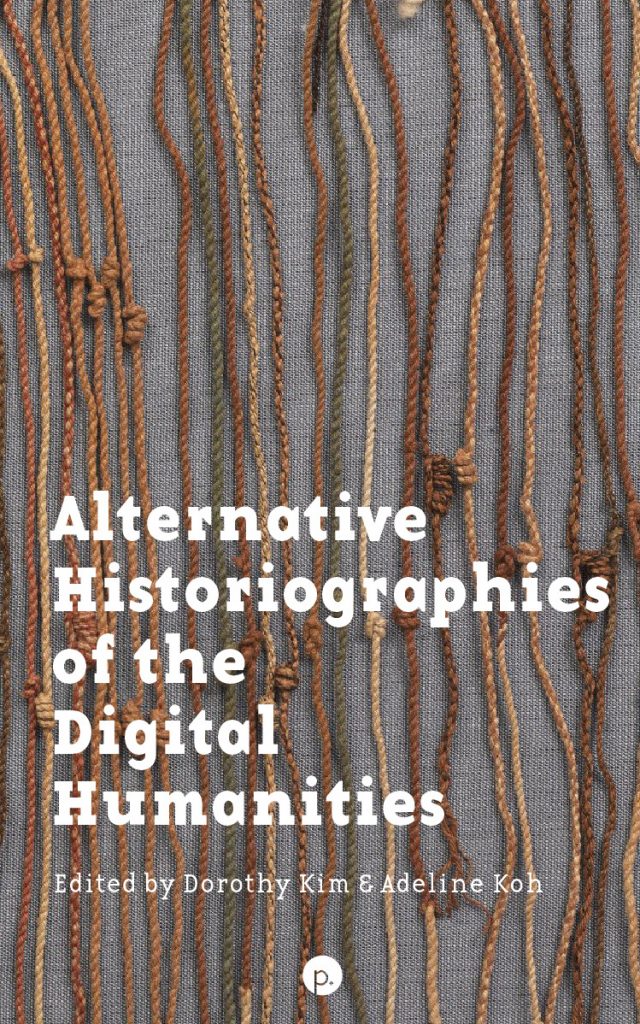
Dorothy Kim serves as Assistant Professor of English at Brandeis University with cross-appointments in the Department of Women's, Gender and Sexuality Studies and the Women's Studies Research Center. Her innovative scholarship bridges medieval literary studies, digital humanities, and critical race theory, examining how medieval history is weaponized by contemporary white supremacist movements and advocating for antiracist frameworks in academia. She earned her Ph.D. and M.A. from the University of California, Los Angeles and her B.A. from the University of California, Berkeley. Her educational trajectory reflects deep engagement with interdisciplinary approaches to literature and cultural studies. Kim's research centers on exposing the racialized foundations of medieval studies, particularly through projects analyzing digital white supremacy and medievalism's role in alt-right ideology. She pioneers methodologies connecting medieval women's literary cultures with contemporary trans feminism while interrogating Jewish/Christian difference in manuscript studies. Her work consistently challenges the field's historical whiteness and develops decolonial digital humanities practices. Her publication trends reveal a decisive shift toward critical race interventions in premodern studies, with increasing focus on database methodologies, sonic histories, and the material politics of medieval manuscript transmission. Recent works demonstrate how digital tools can either reinforce or dismantle racial hierarchies in academic knowledge production. Her distinguished honors include: 2023 Medieval Academy of America Article Prize in Critical Race Studies American Studies Association Digital Humanities Book Prize (2021) Society for Medieval Feminist Scholarship's Best Feminist Article Award (2021) AAUW Postdoctoral Fellowship (2018-2019) Folger Shakespeare Library Long-Term Fellowship (2025-2026) SSHRC, Ford Foundation, Fulbright, and Mellon fellowships Kim directs major collaborative projects including the NEH-funded An Archive of Early Middle English (161-manuscript database) and co-leads the Global Middle Ages Project. As co-director of RaceB4Race and the Reckonings Institute, she creates platforms for community archiving and social justice praxis. Her mentorship focuses on training students in critical digital methodologies through Brandeis' DH Lab while developing antifascist frameworks for humanities education. She currently leads the Brandeis University DH Lab housing her NEH project, co-edits Literature Compass's pre-1800 section, and develops two major book projects: Race, the Crusades, and the Katherine Group (based on her AAUW fellowship) and Music, Multimodal Manuscripts, and Remediating the Medieval Lyric for ArcPress.
Andrew J Fleck is an Associate Professor in the English and Comparative Literature Department at San José State University, affiliated with the College of Humanities and the Arts. He has been teaching since 2001, specializing in Early Modern British Literature with a focus on Dutch-English cultural relations between 1588-1688. Fleck holds a PhD from Claremont Graduate University (2000). His research explores how Dutch figures influenced English literary and cultural imagination, including studies on John Donne, Thomas Nashe, and early modern drama. He has published widely in journals like Studies in Philology and Journal of British Studies , with a particular emphasis on textual analysis, historical narratives, and cross-cultural exchanges. Fleck’s work spans from examining the role of Dutch language performances in early modern theater to analyzing the representation of national identity in texts like The Shoemaker’s Holiday . His recent publications (2013) include studies on John Donne’s engagement with astronomical themes and global adaptations of Macbeth . He maintains an active presence in academic encyclopedias, contributing entries on Milton’s Dutch connections and Renaissance authors. His scholarship bridges literary analysis with historical context, often highlighting how literature reflects political, religious, and cultural tensions of the period. Fleck’s teaching and research reflect a commitment to interdisciplinary approaches, integrating historical, linguistic, and cultural methodologies.
Alexander Key is an Associate Professor of Comparative Literature at Stanford University, specializing in Classical Arabic literature and the intellectual history of Arabic and Persian-speaking worlds from the 7th century onwards. His scholarship focuses on the philosophy of language, literary theory, and cross-cultural translation. Ph.D. in Arabic and Islamic Studies from Harvard University (2012) Current research: Arabo-Persian linguistic intersections, poetics in translation, and pre-modern theories of syntax and affect His articles span diverse eras and topics, including: Medieval Arabic language philosophy (5th–11th century) Modern Arabic political poetry analysis (20th–21st century) Comparative methodologies bridging Islamic and Western traditions A key editorial role includes: Board Member of Stanford University Press Advisory roles at Habib University and Stanford’s Markaz Resource Center His work bridges academic publication with public discourse through: Contributions to Arcade Colloquy Interviews on poetics, religion, and contemporary politics Podcasts and literary salon discussions
Robert Con Davis-Undiano is a Professor of English at the University of Oklahoma and the Neustadt Professor. He serves as Executive Director of World Literature Today , contributing to global literary discourse. His academic roles span teaching and research in American literature, Chicano studies, cultural studies, and literary theory. Ph.D., University of California, Davis, 1979 Office: 110 Monnet Hall Email: rcdavis@ou.edu Davis-Undiano’s research explores American identity, gender relations, and cultural theory. His work bridges literary criticism with interdisciplinary approaches, emphasizing cognitive science, ethics, and cross-cultural analysis. His publications span four decades, focusing on critical theory, cultural cognition, and literary analysis. These works engage with postmodernism, ethnic studies, and gender dynamics in literary traditions. Neustadt Professor He has authored influential books and editions that shape debates in American studies and cultural theory, offering frameworks for understanding literature’s role in societal and intellectual contexts.
Elaine Treharne serves as the Roberta Bowman Denning Professor of Humanities at Stanford University, holding primary appointment in the Department of English with courtesy appointments in German Studies and Comparative Literature. She concurrently acts as Senior Associate Vice Provost for Undergraduate Education and Director of Curriculum, while directing Stanford Text Technologies—a major initiative exploring textual transmission across historical periods. Her leadership extends to co-directing SILICON and spearheading NEH-funded projects that redefine digital approaches to manuscript studies. Her academic foundation includes a B.A. in English Language and Literature (First Class Honors) from the University of Manchester (1986), a Master of Archive Administration from the University of Liverpool (1987), and a Ph.D. in English from the University of Manchester (1992). This archival training underpins her dual expertise in traditional manuscript scholarship and digital innovation. Treharne's research pioneers intersections between medieval materiality and contemporary technology, investigating the haptic experience of medieval books, AI applications for manuscript analysis, and the long history of text technologies. She challenges conventional periodization through projects like 'Disrupting Categories, 1050-1250' while developing computational frameworks for fragmentology and textual distortion. Her work consistently bridges paleography with digital methodology to examine how writing systems shape cultural memory. Recent publications reveal a decisive shift from foundational medieval scholarship toward integrative digital-humanities frameworks, with increasing emphasis on phenomenological approaches to both physical and digital texts. This trajectory culminates in current projects applying machine learning to manuscript transmission patterns and developing ethical guidelines for digital archival tools. Her scientific recognition includes: Fellow of the Society of Antiquaries Fellow of the Royal Historical Society Honorary Lifetime Fellow of the English Association (former Chair and President) Fellow of the Learned Society of Wales American Philosophical Society Franklin Fellow Princeton Procter Fellow Fellow of the Stanford Clayman Institute for Gender Studies Treharne actively supervises graduate students in early literature, Book History, and Digital Humanities while securing major grants including NEH funding for Stanford Global Currents, AHRC support for the Production and Use of English Manuscripts project, and Stanford Impact Labs fellowship for archival tool development. She maintains commitment to ethical scholarly environments through her leadership in VPUE initiatives and digital pedagogy. She directs the Stanford Text Technologies initiative hosting the annual Collegium series, co-directs SILICON for internet longevity research, and leads specialized projects including 'Digital Ker' for Anglo-Saxon manuscript cataloging and 'Medieval Networks of Memory' analyzing mortuary rolls. These interconnected efforts form a comprehensive ecosystem for advancing textual scholarship across temporal and technological boundaries.
Caitlin Mahaffy is a Visiting Assistant Professor in the Department of English at Mount Holyoke College. She holds a Ph.D. in Early Modern British Literature from Indiana University, Bloomington (2022), and specializes in interdisciplinary work connecting queer theory and ecocriticism . Research Focus: Analyzes medieval and early modern texts to explore intersections between queerness, environmental studies, and non-human elements like flora/fauna. Teaching Philosophy: Prioritizes individual student engagement and mentorship in English literature courses. Education: Ph.D. in Early Modern British Literature, Indiana University Bloomington (2022)
Julie Orlemanski is an Associate Professor and Director of Graduate Studies in the Department of English Language and Literature at the University of Chicago. She holds a Ph.D. and MA from Harvard University (2010) and a BA from the University of Georgia (2004). Her scholarly work bridges late medieval literature with contemporary theoretical debates in literary criticism, the history of science, and the philosophy of fictionality. Harvard University - Ph.D. and MA (2010) University of Georgia - BA (2004) Her research focuses on medieval medical discourse, the poetics of literary personhood, and the historiography of fiction. She is currently completing Making Literary Persons: A Poetics of Voice in Chaucer , which explores Chaucerian narratology, and developing a book on Bernard of Clairvaux's Sermons on the Song of Songs , considering how medieval writing virtualized embodied speech. Her 2019 monograph Symptomatic Subjects examines medical causation in pre-modern literature. Julie serves as Book-Review Editor for Exemplaria: Medieval, Early Modern, Theory (2025–) and has edited special issues on trans-regional medieval studies. Her recent publications analyze medieval fictionality, personification, and the ethical stakes of literary voice. She has presented at the English Institute Annual Conference and organized graduate research symposia.
Dr. Hannah Zdansky is an Assistant Professor of English at Belmont Abbey College, specializing in medieval languages, literatures, and manuscript studies. Her research focuses on cross-cultural connections in medieval Britain and Ireland, particularly exploring multilingualism, religion in literature, and medieval reading practices. She holds a B.A. from Baylor University, an M.A. from the National University of Ireland, Galway, and a Ph.D. from the University of Notre Dame. Her expertise spans Old and Middle English, French, Irish, Welsh, and Latin, with a methodological focus on digital humanities and the history of the book. Dr. Zdansky’s work examines how medieval literary and material cultures were shaped by multicultural interactions, including studies on medieval manuscripts, the role of women in literary production, and the intersection of religion with secular narratives. Her recent scholarly engagements include presentations on topics like the transnational dimensions of medieval texts, the interplay between sacred and secular themes in works such as Gui o Bharbhuic , and comparative analyses of Welsh and English manuscript traditions. Her publications span peer-reviewed articles, encyclopedia entries, and book reviews, reflecting her commitment to interdisciplinary medieval studies. Dr. Zdansky teaches a wide range of courses, from Old English Language and Literature to Irish History, emphasizing close textual analysis and historical context. She has advised numerous students through independent studies and thesis work, fostering academic rigor and intellectual curiosity in her classroom.
State University of New York at OswegoUnited States
Erik Wade is an Assistant Professor in the Department of English and Creative Writing at SUNY Oswego. He holds a PhD from Rutgers University and has taught at Rheinische Friedrich-Wilhelms-Universität Bonn in Germany. His research focuses on race, sexuality, and national identity in early medieval English literature, with a particular emphasis on how these themes intersect with religious texts and cultural narratives. He currently directs the Medieval and Renaissance Studies minor and serves on the advisory board for Exemplaria: Medieval, Early Modern, Theory . Educational Background: PhD in English, Rutgers University (2018) MA in English, University of Oregon (2011) BA in English and History with a minor in Medieval and Renaissance Studies, SUNY Oswego (2009) AA in Humanities, Onondaga Community College (2007) Research Interests: Interrogates racial and sexual discourses in medieval literature Examines how early English texts constructed national identity through contested themes like rape culture and racial hierarchies Investigates global influences (e.g., Byzantine theology) on medieval English thought Challenges Eurocentric narratives in medieval studies Recent Publications Highlight: His work analyzes trans and queer themes in medieval hagiography, the racialized language of 'Anglo-Saxon' terminology, and the intersections between animal studies and gender relations. He co-authored a Smithsonian Magazine article deconstructing the term 'Anglo-Saxon.' Teaching and Advocacy: Teaches courses on medieval global literature, critical theory, and premodern identity. Actively promotes inclusive pedagogy and addresses systemic racism in academic disciplines through published opinion pieces and collaborative projects like the upcoming Race in Early Medieval England (Cambridge UP).
Thomas Herron is a Professor in the English Department at East Carolina University (ECU). His research focuses on early modern poet Edmund Spenser, Irish plantation history, and connections to figures like Sir Walter Raleigh and Thomas Harriot. He also specializes in Shakespeare, medieval and early modern Irish history, archaeology, and literature surveys. Herron earned a B.A. from Carleton College, followed by an M.A. and Ph.D. from the University of Wisconsin, Madison. His publications include the monograph Spenser’s Irish Work: Poetry, Plantation and Colonial Reformation (2007), co-edited volumes on Ireland in the Renaissance, and articles in journals such as Spenser Review and South Atlantic Review . He co-curated the Folger Shakespeare Library exhibit Nobility and Newcomers in Renaissance Ireland (2013) and edited the journal Explorations in Renaissance Culture . Teaching interests span Spenser, Shakespeare, Milton, Joyce, and Irish literature. He has developed courses on Renaissance literature, literary surveys, and digital humanities projects like Centering Spenser , a resource reconstructing Kilcolman Castle. His work integrates historical archaeology with literary analysis, emphasizing colonial dynamics and cultural memory.
Geraldine Heng is the Mildred Hajek Vacek and John Roman Vacek Chair in English at the University of Texas at Austin, where she is cross-appointed to Middle Eastern Studies, Women's Studies, Jewish Studies, and the Rapoport Center for Human Rights and Social Justice. Elected to the American Academy of Arts and Sciences in 2023 and a Fellow of the Medieval Academy of America, she founded and directs the Global Middle Ages Project (G-MAP), a major interdisciplinary initiative promoting global perspectives on premodernity. With a Ph.D. from Cornell University, Heng has pioneered the field of premodern critical race studies, fundamentally challenging the assumption that race is a modern construct. Her research focuses on literary, cultural, and social encounters between worlds, particularly through the lenses of race, gender, sexuality, class, and religion, with special attention to medieval Europe's interactions with Asia and Africa. Heng's scholarly work reveals how medieval global connections shaped cultural production and identity formation long before the so-called 'Age of Exploration.' Her approach synthesizes literary analysis, historical research, and critical theory to uncover the deep roots of globalization and its implications for understanding contemporary identity politics and cultural exchange. Her publications demonstrate a consistent trajectory toward increasingly global frameworks, moving from studies of medieval romance to comprehensive examinations of early global interconnectedness. This evolution reflects her commitment to dismantling Eurocentric narratives of the medieval world and revealing the complex networks of exchange that characterized premodern societies across Afro-Eurasia. 2019 PROSE prize in Global History 2019 Academy of American Literature prize in Historical Studies 2019 Robert W. Hamilton Grand Prize 2020 Otto Gründler prize Fellow of the American Academy of Arts and Sciences (2023) Fellow of the Medieval Academy of America Heng has secured approximately $750,000 in grants for digital projects and held eight major fellowships at research centers. She co-edits the Cambridge University Press Elements series in the Global Middle Ages and the University of Pennsylvania Press series RaceB4Race: Critical Studies of the Premodern. Her teaching encompasses courses on early global literatures, premodern race, Crusades literature, Arthurian traditions, and feminist theory. As founder and director of the Global Middle Ages Project (G-MAP), Heng has built an international scholarly network that challenges traditional disciplinary boundaries and promotes collaborative approaches to studying premodern global connections. The project has fostered numerous digital initiatives, publications, and conferences that have significantly reshaped how scholars understand medieval intercultural exchange.
Tamara Goeglein is a Professor of English and Program Chair of Comparative Literary Studies at Franklin & Marshall College. She has held multiple academic leadership roles, including English Department Chair, Associate Dean of the Faculty, and Secretary of the Faculty. Her research focuses on English Renaissance literature, early modern emblematics, and visual culture, with particular attention to figures like Edmund Spenser, John Donne, Shakespeare, and John Milton. Education: Ph.D. British Literature with Medieval Studies Certificate, Indiana University (1989) M.A. British Literature, Indiana University (1986) A.B. English, Earlham College (1982, with highest honors and Phi Beta Kappa) Research interests include the intersection of text and image in early modern works, particularly through emblem studies. Recent publications explore emblematic symbolism in John Donne’s poetry and Shakespearean drama, leveraging sources like the Antwerp Polyglot Bible. She has edited collections such as Textual Respect: Essays in Honor of Judith H. Anderson (forthcoming 2026) and authored chapters on topics like emblematic tabernacles and death imagery in early modern literature. Professional activities include reviewing for journals like Emblematica and serving on the John Donne Society’s Executive Board (2014–2017) and the Society for Emblem Studies (2012–2015). Courses taught include Medieval/Early Modern English Literature, Shakespeare studies, and the history of the book.
Stephen Spector is a Professor of English at Stony Brook University since 1972, with a PhD from Yale University (1973). His work bridges medieval literature, religious studies, and language history. He has held visiting positions at the Hebrew University (Jerusalem, 1996–97) and fellowships at the National Humanities Center and Wesleyan University. His research focuses on medieval English literature, particularly mystery plays and biblical texts, alongside modern topics like Christian Zionism and the Ethiopian Jewish rescue operation (Operation Solomon). He has authored influential books such as Evangelicals and Israel (2009), which won the London Book Festival Prize, and Operation Solomon (2005), honored with the JDC-Herbert Katzki Award. Education: B.A. in English and Psychology from Penn State University (1968), M.Phil. and Ph.D. from Yale University (1973). He has taught courses ranging from the history of the English language to medieval literature and the Bible as literature. Research highlights include pioneering studies on anti-Semitism in medieval mystery plays, textual editing of the N-Town Play, and modern analyses of religious-political intersections. His recent work explores biblical prophecy’s influence on US foreign policy and contemporary grammar usage guides. Awards include the Van Courtlandt Elliott Prize (1980) for medieval scholarship, National Endowment for the Humanities grants, and SUNY Research Foundation fellowships. He has also contributed op-eds on topics like Sarah Palin’s religious influences and Israel-Evangelical relations. Grants and fellowships span decades, including directing NEH summer seminars on Jewish presence in early English literature (1993, 1996). His work often integrates historical methodologies with contemporary cultural analysis. Labs/Teams: Not explicitly listed, but his research collaborations are evident in co-edited volumes like The Olde Daunce (1991) and contributions to interdisciplinary projects like the Early English Text Society.
David Aers is the James B. Duke Distinguished Professor of English at Duke University, with affiliations in the Department of English, Religious Studies, and Divinity School. He holds academic appointments since 1994, including directorship of the Medieval and Renaissance Studies Center since 2019. His expertise spans medieval and early modern literature, theology, and political culture, with a focus on Christian tradition and its intersections with ethics, gender, and community. Education: PhD from the University of York (1971) and BA from the University of Cambridge (1968). Research interests include late medieval English writing (e.g., Chaucer, Langland), theological doctrines like election and sin, and the evolution of Christian thought across the medieval/early modern divide. His recent works explore themes like enemy love in theology, gender identity, and the legacy of Constantinian Christianity. Recognition includes the Duke Distinguished Professorship. Teaching spans courses on Milton, medieval literature, and historical theology. He has served as editor for journals like Journal of Medieval and Early Modern Studies and contributed to academic service through editorial roles and professional committees. Labs/Teams: Leads the Medieval and Renaissance Studies Center, fostering interdisciplinary research in premodern cultures.