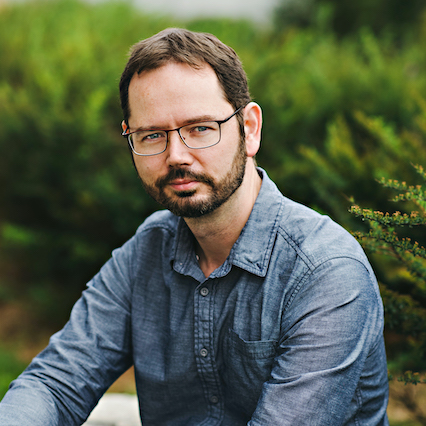
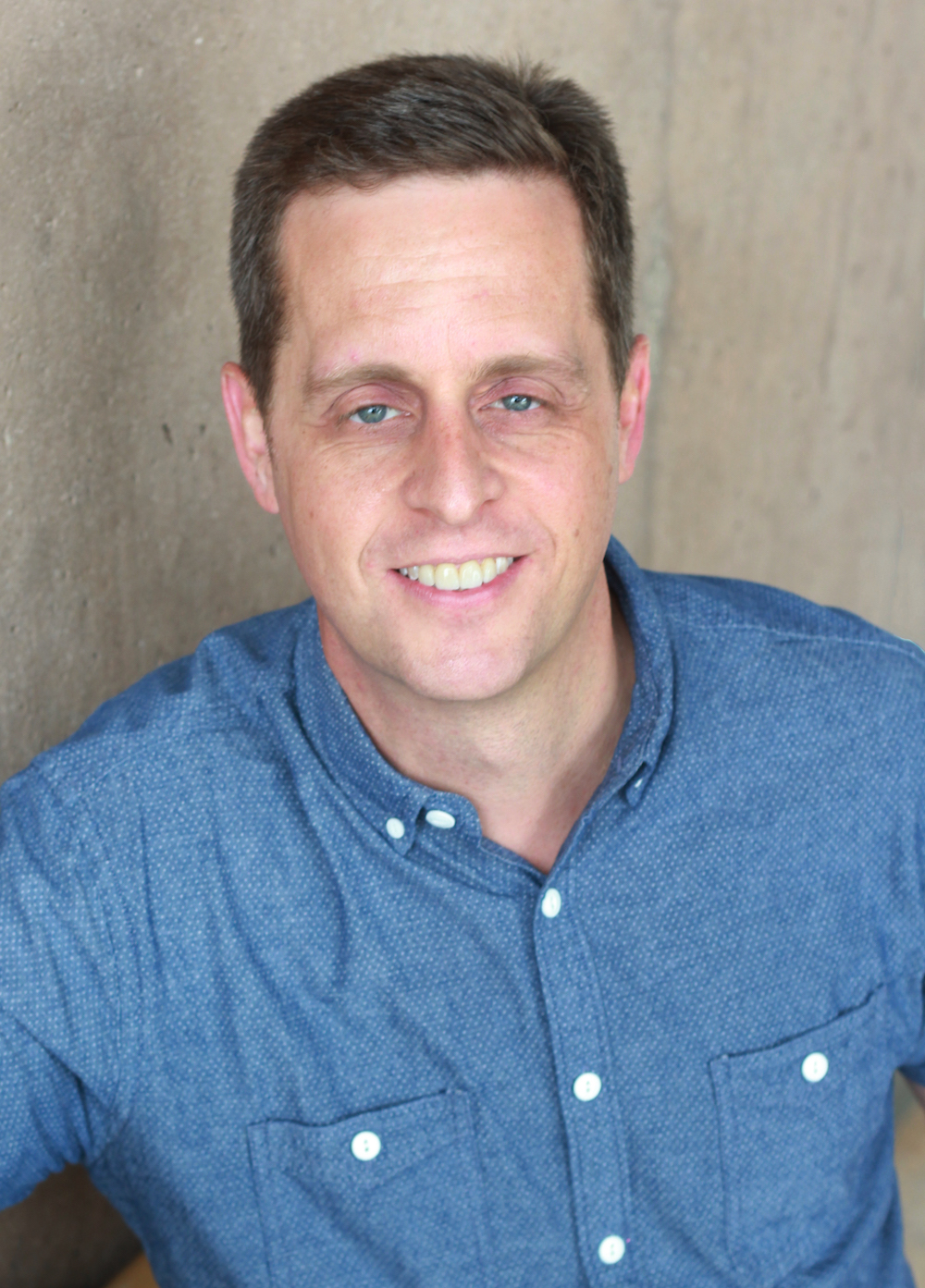
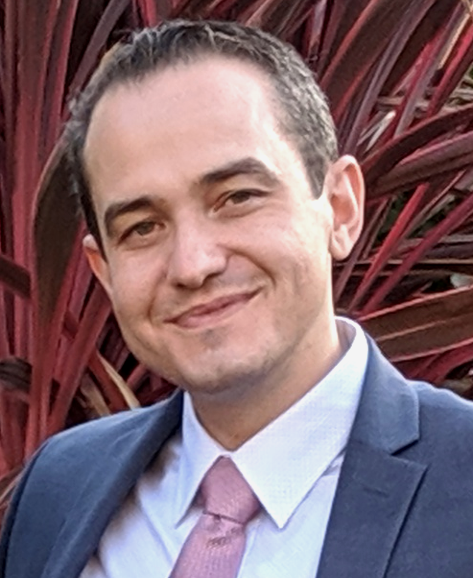
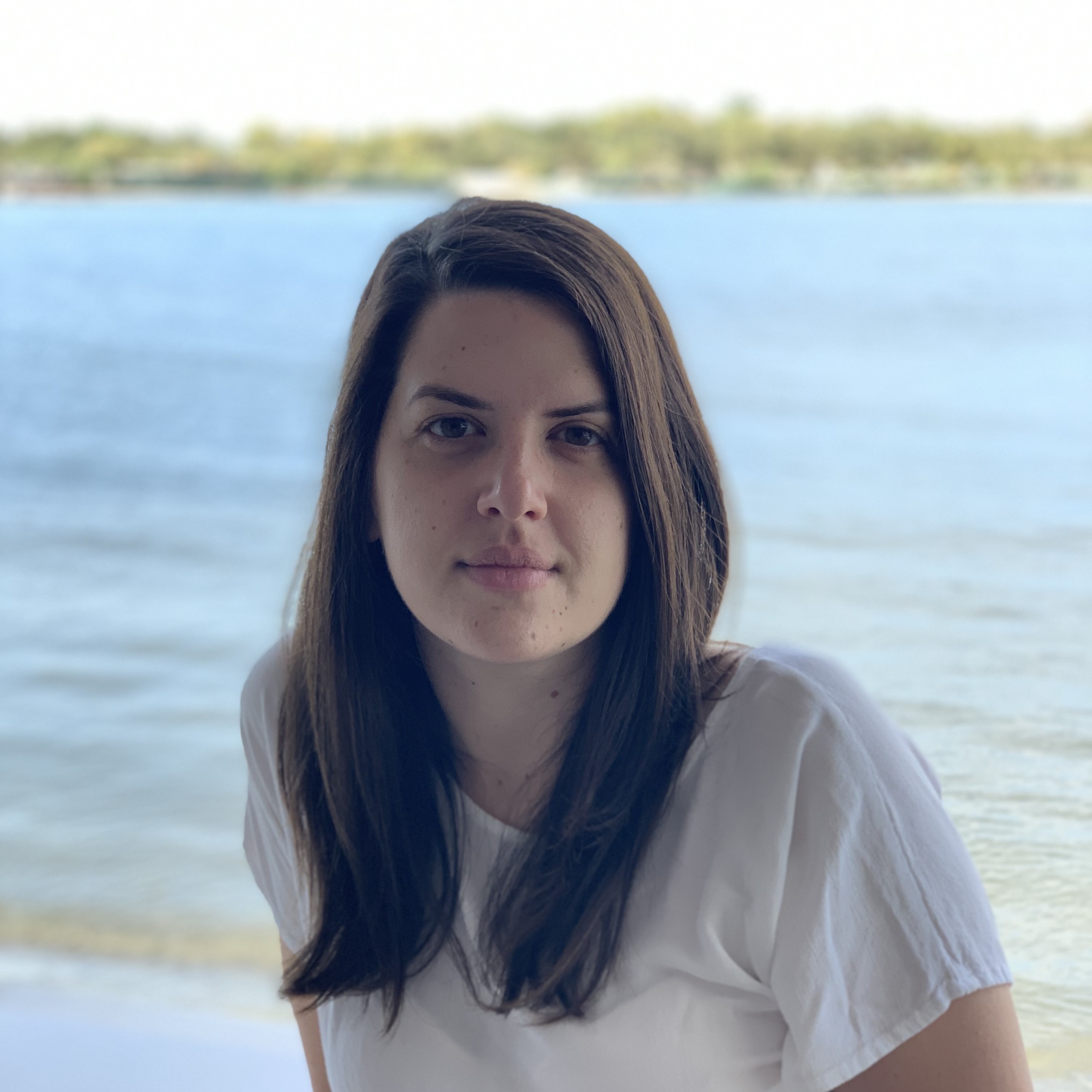
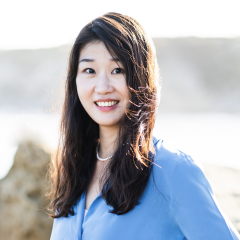
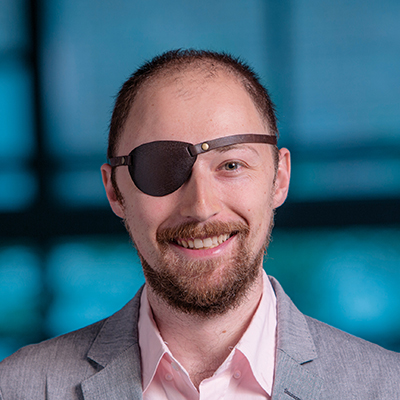
Prof. Dr. Dennis Säring is a faculty member at the University of Applied Sciences Wedel , specifically affiliated with the School of Engineering. His academic and research activities focus on Deep Learning , Medical Image Analysis , and applications of Artificial Intelligence in healthcare and biomedical imaging. He has led seminars on Deep Learning topics and supervised student projects in Autonomous Driving at Audi's AADC 2018 competition. Research Highlights : Cardiovascular imaging, forensic age estimation via MRI, neural network-based bone segmentation, and cerebrovascular aneurysm analysis. Technical Expertise : Cardiac MRI, 3D/4D image processing, parametric mapping, and spatiotemporal data fusion. His recent publications (2018-2023) emphasize 3D MR segmentation for age assessment, CMR strain analysis in athletes, and T1/T2 mapping for myocarditis. Key collaborations include institutions like the University Medical Center Hamburg-Eppendorf and Wedler Hochschulbund, with funding for autonomous vehicle research. While no explicit scientific awards are listed, his work spans clinical cardiology, forensic radiology, and AI-driven medical diagnostics.
Mark Crowley is an Associate Professor in the Department of Electrical and Computer Engineering at the University of Waterloo, with a cross-appointment in the Cheriton School of Computer Science. He is a member of the Waterloo Artificial Intelligence Institute (WAII) and the Waterloo Institute for Complexity and Innovation (WICI), and serves as National Secretary of the Canadian Artificial Intelligence Association (CAIAC). His educational background includes a Ph.D. and M.Sc. in Computer Science from the University of British Columbia, where he worked in the Laboratory for Computational Intelligence, and a B.A. in Computer Science from York University. He completed a postdoctoral fellowship at Oregon State University working with Tom Dietterich's machine learning group. Crowley's research focuses on developing dependable and transparent algorithms to augment human decision-making in complex domains with multiple agents, spatial structure, or uncertainty. His work spans Reinforcement Learning , Deep Learning , Ensemble Methods , and Manifold Learning . He frequently collaborates with researchers in applied fields including Computational Sustainability, Sustainable Forest Management, Autonomous Driving, Medical Imaging, and Material Design. His research is motivated by both theoretical opportunities and real-world challenges such as forest fire management, automotive applications, and medical imaging. His recent publications demonstrate a strong focus on addressing challenges in reinforcement learning, particularly around observation costs, multi-agent systems, and causal representation learning. His work on ChemGymRL provides a significant contribution to digital chemistry and material design through reinforcement learning frameworks. The textbook Elements of Dimensionality Reduction and Manifold Learning represents a major contribution to the theoretical foundations of machine learning. Crowley actively supervises graduate students, with recent thesis completions including Shayan Shirahmadi Gale Bagi (PhD, Feb 2025) and Oleksandra Nahorna (MASc, Dec 2024). His lab, UWECEML (Waterloo ECE Machine Learning Lab), focuses on developing new algorithms at the intersection of Machine Learning, Optimization, and Probabilistic Modeling. He teaches courses including ECE 457C (Reinforcement Learning), ECE 657A (Data & Knowledge Modelling & Analysis), and ECE 457B (Fundamentals of Computational Intelligence). His blog Computationally Thinking explores AI, machine learning, and the societal impact of these technologies.
Erik B. Sudderth is a Professor of Computer Science and Statistics and Chancellor's Fellow at the University of California, Irvine (UCI). He leads the Learning, Inference, & Vision Group and directs multiple research centers, including the UCI Center for Machine Learning and Intelligent Systems and the HPI Research Center in Machine Learning and Data Science. He previously served as an Associate Professor at Brown University. Education: B.S. (summa cum laude) in Electrical Engineering from UC San Diego (1999), M.S. and Ph.D. in EECS from MIT (2002, 2006). His research focuses on statistical methods for scalable machine learning, Bayesian nonparametrics, probabilistic graphical models, and applications in computer vision, AI, and environmental science. Key areas include nonparametric clustering, deep generative models, and particle-based inference algorithms. Research interests span diverse topics: advancing Bayesian nonparametric models for medical time series, scalable variational inference, and AI ethics. Notable contributions include the NET-VISA seismic monitoring system (ISBA Mitchell Prize, 2014), the BNPy toolbox (NSF CAREER Award), and work on diverse particle max-product algorithms for continuous inference. Scientific awards include the NSF CAREER Award, ISBA Mitchell Prize, and recognition as one of "AI's 10 to Watch" (IEEE). He has served as editor for top journals (JMLR, IEEE PAMI) and conference chairs (NeurIPS, CVPR). His work bridges theory and practice, with applications in robotics, climate science, and healthcare. Labs/Teams: UCI Learning, Inference, & Vision Group; UCI Center for Machine Learning; CREATE Technology Center. Grants include NSF funding for visually impaired collaboration tools and soil biogeochemical modeling.
Christopher Kanan is a tenured Associate Professor of Computer Science at the University of Rochester, leading the AI Initiative within the Hajim School of Engineering & Applied Sciences. He holds secondary appointments in Brain and Cognitive Sciences, the Goergen Institute for Data Science and AI (GIDS-AI), and the Center for Visual Science. His research focuses on deep learning systems for artificial general intelligence (AGI), including continual learning, medical computer vision, and visual question answering. Previously, he was an Associate Professor at RIT’s Carlson Center for Imaging Science and a leader at Paige.AI, contributing to the FDA-cleared Paige Prostate system. Kanan earned his PhD from UC San Diego, completed postdoctoral work at Caltech, and worked at NASA JPL. Education: PhD in Computer Science, UC San Diego MS in Computer Science, University of Southern California Bachelor’s in Philosophy and Computer Science, Oklahoma State University Research Interests: Kanan’s work spans foundational AI capabilities like continual learning, medical imaging (pathology and radiology), multi-modal reasoning, and cognitive science-inspired models. His lab develops bias-robust AI systems and applies deep learning to healthcare and fusion research. Articles Trends: His recent work emphasizes out-of-distribution generalization, foundation models in pathology, and stability in continual learning. Key themes include AI applications in healthcare, model robustness, and neuroscience-inspired algorithms. Awards: NSF CAREER Award Senior Member, AAAI and IEEE DoE and NSF grants totaling $5M+ DARPA/ARL awards Advising & Grants: Mentored over 10 PhD students, including Robik Shrestha and Usman Mahmood. Secured grants for AI in nuclear fusion and medical imaging. Led RIT’s Center for Human-aware AI (CHAI) as Associate Director. Labs & Teams: Heads the University of Rochester AI Initiative, collaborates with Paige.AI, and leads teams advancing AI in pathology and robotics. His lab’s KLab (klab.cis.rit.edu) focuses on vision and learning systems.
Animesh Garg is an Assistant Professor at the School of Interactive Computing at Georgia Tech, where he leads the People, AI, and Robotics (PAIR) research group . He holds a Senior Researcher position at Nvidia Research and has courtesy appointments at the University of Toronto and Vector Institute. Previously, he served as Chief Scientific Officer at Apptronik (2024-2025) and Senior Staff Research Scientist at Nvidia Research (2018-2024). Education : Ph.D. in Operations Research from UC Berkeley (2011-2016), MS in Computer Science and Industrial Engineering from Georgia Tech and University of Delhi. Research Focus : Building Generalizable Autonomy through Reinforcement Learning , Control Theory , and 3D Vision , with applications in Surgical Robotics , Self-Driving Labs , and Manufacturing . Key Article Themes : His recent work emphasizes Foundation Models for robotics, Differentiable Simulation , Language-Guided Autonomy , and Structured Inductive Biases in sequential decision-making. Scientific Awards : Stephen Fleming Early Career Professorship at Georgia Tech. Teaching : Courses on AI, Deep Reinforcement Learning, and Algorithmic Intelligence in Robotics at Georgia Tech. Labs & Collaborations : Affiliated with Institute for Robotics and Intelligent Machines (IRIM) and ML@GT at Georgia Tech; collaborates intensively with Nvidia Robotics.
Mark Foster is an Associate Professor in the Department of Electrical and Computer Engineering at Johns Hopkins University, with a primary appointment in the Whiting School of Engineering. He is also a Fellow of the Hopkins Extreme Materials Institute. His research focuses on developing ultrahigh-speed optical systems at the intersection of photonics and electronics, emphasizing photonic devices and information theory to advance imaging, sensing, and communications technologies. Applications include quantum-optical systems, ultrawide-bandwidth microwave photonics, and terahertz-rate imaging systems. Dr. Foster received his BS (2003), MS (2007), and PhD (2008) in Applied and Engineering Physics from Cornell University. Before joining Johns Hopkins in 2010, he served as a postdoctoral associate there. His work has been funded by the NSF, IARPA, DTRA, and NIH, resulting in over 200 publications and eight patents. He has held leadership roles, including chairing the IEEE Photonics Society’s Baltimore chapter (2011–2014). Research Highlights: World-leading imaging systems achieving terahertz frame rates Quantum-optical platforms and nonlinear photonic materials (e.g., NbTiOx) Secure authentication via physically unclonable functions (PUFs) Applications in fusion energy diagnostics and medical imaging His awards include the NSF CAREER Award (201?), DARPA Young Faculty Award, and ONR Young Investigator Award. Current projects explore machine learning-resistant PUFs, multi-modal imaging systems, and photonics for extreme environments.
Prof. Michael Moor is a tenure-track Assistant Professor for Medical AI at ETH Zurich's Department of Biosystems Science and Engineering in Basel. Previously, he conducted postdoctoral research at Stanford University under Prof. Jure Leskovec, focusing on medical foundation models. His work spans causal learning, multimodal AI, and sepsis prediction. Moor holds an MD from the University of Basel and a PhD from ETH Zurich's Machine Learning and Computational Biology Lab under Prof. Karsten Borgwardt. Research Interests: Generalist medical AI models Multimodal medical reasoning Zero-shot and few-shot learning Clinical causal inference Retrieval-augmented language models Sepsis prediction systems Key Achievements: Published foundational work in Nature (2023) on generalist medical AI Developed Med-Flamingo multimodal model (2023) Zero-shot causal learning framework accepted to NeurIPS 2023 (Spotlight) International sepsis prediction study with 156k ICU patients (2023) Lab Activities: Leads ETH's Medical Foundation Models group, collaborating with Stanford HAI and NASA Ames. Active in creating medical AI benchmarks like AgentClinic and developing retrieval-augmented systems like Almanac.
Baharan Mirzasoleiman is an Assistant Professor in the Department of Computer Science at the University of California, Los Angeles (UCLA), where she leads the BigML research group. Prior to joining UCLA, she was a postdoctoral research fellow in Computer Science at Stanford University working with Jure Leskovec. She received her Ph.D. in Computer Science from ETH Zurich advised by Andreas Krause. Her research focuses on addressing sustainability, reliability, and efficiency of machine learning, with particular emphasis on improving big data quality by developing theoretically rigorous methods to select the most beneficial data for efficient and robust learning. Her work spans several critical areas including data efficiency, robustness against label noise and data poisoning, and addressing spurious correlations in machine learning models. She has made significant contributions to understanding how neural networks exploit spurious features that correlate with certain categories during training but fail to generalize to minority groups. Professor Mirzasoleiman's research demonstrates how theoretically grounded approaches can lead to practical improvements in model robustness and efficiency across various applications including medical diagnosis and environmental sensing. Her work has resulted in the development of the SpuCo package, a Python library that provides modular implementations of state-of-the-art methods to address spurious correlations, along with controllable synthetic datasets like SpuCoMNIST and large-scale vision datasets like SpuCoAnimals. She has received numerous prestigious awards including the ETH medal for Outstanding Doctoral Thesis, being selected as a Rising Star in EECS by MIT, an NSF Career Award, a UCLA Hellman Fellows Award, and an Okawa Research Award. Her students have also received multiple fellowships and awards including Amazon Doctoral Student Fellowships and an OpenAI Superalignment Fast Grant. Professor Mirzasoleiman actively contributes to the academic community through invited talks at major conferences including ICML, ICLR, NeurIPS, and KDD, as well as co-organizing workshops on new frontiers in adversarial machine learning and sparsity in neural networks. She has developed educational resources including tutorials on Foundations of Data-efficient Learning presented at ICML 2024.
Zongyi Li is a Research Fellow at Massachusetts Institute of Technology , hosted by Kaiming He. They are currently pursuing a Ph.D. in Computing and Mathematical Sciences at Caltech (2019-2025), mentored by Anima Anandkumar and Andrew Stuart. Ph.D. candidate: Computing and Mathematical Sciences, Caltech (2019-2025) B.Sc. in Computer Science and Mathematics with a Jazz minor from Washington University in St. Louis (2015-2019) They focus on Neural Operators for learning solution operators in Partial Differential Equations (PDEs) , particularly in fluid mechanics and earth science . Their work models physical simulations with chaotic behaviors and complex geometries, showing applications in weather forecasting , carbon storage , and aerodynamics simulation . Publications emphasize resolution-invariant models , chaotic systems , and zero-shot super-resolution capabilities. Their research combines Fourier analysis , graph networks , and physics-informed loss functions to achieve state-of-the-art performance in PDE solving with up to 1000x speedup over traditional solvers. Fellowships: Kortschak Scholarship PIMCO Fellowship Amazon AI4Science Fellowship Nvidia Fellowship MIT Novo Nordisk AI Fellowship Code & Open-Source: Co-developer of the NeuralOperator library Implementations for Fourier Neural Operators , Graph Neural Operators , and Tensorized Neural Operators Media Recognition: Quanta Magazine MIT Tech Review NVIDIA Features Towards Data Science
Wengong Jin is an Assistant Professor at the Khoury College of Computer Sciences, Northeastern University, and a visiting research scientist at the Eric and Wendy Schmidt Center at the Broad Institute. He holds a PhD from MIT CSAIL, advised by Prof. Regina Barzilay and Prof. Tommi Jaakkola. Research Interests: His work focuses on geometric and generative AI models for drug discovery, biology, and chemical engineering. Key areas include equivariant neural networks (e.g., FAFormer), diffusion models for binding energy prediction, antibody/enzyme design (RefineGNN, SurfPro), and molecular design through graph neural networks (Junction Tree VAE). He also explores domain generalization and systems for autonomous molecular discovery. Publications: His research has been published in top venues like NeurIPS, ICLR, ICML, Nature, Science, and Cell. Recent breakthroughs include discovering novel antibiotics using explainable AI and designing synergistic drug combinations for cancer treatment. Awards: He has received the BroadIgnite Award, Dimitris N. Chorafas Prize, and MIT EECS Outstanding Thesis Award for his contributions to computational biology and AI-driven drug discovery. Teaching: Currently teaches a PhD seminar on AI for Science, focusing on integrating machine learning into scientific discovery processes.
Georgia Gkioxari is an Assistant Professor in the Division of Computing and Mathematical Sciences at Caltech , with a part-time affiliation at Meta AI . Her work focuses on extending visual perception models through advanced 2D and 3D representation learning, spatial reasoning, and generative models. Education: Not explicitly mentioned in the text Research interests span 3D perception , spatial reasoning , and vision-language integration , with projects like Visual Agentic AI for Spatial Reasoning and Token-by-Token Multimodal Alignment . Her publications emphasize 3D object detection , reconstruction , and generative modeling techniques including diffusion models and transformers . Scientific recognition includes the Meta LLM Evaluation Research Grant , Okawa Research Grant , Google Faculty Scholar Award 2024 , and Amazon Research Award . She teaches courses like Large Language & Vision Models (EE/CS 148) and Learning & 3D (CS 101) at Caltech. Labs & Teams: Leads Glab with members including Ilona Demler, Ziqi Ma, and Damiano Marsili
Yao Qin is an Assistant Professor in the Department of Electrical and Computer Engineering at the University of California, Santa Barbara (UCSB), with dual affiliation in the Department of Computer Science. She concurrently serves as Co-Director of the REAL AI Initiative at UCSB and holds a Senior Research Scientist position at Google DeepMind, where she contributes to the Gemini Multimodal project. Her academic credentials include a PhD in Computer Science and Engineering from the University of California, San Diego (advised by Prof. Garrison W. Cottrell) and a BS in Electrical Engineering from Dalian University of Technology. During her doctoral studies, she completed internships with pioneering researchers Geoffrey Hinton and Ian Goodfellow. Dr. Qin's research program centers on machine learning robustness, with emphasis on adversarial robustness, out-of-distribution generalization, and fairness. She develops reliable AI systems specifically for healthcare applications, with diabetes management as a primary focus. Her lab explores critical themes including AI safety in multimodal models and diabetes-specific AI solutions, particularly exercise metabolism modeling and glycemic effect prediction. Recent publications reveal a strong trajectory in robust machine learning with cross-domain applications. Her work consistently bridges theoretical robustness concepts with practical healthcare implementations, particularly in diabetes care. Key publication venues include CVPR, ICML, NeurIPS, and ICLR, with notable contributions to out-of-distribution detection, adversarial transfer learning, and multimodal AI safety. Her distinguished recognition includes: EECS Rising Star at MIT (2021) UCSB Regents' Junior Faculty Fellowship Award Helmsley Charitable Trust award for Type 1 diabetes research UCSB Faculty Research Grant American Diabetes Association Abstract Award (ADA-2025) Dr. Qin actively mentors four PhD students—Mehak Dhaliwal, Andong Hua, Kenan Tang, and Youngseok Yoon—on projects spanning LLMs for diabetes, multimodal robustness, and generative time-series modeling. Her research is funded by the Helmsley Charitable Trust and UCSB, with recent grants supporting exercise-specific AID algorithms for diabetes management. As Co-Director of the REAL AI Initiative, she leads a research ecosystem focused on developing reliable artificial intelligence. Current lab activities include organizing workshops at NeurIPS-2024 (AdvML-Frontiers and AIM-FM) and developing next-generation diabetes management tools through collaborations with medical institutions.
Hyunghoon Cho is an Assistant Professor at Yale School of Medicine in the Department of Biomedical Informatics & Data Science, with a secondary appointment in the Department of Computer Science. He received his PhD in Electrical Engineering and Computer Science from MIT (2019) and MS/BS in Computer Science from Stanford University (2013). His research focuses on computational challenges in biomedical data privacy, single-cell genomics, and network biology. Assistant Professor (Primary): Biomedical Informatics & Data Science Assistant Professor (Secondary): Computer Science Appointments: Yale School of Medicine | Broad Institute (Schmidt Fellow) Research Themes: Privacy-Enhancing Technologies for genomic and health data Scalable AI/ML tools for omics data analysis Structured biological modeling for system-level discovery His work includes secure GWAS, transcriptomic privacy assessment, and sfkit - a federated genomic analysis toolkit. He received the NIH Director's Early Independence Award and leads NSF-funded projects on confidential genome analytics. Awards: NIH Director's Early Independence Award Lab Members: Haris Smajlović (Postdoc), Vincent Angelo (CBB MS), Denis Loginov (Senior Software Engineer), Lucy Zheng (CBB PhD)
Mark Yatskar is an Assistant Professor in the Department of Computer and Information Science at the University of Pennsylvania. His research focuses on the intersection of natural language processing, computer vision, and fairness in machine learning. He earned his PhD from the University of Washington under advisors Luke Zettlemoyer and Ali Farhadi, and previously worked as a Young Investigator at the Allen Institute for Artificial Intelligence. Education: PhD in Computer Science, University of Washington (Advisor: Luke Zettlemoyer & Ali Farhadi) Research Interests: Yatskar's work explores how language can structure visual perception and mitigate human biases in machine learning systems. Key themes include: Natural language as a scaffold for visual intelligence Bias characterization and control in machine learning systems His lab currently investigates projects like language-guided bottlenecks, annotator cognitive heuristics, and gender bias amplification. Teaching: CIS 5300: Computational Linguistics (2021-2024) CIS 7000: Language and Vision (2020) CIS 6300: Efficient NLP (2023, 2025) Awards: Best Paper Award at EMNLP (Gender Bias Amplification Research) Advising & Grants: Yatskar advises a team of PhD/Master's students and actively seeks motivated researchers. His group has explored funding in areas like interpretable AI, multimodal reasoning, and dataset bias mitigation. Labs/Teams: Leads the Penn NLP & Vision Lab, focusing on projects like MolMo/PixMo open models, ViUniT visual unit tests, and bias mitigation frameworks.
Enamul Hoque Prince is an Associate Professor and Director of the School of Information Technology at York University. He leads the Intelligent Visualization Lab, funded by the Canada Foundation for Innovation (CFI) and Ontario Research Funds (ORF). He holds a PhD in Computer Science from the University of British Columbia and completed postdoctoral work at Stanford University. His research integrates information visualization, human-computer interaction (HCI), and natural language processing (NLP) to address information overload challenges. Dr. Prince's educational background includes a PhD from UBC, an MSc from Memorial University of Newfoundland, and a BSc from Chittagong University of Engineering & Technology. He has conducted research at institutions like Tableau Software and the Qatar Computing Research Institute and serves on committees for top conferences like ACL and IEEE Vis. His work is supported by grants from NSERC, CFI, and others. Research interests focus on NLP-driven visual analytics, user-adaptive visualization, and accessible interfaces. Notable projects include Evizeon (natural language interfaces for visual analytics), ConVisIT (topic modeling for online conversations), and CIDER (concept-based image search). Publications highlight trends in multimodal systems, chart comprehension, and accessibility. Key awards include the NSERC Discovery Grant (2019) and a Best Paper Honorable Mention at DIS 2021. He supervises graduate and undergraduate students in areas like visualization, NLP, and HCI. Labs and collaborations emphasize interdisciplinary approaches, with the Intelligent Visualization Lab advancing tools for data exploration and user-centered design. Teaching includes courses on design principles and information visualization.