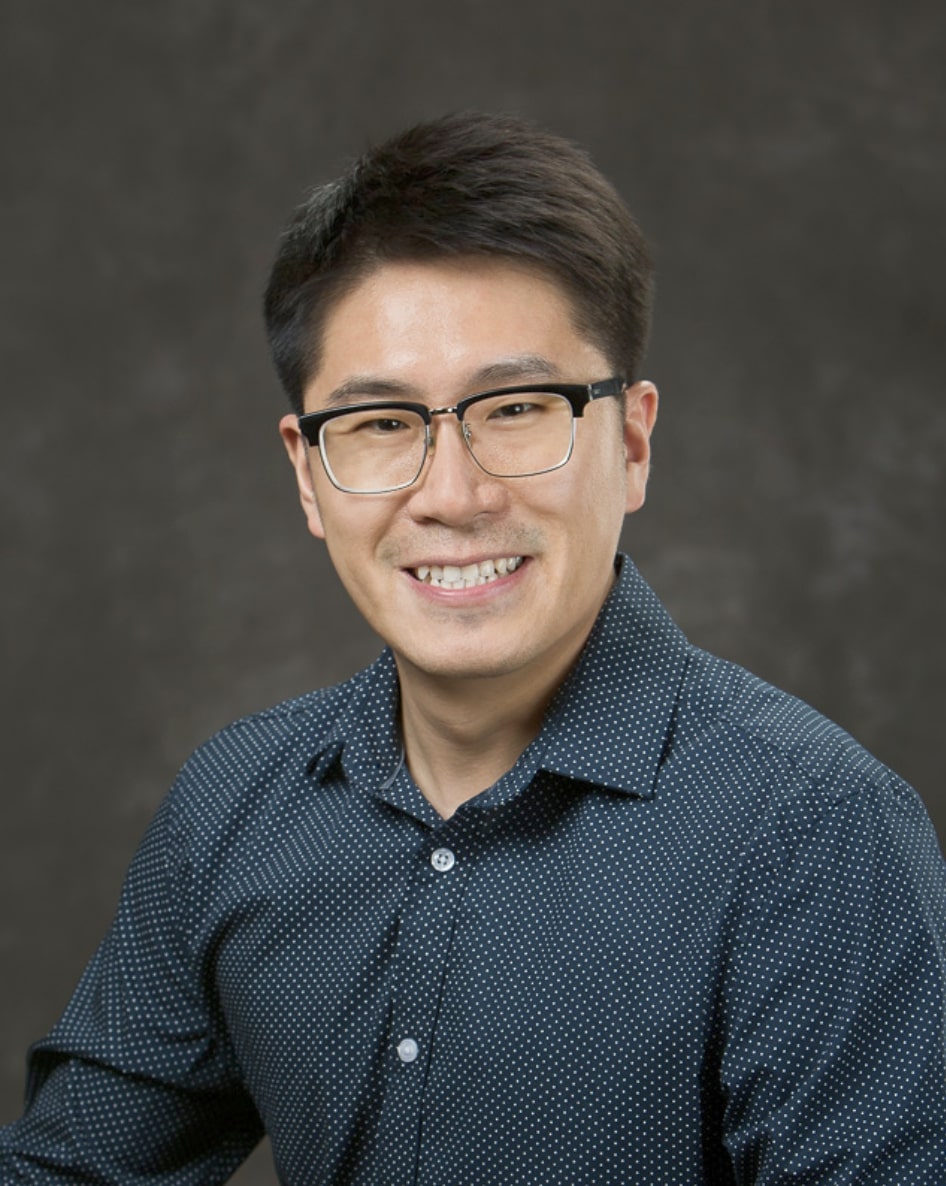
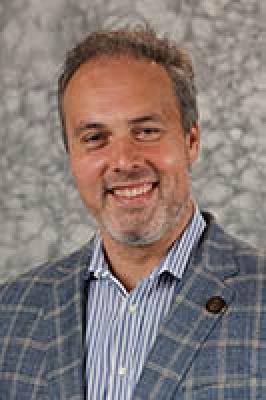
Xiaolong Liu is an Assistant Professor in the Department of Mechanical Engineering at Texas Tech University and a member of the STEM CORE program. He previously held a Research Scientist position at Johns Hopkins University, affiliated with the Department of Mechanical Engineering and the Laboratory of Computational Sensing and Robotics (LCSR). His research spans soft robotics, medical robotics, computer-assisted surgery, and surgical innovation. Grants: National Science Foundation (NSF), National Institute of Health (NIH), American Heart Association (AHA), Maryland Technology Development Corporation (TEDCO) Research Areas: Soft robotics, medical devices, surgical automation, and robotics He has published over 40 peer-reviewed papers in IEEE, ASME, and BMES journals and conferences, and his work has been recognized with awards such as the Maryland Innovation Initiative Award and Best Paper Runner-up Award in Robotics. Dr. Liu has also contributed to NSF panels, conference committees, and editorial boards in robotics and automation.
Professor David Ackerley (Victoria University of Wellington) is a leading microbiologist and enzyme engineer specializing in directed evolution of bacterial enzymes for biotechnological applications. As Biotechnology Programme Director since 2006, he lectures in foundational courses like BTEC101 and BTEC201. Academic rank: Professor of Biotechnology Institutional affiliation: Victoria University of Wellington Research focus areas: Microbial Biotechnology, Drug Discovery, Synthetic Biology His research employs Darwinian evolutionary principles to engineer enzymes with enhanced activities, particularly targeting non-ribosomal peptide synthetases and nitroreductases for antibiotic development and cancer therapy. Recent work explores metagenomic domain substitution in pyoverdine biosynthesis and Purpuramine R from marine sponges. Key publications demonstrate innovations in metagenomic library construction , CRISPR screening for regeneration genes, and structural characterization of engineered enzymes. His team has developed NTR 2.0 , a high-efficacy nitroreductase for targeted cell ablation. Current research projects include: Clean solutions from dirty genes: Plastic-degrading enzyme discovery Engineering enzymes for CAR T-cell-chemotherapy synergy Repurposing niclosamide against Gram-negative superbugs Grants from the Health Research Council of New Zealand, Royal Society of New Zealand, and Cancer Society of NZ support his work. Collaborations span biomedical research, synthetic biology, and environmental applications.
Guojun Chen is an Assistant Professor at the Department of Biomedical Engineering and a member of the Rosalind & Morris Goodman Cancer Institute (GCI) at McGill University . His research focuses on engineering intelligent biomaterials for precision medicine , with emphasis on non-viral genome editing , cold atmospheric plasma (CAP) therapy , and biomaterials-mediated immunotherapy . The lab operates in a multidisciplinary environment , integrating principles from materials science , chemistry , biology , and health sciences . Education : Ph.D. from University of Wisconsin-Madison (2017), Postdoc at UCLA (2020) Research Themes : Genome Editing Delivery : Designing non-viral vectors for efficient CRISPR/Cas9 delivery in vivo. CAP-mediated Immunotherapy : Developing portable cold plasma devices to synergize with immune checkpoint blockade and study CAP’s immunological mechanisms. Biomaterials-based Immunotherapy : Reprogramming tumor microenvironments using bioresponsive materials to enhance immune responses. Publication Trends : Recent work spans responsive nanomaterials , genomic editing systems , and plasma oncology , with a focus on cancer immunotherapy , diabetes diagnostics , and bioinspired medical devices . Scientific Awards : Canada Research Chair (2024, 2025) McGill's President's Prize for Emerging Researchers (2025) FRQS Chercheurs-boursiers (2022) Chinese Association for Biomaterials Young Investigator Award (2022) NSERC Discovery Grant (2021) Advising & Grants : Supervises 14 current graduate and undergraduate students. Secured $5M+ in funding from CIHR , NSERC , CCS , and CFI , including multi-institutional collaborations with Dr. Morag Park , Dr. Réjean Lapointe , and Dr. Ian Watson .
Benedikt Günther is a research scientist at the Technical University of Munich (TUM) working within the Chair of Biomedical Physics led by Prof. Dr. Franz Pfeiffer. His research focuses on the Munich Compact Light Source (MuCLS), a laboratory-scale inverse Compton X-ray source that provides synchrotron-like radiation for biomedical applications. Günther plays a key role in developing, optimizing, and characterizing this innovative technology, contributing to both its fundamental physics and practical medical applications. His primary research interests center around X-ray physics and imaging techniques, particularly laser enhancement cavities for inverse Compton X-ray sources, X-ray microscopy, dynamic phase-contrast imaging, and X-ray spectroscopy. Günther's work bridges fundamental physics with practical medical applications, developing instrumentation that brings synchrotron-quality imaging to conventional laboratory settings. His research has significant implications for improving medical diagnostics while making advanced imaging techniques more accessible. Analysis of Günther's publication record reveals a consistent focus on advancing compact X-ray source technology and its applications. His work demonstrates expertise in both theoretical modeling and experimental implementation, with publications spanning instrument development, imaging techniques, and specific medical applications. The research shows progression from fundamental source characterization to increasingly sophisticated biomedical applications, particularly in breast imaging, dental diagnostics, and materials science. 2019 Best Poster Award at the combined meeting of the 68th Denver X-ray Conference (DXC) & 25th International Congress on X-ray Optics and Microanalysis (ICXOM) for 'Full-Field Structured Illumination Super-Resolution X-ray Transmission Microscopy' Günther regularly presents his work at major international conferences including the International Particle Accelerator Conference, High-Brightness Sources and Light-driven Interactions Congress, and specialized X-ray imaging meetings. His research is conducted within the Munich Compact Light Source facility, a collaborative project involving physicists, engineers, and medical researchers working to develop laboratory-scale synchrotron technology for widespread biomedical use.
Nezihe Merve Gürel is an Assistant Professor in Computer Science at Delft University of Technology (TU Delft), affiliated with the Pattern Recognition & Bioinformatics Group within the Intelligent Systems Department of the Faculty of Electrical Engineering, Mathematics and Computer Science. Her research focuses on developing robust, reliable, and efficient machine learning methods with enhanced reasoning capabilities, bridging theoretical rigor and practical applications. She emphasizes data-centric approaches to improve ML systems. Education: PhD in Computer Science from ETH Zurich, MSc from EPFL (Switzerland). Research Interests: ML robustness, reliability, reasoning, data-centric ML, federated learning, and explainable AI. Her recent work includes certified robustness for retrieval-augmented models and time-efficient learning algorithms. She has contributed to the Journal of Data-centric Machine Learning Research as an executive editor and served as a reviewer for top ML conferences (NeurIPS, ICML, ICLR). She previously held roles at IBM Research, Stanford University's Human-Centered AI Lab, and Westlake Institute for Advanced Study. Her awards include the Generation Google Scholarship and Cisco Research Funding . Scientific Awards : Generation Google Scholarship (2021) Cisco Research Center University Funding Labs & Teams : She leads research in the Pattern Recognition Laboratory at TU Delft and collaborates with international institutions like Stanford and Westlake Institute for Advanced Study.
Dawn Martin-Hill , Professor Emeritus in Indigenous Studies at McMaster University , is Canada’s first Indigenous cultural anthropologist and the founder of McMaster’s Indigenous Studies Program (1992). She also holds the role of Academic Co-Chair of the Indigenous Education Council and has served as Director of Indigenous Studies since 1998. A Mohawk scholar residing at Six Nations of the Grand River, she integrates Indigenous knowledge systems with Western science to address critical issues of water security, health, and sovereignty. Education & Training: PhD, Cultural Anthropology Research Interests: Dr. Martin-Hill’s work centres on traditional ecological knowledge (TEK) , community-driven water security , and Indigenous methodologies . Her flagship program Ohneganos co-creates bilingual tools—apps, VR, water sensors, Indigenous mapping, films, and podcasts—to empower First Nations in monitoring and managing water resources. She explores intersections of climate change, maternal health, mental health, and Indigenous governance . Research Impact: Spanning hydrology, medical anthropology, and digital health, her recent publications address urgent issues such as water insecurity’s impact on maternal mental health , climate-driven hydrological extremes , and digital mental-health tools for Indigenous youth . Collectively, her work advances decolonizing methodologies and supports United Nations Sustainable Development Goals. Scientific Awards & Honours: Inaugural Fulbright Indigenous Canada–U.S. Scholar Award Inaugural Chair, CIHR-IPH Secretariat on Traditional Medicine in Health Research Outstanding Teaching Award, Aboriginal Consortium 2022 University of Oklahoma International Water Prize Oklahoma Universities Water Technologies Award Princeton Book Award for forthcoming Ohneganos volume Funding & Training: Principal Investigator on four Global Water Futures grants that have supported over 30 graduate students and nine Indigenous Studies undergraduates , plus 45 secondary First Nations students receiving McMaster certificates. She has served as co-investigator on CIHR-IPH ARHNets Center funding 80+ First Nations, Métis, and Inuit graduate students . Leadership & Service: Member of the UNESCO Hydrology Committee for Canada , board member of CIHR Institute of Indigenous Peoples’ Health and CIHR Anti-Racism Committee , former Chair of the CIHR College of Reviewers. She spearheaded the McPherson Chair in Indigenous Studies and secured multiple Indigenous student scholarships and bursaries.
Scott McCabe is a Professor of Marketing at Birmingham Business School, University of Birmingham. He earned his PhD from the University of Derby in 2001, focusing on visitor motivations in the Peak District National Park, and holds an MA in Leisure and Tourism Studies from the University of North London (1993) and an HND in Leisure Studies from the University of Salford (1991). Current co-editor in Chief of the Annals of Tourism Research Editorial board member of Tourism Management Elected fellow of the International Academy for the Study of Tourism (2019+) His research spans social tourism , responsible tourism , tourist emotions , and socio-linguistic methodology , with significant work on wellbeing outcomes from supported holidays for disadvantaged families. He has contributed to Annals of Tourism Research , Journal of Travel Research , and other top-tier journals. Recent publications address topics like qualitative research sampling , tourism theory , dark tourism motivations , and smart destination engagement . His work combines tourism policy critique , consumer behavior analysis , and methodological innovation . Scientific awards include fellowships and leadership roles in international tourism research committees. He has served as VP for the International Sociological Association's Tourism Research Committee and co-chairs the Academy of Marketing's Tourism Marketing SIG.
Sunil K. Agrawal is a Professor of Mechanical Engineering and Professor of Rehabilitation and Regenerative Medicine at Columbia University, where he directs a highly interdisciplinary rehabilitation robotics program bridging the School of Engineering and Applied Sciences and the College of Physicians and Surgeons. His research focuses on developing robotic systems to restore and enhance human mobility for individuals with neurological disorders, pediatric conditions, and age-related decline. Education: PhD in Mechanical Engineering, Stanford University, 1990 MS in Mechanical Engineering, Ohio State University, 1986 BS in Mechanical Engineering, Indian Institute of Technology (IIT) Kanpur, 1984 Research Focus: Dr. Agrawal’s work centers on rehabilitation robotics , where he integrates dynamic systems, control theory, and optimization to create robotic devices that assist in gait training, balance improvement, and functional movement restoration. His studies span stroke, Parkinson’s disease, cerebral palsy, vestibular disorders, and spinal cord injury, using devices like the Tethered Pelvic Assist Device (TPAD) and robotic exoskeletons. Scientific Honors: Machine Design Award, ASME (2016) Robotics and Mechanisms Award, ASME (2016) Fellow, American Institute of Medical and Biological Engineering (AIMBE) (2016) Fellow, American Society of Mechanical Engineers (ASME) (2004) Alexander von Humboldt Foundation U.S. Senior Scientist Award (2007) Friedrich Wilhelm Bessel Research Award (2002) Presidential Faculty Fellow Award, The White House (1994) Research Collaborations & Funding: Dr. Agrawal collaborates with faculty across Neurology, Rehabilitation Medicine, Pediatric Orthopedics, Otolaryngology, Geriatrics, and Psychiatry. His work is supported by the National Science Foundation, National Institutes of Health, and the Spinal Cord Injury Research Board. Laboratory & Outreach: He leads an active research group focused on translational robotic systems, with ongoing clinical trials for stroke, Parkinson’s, cerebral palsy, and elderly fall prevention. His lab develops novel robotic braces, exoskeletons, and VR-integrated training platforms.
Rafael Perera is a Professor of Medical Statistics at the Nuffield Department of Primary Care Health Sciences (NDPCHS), University of Oxford, where he has been since 2002. He holds leadership roles as Director of the Statistics Group and Director of Graduate Studies , overseeing academic leadership and methodological research. He is also a Statistical Editor of BMJ and BMJ Medicine , and a fellow at St Hugh’s College Oxford . Education : DPhil, MSc, MA Rafael’s research focuses on monitoring for managing long-term conditions (e.g., Type 2 diabetes, hypertension) and complex multimorbidity phenotypes . His work includes impact of extreme temperatures on health , meta-analysis methods , and methodology for infectious diseases . He leads large methodological groups and has been a PI on NIHR-funded infrastructure programs (BRC, ARC, MIC). Recent publications highlight his expertise in clinical prediction models , digital health interventions , and diagnostic test evaluation . His grants span applied research , global health transformation , and ageing research . Scientific Awards : National and international recognition for methodology development in clinical trials (NIHR Progress Report 2008/09) Rafael supervises DPhil and MSc students and leads a fully accredited Clinical Trials Unit . His editorial and policy influence extends to healthcare policy panels and the Centre for Evidence-Based Medicine as Director of Research Methodologies.
Omer T Inan is the Regents Entrepreneur Endowed Chair and Assistant Professor at the School of Electrical and Computer Engineering (ECE) at Georgia Institute of Technology. His work bridges biomedical engineering and wearable technology, focusing on non-invasive physiological monitoring for chronic disease management. He holds a Ph.D. in Electrical Engineering from Stanford University (2009) and previously worked at Countryman Associates (2007-2013) as Chief Engineer, developing professional audio systems. Education: B.S., M.S., Ph.D. in Electrical Engineering, Stanford University (2004-2009) His research interests include medical devices for home-based cardiovascular monitoring, musculoskeletal sound analysis, and neuromodulation of stress responses. He has pioneered technologies for heart failure patients, PTSD treatment, and osteoarthritis diagnostics. Recent publications highlight innovations in AI-driven cardiac parameter estimation, motion artifact removal in seismocardiograms, and multimodal stress tracking via wearables. His work spans biomedical signal processing, clinical translation, and portable diagnostic systems. Scientific Awards 2024 IEEE Fellow 2023 IEEE Distinguished Lecturer 2023 American College of Cardiology Fellow 2022 American Institute for Medical and Biological Engineering Fellow 2021 Academy Award for Technical Achievement (The Oscars) 2018 ONR Young Investigator Award 2018 NSF CAREER Award At Georgia Tech, Inan leads the Inan Research Lab, which develops technologies for physiological monitoring and modulation. Projects include musculoskeletal sound analysis for joint health, non-invasive cardiovascular sensing, and neuromodulation to treat PTSD via vagal nerve stimulation.
Sebastiano Battiato is a Full Professor of Computer Science at the University of Catania's Department of Mathematics and Computer Science. He serves as Scientific Coordinator of the PhD Program in Computer Science and Deputy Rector for Strategic Planning and Information Systems at the University of Catania. As Director and Co-Founder of the International Computer Vision Summer School (ICVSS), he has significantly contributed to computer vision education globally. Education: Bachelor's degree in Computer Science (summa cum laude), University of Catania, 1995 Ph.D. in Computer Science and Applied Mathematics, University of Naples, 1999 Professor Battiato's research primarily focuses on Computer Vision, Imaging Technology, and Multimedia Forensics . His work spans from developing ISP algorithms for embedded devices to creating advanced techniques for image enhancement, coding, and forensic analysis. He has pioneered research in social media forensics, developing methods to determine if images have been processed through specific social platforms. His research has practical applications in assistive technologies, retail, digital marketing, and medical fields. His scholarly output shows a consistent focus on digital forensics and image processing, with an increasing emphasis on social media forensics in recent years. The research trajectory demonstrates progression from foundational image processing techniques to sophisticated forensic applications capable of addressing modern challenges like deepfakes and social media manipulation. Scientific Awards: 2017 PAMI Mark Everingham Prize for the series of annual ICVSS schools 2011 Best Associate Editor Award of IEEE Transactions on Circuits and Systems for Video Technology Professor Battiato has coordinated IPLab's participation in numerous large-scale research projects funded by national and international bodies as well as private companies. He has served as principal investigator on many international and national research projects, demonstrating strong leadership in securing research funding. His editorial work includes serving as associate editor for the SPIE Journal of Electronic Imaging and IET Image Processing Journal, and membership on several other editorial boards. As Director of IPLab research lab (http://iplab.dmi.unict.it), Professor Battiato leads a team focused on computer vision and digital forensics. The lab collaborates extensively with law enforcement agencies through iCTLAB, a university spinoff he founded that provides digital forensic services. IPLab is recognized for its contributions to image/video forensics, with techniques implemented in commercial forensic software like AMPED Authenticate.
Said Hamdioui serves as a full Professor in the Department of Computer Engineering within the Faculty of Electrical Engineering, Mathematics and Computer Science at Delft University of Technology. His research focuses on cutting-edge hardware architectures for neuromorphic computing and energy-efficient AI acceleration, with particular emphasis on memristor-based systems, emerging memory technologies, and fault-tolerant designs for edge applications. His research interests span Neuromorphic Computing , Memristor-Based Architectures , and Energy-Efficient AI Hardware , addressing critical challenges in hardware security, computation-in-memory, and reliable edge AI deployment. Recent work demonstrates significant advancements in RRAM/FeFET testing methodologies, spiking neural network implementations, and spin wave computing alternatives to traditional CMOS. His publications reveal strong trends toward real-world deployment of brain-inspired hardware with practical constraints like power efficiency, testability, and security. Award highlights include: DATE'20 Best Paper Award DFT'21 Outstanding Student Paper ETS 2021 Best Paper Award LATS 2018 & 2022 Best Paper Awards Professor Hamdioui actively contributes to the research community through editorial roles at IEEE Transactions on VLSI Systems , IEEE Design & Test , and Journal of Electronic Testing from 2017-2018. His leadership in multi-partner projects like CONVOLVE and NEUROKIT2E demonstrates strong industry-academia collaboration for edge AI solutions. Current work shows increasing focus on practical deployment challenges including in-field fault monitoring, security vulnerabilities in neuromorphic systems, and realistic brain simulation frameworks.
Anne-Sophie Chauvin is a Senior Lecturer and Researcher at École Polytechnique Fédérale de Lausanne (EPFL), School of Basic Sciences, within the Institute of Chemical Sciences and Engineering and the Supramolecular Chemistry Laboratory. She actively engages in supramolecular and inorganic chemistry, focusing on f-element (lanthanides and actinides) coordination polymers and luminescent bioprobes for biological and technological applications, including invisible inks and dye-sensitized solar cells. PhD in Bioinorganic Chemistry from University Paris V-René Descartes (thesis on Nitrile Hydratase mimetics) Postdoctoral work at University of Geneva on chiral alcohol configuration analysis Habilitation à Diriger des Recherches (HDR) from University René Descartes (2006) Her research spans Lanthanide and Actinide Chemistry , Luminescence , Coordination Polymers , Metallacages , and Photovoltaic Materials . Recent publications emphasize catalytic spiro stereocenter formation, actinide coordination polymers, and photoredox-enabled biomolecule functionalization. She has supervised PhD students including Andrei Andreichenko , Julien Andrès , Steve Comby , and Aurélien Willauer . Recognitions include Fellowship of the Royal Society of Chemistry (FRSC) and membership in the Swiss Chemical Society (SCS). Current roles include teaching General and Analytical Chemistry to first-year Pharmacy and Biology students at the University of Lausanne (UNIL), overseeing practical sessions, and serving on the EPFL School of Basic Sciences Faculty Council.
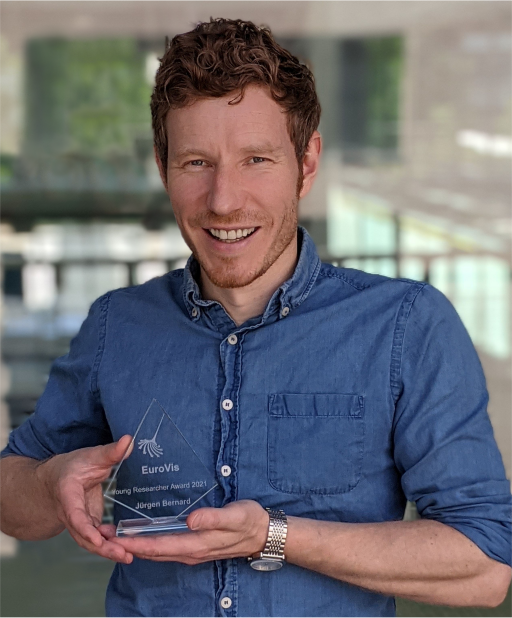
Jürgen Bernard is an Assistant Professor of Computer Science at the University of Zurich , leading the Interactive Visual Data Analysis (IVDA) Group . He is associated with the Digital Society Initiative (DSI) and holds a PhD in Computer Science from Technische Universität Darmstadt (2015) with a focus on time-oriented data analysis. His academic journey includes postdoctoral research at TU Darmstadt and the University of British Columbia. Education : Diploma in Computer Science (2009, TU Darmstadt) PhD in Computer Science (2015, TU Darmstadt) Research Interests : Dr. Bernard specializes in interactive visual data analysis , explainable machine learning , and human-centered AI . His work explores time series analysis , multivariate data exploration , and user-driven preference elicitation . He develops visual analytics systems for domains like healthcare , digital humanities , and industrial applications , with a particular focus on responsible AI and transparency in algorithmic systems . Research Trends : His publications emphasize interactive machine learning workflows , visual analytics for healthcare , and time-stamped event sequence analysis . Recent work includes LLM validation frameworks (Human-Data-Model Interaction Canvas) and personalized ranking systems funded by the Swiss National Science Foundation. He integrates temporal data with multivariate analysis across applications from medical manufacturing to chronic disease management . Scientific Recognition : EuroGraphics Young Researcher Award (2022) EuroVis Young Researcher Award (2021) Best Paper Awards at IEEE VIS (2021), EuroVA (2021, 2025) Dirk Bartz Prize (2017), Hugo-Geiger Preis (2016) Teaching & Grants : He teaches Interactive Visual Data Analysis (6 ECTS), Digital Health Seminars , and People-Oriented Computing . Currently leads a SNF Grant on Personalized Visual Analytics for multi-criteria decision support (2024-2028) with ETH Zurich's Prof. M. El-Assady.
Dr. Suman Adhikari is a Conjoint Lecturer at the School of Clinical Medicine , University of New South Wales (UNSW), focusing on Infectious Diseases , Antimicrobial Stewardship , and Clinical Pharmacology . He has contributed to advancements in antibiotic management, sepsis diagnostics, and e-learning tools for healthcare professionals. University: University of New South Wales School: School of Clinical Medicine Email: suman.adhikari@unsw.edu.au Research Interests: Dr. Adhikari’s work spans antimicrobial stewardship in tertiary care, therapeutic drug monitoring of antibiotics like linezolid, and educational technology for vancomycin use. He also explores pharmacokinetics in parasitic infections and contributes to sepsis pathway optimization . Publication Trends: His recent articles (2017–2023) highlight antibiotic safety , digital education , and infection control . Notable studies include multimodal stewardship in ICU, qSOFA criteria validation, and e-learning tool efficacy for vancomycin training. Contact: Phone: 0411817996 | Location: Gray Street, Kogarah 2217 NSW