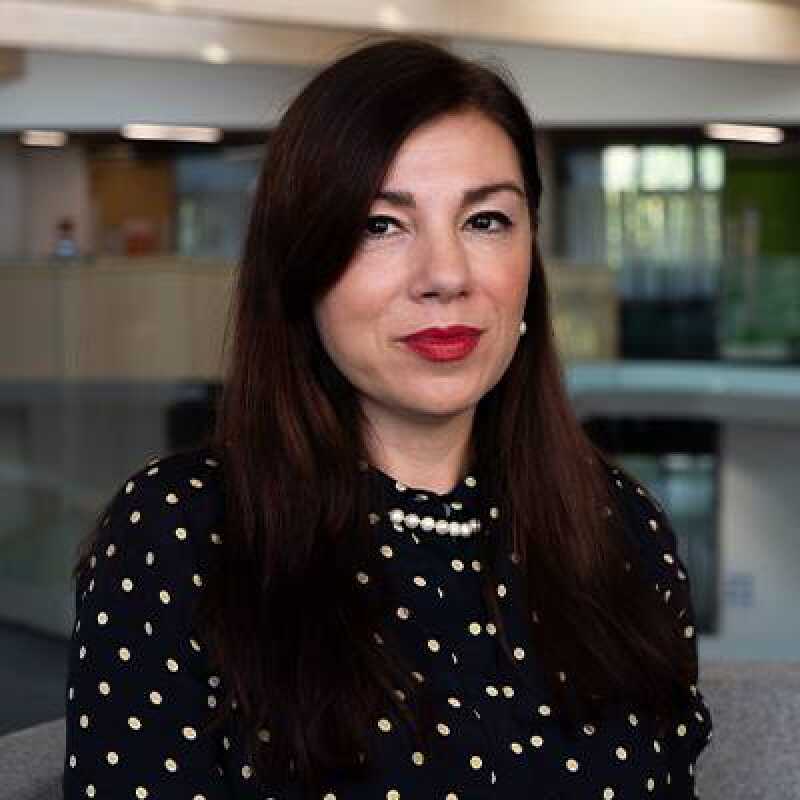
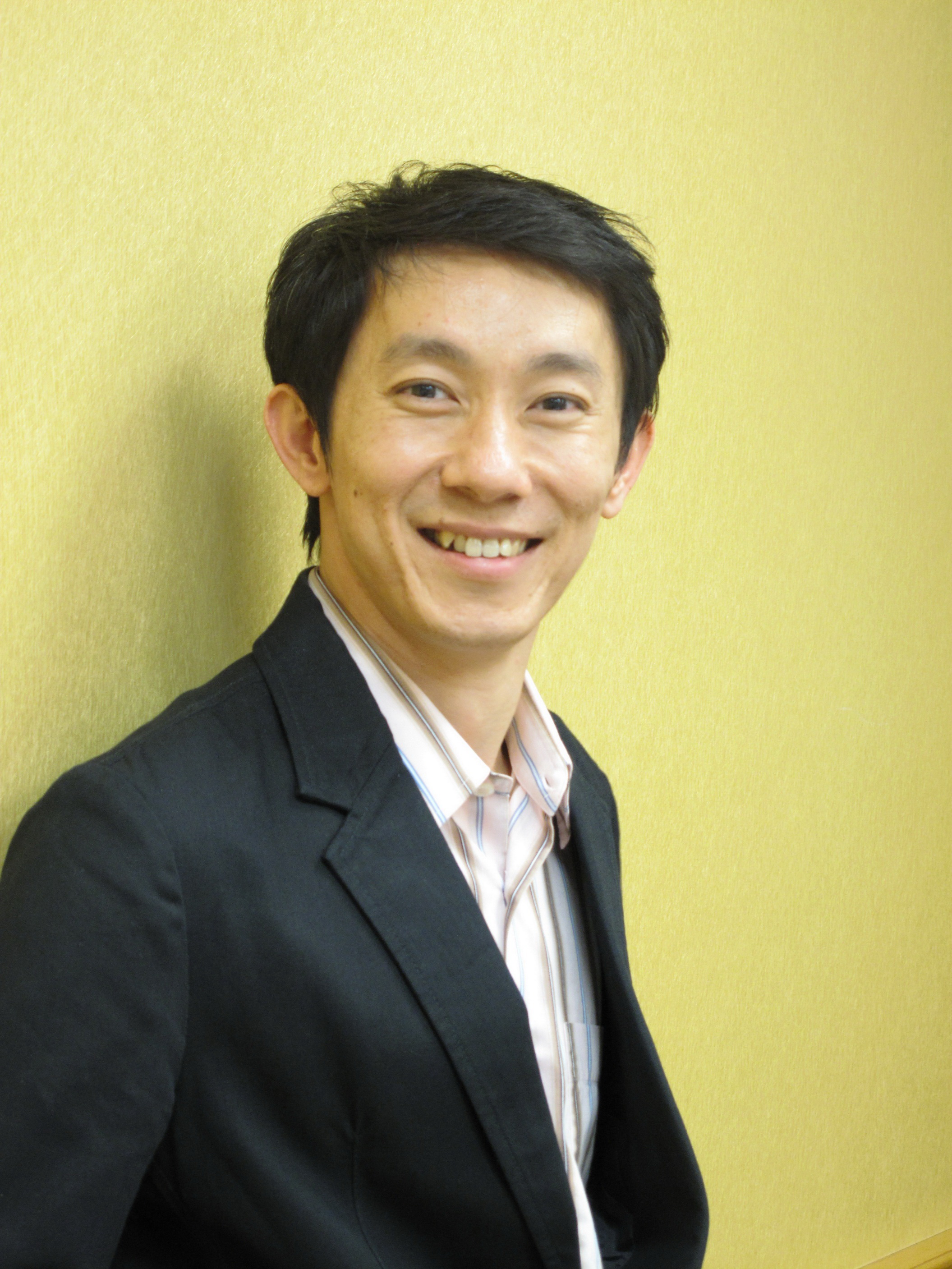
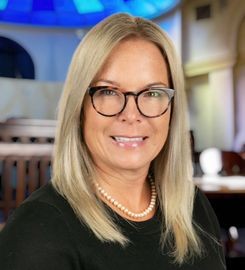
Professor Kathy Kotiadis is Professor of Operational Research and Co-Director of the Centre for Advanced Diagnostic Development and Application (CADDA) at Kent Business School. Co-developed PartiSim framework for participatory simulation. Research expertise in simulation methodology (discrete-event/hybrid), conceptual modeling, and stakeholder engagement approaches applied to healthcare, transport, and energy sectors. Recipient of K.D. Tocher Medal (2007-08) and Daphne Jackson Fellowship (2014). Secured funding from EPSRC, Innovate UK, and Research England. Serves as Co-Editor of Health Systems and Editorial Board member for Journal of Simulation. Supervised 7 PhD students to completion in simulation methodologies and healthcare applications. Current projects include HS1 Ltd (2024) and North Kent Industrial Cluster (2025).
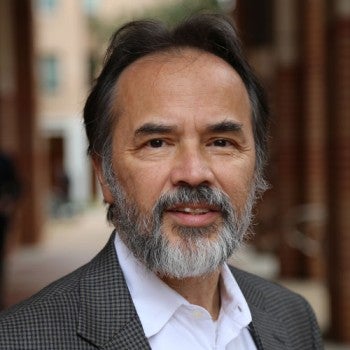
Rudy Guerra is a Professor and Chair of the Department of Statistics at Rice University, where he has been since 2000. His research spans biomedical applications of statistics, including bioinformatics, statistical genetics, and medical imaging, alongside sociological research in education and Mexican migration. He holds academic leadership roles, including Director of the Data Science Minor and member of the BRIDGE and Doerr Institute steering committees. Guerra earned his Ph.D. in Statistics from UC Berkeley, M.A. in Mathematics from UC Berkeley, and B.S. in Applied Mathematics from UT San Antonio. Education: Ph.D., Statistics, UC Berkeley (1992) M.A., Mathematics, UC Berkeley (1987) B.S., Applied Mathematics, UT San Antonio (1984) Key Roles: Department Chair, Statistics (2019–present) Associate Chair, Statistics (2016–2019) Former Jones College Magister (Residential College Leader, 2005–2011) Research Interests: Dr. Guerra’s work integrates statistical methods with biomedical and social science challenges. His biomedical focus includes cancer genomics (e.g., osteosarcoma metastasis, biomarker discovery), medical imaging (e.g., CT ventilation analysis), and bioinformatics. In social sciences, he examines educational inequities and Mexican migration impacts on health. His recent projects include collaborations with Texas Medical Center institutions and sociologists at Rice. Articles Trends: His publications emphasize interdisciplinary applications, combining statistical rigor with domain-specific insights. Recent work spans oncology, public health, and computational biology, reflecting a commitment to bridging theory and practical medical/sociological challenges. Awards & Roles: Panel Member, Ford Foundation Fellowship (2016–present) Associate Editor, BMC Genetics (2014–present) Former Residential College Master of Jones College (2005–2011) Advising & Grants: Guerra advises students on statistical research and curricula. He has led initiatives like the Keck Center for Quantitative Biomedical Sciences Training and co-founded the Empowering Leadership Alliance (ELA) to support underrepresented minorities in STEM. His grants include funding for bioinformatics consortia and educational outreach programs. Labs & Teams: Active in the Gulf Coast Consortia for Bioinformatics and collaborates with multidisciplinary teams at MD Anderson, Baylor College of Medicine, and UT Health Science Center.
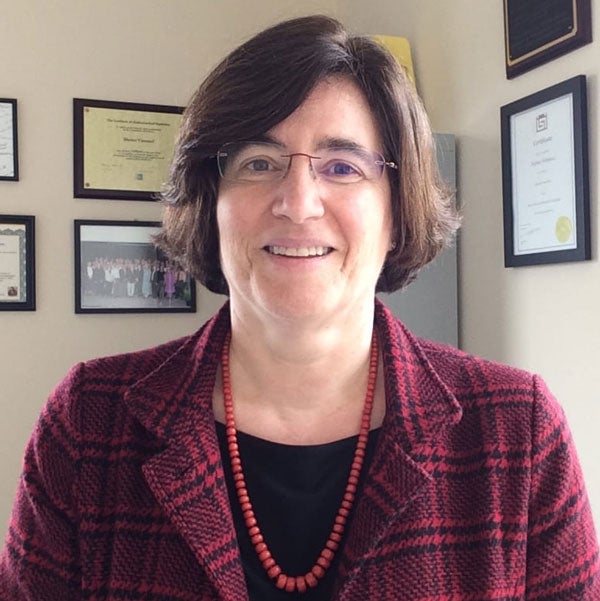
Marina Vannucci is the Noah Harding Professor of Statistics at Rice University, with an adjunct appointment at the UT MD Anderson Cancer Center. She holds a Ph.D. and Laurea in Mathematics from the University of Florence, Italy. Her research focuses on Bayesian statistical methods for complex problems in genomics, neuroimaging, and engineering. She has supervised 31 Ph.D. students and 13 postdocs, published over 185 papers, and received prestigious awards including the Mitchell Prize, Zellner Medal, and Don Owen Award. She has served as Editor-in-Chief of Bayesian Analysis and co-Editor of the Journal of the American Statistical Association. Education: Ph.D. in Statistics (University of Florence, 1996), Laurea in Mathematics (University of Florence, 1992). Research Interests: Bayesian statistics, variable selection, graphical models, statistical computing, applications in genomics, neuroscience, and engineering. Awards: Includes Fellowships from ASA, IMS, AAAS, ISBA, and the 2020 Zellner Medal. Recent recognitions include the 2025 Don Owen Award for excellence in research and contributions to the statistical community. Grants/Advising: Over 30 Ph.D. students and 13 postdocs trained. Key roles include Department Chair (2014–2019) and President of the International Society for Bayesian Analysis (2018). Labs/Teams: Affiliated with Rice Neuroengineering, Ken Kennedy Institute, and the W.M. Keck Center for Interdisciplinary Bioscience Research.
Dr. Kanika Goel is a Lecturer in the School of Information Systems at Queensland University of Technology (QUT), specializing in Business Process Management (BPM), Data Governance, and Process Analytics. She holds a PhD from QUT and has over 9 years of teaching experience, coordinating programs such as BIT Honours (IN10) and Masters of Philosophy (IN80). Her research focuses on process-oriented data analytics, data quality, and process mining, with industry collaborations spanning health, retail, and asset management sectors. She is a Lean Six Sigma Green Belt certified trainer and a Fellow of the Higher Education Academy (FHEA). Dr. Goel has led several industry-funded projects, emphasizing applied research in data governance, process mining, and process improvement. Notably, she received the Vice-Chancellor's Award for Excellence (2019) for innovative BPM integration in research management systems. Her work bridges academic research and real-world applications, contributing to journals like Business and Information Systems Engineering and IEEE Access . She teaches courses on Business Process Technologies, Modern Data Management, and BPM units in QUT's continuing professional education programs. Her articles explore topics like data imperfections in healthcare systems, process standardization strategies, and privacy risks in NoSQL databases. She advocates for digital literacy and has published on initiatives to build tech-savvy communities. Dr. Goel is also involved in supervising research topics such as prescriptive process analytics and process-data governance patterns.
Subodha Kumar is the Paul R. Anderson Distinguished Chair Professor of Statistics, Operations, and Data Science at Temple University’s Fox School of Business. He also serves as Founding Director of the Center for Business Analytics and Disruptive Technologies and holds a secondary appointment in Information Systems. With prior faculty roles at the University of Washington and Texas A&M University, he has been recognized with prestigious awards including the INFORMS ISS Distinguished Fellow Award (2023) and POMS Fellow (2019). His research focuses on artificial intelligence, machine learning, blockchain, fintech, and cybersecurity, with over 240 publications in top journals and two books. He actively contributes to academic leadership as Deputy Editor of the Production and Operations Management Journal and Founding Executive Editor of Management and Business Review. Research Interests: Artificial Intelligence Machine Learning Blockchain Fintech Healthcare Analytics Social Media Analytics Supply Chain Analytics Awards: INFORMS ISS Distinguished Fellow Award (2023) POMS Fellow (2019) Changjiang Scholars Chair Professorship (China) Namesake Award: The Subodha Kumar and Geoffrey G. Parker Award for Digital Transformation Research Grants & Advising: Secured NIH grants, advises PhD students in Operations & Supply Chain Management, and oversees the Center for Business Analytics. His editorial roles include multiple top journals and conference leadership (e.g., POMS Annual Conference 2018). Labs/Teams: Leads the Center for Business Analytics and Disruptive Technologies, fostering innovation in analytics and tech-driven business strategies.
Agnieszka Roginska is a Professor of Music Technology at the Steinhardt School, New York University, specializing in immersive audio, spatial sound, and auditory displays. Her work integrates acoustic science with virtual reality and medical applications, including postural stability studies for vestibular rehabilitation. She holds leadership roles as AES President-Elect and co-edited the authoritative book 'Immersive Sound'. Education: B.A. in Piano Performance and Computer Applications in Music (McGill University, 1996); M.M. in Music Technology (NYU, 1998); Ph.D. in Music Technology (Northwestern University, 2004). Research focuses on 3D audio technologies, auditory displays for virtual environments, and sensory integration studies. She leads NYU's Music and Audio Research Lab (MARL) and advises the Society for Women in TeCHnology (SWiTCH) at NYU. Awards include AES Fellowship and leadership in international audio engineering societies. Recent publications emphasize audio's role in postural control, distributed music performance frameworks (Holodeck), and VR sound design. Her work bridges technical innovation with artistic applications, including collaborative music systems in mixed reality.
Silvia Jiménez Fernández is an Associate Professor in the Department of Signal Theory and Communications at Universidad Autónoma de Madrid. Her research focuses on optimization algorithms, smart grids, renewable energy systems, telemedicine, and machine learning applications. She holds a Ph.D. from Universidad Politécnica de Madrid (2009), supervised by Dr. Francisco del Pozo Guerrero and Dr. Paula de Toledo Heras. Her work integrates interdisciplinary approaches, such as combining evolutionary algorithms with engineering challenges in energy systems and healthcare. Key contributions include advancements in coral reefs optimization algorithms for energy management, machine learning for battery health estimation, and telemedicine systems for chronic disease monitoring. Recent research trends emphasize hybrid learning models in education, multi-objective optimization in renewable energy systems, and risk analysis in smart grids with electric vehicles. She is affiliated with the GHEODE Research Group (Modern Heuristics and Network Design).
Joan Nogue i Font is a Professor at the Department of Geography of the University of Girona , and founder-director of the Cátedra del Bosque since 2022. He served as Dean of the Faculty of Arts (1996-2004) and former director of the Catalan Landscape Observatory (2005-2017). A specialist in Landscape and Human Geography , he has authored and edited numerous influential works, including Nacionalismo y territorio (1998) and Geopolítica, identidad y globalización (2001). Education: PhD in Geography (Universitat Autònoma de Barcelona), studies at University of Wisconsin-Madison under Yi-Fu Tuan Advisory roles: Member of Advisory Council for Sustainable Development (CADS), full member of Institute of Catalan Studies (IEC) Editorial work: Co-editor of Documents d'Anàlisi Geogràfica , co-director of Paisaje y Teoría book series International experience: Adjunct Professor at Western University (Canada), visiting scholar at Harvard University (2022) His research integrates Landscape Analysis with Societal and Environmental Studies , focusing on territorial identity, sustainability, and the interplay between culture and geography. He has pioneered methodologies for landscape cataloging and participatory management, emphasizing intangible values and citizen engagement. His work bridges European landscape policies with Catalan rural transformations. Recent publications like The other rural world (2022) and Paesaggio, territorio, società civile (2017) reflect his focus on civil society and contemporary spatial dynamics. His scientific awards include: 2009 Rei Jaume I Award for Urbanism, Landscape, and Sustainability 2010 Joan Fuster Essay Award 2022 Sylvester Baxter Lecturer at Harvard University He has served on editorial boards for journals such as Bolletino della Società Geografia Italiana and Punto Sur , and collaborates with La Vanguardia and Ara media supplements.
TEERAWATTANANON Yot is a medical doctor and health economist with significant contributions to global health policy. He currently serves as a Visiting Professor at the Saw Swee Hock School of Public Health , National University of Singapore, while maintaining primary affiliation with Thailand's Health Intervention and Technology Assessment Program (HITAP) . He is also a Non-resident Fellow at the Center for Global Development (2020-present) and co-founder of both HTAsiaLink and the international Decision Support Initiative (iDSI) . Research Focus: His work centers on health economic evaluation , health technology assessment (HTA) , and health systems research , with particular emphasis on equitable resource allocation, universal health coverage, and vaccine policy optimization. He has led capacity-building initiatives in HTA across Bhutan, China, Ethiopia, Ghana, India, Indonesia, Japan, Kenya, Korea, Laos, Myanmar, Nepal, the Philippines, South Africa, Sri Lanka, Tanzania, Timor-Leste, and Vietnam. Scientific Awards The Thailand Research Fund’s Outstanding Researcher of the Year (2015) Thailand Ministry of Public Health’s Best Research Award (2008) Best Podium Presentation, Asia-Pacific ISPOR Conference (2006)
Dr. Richard J. Callahan, Jr. is an Associate Professor of Religious Studies at Gonzaga University, where he teaches courses including RELI 193 Sacred Waters (FYS), RELI 254 American Christianities, RELI 356 Native American Religions, RELI 359 Religion and Globalization, RELI 399 Methodology, and RELI 432 Commercial Religion (CIS). Dr. Callahan's educational background includes: Ph.D. in Religious Studies from the University of California, Santa Barbara M.A. in Religious Studies from the University of California, Santa Barbara M.A. in Folklore and Folklife from Western Kentucky University B.A. in Religious Studies and Philosophy from Connecticut College Dr. Callahan's research focuses on the intersections of religion with cultures of work, natural resource extraction, and globalization. His work examines how religious practices engage with material conditions and economic structures, as evidenced in his studies of the Kentucky coal fields and the American whaling industry. He approaches religion as a dynamic, contextualized practice that is deeply intertwined with class formations and material realities, challenging simplistic deprivation theories by demonstrating how religious traditions provide resources for identity, resistance, and adaptation within changing economic landscapes. His methodology emphasizes the 'work' of religion—how religious practices are produced and reworked by people in specific contexts to make meaning of their lived experiences. His recent publications reveal a consistent focus on material religion within industrial contexts, particularly examining religious dimensions of natural resource extraction industries. His scholarship traces how religious meanings and practices are embedded in commodity chains, spatial arrangements, and bodily experiences, demonstrating religion's active role in shaping and being shaped by economic structures. This work moves beyond traditional theological analyses to examine religion as lived practice within specific economic and material conditions. Dr. Callahan's scholarly work has received support from prestigious institutions including: National Endowment for the Humanities Indiana University's Center for Religion and the Human Yale University's Center for the Study of Material and Visual Cultures of Religion Wabash Center for Teaching and Learning in Religion and Theology Center for the Study of Religion and American Culture at Indiana University Indianapolis Missouri Humanities Council University of Missouri Gonzaga University's Digital Humanities Initiative While specific information about student advising is not provided in available materials, Dr. Callahan's research trajectory suggests he mentors students working at the intersections of religion, labor, material culture, and American religious history. His methodological approach emphasizes contextualized, embodied understandings of religion that reveal its complex entanglements with economic structures and class formations, providing students with frameworks to analyze religion as active cultural production rather than merely compensatory or otherworldly phenomena.
Keith Humphreys is a Professor at Stanford University , teaching courses in psychiatry and behavioral sciences. His research focuses on addiction medicine, opioid crisis interventions, and public health policy. He employs interdisciplinary methodologies, including neuroscience and machine learning, to analyze substance use disorders and treatment outcomes. Teaching: PSYC 290 (Teaching in Psychiatry), PSYC 370 (Medical Scholars Research), and others His recent work explores opioid epidemic monitoring via social media, neuromodulation therapies for alcohol use disorder, and policy frameworks for psychedelics and cannabis. Publications span clinical trials, health informatics, and global epidemiology. Key trends in his 15 most recent articles (2023–2025) include: Neuroscience-driven interventions (e.g., theta burst stimulation for addiction) Digital epidemiology (social media analysis for real-time public health insights) Health policy evaluation (opioid regulation, cannabis legalization, overdose mortality) Machine learning applications in predicting treatment outcomes
Dr. Silvia Martínez Martínez is a Researcher in the Department of Philology and Translation at the University of Granada, specializing in German Philology with a PhD completed in 2015. Her academic work centers on accessibility in audiovisual translation, particularly subtitling for the deaf and hard of hearing (SpS), and audio description across multilingual contexts. Her research interests include: Audiovisual Translation Accessibility for Deaf and Hard of Hearing Subtitling for the Deaf Translation Technology German-Spanish Translation Audio Description Terminology Analysis of her 15 most recent publications (2022-2025) reveals dominant trends in AI-driven accessibility solutions, cross-linguistic corpus studies (German/Spanish/English), and innovative pedagogical applications. Key thematic clusters include sound translation in streaming/VOD platforms, gamification in STEM education, vitivinicultural terminology, and cultural adaptation in music translation, demonstrating her interdisciplinary approach spanning translation technology, medical accessibility, and sociological studies. She has received the Premio Francisco Ayala (2012) for her contributions to translation studies, recognizing her work on accessibility frameworks and specialized translation methodologies. Dr. Martínez Martínez actively contributes to educational innovation through projects like DESAM (accessible museum resources) and OPERA (cultural accessibility), while her supervision of PhD candidates and development of didactic tools for audio description training underscore her commitment to advancing inclusive translation practices in academic and professional settings.
Kathleen Liddell is the Herschel Smith Senior Lecturer of Intellectual Property Law at the University of Cambridge, where she serves as the Founding Director of the Cambridge Centre for Law, Medicine and Life Sciences and is a member of the Cambridge Centre for IP and Information Law. She holds degrees including a D.Phil from Oxford, LLB (hons) and BSc from Melbourne, and an MBioeth from Monash. With experience in both academic and practical legal settings, including private practice and public sector legal services for a health department, Dr. Liddell brings a comprehensive perspective to her interdisciplinary work at the intersection of law, medicine, and technology. Dr. Liddell's educational background reflects her interdisciplinary approach: D.Phil in Law from the University of Oxford, focusing on regulation of controversial genetic technologies in morally pluralist societies LLB (hons) and BSc from the University of Melbourne MBioeth from Monash University Her research focuses on health, medicine and society, with particular emphasis on intellectual property frameworks that govern medical innovation. Dr. Liddell examines how intellectual property rights both help and hinder the translation of medical discoveries into effective clinical treatments, and how these frameworks could be modified to be more effective and just. She leads international collaborations investigating intellectual property law across five key areas of bioinnovation: pharmaceutical repurposing, antibiotics, biologics, rare diseases, and machine-learning based precision medicine. Her work also addresses legal challenges in pre-mortem interventions for organ transplantation, regulatory gaps in healthcare, and the application of theoretical insights from regulatory and political theory to biomedical controversies. Dr. Liddell employs diverse legal methodologies including statutory and case law analysis, normative analysis drawing on moral philosophy, regulatory theory, empirical investigations (interviews, surveys, patent mapping), and expert meetings. She has made significant contributions to understanding the impact of patent law on life sciences innovation, particularly regarding genetic technologies, precision medicine, and diagnostic tools. Her notable scientific contributions include: Principal investigator for a major research project on intellectual property rights, precision medicine and genomic medicine (2015-2018) International collaborations on intellectual property law in bioinnovation Empirical studies on the impact of patent law on medical innovation Research on regulatory frameworks for emerging health technologies Analysis of legal implications for organ transplantation and antimicrobial resistance Dr. Liddell actively supervises research theses at all levels, including PhD students, and teaches across various courses including Law and Ethics of Medicine, Law, Medicine and Life Sciences, Intellectual Property, and the Law PhD Research Methodologies course. She also serves as a Senior Fellow at the University of Melbourne, teaching 'Law and Emerging Health Technologies.' Her research has significant practical applications, informing policy development in areas such as: Intellectual property frameworks for medical innovation Regulation of diagnostics and pharmaceuticals Legal aspects of precision medicine and genomic medicine Machine learning applications in healthcare Stem cell and regenerative medicine Gene editing technologies
Leah Christensen serves as Professor of Legal Writing at the University of San Diego School of Law, where she joined the faculty in 2018 after teaching positions at Thomas Jefferson School of Law, University of St. Thomas School of Law, and University of Wisconsin School of Law. Her educational background includes a JD from the University of Iowa College of Law (1995) and BA from the University of Chicago (1992). Her academic journey began with a clerkship for Justice William A. Bablitch of the Wisconsin Supreme Court, followed by legal practice in medical malpractice, environmental law, and public education law. Her research focuses on innovative legal pedagogy with special emphasis on neurodiverse learners, professional responsibility training, and evidence-based learning strategies for law students. Christensen's scholarly output reveals consistent thematic development across 13 publications from 2006-2018, demonstrating evolving expertise in legal education psychology. Her work increasingly addresses learning differences in legal training while maintaining strong connections to professional ethics and practical lawyering skills, reflecting both theoretical depth and practical application in legal education reform. Among her distinctions: Professor of the Year (2006-2013) Lewis and Clark Award for Innovation (2013) Awards from Black Allied Law Students Association (BALSA) Awards from Women Law Students Association (WLSA) She has received research grants from the Legal Writing Institute and Association of Legal Writing Directors. Christensen actively contributes to legal education discourse through presentations at American Association of Law Schools (AALS), Legal Writing Institute, and Law School Admissions Council conferences. Her empirical research methodology, particularly regarding student learning patterns and editorial processes in legal scholarship, demonstrates rigorous academic approach to improving legal education outcomes.
Patrick Desrosiers serves as an Adjunct Professor in the Department of Physics, Physical Engineering and Optics within Université Laval's Faculty of Science and Engineering, while conducting neuroscience research at the CERVO Brain Research Center. He co-directs Dynamica, a multidisciplinary complex systems research group, and participates in UNIQUE (neuroscience-AI integration) and CIMMUL (mathematical modeling applications). His academic training spans physics and mathematics at Université Laval, the University of Melbourne, and CEA-Saclay. Dr. Desrosiers' research centers on mathematical and computational neuroscience , with signature contributions in dimensionality reduction and network resilience analysis . His work bridges biological and artificial neural networks , zebrafish brain mapping , and neurovascular coupling using advanced techniques from spectral graph theory , random matrix theory , and dynamical systems . Current investigations focus on neural decoding under chronic stress and structural-functional relationships in brain networks. Analysis of his 2023-2025 publications reveals three dominant trajectories: (1) Low-dimensional representations for predicting cognitive decline and neural dynamics, (2) Network reconstruction methodologies applied to neuroscience and biodiversity, and (3) Development of computational tools like NeuroTorch for neural data analysis. His work consistently integrates mathematical rigor with biological relevance across species and scales. His recognition includes: Professeur étoile prize for exceptional teaching (Faculty of Science and Engineering, Université Laval, 2018) As Dynamica co-director, he mentors a research team comprising Antoine Légaré, Arthur Légaré, Benjamin Claveau, Jordan Charest, Marziyeh Pourmousavi, Pierre-Luc Larouche, Vincent Savard, Vincent Thibeault, and Zahra Yazdani. His collaborative framework connects physics, mathematics, and neuroscience to address fundamental questions in neural network organization, with funding evident through sustained publication output and lab operations. Dynamica Lab ( https://dynamicalab.github.io/ ) serves as the operational hub for his interdisciplinary research, maintaining active collaboration with CERVO Brain Research Center and international institutions.