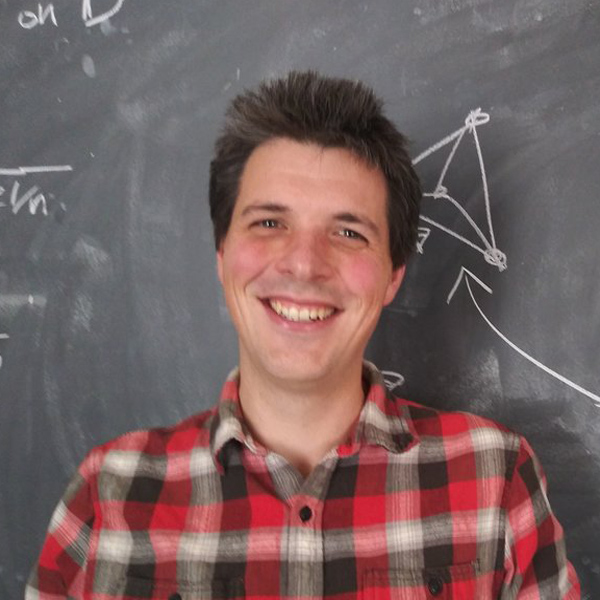
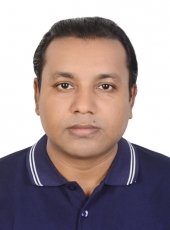
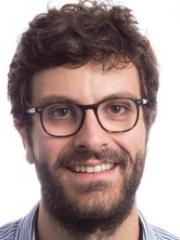
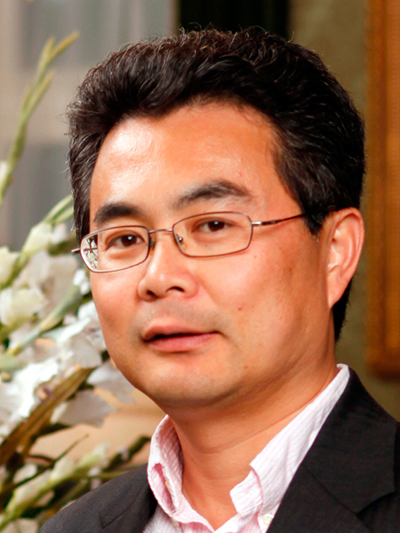
Jeremy Hoskins serves as an Assistant Professor in the Department of Statistics at the University of Chicago and is affiliated with the Committee on Computational and Applied Mathematics (CCAM). His office is located in room 120A with contact number 773-834-3863. He received his PhD in applied mathematics from the University of Michigan and previously held a Gibbs assistant professorship in mathematics at Yale University. His research bridges physics, computation, and mathematics with emphasis on mathematical foundations of imaging in highly-scattering and quantum environments. Dr. Hoskins develops efficient algorithms for large-scale optical system simulations, yielding applications across signal processing, genomics, acoustics, and medical imaging. Professional recognition includes: 2025 Sloan Research Fellow (announced February 18, 2025) No details were provided regarding student advising, research grants, or laboratory collaborations in the source material.
Guillaume Bal is a Professor at the University of Chicago, holding joint appointments in the Departments of Statistics and Mathematics, and affiliated with the Committee on Computational and Applied Mathematics (CCAM). His research focuses on inverse problems in medical and geophysical imaging, partial differential equations with random coefficients, and the mathematical analysis of topological insulators. He explores applications in wave propagation, uncertainty quantification, and hybrid imaging modalities. His recent work delves into theoretical and computational aspects of stochastic partial differential equations and topological edge states. Research Interests: Inverse Problems (Geophysical/Medical Imaging) Topological Insulators and Edge States Wave Propagation in Heterogeneous Media Uncertainty Quantification Publications Trends: Recent articles emphasize topological insulator dynamics, hybrid imaging techniques, and stochastic PDE models. Key themes include bulk-edge correspondence, dual-energy CT optimization, and semiclassical propagation in curved interfaces.
Professor Yue Rong is a Full Professor at Curtin University's Department of Electrical and Computer Engineering, within the School of Electrical Engineering, Computing and Mathematical Sciences. He holds editorial roles at IEEE Transactions on Signal Processing and IEEE Wireless Communications Letters. His research focuses on signal processing for communications, underwater acoustic systems, wireless networks, and healthcare IoT. Rong has authored over 140 journal and conference papers and received multiple awards, including the 2010 Young Researcher of the Year Award. Education: B.E. (Electrical Engineering), Shanghai Jiao Tong University (1999) M.Sc. (Electrical Engineering), University of Duisburg-Essen (2002) Ph.D. (Electrical Engineering), Darmstadt University of Technology (2005) Research Interests: Rong's work spans cooperative MIMO communications, underwater acoustic systems, OFDM modulation, radar-based healthcare monitoring, and secure wireless protocols. His innovations include adaptive modulation schemes for underwater environments and radar-based vital signs detection. Recent trends in his publications emphasize AI-driven signal processing for healthcare IoT and underwater optical communication systems. Awards: Best Paper Awards (WCSP 2011, APCOMM 2010) Chinese Government Award (2004) DAAD/ABB Fellowship (2001-2002) Grants & Labs: His research is supported by grants focusing on UAV-enabled data collection and underwater network optimization. He leads projects in the Distributed Data Fusion and Emerging Technologies (DDFE) lab, advancing radar-cardiography and wearable health monitoring systems.
Aonghus Lawlor is an Assistant Professor/Lecturer in Computer Science at the School of Computer Science, University College Dublin. His roles include coordinating modules such as Software Engineering, Data Structures, Machine Learning, and Final Year Project Foundations. He holds an Orcid identifier: 0000-0002-6160-4639. His research focuses on machine learning applications in medical imaging (e.g., MRI, CT), sports science, and healthcare systems. Notable areas include AI-driven diagnostics, cybersecurity in radiology, and genomics for agricultural optimization. Recent work explores ChatGPT4-vision in MS progression, knee osteoarthritis grading via anomaly detection, and reinforcement learning in exercise prescriptions. Professional activities include committee roles in ACM Recommender Systems and Intelligent User Interfaces, grant assessments, and peer reviewing. He has published 137+ outputs, emphasizing interdisciplinary AI solutions with clinical and agricultural impact. Teaching responsibilities span foundational CS courses to advanced ML and project modules. No formal awards are listed, but his work demonstrates contributions to AI ethics, health informatics, and agricultural genomics.
Wooram Park is an Associate Professor in the Department of Mechanical Engineering at the University of Texas at Dallas (UT Dallas), affiliated with the Erik Jonsson School of Engineering and Computer Science. He leads the Robotics and Intelligent Systems Laboratory (ROBINS Lab) and holds a PhD from Johns Hopkins University (2008), along with MS and BS degrees from Seoul National University (2003 and 1999). His research focuses on robotics, biomedical robotics, computational structural biology, and image processing. Key projects include flexible needle steering for medical applications, haptic feedback systems, and advanced algorithms for motion planning and image reconstruction. He has received notable awards such as the Creel Fellowship (2007) and Critics’ Choice Award in ArtBot Design (2004). His work spans theoretical contributions in stochastic systems and practical innovations like vibratory magnetic robots (Vimbot) and wearable haptic devices. The ROBINS Lab emphasizes interdisciplinary research at the intersection of mechanical engineering, computer science, and biomedical applications.
Dr. Esam Abdel-Raheem is a Professor in the Department of Electrical and Computer Engineering at the University of Windsor, Faculty of Engineering. His research focuses on digital signal processing, biomedical engineering, cognitive radio networks, and VLSI design. He holds a Ph.D. from the University of Victoria (1995) and is a Professional Engineer (P.Eng.) in Ontario and a Senior Member of IEEE. Education: B.Sc. Electrical Engineering, Ain Shams University (1984) M.Sc. Electrical Engineering, Ain Shams University (1989) Ph.D. Electrical Engineering, University of Victoria (1995) Research Interests: Dr. Abdel-Raheem’s work spans signal processing for communications, biomedical signal processing, and VLSI implementations. He has pioneered algorithms for cognitive radio networks and adaptive filtering. His recent studies leverage deep learning for medical diagnostics (e.g., lung nodule detection, Parkinson’s disease voice analysis) and cognitive radio spectrum sensing. Publications Trends: Recent work emphasizes biomedical applications (e.g., CT scan analysis, diabetic retinopathy detection) and machine learning integration in communications (e.g., federated learning for traffic crowdsourcing). His articles often bridge theoretical signal processing with practical implementations in hardware (e.g., FPGA-based filters). Awards/Grants: Not explicitly listed in the text, though his senior IEEE membership and prolific publications suggest sustained professional recognition. Lab/Teams: While not detailed, his research themes imply involvement in interdisciplinary teams focusing on biomedical engineering, telecommunications, and VLSI design.
Adrian Chan is a Professor at Carleton University's Department of Systems and Computer Engineering, Faculty of Engineering and Design. He holds the title of Director of the Research and Education in Accessibility, Design, and Innovation (READi) program. His expertise spans biomedical engineering, signal processing, and accessibility technologies. Education: Ph.D. in Electrical Engineering (University of New Brunswick), M.A.Sc. in Electrical Engineering (University of Toronto), B.A.Sc. in Computer Engineering (University of Waterloo). Research focuses on non-invasive sensors, biomedical signal/image processing, machine learning, and accessibility solutions. Notable projects include the Abilities Living Laboratory and collaborations with healthcare institutions like The Ottawa Hospital. His work addresses challenges in neonatal transport safety, placental imaging for maternal health, and wearable medical devices. Publications highlight advancements in AI-driven ECG analysis, histopathology segmentation, and clinical monitoring systems. Over 150 students have been mentored, with many securing prestigious awards. Awards include the 2024 CMBES Fellowship, 2023 Carleton Research Achievement Award, and 2012 3M Teaching Fellowship. Grants include NSERC CREATE programs and CFI funding for the Abilities Living Laboratory. Leadership roles include interim Assistant Vice-President (Academic), Associate Dean (Graduate Programs), and Shad Valley Program Director. Active in community initiatives like the READi training program and accessibility advocacy.
Sujan Kumar Roy is an Assistant Teaching Professor in the Department of Computer Science at Michigan Technological University. He holds a Ph.D. in Machine Learning with Computer Engineering and Signal Processing from Griffith University, Australia, and has earned multiple academic distinctions, including the 'Award of Excellence in the Research Thesis' and consideration for the 'Chancellor's Medal for Excellence in Ph.D. Thesis 2021.' Dr. Roy's teaching focuses on Computational Intelligence, Foundations of Data Science, Machine Learning, Data Mining, and Introduction to Data Science. His research explores applications of AI, ML, and Data Science in Cybersecurity, Medical Image Analysis, Healthcare Systems, and Speech Enhancement. He has contributed extensively to speech enhancement techniques, integrating Kalman filters with machine learning and deep learning approaches. Recent research trends in his publications emphasize the development of robust algorithms for speech enhancement in noisy environments, fusion datasets for hate speech detection, and adaptive filtering methods. His work bridges signal processing and AI, aiming to improve real-time system performance and noise robustness. Awards: Award of Excellence in the Research Thesis Consideration for Chancellor's Medal for Excellence in Ph.D. Thesis 2021 In teaching, Dr. Roy emphasizes foundational concepts and their practical applications. His grants and collaborations focus on advancing AI-driven solutions for healthcare and cybersecurity challenges. He is affiliated with the Department of Computer Science at Michigan Tech, contributing to both academic and research missions.
Dr. Neal Bangerter is a Visiting Professor in the Department of Bioengineering at Imperial College London's Faculty of Engineering. He specializes in medical imaging (MRI), artificial intelligence, machine learning, and signal processing. Dr. Bangerter holds adjunct appointments at INSEAD, the University of Utah, and Brigham Young University. His research focuses on ultra-high field MRI, AI applications in healthcare, and data-driven bioscience technologies. He leads the London Collaborative Ultra-High Field Scanner (LOCUS) project and advises companies on AI and innovation strategies. Education: B.S. in Physics (UC Berkeley), M.S. and Ph.D. in Electrical Engineering (Stanford University). Career highlights include roles at McKinsey & Company, Microsoft, and Reactrix, as well as founding BYU's Medical Imaging Research Center. He has pioneered cross-faculty initiatives like the Crocker Innovation Fellowship Program. Research interests include novel MRI pulse sequences, AI in medical imaging, and large-scale health data analysis. His work spans collaborations with Stanford, Oxford, Cambridge, and Siemens Healthcare. He teaches executive education at INSEAD, focusing on bridging technical concepts with business strategies. Key awards include the David Evans Chair at Brigham Young University. His contributions to the UK Biobank Neuroimaging study and development of MRI techniques like RAFO-4 highlight his impact on advancing imaging technologies and AI applications in healthcare.
Dr. Maxime Cordeil is a Senior Lecturer in Human Centred Computing at the School of Electrical Engineering and Computer Science, The University of Queensland. His research focuses on Virtual and Augmented Reality technologies for data interaction, interactive visualization systems, and AR interfaces for industry applications. He has authored over 60 publications in top-tier venues such as ACM CHI and IEEE VR, and was nominated as Australia's Field Leader in Computer Graphics in 2021 and 2022. Research Interests: Data visualization, immersive analytics, medical imaging, collaborative systems, and human-computer interaction. Current Projects: Includes embedded visualizations for sports performance, interactive machine learning in 3D environments, and mixed-reality applications in forensic science. PhD Supervision: Actively guiding students in topics like immersive gesture exploration, AR for digital health, and collaborative VR systems. His work bridges theory and practice, with tools like IATK (Immersive Analytics Toolkit) and the MADE-Axes hardware system. He collaborates with industry partners like Raytracer and CSIRO, focusing on applications in space exploration, underwater training, and remote operations. Awards: Multiple best paper recognitions at ISS and CHI, plus industry-driven research grants. Labs: Leads the Immersive Analytics research group at UQ, specializing in embodied interaction and spatial computing.
Jiebo Luo is the Albert Arendt Hopeman Professor of Engineering and Professor of Computer Science at the Hajim School of Engineering & Applied Sciences, University of Rochester. He holds a PhD and has been affiliated with the Department of Computer Science since 2011, following a 15-year career at Kodak Research. His research spans computer vision, natural language processing, machine learning, data mining, computational social science, and digital health. Luo is an ACM Fellow, AAAI Fellow, IEEE Fellow, SPIE Fellow, and IAPR Fellow. Education: PhD (specific discipline not explicitly stated in text). Research interests include computer vision, machine learning, data mining, social media analysis, biomedical informatics, human-computer interaction, and ubiquitous computing. He co-authored the book Deep Neural Network for Medical Image Computing: Principles and Applications (Elsevier, 2022). His work has led to nearly 600 technical papers and 90+ U.S. patents. Research Trends: Recent work focuses on large language models (LLMs), multimodal systems, AI-driven social media analysis, and healthcare applications. Key areas include bias analysis in political simulations, video understanding, and benchmark development for AI-generated content evaluation. His research bridges theoretical advancements with practical applications in healthcare, social sciences, and multimedia systems. Awards: ACM SIGMM Technical Achievement Award (2021), IEEE Region 1 Technological Innovation Award (2018), Eastman Innovation Award (2004), and multiple best-paper recognitions at top conferences. Service & Leadership: Served as program co-chair for ACM Multimedia 2010, IEEE CVPR 2012, ACM ICMR 2016, and IEEE ICIP 2017. Currently Editor-in-Chief of IEEE Transactions on Multimedia (2020–2022). Editorial board roles include several IEEE Transactions journals and conferences. Labs & Teams: Leads research groups in computer vision and multimodal computing at the University of Rochester, collaborating on projects like UroSAM (kidney stone classification) and computational social science initiatives.
Mauro Maggioni is a Professor in the Departments of Mathematics and Applied Mathematics and Statistics at Johns Hopkins University. His research focuses on the mathematical foundations of Data Science, with applications in molecular dynamics, hyperspectral imaging, and reinforcement learning. He employs techniques from Harmonic Analysis, Approximation Theory, and Probability to develop scalable algorithms, particularly multiscale methods for analyzing high-dimensional data. Maggioni’s work bridges theoretical mathematics and practical applications, including cardiac electrophysiology modeling, unsupervised segmentation of hyperspectral images, and reduced-order modeling of complex systems. Education: B.S. in Mathematics from Università degli Studi in Milan, Italy; Ph.D. in Mathematics from Washington University in St. Louis. He held a Gibbs Assistant Professorship at Yale before moving to Duke University and later becoming a Bloomberg Distinguished Professor at JHU. Research Interests: Mathematical foundations of Data Science, Machine Learning, Partial Differential Equations, and their applications in physical and biological systems. Notable contributions include diffusion wavelets, interaction kernel learning, and multiscale geometric analysis of molecular dynamics data. Scientific Awards: Popov Prize in Approximation Theory (2007), NSF CAREER Award and Sloan Fellowship (2008), Fellow of the American Mathematical Society (2013), Simons Fellowship (2020). Advising & Grants: Maggioni mentors postdocs and students in areas like stochastic systems and signal processing. His group’s work is supported by Simons Foundation grants, NSF funding, and collaborations with institutions like MINDS and CIS at JHU. Labs/Teams: Leads a research group focused on data-driven discovery in mathematics and applied sciences, emphasizing interdisciplinary collaboration across computational methods, statistics, and domain-specific applications.
Kaye Morgan is an Associate Professor in the School of Physics and Astronomy at Monash University, specializing in X-ray imaging technologies with applications in medical and respiratory research. She holds an Australian Research Council Future Fellowship and has held prestigious positions including a Hans Fischer Fellowship at Technische Universität München. Her research focuses on advancing X-ray optics methodologies, particularly phase contrast X-ray imaging (PCXI) and dark-field imaging, to enhance resolution, speed, and sensitivity. These techniques are applied to study airway health in cystic fibrosis and other respiratory diseases, using synchrotron facilities like SPring-8 and the Munich Compact Light Source. She has pioneered single-grid imaging and propagation-based dark-field approaches, enabling real-time visualization of lung dynamics and treatment efficacy. Morgan leads multiple high-impact projects funded by ARC and international collaborations, with over 85 publications in journals like Optics Express and Scientific Reports. Her work contributes to UN Sustainable Development Goals related to health and innovation. Key achievements include developing lab-based X-ray sources for clinical translation and quantifying lung microstructure through advanced imaging algorithms.
Prof. Huiyu Zhou is a Professor of Machine Learning at the School of Computing and Mathematical Sciences, University of Leicester . He leads the Biomedical Image Processing Lab (BIPL) and serves as Deputy Director of the Research Centre for Artificial Intelligence, Data Analytics and Modelling (AIDAM) , and a member of the Apollo-Leicester Centre for Digital Health and Precision Medicine (CDHPM) . Previously, he held roles as Reader at the University of Leicester and Lecturer at Queen’s University Belfast. Education: BEng in Radio Technology, Huazhong University of Science and Technology, China MSc in Biomedical Engineering, University of Dundee, UK PhD in Computer Vision, Heriot-Watt University, UK His research focuses on AI applications in biomedical imaging , robotics , and health informatics . Current projects include advancing medical image analysis, secure learning systems, and interdisciplinary collaborations in precision medicine. He chairs editorial boards for journals like IEEE Transactions on Human-Machine Systems and Pattern Recognition , and serves as Associate Editor for ICRA and Area Chair for BMVC and IJCAI. Prof. Zhou holds administrative roles such as PGR Director of CMS (2022–2025) , MSc Programme Director (2018–2019) , and coordinates MSc Distance Learning in Informatics . He reviews grants for global bodies including Horizon Europe, UKRI, and the Wellcome Trust, and assesses faculty promotions in the UK, China/HK, Israel, and others. He also acts as an external examiner for institutions across the UK, Hong Kong, Australia, India, and China. Affiliations include the National Academy of Artificial Intelligence (NAAI) and collaborations in interdisciplinary teams for digital health and AI-driven biomedical research.
Dr. Hung Yew Mun is an Associate Professor and Interim Head of the Mechanical Engineering program at Monash University Malaysia’s Malaysia School of Engineering. His expertise spans heat transfer, thermodynamics, and fluid dynamics, with a focus on micro-scale phenomena, phase-change heat transfer, and graphene-based materials. He teaches courses including MEC3454/MEC4408 (Thermodynamics and Heat Transfer) and MEC4416 (Momentum, Energy & Mass Transport). Dr. Hung’s research addresses advanced cooling solutions for electronics, energy storage, and sustainable materials. Education: PhD in Mechanical Engineering from University of Multimedia, Malaysia (2010). Research Interests: Micro-scale heat transfer, phase-change mechanisms, graphene nanostructures, and applications in thermal management. His work contributes to UN SDG goals related to affordable and clean energy (SDG7) and industry innovation (SDG9). Recent Projects: Includes studies on MXene-biochar composites for energy storage, graphene-enhanced devices for electronics cooling, and multiscale modeling of postharvest fruit water transport. He has led/co-investigated 12 projects since 2013, emphasizing interdisciplinary collaboration. Publications: Over 100 peer-reviewed articles, with recent focus on graphene-mediated heat transfer enhancement, plasma-activated cooling, and nanofluid applications. His work addresses both fundamental mechanisms and industrial applications. Labs/Teams: Active in thermal engineering and nanomaterials research groups, collaborating with institutions globally on sustainable energy and advanced materials.