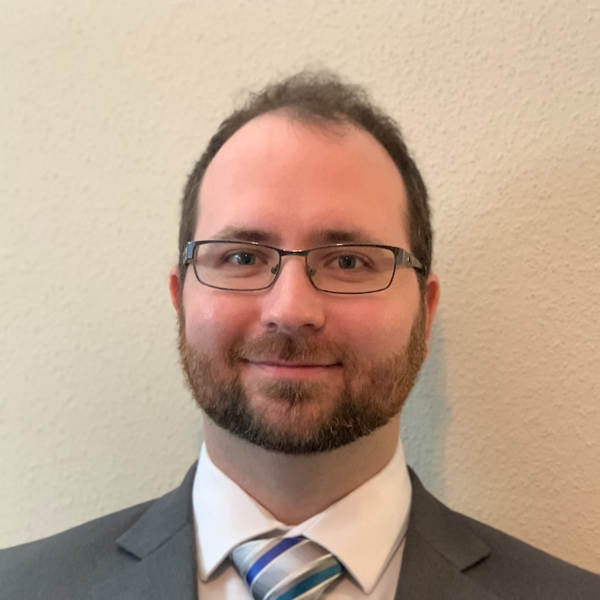
Jianlin Shi is an Assistant Professor in the Department of Internal Medicine at the University of Utah , with an adjunct appointment in Biomedical Informatics . His academic journey includes a PhD from University of California, Irvine , medical training at West China Medical Center , and residency at Sichuan University . Primary: Internal Medicine Adjunct: Biomedical Informatics Dr. Shi's research focuses on Natural Language Processing (NLP) in clinical settings , particularly for genetic testing criteria identification , medication disposition extraction , and clinical decision support systems . He has developed medspaCy , a Python NLP toolkit for healthcare, and created hybrid NLP frameworks integrating LLMs with rule-based systems to enhance disease screening and data privacy tools . His recent work spans 2025-2022 , emphasizing applications in surgical infection detection , dementia identification , and clinical cohort generation . While no formal awards are listed, his 15 most recent publications demonstrate sustained contributions to clinical NLP , medical decision support , and health data standardization .
Leif Nilsson is an Associate Professor at the Department of Mathematics and Mathematical Statistics, Umeå University. His research focuses on statistical learning methods for industrial quality control and occupational health risk assessment. Statistical learning for defect detection Exposure modeling for occupational hazards Biostatistical analysis of health outcomes Recent work applies probabilistic classifiers and spline smoothers to automate surface finish inspection. He also investigates exposure variability in hand-arm vibration and its health impacts through epidemiological studies. Nilsson collaborates with clinical teams on stress recovery interventions and contributes to methodological developments in biological monitoring. His statistical expertise spans Bayesian modeling, resampling techniques, and spatio-temporal data analysis.
Patrick Denny is an Associate Professor at the University of Limerick, affiliated with the Department of Computer Science & Information Systems, the Centre for Sustainable Digital (Re)Manufacturing, and Lero – the Research Ireland Centre for Software. His research focuses on computer vision, automotive systems, and medical imaging, with notable contributions to object detection, instance segmentation, and image processing in autonomous vehicles and healthcare. He holds patents in automotive camera systems and has authored over 38 research papers. His work addresses challenges such as rain impact on automated vehicle perception, medical image classification using graph neural networks, and optimizing camera exposure for automotive applications. He collaborates extensively on projects involving V2X communications and intelligent transportation systems. Denny’s research also extends to waste management through computer vision and medical imaging innovations. Patents: Over 10 patents in automotive imaging, including systems for calibrating image-capturing devices and thermal infrared sensors. Key Research Themes: Automotive perception, computer vision algorithms, medical image analysis, and sensor optimization. He actively engages in interdisciplinary projects, combining machine learning with real-world applications in transportation and healthcare.
Brett J. Theeler is a Professor and Chair of the Department of Neurology at the Uniformed Services University of the Health Sciences (USUHS) School of Medicine. He maintains an active Neuro-Oncology practice at the John P. Murtha Cancer Center within Walter Reed National Military Medical Center and serves as a Clinical Collaborator with the National Institutes of Health, National Cancer Institute, Neuro-Oncology Branch in Bethesda, MD. Dr. Theeler earned his B.S. from Black Hills State University (1996-2001), M.D. from Uniformed Services University (2001-2005), completed Neurology residency at Madigan Army Medical Center (2005-2009), and a Neuro-Oncology fellowship at MD Anderson Cancer Center (2010-2012). His research focuses on rare primary central nervous system neoplasms including pilocytic astrocytomas, pleomorphic xanthoastrocytomas, diffuse midline gliomas and other brain cancers with increased incidence in adolescent and young adult populations. Dr. Theeler has been instrumental in advancing molecular classification of brain tumors and developing targeted therapies for rare CNS tumors through his leadership in the NCI-CONNECT program. His work bridges clinical practice with translational research, emphasizing both patient care and scientific advancement in neuro-oncology. Dr. Theeler's recent publications demonstrate a strong focus on rare CNS tumors, quality of life issues, molecular classification of gliomas, and innovative therapeutic approaches, with significant contributions to understanding tumor biology and improving clinical outcomes. Dean's Award for Academic Excellence, 2001-02 (USUHS) Malcolm B. Carpenter Award, Excellence in Fundamentals of Neuroscience, 2001-02 (USUHS) Captain Calvin B. Early Award for Excellence in Teaching, 2018 Honorary Doctorate of Science from Black Hills State University, 2019 'A' Proficiency Designator by US Army Medical Command, 2019 Inducted into Order of Military Medical Merit (O2M3), 2020 Master Clinician, Neuro-Oncology, 2023 Dr. Theeler has held significant leadership roles including Associate Residency Program Director, Deputy Chief, and Chief of Neurology at Walter Reed National Military Medical Center before becoming Chair of Neurology at USUHS in 2021. He served as Theater Neurologist in Afghanistan (2013) and currently chairs the Programmatic Review Panel for the Rare Cancers Research Program (FY2024-FY2026). His military service as a Colonel in the Army Medical Corps complements his academic and clinical work. As an active participant in the NCI-CONNECT program, Dr. Theeler has co-chaired workshops on rare CNS tumors, particularly focusing on histone mutated midline gliomas. His clinical work at the Murtha Cancer Center provides specialized neuro-oncology care to military personnel and their families, integrating military medicine with cutting-edge academic research.
Dr. Isaac Pence is an Assistant Professor at UT Southwestern Medical Center's Department of Biomedical Engineering, with secondary appointments in Internal Medicine and the Charles and Jane Pak Center for Mineral Metabolism. He also holds an Adjunct Assistant Professor role at UT Dallas' Bioengineering Department. His research focuses on developing optical tools for non-invasive disease characterization and therapeutic monitoring, integrating biophotonics, computational analysis, and clinical medicine. Dr. Pence's work includes advancements in Raman spectroscopy for drug distribution analysis, tissue engineering, and cryoneurolysis devices for pain management. He completed his PhD at Vanderbilt University and postdoctoral training at Imperial College London and Harvard Medical School. Research interests span label-free quantitative tissue mapping, translational biophotonics, and biomarker heterogeneity analysis. His lab develops clinical instruments such as portable Raman systems for in vivo imaging and theranostic platforms. Recent work addresses pelvic organ prolapse via ECM composition analysis and cryotherapy device innovation. Collaborations include UT Dallas and the Texas Instruments Biomedical Engineering and Sciences Building. Key projects include Raman-guided surgical tools, nanocarrier design, and extracellular vesicle biomarker detection. His contributions have led to funded grants and patents, though specific award names are not listed. The Pence lab actively trains graduate students and postdocs in biophotonics and biomedical engineering.
Michael Hummel is Associate Professor at Aalto University's School of Chemical Engineering, Department of Bioproducts and Biosystems. His research focuses on sustainable biopolymer chemistry, cellulose processing, and development of renewable materials from natural resources. Hummel leads research on advanced cellulose fiber technologies including the Ioncell process for eco-friendly textile production. His recent work includes developing dope-dyed Lyocell fibers, recycling post-consumer textiles into new materials, creating multifunctional cellulose textiles, and pioneering medical textiles for wound care applications. Research spans fundamental chemistry of biomass conversion to applied material development, with emphasis on circular economy principles. Hummel's publications demonstrate advancements in sustainable materials science, particularly in cellulose chemistry, fiber engineering, lignin valorization, and green chemistry applications for textiles and advanced materials.
Anshul Thakur is a Departmental Lecturer in Clinical Machine Learning at the University of Oxford's Institute of Biomedical Engineering. His research focuses on advancing data-efficient deep learning techniques, adversarial attacks, and interpretable AI frameworks for healthcare applications. He holds a PhD from IIT Mandi (2020), where his thesis explored audio signal analysis using dynamic kernels and deep learning. Education: PhD in Computing & Electrical Engineering, Indian Institute of Technology Mandi (2020) Research concentrated on bioacoustic signal pattern analysis and ML frameworks for acoustic classification. Research Interests: His work emphasizes clinical AI applications, including federated learning for medical data, multimodal diagnosis systems, and mitigating class imbalance in healthcare datasets. He develops interpretable models for medical practitioners and explores ethical AI deployment in clinical settings. Recent Trends in Publications: Recent work addresses federated learning optimization, multimodal clinical diagnosis, and early disease prediction using biomarker patterns. His studies highlight innovations in EHR analysis, privacy-preserving techniques, and cross-domain medical model adaptation. Labs & Teams: Active in the Institute of Biomedical Engineering, collaborating on projects like the RapiD_AI framework for pandemic preparedness and Continuous Patient State Attention Models for irregular EHR data analysis.
Professor Eddie Ball is a Professor of Radio Frequency Engineering at the University of Sheffield's School of Electrical and Electronic Engineering, and a UKRI Future Leaders Fellow (2021-2028). He leads the Electromagnetics, Wireless Hardware & RF Devices research theme and directs the EPSRC Millimetre Wave Measurement Laboratory. His expertise spans RF circuit/system design, SDR, and millimeter-wave technologies, with a focus on IoT applications and hardware manufacturing. Qualifications: Ph.D., University of Sheffield (2024) M.Eng (1st class), University of York (1996) Chartered Engineer Research Interests: Novel RF circuit/system design Millimeter-wave transceivers and antennas RF-MMIC and SiGe design IoT radio systems and blockchain integration Low-cost, high-performance wireless protocols Teaching: Creator and instructor for EEE6239: Radio Transceiver System & Circuit Design 2nd-year course leader for VHF Synthesiser for Wireless Communications Labs/Teams: EPSRC Millimetre Wave Measurement Laboratory Future Millimetre Wave RF Transceiver Architectures Project
Dr Daniel Abasolo is the Head of the Centre for Biomedical Engineering and a Senior Lecturer in Biomedical Engineering at the University of Surrey's School of Mechanical Engineering Sciences. His research focuses on biomedical signal processing, non-linear analysis, and deep learning applications in neurology. He specializes in analyzing EEG and MEG signals to study neurodegenerative disorders, aging processes, and cognitive decline. Education and Roles: Holds an MEng and PhD. Leads the Centre for Biomedical Engineering and supervises final-year projects for BEng/MEng Medical Engineering and MSc Biomedical Engineering students. Research Interests: Explores complexity measures in brain signals to detect Alzheimer’s disease, mild cognitive impairment, and functional seizures. Develops machine learning models for health monitoring in postmenopausal populations. Collaborates with Dr Raphaelle Winsky-Sommerer on neuroimaging and neurological biomarkers. Publications Overview: Over 50 peer-reviewed articles since 2009, emphasizing nonlinear dynamics in EEG/MEG signals, entropy-based diagnostic tools, and deep learning applications in neurology. Recent work investigates structural inequality impacts on brain aging and global dementia disparities. Teaching: Teaches Biomedical Signal Processing (ENG3186), Instrumentation (ENGM186), and Computer Methods in Biomedical Engineering Research (ENGM259) at undergraduate and postgraduate levels. Labs/Teams: Active in the Centre for Biomedical Engineering, focusing on translational research in neurotechnology and medical signal analysis.
Dr. Wenbin Li is a Senior Lecturer (Associate Professor) in Robotics at the University of Bath's Department of Computer Science. He leads the Pering Laboratory (Perceptual Intelligence Laboratory), affiliated with the AI & Machine Learning and Visual Computing groups. Previously, he held postdoctoral positions at Imperial College London (2016-2018) and UCL (2014-2016), and earned his PhD from the University of Bath in 2013, with earlier degrees from Imperial College London (MSc, 2009) and Xidian University (B.Eng, 2008). His research focuses on unified autonomous systems, including multi-sensory localization/mapping, dynamic motion capture, and uncontrolled scene understanding with applications in manufacturing and professional capture. Key areas include Robotics, Computer Vision, Graphics, and Machine Learning. He actively supervises doctoral students in these fields and has funded PhD openings. Dr. Li has been involved in major initiatives such as the My World - Strength in Places Fund (2021–2027), SLAM with Reinforcement Learning (2022–2023), and the CAMERA MC2 Award (2019–2023). His work aligns with UN Sustainable Development Goals, particularly in advancing technology for societal benefit. Recent publications emphasize aerial robotics, autonomous systems, and computer vision applications, including UAV package delivery reviews, Bayesian optimization for balloon station-keeping, and generative models for intrinsic image decomposition.
Kerstin Bunte is a Professor of Machine Learning for interdisciplinary data analysis at the University of Groningen, affiliated with the Faculty of Science and Engineering and the Bernoulli Institute's Intelligent Systems Group. She holds an Honorary Fellowship at the University of Birmingham and leads the Intelligent Systems Group. Her research focuses on interpretable machine learning, interdisciplinary applications (e.g., astrophysics and biomedical data), and visualization techniques. Research Interests: - Machine Learning - Artificial Intelligence - Explainable AI (XAI) - Interpretable Models - Dimensionality Reduction - Data Visualization - Astrophysical Data Analysis - Medical Imaging Awards & Grants: - DSSC XS funding (2023) - NWO VIDI grant (2020) - Rosalind Franklin Fellowship (2016–present) Advising & Students: Supervised PhD students include Elisa Oostwal, Janis Norden, Matteo Marcantoni, and Petra Awad. Research spans topics like tumor segmentation in medical imaging, astrophysical structure detection, and autonomous navigation systems. Labs & Collaborations: Leads the Intelligent Systems Group, collaborating with institutions like the University of Birmingham and the University of Warwick. Work involves interdisciplinary projects combining machine learning with astronomy, biomedical sciences, and robotics.
Dr. Matias Valdenegro Toro is an Assistant Professor of Machine Learning at the University of Groningen within the Faculty of Science and Engineering and the Artificial Intelligence department of the Bernoulli Institute. He holds a PhD from Heriot-Watt University (2019) and a Master's in Autonomous Systems from Bonn-Rhein-Sieg University of Applied Sciences (2014). His research focuses on trustworthy machine learning models , particularly in uncertainty quantification , medical AI , and robotics , with applications in computer vision and explainable AI. He teaches courses like Introduction to Machine Learning and Deep Learning at the Bachelor and Master levels. His work emphasizes robustness in AI systems, including uncertainty estimation for medical applications, super-resolution techniques, and neuromorphic robotics. He has published widely on topics like Bayesian neural networks, prompt tuning, and sanity checks for explanations. Notable awards include Best Reviewer at ICML (2024) and Highlighted Reviewer at ICLR (2022). He collaborates with institutions like the German Research Center for Artificial Intelligence and actively contributes to open-source datasets (e.g., the Japanese Uncertain Scenes Dataset ). Key grants and activities include organizing the ENLIGHT BIP Course on Deep Learning for Forestry and teaching at the European Summer School on AI . His research also addresses regulatory challenges like the EU AI Act's implications for uncertainty quantification in general-purpose AI.
Jefersson Alex dos Santos is an Assistant Professor (Lecturer) in Computer Vision at the University of Sheffield, UK. Previously, he served as an Associate Professor at Universidade Federal de Minas Gerais (UFMG), Brazil (2013–2022). He holds a PhD in Computer Science from the University of Campinas (Unicamp) and the University of Cergy-Pontoise, France (2013). His research focuses on remote sensing image processing, computer vision, and machine learning, with applications in geospatial data analysis and medical imaging. He is an IEEE Senior Member and serves as an Associate Editor for IEEE Geoscience and Remote Sensing Letters and Co-Chair of the ISPRS Working Group for AI/ML in Geospatial Data. Education: PhD in Computer Science: University of Campinas (Unicamp) & University of Cergy-Pontoise, 2013 Master's in Computer Science: Unicamp, 2009 Bachelor's in Computer Science: University of Mato Grosso do Sul (UEMS), 2006 Research Interests: Remote sensing image processing, computer vision, machine learning, and geospatial data analysis. His work emphasizes interdisciplinary research, including applications in environmental monitoring, medical imaging, and digital forensics. Grants & Awards: CNPq Productivity Research Scholarship (2016–2022) Serrapilheira Institute Research Grant (2021) Labs & Teams: Founder of the Laboratory of Pattern Recognition and Earth Observation (PATREO) at UFMG's Department of Computer Science.
Giuseppe Vinci is an Assistant Professor at the Department of Applied and Computational Mathematics and Statistics (ACMS) at the University of Notre Dame, within the College of Science. His research focuses on probabilistic graphical models, particularly in neuroscience and genomics applications. He holds a Ph.D. in Statistics from Carnegie Mellon University (2017), and completed postdoctoral research and lecturing at Rice University (2017–2020). Vinci’s expertise spans astrostatistics, forensic science, and geometric data analysis. Education: Ph.D. in Statistics, Carnegie Mellon University (2017) M.Sc. in Statistics, Carnegie Mellon University (2013) M.Sc. in Economics and Social Sciences, Bocconi University (2012) B.Sc. in Economics, University of Catania (2009) Research Interests: High-dimensional statistical theory of graphical models, matrix completion, astrostatistics, neuroscience, genomics, forensic science, and geometric data analysis. His work addresses challenges in neuronal functional connectivity, genomic networks, and climate science. Awards: NeuroNex Postdoctoral Trainee (NSF) Rice Academy Postdoctoral Fellow Three-minute thesis competition (Top-10, Carnegie Mellon University) Advising & Grants: Vinci mentors multiple Ph.D., MSc, and undergraduate students in projects spanning forensic statistics, genomics, and astrostatistics. He has secured funding for undergraduate research programs and participated in NIH-funded interdisciplinary training. Labs/Teams: Involved in collaborative projects with institutions like Baylor College of Medicine and Rice University, focusing on neurotheory and statistical methods in neuroscience.
Professor YuanTong Gu is the Pro Vice-Chancellor (Research Career Advancement) and Head of the School of Mechanical, Medical and Process Engineering at Queensland University of Technology (QUT). He holds an ARC Future Fellowship and leads the Laboratory for Advanced Modelling and Simulation in Engineering and Science. His research focuses on computational mechanics, biomechanics, and nanotechnology, with over $40M in secured research funding since 2000. He has supervised over 15 PhD students and collaborates with global institutions including Tsinghua University and the University of California. His awards include the International Computational Methods Award (2017) and ICACM Computational Mechanics Award (2017). Prof. Gu's work spans interdisciplinary projects in joint biomechanics, advanced materials, and AI-driven engineering solutions. Education: PhD (National University of Singapore), Graduate Certificate in Education (QUT). Research Groups: Leads a team of 3 academics, 2 ARC Future Fellows, and 15+ PhD students. Key projects include diamond nanothread composites, AI in biomedical devices, and fracture detection frameworks. His group collaborates with industry leaders and global universities to advance computational methods and materials science. Editorial Roles: Associate Editor of Engineering Analysis with Boundary Elements and Applied Mathematical Modelling , among others. Conference leadership includes chair roles in international computational mechanics conferences since 2012.