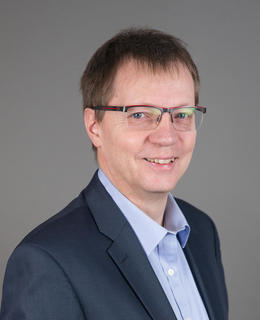
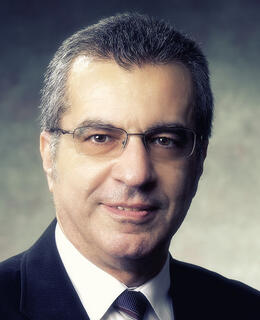
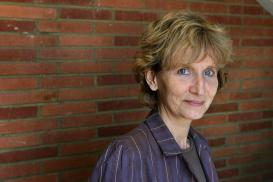
Prof. Plamen Angelov holds a Chair in Intelligent Systems and is Director of Research at Lancaster University's School of Computing and Communications. He leads the Lancaster Intelligent, Robotic, and Autonomous Systems (LIRA) Centre, uniting 70+ faculty across 15 departments. With a PhD (1993) and DSc (2015), he is a Fellow of IEEE, IET, ELLIS, and AAIA. His research focuses on explainable AI, evolving systems, and computational intelligence, with 400+ publications (h-index 65) in top venues like TPAMI and IEEE Transactions. Notable achievements include the Dennis Gabor Award (2020) and ranking in Stanford's Top 0.2% AI researchers (2024). He leads projects funded by UK Research Councils, ESA, DSTL, and industry. As Editor-in-Chief of Springer's Evolving Systems , he drives standards in explainable AI through IEEE's P2976 Working Group. His work spans autonomous systems, cybersecurity, and biomedical applications through initiatives like AI4EO and H-UNIQUE.
Sukhpal Singh Gill is an Assistant Professor (Lecturer) in Cloud Computing at the School of Electronic Engineering and Computer Science, Queen Mary University of London (UK). He holds a PhD, ME, and BE in Computer Science and is a Fellow of the Higher Education Academy (FHEA). His roles include Programme Director for MSc Advanced Computer Science and MSc Business Analytics, as well as Deputy Chair of the Main Misconduct Panel. He leads the GillNet Research Lab and is the Editor-in-Chief of the International Journal of Applied Evolutionary Computation (IJAEC) , with editorial roles in IEEE IoT, Nature Scientific Reports, and other journals. Education: PhD in Computer Science ME in Computer Science BE in Engineering Research Interests: Focus on Cloud Computing, Edge AI, IoT, Energy Efficiency, and Quantum Computing. His work bridges theoretical advancements with practical applications in healthcare, smart cities, and sustainable computing. Notable projects include AI-driven frameworks for carbon-neutral cloud resource management, blockchain-empowered healthcare systems, and quantum cloud computing models. Teaching: Teaches modules such as Cloud Computing (Postgraduate), Fundamentals of Web Technology (Undergraduate), and Semi-structured Data and Advanced Data Modelling (Postgraduate/Undergraduate). He emphasizes inclusive curriculum design and innovative teaching tools like the Q-Module-Bot for AI-supported learning. Awards & Grants: Recipient of 12,500+ citations and an H-index of 54 (Google Scholar). Secured grants for projects on edge AI, federated learning, and sustainable cloud computing. Winner of awards including the IEEE IT Professional Magazine Outstanding Reviewer Award (2024) and Elsevier's Best Paper Award (2023). Labs & Teams: Leads the GillNet Research Lab , focusing on cutting-edge research in cloud-edge computing, AI, and quantum systems. Collaborates with industry partners on projects like HealthEdgeAI and AIoT-driven smart healthcare systems .
Dr Steve Maddock is a Senior Lecturer in Computer Graphics and Acting Head of the Visual Computing research group at the University of Sheffield's School of Computer Science. He holds a Class I Degree in Computer Science (University of Sheffield), a PGCE in Mathematics (11-18), and a PhD in computer graphics modeling and animation, all from the University of Sheffield. With over 30 years of experience in computer graphics software development, he has contributed to the computer games industry through a six-month secondment at Gremlin/Infogrames. His research focuses on facial modeling and animation, augmented/virtual/mixed reality applications, and sketch-based interfaces. Key areas include 3D computer graphics, real-time rendering, and human-robot collaboration systems. Maddock has led and co-led several grants, including projects on game software engineering, rail network surveillance, and heritage visualization using immersive technologies. He is a member of INSIGNEO, Sheffield Robotics, and the Cultural Industries Research Network. Publications highlight contributions to facial analysis for medical diagnostics, style transfer techniques for games, and safety zone visualization in robotics. His work integrates interdisciplinary approaches, combining computer science with fields like biology and robotics. Maddock's Visual Computing research group explores cutting-edge solutions in graphics, virtual environments, and computational tools for real-world applications.
Anthony Constantinou is a Senior Lecturer at Queen Mary University of London, part of the School of Electronic Engineering and Computer Science. He leads the MInDS Research Group and the Bayesian AI Lab, focusing on causal machine learning for decision-making under uncertainty. His research spans healthcare, defense, sports, economics, and gaming, with a strong emphasis on Bayesian networks and causal inference. Research Interests: Causal machine learning, decision systems, Bayesian networks, uncertainty quantification, and their applications in healthcare, military defense, sports analytics, and economics. He collaborates with academia and industry to advance AI-driven decision-making systems. Grants: Noted for securing funding such as the Engineering and Physical Sciences Research Council grant (EP/S001646/1) for Bayesian AI research. His work emphasizes practical applications in diverse fields through collaborative projects. Labs & Teams: Head of the MInDS Research Group and Bayesian AI Lab, fostering interdisciplinary research in AI and decision systems.
Dr. Frank Maurer is a Professor in the Department of Computer Science at the University of Calgary, specializing in Extended Reality (XR) and Immersive Analytics. His work focuses on serious applications of XR in healthcare, energy, and engineering sectors. He leads the SEER Group, advancing cross-reality prototyping tools and digital twin technologies. Maurer holds a Diplom and a Dr. rer. nat. in Computer Science from the University of Kaiserslautern (1989 and 1993). Research areas include XR prototyping , immersive analytics , UX design for 5G-XR , and healthcare applications like pre-surgical epilepsy evaluations. He collaborates on strategic initiatives such as Brain/Mental Health and Energy Innovations. Recent work explores hydrogen pipeline monitoring, seismic data analysis (Siera tool), and generative AI integration in XR. Publications emphasize technical challenges in 3D medical imaging, reservoir engineering workflows, and cross-reality application testing. Maurer teaches Research Methods in Computer Science and has pioneered tools like NiwViw (immersive analytics authoring) and SpyREST (API documentation). His lab develops solutions for multi-surface environments and emergency response systems.
Behrouz Far is a Professor at the University of Calgary’s Schulich School of Engineering, Department of Electrical and Software Engineering. He holds a PhD in Artificial Intelligence from Chiba University, Japan (1990) and degrees from the University of Teheran including a B.S. in Electrical Engineering (1983) and M.S. in Electrical Engineering (1986). His research focuses on AI applications in medical imaging, software engineering, transportation systems, and data mining. He has contributed to advancements in fundus image analysis, deep learning models for disease detection, and intelligent traffic management systems. Dr. Far has received notable awards such as the 2017 SSE Achievement Award and the AITF-AMA Tier-2 Chair in Smart Multimodal Transportation Systems (2013). His work bridges theoretical AI with practical healthcare solutions, including tools like LETTA for traffic management systems and methodologies for detecting ocular lesions using CNNs. He teaches courses on software testing, reliability engineering, and agent-based systems. His publications highlight contributions to medical diagnostics (e.g., choroidal nevi classification), transportation optimization (e.g., real-time traffic signal control), and machine learning explainability. Collaborative research includes projects on biopotentiostat biosensors for SARS-CoV-2 detection and data mining for cancer patient stratification.
Sergej Stoppel is currently a researcher (PostDoc) in the visualization group at the University of Bergen. His academic background includes a Mathematics master's degree (2014) and a PhD in 2018, both from the University of Bergen. His research focuses on visual data science, with an emphasis on interactive visualization techniques, human-computer interaction, and physical visualization systems. He has authored/co-authored numerous papers on topics such as hexagonal map enhancements, spatio-temporal data interaction, and low-cost physical art generation. Education: M.Sc. Mathematics (2014), University of Bergen PhD in Visualization (2018), University of Bergen Research Interests: His work spans data visualization, scientific visualization, and interactive techniques. Notable contributions include Vol²velle (printable interactive volume visualization widgets), Firefly (virtual illumination drones), and LinesLab (low-cost art generation systems). He explores methods to bridge the gap between virtual and physical visual representations, emphasizing user-centric design. Publications: His recent work includes advancements in hexagonal map visualization (2022), spatio-temporal selection techniques (2020), and illumination automation (2019). These contributions highlight his focus on enhancing data interpretation through novel interaction paradigms. Labs/Teams: Active member of the VisGroup at the University of Bergen, collaborating on projects like MetaVis and VIDI. His work is supported by grants involving visualization and medical imaging applications.
Eric Mörth is a PhD Scientist in Multimodal Medical Visualization at the University of Bergen's Department of Informatics, collaborating with the Mohm Medical Imaging and Visualization Center (MMIV). His research focuses on innovative medical data visualization techniques, such as MuSIC and ICEVis, which enhance clinical decision-making. Currently on a research stay at Harvard University's VCG Group, he holds a Master's in Medical Informatics from the Medical University of Vienna and a degree in Biomedical Engineering from the Technical University of Vienna. His awards include the Best Paper Honorable Mention (VCBM2022) and Best Short Paper (VINCI2022). Mörth's work spans cancer imaging, scrollytelling narratives, and interactive visualization tools, supported by grants from Trond Mohn Stiftelse. He advises through Team Smit and has contributed to projects like RadEx and ParaGlyder, advancing medical data exploration and communication.
Dr. Sabin Tabirca is a Senior Lecturer at the School of Computer Science and Information Technology, University College Cork (UCC). He holds a BSc from Bucharest University and a PhD from Brunel University. His research focuses on Artificial Intelligence, Data Analytics, Algorithmics, Interactive Media, and HCI, with applications in computational cancer modeling, mobile health (mHealth), and parallel computing. He coordinates MPT Activities and is affiliated with the CRR Group and BCRI Centre. Notable awards include UCC's President Award for Innovation in Teaching (2007), IT@Cork Leader Award (2008), and UCC Staff Recognition Award (2013). His teaching includes modules like Parallel and Grid Computing, Mobile Application Design, and Graphics for Interactive Media. Dr. Tabirca has supervised over 70 MSc students and numerous PhD candidates, many of whom now hold academic and industry roles globally. His research includes developing mHealth apps for cystic fibrosis patients, 3D cancer visualization tools, and frameworks for mobile parallel computing. Publications span mHealth design pipelines, cancer prediction models, and mobile gaming for health education. He actively engages in interdisciplinary projects, blending computer science with medical and biological applications.
Katherine B. Ensor is the Noah G. Harding Professor of Statistics at Rice University's George R. Brown School of Engineering and Computing. She serves as Director of the Center for Computational Finance and Economic Systems (CoFES) and previously led the Kinder Institute Urban Data Platform (UDP). Her expertise spans statistical methods for complex problems in public health, environmental science, and finance. Ensor has a 35-year academic career at Rice, including 14 years as Department Chair. She pioneered wastewater surveillance for pathogens, expanding to monitor 29 communicable illnesses through Houston Wastewater Epidemiology. Education: Ph.D. in Statistics (Texas A&M University), M.S. and B.S.E. in Mathematics (Arkansas State University). Research focuses on high-dimensional time series, spatial processes, Bayesian methods, and computational finance. She leads interdisciplinary initiatives, such as the UDP providing urban data for Greater Houston studies. Research interests include data science applications in public health, environmental analytics, and quantitative finance. Her work bridges academia and community, addressing issues like flood impacts via the Texas Flood Registry and asthma surveillance through collaborations with Houston Health Department. Ensor chairs the National Academies committee on Statistics in Science and Engineering and holds leadership roles in AAAS and ASA. Awards include the ASA Founders Award (2024), AAAS Fellowship (2013), and Texas A&M's Distinguished Former Students honor. She advises on national boards, including NSF's IPAM and ABET's CSAB. Her grants and collaborations drive innovations in statistical methods for societal challenges. Labs/Teams: Co-directs Houston Wastewater Epidemiology and Rice Environmental Statistics & Health (RESH) group with Dr. Loren Hopkins. Active in CoFES, UDP, and the Kinder Institute's urban data initiatives.
Simon McCallum is an Associate Professor at NTNU’s Faculty of Information Technology and Electrical Engineering. Born in New Zealand, he transitioned from commercial game development in Norway to academia in 2009. His research focuses on Serious Games, particularly in healthcare contexts, gamification, and virtual reality applications. He holds a PhD from the University of Otago (2007), where he studied Computer Science, Mathematics, Psychology, and Philosophy. McCallum has contributed to over 30 publications, including works on cognitive health gaming, software engineering education, and AR applications. He teaches courses such as IMT4307 (Serious Games Research) and IMT3603 (Game Programming). His key projects include the Smartkuber AR game for cognitive screening and the Traction Trebuchet historical engineering study. McCallum has collaborated with institutions like the University of Otago and has engaged in outreach through conferences and media appearances, promoting game technology in healthcare and education.
Soraya de Chadarevian is a Professor in the Department of History and the Institute for Society and Genetics at the University of California Los Angeles (UCLA). With an advanced degree (Diplom) in Biology from the University of Freiburg and a PhD in Philosophy from the University of Konstanz, she bridges biological sciences and humanities. Prior to joining UCLA, she held positions as a senior research associate and affiliated lecturer at the University of Cambridge (1991–2006), where she remains an affiliated scholar. PhD in Philosophy, University of Konstanz Advanced degree (Diplom) in Biology, University of Freiburg Research Interests: De Chadarevian specializes in the history of life sciences in the 20th and 21st centuries, with a focus on molecular biology, human genetics, and material/visual practices in science. Her work examines intersections between scientific, institutional, and cultural developments, including the rise of genetic evidence in historical narratives and the role of databases. Collaborations & Current Projects: She collaborates with Lisa Onaga in the Proteins and Fibers: Scaffolding History with Molecular Signatures working group (2018–2025) and contributes to the Commoning Biology Working Group's Special Issue on Research Interviews. Recent research traces the global history of radioactive strontium as a pollutant and explores its scientific and societal implications. Scientific Awards National Science Foundation Scholar Award (2015-2021) Fellowships at Walther Rathenau Program, Max Planck Institute, La Villette, École des Hautes Études en Sciences Sociales, Hamburg Institute, Churchill College Cambridge, and University of Edinburgh Teaching: She offers courses on genetics and society , science as a way of knowing , and both introductory and advanced history of science, technology, and medicine courses at UCLA.
Melissa J. Moore, PhD, is Professor at the University of Massachusetts Chan Medical School, where she holds the Eleanor Eustis Farrington Chair of Cancer Research and serves in the RNA Therapeutics Institute. She also holds appointments in the T. H. Chan School of Medicine (Department of Chemical Biology) and the Morningside Graduate School of Biomedical Sciences (Departments of Biochemistry & Molecular Biotechnology, Interdisciplinary Graduate Program, and Translational Science). Additional affiliations include campus-wide programs in Bioinformatics & Integrative Biology and Chemical Biology. Education: BS in Chemistry/Biology, College of William and Mary PhD in Biological Chemistry, Massachusetts Institute of Technology Research Focus: Melissa Moore’s laboratory investigates post-transcriptional gene regulation in eukaryotes, with emphasis on three interconnected themes: (1) spliceosome structure and catalytic mechanism, (2) nuclear-to-cytoplasmic control of mRNA metabolism, and (3) quality control and clearance of defective ribosomal and messenger RNAs. The group combines biochemistry, single-molecule biophysics, RNA structural biology, and cell biology to dissect these processes at molecular and systems levels. Scientific Awards & Honors: Eleanor Eustis Farrington Chair of Cancer Research Funding & Collaborations: Work is supported by grants from the National Institutes of Health and involves ongoing collaborations with investigators at Brandeis University, MIT, University of Rochester, and other institutions. Rotation projects for graduate students are available in all active research areas. Laboratory & Team: The Moore laboratory is located in the RNA Therapeutics Institute at UMass Chan Medical School, 364 Plantation Street, Worcester, MA. The team employs state-of-the-art single-molecule imaging, mass spectrometry, and high-throughput sequencing to advance understanding of RNA biology and to translate insights into therapeutic RNA technologies.
Catia Pesquita is an Associate Professor in Computer Science at the Faculty of Sciences of the University of Lisbon , where she is also a Senior Researcher at LASIGE and leads the Health and Biomedical Informatics Research Line . With a multidisciplinary background in Biology and Computer Science, she focuses on Artificial Intelligence and Data Science applications in life and health sciences . Her research spans Semantic Web , Biomedical Ontologies , Knowledge Graphs , and Explainable AI , with significant contributions to ontology matching and semantic similarity . Education: PhD in Computer Science - Bioinformatics (2012) MSc in Bioinformatics (2008) Degree in Cell Biology and Biotechnology (2005) Current Projects: KATY (2021-2024): AI-Empowered Personalized Medicine for cancer treatments. BRAINTEASER (2021-2024): AI for ALS and MS disease progression models. Research Outputs: Developed tools like AgreementMakerLight (AML) , KGsim-benchmark , and the Epidemiology Ontology . Over 133 publications with significant citations (32,909 reads, 3,889 citations). Teaching: Lectures advanced topics in Databases , Data Integration , Bioinformatics , and Big Data . Advocacy: Vice-president of Biodata.pt , promoting biological data valorization in Portugal. Actively involved in initiatives to promote computer science careers to young women .
Lucienne Roberts is a Professor in Communication Design at ABK, Stuttgart, and a leading figure in ethical graphic design, education, and curation. She co-founded GraphicDesign& and is a member of the Alliance Graphique Internationale (AGI), with a career dedicated to cultural and social sectors. 2019–2022: Visiting Professor, Royal Academy of Engineering, University of Southampton 2020–2021: International Fellow, Hoffmitz Milken Center for Typography (HMCT), ArtCenter College of Design 2022–Present: Professor in Communication Design, ABK Stuttgart Her research focuses on the societal impact of graphic design, particularly in ethical design , climate change advocacy , and political communication . Her practice integrates 2D and 3D design to challenge norms and engage non-specialist audiences. Recent projects include Wonderlab (2023) at the National Railway Museum, emphasizing engineering education, and the Non-Pavilion (2019) for London Design Festival, using AR for climate awareness. She co-curated Hope to Nope: Graphics and Politics (2018), exploring political graphics from 2008–18. Scientific Awards: Honorary Fellow of the ISTD (2021) Alliance Graphique Internationale (AGI) membership Signatory of the First Things First 2000 manifesto Her academic contributions include books on design ethics and education, and advising on exhibition identities for institutions like the Wellcome Collection and the Design Museum.