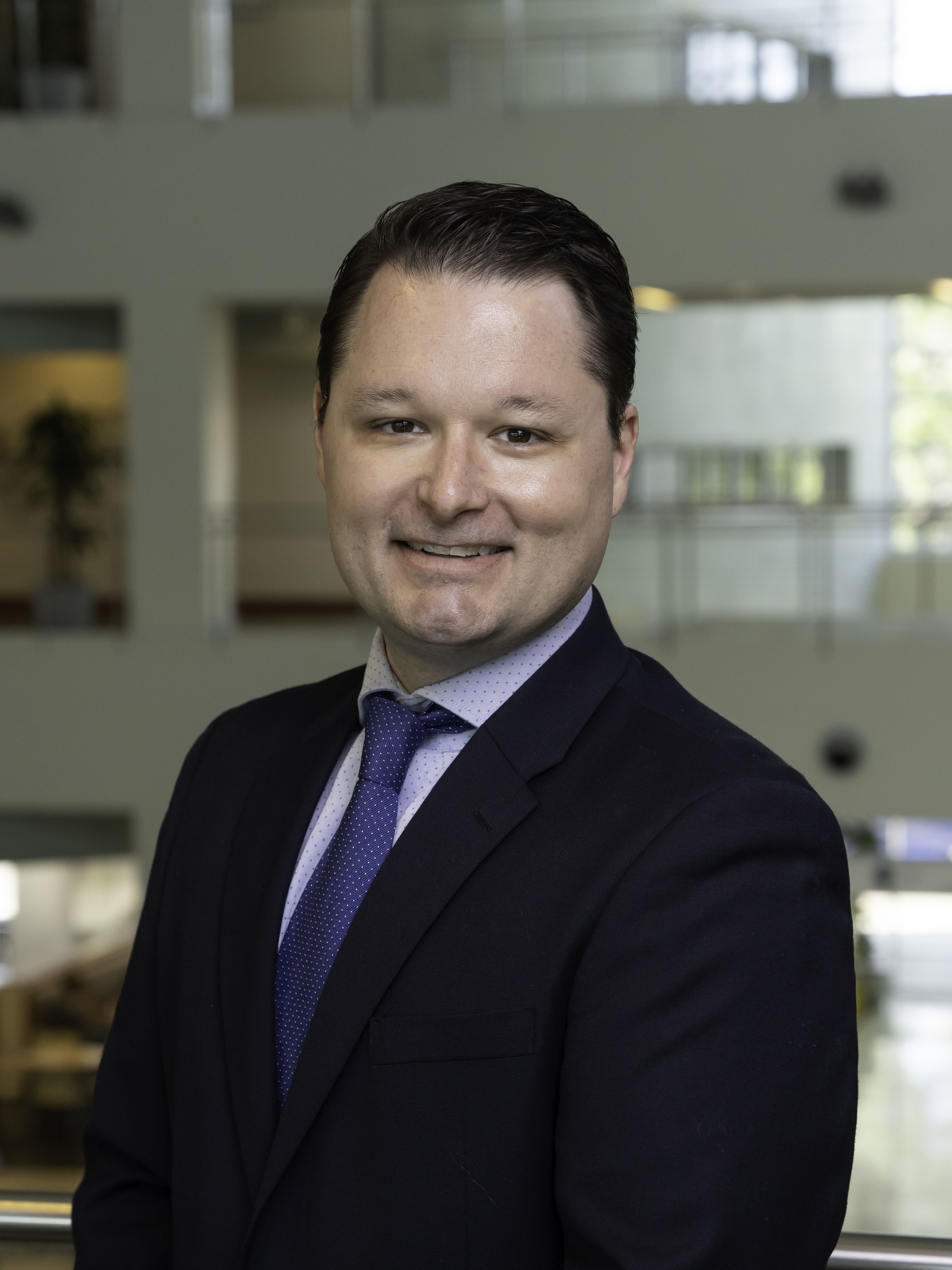
Joshua M. Scacco is an Associate Professor in the Department of Communication and founding Director of the Center for Sustainable Democracy at the University of South Florida, College of Arts & Sciences. His work bridges political communication, media effects, and quantitative research methods, with a focus on democratic governance in the digital age. Education: PhD, University of Texas at Austin Dr. Scacco’s research explores how communication technologies can strengthen democratic institutions, addressing topics like presidential digital rhetoric, health misinformation, election integrity, and media accountability. He employs computational methods and experimental designs to analyze media ecosystems. Recent publications examine: Health communication challenges during the pandemic Political misinformation on social platforms Democratic backsliding and press responsibility Interactive media effects on political behavior Dr. Scacco partners with the U.S. Department of State, journalism nonprofits, and local governments. He is affiliated with the Center for Media Engagement at the University of Texas at Austin.
Anthony Hornof is a Professor in the Department of Computer Science at the University of Oregon, part of the College of Arts and Sciences. He has been a faculty member since 1999 and was granted tenure in 2005. His research is centered on human-computer interaction, with strong emphases on cognitive modeling, eye tracking, and assistive technology. He leads an active research laboratory and has secured substantial funding from the National Science Foundation and the Office of Naval Research. University: University of Oregon School: College of Arts and Sciences Department: Department of Computer Science Position: Professor Email: hornof@uoregon.edu, hornof@cs.uoregon.edu Office: 356 Deschutes Hall Phone: (541) 346-1372 Education: B.A. in Computer Science, Columbia University, 1988 M.S. in Computer Science and Engineering, University of Michigan, 1996 Ph.D. in Computer Science and Engineering, University of Michigan, 1999 Research Interests: Dr. Hornof's research lies at the intersection of human cognition and computing. He is particularly interested in understanding and modeling the perceptual, cognitive, and motor processes involved in human-computer interaction. His work uses eye tracking both as an evaluation tool for cognitive models and as a real-time input method for creative expression and accessibility. A major focus is assistive technology, especially developing tools like EyeDraw that enable children with severe motor impairments to create art using only eye movements. He also explores eye-controlled musical compositions, bridging technology and artistic expression. His research is grounded in participatory design, involving end-users directly in the development process. Publication Trends: His recent publications demonstrate a consistent focus on modeling human behavior in complex interactive tasks. Key themes include visual search strategies, dual-task performance, cognitive modeling using eye-tracking data, and accessibility. His work spans top venues in HCI (CHI, TOCHI), cognitive science (CogSci, ICCM), and specialized conferences like ETRA and NIME. There is a strong methodological thread involving data calibration, model validation, and the development of predictive tools for interface design. Scientific Awards: Best Paper Award (Top 1%) at CHI 2014 (two papers) Honorable Mention Paper (Top 5%) at CHI 2010 Siegel-Wolf Award for Best Applied Paper at ICCM 2010 Advising and Grants: Dr. Hornof actively seeks to mentor exceptional undergraduate students, graduate students, and postdoctoral researchers in his lab. He emphasizes rigorous and creative scientific research. He has been awarded over $2.9 million in single-investigator research grants from prestigious agencies including the National Science Foundation (NSF) and the Office of Naval Research (ONR). Notably, he served as an NSF Program Director from 2012 to 2014, contributing to funding decisions for approximately $65 million in research. Labs and Teams: He leads the Human-Computer Interaction Laboratory at the University of Oregon, where interdisciplinary research is conducted on cognitive modeling, eye tracking, and assistive technologies. His team has developed software such as VizFix for visualizing eye-tracking data and has ported the Eyegaze system to Macintosh. The lab fosters collaborations with new media artists and musicians, and engages in participatory design with children who have disabilities.
Daniel (Danny) Zane is Associate Professor of Marketing at Lehigh University’s College of Business, where he also holds the endowed Class of ’61 Professorship. His scholarship centers on consumer psychology, with particular attention to how marketplace information shapes consumer inferences, ethical decision-making, and brand evaluations. Education & Professional Background: Ph.D. in Marketing, The Ohio State University Former Marketing Analyst, Harte-Hanks Research Interests: Professor Zane investigates the cognitive and emotional processes that underlie consumer judgments. His work examines how consumers draw inferences about themselves and about companies from advertising, promotions, and social-media content. He applies these insights to domains such as sustainability marketing, pharmaceutical marketing, and public-health messaging, with an overarching concern for consumer well-being. Publication Trends: Across more than fifteen recent publications (2015-2024), Zane’s research has consistently explored metacognitive inferences, ethical consumption barriers, promotional framing effects, and the psychological consequences of multitasking with advertising. His empirical studies appear in premier journals including the Journal of Marketing Research , Journal of Consumer Research , and Harvard Business Review , and have garnered coverage in national media outlets such as NPR and Reuters. Scientific Awards: Mary Kay Inc. Dissertation Proposal Competition – First Place (Academy of Marketing Science) Emerging Scholar in Marketing Communications Award (AMA Marketing Communications SIG) Advising & Funding: While specific student names are not listed, Professor Zane actively mentors doctoral and master’s candidates in consumer-behavior research. His projects have received recognition and support via competitive dissertation and emerging-scholar awards. Contact & Resources: Office: RBC 382 (inside RBC 385), Lehigh University Email: dzane@lehigh.edu Phone: 610-758-4479 Courses: Consumer Behavior, Principles of Marketing Google Scholar: Profile
Dennis Fehrenbacher is an Associate Professor in the Department of Accounting at Monash Business School, Monash University. He is actively engaged in research and teaching at the intersection of information systems and management accounting, with a strong focus on digital technologies and their organizational impact. Monash Business School, Monash University Department of Accounting Chair, Monash Business School Behavioral Laboratory Organizer, Experimental Research Cluster Associate Editor, Decision Support Systems Editorial Board Member, Behavioral Research in Accounting His research interests center on information system success, performance measurement, analytics, and the behavioral aspects of accounting. He employs empirical methods such as experiments, surveys, and archival analysis, often integrating emerging technologies like eye tracking and big data analytics to study cognitive biases in performance evaluation and decision-making. Dennis has developed innovative teaching methods, including workshops on Social Media Analytics using Python and MongoDB, and machine learning for business decisions. His recent research outputs span topics such as professional scepticism, multitasking, accountability in capital budgeting, and causal inference in judgment using balanced scorecards. These works reflect a consistent trend toward understanding human behavior in accounting systems through technological and experimental lenses. He has received recognition for his work, including: Best Paper Award - Management Accounting Stream (2020) Dennis has served as a reviewer for top journals like Journal of Management Information Systems and Accounting, Organizations and Society , and has been invited to speak internationally. He has led two major research projects funded by CIMA and AFAANZ, focusing on performance evaluation and information processing. His work contributes to the UN Sustainable Development Goals, particularly those related to quality education and decent work. He leads the Monash Business School Behavioral Laboratory, supporting experimental research in accounting and management. The lab facilitates advanced research using tools like eye tracking and data analytics, fostering a collaborative environment for empirical inquiry.
Andrew D. Ker is Professor and Associate Professor of Computer Science at the University of Oxford's Department of Computer Science, and Tutorial Fellow in Computer Science at University College, Oxford since 2009. He received his BA in Mathematics & Computer Science (1994-1997) and DPhil in Computer Science (1997-2000) from Oxford, followed by academic appointments including Junior Research Fellow (2000-2003), Special Supernumerary Fellow (2003-2009), and Royal Society University Research Fellow (2003-2011). His research focuses on information hiding, particularly steganography (covert communication in digital media) and steganalysis (detection of hidden data), with additional interests in digital media forensics and programming language semantics. His foundational work includes the mathematical formalization of the 'square root law of steganographic capacity'. Recent publications explore practical implementations in social media platforms, GPU-accelerated steganalysis, and linguistic steganography techniques. He has received multiple scientific awards including Best Paper Awards at ACM Workshops on Information Hiding & Multimedia Security, SPIE conferences, and the International Workshop on Digital Watermarking. As Associate Editor for IEEE Transactions on Information Forensics and Security, he maintains active involvement in the academic community. Professor Ker has supervised numerous graduate students in computer security and steganography research, including doctoral candidates and master's students. He leads research within Cyber Security Oxford and has developed four major lecture series: Lambda Calculus and Types, Discrete Mathematics, Computer Security, and Advanced Security: Information Hiding. He remains active in teaching despite administrative responsibilities as Tutorial Fellow.
Luca Barra is Full Professor of Television and Digital Media at the Department of Arts, University of Bologna. His research focuses on media studies, particularly television history and contemporary evolution, transnational circulation of content, serialization, and comic/humorous genres. He has coordinated the Master's Degree in Information, Cultures and Media Organization since 2021 and serves as editor-in-chief of VIEW. Journal of European TV History and Culture. University of Bologna, Department of Arts Research areas: Television History, Transnational Media, Digital Transformation, Italian TV Production Barra's work examines the international mediation of ready-made TV formats, Italian streaming partnerships, and the cultural implications of digital television. His recent articles analyze dystopian narratives, sitcom reception in Italy, and the redefinition of celebrity during the pandemic. He contributes to academic discourse through editorial roles in journals like SERIES and Comunicazioni Sociali. His publications include monographs on Italian television programming, sitcoms, and co-edited volumes exploring European premium TV fiction and digital media frameworks. Barra has led research projects such as ATLas and F-ACTOR, and collaborates with international institutions including Brown University and NECS.
Shweta Yadav is an Assistant Professor in the Department of Computer Science at the University of Illinois Chicago (UIC). Prior to this, she was a Bridge to the Faculty (B2F) fellow at UIC and a postdoctoral research fellow at the U.S. National Library of Medicine, NIH. She holds a Ph.D. in Computer Science from the Indian Institute of Technology Patna, India. Education: Ph.D. in Computer Science, Indian Institute of Technology Patna, India Research Interests Her research focuses on the intersection of Natural Language Processing (NLP), Healthcare Informatics, Biomedical Text Mining, and Computational Social Science. She develops machine learning algorithms to advance AI applications in healthcare, particularly in medical document summarization , disease progression modeling , and health outcome prediction using electronic health records and social media data. Her work emphasizes interdisciplinary collaboration to address real-world healthcare challenges. Recent Publications Her recent publications highlight advancements in Multimodal Mental Health Analysis , Perspective-aware Healthcare Summarization , and Biomedical Relation Extraction . She employs techniques like Transformer models , Contrastive Learning , and Attention Frameworks to tackle low-resource settings and extract insights from complex data sources.
Orit Shaer is a Professor and co-Chair of Computer Science at Wellesley College , where she founded and directs the Human-Computer Interaction (HCI) Lab . Her work bridges tangible interaction, human-AI collaboration, and mixed-reality interfaces, focusing on transforming work and learning environments through embodied technologies. Education : B.A. from Academic College of Tel-Aviv, M.S. and Ph.D. in Computer Science from Tufts University Research interests center on novel human-computer interaction paradigms : Human-AI collaboration frameworks Tangible and embodied interface design Mixed-reality applications for productivity Genomics collaboration tools STEAM education technologies Recent publications highlight human-AI co-creation (CHI 2024), temporal dynamics in automated work (CHIWork 2024), and pandemic-era remote interaction studies (IEEE Pervasive Computing 2021). Awarded: NSF CAREER Award Agilent Technologies Research Award Google App Engine Education Award Pinanski Prize for Excellent Teaching Best Paper Honorable Mention (ACM CHI 2014) Honorable Mention (CHIWork 2022) She co-founded the international CHIWork Symposium and chairs the ACM TEI conference. Her NSF IRES grant (2022) supports US-German collaboration on human-automation interaction.
Professor Jamie Carlson is a Professor of Marketing and Deputy Head of School - Research at the Newcastle Business School, University of Newcastle. His expertise lies at the intersection of marketing, consumer behavior, and technology, with a focus on how organizations can better engage customers in increasingly digital environments. He has held significant leadership roles including Assistant Dean Research and Engagement (2018-2020) and Head of Marketing Discipline (2017-2018). Professor Carlson's educational background includes: PhD (Management) from the University of Newcastle Bachelor of Business (Honours) from the University of Newcastle Bachelor of Business from the University of Newcastle Professor Carlson's research program focuses on customer experience management, particularly at the customer-technology interface. His work spans three core areas: understanding customer engagement with physical and virtual channels, examining service design and consumer behavior in service industries, and investigating consumer adoption of e-health services. He emphasizes how consumers actively shape their consumption journeys, seeking both individualized and communal brand experiences across touchpoints, and how technology both creates value and presents challenges for consumer well-being. An analysis of Professor Carlson's recent publications reveals a strong emphasis on digital transformation in marketing, with particular focus on omnichannel retailing, metaverse applications, social media engagement, and the psychological aspects of consumer behavior in digital environments. His work demonstrates increasing interdisciplinary collaboration, connecting marketing with information systems, psychology, and healthcare domains to address complex consumer behavior questions in our technology-driven world. Professor Carlson has received numerous prestigious awards for his scholarly contributions: 2025 Jay Lindquist Best Conference Paper Award at the Academy of Marketing Science World Marketing Congress 2023 Best paper in Digital and Social Media Marketing Track at Academy of Marketing Multiple Top Cited/Downloaded Article recognitions from International Journal of Information Management (2022) 2022 Best paper award in the Australasian Marketing Journal Multiple best paper awards at Academy of Marketing conferences (2014-2017) 2010 Vice-Chancellor's Citation for Outstanding Contribution to Student Learning As a principal supervisor for PhD, DBA, and Honours students, Professor Carlson has mentored numerous successful researchers who have gone on to academic positions at institutions worldwide including Maastricht University (Netherlands), Dortmund University (Germany), Macquarie University, UTS, and the University of Adelaide. His students have received faculty medals, best paper awards, and the prestigious Arizona State University Center for Service Leadership Research Scholarship. His supervision focuses on customer engagement in digital media, service experience management, relationship quality, emotional appeals in advertising, and drivers of group travel behavior. Professor Carlson's research is conducted through multinational and interdisciplinary collaborations aligned with the Australian government's 'Growth Through Innovation' agenda and the UN Sustainable Development Goals. His work connects marketing with information systems, psychology, and healthcare to develop frameworks for understanding e-service quality, online flow experiences, customer engagement, and value creation in digital environments.
Dr. George Fitzmaurice is a Research Fellow at Autodesk, leading the Human Computer Interaction and Visualization Research group. With over 120 publications and 95 patents, his work spans 25 years of innovation in interactive systems, focusing on technology-assisted learning , 3D visualization , and novel input techniques . His notable contributions include the Maya 1.0 UI and SketchBook Pro design, as well as pioneering Graspable UIs and Spatially-Aware Displays . Education : MIT (B.Sc. Math/CS), Brown (M.Sc. CS), Toronto (Ph.D. CS) His research explores immersive visualization and generative AI applications in design workflows, with recent work focusing on VR/AR tools like TimeTunnel for motion editing and WhatIF for AI-assisted narrative design. Current projects examine the intersection of large language models , 3D design systems , and collaborative environments . Key article themes include: Generative AI integration (3DALL-E, WorldSmith) Immersive motion analysis (AvatAR, VideoPoseVR) Creative workflow optimization (MoodCubes, Immersive Sampling) Privacy-aware VR systems (Vice VRsa) Scientific Recognition: 2019 - Inducted into ACM CHI Academy 2024 - Awarded ACM Fellow for computing contributions He has developed foundational interaction techniques like ViewCube™ and SteeringWheels™ , and his work continues to shape modern 3D UI paradigms and spatial computing approaches through projects like DreamSketch and Tesseract.
Dr. Shaobo (Kevin) Li is a Tenured Associate Professor at the School of Business, Southern University of Science and Technology (SUSTech), with secondary appointment in the Department of Information Systems & Management Engineering. He holds a PhD in Business Administration from Nanyang Technological University (2019), Master of Business Administration (University of Virginia, 2014), Master of Finance (West Virginia University, 2012), and Bachelor of Business Administration (Lanzhou University, 2011). National High-Level Youth Talent Program awardee Overseas High-Caliber Personnel in Shenzhen City Recipient of 2018 China Scholarship Council’s Excellent Self-Funded Student Scholarship His research focuses on the intersection of digital economy, social welfare, and technology-driven marketing, employing experimental methods, empirical models, and neuroscience. He serves as Associate Editor for the Journal of Business Research and has published in top UTD-24 journals including Journal of Consumer Research, Information Systems Research, and Production and Operations Management. His work examines platform economics, brand management during crises, and consumer behavior related to AI, sustainability, and health decisions. He has led 10+ research projects (National Natural Science Foundation, Ministry of Science and Technology 2030 Program) and received multiple research awards, including Academy of Marketing Science Best Doctoral Dissertation Proposal Award (2019) and Best Paper Awards at China Marketing Science (2020,2024), China Marketing International Conference (2023), and CMAU Annual Conference (2023,2024). Teaching accolades include SUSTech’s Premier Teaching Award, Top 10 Most Popular Professor among undergraduates, and Nanyang Business School’s Best Graduate Teaching Award (2017). Teaches Financial Marketing (undergraduate) Teaches Frontiers of Management & Research Methods (PhD) Actively recruiting research assistants, postdocs, and joint PhD candidates with Hong Kong Polytechnic University
Dr. Leonie Baumann is an Assistant Professor in the Department of Economics at McGill University, specializing in Economic Theory, Networks, Mechanism Design, and Game Theory. She holds a Ph.D. (summa cum laude) and M.Sc. in Economics from the University of Hamburg, and dual B.A. degrees from the University of Siegen. Currently on maternity leave, Dr. Baumann previously served as a Postdoctoral Research Associate at the University of Cambridge. Her research explores social interactions in microeconomic theory, with a focus on network formation dynamics, strategic evidence disclosure, and robust implementation mechanisms. Recent work examines how network structures influence economic decision-making and resource allocation. Dr. Baumann's publications demonstrate consistent focus on network economics and game-theoretic modeling, with emerging applications in discrimination mechanisms and evidence disclosure. Her methodological approaches combine theoretical rigor with computational innovations. Awards & Recognition: Vice-Chancellor's Innovation Award (2020) Econometric Society Travel Grant (2015) Multiple research grants including SSHRC and FQRSC funding Supervision & Service: Currently advising 4 doctoral students on topics ranging from biosolvent characterization to indoor air quality Active editorial board member for Journal of Mathematical Economics Organizes international conferences on economic theory
Janneke Koerts is an Associate Professor of Psychology at the University of Groningen, affiliated with the Faculty of Behavioural and Social Sciences and the Faculty of Medical Sciences. Her research focuses on neuropsychological aspects of financial decision-making in individuals with cognitive or affective impairments, including ADHD, Parkinson's disease, and psychotic disorders. She leads studies on how neurological and psychiatric conditions impact financial judgment and develops assessment tools to evaluate cognitive performance validity. Dr. Koerts holds editorial roles for Journal of Clinical Medicine and Journal of the International Neuropsychological Society , and has supervised multiple PhD candidates. Her work contributes to the UN Sustainable Development Goals related to mental health and well-being (SDG 3). Education: PhD in Psychology (not explicitly stated, inferred from academic rank) Affiliations: Department of Clinical & Developmental Neuropsychology, Faculty of Medical Sciences (secondary) Research interests include: - Financial well-being in neurodegenerative and psychiatric disorders - Executive dysfunction and its impact on daily life - Validity assessment in neuropsychological evaluations - Cognitive correlates of media multitasking and ADHD Recent articles highlight trends in: - Systematic reviews on decision-making in neurodegenerative diseases - Cross-sectional studies on financial dissatisfaction in psychosis cohorts - Meta-analyses of risky behaviors in alcohol use disorder Grants/Teams: Collaborates with international teams on neurodegenerative and psychiatric projects (e.g., European-wide studies on financial performance) Labs/Teams: Part of the Clinical Neuropsychology group at UG Groningen
Mona Moisala is a Doctor of Psychology and active researcher specializing in cognitive science and psychology, with particular expertise in attentional multimodal networks and brain responses to digital media. Her research has been supported by major projects funded by the Academy of Finland, including 'Bridging the Gaps,' 'Kasvava mieli,' 'Mind the Gap Between Digital Natives and Educational Practices,' and 'CENT.' Her research interests focus on how digital media affects cognitive functions, particularly in adolescents and young adults. She investigates media multitasking, video gaming, social media interactions, and their neural bases, examining how these activities influence attention, concentration, and brain responses. Her work bridges cognitive neuroscience with practical applications for education and mental well-being. Analysis of her publication trends shows a consistent focus on cognitive neuroscience applied to digital media effects, with increasing attention to adolescent development and educational implications over time. Her research combines experimental methods with real-world applications, as evidenced by her popular science book 'Concentration recovery guide' which translates complex cognitive concepts for general audiences. Behavioral Science Faculty Pro Gradu Award (2013) Mona Moisala actively supervises master's theses and has served as Principal Investigator on major research grants totaling millions in funding. Her research has generated significant media attention, with 47 media appearances where she discusses cognitive science topics for public audiences. She has also contributed to academic service through journal reviewing for publications like Cortex, Brain and Behavior, and Computers in Human Behavior, and has been a member of organizations including Heureka and Young Academy Finland. Her international collaboration includes a visiting researcher position at Leiden University (2018), demonstrating her engagement with the global research community. Her work continues to address critical questions about how digital environments shape cognitive development and brain function.
Marian Sauter is a researcher at Ulm University's Institute for Psychology in Germany, specializing in the intersection of psychology, human-computer interaction, and educational technology. Her work primarily focuses on eye-tracking methodologies and gaze analysis to improve online teaching and learning environments. She frequently collaborates with colleagues from the Institute of Media Informatics at Ulm University, indicating strong interdisciplinary connections between psychology and computer science departments. Her research interests center on understanding visual attention patterns in educational contexts, particularly how gaze behavior correlates with learning outcomes in digital environments. Dr. Sauter investigates how eye movement data can be visualized and utilized to optimize instructional design, with specific attention to gaze-laser pointer relationships, gaze synchronicity among students, and attention monitoring in virtual classrooms. Her work bridges cognitive psychology theories with practical applications for e-learning platforms and remote education systems. Analysis of her recent publications reveals a strong trajectory in applying eye-tracking technology to solve real-world educational challenges, particularly those emerging during and after the pandemic-driven shift to online learning. Her research spans both theoretical investigations of visual attention mechanisms and practical implementations for educational technology. The consistent focus on webcam-based eye-tracking demonstrates her commitment to developing accessible methods that don't require specialized hardware, making her research particularly relevant for widespread educational applications. Best Paper Award at ETRA '22 Symposium on Eye Tracking Research and Applications Berlin Health Award (2023) Dr. Sauter's collaborative approach is evident in her frequent co-authorship with Tobias Wagner from Ulm University's Institute of Media Informatics and Anke Huckauf from General Psychology. Her research appears to be supported by institutional resources at Ulm University, though specific external grants are not mentioned in the available information. She appears to be actively mentoring students given her involvement in educational psychology research and student-focused studies. Her work suggests involvement with research groups focused on human-computer interaction, educational technology, and cognitive psychology at Ulm University, though specific lab names are not provided in the available information. The interdisciplinary nature of her publications indicates collaboration across psychology and media informatics departments.