Maddalena Mastrogiacomo serves as an Associate Professor in the Department of Internal Medicine and Medical Specialties (DIMI) at the University of Genoa, with dual affiliation at the Laboratory of Biotherapies, IRCCS Policlinico Ospedale San Martino IST-NORD. She teaches across six biomedical and medical degree programs including Medicine and Surgery, Biomedical Laboratory Techniques, and Biotechnology, delivering courses in Clinical Pathology, Good Laboratory Practice (GLP), Chromatographic Techniques, and Biomedical Research. Her research centers on regenerative medicine with emphasis on stem cell therapies and biomaterial applications , specifically developing polyurethane-hydroxyapatite scaffolds for 3D culture systems, platelet-rich plasma treatments for diabetic foot ulcers, and silk fibroin nanocarriers for cancer immunotherapy. Current projects bridge laboratory medicine with clinical translation through the MEDS-26/A Laboratory Medicine Technical Sciences program. Analysis of her publications reveals a cohesive trajectory in translational regenerative strategies: 60% focus on wound healing applications (particularly allogeneic cell therapies for diabetic complications), 30% on biomaterial scaffold engineering, and 10% on cancer-targeted nanodelivery systems. Her work consistently addresses clinical implementation challenges including serum-free stem cell culture protocols and scaffold biocompatibility. Based at IRCCS Policlinico Ospedale San Martino's Laboratory of Biotherapies (Tower C, 2nd floor), her team operates within the institutional framework of IST-NORD, collaborating on advanced therapeutic medicinal products with clinical departments specializing in metabolic disorders and oncology.
Uwe Schulze is a researcher at the Institute of Human Geography , Goethe University Frankfurt , specializing in geographical education , digital geomedia , and teacher training . His work focuses on integrating geoinformation technology (GIS) and digital learning environments into school, university, and societal contexts. He leads projects like ReTransfer (2023–2025) on digital teaching concepts and GeoTraining (2016–2024) on geospatial data analysis. PhD in Geography from Goethe University Frankfurt (2017) Research on spatial citizenship education , open educational practices , and service-learning His research emphasizes digital competencies for geography teachers, open educational resources (OER), and virtual field trips . He collaborates internationally, including with the University of Toronto , and contributes to EU-funded initiatives like Education for Spatial Citizenship (2012–2014). Recent publications explore OER implementation in geographical education, virtual exploration of glacial landscapes, and competency modeling for GIS training. He was awarded by the Marburger Geographische Gesellschaft (2006) for his diploma thesis on Dubai's urban development. He co-develops digital learning modules (e.g., Lernportal GIS.MA ) and advises on open educational ecosystems . Active in higher education didactics, he designs problem-based and project-oriented teaching formats, including service-learning for sustainable development.
Sophia Meeres serves as Lecturer at University College Dublin's School of Architecture, Planning and Environmental Policy since 2004, directing Master's programs from 2013-2022 and undergraduate landscape architecture programs from 2006-2009. Her dual expertise bridges professional practice and academia, informed by 18 years in international design firms including SOM, Fosters, and BDP. BSc Civil, Structural and Environmental Engineering: University College London MLA Landscape Architecture: University of Edinburgh Other: Institute des Hautes Etudes de Défence Nationale (AA-IHEDN) Her research centers on anthropogenic landscape transformation, with current focus on Irish tree management policy and rural-urban connections. She explores communication methods for illustrating landscape change to communities, emphasizing transparent planning processes and fundamental connections between local/global environments. Recent work examines trees outside forests and develops strategies for rural County Councils. Publications reveal evolving focus from European urban gardens and allotments to Irish-specific landscape challenges, with significant contributions through EU projects like LE:NOTRE and COST Action TU1201. Her work increasingly addresses climate adaptation through rural tree policies and small town studies. As active committee member in European Council of Landscape Architecture Schools (ECLAS) and ARENA Architectural Research Network, she connects Irish planning with continental frameworks. Her professional activities include French Ministry of Culture consultancy (2009-2011) and municipal projects in Nice and Alpes Maritimes. Principal supervisor for Landscape Architectural THESIS (30 ECTS) and Landscape STUDY modules since 2016 Coordinator of Nature as Builder, Landscape Research, and Understanding Landscape modules Participant in EU-funded LE:NOTRE (2010-2013) and COST Action TU1201 (2013-2016) Based in UCD's Richview campus, her work integrates studio teaching with policy development, particularly through collaborations with Irish rural councils on tree management strategies and community engagement frameworks.
Sergey Vakhrushev serves as Associate Professor in the Department of Cellular and Molecular Medicine at the University of Copenhagen's Faculty of Health and Medical Sciences. He leads the Vakhrushev Group, which focuses on proteome-wide characterization of O-glycan structures at specific sites in O-glycoproteins. His research addresses fundamental challenges in glycoproteomics through innovative methodological approaches. Dr. Vakhrushev's primary research centers on post-translational modifications, particularly protein glycosylation. His group has made significant breakthroughs using genetically engineered 'SimpleCells' to overcome limitations in O-glycoproteome analysis, reporting over 15,000 O-glycosites and 5,000 O-glycoproteins. His work spans next-generation glycoproteomics, tyrosine O-GalNAc glycosylation, clinical glycoproteomics, and computational glycoinformatics. The research addresses critical challenges in simultaneous identification and quantification of native glycan structures on single glycosites, as well as glycosite occupancy and stoichiometry determination. His recent publications demonstrate a strong focus on advancing glycoproteomics through methodological innovation with applications spanning basic science to clinical diagnostics. His work on aberrant glycosylation in cancer development shows particular promise for biomarker discovery. The research has significant implications for understanding biological functions in health and disease across multiple organ systems including liver, kidney, and brain. Dr. Vakhrushev maintains an extensive international collaboration network spanning institutions in Zaragoza, Porto, Singapore, Muenster, Copenhagen, Split, Rome, Wien, and Athens. His research has garnered substantial attention, with publications being picked up by 72 news outlets, blogged by 3 sources, and widely shared across social media platforms including 39 X posts and numerous Bluesky references. His work has attracted significant academic interest with over 100 Mendeley readers across recent publications.
Dr. Maren Stollberg is a Research Associate for Building Greening in Teaching and Research at Geisenheim University, where she works within the Institute for Urban Horticulture and Plant Use and the Professorship for Ornamental Plant Research and Urban Horticulture. Her academic background includes a Master's degree in Crop Science (focus on Production Ecology) from the University of Bonn (2013-2015) and a Bachelor of Environmental Geosciences from the University of Trier (2009-2013). Dr. Stollberg's research focuses on vertical greening systems, particularly living walls and facade greening technologies. Her work spans plant selection for different building exposures, biodiversity enhancement in vertical systems, and the microclimatic effects of green walls. She has conducted extensive field research over multiple years, examining how plants adapt to vertical environments and how these systems can be optimized for urban settings. Her research has revealed significant insights about plant performance in vertical systems, showing that different plant species and configurations respond uniquely to various building exposures (north, south, east, west). She has documented seasonal variations in plant growth and visual attractiveness, identifying species that maintain aesthetic appeal throughout the year. Her work on meadow-living walls demonstrates how seed mixtures can create biodiverse vertical ecosystems with relatively low maintenance requirements. 2024: Research on vertical biodiversity promotion and plant design for living walls 2023: Interdisciplinary studies on living walls' effects on surface temperature and human perception 2022: Field trials on meadow-living walls and plant suitability for textile-based systems 2016-2019: Development of green facade tiles system for cost-effective building greening Dr. Stollberg's scientific contributions have been published in journals spanning ecological engineering, horticulture, urban studies, and sustainability. Her work bridges theoretical research with practical applications, providing valuable guidance for architects, urban planners, and landscape designers seeking to implement effective vertical greening solutions.
Morten Rytter Tulstrup serves as a Lecturer in the Department of Public Health within the Faculty of Health and Medical Sciences at the University of Copenhagen. His academic affiliation centers on the Section of Biostatistics, where he conducts research at the intersection of hematology, epidemiology, and pharmacovigilance. His institutional address is Øster Farimagsgade 5 opg. B, 1353 København K. His research spans hematological malignancies, clonal hematopoiesis, and drug safety assessment. Key focus areas include: Mendelian randomization studies for causal inference in testosterone therapy DNA methylation alterations in myelodysplastic syndromes Epidemiological patterns of anabolic steroid complications Clonal evolution in multiple myeloma and acute leukemias Pharmacovigilance methodologies for adverse drug reactions His work integrates genomic, epigenetic, and population-level data to address clinical questions in hemato-oncology. Analysis of his 16 recent publications (2023-2025) reveals consistent focus on hematological disorders with emerging emphasis on Mendelian randomization techniques. His collaborative network spans Danish hospitals and international consortia, particularly in studies involving large population cohorts and genomic databases. Key publication venues include Leukemia , Haematologica , and specialized pharmacology journals. No scientific awards are currently documented in available sources. His research impact is evidenced by social media dissemination across X (formerly Twitter), Bluesky, and Mendeley readership, with several studies picked up by news outlets. Tulstrup participates in multi-institutional collaborations, notably with Rigshospitalet and Copenhagen University Hospital departments. His current work involves Danish population-based studies on clonal hematopoiesis (e.g., COVID-19 hospitalization research) and testosterone-related adverse events. He appears integrated within the university's hematology research ecosystem but no dedicated lab leadership is indicated.
Simon Payne is Associate Professor in Film and Media at Anglia Ruskin University's Cambridge School of Creative Industries. He teaches creative practice and theory modules across film and media studies courses and supervises PhD students in the School of Creative Industries and School of Art. His educational background includes: PhD (Practice-Based) in Materiality and Medium-Specificity: Digital Aesthetics in the Context of Experimental Film and Video from the Royal College of Art (2008) Postgraduate Diploma in Electronic Imaging from Duncan of Jordanstone College of Art, Dundee University BA (Hons) in Time-Based Media from Kent Institute of Art and Design, Maidstone Payne's research focuses on experimental cinema, avant-garde arts of the 20th century, and practice-based research in film and video. His work explores systematic and graphic ideas through quick cutting, abstract forms, and solid color fields. He investigates the relationship between digital aesthetics and experimental film, particularly examining how digital color processing affects visual perception and artistic expression. His publications demonstrate a consistent focus on experimental film techniques, structural film analysis, and the intersection of digital media with traditional cinematic forms. Payne's work shows particular interest in color theory, motion perception, and the materiality of digital media, often connecting historical avant-garde movements with contemporary digital practices. As an active curator, Payne co-curated 'Assembly: A Survey of Recent Artists' Film and Video Made in Britain' at Tate Britain in 2013 and has been curating the 'Contact' series since 2014. His academic supervision extends to PhD students in film and media studies, though specific grant information is not provided in the available materials. Payne's artistic practice complements his academic work, with digital video art shown internationally in cinemas, museums, and galleries including Tate Britain, Tate Modern, and the Whitechapel Gallery. His creative output informs his theoretical investigations, creating a productive dialogue between practice and scholarship.
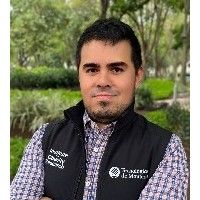
Iván Andres Luzardo-Ocampo is a Research Professor (tenure-track) at Tecnológico de Monterrey, holding dual appointments in the Institute for Obesity Research and the Department of Bioengineering at Campus Querétaro. His academic journey spans institutions across Colombia, Mexico, Spain, and the United States, reflecting a truly international research perspective in food science and nutrition. Education: PhD in Food Sciences, Universidad Autónoma de Querétaro (2016-2020), Summa Cum Laude Master in Food Technology, Universidad Autónoma de Querétaro (2014-2016), Magna Cum Laude Food Engineering, Universidad del Quindío, Colombia (2007-2013) Academic visit at Autonomous University of Barcelona and University of Barcelona, Spain (2010-2011) PhD Research Scholar, University of Illinois at Urbana-Champaign, USA (2018-2019) Dr. Luzardo-Ocampo's research focuses on the impact of food prototypes and metabolites in metabolic disease models (obesity, inflammation, diabetes), utilization of food by-products as sources of biologically active compounds, and in vitro/ex vivo simulation of gastrointestinal digestion. His interdisciplinary work bridges food science, nutrition, and biomedical engineering to develop functional foods that address global health challenges including obesity and metabolic disorders. He is particularly interested in phenolic compounds from plant sources and their health implications. Analysis of Dr. Luzardo-Ocampo's recent publications (2023-2025) reveals a strong emphasis on food by-products valorization, phenolic compounds analysis, and their impact on metabolic health. His research spans multiple disciplines including food chemistry, nutrition science, and biomedical applications. Key trends include the investigation of underutilized plant materials (mango bagasse, corn by-products, avocado), development of plant-based functional foods, and examination of food processing effects on bioaccessibility and biological activity. His work frequently employs in vitro digestion models to assess these properties. Scientific Awards and Honors: US National Academies of Sciences delegate (2024) Mars Corporation Fellow (2022) Mexican Representative at the Lindau's Nobel Conferences (Germany, 2022) American Society for Nutrition's Global Nutrition Early Research Scholar Award (2021) 2nd Place at the Alejandrina Research Award (Mexico, 2020) PhD Summa Cum Laude (2020) and MSc Magna Cum Laude (2016) Mexican Researcher Certification - Level 1 Dr. Luzardo-Ocampo serves as an editorial board member for multiple prestigious journals including the Journal of Functional Foods (Elsevier), Journal of Food Quality (Wiley), Journal of Food Processing and Preservation (Wiley), and International Journal of Food Science (Wiley). He has reviewed for over 60 journals in food science, nutrition, biochemistry, biotechnology, and microbiology fields. His research has attracted significant attention, as evidenced by numerous citations and social media mentions across platforms. He actively engages in community-focused education initiatives, as demonstrated by his work on unconventional laboratory concepts for bioengineering student development. As part of the Institute for Obesity Research at Tecnológico de Monterrey, Dr. Luzardo-Ocampo contributes to a multidisciplinary team addressing global nutrition challenges. His work aligns with several UN Sustainable Development Goals including Zero Hunger, Good Health and Well-being, and Climate Action. The Healthy Foods Unit where he works focuses on developing innovative food solutions to combat obesity and related metabolic disorders through scientific research and technological innovation.
Derek Hales is a Researcher at the University of Salford's School of Science, Engineering & Environment, affiliated with the Built and Human Environments (BuHU) research group and MediaCityUK Immersive Technology Innovation Accelerator. His work bridges architecture, literature, media, and science through speculative design methodologies, operating at the intersection of posthuman futures, cyberphysical technologies, and virtual architectures. His research explores speculative design fiction, experimental architecture, and digital twinning through para-academic initiatives including The New Centre for Research & Practice, Extraordinary Experimental Laboratory, and DreamLab collective. Key projects examine 'machinic organs' for Soft House architecture and infrastructure digital twinning, drawing on Deleuzian philosophy and process thought to challenge disciplinary boundaries between the vegetal, machinic, and virtual. Hales' 12 recent publications (2013-2025) reveal evolving focus from foundational design fiction taxonomies toward digital twinning applications and pataphysical computing. His work consistently engages with objectile theory, anticipation studies, and the philosophical dimensions of virtual architecture, demonstrating interdisciplinary reach across architecture, media studies, and STEM education. Scientific contributions include editorial roles for Digital Creativity and Architecture and Culture , with special issues on design fiction (2013, 2025) and speculative hardware (2016). His research has secured funding from Arts Council England, AHRC, EPSRC, HEIF, ERDF, and UKRI via Innovate UK. As an educator, Hales teaches postgraduate modules including Histories/Theories & Methodologies, Advanced Digital Design Technologies, and Dissertation supervision. Formerly Director of the Professional Doctorate in Built Environment and Master of Architecture programme, he currently convenes the Practice Futures lecture series and leads Professional Studies development within the School.
Stephen Ward is a Reader in Politics and Subject Head of the Politics and Contemporary History Group at the University of Salford's School of Arts, Media and Creative Technologies. He has maintained a continuous academic career at Salford since 1995, with a temporary appointment at the Oxford Internet Institute, University of Oxford from 2005-2009. Ward received his education at the University of Warwick, London School of Economics, and the University of West of England. His academic background established the foundation for his research at the intersection of digital technologies and political processes. His research program systematically examines how digital communication transforms political engagement and institutions. Ward investigates internet and politics, political participation and campaigning, online political communication, and public perceptions of intelligence agencies. His work addresses critical tensions between government secrecy and public accountability, particularly regarding intelligence services. He has published extensively on social media's impact on political representation, election campaigns, and the growing challenge of online political abuse, with over 70 research publications in the field of media and political communications. Ward's scholarly output reveals an evolving research trajectory from early studies of internet politics to contemporary analyses of social media's role in elections, parliamentary communication, and public trust in intelligence agencies. His work demonstrates methodological sophistication in analyzing digital political communication while addressing pressing democratic concerns about misinformation, polarization, and online abuse. Recent publications focus on intelligence agency representation in the press and the complex relationship between public knowledge and trust in security services. As Subject Head of the Politics and Contemporary History Group, Ward leads academic initiatives within the Politics & Contemporary History Research Centre at Salford. He teaches across British politics and political history modules, along with specialized courses on political communication and social media and politics, shaping the next generation of political analysts and practitioners.
Chrystal Cherniwchan is a Lecturer in the School of Arts, Media and Creative Technologies at the University of Salford, where she leads undergraduate photography modules including Creative Communities, Street & Studio, and Resolution. Her practice-based research critically investigates expanded documentary methodologies through photography, film, audio field recordings, and creative non-fiction, focusing on affective dimensions of recorded experience and more-than-human knowledge systems. Her educational qualifications include: Bachelor of Fine Arts (Complete) Master of Arts (Complete) Postgraduate Certificate in Academic Practice (PGCAP), University of Salford (2025) Cherniwchan's research interrogates the intersection of feminist new materiality, aural diversity, and ethical systems of care within contemporary art practice. She critically examines hyper-tools in digital generative methods to challenge artifice in mechanical reproductions and ontological understanding within machine learning realities, emphasizing sensuality and atmospheric production in documentary outputs. Recent outputs demonstrate consistent exploration of sound art and environmental documentation, particularly through collaborative field-recording projects like 'Non Mountain' and 'Grass Folded'. These works investigate sensory experience and more-than-algorithmic knowledge systems, while her artist features highlight emerging practices in contemporary photography and visual arts. Scientific recognition includes: The Agassi Book Arts Prize (2019) for innovative book arts practice As an Academic Progress Reviewer for undergraduate levels 4 and 6, she provides academic guidance while developing curriculum through modules exploring photographic book formats and creative resolution. Her AdvanceHE Fellowship reflects commitment to pedagogical excellence in arts education. Cherniwchan collaborates with sound artists like Angus Carlyle and Craig Tattersall on projects investigating acoustic ecology, forming interdisciplinary teams that bridge environmental studies, sensory anthropology, and experimental documentary practice.
David Savill is a Senior Lecturer in Creative Writing at the School of Arts, Media and Creative Technologies, University of Salford, where he founded and leads the BA Hons Creative Writing Multidiscipline program. He coordinates the Northern School of Writing, a university-wide network of professional writers driving Salford's literary ecosystem through community partnerships and the Salford Literacy Matters Network (152 educators). His academic background includes a Master's in Creative Writing from Birkbeck College (2008-2009) and a Bachelor's in English and Creative Writing from the University of East Anglia (1996-1998). As a Senior Fellow of Higher Education (2023), he pioneered curriculum development for creative writing degrees and teaches modules including Teaching Masterclass, Final Portfolio, and Introduction to Children's Fiction. Savill's research integrates creative practice with community literacy, examining reading motivation through place-based methods. His fiction explores Central European political decay, notably in the award-winning novel 'They Are Trying to Break Your Heart' (2016), which analyzes Bosnian War trauma through intergenerational narratives. Current projects investigate reading barriers among Salford's teens and new parents using participatory action research. His recognitions include France's Lectures Plurielle Debut Novel Award (2016), Desmond Elliot Prize shortlisting (2016), and three 2024-2025 research awards funding Salford literacy innovation networks. He organizes the 2025 Salford Literacy Symposium and leads advisory boards with Birmingham, Reading, and Royal Holloway universities alongside the National Literacy Trust. Savill's teaching directly applies his research, developing programs that bridge academic writing with community literary engagement. His grants focus on translating reading behavior insights into practical interventions for Salford's schools and community centers, particularly targeting demographics with declining reading-for-pleasure rates. He directs the Northern School of Writing innovation network and co-leads the Salford Literacy Matters Network's research consortium, which includes Manchester City of Literature and national literacy organizations to drive place-based pedagogy advancements across Greater Manchester.
Dr Alex Lichtenfels is a Senior Lecturer in Film Production at the University of Salford's School of Arts, Media and Creative Technology, serving as Subject Group Head for Film. He leads the MA Film Production module on Collaboration and Co-creation while teaching Directing, Producing, and Film Theory. His academic credentials include: BA Film with Television Studies from University of Warwick (2002-2005) MA Film and Television Studies from University of Warwick (2005-2006) PhD from Queen Mary University of London (2008-2012) Lichtenfels' research centers on devising ethical cinematic spaces where filmmakers and audiences co-create transformative 'events' through experimental processes. His work bridges theatre traditions and film innovation, focusing on collaborative creation, materiality of practice, and challenging established worldviews through fiction. Key projects include adapting theatrical models for cinema and investigating truth models in documentary-fiction hybrids. Analysis of his 2019-2023 outputs reveals consistent exploration of interdisciplinary connections between performance studies and film. Works like 'Becky' (2023) and 'Materiality of Nothingness' (2020) demonstrate how theatrical devising techniques generate new cinematic forms, emphasizing craft documentation and ecological memory. This trajectory shows increasing integration of cross-cultural workshops and philosophical inquiry into film practice. Alex actively supervises PhD and MPhil students and co-founded the International Network of Experimental Fiction Filmmaking (INEFF) in 2023 with colleagues from Salford and London South Bank University. His current Bacchae adaptation project investigates fiction-devise relationships within collaborative frameworks through the Creative Technology Research Centre.
Dawn Surgenor is a Lecturer in the Department of Hospitality, Tourism and Events Management within the Ulster University Business School at Ulster University's Coleraine campus. Her office is located in Room L117A, Cromore Road, Coleraine, Co. Londonderry, BT52 1SA. Dr. Surgenor's research focuses on critical food security issues, with particular expertise in food insecurity, food choice, domestic cooking practices, and diet quality. Her work contributes significantly to Sustainable Development Goals related to zero hunger and good health and well-being. Her research examines how socioeconomic factors impact food access and preparation, with special attention to vulnerable populations across the island of Ireland. Her publication record demonstrates a strong focus on food poverty, nutritional science, and public health policy. Recent work includes investigations into food insecurity measurement, children's food security, and the relationship between household economics and food choices. Her research often employs interdisciplinary approaches combining nutritional science with social policy analysis. Scientific Awards: An Exhibition: Our Food. Cooking and recipes of Ulster. Then and Now. (Honorary award, 2019) Dr. Surgenor has been actively involved in research collaborations across Ireland, contributing to major studies on food security and domestic food practices. Her work has received media attention, including coverage in outlets reporting on research revealing that men and young adults have the least kitchen know-how in Northern Ireland. She has contributed to policy discussions through evidence sessions such as the CHILDREN'S FUTURE FOOD INQUIRY. Her research activities span multiple dimensions of food science and security, with a particular emphasis on practical applications for improving nutritional outcomes in communities facing food poverty challenges. She maintains an active research profile with publications spanning from 2015 to 2022.
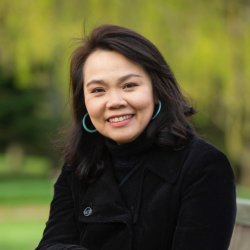
Dr. Maltika Siripis is a Teaching Fellow and interim Programme Leader for the MSc in International Tourism Management at the University of Surrey. Her research examines the influence of popular media on destination marketing and tourist experiences, with additional focus on developing experience-based tourism products that benefit local communities. Industry engagement includes prior membership on Thailand Tourism Council's Academic Committee. Teaching responsibilities encompass modules in Visitor Attraction Management, Strategic Tourism Management, Services Marketing, and Research Methods. Current research investigates how film and media representations shape destination perceptions and the design of community-based tourism experiences that create economic opportunities while enhancing visitor satisfaction. Her work demonstrates that tourists actively negotiate between media-constructed destination images and lived experiences, challenging passive consumption models in tourism studies.