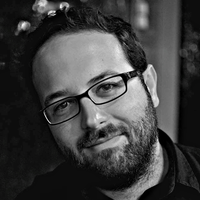
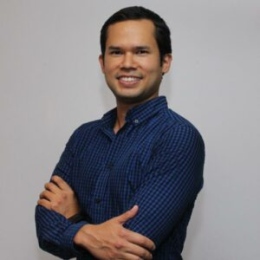
Nikolce Murgovski is an Assistant Professor at Chalmers University of Technology, specializing in Mechatronics . He focuses on electric and hybrid vehicle energy management , autonomous driving systems , and optimization algorithms for powertrain design. His work bridges control theory , battery technology , and transport electrification . Current projects include CHARGE (2023–2026) for charging and trip planning , and EcoPilot (2022–2026) for energy-efficient autopilot development. Collaborates with institutions like Volvo Cars , Swedish Electromobility Centre , and VINNOVA on autonomous vehicle control and thermal energy systems . His recent publications emphasize convex optimization , eco-driving strategies , and collision avoidance in complex environments. He has contributed to tools like CONES for electromobility studies and has led research on hybrid powertrains and predictive energy management .
Georgios Andrikopoulos is an Assistant Professor at KTH Royal Institute of Technology's Department of Industrial and Environmental Management (ITM), affiliated with the Digital Futures Faculty. He serves as Co-Principal Investigator (Co-PI) on the 'Real-time exoskeleton control for human-in-the-loop optimization' project, focusing on advanced robotics and human-technology interaction. His research spans soft robotics, exoskeleton systems, and adaptive climbing robots, with applications in healthcare, aerospace, and education. Key projects include: "Connecting Bodies – Designing Shape-changing Wearables" (Postdoc Fellowship, 2023–2025) "Advancing real-time exoskeleton control for human-in-the-loop optimization" (Demonstrator Project) SEC scholar collaboration with Mohamed Elbadawi (May–June 2024) Research interests emphasize: Soft robotic actuators for safe human interaction Optimization of compliant mechanisms in robotics Vortex adhesion systems for autonomous inspection Design of child-friendly interactive robots His work integrates robotics with control systems, biomechanics, and human-centered design. Over 50 peer-reviewed articles demonstrate contributions to exoskeleton technology, climbing robot algorithms, and soft actuator modeling. He advises students like Laia Turmo Vidal (Postdoc) and Mohamed Elbadawi (SEC scholar). Affiliated with the cross-disciplinary Digital Futures initiative, he collaborates with Stockholm University and RISE Research Institutes to address societal challenges through digital innovation.
Micael Derelöv is an Associate Professor at Linköping University's Department of Management and Engineering (IEI), specializing in Product Realisation (PROD). His work focuses on optimizing safety, reliability, and efficiency in industrial and aerospace systems. He contributes to sustainable product development through advanced methodologies in design optimization and failure analysis. His research integrates robotics, manufacturing systems, and systems engineering to address challenges in collaborative assembly, aircraft design, and risk management. Dr. Derelöv’s research interests include multi-objective optimization for balancing safety and weight in aircraft systems, industrial safety demonstrators, and reliability-centric design processes. He has developed frameworks for evaluating design concepts and identifying potential failures in early-stage engineering projects. His work also explores the application of genetic algorithms in concept synthesis and the use of qualitative modeling for risk assessment. His publications highlight trends in industrial safety, systems reliability, and aerospace engineering. Recent work includes advancements in safe collaborative robotics on assembly lines and methodologies for industrial safety demonstrators. Earlier contributions address cost optimization in reliability-focused design and bio-mechatronic product development. While no specific scientific awards are listed, his active research and academic role reflect a commitment to advancing engineering practices. He collaborates on student projects, such as a recent initiative designing a pressure-resistant device for space exploration, demonstrating engagement in applied and interdisciplinary research. Micael Derelöv’s affiliation with the Department of Management and Engineering positions him at the intersection of academic research and industrial innovation, particularly within the Product Realisation group. His work emphasizes sustainable, integrated approaches to product development, blending theoretical insights with practical applications in manufacturing and aerospace sectors.
Jonas Sjöberg is a Full Professor of Mechatronics at Chalmers University of Technology, where he leads the Mechatronic research group in the College of Engineering. His research spans multiple aspects of mechatronic systems with a strong focus on automotive applications. Sjöberg holds leadership roles in numerous research projects related to autonomous vehicles, vehicle control systems, and transportation safety. His research interests encompass a broad spectrum of mechatronics applications, with particular emphasis on model-based methods, signal processing, control systems, system identification, and optimization for design and product development of mechatronic systems. Sjöberg's work bridges theoretical control engineering with practical automotive applications, especially in the domains of Automotive Active Safety and Hybrid Electric Vehicles. Analysis of Sjöberg's recent publications reveals a strong research trajectory focused on autonomous vehicle technologies, with particular attention to vehicle dynamics control, intersection safety, road surface condition estimation, and optimization of vehicle maneuvers. His work demonstrates a consistent approach of applying advanced control theory to solve real-world transportation challenges, with increasing emphasis on machine learning techniques integrated with traditional control systems. Sjöberg actively supervises research and education at both undergraduate and graduate levels while leading multiple research projects funded by VINNOVA, the European Commission, and other organizations. His research group collaborates extensively with both academic institutions and industry partners in the automotive sector. His laboratory work focuses on mechatronic systems development, particularly for automotive applications including autonomous bicycles, bus docking systems, and vehicle control algorithms. The research group maintains strong connections with the automotive industry, particularly in Sweden's robust vehicle technology ecosystem.
Cecilia Boström serves as a Senior Lecturer (Universitetslektor) and Docent at Uppsala University's Department of Electrical Engineering within the Faculty of Science and Technology. She holds dual roles as both an academic faculty member and Prefect (Head) of the Department of Electrical Engineering at the Ångström Laboratory. Her institutional email is cecilia.bostrom@angstrom.uu.se and she can be reached at phone number 018-471 58 55. Dr. Boström's research primarily focuses on electrical systems for renewable energy applications, with particular emphasis on wave power technology. Her work spans renewable energy integration, power grid stability, marine energy systems, and electrical engineering solutions for sustainable energy. She has extensively studied wave energy converters, power electronics for renewable integration, grid-forming control systems, and the application of marine energy for desalination and freshwater production. Her research aims to ensure that a significant portion of the world's future energy supply comes from renewable sources while maintaining reliable power systems. Analysis of her recent publications reveals a strong trend toward grid integration of renewable energy sources, particularly wave power systems. Her work demonstrates increasing focus on power electronics control strategies, grid-forming capabilities for island electrification, and service stacking with energy storage systems to address grid congestion. There's also a clear trajectory toward practical applications of wave energy for specific use cases like freshwater production on islands and vehicle-to-grid integration. Dr. Boström has been consistently active in wave energy research since the early 2000s, with numerous publications related to the Lysekil wave energy research site in Sweden. Her work spans theoretical modeling, experimental validation, and practical implementation of wave energy conversion systems. She appears to be actively involved in advising students and collaborating on research projects, as evidenced by her numerous co-authored publications across various topics in electrical engineering and renewable energy. Her work frequently intersects with energy storage applications, power quality assessment, and innovative control strategies for renewable integration. Dr. Boström is part of Uppsala University's wave energy research group, which has been conducting experiments at the Lysekil research site since the mid-2000s. This group has developed direct-drive linear generator technology for wave energy conversion and has been instrumental in advancing marine renewable energy research in Sweden.
Alejandro Kuratomi Hernandez is an Associate Senior Lecturer (ranked as Senior Lecturer) at Stockholm University's Department of Computer and Systems Sciences, part of the Faculty of Social Sciences. His research focuses on Applied Machine Learning, Interpretability, and Fairness in AI. He holds a M.Sc. in Mechatronics from KTH Royal Institute of Technology and dual B.Sc. degrees in Mechanical Engineering and Industrial Engineering from Universidad de Los Andes. He has supervised multiple master’s theses on topics like counterfactual explanations, interpretable algorithms, and fairness measurement. His work bridges academic research with industrial applications, often collaborating with companies to develop AI solutions. He is affiliated with the Data Science Research Group, which emphasizes core data science methodologies and their practical decision-making applications. Recent publications address challenges in positioning error prediction, justified counterfactual explanations, and fairness metrics using counterfactual analysis. Teaching includes roles as a teaching assistant for Machine Learning, Programming for Data Science, and AI Principles courses. His advising spans projects in XAI (eXplainable AI), medical image analysis, and interpretable neural networks. He actively contributes to the development of algorithms that enhance AI transparency and ethical compliance.
Alejandro Kuratomi is an Assistant Professor in Data Science at the Department of Computer and Systems Sciences (DSV), Faculty of Social Sciences, Stockholm University. His academic journey includes a Ph.D. in Machine Learning (2024), M.Sc. in Engineering Design: Mechatronics (2019), and dual B.Sc. degrees in Industrial and Mechanical Engineering (2014). Ph.D., Machine Learning – DSV, Stockholm University M.Sc., Mechatronics – KTH Royal Institute of Technology B.Sc., Industrial Engineering – Universidad de Los Andes B.Sc., Mechanical Engineering – Universidad de Los Andes Kuratomi’s research focuses on Machine Learning Interpretability , Algorithmic Fairness , and Multivariate Time Series Classification , with applications in GNSS error estimation and healthcare decision-making. He develops interpretable models like CRITS and ORANGE to address technical and ethical challenges in AI. His recent work explores Transformer/LLM interpretability , mechanistic explanations , and integer-justified counterfactuals . While no awards or students are mentioned, his publications highlight interdisciplinary efforts combining computer science, ethics, and engineering.
Meng Yuan is a Marie Skłodowska-Curie Fellow at Chalmers University of Technology , affiliated with the Control Engineering department. Previously, he was a Research Fellow at the Rehabilitation Research Institute of Singapore, Nanyang Technological University, and earned his PhD in Electrical and Electronic Engineering from the University of Melbourne. Research Focus: Control theory, energy systems, rehabilitation engineering, robotics, and industrial automation. Notable Projects: Integration of reinforcement learning and predictive control for energy management in smart homes (SmartHOME), funded by the European Commission (EU). His recent publications explore machine learning for industrial load forecasting, deep reinforcement learning in manufacturing optimization, and safety-critical control systems for assistive robots. A 2024 Advanced Engineering Informatics paper highlights his work on steel logistics, while a 2023 IEEE Transactions on Cybernetics article details wheelchair speed control using robust MPC. Awards: Marie Skłodowska-Curie Fellowship Collaborative Networks: Active in smart home energy projects and industrial robotics teams at Chalmers. Supervises research in control algorithm development but no specific students are listed in the provided data.
Jonas Fredriksson is a Professor in the Mechatronics research group at the Department of Systems and Control Engineering, Chalmers University of Technology. His work focuses on electric/hybrid vehicles, vehicle dynamics, active safety systems, and optimization-based coordination of automated vehicles. Academic Rank: Professor Affiliation: Chalmers University of Technology Department: Systems and Control Engineering Email: jonas.fredriksson@chalmers.se Research Themes: Powertrain control and energy management for electric/hybrid vehicles Advanced control strategies for heavy articulated vehicles Autonomous driving in confined environments Battery thermal management and charging optimization Vehicle stability and safety systems using Newtonian mechanics Article Trends: Recent publications emphasize 1) optimization algorithms for electric vehicle coordination, 2) aerodynamic modeling under crosswind conditions, 3) stochastic approaches to longitudinal vehicle dynamics, and 4) robust control systems for articulated heavy vehicles. The work combines classical mechanics with modern machine learning techniques. Teaching & Leadership: Supervises doctoral students and leads research projects in mechatronics. Manages the master's program in Systems, Control and Mechatronics. Teaches courses in mechatronics and vehicle control systems.
Björn Åstrand serves as a Senior Lecturer at Halmstad University's School of Information Technology, specializing in mechatronics and autonomous systems with the additional qualification of Associate Professor (Docent). His research develops perception and cognition systems for mobile robots, focusing on agricultural robotics, automatic guided vehicles, and self-driving vehicles. He applies signal processing and machine learning to semantic mapping, human tracking, agent behaviour modelling, intention estimation, object detection/classification, and autonomous vehicle safety systems. Dr. Åstrand teaches Electrical Circuits and Electronics, Design of Mechatronical Systems, Intelligent Vehicles, Robotics, Sensors, Signals and Systems, and Signals and Sensors courses. He acts as course responsible and examiner for Bachelor of Science engineering theses while supervising undergraduate, postgraduate, and PhD students. No scientific awards were documented in the source materials. His academic supervision spans undergraduate theses, postgraduate research, and PhD candidate mentorship, with primary responsibility for engineering program thesis examination.
Christopher Jouannet is an Associate Professor and Docent at Linköping University's Department of Management and Engineering (IEI), affiliated with the Fluid and Mechatronic Systems (FLUMES) group. His work focuses on aircraft design, sustainable aviation, and system-of-systems engineering. He holds a position in the Fluid and Mechatronic Systems department, contributing to interdisciplinary research at the intersection of aerospace and systems engineering. Research interests include sustainable aviation technologies, unmanned aerial systems, agent-based simulation frameworks, and ontology-driven system design. His recent work addresses economic viability of regional aircraft concepts, zero-emission transportation strategies in Scandinavia, and technology assessments for defense-related airborne platforms. Publications emphasize innovative approaches to aircraft actuation systems, multi-fidelity modeling integration, and systems-of-systems architectures. His contributions span both academic journals and conference proceedings, with a strong emphasis on applied research impacting aviation sustainability and defense capabilities. Labs/Teams: Active member of the FLUMES research group, collaborating on projects involving conceptual aircraft design, system integration, and advanced simulation methodologies.
Satyam Paul is a Senior Lecturer in Mechanical Engineering at Örebro University, Sweden. His academic journey includes roles as Senior Research Fellow at University of Nottingham (2022-2023), Assistant Professor at University of the West of England (2020-2021), and postdoctoral researcher positions at Örebro University (2018-2020) and Tecnológico de Monterrey (2018). He holds a PhD from CINVESTAV-IPN (Mexico), MSc in Mechatronics from VIT University (India), and BEng in Mechanical Engineering from NIT (India). Research Focus: Vibration control, fault detection in mechanical systems, control theory, and mechatronics. Key areas include active vibration control of structures, chatter suppression in milling processes, and fuzzy logic-based control systems. Research Projects: "A general digital twin driving mining innovation" (ongoing) "Production Centred Maintenance (PCM)" "Digital twin for sustainable production as a service" Awards: Full Fellowship Status (FHEA, UK) for teaching excellence in higher education. Grants & Labs: Active in the "Digitalized product and production development" research group. Leads projects combining statistical/logical modeling with industrial applications. Publications: Over 15 peer-reviewed articles in journals like Applied Sciences , IEEE Access , and Journal of Vibration and Control , plus book chapters and conference proceedings on structural control and mechatronics.
Jonas Sjoberg is a Professor of Mechatronics at Chalmers University of Technology and leader of the Mechatronics research group. His work spans over 30 years with 143 publications and leadership in 29 research projects. His current research focuses on autonomous vehicle systems, vehicle dynamics, and traffic safety applications. Dr. Sjoberg's research interests center on mechatronic systems for transportation applications. His work bridges theoretical control systems with practical automotive implementations, particularly in autonomous vehicle technology. His research group investigates vehicle dynamics, path planning, intersection management, and safety systems, with growing emphasis on micromobility applications including autonomous bicycles and pedestrian interaction. Recent work demonstrates strong focus on real-world applications of control theory to improve vehicle safety and performance. His publication record shows consistent output with 15+ papers annually, demonstrating sustained research activity. The work spans fundamental control theory (system identification, nonlinear control) to applied transportation problems (intersection management, road surface estimation, autonomous docking). Recent publications show increasing focus on micromobility applications, particularly autonomous bicycles, and integration of machine learning techniques with traditional control approaches. Dr. Sjoberg leads multiple significant research projects including MicroSIM (2026-2027), Mintox (2025-2026), and MicroITS, with funding from VINNOVA, EU, and industry partners. His projects address critical challenges in autonomous vehicle safety, micromobility integration, and traffic management. As leader of the Mechatronics research group, Dr. Sjoberg oversees research on vehicle control systems, autonomous driving technologies, and safety applications. His laboratory work focuses on practical implementation of theoretical control concepts, with recent emphasis on bicycle dynamics and micromobility safety systems.
Raffaello Mariani is an Associate Professor at the Royal Institute of Technology (KTH), affiliated with the AEROSPACE, MOVEABILITY AND NAVAL ARCHITECTURE school and the Aeronautical and Vehicle Engineering Unit. He holds a BSc in Aerospace Engineering from Embry-Riddle Aeronautical University (2003), an MEng in Experimental Methods from Old Dominion University (2005), and a PhD in Fundamental Fluid Dynamics from The University of Manchester (2012). His career includes roles at BMT FM, ONERA, and Nanyang Technological University before joining KTH in 2018. Research focuses on experimental aerodynamics, supersonic jets, shock wave dynamics, and UAV design. Key areas include wind tunnel testing techniques (e.g., rainbow schlieren), flow control strategies, and hybrid-electric propulsion systems for sustainable aviation. He leads the Green Raven project, developing a hydrogen-powered blended-wing-body UAV to combat climate change. Teaching responsibilities include courses like Advanced Topics in Aeronautics and Future Sustainable Aviation . Active in interdisciplinary collaborations, he integrates electrochemistry, mechatronics, and embedded systems into aerospace engineering solutions. Award-winning contributions include pioneering work on vortex ring interactions and supersonic jet noise mitigation. His recent studies explore bio-inspired wing designs and ground-effect aircraft optimization.
Raghu Chaitanya Munjulury is an Adjunct Associate Professor at Linköping University's Department of Management and Engineering (IEI), specializing in Fluid and Mechatronic Systems (FLUMES). His work focuses on advancing aircraft design methodologies through interdisciplinary approaches in systems engineering, simulation, and knowledge-based frameworks. He holds a formal academic appointment at Linköping University, contributing to both research and education in aerospace systems and multidisciplinary engineering. Research Interests: Conceptual aircraft design optimization Model-based systems engineering (MBSE) Multi-fidelity simulation techniques Integration of artificial intelligence in engineering workflows Knowledge-driven design automation Recent publications highlight innovations in aircraft environmental control systems, ontology-assisted design processes, and interoperability standards for system integration. His work bridges computational methods with practical aerospace applications, emphasizing digital engineering practices. Collaborations include projects on firefighting aircraft systems, hydrogen fuel integration, and unmanned aerial systems. Munjulury's contributions extend to advancing standardization efforts in geometry-physics modeling exchange and virtual reality applications for aircraft cabin design. His research aligns with global trends in sustainable aviation and digital transformation in engineering sectors.