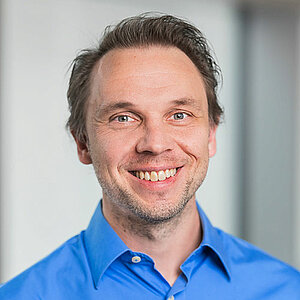
Prof. Dr. Markus Zimmermann leads the Chair of Product Development and Lightweight Design at the Technical University of Munich (TUM). With a background in mechanical engineering from TU Berlin and the University of Michigan, and a doctorate from MIT on solid-state singularities, he bridges academic rigor with industrial application. His career spans 12 years at BMW focusing on vehicle development before transitioning to academia. Specializes in solution space engineering for robust design Expert in additive manufacturing and systems engineering Develops methodologies for managing design complexity and uncertainty His research focuses on multidisciplinary design optimization and lightweight structures , particularly in robotics and automotive systems . His team applies digital twin frameworks and attribute dependency graphs to enhance design processes. Recent publications emphasize topology optimization in robotic systems and thermal management for medical X-ray sources. Key trends in his 2024-2025 publications include: Topological optimization for additive manufacturing and robotics Application of solution spaces to manage design uncertainty Development of compact X-ray systems for medical therapy Integration of digital twin technologies in industrial contexts
Max Planck Institute for Intelligent SystemsGermany
Michael Mühlebach is a Research Group Leader at the Max Planck Institute for Intelligent Systems in Tübingen, Germany, leading the independent Learning and Dynamical Systems group. His academic journey began at ETH Zurich where he earned his B.Sc. (2010) and M.Sc. (2013) in mechanical engineering, specializing in robotics, systems, and control. He completed his Ph.D. at ETH Zurich in 2018 under Prof. R. D'Andrea, followed by postdoctoral research at UC Berkeley with Prof. Michael I. Jordan. Dr. Mühlebach's research spans machine learning, dynamical systems, control theory, and optimization . His work bridges theoretical foundations with practical applications in robotics, developing methods that incorporate physical constraints and system dynamics into learning frameworks. His group focuses on online learning, physics-informed machine learning, and large-scale optimization for cyber-physical systems, with applications in electromagnetic navigation, robotic table tennis, and energy-efficient flight systems like the shape-changing robot Floaty . His publication record shows a strong focus on constrained optimization, with recent work exploring decision-dependent stochastic optimization, nonlinear feedback, and the theoretical foundations of reinforcement learning. His research integrates perspectives from control theory, dynamical systems, and optimization to develop algorithms with strong theoretical guarantees and practical performance. Outstanding D-MAVT Bachelor Award Willi-Studer prize for best Master's degree ETH Medal and HILTI prize for doctoral thesis Branco Weiss Fellow (2018) Emmy Noether Fellowship (2020) Amazon Fellowship (2024) Dr. Mühlebach actively mentors doctoral researchers and is seeking talented students for PhD and Master's projects. His research group has received funding from multiple prestigious fellowships and maintains collaborations across institutions including ETH Zurich, UC Berkeley, and various Max Planck research units. The group's work spans theoretical developments to practical implementations on robotic systems, demonstrating strong connections between mathematical theory and physical realization.
Jihyun Lee is an Assistant Professor in the Department of Mechanical and Manufacturing Engineering at the Schulich School of Engineering, University of Calgary. She was awarded the Anna Boyksen Fellowship by the Technical University of Munich Institute for Advanced Study (TUM-IAS) in 2021, hosted by Prof. Michael Zäh. Doctorate in Mechanical Engineering from University of Michigan-Ann Arbor (2016) Prior post at Korea Institute of Machinery and Materials (2016-2019) Her research focuses on mechatronics, robotics, manufacturing automation, and control systems , with applications in machine tools, additive manufacturing, and precision measurement. She integrates artificial intelligence and optimization to enhance industrial automation. Recent publications highlight work on vibration control , sensor fusion , and flexible manufacturing systems . Her team explores dynamic modeling , nanocomposite sensors , and human-in-the-loop robotics for industrial and marine applications. 2020 Remote Teaching Award, Schulich Engineering 2020 Early Achievement Award, Association of Korean-Canadian Scientists and Engineers 2018 Best Achievement Award, KIMM She supervises doctoral and master’s students at the University of Calgary, emphasizing hands-on experience and MATLAB/Python simulation skills in her lab. Her work bridges quantum logic and industrial robotics through interdisciplinary collaborations.
Joachim Weickert is a Professor of Mathematics and Computer Science at Saarland University where he heads the Mathematical Image Analysis Group since 2001. He received his diploma and Ph.D. in mathematics from the University of Kaiserslautern (1991, 1996), and a habilitation degree in computer science from the University of Mannheim (2001). Prior to his current position, he worked as a research assistant at the University of Kaiserslautern, as a post-doctoral researcher at the universities of Utrecht and Copenhagen, and as an assistant professor at the University of Mannheim. His research focuses on image processing, computer vision, and scientific computing, with special emphasis on techniques based on partial differential equations, variational principles, wavelets, morphological and nonlocal methods, as well as neuroexplicit approaches. He has developed mathematical models and efficient numerical algorithms for image restoration, enhancement, segmentation, compression, optic flow computation, stereo reconstruction, shape from shading, and signal processing methods for tensor fields. These ideas have been successfully applied in industry, biomedical image analysis, and other fields. Analysis of his recent publications reveals a strong trend toward combining traditional PDE-based methods with modern deep learning approaches, particularly in the areas of image inpainting and compression. His work increasingly explores the connections between numerical algorithms for partial differential equations and neural network architectures, demonstrating how mathematical foundations can inform cutting-edge AI techniques while maintaining strong theoretical guarantees. Gottfried Wilhelm Leibniz Prize (2010), considered the most important research award in Germany ERC Advanced Grant (2017) for "Inpainting-based Compression of Visual Data" Elected member of Academia Europaea - The Academy of Europe Jan Koenderink Prize for Fundamental Contributions in Computer Vision (2014) Multiple DAGM Prizes and Best Paper Awards throughout his career AAIA Fellow (2021) and Highly Ranked Scholar (2024) distinctions Professor Weickert has supervised over 250 bachelor's and master's theses and initiated the Master Programme in Visual Computing at Saarland University, the first of its kind in Germany taught in English. He has established numerous interdisciplinary collaborations with colleagues from medicine, bioinformatics, pharmacy, physics, mechatronics, and mechanical engineering. As Principal Investigator for Visual Computing within the Multimodal Computing and Interaction Cluster of Excellence, and former dean of the Faculty of Mathematics and Computer Science (2008-2010), he has played a significant leadership role in advancing visual computing research and education. He heads the Mathematical Image Analysis Group, which has been at the forefront of developing mathematical methods for image analysis. The group maintains strong connections with both theoretical mathematics and practical applications, bridging the gap between fundamental research and real-world implementation across various domains including medical imaging, industrial inspection, and multimedia processing.
Prof. Dr.-Ing. Ralf Beck serves as Professor for Control and Regulation Technology and Automation Technology at Hochschule Düsseldorf University of Applied Sciences within the Faculty of Electrical Engineering & Information Technology. His academic responsibilities span multiple degree programs including BEng Electrical Engineering, BEng Industrial Engineering, and MSc Electrical Engineering and Information Technology. His educational background includes Mechanical Engineering studies at TU Braunschweig (1998-2004), followed by doctoral research at RWTH Aachen's Institute of Control Engineering where he earned his Dr.-Ing. in 2010 with a dissertation on predictive energy management for hybrid vehicles. Prior to his current professorship, he held progressive roles at FEV Europe GmbH from 2009-2018, culminating as Senior Project Manager for Vehicle and Powertrain Electronics. Beck's research focuses on control engineering systems with particular emphasis on automation technology, regulation systems, and model-based development approaches. His work bridges theoretical control methodologies with practical automotive applications, especially in hybrid vehicle energy management, multi-robot systems, and intelligent air path control. The Modellfabrik Fab21 serves as his primary experimental platform for model-based development applications. His publication record since 2005 demonstrates consistent contributions to control engineering, particularly in hybrid vehicle systems, emission control optimization, and calibration methodologies. Recent work shows increasing focus on distributed robotics and intelligent transportation systems, reflecting evolving research directions while maintaining core expertise in control theory applications. As an educator, Beck teaches foundational and advanced courses including Electrical Engineering III, Control and Regulation Technology, Model-Based Development, Technical Mechanics, and Advanced Control Engineering at the Master's level. His teaching integrates theoretical concepts with practical laboratory applications through the university's Moodle platform, emphasizing hands-on implementation of control algorithms and system modeling techniques.
Dr. Philipp Allgeuer is a Postdoctoral Research Associate at the Knowledge Technology Research Group within the Department of Informatics at the University of Hamburg. His work focuses on humanoid robotics, bipedal locomotion, and sensor fusion. He holds a PhD from the Autonomous Intelligent Systems Group at the University of Bonn, alongside dual bachelor's degrees in Mechatronic Engineering and Mathematical/Computer Sciences (both with First-Class Honors). His research contributions include the development of the igus Humanoid Open Platform and the NimbRo-OP series of humanoid robots, recognized with awards like the RoboCup HARTING Open Source Award (2016) and the Best Humanoid Award (2018). He has authored influential papers on fused angles for robot balance, tilt phase space representations, and neuro-inspired control architectures. Allgeuer's teams have dominated RoboCup competitions, winning titles in AdultSize and TeenSize leagues multiple times. His open-source software frameworks (e.g., rot_conv_lib , attitude_estimator ) and hardware designs are widely used in robotics research. Recent work explores multimodal human-robot interaction and AI-driven robotic task coordination. He is affiliated with the Knowledge Technology Research Group and contributes to projects like the NICOL humanoid robot, bridging social interaction and reliable manipulation. His research spans from low-level control algorithms to high-level behavior planning systems.
Prof. Dr. Julius Schöning is a Professor at the Faculty of Engineering and Computer Science , Osnabrück University of Applied Sciences. His research focuses on Artificial Intelligence , Human-Computer Interaction , and Computer Vision within agricultural contexts. 2019–Present: Professor, Hochschule Osnabrück 2018–2019: System Architect, ZF Friedrichshafen AG 2014–2018: Researcher, University of Osnabrück 2009–2013: Project Lead/System Engineer, CLAAS Harsewinkel Education: M.Sc. in Intelligent Embedded Microsystems (Freiburg), B.Eng. in Mechatronics (DHBW Stuttgart) His research spans smart agriculture , quantum NLP , and explainable AI systems , with recent work on vibrotactile warning systems, AI compliance frameworks, and hybrid dataset applications in farming. Publications emphasize interdisciplinary approaches bridging technology and agricultural practice . Scientific honors include: DAAD Stipendium for conference participation Best Paper Award (2018) IEEE GHTC Student Paper Contest Winner (2016) Sonderpreis für gute Lehre (2017) Finalist/Falling Walls Lab (2015)
Prof. Dr.-Ing. John Heppe is a Professor in the Faculty of Engineering at Saarland University of Applied Sciences (htw saar), appointed from the Summer Semester 2023. His research and teaching focus on physical sensor technology, mechatronics, and biomechatronic applications. He has extensive industry experience in medical device development and holds multiple patents in moisture detection systems for vascular access monitoring. Aktuelle Lehrveranstaltungen: Actuators, Atomic and Solid-State Physics, Representation Methods and Statics, Dimensioning and Strength, Precision Engineering and Microtechnology, Mechatronics Project in English, Laser Measurement Technology and Design Methodology, Technical Mechanics in Production Environments, Non-Technical Aspects in Engineering Research Areas: Physical sensors, mechatronics, design methodology, product development, plant engineering, and component design Contact: john.heppe@htwsaar.de , +49 (0)681-5867-287, Room 9105, Goebenstraße 40, 66117 Saarbrücken
Prof. Dr.-Ing. Udo Fiedler is a faculty member at the Technical University of Central Hesse (THM), Department of Business Administration and Economics, where he serves as Head of the Production Engineering Laboratory and Member of the Senate. His academic work focuses on manufacturing engineering with specialization in high-speed machining, production processes, and machine tools. His research interests include: High-Speed Machining (HSC) and precision manufacturing Green machining of sintered parts in the green state Process optimization using statistical experimental design Machine tool technology and NC programming Industry 4.0 applications in manufacturing education Process monitoring and control for increased manufacturing safety Prof. Fiedler's publication record demonstrates an evolution from fundamental machining processes toward integrating AI with traditional manufacturing. His recent work shows strong emphasis on applying artificial intelligence to quality prediction, optimizing green machining processes, and implementing Industry 4.0 concepts through learning factory approaches, bridging traditional manufacturing engineering with modern digital technologies. His significant scientific contributions include: Development of methods for NC programming of complex workpieces Research on stability lobe diagrams for milling processes Studies comparing different production methods including HSC, EDM, and generative processes Work on mechatronic tool holders for process monitoring Applications in the ophthalmic industry for precision machining of spectacle lenses Prof. Fiedler teaches multiple courses at THM including Factory Planning/Ergonomics, Handling and Assembly Technology, Innovative Manufacturing Processes, and Machine Tools at the bachelor's level, and Learning Factory 1 and 2 at the master's level. He leads current research projects including Klag-Robotics (2023-2025), Loewe Project OST (2018-2021), and GrünSpan (2014-2015), demonstrating sustained research activity across multiple manufacturing domains.
Dr. Armin Wedler serves as Head of the Planetary Exploration Domain at the German Aerospace Center (DLR), Institute of Robotics and Mechatronics, where he leads cutting-edge research in space robotics and planetary exploration systems. With a doctorate in robotics from the University of Hannover, his career spans over 15 years of advancing robotic technologies for both extraterrestrial and terrestrial applications. His primary research interests focus on adaptive robotic systems for space environments, with specialization in mobile planetary robotics , compliant mechanisms , and autonomous navigation systems . His doctoral work on 'Adaptive passive compliant systems for use in robotics' established foundational expertise that has evolved into leadership roles in major international space missions. Dr. Wedler has coordinated significant contributions to projects including EXOMARS (ESA), DEXHAND (DLR-ESA), Mobile Payload Element (DLR-MPE), Next Lunar Lander (ESA-NLL), ROBEX (HGF), ARCHES (HGF), MASCOT (DLR, CNES, JAXA), and Rover for MMX (DLR, CNES, JAXA). His recent work demonstrates a strategic shift toward humanitarian applications, particularly through the AHEAD project which develops remotely controlled food aid delivery systems using robotic vehicles for inaccessible terrain. As leader of the Institute's Field Robotics Group and active participant in committees like ISCEG, he bridges theoretical robotics with practical implementation challenges in harsh environments. His technical trajectory shows continuous progression from scientific developer to system engineer, technical manager, project coordinator, and ultimately domain leadership.
Professor Marcel Huptych serves as faculty within the Faculty of Engineering at Hof University of Applied Sciences, maintaining an office in Building C, Room C120 on Campus Hof. His primary contact channels include email at marcel.huptych@hof-university.de and telephone number +49 9281 409 - 4413, with dedicated office hours held every Wednesday from 14:00 to 15:00. His academic specialization centers on Mechatronics, with concentrated expertise in Industrial Robotics and Automation Technology. These fields form the core of his instructional responsibilities, where he delivers advanced coursework integrating robotic systems and automated manufacturing processes within engineering education.
Prof. Alen Turnwald is a Professor at Technische Hochschule Ingolstadt (THI), affiliated with the Faculty of Electrical Engineering and Information Technology and the Department of Robotics. His expertise spans intelligent robotics, space applications, predictive control systems, and optimal motion planning. He holds a Dr.-Ing. (Doctor of Engineering) from TU Kaiserslautern and a Master's in Mechatronics from Leibniz University Hannover. Prior to his professorship, he served as Lead Engineer at e:fs Techhub GmbH (2019–2024) and held roles including Research Assistant at TU Kaiserslautern (2015–2019), Lecturer at Wilhelm Büchner University of Applied Sciences (2017–2018), and a DAAD research stay at Zhejiang University (2017). Research & Teaching: Develops robotics solutions for space applications and advanced control systems. Supervised projects such as the Suricate Robot (a two-wheeled inverted pendulum), documented on GitHub and described in tutorials. Involvement in ROS (Robot Operating System) development for education and control systems. Awards & Memberships: Recipient of the Deutschlandstipendium (2012). Grants & Labs: Lead developer on projects like the Suricate Robot, focusing on simulation and hardware integration. Collaborated with institutions such as DLR (German Aerospace Center) and Zhejiang University.
Prof. Dr. Frank Kirchner is a leading expert in robotics and artificial intelligence, serving as Executive Director of DFKI Bremen and Professor of Robotics at the University of Bremen since 2002. He founded the Robotics Innovation Center (DFKI Bremen) and co-founded the Brazilian Institute of Robotics (2013) and Institute for Maritime Technologies (MarTech, 2010). Education: Doctorate in Informatics (Dr. rer. nat, Bonn, 1999); Diploma in Informatics and Neurobiology (Bonn, 1994) Research Interests focus on biologically inspired robotic motion, highly redundant systems, AI-driven autonomous robotics, and cross-domain applications in space, maritime, and industrial contexts. His work bridges theoretical and applied robotics, emphasizing simulation-reality gaps and adaptive control frameworks. Recent Publications highlight advancements in co-design optimization for manipulators, planetary exploration robotics, and sensor-based industrial assembly learning, reflecting interdisciplinary trends in AI, mechatronics, and environmental adaptation. Scientific Awards: Honorary Doctorate (2017, SENAI CIMATEC, Brazil) BBAW Membership (2015–) Advising includes supervising 65 doctoral theses (38 completed, 27 in progress) and mentoring over 250 bachelor’s/master’s students at the University of Bremen. He leads major projects like AI-REEFSHIELD and FieldCoBots , with funding from EU, DFG, BMBF, and DLR.
Beuth University of Applied Sciences BerlinGermany
Prof. Dr.-Ing. André Jakob is a faculty member at Berlin University of Technology , affiliated with the Department VII - Electrical Engineering - Mechatronics - Optometry. His academic role spans teaching and research in digital signal processing, audio technology, and acoustics. Digital Signal Processing Audio Technology Acoustics Active Noise Control His research focuses on active noise control , simulation of moving sound sources , and audio signal processing , with applications in robotics, building acoustics, and medical devices. Publications include advancements in anti-noise window systems , sound source localization , and acoustic measurement techniques . His recent work explores real-time auralization for educational robotics and nonlinear acoustic modeling with neural networks. The 15 most recent articles demonstrate a consistent focus on acoustic simulation , active control systems , and sound propagation modeling , with conference contributions at DAGA, NAG-DAGA, and international acoustics events. Topics range from dental drill noise reduction to active sound design in musical instruments , reflecting interdisciplinary applications. He supervises numerous Master's and Bachelor's theses in areas like real-time signal processing, deep learning for sound recognition, and virtual acoustics. His lab at TU Berlin explores multi-loudspeaker systems , acoustic beamforming , and active noise cancellation for both industrial and consumer applications.
Rhenish Friedrich Wilhelm University of BonnGermany
Dr. Antonio Ortiz is a Researcher at the University of Bonn, affiliated with the Life and Medical Sciences Institute (LIMES) and the IRU Mathematics and Life Sciences group. He works under the supervision of Professors Alexander Effland and Jan Hasenauer. His research focuses on Computer Vision in Medical Imaging and Machine Learning applications. He holds a Ph.D. in Electric and Electronics Engineering from Cinvestav, Mexico (2023), a Master's in Computer Science from Cicese, Mexico (2019), and a Bachelor's in Mechatronic Engineering (2017). His research integrates Bayesian methods, deep learning, and optical flow techniques for cardiac MRI segmentation, visual-inertial SLAM systems, and 3D shape measurement. Recent work emphasizes adaptive algorithms for medical imaging and robotics applications. Publications span medical imaging, robotics, and materials science, with a focus on algorithmic innovation and interdisciplinary applications. No scientific awards are explicitly mentioned, but his work demonstrates strong academic contributions. His advising activities and grants are not detailed in the provided text. He collaborates within the Effland Lab and IRT Mathematics and Life Sciences team.