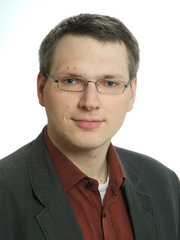
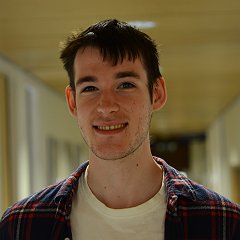
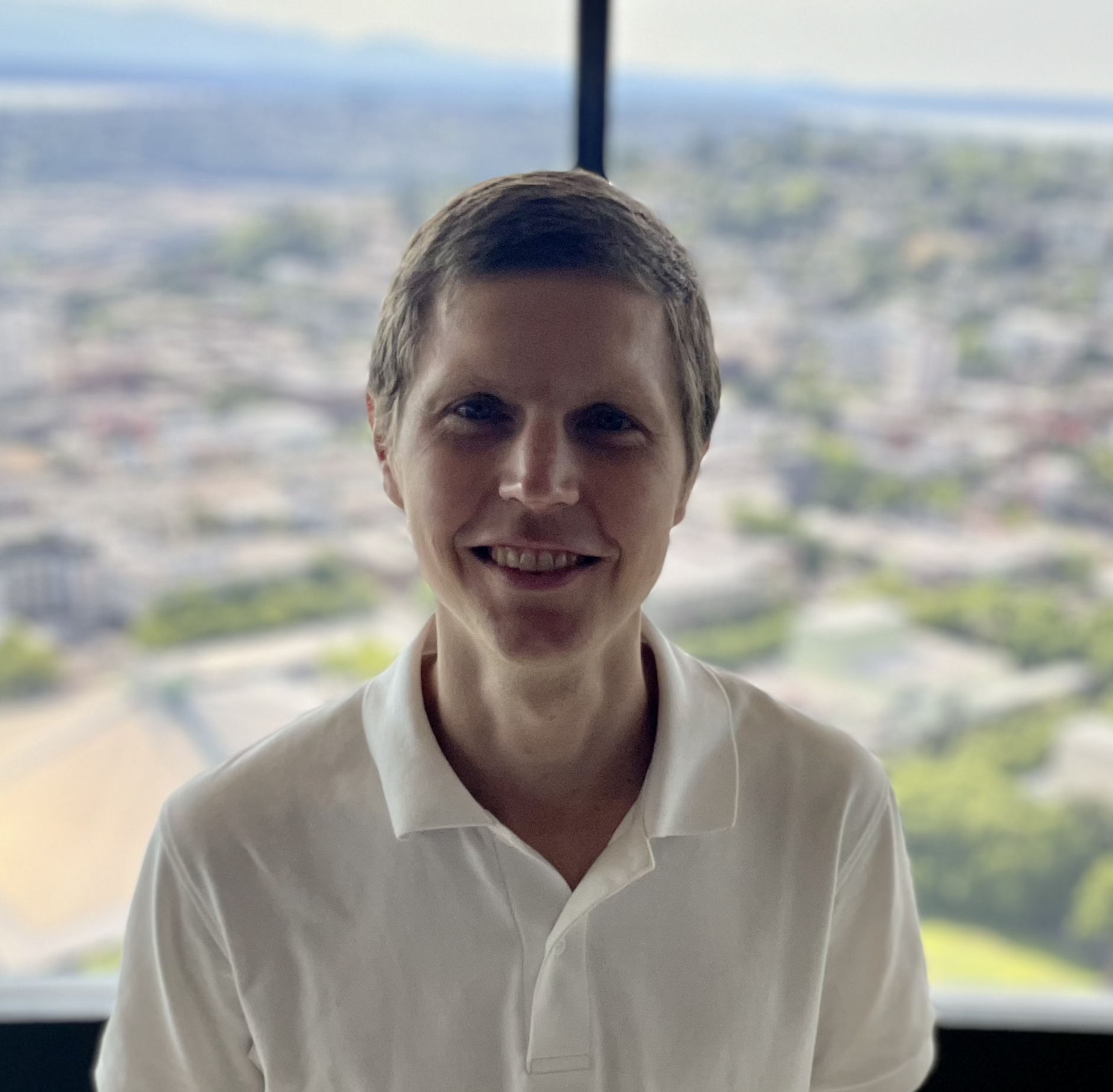
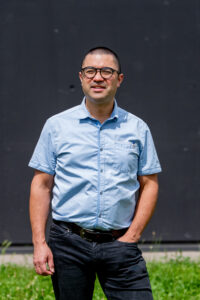
Tengyu Ma is an Assistant Professor of Computer Science at Stanford University. His research focuses on machine learning, deep learning, optimization, and theoretical computer science. He is particularly known for work on neural networks, reinforcement learning, and algorithmic guarantees in AI systems. His email is tengyuma@stanford.edu . Ma's research interests span foundational aspects of machine learning, including generalization theory, optimization algorithms, and the theoretical underpinnings of deep learning. He has contributed to areas such as self-play theorem provers, learning rate schedules, and robustness in low-light vision tasks. His work often bridges theoretical insights with practical algorithm design. His recent publications emphasize advancements in large language models (LLMs), theorem proving via self-play, and understanding training dynamics in deep networks. Despite prolific output, no specific scientific awards are explicitly mentioned in the provided texts. Ongoing work includes exploring in-context learning mechanisms, formal verification of AI systems, and efficient pretraining techniques. His research has implications for both theoretical understanding and real-world applications of AI.
Björn Brandenburg is a researcher at the Max Planck Institute for Software Systems (MPI-SWS) in Kaiserslautern, Germany. His work focuses on real-time systems, scheduling algorithms, and operating system design, with a particular emphasis on predictable resource allocation and performance guarantees in multiprocessor and cyber-physical environments. His research interests include real-time response-time analysis (e.g., PROSA ), locking protocols for multiprocessor systems, side-channel mitigation in cloud environments, and the verification of real-time scheduling policies. He has contributed to foundational studies on deadline failure probabilities, self-suspending tasks, and predictable real-time Linux implementations. Scientific awards include recognition for outstanding papers on TimerShield (2017) Offline Equivalence (2017) . His work intersects with practical systems like LITMUSRT and ROS 2, aiming to bridge theoretical guarantees with real-world applications in safety-critical and distributed real-time systems.
Conrad Watt is an Assistant Professor at Nanyang Technological University (NTU), Singapore , specializing in WebAssembly, formal verification, and concurrency. He previously served as a Research Fellow at Peterhouse, University of Cambridge, and earned his PhD under Peter Sewell. Co-chair of the W3C WebAssembly Community Group Active in WebAssembly standards development, including concurrency specifications Developed mechanizations in theorem provers like Isabelle/HOL Collaborator with industry (wasmtime engine) and academic teams on verification tools Research Focus: Formal verification of low-level languages, concurrency models, and security mechanisms for WebAssembly. His work bridges theoretical rigor with practical applications, including WasmRef-Isabelle and threads projects. Recent Trends: 2025 publications explore separation logic automation and concurrency experiments, while 2024-2023 work emphasizes specification toolchains (SpecTec), verified interpreters, and memory-safe execution techniques. Scientific Awards ACM Doctoral Dissertation Award Honorable Mention EAPLS Best Dissertation Award Advising: Supervises PhD students Qiyuan Xu and Antanas Kalkauskas. Collaborates with researchers like Philippa Gardner and Jean Pichon-Pharabod.
Alastair F. Donaldson is a Professor and Director of Research in the Department of Computing at Imperial College London, where he leads the FastPL research group. His work bridges formal methods, software testing, and programming languages, with a focus on enhancing the reliability of high-performance and parallel software systems. He has held key roles including Director of Research (since 2023) and previously served as Lecturer (2011–2014), Senior Lecturer (2014–2017), and Reader (2017–2020) before being promoted to Professor in 2020. His research interests include formal verification, compiler testing, GPU programming, concurrency, and fuzzing. He has made significant contributions to the verification of GPU kernels, metamorphic testing of graphics drivers, and the development of tools like GPUVerify and GraphicsFuzz. His work combines theoretical rigor with practical impact, demonstrated by the acquisition of his startup GraphicsFuzz by Google in 2018 and his subsequent roles as Senior Software Engineer and Visiting Researcher at Google. His recent publications reflect a sustained focus on compiler and system reliability, with trends in fuzzing, formal specification, and automated testing of complex systems such as WebGPU, CXL cache coherence, and large language models for code generation. His work increasingly integrates empirical validation with formal techniques to uncover subtle bugs in real-world systems. Scientific awards and recognitions include: 2017 BCS Roger Needham Award EPSRC Early Career Fellowship Fellow of the British Computer Society Best Paper awards at EuroSys 2024, MET 2021, IISWC 2019, IWOCL 2019, and ICST 2016 Best Industry Paper at ICST 2024 ACM SIGSOFT Distinguished Paper at ISSTA 2023 ACM SIGPLAN Most Influential OOPSLA Paper Award (2012 paper), awarded in 2022 Best Student Paper at PPoPP 2014 He has advised numerous PhD students and leads a vibrant research group. He has secured significant research funding and collaborates extensively with industry and academia. His service includes leadership roles such as General Chair of PLDI 2020, PC Chair of ECOOP 2019, and Steering Committee Chair of PLDI (2022–2025). He also serves on the advisory board of PACM-PL and on program committees for top venues including POPL, OOPSLA, PLDI, ICSE, and ISSTA. He leads the FastPL research group, which focuses on the design and implementation of programming tools and techniques for reliable software. The group conducts cutting-edge research in compiler testing, formal methods, and high-performance systems, fostering collaboration across academia and industry.
Sebastian Pokutta is a Professor at Technische Universität Berlin, Vice President at the Zuse Institute Berlin (ZIB), and Chair of the Cluster of Excellence MATH+ and MODAL. His research lies at the intersection of Artificial Intelligence, Optimization, and Machine Learning, with applications in sustainability, quantum computing, and mathematical discovery. Research Interests: Development of novel optimization algorithms, particularly Frank-Wolfe and Conditional Gradient methods. Integration of machine learning with decision-making and combinatorial optimization. AI for Science (AI4Science), including applications in quantum mechanics and ecology. AI and creativity, human-AI co-creativity, and social science modeling using multi-agent LLMs. His recent publications (2025) demonstrate a strong focus on scalable optimization, interpretability, and algorithmic foundations. The work spans theoretical advances in convergence analysis, practical implementations in Julia (FrankWolfe.jl), and real-world deployments in biomass estimation and quantum certification. Scientific Awards: Gödel Prize (2023) STOC Test of Time Award (2022) Science Prize of the Association for Pediatric Orthopedics (2025) Google Research Awards (2021, 2020) NSF CAREER Award (2015) He advises a vibrant research group, with former students and postdocs securing faculty positions at institutions like Inria, Carlos III University, and James Madison University. His group has received funding from Google, DFG, and Math+, and he leads major collaborative efforts such as the Thematic Einstein Semester on Mathematical Optimization for Machine Learning. Labs and Teams: Interactive Optimization and Learning Lab at TU Berlin and ZIB. Leadership in MODAL and MATH+ research clusters, fostering interdisciplinary collaboration in mathematical optimization and AI.
Benjamin J. Delaware is an Assistant Professor of Computer Science at Purdue University. His research focuses on programming languages, formal verification, and tools for ensuring software correctness using mechanized theorem provers. He holds a Ph.D. from The University of Texas at Austin (2013), an MSc from Washington University in St. Louis (2007), and a B.S. from Truman State University (2005). His work emphasizes practical formal methods, including static enforcement of privacy policies, compiler design for oblivious computation, and automated verification techniques. Key contributions include tools like Taypsi, KestRel, and HACCLE. His research bridges theory and practice, addressing challenges in software security, correctness, and efficiency. Publications span top venues like POPL, PLDI, and OOPSLA, reflecting a strong focus on foundational programming language concepts. Collaborations with researchers like Suresh Jagannathan and Qianchuan Ye drive advancements in automated reasoning and secure computation.
Sean Welleck is an Assistant Professor at Carnegie Mellon University's School of Computer Science, specifically within the Language Technologies Institute (LTI). He leads the L3 Lab and serves as an advisor for the AI for Math Fund. His academic journey includes a PhD from New York University under Kyunghyun Cho and postdoctoral positions at the Allen Institute for Artificial Intelligence and the University of Washington with Yejin Choi. Dr. Welleck's educational background shows a strong foundation in computer science. He earned his PhD in Computer Science from New York University, where he worked under the mentorship of Kyunghyun Cho and Zheng Zhang. Prior to this, he completed his MSE and BSE in Computer Science from the University of Pennsylvania, demonstrating a long-standing commitment to the field. Dr. Welleck's research focuses on bridging informal and formal reasoning with AI, with particular emphasis on developing learning, inference, and evaluation algorithms for large language models. His work spans multiple cutting-edge areas including mathematical reasoning , code generation , inference algorithms , and AI reasoning agents . A significant portion of his recent work involves combining AI with formal methods for mathematics, where he has developed frameworks like Llemma (an open-source language model for mathematical reasoning) and meta-generation (for inference-time algorithms). His research is characterized by a strong theoretical foundation coupled with practical applications that push the boundaries of what AI systems can achieve in formal reasoning domains. Analysis of Dr. Welleck's recent publications reveals a clear research trajectory focused on enhancing language models' capabilities in formal reasoning and mathematical problem-solving. His work demonstrates an evolution from foundational research in neural text generation to increasingly sophisticated approaches that integrate formal methods with deep learning. Key trends include the development of inference-time algorithms that improve model performance without additional training, frameworks for mathematical reasoning that connect informal and formal proofs, and novel evaluation methodologies for language models. His publications consistently appear in top-tier conferences including NeurIPS, ICLR, ICML, and ACL, reflecting the high impact of his contributions to the field. Dr. Welleck's scientific achievements have been recognized with several prestigious awards: NAACL 2025 Best Paper Award ICLR 2025 Oral Presentation (Top 2%) ICLR 2025 Spotlight Presentation (Top 5%) NeurIPS 2021 Outstanding Paper Award (Top 0.1%) for MAUVE NVIDIA AI Labs Pioneering Research Award (2017 and 2018) As an educator and mentor, Dr. Welleck actively guides the next generation of AI researchers. He currently advises multiple PhD students including Pranjal Aggarwal, Weihua Du, Andre He, and Seungone Kim (some co-advised with other faculty), along with MS students Riyaz Ahuja, Jiewen Hu, Qinyue Tan, and Thomas Zhu, and undergraduate Tate Rowney. At CMU, he teaches advanced courses such as Neural Code Generation and Advanced NLP, and has previously taught at New York University and the University of Washington. His commitment to education extends to creating resources like the Thesis Review Podcast and developing tutorials on neural theorem proving that have been presented at major conferences. Dr. Welleck leads the L3 Lab at CMU, which focuses on the intersection of language, learning, and logic. The lab brings together students and researchers to tackle challenging problems in AI reasoning, with particular emphasis on mathematical reasoning and code generation. Recent initiatives include the development of Llemma, an open-source language model specialized for mathematical reasoning, and work on inference-time algorithms that enable language models to improve their performance through additional computation during inference rather than through additional training.
David A. Plaisted is a Research Professor in the Department of Computer Science at the University of North Carolina at Chapel Hill. He joined UNC-Chapel Hill as a full professor after serving on the faculty of the Computer Science Department at the University of Illinois at Urbana-Champaign until 1984. His academic career spans several decades with significant contributions to automated reasoning and computational logic. Bachelor's degree in Mathematics from the University of Chicago (1970) Ph.D. in Computer Science from Stanford University (1976) Professor Plaisted's research focuses on mechanical theorem proving, term rewriting systems, logic programming, and algorithms. His work in term-rewriting systems investigates methods of combining them with first-order theorem provers, including techniques for applying efficient permutation group algorithms to equational theorem proving. In mechanical theorem proving, he has developed a sequence of methods including clause linking with semantics and ordered semantic hyper-linking. His research in logic programming includes developing tests to eliminate the occurrence check in Prolog while maintaining semantics. His work spans theoretical foundations to practical applications in program verification and generation. His recent publications demonstrate continued innovation in automated reasoning, particularly in semantic guidance for theorem proving. His work shows a consistent focus on improving the efficiency and effectiveness of automated deduction systems, with recent contributions to SGGS (Semantically-Guided Goal-Sensitive) theorem proving and analysis of the relationship between semantics and unification in proof systems. Professor Plaisted has served on numerous program committees and editorial boards including the Journal of Symbolic Computation, Information Processing Letters, Mathematical Systems Theory, and Fundamenta Informaticae. He is currently on the editorial board of ACM Transactions on Computational Logic and the electronic Journal of Functional and Logic Programming. He has organized significant conferences including serving as co-chair of the Second International Conference on Rewriting Techniques and Applications in 1987. He has spent several sabbaticals at prestigious institutions including SRI in Menlo Park (1982-1983), the Max-Planck Institute and University of Kaiserslautern in Germany (1993-1994), and research visits to groups in Grenoble and Nancy, France (1998).
Frédéric Tran Minh is a Lecturer at Esisar – Grenoble INP-UGA and a PhD student affiliated with the CTSYS team at LCIS laboratory. His career spans academic teaching, software development, and research in formal verification for education. PhD in progress on proof assistants for teaching mathematics Former software engineer in computer-assisted surgery (8 years) Member of the APPAM ANR project Develops the Yalep proof assistant environment Research focus: Integration of Lean theorem prover and mechanized proofs into undergraduate mathematics pedagogy, emphasizing interactive learning and web-based accessibility. Teaching areas: Algebra, Analysis, C Programming, and automata theory, with innovative use of proof assistants in curricula.
Robert Y. Lewis is a Lecturer in the Department of Computer Science at Brown University, specializing in formal methods, logic, and interactive theorem proving. His work bridges computer science and mathematics, focusing on the verification of mathematical proofs and program correctness. Education: PhD in Pure and Applied Logic (2018), Carnegie Mellon University MS in Pure and Applied Logic (2015), Carnegie Mellon University BA in Mathematics (2010), Rice University Research Interests: Lewis’s research spans formal verification, logic, type theory, and automated reasoning. He explores the application of logical tools like the Lean proof assistant in mathematics education and software verification. Teaching: At Brown, he teaches courses such as Introduction to Discrete Structures and Probability and Formal Proof and Verification . Prior to Brown, he taught Logic and Modeling at Vrije Universiteit Amsterdam and served as a teaching assistant at Carnegie Mellon University. Publications: His recent work includes advancements in formalizing mathematical structures (e.g., Witt vectors, Cap Set Problem), integrating proof assistants with computational tools (Lean-Mathematica interface), and developing educational resources for logic and formal methods. Contact: Email: robert_lewis@brown.edu Office: Center for Information Technology 203, Brown University
Dr. Heather Macbeth is a Senior Lecturer in Pure Mathematics at Imperial College London, specializing in Kähler geometry, geometric analysis, and the formalization of mathematics. Her research develops geometric analysis techniques for complex manifolds while advancing proof verification through the Lean theorem prover. She leads the development of Lean's Mathlib library, creating formalizations for differential geometry, functional analysis, and representation theory. Her textbook The Mechanics of Proof introduces proof writing through Lean, integrating computer verification with mathematical pedagogy. Funded by a Microsoft Research Lean Award, Dr. Macbeth organizes workshops on formal mathematics and serves on the AMS Committee on Publications. Her geometric research examines Ricci solitons, Yamabe invariants, and Kähler-Einstein metrics, while her formalization work includes Sobolev inequalities and semilinear functional analysis. Research Contributions: Geometric analysis of Ricci solitons and Kähler metrics Formal verification of functional analysis theorems Proof assistant pedagogy and textbook development Contributions to Lean's mathematical library
Asta Halkjær From is a postdoctoral researcher in the Department of Computer Science at the University of Copenhagen, affiliated with the Software, Data, People & Society (SDPS) section under Dmitriy Traytel. She previously completed her PhD at DTU Compute from 2020 to 2023, focusing on formalized deduction methods in computational logic. She holds a Master’s and Bachelor’s degree from DTU in Computer Science and Software Technology, respectively, with a specialization in Artificial Intelligence and Algorithms. Her research lies at the intersection of formal logic and computer science, particularly in automated reasoning, proof assistants (Isabelle/HOL and Lean), and mechanized metatheory. She has contributed extensively to synthetic completeness proofs, tableau systems, and verified theorem provers. Her work emphasizes formal verification of logical systems, including epistemic logic, hybrid logic, and first-order logic, with a focus on soundness and completeness. The recent publications highlight a consistent trend: the mechanization of logical foundations in proof assistants. Her work bridges theoretical logic with practical verification tools, enabling reliable automation in theorem proving. She has developed and verified provers, explored axiomatic systems, and advanced the methodology of synthetic completeness, often leveraging Isabelle/HOL’s framework. Distinguished Paper Award, CPP 2023 DTU Young Researcher Award DTU Travel Grant (Executive Board Recognition) Otto Mønsted Fonden Travel Grant She has supervised BSc and MSc theses, special courses, and research projects at DTU, and currently teaches Software Development for Digital Health . She has served on program committees for CPP, ITP, and Dalí workshops and has reviewed for journals including Journal of Automated Reasoning and Journal of Logic and Computation . She has also participated in international research visits, including at VU Amsterdam. She is actively involved in building tools for formal reasoning and maintains a personal website with resources, including an Isabelle snippets generator and bibliography tools. Her work continues to advance the foundations of formal logic through mechanized proofs and practical automation.
Geoff Sutcliffe is a Professor in the Department of Computer Science at the University of Miami's College of Arts and Sciences. He holds a PhD from the University of Western Australia (1992), MSc from the University of Natal (1986), and BSc (Hons) from the University of Natal (1983). His research focuses on Automated Theorem Proving (ATP), evaluation methodologies for reasoning systems, and distributed computational frameworks. His primary research areas include developing infrastructure for ATP systems through the TPTP (Thousands of Problems for Theorem Provers) World project, organizing the CADE ATP System Competition (CASC), and creating standards for logic representation. His work bridges theoretical foundations with practical implementations in AI and computational logic. Research publications demonstrate sustained focus on ATP system improvements, logical framework extensions, and historical analyses of automated reasoning. Recent works explore non-classical logics, semantic web integrations, and performance benchmarking techniques. Scholarship consistently emphasizes practical tool development alongside theoretical advances.
Jasmin Blanchette is a Professor of Theoretical Computer Science and Theorem Proving at Ludwig-Maximilians-Universität München (LMU), where he also serves as the Dean of Studies for Computer Science since January 22, 2024. He is affiliated with the Institute for Informatics and leads the Theoretische Informatik und Theorembeweisen research unit. Additionally, he is a guest researcher in the VeriDis group at Loria, Nancy. Research Interests: His research centers on strengthening proof automation for general-purpose logics and enhancing the usability of proof assistants. He combines automatic and interactive methods, bridging human and artificial intelligence in formal verification. His work spans higher-order logic, automated and interactive theorem proving, formalization of mathematical results, and foundational mechanisms for (co)datatypes and (co)recursive functions. Key projects include Sledgehammer, Nitpick, Matryoshka, Nekoka, IsaFoL, and Lean Forward. Publication Trends: His recent publications (2023–2025) show a strong focus on higher-order automated reasoning, superposition calculus, proof automation in Isabelle/HOL, and formalization of logical and mathematical concepts. There is a consistent emphasis on verification, efficiency, and integration of SAT/SMT techniques into higher-order provers. Scientific Awards: FroCoS 2023 Best Paper Award (with Visa Nummelin and Sander Dahmen) CADE 2023 Best Paper Award for 'Verified given clause procedures' (with Qi Qiu and Sophie Tourret) IPA Dissertation Award (awarded to student Petar Vukmirović) Dutch Prize for ICT Research 2022 Advising and Grants: He supervises a large team of postdocs and PhD students at LMU and co-supervises students at other institutions. His leadership in major collaborative projects like Matryoshka indicates significant grant funding and collaborative research efforts. He is editor-in-chief of the Journal of Automated Reasoning and serves on numerous steering and program committees, reflecting strong academic leadership and visibility. Labs and Teams: He leads a research group at LMU’s Institute for Informatics, focusing on theorem proving and formal methods. He is also associated with the VeriDis group at Loria, Nancy, and collaborates widely across Europe in the automated reasoning community.
Claudia Schon is a Researcher at the Institute of Computer Science, Department 4, University of Koblenz-Landau. Her work focuses on automated reasoning, cognitive systems, and knowledge representation. She has contributed to projects like the Corg Project, exploring cognitive reasoning mechanisms and integrating commonsense knowledge into automated theorem provers. Her research bridges logic-based AI with human reasoning models, addressing challenges in uncertainty management, associative reasoning, and deontic logic. Key areas of research include commonsense reasoning, deductive systems, and the application of large language models to knowledge selection. She has published extensively on topics such as negation in cognitive reasoning, concept contraction in description logics, and intentional forgetting in AI systems. Her work often emphasizes interdisciplinary approaches, combining formal logic with cognitive science and philosophy. Her publications from 2019 to 2024 reflect a steady focus on advancing automated reasoning methodologies, integrating human-like cognitive processes into AI systems. Recent work explores the next generation of deduction systems and the use of word embeddings for axiom selection. She has also contributed to workshops on linguistic and cognitive approaches to dialog agents, highlighting her interest in human-AI collaboration. Despite no listed scientific awards, her contributions are recognized through active publication in top-tier conferences and journals. She is affiliated with the E-KRHyper project, developing reasoning tools for description logics. Her advising roles and grants are not explicitly documented in the provided text.