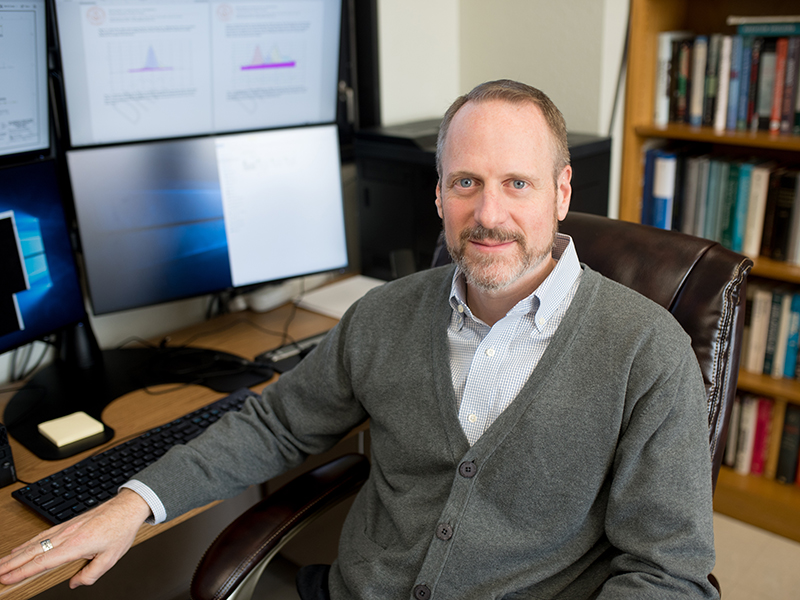
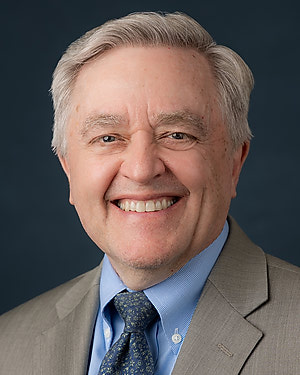
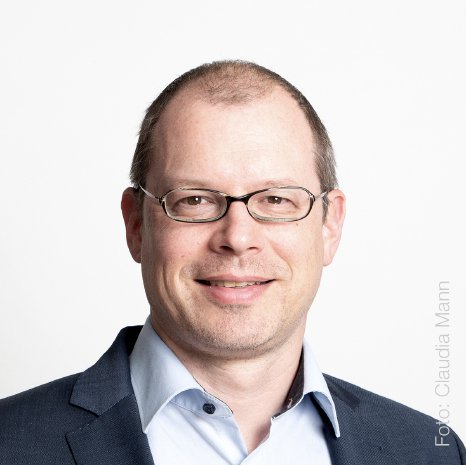
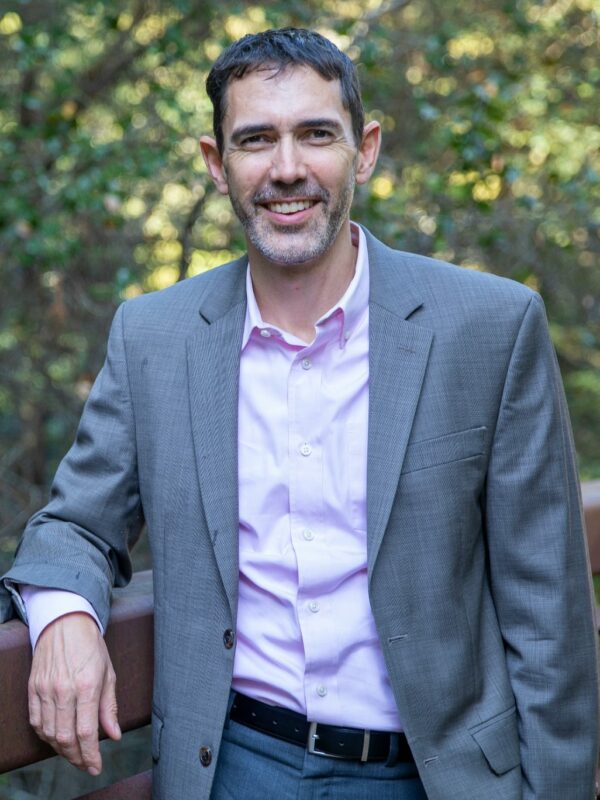
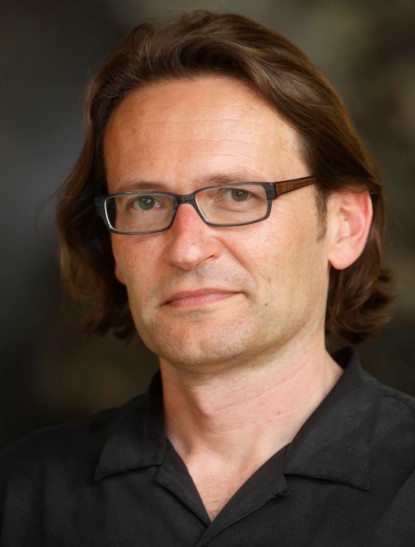
Dr. William Charlton is a Professor at the University of Texas at Austin , holding the John J. McKetta Energy Professorship in the Walker Department of Mechanical Engineering. He serves as the Director of the Nuclear Engineering Teaching Laboratory , which houses the newest nuclear research reactor in the U.S. His career spans leadership roles in academic nuclear security and nonproliferation research, including founding the Nuclear Security Science & Policy Institute at Texas A&M University (2006–2015) and leading research programs at the University of Nebraska’s National Strategic Research Institute (2015–2018). Dr. Charlton’s research focuses on nuclear security , nonproliferation , radiation detection , and nuclear forensics . His work addresses technical solutions for nuclear threats, including reactor design, spent fuel verification, and border monitoring systems. Recent publications highlight advancements in neutron resonance densitometry, gamma-ray background modeling, and proliferation resistance analysis tools. His scientific awards include the Special Service Award from the Institute of Nuclear Materials Management (2010), multiple Faculty Fellowships at Texas A&M, and the NSRI Distinguished Research Award (2017). Dr. Charlton has supervised numerous students, including R. Coogan, D. Sweeney, and B. Goddard, on topics ranging from nuclear detection to safeguards. As Director of the Nuclear Engineering Teaching Laboratory , he oversees cutting-edge research facilities and collaborates with national security agencies. His security clearances (TOP SECRET, SCI) reflect his role in high-impact projects for the U.S. Department of Defense and National Nuclear Security Administration.
Daniel E. Ford is a Professor of Medicine at Johns Hopkins University School of Medicine with joint appointments in Psychiatry and Behavioral Sciences, and at the Johns Hopkins Bloomberg School of Public Health in Health Policy and Management and Epidemiology. He serves as Director of the Johns Hopkins Institute for Clinical and Translational Research and Senior Associate Dean for Clinical and Translational Research at the Johns Hopkins School of Medicine. Dr. Ford received his MD from State University of New York at Buffalo in 1982 and has been on the Johns Hopkins faculty since then, except for a brief period as a National Institutes of Health fellow. He earned his Master's in Public Health from the Bloomberg School in 1986. He has published more than 120 research papers and book chapters and served as associate editor of the Journal of General Internal Medicine. Dr. Ford is widely regarded as a pioneer in research on the interrelationships between mental disorders and chronic medical conditions. His research interests focus on depression and coronary artery disease, improving care for patients with medical comorbidity, and exploring how information technology can be used to improve care for patients with depression and tobacco abuse. He was one of the first investigators to document depression as a risk factor for myocardial infarction and stroke. His work includes developing web-assisted interventions for tobacco cessation and studying seasonal patterns in mental health information seeking. His research demonstrates strong interdisciplinary connections between mental health, cardiology, epidemiology, and digital health technologies. The publications show a consistent focus on translating research findings into practical clinical applications, particularly through information technology solutions. His work spans clinical trials, epidemiological studies, implementation science, and digital health innovation. David M. Levine Professor of Medicine (2005) Dr. Ford has been instrumental in developing clinical research infrastructure at Johns Hopkins, working closely with personnel who developed e-IRB, an electronic process for submitting research proposals to the Institutional Review Board. He has been principal researcher on a large training grant to develop researchers in general internal medicine and was chosen by the Robert Wood Johnson Foundation to direct the evaluation of its $12 million Depression in Primary Care Initiative. He advocates treating human research subjects as partners in the research process. His laboratory research focuses on understanding relationships between depression and various chronic medical conditions, with recent emphasis on depression and coronary artery disease. The Ford Lab explores how information technology can be used to improve care for patients with depression and tobacco abuse, with interest in moving these interventions into the commercial world.
D'Maris Coffman is a Professor in Economics and Finance of the Built Environment at the Bartlett School of Sustainable Construction, University College London (UCL). She serves as Vice Dean for Innovation & Enterprise and has held leadership roles including Director (Head of Department) of BSSC from 2017-2023. She is Editor-in-Chief of Structural Change and Economic Dynamics , contributes to editorial boards of journals like The Journal of Cleaner Production , and holds visiting appointments at Tsinghua University, the University of Milan, and Beijing Institute of Technology. PhD in Economics (University of Pennsylvania, 2008) MA in Economics (University of Pennsylvania, 2004) MA in History (University of Cambridge, 2011) BSc in Economics (University of Pennsylvania, 1999) Her research bridges economic history, infrastructure economics, and climate change mitigation, with a focus on: Measuring welfare impacts of infrastructure investment Financial tools for decarbonization (carbon trading, CDR futures) Regional carbon emissions in China and Zambia Supply chain dynamics during crises (e.g., Great Fire of London, COVID-19) Construction industry challenges (trade credit reliance, rare earth supply) Urban sustainability through bike-sharing systems Recent publications analyze historical financial systems, urban carbon patterns in China, and climate-resilient infrastructure. Her work has been cited over 1,000 times, with notable impact on Nature Sustainability (378 citations) and Nature Human Behaviour (683 citations). Scientific distinctions include Fellowships with the Royal Geographical Society (2022), Academy of Social Sciences (2023), and Accademia Nazionale dei Lincei (2023). She has held editorial leadership roles since 2016. As a mentor, she has guided PhD students in topics ranging from colonial Indian railways to energy policy in Zambia. Graduates now hold roles at Oxford, LSE, UCL, and the Tony Blair Institute. She currently supervises four research students and an incoming scholar on Kenyan public sector capabilities.
Amael Poulain is a hydrogeology researcher at the University of Namur specializing in karst systems and groundwater dynamics. With a PhD completed in 2017 under supervisor Hallet V., Poulain has established a strong research profile focusing on vadose zone processes, tracer testing, and hydrological monitoring in karst environments. Their work combines field measurements with computational modeling to understand complex groundwater systems in Belgian karst regions. PhD in Geology (2017), University of Namur Principal Investigator on 6 research projects (2017-2023) 16 research outputs including journal articles and conference contributions Recipient of Young Karst Researcher Prize (2015) Active contributor to international karst research conferences Poulain's research focuses on understanding groundwater recharge processes in karst systems through innovative monitoring techniques. Their work examines solute transport, breakthrough curve analysis, and the impact of flash flood events on groundwater systems. Key contributions include developing ultra-portable fluorometry for dye tracing in remote karst environments and investigating the relationship between surface water features and underground flow paths in Belgian karst regions. Analysis of Poulain's 16 research outputs reveals consistent focus on experimental hydrogeology in karst environments, particularly using tracer tests and novel monitoring technologies. The research spans vadose zone processes, breakthrough curve analysis, and the development of field instrumentation for hydrological monitoring. Recent work (2020-2023) shows increasing emphasis on technological applications including fluorimeter industrialization and gravity monitoring techniques. Young Karst Researcher Prize (2015) awarded at conference in Birmingham, UK Recognition for contributions to groundwater research and karst hydrology Active participation in international karst research community Poulain leads multiple research projects including STREAM fluorimeter industrialization and eco-village construction expertise. Their work bridges academic research and practical applications through spin-off development for hydrological monitoring equipment. As Principal Investigator on projects like 'Expertise of tracing test at the ponds of Villeneuve,' Poulain demonstrates strong grant acquisition and project management capabilities. The research involves collaboration with multiple institutions across Belgium's karst regions. Poulain's laboratory work focuses on hydrological monitoring in karst environments, particularly through the STREAM project which develops fluorometric solutions for groundwater monitoring. Their research utilizes cave percolation monitoring, gravity measurements, and electrical resistivity tomography to study water movement through vadose zones. The work is conducted primarily in Belgian karst regions including Rochefort and Furfooz, with emphasis on practical applications for water resource management.
Harald Wimmer is a Professor at St. Pölten University of Applied Sciences, where he serves as Academic Director of Digital Marketing and Communication (MA), Academic Director of Digital Media Management (MA), and Deputy Academic Director of Marketing and Communication (BA). He leads multiple academic programs within the Department of Digital Business and Innovation, including Digital Marketing (academic), Digital Marketing (MA), and Digital Marketing (MBA). Professor Wimmer's research spans digital marketing, media management, and strategic communication. His work explores consumer behavior in digital environments, advertising effectiveness, PR strategies, and generational marketing approaches. He has developed expertise in both traditional marketing research methods and newer digital analytics approaches. His research bridges theoretical frameworks with practical applications for businesses navigating digital transformation. His publication record shows a clear progression from early work on consumer acceptance of hybrid vehicles and digital camera branding toward contemporary research on digital marketing, social media, and strategic communication. Recent publications focus on Gen Z marketing, gender representation in media, semiotic analysis of advertising, and creative methodologies in communication. Professor Wimmer actively contributes to academic discourse through editorial roles, particularly with the PRaktivium publication series which examines evolving PR practices and the relationship between journalism and public relations. His work demonstrates strong industry connections and practical relevance to current marketing challenges. He has been instrumental in developing academic programs that address the rapidly changing digital marketing landscape, ensuring curriculum relevance through close industry partnerships and practical project work. His leadership extends to student competitions like the Mobile Marketing Rookie Award and Dialog Marketing Rookie initiatives that connect classroom learning with real-world marketing challenges.
Albert Theuwissen is a Professor in the Faculty of Electrical Engineering, Mathematics and Computer Science, specializing in the Electronic Instrumentation department. His career spans decades of pioneering work in image sensor technology, with over 120 research publications and 27 recorded academic activities including keynote speeches at major international conferences. His research dominates Image Sensor Engineering, focusing on CMOS Image Sensors, Sensor Design, Analog-to-Digital Converters, and Thermal Sensors. He has developed breakthrough techniques for dark current compensation using in-pixel temperature sensors, linearity enhancement in column-parallel SAR ADCs, and global shutter characterization. His work bridges semiconductor physics and circuit design to solve critical challenges in high-speed imaging, dynamic range limitations, and thermal management. Analysis of his 2022-2024 publications reveals a concentrated effort on practical circuit innovations for CMOS image sensors, particularly calibration methods for column-parallel ADCs and thermal compensation systems. These contributions address fundamental bottlenecks in sensor performance, reflecting a strategic shift toward system-level optimization of imaging pipelines for scientific and industrial applications. No specific scientific awards were documented in the source material, though his status as a frequent invited speaker and editorial contributor indicates significant peer recognition within the sensor community. Professor Theuwissen has supervised 11 graduate students according to institutional records. His sustained research output and conference engagements suggest consistent grant funding, though specific awards aren't detailed in the available information. He operates within the Electronic Instrumentation research group, which provides the collaborative framework for his sensor development work. This group specializes in measurement systems and electronic instrumentation, directly enabling his innovations in image sensor architecture and performance characterization.
Amy Safran-Henderson, AuD, CCC-A, FAAA, is an Assistant Professor in Clinical Otolaryngology – Head & Neck Surgery at the Lewis Katz School of Medicine, Temple University. She specializes in audiology with a focus on comprehensive hearing care and balance disorders. Education: AuD from University of Washington, Seattle Training: Externship at Weill Cornell Medical College Clinical Expertise: Vestibular and balance disorder assessment Cochlear implant evaluation and management Hearing instrument selection and fitting Auditory training for hearing impaired Electrophysiological measures and ototoxicity monitoring Honors & Memberships: Certification of Clinical Competency in Audiology (ASHA) Fellow of American Academy of Audiology (2015) Resume Review Committee Member (2017) Leadership Development Committee Member (2016) American Speech-Language-Hearing Association member Academy of Rehabilitative Audiology member Currently practicing at Temple Head & Neck Institute in Philadelphia, PA.
Anne Traynor is an Associate Professor in the Department of Educational Studies at Purdue University 's College of Education. Her expertise lies in educational measurement, psychometrics, and research methodology. Education: Ph.D. in Measurement and Quantitative Methods from Michigan State University (2014) Experience: Associate Professor (2020–present), Assistant Professor (2014–2020), and prior roles including Quantitative Methods Consultant and ACT, Inc. researcher Her research focuses on test score validation , curriculum alignment , and scoring rubric refinement . Recent work examines instructional sensitivity in science assessments and large-scale educational data analysis. She teaches graduate courses in psychometric theory, item response theory, and international education data analysis. Her publications address technical challenges in educational measurement, including alignment indices and rubric impacts on self-regulation.
Professor Vashti Berry is a Professor of Prevention Science in the Department of Public Health and Sport Sciences at the University of Exeter, where she serves as Co-Director of the NIHR Applied Research Collaboration South West Peninsula (PenARC) and leads the national NIHR ARC Children’s Health and Maternity priority programme. Her research focuses on prevention and early intervention for children's psychosocial health difficulties, particularly in challenging family contexts including domestic violence and abuse, with a commitment to reducing health inequalities through public partnership. Her educational background includes a PhD in Social and Policy Sciences from the University of Bath (2008), an MSc in Psychology with Cum Laude Distinction from the University of Natal (2000), and a BA (Hons) in Psychology with Cum Laude Distinction from the University of Natal (1998). In 2024, she was awarded a Fellowship through distinction by the Faculty of Public Health. Professor Berry's research spans prevention science, child and adolescent mental health, and implementation science, with emphasis on early intervention strategies for vulnerable families. She employs realist evaluation and systematic review methods to develop evidence for service commissioners and practitioners, addressing critical gaps in parenting support, domestic abuse services, and mental health prevention. Her work consistently integrates public co-production to ensure relevance to real-world challenges. Analysis of her recent publications reveals a dominant focus on adolescent mental health systems, parenting program effectiveness across cultural contexts, school-based violence prevention, and social prescribing for children. Her research demonstrates sophisticated methodological approaches including realist evaluation, qualitative comparative analysis, and integrative data analysis to unpack complex intervention mechanisms and equity impacts. Her scientific recognition includes: Fellowship through distinction, Faculty of Public Health (2024) Professor Berry has secured major funding through NIHR Applied Research Collaboration, directing the Children & Young People’s Mental Health Research Collaboration (ChYMe) from 2019-2024 and founding the Children and Young People's Health and Wellbeing Research Network in 2021. Her leadership extends to international collaborations on prevention science, with research directly influencing UK policy in early years services, domestic abuse support, and mental health prevention. She actively mentors through her directorship roles and research networks. Her current initiatives include the Kailo systems approach to adolescent mental health, integration models for financial well-being and parenting support in Family Hubs, and community-based knowledge mobilisation frameworks, all operating within the PenARC infrastructure to drive evidence-based service transformation.
Kathleen Barker is a Professor in the Department of Psychology at Medgar Evers College, part of the City University of New York (CUNY) system. She holds a PhD in Social-Personality Psychology from The Graduate Center, CUNY, earned in 1990. Dr. Barker has served in various leadership roles within CUNY, including as Chair of the Medgar Evers Faculty Senate (2022-2024), Vice Chair of the University Faculty Senate (2016-2020), and member of the UFS Executive Committee (2012-2016). Dr. Barker's educational background includes a doctorate in Social-Personality Psychology from The Graduate Center of The City University of New York, completed in 1990. Her academic journey has positioned her as a social psychologist with expertise in both theoretical and applied aspects of the field. Her research interests span multiple domains within social psychology and beyond. As a social psychologist, she conducts multidisciplinary research focusing on nonstandard work arrangements, higher education systems, social justice issues, and methodological concerns in research. Her work on bibliometrics has been particularly influential, examining how citation analysis and impact factors can be used (and potentially abused) in academic personnel decisions. She has extensively studied self-efficacy as a construct for evaluating student outcomes, developing assessment tools like the Evaluation Self-Efficacy Scale. Her research also addresses gender issues in the workplace, particularly examining the experiences of women in full- and part-time employment. Analysis of her recent publications reveals a strong emphasis on bibliometrics and self-efficacy measurement within social work education. Her scholarly output demonstrates a consistent focus on methodological rigor and the application of psychological principles to real-world issues in education and employment. The interdisciplinary nature of her work bridges psychology, social work, education, and organizational behavior, with a particular emphasis on developing valid assessment tools and examining research impact through bibliometric analysis. Co-edited book 'Contingent Work: American Employment Relations in Transition' selected as noteworthy book in industrial relations and labor economics by Princeton University's Firestone Library Named to the American Psychological Association's 2005 and 2006 panels on the Work Force in Psychology Assisted in establishing the APA Center for Workforce Analysis through her panel work Contributed to the development of the Evaluation Self-Efficacy Scale, widely used in social work education assessment Dr. Barker has been actively involved in mentoring through her role as a professor and her service on university committees. Her leadership roles in the University Faculty Senate and Medgar Evers Faculty Senate have positioned her to influence academic policy and governance across CUNY. While specific grant information isn't detailed in the provided texts, her extensive publication record suggests successful research funding. She has served as a network member for the Alfred P. Sloan Foundation, indicating recognition of her expertise in workforce issues. Her leadership extends to committee work, including chairing the Committee on the Faculty Experience Survey of the University Faculty Senate, which produced the comprehensive FES:09 report documenting faculty experiences across CUNY. Dr. Barker has been instrumental in revitalizing the Medgar Evers College Faculty Senate, establishing its first web page and programming speakers on topics such as shared governance, budget processes, parliamentary procedures, and workplace bullying. Her work with the University Faculty Senate's Academic Affairs Advisory Committee and her participation on the CUNY Board of Trustees' Committee on Faculty, Staff and Administration demonstrate her commitment to institutional improvement. She has also served as Senior College Representative on the Executive Council of the Professional Staff Congress (the faculty and staff union) and as a Grievance Counselor, showing her dedication to faculty rights and workplace issues.
Sinead O'Keeffe is a Research Fellow at the University of Limerick in the Faculty of Science and Engineering , specifically within the Department of Electronic and Computer Engineering . Her research bridges the technical domain of optical fiber sensor development with critical applications in radiation therapy and sports medicine. Primary Research Themes Medical radiation dosimetry using optical fiber sensors Brachytherapy dose monitoring systems Sports injury prevention in Gaelic football and running Mental health literacy in rural farming communities Key Technical Contributions Development of scintillation-based dosimeters Characterization of perfluorinated polymer fibers 3D printed sensor systems for clinical and rehabilitation applications Interdisciplinary Applications Prostate cancer radiotherapy dose measurement Mental health intervention programs for athletes Work-family conflict analysis in Irish farming Email: sinead.okeeffe@ul.ie
Adam Millard-Ball is Professor of Urban Planning at the UCLA Luskin School of Public Affairs, where he conducts research at the intersection of transportation systems, environmental sustainability, and urban data science. Trained in economics, geography, and urban planning, he employs geospatial analysis, econometric modeling, and qualitative methods to evaluate transportation and land-use policies aimed at reducing greenhouse gas emissions. His research spans street-network sprawl measurement, parking policy reform, active transportation infrastructure, and climate action planning. Key methodological approaches include large-scale geospatial data analysis, network connectivity metrics, and community-engaged research frameworks. His work consistently addresses equity dimensions in urban environmental policy, examining how transportation and land-use decisions disproportionately impact vulnerable populations. Analysis of his 2023-2025 publications reveals three dominant research trajectories: (1) Quantifying urban form through street-network sprawl metrics at global scales, (2) Evaluating active transportation infrastructure for health and climate co-benefits, and (3) Developing equity-centered frameworks for climate adaptation planning. His recent work demonstrates increasing integration of community-based participatory methods with computational urban analytics.
Thomas Aumann is a Professor at the Institute of Nuclear Physics, Technical University of Darmstadt, serving as Working Group Leader for Experimental Nuclear Physics with Exotic Ion Beams, Coordinator of BMBF-FSP ErUM T07, and Managing Director of the Helmholtz Research Academy Hesse for FAIR (HFHF). His research group conducts experiments at major international facilities including GSI/FAIR and RIKEN. His research focuses on experimental studies of exotic nuclei with extreme neutron-to-proton asymmetry to understand nuclear structure, reactions, and applications in nuclear astrophysics (e.g., element synthesis in the universe) and neutron star properties. His team develops instrumentation for facilities like R3B at GSI/FAIR, SAMURAI at RIKEN, and NEPTUN at S-DALINAC. Professor Aumann leads the R3B collaboration—the only worldwide experiment enabling kinematically complete measurements of exotic nuclear reactions at high beam energies (up to 1 GeV/nucleon) with heavy nuclei and high resolution. His team includes permanent scientists, postdocs, doctoral students, and administrative staff. Scientific Awards: None mentioned in the provided text. He advises doctoral students Martin Baumann, Christian Helmel, and Nikhil Mozumdar. Research funding sources include: German Federal Ministry of Education and Research (BMBF) Collaborative Research Center 1245 (SFB 1245) ELEMENTS Research Cluster German Research Foundation (DFG) LOEWE Research Cluster Nuclear Photonics GSI Helmholtz Centre for Heavy Ion Research Helmholtz Research Academy Hesse for FAIR (HFHF)
Johann Isaak is a leading experimental nuclear physicist serving as Head of Research Data Management and Principal Investigator (PI) of the IRTG 2891 program at the Institute for Nuclear Physics (IKP) , TU Darmstadt , Germany. His research focuses on advancing our understanding of nuclear structure through precision photonuclear experiments, particularly in the areas of the Pygmy Dipole Resonance, nuclear resonance fluorescence, and gamma-ray spectroscopy. He actively teaches specialized courses such as "Photonuclear Reactions" and contributes to interdisciplinary nuclear physics education. Research Interests: Experimental Nuclear Physics: Design and implementation of advanced detection systems like DAGOBERT for electron-gamma coincidence spectroscopy. Photonuclear Reactions: Investigating nuclear responses to real photons via quasimonoenergetic and polarized beams, focusing on dipole excitations in medium-mass nuclei. Pygmy Dipole Resonance (PDR): Pioneering studies on low-lying dipole strength, its systematic behavior across isotopic chains (e.g., Sn, Ce, Te), and implications for nuclear astrophysics. Nuclear Structure: Precision measurements of transition strengths, level densities, and gamma-ray strength functions to test theoretical models and the Brink-Axel hypothesis. Advanced Detectors and Techniques: Development of high-efficiency spectroscopy setups like y³ at HIγS and AGATA for high-resolution gamma-ray detection. Publication Trends: Isaak's recent publications (2020-2025) demonstrate a strong focus on collective nuclear excitations , evidenced by studies on giant dipole resonances, two-phonon states in Sr-88, and quadrupole excitations in tin isotopes. His collaborative work spans international facilities, including HIγS, GRAF, and Legnaro National Laboratories, highlighting his role in large-scale experimental campaigns. Scientific Contributions: Methodological Advances: Introduced model-independent approaches for determining dipole responses via (γ, γ′γ″) reactions, enhancing precision in photon strength function measurements. Experimental Leadership: Coordinated multi-institutional projects like the AGATA collaboration and NUMEN project, driving advancements in gamma-ray spectroscopy. Educational Outreach: Mentors young researchers through IRTG 2891 and contributes to foundational texts, such as chapters in the Handbook of Nuclear Physics . Collaborations and Infrastructure: Isaak leverages world-class facilities, including the S-DALINAC accelerator at TU Darmstadt and international gamma-ray sources, to probe nuclear phenomena. His leadership in research data management ensures FAIR principles are integrated into nuclear physics workflows, enhancing reproducibility and data sharing.
Johanna Ullrich is a Professor at the University of Vienna's Faculty of Computer Science and a Key Researcher at SBA Research in Vienna. She leads the Research Group Communication Technologies and serves as Head of the Networks and Critical Infrastructures Security Group at SBA Research. Her academic journey includes positions as Principal Investigator & Manager of Third Party Funded Projects at the University of Vienna and Post-Doctoral Researcher at the Christian Doppler Laboratory for Security and Quality Improvement in the Production System Lifecycle. Her educational background includes a PhD sub auspiciis praesidentis in Computer Science from TU Wien (2013-2016), an MSc in Automation Engineering from TU Wien (2010-2013), and a BSc in Electrical Engineering from TU Wien (2007-2010). She also holds a Venia Docendi for Computer Engineering from the University of Vienna. Ullrich's research focuses on the intersection of computer science and classical engineering, with particular emphasis on network security, IPv6 measurement experiments, and critical infrastructure protection. Her groundbreaking work demonstrated vulnerabilities in the IPv6 Privacy Extension that led to modifications in major client operating systems, protecting millions of users. She is renowned for her research on cyber-physical attacks against power grids, showing how coordinated load attacks can destabilize electrical infrastructure. Her work spans both theoretical security frameworks and practical implementations with significant real-world impact. Her publication record reveals a consistent trajectory from fundamental network security research toward increasingly complex interdisciplinary investigations at the boundary of computer science and physical infrastructure. Recent work emphasizes AI/ML applications for network security, power grid resilience, and socio-technical approaches to cybersecurity. Her research demonstrates a progression from protocol-level security (IPv6) to system-level security (cloud, IoT) and now to infrastructure-level security (power grids, critical national infrastructure). 2nd in the Faculty of Computer Science's Best-of-the-Best Ranking 2024 Category Third Party Funding Nomination for the Hedy Lamarr Prize 2019 and 2020 Scholarship of Excellence 2018 Research Prize of the Dr. Maria Schaumayer Foundation 2018 Promotio Sub Auspiciis Praesidentis 2017 Diploma Thesis Award of the City of Vienna 2013 Ullrich actively contributes to the academic community through extensive grant acquisition and service. She has secured numerous research projects including SPyCoDe (Semantic and Cryptographic Foundations of Security and Privacy by Compositional Design), DynAISEC (Adaptive AI/ML for Dynamic Cybersecurity Systems), and Q-Crit (Quantum-Safe Critical Infrastructure for Austria). Her leadership extends to committee roles including Program Committee Member of IEEE Symposium on Security and Privacy (S&P) 2024 and Technical Program Chair of Network Traffic Measurement and Analysis Conference (TMA) 2023. At SBA Research, she leads the Networks and Critical Infrastructures Security Group, which investigates security challenges at the intersection of digital networks and physical infrastructure. The group conducts both theoretical research on security frameworks and practical measurements of real-world systems. Their work combines network measurement techniques with power systems engineering to develop comprehensive security approaches for critical infrastructure.