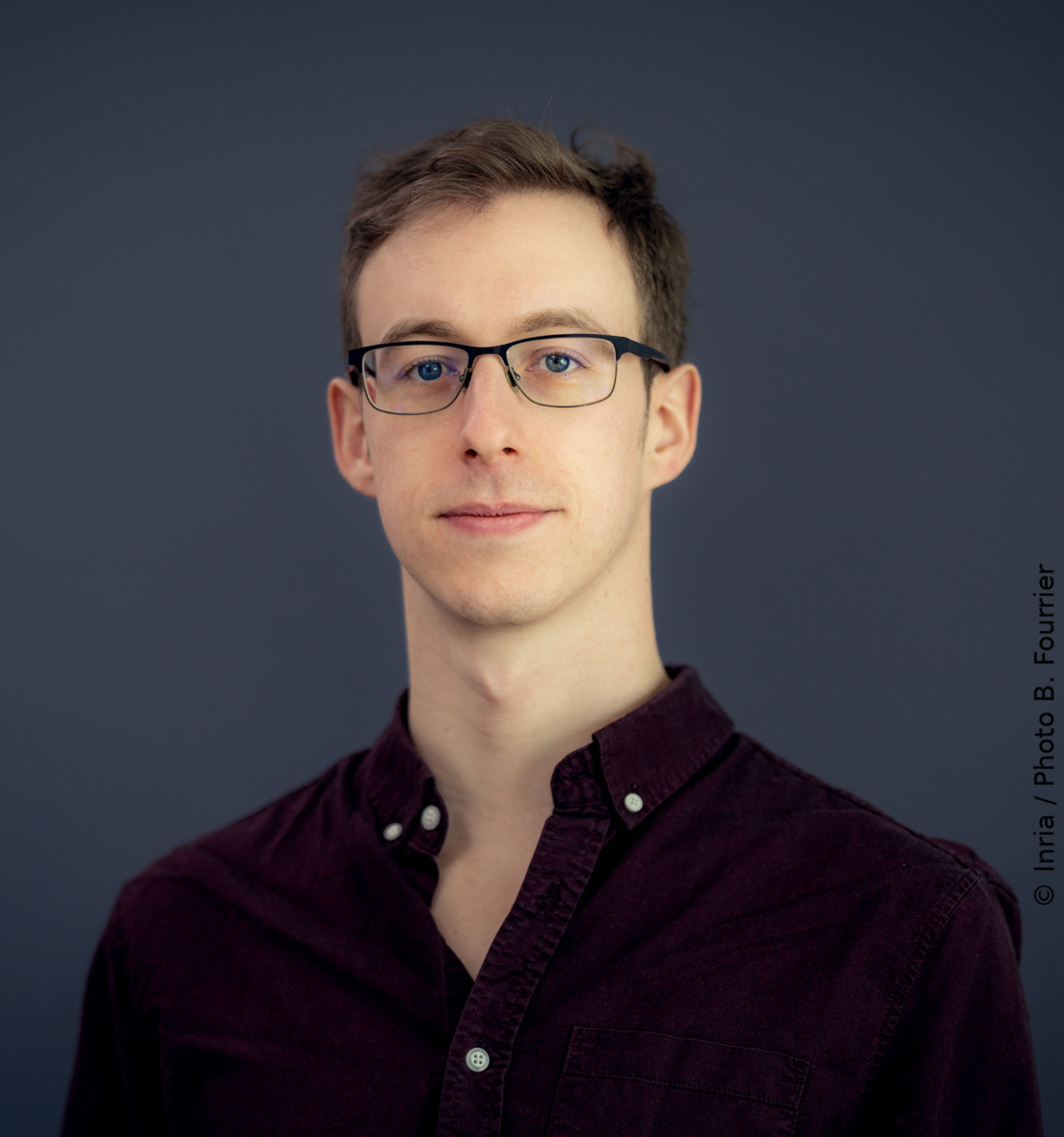
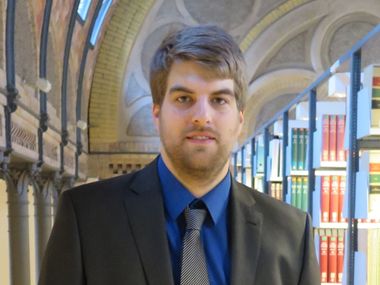
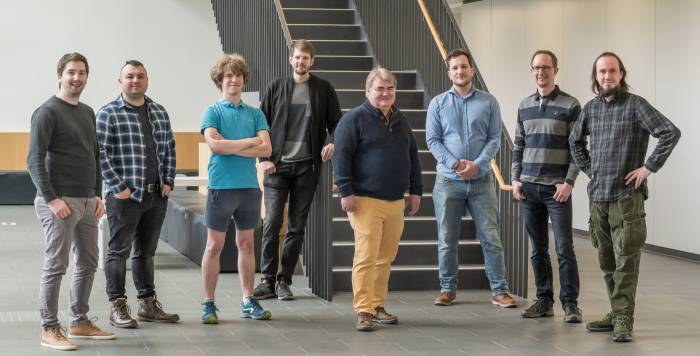
Erik Englesson is a Researcher at the Division of Robotics, Perception and Learning at KTH Royal Institute of Technology. His work is supported by the Wallenberg AI, Autonomous Systems and Software Program (WASP-AI/MLX). He holds a PhD from KTH Royal Institute of Technology, focusing on label noise in image classification from an aleatoric uncertainty perspective. His research interests center on robustness and uncertainty quantification in deep learning, particularly addressing label noise and combining aleatoric and epistemic uncertainties. He teaches Probabilistic Graphical Models (DD2420) at KTH. Recent publications explore topics like gradient-based explanation methods, autoencoder parameterization, and noise-robust classification strategies. His work frequently intersects with computer vision and theoretical deep learning principles. Englesson collaborates with prominent researchers like Hossein Azizpour and receives funding from strategic initiatives in AI and autonomous systems. His research bridges foundational theory with practical applications in healthcare imaging and robust model design.
Prof. Dr. Jörg Henseler is Full Professor and Chair of Product–Market Relations at the Department of Design, Production and Management, Faculty of Engineering Technology, University of Twente, Netherlands. He also holds visiting positions at NOVA Information Management School, Universidade Nova de Lisboa, Portugal, and as Distinguished Invited Professor at the University of Seville, Spain. University: University of Twente School: Faculty of Engineering Technology Department: Department of Design, Production and Management Chair: Product–Market Relations Visiting Professor: NOVA Information Management School, Portugal Distinguished Invited Professor: University of Seville, Spain His research focuses on composite-based structural equation modeling (SEM) , particularly partial least squares (PLS) path modeling , emergent variables , and methodological innovations in empirical research. He bridges design and behavioral sciences through advanced statistical modeling, with applications in marketing, management, and information systems. His recent publications emphasize methodological rigor in PLS-SEM, including consistent PLS (PLSc) , confirmatory composite analysis (CCA) , HTMT for discriminant validity , and second-order modeling . These works highlight trends toward improved model assessment, validity testing, and theoretical integration in composite-based approaches. Highly Cited Researcher by Clarivate/Web of Science Ranked among the top 100 most influential researchers in the Stanford/Elsevier Top 2% Scientists List 2024 Repeated 'Teacher of the Year' award recipient Prof. Henseler contributes extensively to the scientific community as a reviewer, editorial board member, and guest editor. He chairs the scientific advisory board for the ADANCO software and organizes the PLS School , offering seminars on PLS path modeling. He has authored over 130 journal articles and the authoritative book Composite-Based Structural Equation Modeling . His work supports researchers in applying robust, theory-driven methods in empirical studies. He leads methodological innovation in composite-based modeling, with strong ties to software development and global academic outreach. His research group and collaborations focus on advancing SEM techniques for complex, real-world applications in business and engineering contexts.
Renaud Vilmart is a researcher at LMF (Laboratoire Méthodes Formelles), part of Inria Saclay, affiliated with Université Paris-Saclay, CNRS, and ENS Paris-Saclay. He holds an Inria Starting Faculty Position (ISFP), placing him in a research-intensive faculty role. He is actively involved in the scientific committee of Inria Saclay and co-supervises the Groupe de Travail Informatique Quantique (GTIQ) under the GdR-IFM. His research focuses on quantum computing, particularly on the ZX-Calculus —a graphical language rooted in category theory that enables visual reasoning about quantum processes. This formalism unifies quantum circuits and measurement-based models, offering intuitive tools for verification and optimization. His work addresses foundational questions such as the completeness of the ZX-Calculus with respect to quantum mechanics. The 15 most recent articles reflect a strong trend in formal methods for quantum computing , with emphasis on diagrammatic reasoning, categorical semantics, and completeness proofs. Key topics include stabilizer theory, Clifford+T circuits, fermionic circuits, and scalable extensions of the ZX-Calculus. These publications demonstrate a deep integration of logic, algebra, and quantum theory. His scientific achievements have been recognized with: Kleene Award for best student paper at LiCS (Logics in Computer Science) Accessit (honorable mention) for the Gilles Kahn Award from the Société Informatique de France He is actively involved in mentoring and academic leadership through co-supervising GTIQ and serving on the Inria Saclay scientific committee. Though no specific grants are listed, his ISFP position is typically grant-funded, indicating sustained research support. He contributes significantly to education through teaching in the QDCS and QMI master’s programs and the ARTeQ year, focusing on advanced complexity and quantum computing topics. His research is conducted within the LMF (Laboratoire Méthodes Formelles), a collaborative lab between Inria, CNRS, and ENS Paris-Saclay, which fosters interdisciplinary work in formal methods and theoretical computer science.
Stefanos Papadakis serves as a Research Staff Scientist at the Telecommunications and Networks Laboratory (TNL) of the Institute of Computer Science at Foundation for Research and Technology-Hellas (FORTH) and holds an Adjunct Lecturer position in the Department of Computer Science at the University of Crete. Since 2001, he has pioneered hardware and software prototyping at TNL-FORTH, currently leading the Software Defined Radio (SDR) group he established to drive vertical integration from physical layer design to application development. His educational foundation includes a Physics degree (2001) and M.Sc. (2004) and Ph.D. (2009) in Computer Science, all earned at the University of Crete. Teaching responsibilities encompass core courses CS-330: Introduction to Telecommunication Systems Theory and CS-435: Network Technology & Programming. Papadakis' research spans wireless innovation frontiers including software-defined/cognitive radios, spectrum sharing, heterogeneous networking, position location, radio propagation modeling, and emergency communications. His work emphasizes practical implementation, yielding functional prototypes across the entire communications stack. Notable contributions include GPU-accelerated SDR frameworks, robust spectrum virtualization techniques, and emergency response communication systems validated through international competitions. Analysis of his 15 most recent publications (2010-2016) reveals dominant themes in SDR optimization for IoT and critical communications, with significant focus on GPU parallelization, interference management in dense networks, and real-time spectrum sharing mechanisms. His experimental approach consistently bridges theoretical models with hardware validation, particularly in emergency response and heterogeneous network scenarios. Key recognitions include: Ericsson Award of Excellence in Telecommunications for position location research First place in PENED doctoral proposal competition Fourth place in IEEE DySPAN 2015 5G Spectrum Challenge Second place in Virginia Tech ShaRC 2016 with the 'Skynet' cognitive radio system Mentorship spans 16 undergraduate projects (11 completed), 8 M.Sc. students (3 completed theses), and 1 Ph.D. candidate. His research is sustained through major EU and national projects including REDComm (emergency communications), EU-MESH (metropolitan networks), RERUM (IoT security), and Heraklion smart city initiatives. The SDR group maintains critical infrastructure like the Heraklion metropolitan wireless network, FORTH campus network, and specialized mobile emergency nodes equipped with multi-radio SDR platforms, satellite transceivers, and high-performance computing resources.
Jürgen Ziegler is a Senior Full Professor at the Department of Computer Science and Applied Cognitive Science within the Faculty of Computer Science at the University of Duisburg-Essen. He leads the Interactive Intelligent Systems Group, focusing on human-computer interaction, recommender systems, and explainable AI. His work emphasizes transparency, user control, and interdisciplinary collaboration with industry partners. He earned his doctoral degree from the University of Stuttgart, specializing in formal user interface design methodology. Prior to his current role, he headed the Competence Center for Software Technology and Interactive Systems at the Fraunhofer Institute for Industrial Engineering (IAO) in Stuttgart. He also served as Editor-in-Chief of the journal i-com - Journal of Interactive Media from 2001 to 2021. Ziegler’s research bridges academic and industrial domains, with applications in e-commerce, health, social media, and automotive systems. He investigates how to make intelligent technologies more transparent and user-controllable, particularly in conversational recommender systems, personalized interfaces, and social media analytics. His work integrates visualization techniques and semantic data models to enhance user experience. His recent publications focus on multistakeholder evaluation frameworks, explainable AI, and the integration of conversational agents with traditional interfaces. These studies explore domains like health promotion, smart environments, and education, using methods such as knowledge graphs, generative AI, and interactive sliders for feature dependency visualization. Ziegler founded and co-chairs the German Special Interest Group on User-Centred Artificial Intelligence. He has contributed to funded projects like SPIDER, FairWays, and PAnalytics, which address polarization in social networks, interactive recommendation, and health support systems. His leadership roles include organizing international workshops on explainable user models and user-centered AI. He supervises PhD students and advises on projects related to recommender systems, mental models, and user interaction preferences. His team collaborates on multi-method approaches for transparent decision support and the development of tools for measuring user perception of recommendation transparency. Labs and teams under his direction include the Interactive Intelligent Systems Group, which develops demonstrators like AR-based shopping advisors and hybrid recommendation frameworks. His work emphasizes both theoretical advancements and practical implementations across diverse application scenarios.
Vincenzina Vitale serves as a Tenure-Track Assistant Professor of Statistics within the Department of Social and Economic Sciences at Sapienza University of Rome. Her academic profile centers on advanced statistical methodologies with applications spanning economics, public policy, and sustainability initiatives. She teaches core courses including Statistics and Data Science for Sustainability and Statistical Methods and Models for Economics and Public Policy, maintaining regular office hours on Tuesdays from 12:30 to 14:30 by email appointment. Her research program focuses on multivariate analysis, specializing in innovative fuzzy clustering techniques for complex data structures such as time series, spatial data, and mixed data types. She extensively employs probabilistic graphical models, particularly Bayesian networks, for data integration and modeling challenges. This work bridges theoretical statistics with practical applications in electoral analysis, financial volatility, sports analytics, and public health domains including COVID-19 pandemic response. Analysis of her 15 most recent publications reveals a dominant trend toward developing spatially-aware and robust fuzzy clustering algorithms. These methods increasingly incorporate regularization techniques, entropy principles, and copula models to handle interval-valued data, count data, and tail dependencies. Key application areas include regional competitiveness measurement (NUTS2/NUTS3 frameworks), electoral studies, sports performance analytics, and pandemic modeling, demonstrating consistent contributions to top-tier statistical journals. No scientific awards or fellowships were documented in the available materials. While her publication record indicates significant research productivity, specific details regarding graduate student advising, research grants, or collaborative projects were not explicitly mentioned in the provided texts. Similarly, information about laboratory facilities or dedicated research teams remains undocumented in the current sources.
Matthias Springstein is a researcher at the Technical Information Library (TIB), which is affiliated with Leibniz University Hannover. He is part of the Visual Analytics research group within TIB's Research & Development department, focusing on advanced computer vision and multimedia information retrieval techniques. His research interests span multiple areas of artificial intelligence with emphasis on computer vision applications. Springstein specializes in web-supervised learning for visual concepts, incremental learning approaches, and methods to minimize manual labeling efforts for training data. His work bridges theoretical machine learning with practical applications in digital humanities, particularly in art-historical image analysis and film/video studies. His publication record shows a consistent focus on multimodal analysis, with recent work exploring knowledge graphs for image classification, large-scale hierarchical classification of art-historical images, and computational tools for film analysis. The research demonstrates progression from foundational work in image-text relations and depth estimation toward increasingly sophisticated applications in cultural heritage and scholarly media analysis. Notable achievements include receiving the Best Paper Award at the International Conference on Multimedia Retrieval (ICMR) in 2019 for his work on semantic image-text relations. Springstein has developed TIB AV-Analytics, a computational platform for scholarly video analysis that has been presented at multiple major conferences (SIGIR 2023, SCSMI 2024), indicating significant impact in both the information retrieval and film studies communities.
Professor Mark Steel is a faculty member at the University of Warwick , serving as Professor of Statistics since 2003. He previously held a Chair in Economics at the University of Edinburgh (1998-2000) and a Chair of Statistics at the University of Kent (2000-2003). He has also served as Head of the Statistics Department at Warwick (2014-2018) and as Editor-in-Chief of Bayesian Analysis (2022-2025). Education: Ph.D. in Quantitative Economics from Université Catholique de Louvain (1987) Steel's research focuses on Bayesian econometrics and statistics , with interests in distribution theory, model averaging, spatial statistics, nonparametric inference, survival analysis, and stochastic volatility. His work bridges theoretical advancements with applications in macroeconomics (growth theory) , microeconomics (stochastic frontier models) , and finance (stochastic volatility) . Recent publications highlight his contributions to Bayesian computation , copula-based classification , and spatiotemporal modeling . His editorial roles include leadership in Bayesian Analysis and Journal of Productivity Analysis . Scientific Awards: Fellow of the Journal of Econometrics Steel co-leads the Centre for Research in Statistical Methodology (CRiSM) at Warwick and has secured grants such as the EPSRC GR/T17908/01 for flexible distributional modeling in panel data. His collaborations span institutions in the UK, Spain, Italy, and the Netherlands, with co-authors like Roberto Casarin and Jairo Fúquene.
Alexandre Hippert-Ferrer is an Associate Professor at Université Gustave Eiffel, where he is a permanent member of the LASTIG lab working in the Strudel team. He primarily teaches at the National School of Geographic Sciences (École Nationale des Sciences Géographiques). Dr. Hippert-Ferrer received his PhD from University Savoie Mont Blanc, Annecy, France in 2020, supervised by Philippe Bolon and Yajing Yan. His doctoral research focused on reconstruction of missing data in displacement time series by remote sensing. Following his PhD, he was a post-doctoral researcher at L2S (Université Paris-Saclay) working with Florent Bouchard and Frédéric Pascal. He maintains active collaborations with researchers including Arnaud Breloy and Nabil El Korso from LEME at University of Paris Nanterre. Hippert-Ferrer's research focuses on robust statistical methods for signal processing, particularly for geospatial data with missing values. His work bridges the fields of remote sensing, signal processing, and statistics, with a strong emphasis on practical applications in earth observation and geodesy. He has developed innovative approaches using Empirical Orthogonal Function (EOF) analysis, Expectation-Maximization (EM) algorithms, and Riemannian geometry for handling incomplete data in displacement measurement time series. His methods have been applied to Synthetic Aperture Radar (SAR) and Interferometric SAR (InSAR) data for monitoring ground displacement. His publication record shows a clear progression from basic gap-filling techniques to sophisticated statistical models. Starting with EOF-based approaches, his work has evolved to incorporate advanced methods including elliptical distributions, low-rank covariance estimation, and graphical factor models with Riemannian optimization. The consistent theme across his publications is developing mathematically sound yet practical algorithms for real-world geospatial data challenges, particularly when data is incomplete or corrupted. Dr. Hippert-Ferrer has made significant contributions through publications in top journals including IEEE Transactions on Signal Processing and IEEE Transactions on Geoscience and Remote Sensing. His open-source implementation of the EM-EOF algorithm on GitHub demonstrates his commitment to reproducible research. As an educator at the National School of Geographic Sciences, he trains the next generation of geospatial professionals, bridging theoretical statistical methods with practical applications in earth observation.
Cameron Freer is a Research Scientist in the MIT Probabilistic Computing Project , with prior roles including Instructor in Pure Mathematics at MIT, Postdoctoral Fellow at CSAIL, and Project Associate Professor at Keio University. His work bridges probabilistic computing, logic, and theoretical computer science. Education PhD in Mathematics, Harvard University, 2008 (Thesis: Models with High Scott Rank ) Research Interests Freer's research explores the deep interplay between randomness and computation , focusing on: Foundations of probabilistic programming languages and systems Efficient samplers for discrete and continuous distributions Mathematics of random structures like graphons and exchangeable processes Computability in measure theory and probabilistic inference Publications Overview His recent work (2020–2024) advances probabilistic programming systems (e.g., GenSQL), theoretical frameworks for random graphs via Markov categories, and computable approaches to PAC learning. Earlier contributions include exact sampling algorithms, computable exchangeability, and algorithmic barriers in conditional probability. Academic Service Steering Committee Member, LAFI (formerly PPS) workshop series (2017–2025) Program Committee Chair/Co-chair, PPS 2017–2018 Session Chair, POPL 2017 (PPS track) Industry & Visiting Roles Chief Scientist, Remine (2017–2018) Research Scientist, Gamalon Labs (2013–2016) Lyric Labs Visiting Fellow, Analog Devices (2013–2014) Project Associate Professor, Keio University (2021–2024) Labs & Collaborations Freer collaborates extensively with the MIT Probabilistic Computing Project, Harvard Logic Group, and international partners in Oxford, CMU, and Keio University. His work integrates theoretical insights with practical systems in AI and probabilistic inference.
Syed Muhammad Anwar serves as an Associate Professor in Software Engineering at the University of Engineering and Technology (UET) Taxila, Pakistan. He maintains a significant dual affiliation with the Sheikh Zayed Institute at Children's National Hospital in Washington, DC, USA. Additionally, he holds leadership roles as Co-founder and CTO of Sense Digital PVT. Ltd. and Director of both the Virtual Reality and Machine Learning Lab and the Signal Image Multimedia Processing and Learning (SIMPLE) Group at UET Taxila. Dr. Anwar's research spans multiple cutting-edge domains at the intersection of signal processing, machine learning, and medical applications. His primary research interests include: Multimedia Communication and Signal Processing Image and Video Coding and Quality Assessment Biomedical Signal Processing and Brain-Computer Interfaces Medical Imaging including Segmentation, Detection, and Diagnosis Deep Learning applications in healthcare diagnostics Emotion Classification and Human Behavior Modeling His recent scholarly output demonstrates a strong emphasis on applying deep learning techniques to medical image analysis challenges, particularly in brain tumor segmentation, liver tumor detection, and Alzheimer's disease classification. There's also significant work in EEG-based applications including emotion recognition, stress quantification, and game expertise classification. His research effectively bridges theoretical machine learning advances with practical healthcare applications, showing particular strength in adapting deep learning architectures to medical imaging challenges across multiple organ systems. Dr. Anwar actively mentors the next generation of researchers through his leadership of the SIMPLE research group. His current advisees include: PhD Students: Sanay Muhammad Umar Saeed (Quantification of human stress), Romana Farhan (Security in body area networks), Nosheen Sohail (Medical Image Analysis), Amin Ullah (Knowledge extraction), and Saqib Mehboob (Structural health monitoring) MS Students: Haseeb Iftikhar (Doctor recommender system), Faizah Malik (Sentiment analysis), Samreena Aslam (Fashion image retrieval), Huma Shabbir (Fashion image tagging), Khola Rafiq (Ischemic stroke detection), and Saba Naseem (Blood vessel segmentation) As Director of the Virtual Reality and Machine Learning Lab and the SIMPLE research group, Dr. Anwar oversees a dynamic research environment focused on advancing signal processing, multimedia analysis, and machine learning applications, particularly in healthcare contexts. His lab maintains strong collaborations between UET Taxila and international institutions, including Children's National Hospital in Washington DC, facilitating technology transfer between academic research and clinical practice.
Peter Spirtes serves as the Marianna Brown Dietrich Professor and Head of the Department of Philosophy at Carnegie Mellon University's Dietrich College of Humanities and Social Sciences. His academic career spans multiple disciplines including philosophy, statistics, graph theory, and computer science, with a primary focus on causal inference methodology. Spirtes' research interests center on developing theoretical frameworks and practical algorithms for inferring causal relationships from observational data when controlled experiments are impossible. His work addresses fundamental questions about the relationship between probability and causality, with applications across epidemiology, econometrics, sociology, and political science. He leads the influential TETRAD project, which has produced computer programs for causal structure discovery. His extensive publication record demonstrates consistent contributions to causal discovery methodology, with recent work extending into 2024-2025. Spirtes' research increasingly addresses challenges in high-dimensional data, confounding variables, and the integration of causal methods with machine learning. As department head, Spirtes oversees academic programs including the Logic & Computation program, which combines philosophical and computational approaches to reasoning. His leadership position reflects his standing as a senior scholar in both philosophy and interdisciplinary causal methodology.
Prof. Günter Rudolph is a Professor of Algorithmic Foundations and Education in Computer Science at the Technical University of Dortmund's Department of Computer Science. He leads Chair 11: Algorithm Engineering, focusing on Computational Intelligence (CI), Evolutionary Algorithms, and their applications in optimization and gaming. His research emphasizes theoretical analysis of CI methods, practical guidelines for operationalization, and applications in engineering, energy systems, and entertainment. Key research areas include multi-objective optimization, evolutionary robotics, and computational intelligence in games such as StarCraft and car racing simulations. He has advised numerous students on topics ranging from autonomous driving systems to procedurally generated game content. Rudolph collaborates internationally, including with CINVESTAV-IPN (Mexico) on multiobjective control methods and BMWi-funded projects on energy systems and forming process predictions. His work spans academic publications in journals like Genetic Programming and Evolvable Machines and conferences such as IEEE CIG. Notable projects include developing adaptive car racing controllers, optimizing energy supply systems in industrial parks, and advancing AI strategies in real-time strategy games. Rudolph's group actively contributes to game AI research through competitions like the StarCraft AI Competition and the Simulated Car Racing Championship, emphasizing the intersection of computational intelligence and entertainment.
Dr. Nicholas Cox is an Assistant Professor in the Department of Geography at Durham University, specializing in statistical applications within geography. His work spans exploratory data analysis, graphics, smoothing, probability distributions, circular statistics, and spatial analysis. Within geomorphology, hydrology, and climatology, his research covers morphometry, modeling of hillslope, glacial, and karstic forms, analysis of precipitation distributions, and temperature variations in the Durham University Observatory record. Dr. Cox's research interests focus on environmental statistics , geomorphology , the history and methodology of geography , and Stata statistical software . His work bridges the gap between theoretical statistics and practical geographical applications, with particular emphasis on data visualization, exploratory analysis, and distribution fitting. He has developed significant expertise in creating accessible statistical methods for geographers through software development and clear documentation. His publication record demonstrates a consistent focus on statistical methodology development, particularly for the Stata software environment. Over the years, his work has evolved from basic statistical programming to sophisticated visualization techniques and specialized analytical methods. Recent publications emphasize advanced graphical techniques, handling of temporal data, and innovative approaches to data representation. Chair of Stata London User Meetings (1997, 2000, 2002) Former Associate Editor of the Stata Technical Bulletin Executive Editor of the Stata Journal Book Review Editor of Earth Surface Processes and Landforms Associate Editor of the Journal of Statistical Software Dr. Cox is highly active in the Stata community as a prolific program writer, with many of his programs incorporated into official Stata releases (versions 6.0, 7.0, and 8.0). He is a frequent contributor to Statalist and has developed software in various statistical and mathematical languages including Stata, Awk, and J. His collaborative work includes joint editorial projects such as the History of the Study of Landforms, volume 4, and research on hard rock steep slopes on the Colorado Plateau. His methodological work supports substantial research in geomorphology, hydrology, and climatology, with applications ranging from debris-flow avulsion controls to glacier dynamics in Antarctica. Dr. Cox's approach emphasizes practical implementation of statistical methods that address real geographical challenges.
Andee Kaplan is an Associate Professor in the Department of Statistics at Colorado State University. She completed her Ph.D. in Statistics at Iowa State University under advisors Dan Nordman and Steve Vardeman, a postdoc at Duke University with Beka Steorts, and holds advanced degrees in Statistics (M.S.) and Mathematics (M.A.) from Iowa State and The University of Texas at Austin respectively. Ph.D. in Statistics, Iowa State University (2017) Postdoctoral Researcher, Duke University M.S. in Statistics, Iowa State University M.A. in Mathematics, The University of Texas at Austin B.S. in Mathematics with Computing Certificate, The University of Texas at Austin Her research bridges Statistics and Computing, focusing on Bayesian Statistics, Computational Statistics, Record Linkage/Entity Resolution, Markov chain Monte Carlo methods, Spatial Resampling, Statistical Machine Learning, Interactive Statistical Graphics, and Reproducible Research. Her methodological work emphasizes scalable algorithms for complex data structures in ecology, sports science, and public health. Her recent publications highlight trends in Bayesian entity resolution for streaming data, spatial modeling of riverscapes, time-varying epidemic models, and computational methods for LiDAR data analysis. Over 2014-2025, her work spans theoretical advancements in deep learning degeneracy, practical software design for statistics, and interactive tools for network detection.