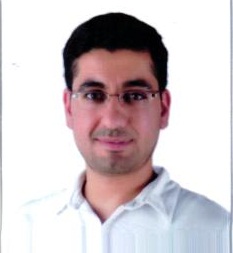
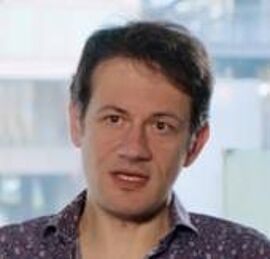
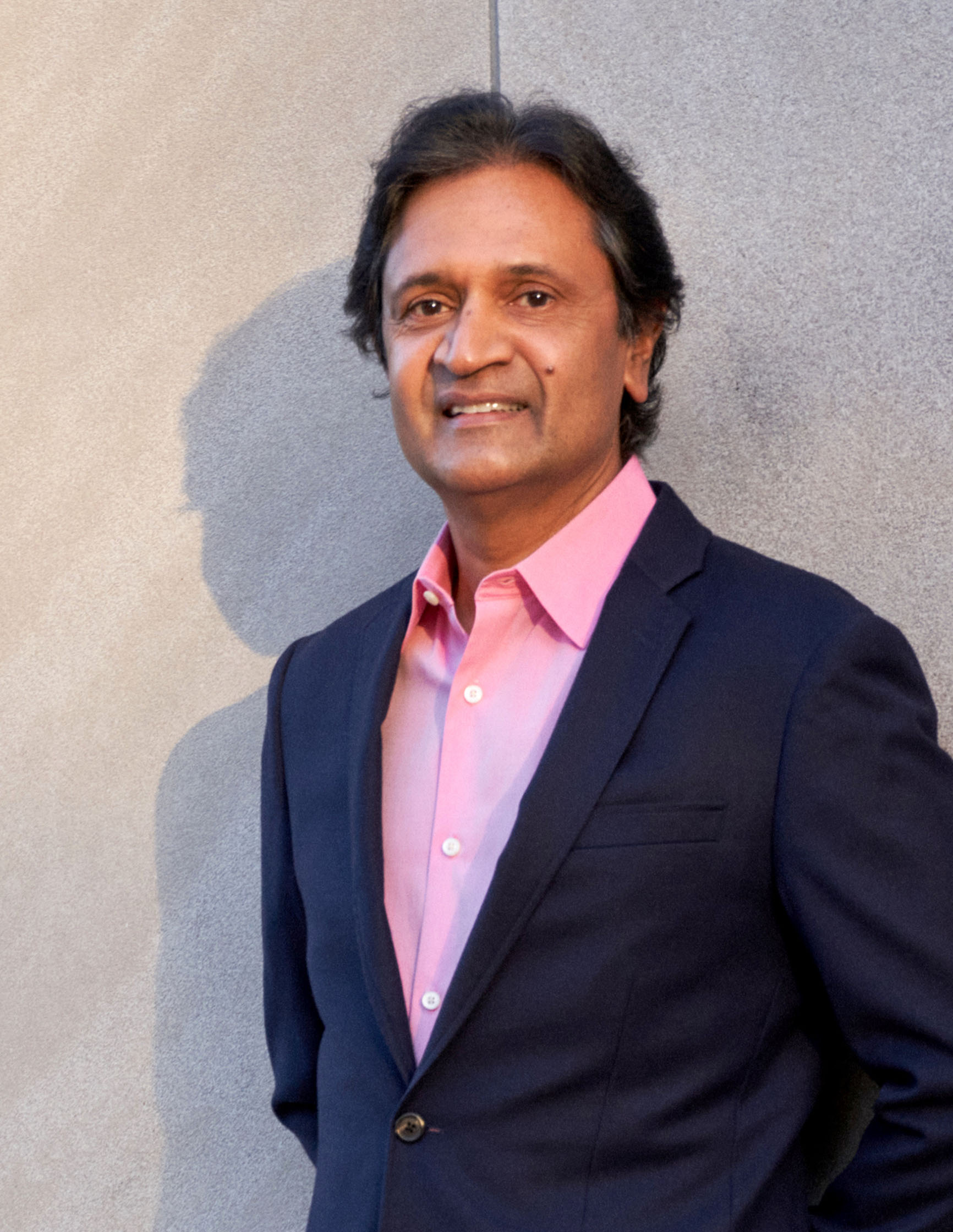
Musa Bute is an Assistant Professor at the Faculty of Engineering , Gaziantep University , Turkey. He holds a doctorate in Electrical and Electronics Engineering from the same university (2018) and has been affiliated with the Electromagnetic Fields and Microwave Technology department since 2019. Doctorate : 2013–2018, Gaziantep University, Electrical & Electronics Engineering Master's : 2011–2013, Gaziantep University Bachelor's : 2006–2011, Gaziantep University His research focuses on electromagnetic property measurement and metamaterials , particularly for applications in civil engineering (e.g., alkali-silica reaction detection) and microwave technology . Recent publications emphasize chiral metamaterials and calibration-free measurement techniques . He has presented at international conferences including: SBMO/IEEE conferences (Brazil, 2015-2017) EMC Türkiye (Ankara, 2017) ISCAE (UK, 2016)
Dr. Lin Chen is an Assistant Professor in the Department of Educational Psychology at the University of Illinois, Urbana-Champaign, with additional appointments at the Beckman Institute for Advanced Science and Technology and the Department of Linguistics. She directs the interdisciplinary Language, Brain, and Technology Lab, focusing on understanding the cognitive and neural mechanisms underlying first and second language processes and their roles in knowledge learning. Her research program centers on cognitive neuroscience of language, psycholinguistics, and applications of AI language models in reading, with particular emphasis on Chinese language processing. Dr. Chen employs diverse methodologies including behavioral studies, eye-tracking, ERPs, co-registration of eye-tracking and EEG, and generative AI language models in conjunction with immersive technologies. Her groundbreaking Character-Word Dual Function model has significantly advanced understanding of how orthographic and semantic processes interact in reading Chinese compounds, with important implications for teaching Chinese as a second language. Analysis of her recent publications reveals a consistent focus on Chinese language processing, particularly examining the dual role of characters and words in reading. Her work demonstrates how understanding writing system structure enhances language learning approaches, with significant contributions to both theoretical models of reading and practical applications for language instruction. Her research bridges educational psychology, cognitive science, and neuroscience to develop evidence-based approaches to language education. Dr. Chen actively mentors graduate students and is recruiting PhD students for the 2025-2026 academic year. She teaches courses including Eye Tracking in Reading Research (EPSY590), Language, Brain, and Technology (EPSY590), Cognitive Psychology Research Method (EPSY590), Child Language and Education (EPSY 401), and Learning from Text (EPSY 427). The Language, Brain, and Technology Lab, supported by the U.S. National Science Foundation, represents a cutting-edge research environment where cognitive science, neuroscience, and educational technology converge to address fundamental questions about language processing and learning.
Jason Pacheco serves as an Assistant Professor in the Department of Computer Science at the University of Arizona, maintaining an office in GS 724. He earned his Ph.D. from Brown University in 2016 and specializes in theoretical and applied machine learning. His educational background includes: Ph.D. in Computer Science, Brown University (2016) Dr. Pacheco's research centers on statistical machine learning, probabilistic graphical models, and approximate inference algorithms, with emphasis on information-theoretic decision making. He bridges theoretical foundations with practical applications in cybersecurity, privacy-preserving AI, and environmental monitoring systems, developing novel approaches for robust sequential decision making under uncertainty. Analysis of his 15 most recent publications (2021-2025) reveals three dominant research thrusts: (1) Privacy-preserving machine learning, particularly federated learning and differential privacy for large language models; (2) Adversarial reinforcement learning for cyber defense and malware detection; and (3) Variational information-theoretic methods for mutual information estimation and sequential decision making. His work consistently integrates theoretical rigor with real-world applications in security and environmental science.
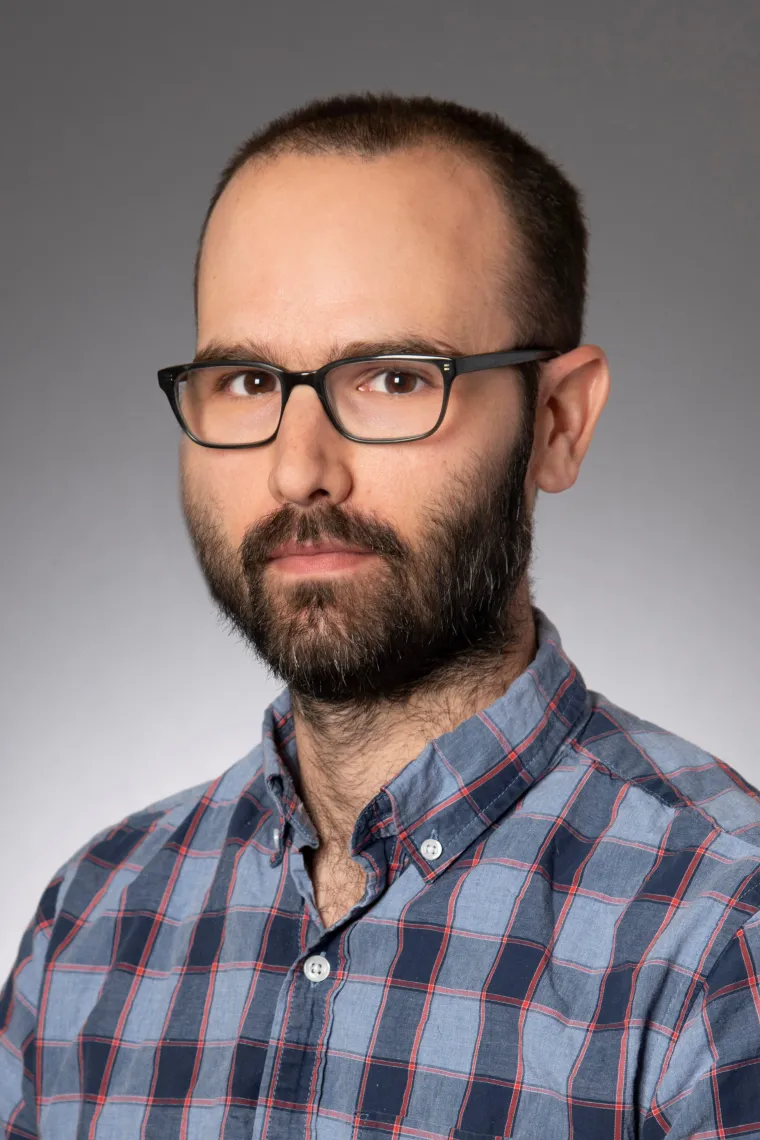
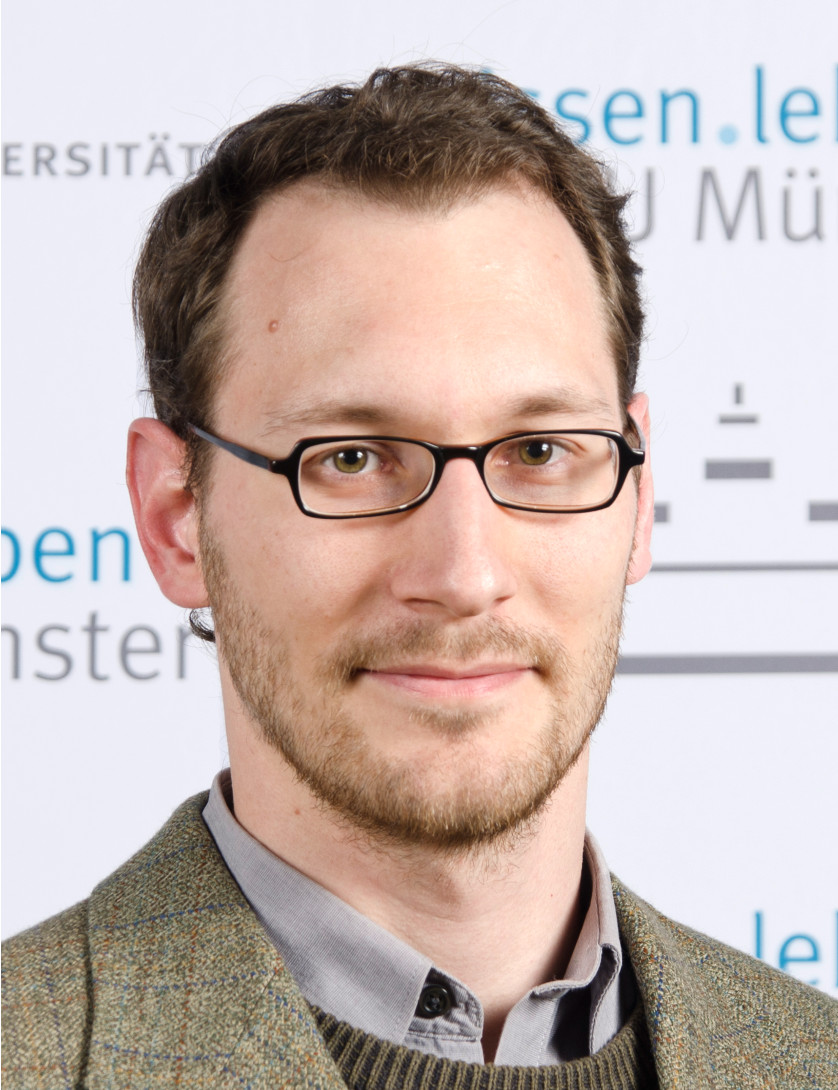
Prof. Dr. Benedikt Wirth is a Professor of Mathematics at the University of Münster, Germany, affiliated with the Institute for Analysis and Numerics within the Department of Mathematics and Computer Science. He is an active researcher and educator specializing in optimization and calculus of variations, with significant contributions to mathematical imaging and shape analysis. His research interests include image processing, scientific computing, numerical analysis, optimization, shape spaces, geodesics in shape space, variational methods, elastic deformation, and optimal transport. Wirth has developed innovative mathematical frameworks for shape analysis, particularly focusing on Riemannian metrics for shape spaces and variational approaches to shape comparison and optimization. His recent publications (2023-2025) demonstrate continued leadership in mathematical optimization, with particular focus on PET reconstruction, dimension reduction techniques, manifold embeddings, and branched transport theory. His work bridges theoretical mathematics with practical applications in medical imaging and computer vision, showing particular strength in connecting geometric analysis with computational methods. CRC 1450 - A05: Targeting immune cell dynamics by longitudinal whole-body imaging and mathematical modelling CRC 1450 - A06: Improving intravital microscopy of inflammatory cell response by active motion compensation EXC 2044 - C1: Evolution and asymptotics EXC 2044 - C2: Multi-scale phenomena and macroscopic structures EXC 2044 - C3: Interacting particle systems and phase transitions EXC 2044 - C4: Geometry-based modelling, approximation, and reduction Prof. Wirth actively supervises numerous bachelor's and master's students, with over 40 theses completed under his guidance since 2015. His teaching portfolio includes courses on inverse problems, numerical methods for partial differential equations, shape spaces, optimization, and optimal transport. He has consistently maintained an active research program while contributing significantly to the education of the next generation of mathematicians.
Professor Ute Schmid is a Full Professor of Cognitive Systems at the University of Bamberg, where she has been a faculty member since September 2004. She leads the Cognitive Systems Group within the Bamberg Center of AI (BaCAI), focusing on creating AI systems that generate human-like explanations and reasoning processes. Her research bridges cognitive science and artificial intelligence to develop methods for explanation generation, inductive programming, and interactive machine learning. Professor Schmid's work emphasizes practical applications of explainable AI across diverse domains including image classification, medical diagnosis, and educational technologies. Her research on contrastive explanations, near misses, and human-AI alignment has significantly advanced the field of XAI. She has also pioneered research on AI literacy, recognizing the growing importance of basic AI understanding for responsible tool usage by non-experts. Her publication record demonstrates exceptional productivity and impact, with numerous articles in top-tier venues including Nature Machine Intelligence, IEEE Transactions on Visualization and Computer Graphics, and the Journal of Web Semantics. Her 2025 paper 'Aligning generalization between humans and machines' represents a significant theoretical contribution to understanding human-machine cognitive alignment. Professor Schmid actively contributes to gender diversity research in computer science through studies examining why women pursue PhDs in the field. She has also made important contributions to computing education, investigating how students acquire programming skills and how AI tools like code generators are integrated into learning processes. As an educator and researcher, Professor Schmid maintains strong international collaborations, with co-authors spanning multiple countries and institutions. Her interdisciplinary approach is evident in her diverse publication venues and collaborative work that bridges computer science, cognitive science, education, and application domains.
Professor Dirk J. Lehmann is a Professor of Data Science in IoT at Ostfalia University of Applied Sciences, Faculty of Computer Science, where he has been employed since May 2022. He holds significant leadership roles including Deputy Head of the Institute for Information Engineering (since 2024), Research Officer of the Faculty of Computer Science (since 2023), and membership in multiple committees including the Admissions Committee for Digital Technologies and the Digital Technologies Examination Board. Professor Lehmann's extensive academic journey includes: Part-time professorship in Data Science in IoT at Ostfalia University (2020-2022) Senior Specialist for Digitalization, AI, and Visual Analysis at IAV GmbH (2018-2023) Assistant Professor of Visual Data Analysis at Nazarbayev University, Kazakhstan (2017) Visiting professorships at TU Graz, Austria and Universidad Rey Juan Carlos, Spain (2016-2017) Researcher at Otto-von-Guericke University Magdeburg (2009-2017) His research expertise centers on Visual Analytics and Data Science, with particular emphasis on high-dimensional data visualization, categorical data analysis, and IoT applications. Professor Lehmann leads the Data Science in IoT working group, conducting research across three main areas: visual data analysis, distributed data analysis using AI methods, and applied data analysis in geology, climate data, medicine, and industrial processes. His methodological contributions include innovative visualization techniques for complex datasets across multiple domains. Analysis of Professor Lehmann's 15 most recent publications (2017-2025) reveals a consistent focus on advancing visualization techniques for complex data analysis. His work spans categorical data visualization (CatNetVis), biological data analysis (D. Melanogaster research), optimization of star coordinate systems, and interactive exploration methods for large datasets. These publications appear in top venues including IEEE Transactions on Visualization and Computer Graphics and EuroVis, demonstrating both theoretical rigor and practical application across diverse domains from healthcare to environmental science. As an educator, Professor Lehmann teaches a comprehensive range of courses from foundational mathematics to advanced machine learning and visualization techniques. He actively supervises student projects and theses, emphasizing clear project definitions with measurable acceptance criteria. His international collaborations span institutions in Israel, Saudi Arabia, China, Austria, and Spain, reflecting a global research perspective that bridges academic theory with industry applications, particularly through his previous role at IAV GmbH, a Volkswagen subsidiary.
David Coeurjolly is a Research Director at the French National Center for Scientific Research (CNRS) affiliated with LIRIS laboratory at Claude Bernard University Lyon 1. He leads the Origami research team and holds several leadership positions including Director of GdR Informatique Géométrique et Graphique and Co-lead of PEPR ICCARE. As co-founder of the DGtal library and General Chair of the Graphics Replicability Stamp Initiative, he significantly influences computational geometry research. His research spans digital geometry, discrete algorithms, Monte Carlo rendering, and geometry processing. Core innovations include work on optimal transport, low-discrepancy sampling, digital surface regularization, and curvature estimation methods. His approaches combine theoretical mathematics with practical implementations for computer graphics and scientific computing applications. Recent publications demonstrate strong focus on: Efficient transport algorithms (BSP-OT, Rectified Flows) Sampling theory innovations (Sobol' sequences, Owen scrambling) Digital geometry foundations (Gauss digitization, Laplace-Beltrami operators) Geometric transformations (bijective rotations, plane probing) Awards include: 🎫 Best Paper Award, SIGGRAPH Asia 2024 🎫 SGP Software Award 2016 He leads multiple ANR grants including SSLAM (point cloud ML), StableProxies (geometry processing), and MoCaMed (medical physics). His lab develops open-source tools like DGtal and maintains active collaborations through international initiatives like the Graphics Replicability Stamp.
Dr. Eng. Marek Daniel Dudzik serves as a Lecturer in the Department of Infotronics and Cybersecurity at the Faculty of Electrical and Computer Engineering, Cracow University of Technology. His academic profile demonstrates a strong research focus on artificial intelligence applications across diverse engineering domains, with particular expertise in neural network modeling for complex physical systems. Dr. Dudzik's research interests span multiple engineering disciplines, with primary focus on applying neural networks to solve challenging problems in materials science, particularly regarding aluminum foams and cellular materials under compression. His work bridges theoretical neural network development with practical applications in building automation systems, environmental monitoring, and mining engineering. The research portfolio reveals a consistent pattern of interdisciplinary work connecting electrical engineering principles with computational intelligence techniques. The publication record shows a clear trend toward increasingly sophisticated neural network applications across multiple domains. Early work focused on traction systems and electrical engineering applications, while more recent publications demonstrate expansion into building automation, environmental monitoring, and materials science. The research methodology consistently employs neural networks to model complex physical phenomena that are difficult to characterize through traditional analytical approaches, with particular emphasis on practical implementation and verification of results. Dr. Dudzik's work demonstrates strong connections between theoretical neural network development and practical engineering applications across diverse fields. His collaborations span multiple departments and institutions, reflecting the interdisciplinary nature of his research. The publication record indicates active participation in both theoretical development and practical implementation of neural network solutions for complex engineering problems.
JIA Xibin serves as a full Professor and doctoral/master's thesis supervisor at Beijing University of Technology's Faculty of Information Technology and Dublin International College. She holds editorial responsibilities for the TIIS journal and maintains active memberships in the China Computer Federation (CCF) and China Society of Image and Graphics (CSIG), including specialized committees for Machine Vision and Big Video Data. Her educational foundation spans a B.S. in Wireless Technology from Chongqing University (1991), M.S. in Measuring and Testing Technology from North University of China (1996), and Ph.D. in Computer Application Technology from Beijing University of Technology (2007). International experience includes visiting scholar positions at University of California Riverside (2015) and Flinders University (2009). Research focuses on intelligent medical imaging for liver disease diagnosis, affective computing in educational contexts, and cognitive behavior modeling through multimodal fusion techniques. Her methodology integrates representation learning with transfer and few-shot learning paradigms to address data scarcity in medical applications. Current publications demonstrate consistent focus on domain adaptation and medical image analysis , with significant contributions to multimodal MRI interpretation for non-alcoholic fatty liver disease and hepatocellular carcinoma. Her work bridges theoretical machine learning with clinical applications through deep neural network architectures. Active research leadership includes principal investigator roles for: National Natural Science Foundation grant on non-invasive liver disease assessment (2019-2022) Beijing Natural Science Foundation project on campus safety risk prediction (2020-2022) These projects emphasize big data analytics for healthcare and educational safety systems, reflecting her dual expertise in technical innovation and practical implementation.
Chevaleyre Yann is a Professor of Computer Science at LAMSADE, Paris-Dauphine PSL University, where he has been working since 2017. Previously, he served as Professor of Computer Science at Paris-Nord University from 2009 to 2017 and as Director of the "data science" team at the LIPN laboratory. His academic journey includes a Lecturer position at LAMSADE, Paris-Dauphine University from 2002 to 2009, a Habilitation thesis at Paris-Dauphine University in 2009, and a Doctorate at Pierre and Marie Curie University under the supervision of Jean-Daniel Zucker from 1998 to 2001. Professor Chevaleyre's research spans multiple areas within artificial intelligence and computer science, with particular expertise in multi-agent systems, computational social choice, and machine learning. His work on preference modeling, voting theory, and resource allocation has significantly contributed to the field of computational social choice. More recently, his research has expanded into adversarial machine learning, robust classification, and generative models, reflecting the evolving landscape of AI research. His publication record demonstrates consistent contributions across multiple domains, with recent work focusing on precision-recall optimization in generative models, the role of randomization in adversarial robustness, and novel approaches to graphical bilinear bandits. His research shows a clear trajectory from foundational work in multi-agent systems toward more contemporary challenges in machine learning security and evaluation. Professor Chevaleyre has maintained active collaborations with researchers across France and internationally, evidenced by his extensive co-authorship network. His work bridges theoretical computer science with practical applications in areas ranging from robotics to bioinformatics.
Georges Dumont is a Professor at École Normale Supérieure de Rennes, where he serves as Scientific Director of the Immersia virtual reality platform and Project Manager of Immerstar. He previously held leadership positions as Scientific Manager of the MEDIA and INTERACTION department at IRISA-UMR6074 (2010-2016) and Director of the Mechatronics Department at ENS Rennes (2012-2016). Professor Dumont's research spans biomechanics, virtual reality, motion capture technologies, and human-computer interaction. His work bridges theoretical developments with practical applications in ergonomics, sports science, and virtual training environments. He has developed significant expertise in motion analysis, force estimation, and biomechanical modeling, with applications ranging from workplace design to athletic performance optimization. Analysis of his recent publications reveals a strong focus on applying virtual reality and motion capture technologies to solve real-world problems in ergonomics and sports biomechanics. His research demonstrates consistent productivity across multiple disciplines, with particular emphasis on developing computational methods for analyzing human movement and interactions with virtual environments. Professor Dumont's scientific contributions include: Development of methods for motion-based force and moment prediction Advancements in virtual reality applications for ergonomic assessment Biomechanical analysis of sports movements, particularly in diving Innovative approaches to muscle path modeling and biomechanical simulation His research program demonstrates strong continuity in applying computational methods to biomechanical problems, with recent work increasingly incorporating machine learning techniques. Professor Dumont maintains active collaborations across disciplines and institutions, contributing to the advancement of both theoretical understanding and practical applications in his fields of expertise. Professor Dumont leads the Immersia virtual reality platform, which provides state-of-the-art infrastructure for conducting research in human movement analysis and virtual environment interactions. His work with students and collaborators focuses on developing methods that translate biomechanical research into practical tools for workplace design, sports performance analysis, and rehabilitation engineering.
Shree K. Nayar is the T. C. Chang Professor of Computer Science in the School of Engineering at Columbia University, where he heads the Columbia Vision Laboratory (CAVE). He served as Department Chair from 2009-2012 and was Director of Research at Snap Inc. from 2018-2024. Nayar received his PhD from Carnegie Mellon University and has been at Columbia since 1991, progressing from Assistant to Full Professor. His educational background includes a PhD in Electrical and Computer Engineering from Carnegie Mellon University (1990), an MS from North Carolina State University (1986), and a BS from Birla Institute of Technology in India (1984). He began his career as a Research Engineer at Taylor Instruments in New Delhi before pursuing graduate studies. Nayar's research spans three interconnected areas: novel computational cameras that capture new forms of visual information, physics-based models for vision and graphics, and algorithms for scene understanding. His work in computational imaging has transformed digital photography, with applications in smartphones, robotics, virtual reality, and human-computer interfaces. His research has produced over 300 publications with nearly 60,000 citations and 80 patents. Analysis of his recent publications reveals a strong focus on computational imaging challenges including low-light vision, depth sensing, mobile interaction, and accessibility technologies. His work consistently bridges theoretical foundations with practical applications, as evidenced by commercial implementations of his assorted pixels technology in smartphone cameras. Elected to National Academy of Engineering (2008), American Academy of Arts and Sciences (2011), National Academy of Inventors (2014), and Indian National Academy of Engineering (2022) Okawa Prize (2023), IEEE PAMI Distinguished Researcher Award (2019) Two-time David Marr Prize winner (1990, 1995) - the highest honor in computer vision Multiple best paper awards at major conferences including SIGGRAPH Asia (2024) and ECCV (2024) National Young Investigator Award (1991), Packard Fellowship (1992) Nayar has supervised numerous PhD and Master's students throughout his career at Columbia. His lab has received continuous funding from NSF, industry partners, and foundations. The Columbia Vision Laboratory (CAVE) is known for its interdisciplinary approach, combining optics, hardware design, and algorithms to solve fundamental vision problems. Nayar's Bigshot Camera project demonstrates his commitment to education, providing hands-on learning experiences for students worldwide. The Columbia Vision Laboratory (CAVE) develops cutting-edge computational imaging and computer vision systems. Under Nayar's leadership, the lab has pioneered technologies including self-powered cameras, high dynamic range imaging systems, and novel computational cameras. The lab maintains strong industry connections, particularly through Nayar's role at Snap Research, and emphasizes translating research into real-world applications that benefit society.
Michael Charles Sachs serves as Associate Professor in the Department of Public Health, Section of Biostatistics at the University of Copenhagen's Faculty of Health and Medical Sciences. He holds a Doctorate in Biostatistics from the University of Washington (awarded August 15, 2011) and maintains an active research program with publications spanning 2022-2025. His primary research focuses on biomarker signatures for treatment selection , computational methods for deriving symbolic bounds on causal effects , and regression modeling of cumulative estimands with censored event history data . His general areas of interest include reproducible research, computational statistics, R programming, Bayesian nonparametric models, and survival analysis. Professor Sachs teaches the advanced course "Programming and Statistical Modeling in R" for PhD students and health researchers, covering programming principles, loops, functions, and efficient data manipulation. His recent publications demonstrate expertise in causal inference methodology, survival analysis techniques, and statistical software implementation, with multiple articles accepted for publication in 2025. His work spans theoretical methodology development and practical applications in medical research, particularly in gastroenterology and celiac disease prediction. His scholarly output shows consistent productivity with multiple first-author publications in high-impact biostatistics journals including Journal of Statistical Software, Journal of Computational and Graphical Statistics, and Biostatistics. He actively organizes academic activities, including a May 2025 workshop on statistical modeling in R.