Alin Coman is a Professor at Princeton University 's School of Public and International Affairs, leading the Cognition in Collectives Lab . His research explores how cognition emerges and evolves within social contexts, focusing on collective memory, belief dynamics, and emotion regulation through interactions. Education: Ph.D. from the New School for Social Research Research Focus: Integrating laboratory experiments, field studies, social network analysis, and agent-based simulations, his work demonstrates how macro-level phenomena like collective memories and synchronized beliefs arise from micro-level cognitive processes. Key themes include memory convergence, belief propagation in networks, and socially triggered prediction errors. Article Trends: His recent publications address vicarious memory frameworks, emotion regulation contagion, moral narratives, political belief change, pandemic-related belief dynamics, and the role of social norms in cognitive processes. Methodologies often involve network science and experimental paradigms. Advising: Mentors graduate researchers including Ari Dyckovsky, Gracielle Li, and Naomi Vaida. Lab: The Cognition in Collectives Lab employs a social-interactionist approach to study emergent psychological phenomena across groups and networks.
Ye Zhisheng is the Dean’s Chair and Associate Professor in the Department of Industrial Systems Engineering & Management at the National University of Singapore (NUS). His research focuses on reliability engineering, inventory control, emergency response systems, and statistical modeling. He holds a PhD in Industrial and Systems Engineering from NUS, along with a BEng in Material Science and Engineering and a BEco in Economics from Tsinghua University. His work emphasizes practical applications in mission-critical systems, predictive maintenance, and data-driven decision-making. Current research initiatives include optimal maintenance policies for manufacturing systems, degradation analysis of bearings, and federated learning approaches for battery lifecycle prediction. He has pioneered methods for integrating physics-informed neural networks into prognostics and health management (PHM) systems. Key technical contributions span advanced statistical methodologies like sieve estimation for survival data, phase-type distributions modeling, and condition-based maintenance optimization. His interdisciplinary approach bridges operations research, mechanical engineering, and computer science to address complex reliability challenges. Recent projects include resilient consensus-based power grid management and contamination source identification frameworks. Notable collaborations involve developing intelligent cross-domain fault diagnosis systems using transformer networks and advancing the Internet of Federated Things (IoFT) for distributed data analytics. His work has been applied in aerospace, telecommunication infrastructure, and medical emergency response systems.
Saras D. Sarasvathy is the Paul M. Hammaker Professor at the Darden Graduate School of Business, University of Virginia, where she is a member of the Strategy, Entrepreneurship and Ethics area. A leading researcher in entrepreneurship, she advises entrepreneurship programs globally across Europe, Asia, and Africa, while serving on boards of companies including Lending Tree (Nasdaq: TREE) and Upekkha, a SaaS accelerator in Bangalore, India. Her research focuses on the cognitive basis of high-performance entrepreneurship, particularly her groundbreaking work on effectuation theory. Sarasvathy's scholarship examines how expert entrepreneurs think and act under uncertainty, challenging traditional predictive approaches to business strategy. She has developed frameworks showing how entrepreneurs create markets and opportunities through action-oriented, non-predictive methods that leverage available means rather than predetermined goals. Sarasvathy's award-winning research has generated significant scholarly attention and practical applications worldwide. Her work has spawned over a hundred scholars involved in the effectuation research program, with publications available through www.effectuation.org. Her influential book Effectuation: Elements of Entrepreneurial Expertise and co-authored textbook Effectual Entrepreneurship (winner of the 2012 Axiom Business Book Awards Gold Medal) have shaped entrepreneurship education globally. Among her numerous accolades are the 2022 Global Award for Entrepreneurship Research (the highest recognition in the field), the Academy of Management's 2019 Foundational Work Award, and recognition as one of Fortune Small Business Magazine's top 18 entrepreneurship professors. She has received honorary doctorates from multiple universities in Europe and Asia and has been named a Visiting Professor at institutions worldwide. Before academia, Sarasvathy founded and ran five successful businesses across three countries. Her doctoral research at Carnegie Mellon University was supervised by Herbert Simon, the 1978 Nobel Laureate in Economics, with whom she collaborated to discover the essential elements of entrepreneurial know-how. She holds a B.Com. from the University of Bombay, India, and an MSIA and Ph.D. from Carnegie Mellon University.
Dr. Nancy L. Sin is an Associate Professor in the Department of Psychology within the Faculty of Arts at the University of British Columbia. She teaches undergraduate and graduate courses in health psychology and supervises students at multiple levels. She is Co-Chair of the Antiracism Task Force for the Society for Biopsychosocial Science and Medicine and a member of the Steering Committee at the UBC Edwin S.H. Leong Centre for Healthy Aging. Previously, she served on the Executive Committee for the American Psychological Association's Division on Adult Development and Aging and established the Diversity Mentorship Program. PhD, University of California, Riverside, 2012 Dr. Sin's research focuses on biological and behavioural pathways linking daily well-being and stress to health. Her work demonstrates that emotional responses to daily stressors are associated with inflammatory, neuroendocrine, and autonomic mechanisms implicated in aging-related conditions like cardiovascular disease. She investigates daily positive events as protective factors for stress processes and health, with particular interest in emotional well-being and aging, stress-sleep cycles, and health equity. Her research spans multiple disciplines including health psychology, gerontology, and social psychology. Analysis of Dr. Sin's recent publications reveals consistent focus on daily stress processes, positive emotions, and health outcomes across the lifespan. Her work increasingly examines pandemic-related stressors, social determinants of health, and health disparities, with strong emphasis on methodological rigor through daily diary and longitudinal approaches. The publications demonstrate interdisciplinary collaboration across psychology, public health, and medicine, with growing attention to diversity, equity, and inclusion in health research. Distinguished Alumni Award, Department of Psychology, University of California, Riverside (2025) Fellow, Gerontological Society of America (2025) Innovative Research on Aging Award (Bronze Award) from the Mather Institute (2021) Michael Smith Foundation for Health Research Scholar (2020) Springer Early Career Achievement Award in Research on Adult Development and Aging (2019) Gerontological Society of America's Behavioral and Social Sciences Student Research Award Editor's Choice article at Annals of Behavioral Medicine Dr. Sin actively supervises undergraduate, MA, and PhD students, with a current focus on Health Psychology graduate students specializing in adult development and aging, stress, and health equity/disparities. Her research has been supported by significant grants as PI or Co-I from the U.S. National Institute on Aging, Social Sciences and Humanities Research Council of Canada, Canadian Institutes of Health Research, Canada Foundation for Innovation, and the Michael Smith Foundation for Health Research. She has established a strong research program examining daily experiences and their health implications across adulthood. Dr. Sin directs the UPLIFT Health Lab (Understanding Pathways Linking Inter- and Intraindividual Factors To Health), which explores psychosocial well-being and biobehavioural mechanisms underlying healthy aging. The lab investigates how daily positive events promote health through lower inflammation, adaptive cortisol profiles, and better health behaviors, with particular attention to how positive emotions buffer stress processes. The lab actively recruits community participants for studies on daily experiences and health, contributing to intervention development for promoting psychological and physical well-being across adulthood.
Kristine Andra Avram is a Visiting Researcher at the Center for Conflict Research (ZfK) at Philipps University of Marburg, serving as a Post-doctoral fellow in the BMBF project 'Transformations of Political Violence' (2024-2025). Her work bridges peace and conflict studies, narratology, and social sciences with a focus on meaning-making in contexts of political violence and state repression. Her educational background includes a PhD in Political Science (summa cum laude, 2022) from Philipps University of Marburg, an MA in Peace and Conflict Studies (2010-2013) with study abroad at the University of Haifa, and a BA in Communication Science and Romance Studies (2007-2010) from the University of Erfurt, including Erasmus at Complutense University of Madrid. Avram's research examines how narratives shape interpretations of violence, influence reckoning with traumatic pasts, and inform transitional justice efforts. Using interdisciplinary narrative and (auto)ethnographic methods, she reveals storytelling as a site of agency and resistance—both for processing historical violence and envisioning just futures. Her work centers on concepts like responsibility, truth, and hope within post-communist contexts, particularly Romania. Her recent publications (2023-2025) demonstrate methodological innovation in narrative analysis applied to political violence, with increasing attention to researcher positionality and reparative methodologies. Articles span qualitative frameworks, courtroom narratives, postcolonial critiques of peacebuilding, and ethical dimensions of studying violence. Key scientific awards include: Dissertation Award from Südost-europagesellschaft (2023) Honorable Mention from Gert-Sommer-Award for Peace Psychology (2023) Mobility Grant from EISA (2023) Scholarships from MARA, Friedrich Ebert Foundation, and University of Haifa She has secured significant research funding including a Fritz Thyssen Foundation grant (2017-2022) as co-applicant and has taught courses on narrative reconstructions of the past at Philipps University Marburg and Goethe University Frankfurt. Her advisory work includes designing memory projects and conflict resolution initiatives with pax christi Rhein-Main. Avram actively collaborates within the Center for Conflict Research's interdisciplinary teams, focusing on political violence, transitional justice, and narrative methodologies in post-communist contexts through projects like 'Ascribing Individual Criminal Responsibility' and 'Transformations of Political Violence'.
Dov Cohen is a Professor of Psychology at the University of Illinois, with extensive cross-disciplinary affiliations including the Information Trust Institute, College of Law, Center for East Asian and Pacific Studies, and Center for Latin American and Caribbean Studies. His academic home resides within the College of Liberal Arts & Sciences. Professor Cohen's research centers on Cultural Psychology with specific expertise in honor cultures, institutional inversion, and cross-cultural value systems. His work examines how cultural frameworks shape cognition, emotion, and behavior - particularly regarding violence, debt, and religious influences. Notable contributions include the development of the 'institutional inversion' framework explaining discrepancies between collective attitudes and behaviors, and pioneering research on honor cultures in the American South. His publication record demonstrates consistent high-impact contributions across top journals including Journal of Personality and Social Psychology , Current Directions in Psychological Science , and Social Psychology . Recent work explores East-West relationship differences, gendered language in financial contexts, and the psychological mechanisms underlying cultural transmission. Cohen maintains active research programs examining the embodied nature of culture through psychological perspective and physical comportment. His theoretical work integrates Lewinian field theory with contemporary cultural psychology frameworks. As a mentor, Professor Cohen advises graduate students in Psychology and related interdisciplinary programs, fostering research that bridges cultural psychology with law, economics, and religious studies. His collaborative projects frequently involve international teams examining cultural phenomena across diverse national contexts.
Frank May is an Associate Professor of Marketing and the Mary F. McVay & Theodore R. Rosenberg Junior Faculty Fellow at Virginia Tech’s Pamplin College of Business. He holds a B.S. in Finance (2006, New Jersey City University), an MBA in Marketing (2010, University of Minnesota), and a Ph.D. in Marketing (2014, University of South Carolina). Educations: Bachelor's in Finance - New Jersey City University (2006) MBA in Marketing - University of Minnesota (2010) Ph.D. in Marketing - University of South Carolina (2014) His research focuses on time perception, self-control, and intertemporal choice, exploring how temporal factors influence consumer decisions. Notable areas include rarity effects on indulgence, time scarcity’s impact on wage rates, and anthropomorphism of time. His work bridges marketing and psychology, contributing to fields like consumer behavior and behavioral economics. Frank’s publications include high-impact papers in Journal of Consumer Research and Journal of Experimental Social Psychology , emphasizing topics like decision-making biases, temporal framing, and virtue/vice preferences. His research has been featured in media outlets like the Chicago Tribune and HuffPost. Awards: Pamplin College of Business Annual Faculty Award for Excellence in Research (2017, 2018) 2019 MSI Young Scholar (Marketing Science Institute) His advising and grants sections remain unspecified in the provided data. He is affiliated with Virginia Tech’s marketing department, contributing to both research and teaching in consumer behavior and marketing strategies.
Mark Crowley is an Associate Professor in the Department of Electrical and Computer Engineering at the University of Waterloo , with a cross-appointment in the Cheriton School of Computer Science . He is actively involved in the Waterloo Artificial Intelligence Institute (WAII) , the Waterloo Institute for Complexity and Innovation (WICI) , and serves as National Secretary for the Canadian Artificial Intelligence Association (CAIAC) , coordinating the Canadian Conference on AI . Research interests span the theoretical and applied aspects of Reinforcement Learning , Deep Learning , Manifold Learning , and Ensemble Methods . His work addresses challenges in domains with spatial dynamics, multi-agent systems, and uncertainty, particularly in Computational Sustainability (forest fire management, sustainable forestry), Autonomous Driving , Medical Imaging , and Material Design . Recent research focuses on integrating causal modeling with generative representation learning to improve out-of-distribution robustness in motion forecasting applications. Key publications include foundational work on ChemGymRL environments for safe chemical process reinforcement learning, Generative Causal Representation Learning for robust forecasting, and collaborative work on multi-advisor reinforcement learning in multi-agent settings. He co-authored a textbook Elements of Dimensionality Reduction and Manifold Learning (Springer, 2023) with Prof. Ali Ghodsi and Prof. Fakhri Karray. Teaching includes graduate and undergraduate courses in Algorithm Design , Computational Intelligence , Reinforcement Learning , and Data Modeling at the University of Waterloo since 2018. His research group has produced several notable graduates including Benyamin Ghojogh (2021), who continued as a postdoc until 2022.
Richard B. Sowers is a Professor at the University of Illinois at Urbana-Champaign, holding joint appointments in the Department of Industrial and Enterprise Systems Engineering, Mathematics, and Statistics (courtesy). He has held faculty positions since 1996, starting as an Assistant Professor in Mathematics and advancing to Professor across multiple departments. His research spans stochastic processes, financial engineering, and data analytics. He also serves as a Research Principal at the Office of Financial Research since 2012. Education: B.S. in Electrical Engineering (Drexel University, 1986), M.S. and Ph.D. in Applied Mathematics (University of Maryland, 1988 and 1991). Research Interests: Financial networks, stochastic systems, and applications in decision-making and control. His work bridges theoretical probability with practical domains like finance and healthcare. Recent articles focus on machine learning applications in gait analysis for neurological disorders and stochastic modeling in financial systems. Professional Contributions: Taught courses in stochastic calculus, deep learning, and financial mathematics. His research often involves interdisciplinary collaboration, including projects on credit risk, algorithmic trading, and wearable technology for health monitoring. Labs/Teams: Active in the Institute for Predictive and Computational Science, focusing on data-driven solutions for complex systems.
Nenad Radakovic is an Associate Professor of STEM Education at Queen's University's Faculty of Education. His research focuses on transdisciplinary approaches in mathematics and STEM education, emphasizing how interdisciplinary integration can enhance learning across PK-12 and post-secondary contexts. He holds a PhD in Curriculum Studies and Teacher Development from the Ontario Institute for Studies in Education (OISE), University of Toronto, and has taught secondary mathematics in Croatia and Canada. Prior roles include Associate Professor at the College of Charleston and Sessional Lecturer at the University of Toronto, where he instructed courses on holistic mathematics pedagogy and curriculum design. Dr. Radakovic’s research interests span transdisciplinary curricula, risk education, mathematics teacher training, and the role of technology in education. He is a STaR Fellow with the Association of Mathematics Teacher Educators and contributes to professional organizations like NCTM and PMENA. His work explores how mathematics education can address societal challenges through critical pedagogy and inclusive practices. Key publications include edited volumes on transdisciplinarity in mathematics education and borders in teacher training. His recent articles address STEM curriculum innovation, inclusive pedagogical frameworks, and the application of feminist theory to educational research. Collaborations include transdisciplinary projects blending arts and mathematics, such as using 3D printing to explore cultural heritage through art.
Krishna Jagannathan is a full-time Professor in the Department of Electrical Engineering at the Indian Institute of Technology Madras (IIT Madras), India. He specializes in stochastic modeling, communication networks, information theory, and queuing theory. He obtained his B.Tech from IIT Madras in 2004, followed by S.M. and Ph.D. degrees from MIT in 2006 and 2010, respectively. After post-doctoral positions at Caltech and MIT, he joined IIT Madras in 2011. Education: B.Tech in Electrical Engineering, IIT Madras (2004) S.M. in Electrical Engineering and Computer Science, MIT (2006) Ph.D. in Electrical Engineering and Computer Science, MIT (2010) Research Interests: His research focuses on stochastic modeling and analysis of communication networks , information theory , and queuing theory . He has made significant contributions to understanding network performance, resource allocation, and risk-aware decision-making in complex systems. He leads the Networks and Stochastic Systems lab at IIT Madras, mentoring a large cohort of Ph.D. and M.S. students working on cutting-edge problems in networking, optimization, and stochastic systems. Scientific Awards: Best Paper Award at WiOpt 2013, Tsukuba, Japan Young Faculty Recognition Award for Excellence in Teaching and Research, IIT Madras (2014) Teaching & Mentorship: He has taught a wide range of courses including Probability Foundations , Stochastic Modeling and Queuing Theory , Convex Optimization , and Signals & Systems , consistently receiving high teaching evaluations. He has supervised over 15 Ph.D. and M.S. students to completion and continues to guide several active researchers.
Professor Matthew James Keeling is a distinguished academic at the University of Warwick, where he serves as Director of the Zeeman Institute for Systems Biology & Infectious Disease Epidemiology Research (SBIDER). He holds a professorship in the Department of Mathematics within the School of Science, specializing in mathematical modeling of infectious disease dynamics. His work bridges theoretical mathematics with practical public health applications, making significant contributions to epidemic prediction and control strategies. Professor Keeling's educational background includes a B.A. in Mathematics (1991), Master in Mathematics (1992), and PhD in Mathematical Modelling (1995). His career progression at Warwick shows steady advancement from Lecturer (2002) to Reader (2005) and finally to Professor (2007), supported by prestigious fellowships including the Royal Society University Research Fellowship (1998-2006) and Wellcome Trust Fellowship (1995-1998). His research focuses on mathematical models for infectious disease transmission, with particular expertise in network-based approaches to understanding how diseases spread through populations. Keeling has applied his modeling expertise to numerous outbreaks including the 2001 Foot-and-Mouth Outbreak, 2009 Swine flu pandemic, and most notably the COVID-19 pandemic. His work spans both human and animal diseases, covering pathogens such as influenza, measles, HPV, and various livestock infections. Analysis of Professor Keeling's publications reveals a strong emphasis on network theory applied to epidemiology, with significant contributions to understanding cattle movement networks, human social contact patterns, and spatial disease dynamics. His work consistently bridges theoretical mathematics with practical disease control applications, demonstrating how mathematical models can inform real-world policy decisions regarding vaccination strategies and outbreak control measures. Scientific Awards and Recognitions: Royal Society University Research Fellowship (1998-2006) Wellcome Trust Fellowship (1995-1998) Professor Keeling has been actively involved in advising government agencies during major disease outbreaks, including providing critical modeling input during the COVID-19 pandemic. His work on HPV vaccination cost-effectiveness directly influenced policy decisions regarding gender-neutral vaccination programs. He maintains an active research group focused on developing novel mathematical approaches to infectious disease modeling, with particular interest in household transmission dynamics and the impact of network structure on disease spread. The Zeeman Institute (SBIDER), which he directs, serves as a hub for interdisciplinary research connecting mathematical sciences with biological and medical applications.
Raymond J. Mooney is a Professor in the Department of Computer Science at the University of Texas at Austin, where he has been a faculty member since 1987. He is the Director of the UT Artificial Intelligence Laboratory and affiliated with multiple research groups including the Machine Learning Research Group, UT Computational Linguistics Lab, and the UT Center for Computational Biology and Bioinformatics. He holds a B.S., M.S., and Ph.D. in Computer Science from the University of Illinois at Urbana-Champaign, where his thesis was supervised by Gerald DeJong. His research spans diverse areas in artificial intelligence, machine learning, and natural language processing: Natural Language Learning Connecting Language and Perception Statistical Relational Learning Information Extraction Transfer and Active Learning Abductive Reasoning Text Mining and Clustering Recommender Systems Knowledge-Base Refinement Recent publications highlight trends in grounded language processing, human-robot interaction, and multimodal reasoning. He has been recognized with prestigious fellowships including ACL (2014), ACM (2010), and AAAI (2005). Scientific awards: Fellow of the Association for Computational Linguistics (2014) Fellow of the Association for Computing Machinery (2010) Fellow of the American Association for Artificial Intelligence (2005) Classic Paper Award (2019) Best Paper Awards (2007, 2004, 1996) He teaches graduate courses like CS 371R: Information Retrieval and Web Search (Fall 2025) and CS 395T: Grounded Natural Language Processing (Spring 2025). His research labs include: UT Artificial Intelligence Laboratory Machine Learning Research Group UT Computational Linguistics Lab UT Center for Computational Biology and Bioinformatics
Jacob Gardner is an Assistant Professor in the Department of Computer & Information Science at the School of Engineering and Applied Science, University of Pennsylvania. His research bridges machine learning and scientific discovery with emphasis on computational biology and molecular design. His primary research interests include: Machine Learning Bayesian Optimization Computational Biology Molecular Design Artificial Intelligence Gaussian Processes Analysis of his 2024-2025 publications reveals a dominant focus on Bayesian optimization techniques integrated with large language models for biological applications. Key trends include therapeutic design using knowledge distillation from scientific literature, RNA splicing prediction, antibiotic development, and scalable Gaussian process methods. His work consistently addresses dimensionality challenges in molecular modeling while improving computational efficiency for high-dimensional biological data. No scientific awards were mentioned in the provided text. No information regarding student advising or research grants was provided in the source material. His research appears supported by institutional initiatives including Penn AI, Innovation in Data Engineering and Science (IDEAS), and the Data Driven Discovery Initiative (DDDI).
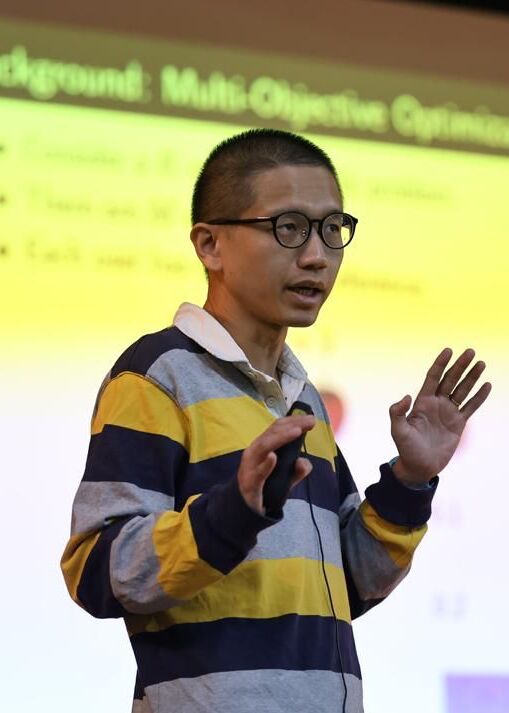
Professor Vincent Y. F. Tan holds dual appointments in the Department of Mathematics and the Department of Electrical and Computer Engineering (ECE) at the National University of Singapore (NUS). He is also affiliated with the Institute of Operations Research and Analytics (IORA) and the Institute of Data Science (IDS). His research focuses on Online Decision Making, Multi-Armed Bandits, Reinforcement Learning, Information Theory, and Statistical Signal Processing. Notably, he has been actively publishing in top-tier conferences like NeurIPS, ICML, and IEEE journals, with recent works exploring topics such as low-rank adaptation, off-policy evaluation, and queueing control. Professor Tan has advised numerous PhD students, including Fengzhuo Zhang, Yujun Shi, and Junwen Yang. He has received recognition for his teaching, including a 4.7/5.0 rating for EE5137 Stochastic Processes. His work has led to impactful publications, such as the best paper award at the ICML 2025 workshop on World Models and an oral presentation at ICLR 2025. He currently serves as a Senior Area Chair for NeurIPS 2025 and an Area Editor for the IEEE Transactions on Information Theory. His research group focuses on advancing theoretical and applied aspects of machine learning, with projects funded by grants in areas like distributed optimization and adversarial robustness. He collaborates widely, including with institutions like IIT Delhi and HKUST Guangzhou. Open positions are available for motivated postdocs and students in his research areas.