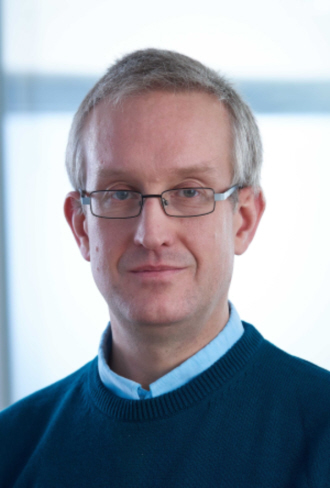
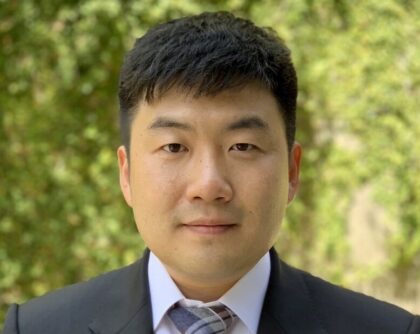
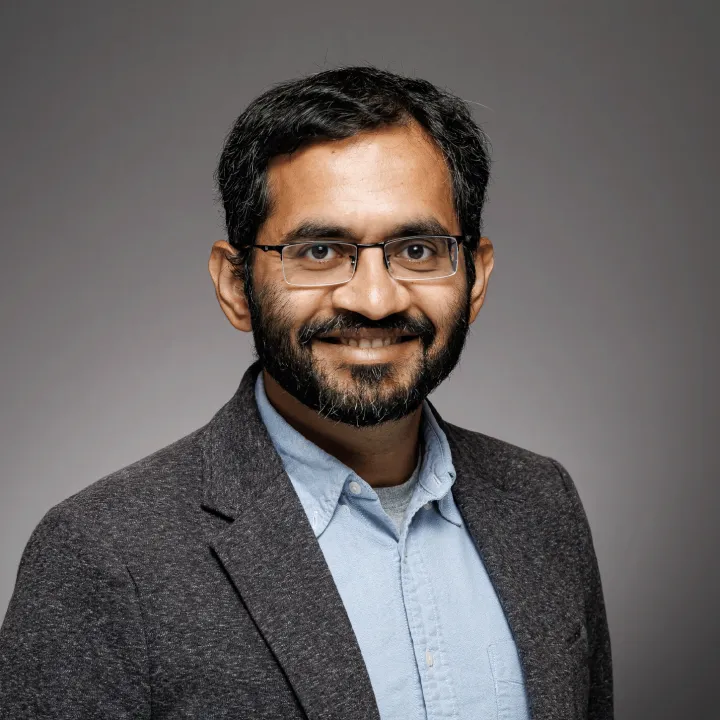
Professor Oliver Johnson is a faculty member at the School of Mathematics, University of Bristol, UK, where he serves as Head of School and holds the Professor of Information Theory position. His research bridges information theory, probability, and statistics, focusing on entropy convergence, group testing, and fundamental limits in data analysis. Current PhD students: Kieran Morris, Conor Crilly Ex-PhD students: Matt Aldridge, Leonardo Baldassini, Dan Cowley, Vaia Kalokidou, Tom Kealy, Jennifer Chakravarty, Zichen Gui, Chrys Paschou Ex-postdoc: Erwan Hillion His work includes ORCiD profile and collaborations across information theory, cybersecurity, and ecological modeling.
Jia-Jie Zhu is a machine learner and applied mathematician currently serving as head of an independent research group at the Weierstrass Institute for Applied Analysis and Stochastics in Berlin, with an upcoming appointment as tenured associate professor at KTH Royal Institute of Technology in Stockholm. Previously, he conducted postdoctoral research in machine learning at the Max Planck Institute for Intelligent Systems in Tübingen, Germany, following doctoral studies in optimization and numerical analysis at the University of Florida. His research focuses on the mathematical foundations of machine learning and optimization, particularly at the intersection of computational algorithms, dynamical systems, and probability theory. Key areas include: Robust probabilistic machine learning algorithms Kernel methods for distribution manipulation Variational methods for optimization over probability distributions Gradient flows and optimal transport theory Wasserstein and Fisher-Rao geometry Applications in generative modeling and causal inference Dr. Zhu's recent work reveals deep connections between partial differential equations, kernel methods, and machine learning, resulting in theoretically grounded algorithms for handling distribution shifts. His publications demonstrate a consistent trajectory from foundational optimization theory to cutting-edge applications in robust learning and generative modeling, with increasing emphasis on the mathematical structures underlying modern ML systems. He has secured significant research funding, including a DFG Project on 'Optimal Transport and Measure Optimization Foundation for Robust and Causal Machine Learning' within the Priority Program 'Theoretical Foundations of Deep Learning' (SPP 2298), and actively organizes academic events such as the Workshop on Optimal Transport from Theory to Applications (OT-DOM) and upcoming sessions at ICSP 2025 and SwissMAP. As an educator, Dr. Zhu teaches nonparametric statistics at Humboldt University of Berlin and serves as area chair for major conferences including AISTATS 2025. He maintains an active research group with opportunities for master's students, PhD candidates, and postdoctoral researchers interested in the mathematical frontiers of machine learning.
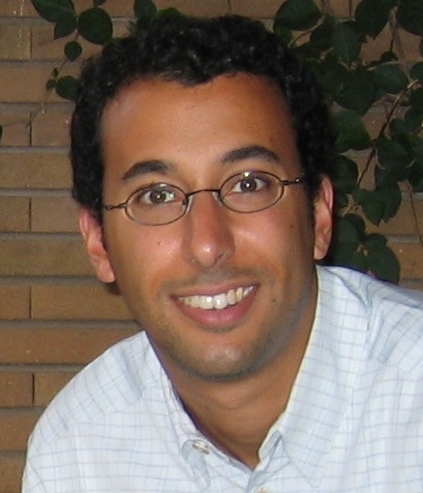
Youssef Marzouk is a Professor of Aeronautics and Astronautics at MIT, serving as co-director of the MIT Center for Computational Engineering and director of the Aerospace Computational Design Laboratory. His research focuses on integrating physical modeling with statistical inference, emphasizing Bayesian computation, uncertainty quantification, and optimal experimental design. He holds a SB, SM, and PhD from MIT and has been recognized with prestigious awards including the DOE Early Career Award and the Junior Bose Teaching Prize. Education: PhD in Aeronautics and Astronautics, MIT SM in Aeronautics and Astronautics, MIT SB in Aeronautics and Astronautics, MIT Research Interests: Uncertainty Quantification techniques for complex systems Bayesian computational methods and inverse problem solutions Optimal experimental design strategies Interdisciplinary applications in geophysics, environmental science, and engineering Awards: 2022: Report to the President, Center for Computational Science and Engineering 2021: Bayesian Inference Software Framework (hIPPYlib-MUQ) 2012: MIT School of Engineering Junior Bose Award 2010: DOE Early Career Research Award Labs & Leadership: Aerospace Computational Design Laboratory (Director) MIT Center for Computational Engineering (Co-Director) Editorial Board roles: SIAM Journal on Scientific Computing, Advances in Computational Mathematics
Brian Ziebart is a Professor in the Department of Computer Science at the University of Illinois at Chicago. He earned his Ph.D. in Machine Learning from Carnegie Mellon University in 2010. Research Interests: Machine Learning, Robotics, Assistive Technologies, Human-Computer Interaction, Adversarial Prediction, Inverse Optimal Control, Structured Prediction. Key Grants: NSF CAREER (RI)-1652530, NSF EAGER (SCH)-1650900, NSF IIS-1526379, NSF III-1514126, Future of Life Institute grant, NSF NRI-1227495. Notable Awards: Best Paper Runner-Up (ECCV, 2012), Best Paper Award (ICML, 2011), CMU School of Computer Science Dissertation Honorable Mention (2011). Teaching & Leadership: Senior Lecturer at CMU, actively involved in mentoring students and leading research teams.
Michael Ortiz is the Dotty and Dick Hayman Professor of Aeronautics and Mechanical Engineering at the California Institute of Technology (Caltech). He holds the Hans Fischer Senior Fellowship at the Technical University of Munich's Institute for Advanced Study (TUM-IAS) since 2010. His research focuses on developing the Advanced Cardiac Mechanics Emulator (ACME) to model human heart function in healthy and diseased states. He has a BS from the Polytechnic University of Madrid, and MS/PhD from UC Berkeley. Previously, he was at Brown University (1984–1995). Professor Ortiz leads Caltech’s DoE/PSAAP Center on High-Energy Density Dynamics of Materials. His honors include the IUTAM Rodney Hill Prize (2008), election to the American Academy of Arts & Sciences (2007), and Humboldt Research Award (2002). He has advised national labs like Lawrence Livermore and Sandia on predictive science and engineering review panels. His work spans computational mechanics, materials science, and multiscale modeling. Recent research emphasizes cardiac biomechanics, fracture mechanics, and quantum materials simulations. Over 100 highly cited papers showcase contributions to meshfree methods, variational fracture, and orbital-free DFT.
Mehdi Toloo is a Reader in Business Analytics at the University of Surrey's Surrey Business School. He holds a BSc, MSc, and PhD, and is a docent. Previously, he was a Professor at Technical University of Ostrava (Czech Republic) and Sultan Qaboos University (Oman). His research focuses on Business Analytics, Operations Research, Data Envelopment Analysis (DEA), and Decision Analysis. He has supervised over 40 postgraduate students and contributed to top-tier journals like European Journal of Operational Research and Omega. He is an editor for journals including Computers & Industrial Engineering and Decision Analytics. Recognized globally, he ranks in the top 2% of scientists worldwide in Business Analytics & Operations Research (2020-2024). His research projects include performance evaluation with unclassified factors, economies of scope in network DEA, and selective measures in DEA. He collaborates internationally on projects like robust optimization and supply chain sustainability. His teaching spans undergraduate courses in Operations Research, Mathematics for Business, and Programming, alongside postgraduate modules on Quantitative Methods and Advanced DEA. His work bridges theoretical and applied research, with applications in healthcare, renewable energy, and public policy.
Soonwon Choi is the Victor F. Weisskopf Career Development Assistant Professor of Physics at the Massachusetts Institute of Technology (MIT), affiliated with the MIT Center for Theoretical Physics (CTP-LI). He holds a PhD from Harvard University (2018) and was a Miller Postdoctoral Fellow at UC Berkeley before joining MIT in 2021. His research focuses on quantum information science, non-equilibrium dynamics of quantum many-body systems, and their applications in quantum technologies. Education: Bachelor's degree in Physics, California Institute of Technology (2012) PhD in Physics, Harvard University (2018) Research Interests: Quantum ergodicity and thermalization in driven systems Applications of quantum dynamics to metrology and sensing Design of quantum algorithms and error correction strategies Interdisciplinary approaches bridging theory, computation, and experiment Articles Trends: His recent work emphasizes quantum ergodicity, noise learning, and the development of theoretical frameworks for quantum computing. Key themes include exploring universal properties of quantum systems far from equilibrium and advancing quantum technologies through novel control protocols. Awards: 2024 Inchon Award (for quantum science advancements) 2024 Sloan Research Fellow 2023 NSF CAREER Award Grants & Labs: His research is supported by the Simons Foundation and member institutions. He leads efforts in MIT's CTP-LI, focusing on quantum many-body dynamics and experimental collaborations with quantum simulators.
Brennan Bean is an Assistant Professor in the Mathematics and Statistics Department at Utah State University's College of Arts & Sciences. His work focuses on geospatial modeling, statistical methods for extreme weather analysis, and machine learning applications in structural and environmental engineering. Recent publications highlight expertise in snow load prediction, Bayesian entropy, and interdisciplinary data science. Notable contributions include optimizing design methods for insulated concrete wall panels and addressing deployment challenges for ML models in engineering contexts. Research trends span geospatial data integration, climate change impact assessments, and educational interventions in STEM. Key subfields include ground snow load mapping, extreme value statistics, climate downscaling, and high-dimensional ecological modeling.
Ranjodh Singh is a Senior Lecturer at the School of Accounting, Economics and Finance within the Faculty of Business and Law at Curtin University. He holds a BSc (Hons) and PhD in disciplines relevant to his research focus. His teaching responsibilities include undergraduate and postgraduate courses in Data Analytics and Econometrics, and he supervises Honours, Masters, and PhD students in these areas. Ranjodh’s research interests center on Applied Econometrics , Applied Statistics , and Housing Economics . His work explores topics such as housing market dynamics, policy impacts on mental wellbeing, Indigenous mobility, and nonlinear econometric modeling. Recent studies include analyzing rental subsidy effectiveness, cannabis-tobacco consumption linkages, and post-pandemic housing demand shifts. His publications span leading journals like Housing Studies , International Journal of Housing Policy , and Journal of Population Economics . He frequently collaborates with researchers across disciplines, including economists, statisticians, and sociologists. His research has addressed policy-relevant issues such as rental affordability, remote infrastructure planning, and pandemic-driven economic shifts. Ranjodh’s contributions extend to major research initiatives like the AHURI Final Reports series, focusing on housing stress and Indigenous community needs. His methodologies blend traditional econometrics with machine learning advancements, as seen in his work on nonlinear models and forecast combinations.
Prof. Dr. Matti Schneider serves as Professor of Engineering Mathematics and Head of the Institute of Engineering Mathematics within the Faculty of Civil Engineering at the University of Duisburg-Essen. His academic leadership spans computational mechanics research and teaching core mathematics courses for civil engineering students. His educational background includes: Diploma in Applied Mathematics with distinction from TU Bergakademie Freiberg (2009) PhD (Dr. rer. nat.) from Leipzig University (2013) on "The Leray-Serre spectral sequence in Morse homology on Hilbert manifolds and in Floer homology on cotangent bundles" Professor Schneider's research focuses on advancing computational methods for solid mechanics through FFT-based homogenization techniques, microstructure modeling, and multi-scale material analysis. His work bridges applied mathematics and engineering to solve complex problems in heterogeneous material systems, with particular emphasis on numerical stability, boundary condition implementation, and efficient solver development for industrial applications. His methodologies enable accurate prediction of material behavior across scales from microscopic structures to macroscopic components. Analysis of his 15 most recent publications reveals dominant trends in FFT-based computational homogenization, with significant contributions to thermal problems, porous media, and fiber-reinforced composites. He pioneers the integration of machine learning (particularly deep material networks) with traditional numerical methods to model complex material behaviors like shear-thinning suspensions and 3D-printed materials. His work consistently addresses computational challenges in boundary condition implementation and convergence for stochastic microstructures. Professor Schneider leads the Institute of Engineering Mathematics and directs research within the ERC-funded BeyondRVE project, which focuses on extending representative volume element concepts for advanced material modeling. His collaborative network includes major German research institutions like Fraunhofer ITWM and international partners in materials science.
Massimo Trovato is a Full Professor of Mathematical Physics at the University of Catania, where he has been teaching since 2004 and has held the rank of full professor since 2010. He serves as Director of the INDAM Unit of the Department of Mathematics and Informatics (DMI) since 2014. Professor Trovato teaches courses in both the Mathematics and Physics degree programs at the University of Catania. Professor Trovato's research spans multiple areas within mathematical physics, with a particular focus on theoretical frameworks for understanding physical systems. His work integrates advanced mathematical techniques with physical principles to develop models that explain complex phenomena in semiconductor physics, quantum systems, and fluid dynamics. His research interests include: Mathematical Physics Statistical Mechanics Quantum Kinetic Theory Semiclassical Kinetic Theory Extended Thermodynamics Maximum Entropy Principle Quantum Maximum Entropy Principle Semiconductor Physics Fluid Dynamics Professor Trovato's publication record demonstrates a consistent focus on entropy principles and their applications across various physical systems. His work shows an evolution from classical thermodynamics to quantum formulations, with particular emphasis on semiconductor applications and 2D materials like graphene. The research trajectory reveals increasing sophistication in handling nonlocal quantum effects and fractional statistics, reflecting the growing complexity of modern physical systems being studied. Professor Trovato has made significant contributions to the theoretical understanding of transport phenomena in semiconductors, particularly through the application of maximum entropy principles to both classical and quantum systems. His research has important implications for the development of next-generation semiconductor devices. His teaching responsibilities include Analytical Mechanics for Physics students and Mathematical Physics II for Mathematics students, demonstrating his commitment to educating the next generation of physicists and mathematicians.
Purushottam Dixit is an Assistant Professor of Biomedical Engineering at Yale University, specializing in computational systems biology and biophysics. He holds a Ph.D. in Chemical and Biomolecular Engineering from The Johns Hopkins University and a B.S. in Chemical Engineering from Indian Institute of Technology, Bombay. His research focuses on integrating machine learning and statistical physics to analyze high-dimensional biological data, particularly inspired by the principle of maximum entropy. Key themes include cellular signaling, population heterogeneity, bacterial community dynamics, and metabolic responses to environmental constraints. He has received the Maximizing Investigator's Research Award (NIGMS 2022-2026) and has published extensively in journals like Nature Metabolism , Cell Systems , and Nature Methods . His work addresses challenges in modeling cellular heterogeneity, lipid metabolism in cancer cells, and microbiota variability. Scientific Awards: Maximizing Investigator's Research Award, NIGMS 2022-2026 He advises doctoral students, including Hoda (first Ph.D. graduate from his lab) and Andrew, and actively recruits new candidates. The lab moved to Yale in July 2023, following previous affiliations with other institutions.
Prof. Michael Beer is the Executive Director of the Institute for Risk and Reliability at Leibniz University Hannover. He holds a professorship in the Faculty of Civil Engineering and Geodetic Science and serves on the Faculty Council. His research focuses on structural reliability, uncertainty quantification, and risk analysis with applications in civil engineering systems. He leads the Collaborative Research Centres (CRC) 871 and 1463, addressing regeneration of complex capital goods and offshore megastructure design, respectively. His work integrates machine learning, Bayesian methods, and stochastic modeling to address challenges in seismic vulnerability, geotechnical systems, and reliability-based design optimization. Beer is also a member of the Leibniz Research Centre Energy 2050, emphasizing interdisciplinary energy systems research. Beer's research interests span probabilistic modeling of dynamic systems, uncertainty propagation in engineering systems, and data-driven methods for reliability assessment. His recent publications emphasize computational methods for reliability, machine learning applications, and seismic risk analysis. He actively contributes to academic leadership roles, including editorial boards and research center management.
Ulrik Dam Nielsen is an Associate Professor in the Section for Fluid Mechanics, Coastal and Maritime Engineering at the Department of Civil and Mechanical Engineering, Technical University of Denmark (DTU). He also held an external position as Associate Professor II at the Norwegian University of Science and Technology (NTNU) from 2014 to 2023, reflecting strong international collaboration. His work contributes to UN Sustainable Development Goals related to sustainable maritime operations and clean energy. His research focuses on naval architecture and ship motion dynamics , particularly in the context of sea state estimation , added resistance in waves , and real-time prediction of vessel responses . He integrates data analytics , estimation theory , and machine learning to develop methods for monitoring hydrodynamic performance and enhancing maritime safety and energy efficiency. A central theme of his work is using ships as mobile wave sensors—transforming operational vessels into 'sailing wave buoys' for environmental monitoring. His recent publications show a clear shift toward data-driven methodologies, especially machine learning applications in sea state estimation, added resistance modeling, and performance monitoring. These works span journals like Ship Technology Research and Journal of Offshore Mechanics and Arctic Engineering , and conferences such as IEEE MetroSea, highlighting interdisciplinary innovation at the intersection of classical marine engineering and modern AI. Best Paper Presented by a Young Researcher Award (First Classified), 2024 (jointly awarded) He actively supervises PhD students—such as R. E. G. Mounet, M. Mittendorf, J. P. Tomy, and A. Oikonomakis—on projects funded by DTU and collaborative initiatives. His leadership in projects like WEFOSWAB (Wave Estimation and Forecasting Using Ships as Buoys) and data-driven added resistance modeling underscores his role in advancing smart maritime technologies. He also contributes to open science through the public release of datasets such as NetSSE . He teaches core courses including Introduction to Ships and Floating Structures , Marine and Ocean Engineering , and Ship Operations , shaping the next generation of maritime engineers.
Dr. Srboljub Simić is a full professor at the University of Novi Sad's Faculty of Science, Department of Mathematics and Informatics. His research focuses on applied analysis, particularly in fluid dynamics, thermodynamics, and mathematical physics. He specializes in multi-component gas mixtures, shock wave propagation, and non-equilibrium systems, with contributions to extended thermodynamics and kinetic models. His work bridges theoretical analysis and computational methods, addressing challenges in capillary phenomena, diffusion processes, and hyperbolic systems. Recent research emphasizes multi-temperature models for polyatomic gases and the mathematical treatment of shock structures. His articles explore entropy production, energy methods for Boltzmann equations, and numerical studies of diffusion in complex mixtures. These contributions advance understanding of rarefied gases and non-equilibrium flows, often employing advanced analytical techniques like the maximum entropy principle and asymptotic analysis. No scientific awards or grants are explicitly mentioned in the provided texts. Dr. Simić has not listed formal advisees, though his teaching includes courses like Mathematical Foundations of Economics and English language training for students. His professional activities include organizing academic events like the 7th International Congress of Serbian Society of Mechanics. Research collaborations and affiliations are centered within the university's mathematics and informatics department, with international involvement in fields like computational fluid dynamics and thermodynamic systems analysis.