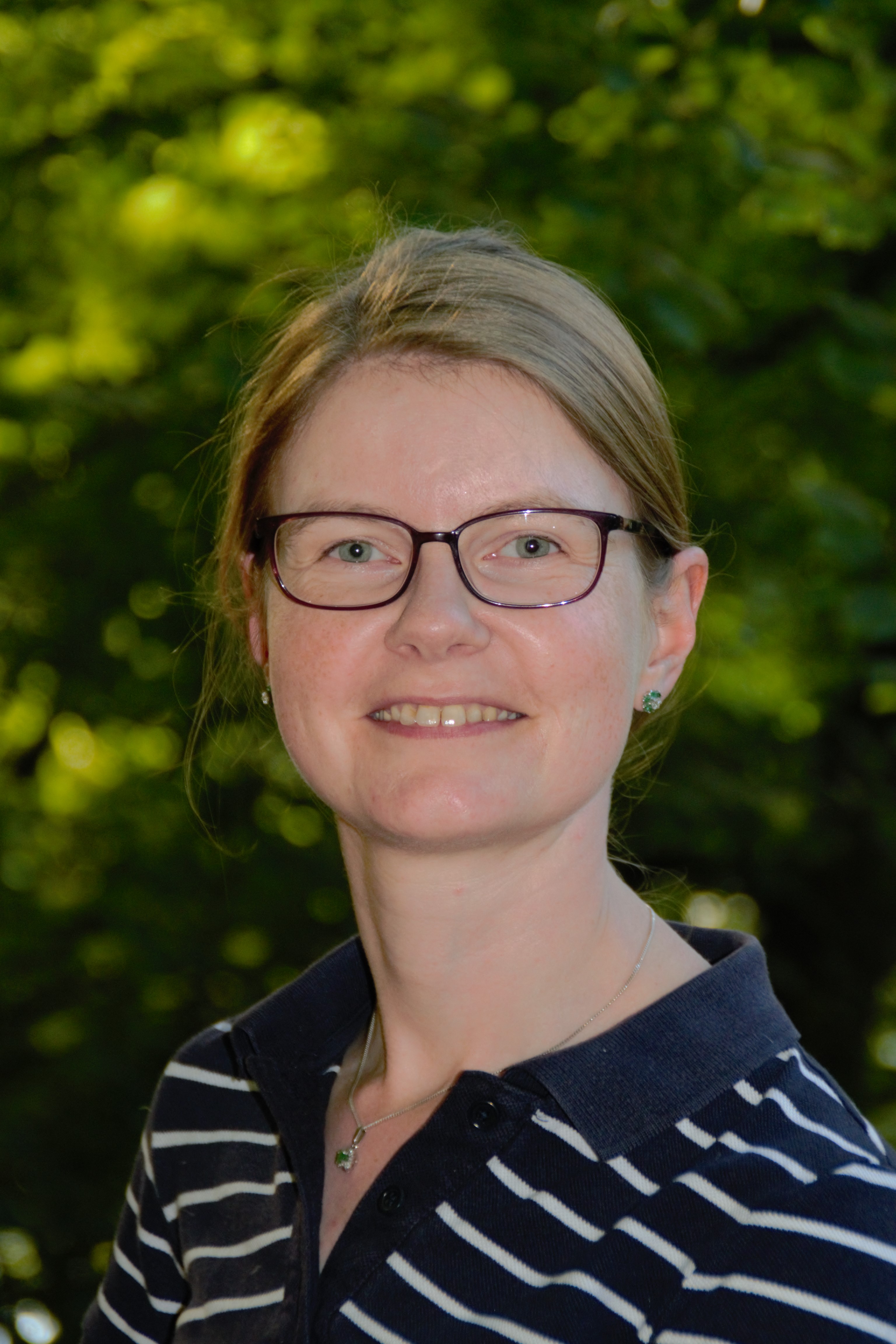
Prof. Dr. Anja Janßen is a university lecturer and professor at the Faculty of Mathematics, Otto von Guericke University Magdeburg since 2020. She was previously an Associate Professor at KTH Royal Institute of Technology Stockholm (2017-2020), Postdoctoral Researcher at University of Copenhagen (2015-2017), and held postdoctoral and teaching roles at University of Hamburg (2011-2015). She earned her Doctoral Degree in Mathematics (2010) and Diploma in Business Mathematics (2006) from University of Göttingen and Hamburg respectively. Doctoral Degree, Mathematics, University of Göttingen (2010) Diploma in Business Mathematics, University of Hamburg (2006) Anja Janßen specializes in Extreme Value Theory and Dependence Modeling . Her research focuses on analyzing rare events in multivariate observations and time series, particularly how model assumptions like GARCH/SV financial models or regular variation frameworks shape extreme event structures. She develops extremal inference techniques that incorporate these structures into estimation methods. Her recent publications (2020-2024) investigate threshold selection procedures, k-means clustering applications for extremes, spectral tail processes, and max-stable approximations for regularly varying time series. These works span statistical methodology, probability theory, and financial mathematics applications. Associate Editor for Extremes Journal Associate Editor for Stochastic Models Journal She teaches courses including Stochastic Processes, Extreme Value Statistics, Probability Theory, and Statistical Methods, with a focus on e-learning formats since 2020. Office hours are by appointment via email.
Dr. Abdullah Bolek is a postdoctoral researcher at the Max Planck Institute for Biogeochemistry in Jena, Germany, affiliated with the Biogeochemical Signals Department and the Integrating surface-atmosphere Exchange Processes Across Scales (IPAS) research group. His work focuses on atmospheric boundary layer dynamics, UAV-based environmental monitoring, and turbulence analysis. He earned a PhD in Civil Engineering (2022), an MSc in Naval Architecture and Marine Engineering (2017), and a BSc in the same field (2014) from the University of Texas at San Antonio and Yildiz Technical University, respectively. Education PhD, University of Texas at San Antonio, Civil Engineering (2022) MSc, Yildiz Technical University, Naval Architecture and Marine Engineering (2017) BSc, Yildiz Technical University, Naval Architecture and Marine Engineering (2014) Dr. Bolek's research synthesizes computational fluid dynamics and empirical data to analyze land-atmosphere interactions. Key areas include UAV-measurement optimization , eddy covariance flux analysis , and rainfall microphysics under extreme wind conditions . His recent publications address carbon flux modeling in permafrost regions, UAV flight pattern evaluation, and atmospheric inversion techniques for heterogeneous ecosystems. Notable methodological contributions include large-eddy simulation (LES) integration with UAV data and reproducibility frameworks for flux chamber measurements . Current projects focus on Arctic greenhouse gas observation metadata (ARGO) and turbulence-precipitation coupling mechanisms.
Tina Lüdecke is a Junior Group Leader of the Emmy Noether Group for Hominin Meat Consumption (HoMeCo) at the Max-Planck Institute for Chemistry in Mainz, Germany. She also holds several honorary and guest researcher positions including at the University of the Witwatersrand in South Africa, National Museums of Kenya, and Senckenberg Biodiversity and Climate Research Centre. Her research focuses on early hominin diets and paleo-food webs using stable isotope analysis. Dr. Lüdecke's educational background includes: PhD from Johann Wolfgang Goethe University Frankfurt, Germany (2016) - 'Stable isotope-based reconstruction of Neogene terrestrial archives' (magna cum laude) Visiting PhD at Stanford University, School of Earth, Energy & Environmental Science (2014) Diploma (M.Sc.) from Gottfried-Wilhelm-Leibniz-University-Hannover, Germany - 'Late Cenozoic Paleoenvironmental signatures of the Central Anatolian Plateau' Dr. Lüdecke investigates early hominin diets and their ecological context, with a focus on the onset and evolution of meat consumption and the position of Plio-Pleistocene hominins in African paleo-food webs, using stable isotopes in tooth enamel. She also reconstructs Neogene paleolandscapes inhabited by early hominins, examining C4 grassland expansion in relation to changes in seasonality, precipitation, temperature, atmospheric pCO₂, and tree cover. Her work combines extensive field research with geochemical approaches — stable isotopes of carbon, oxygen, nitrogen, and zinc, clumped isotopes, and multi-element analyses — applied to fossil tooth enamel, pedogenic carbonates, and other proxy materials. Her research spans the Miocene to Pleistocene in eastern and southern Africa, including early hominin sites of the Afar Depression (Ethiopia), Manyara Basin (Tanzania), Karonga Basin (Malawi), Urema Basin (Mozambique), and the Cradle of Humankind (South Africa). Dr. Lüdecke's recent publications reflect her pioneering work in nitrogen isotope analysis of tooth enamel to reconstruct ancient diets. Her research has demonstrated that enamel nitrogen reliably preserves dietary isotopic signatures, establishing it as a powerful new paleodietary proxy. Her most recent work challenges previous assumptions about early hominin meat consumption, showing that Australopithecus from Sterkfontein (South Africa) did not consume significant amounts of mammalian meat. Her publications span diverse fields including paleoanthropology, geochemistry, stable isotope analysis, paleoecology, and archaeology. Her notable scientific awards include: International Human Frontier Science Program (HFSP) Research Grant (2023) German Science Foundation (DFG) Emmy Noether Program, Junior Research Group (2021) National Geographic Explorer Grant (2018) DFG – ICDP Priority Program personal grants (2017, 2019) Hermann-Willkomm-Stiftung travel grants (2011, 2012) Dr. Lüdecke supervises multiple graduate students and postdoctoral fellows including Dr. Jana Storsberg, Marissa Vink, Miguel A. Soares Remiseiro, Sven Brömme, and Dr. Jennifer Leichliter. She has secured significant grant funding totaling approximately 2,768,000 € for her research, including major awards from the German Science Foundation, National Geographic Society, and International Human Frontier Science Program. Her research group, HoMeCo, focuses on the onset and evolution of early hominin meat consumption. Dr. Lüdecke is actively involved with the Paleo-Primate Project Gorongosa in Gorongosa National Park, Mozambique, where she serves as the leading geochemist. She also collaborates with institutions worldwide including the National Museums of Kenya, University of the Witwatersrand in South Africa, and Senckenberg Biodiversity and Climate Research Centre in Frankfurt. Her field research spans multiple continents, focusing on early hominin sites across eastern and southern Africa as well as out-of-Africa localities.
Alessandra Gragnani is a tenured researcher (Ricercatrice confermata) at the Department of Electronics, Information and Bioengineering (DEIB) of the Polytechnic University of Milan since March 2004. Her academic career began with a Laurea in Electronic Engineering (1994) followed by a PhD in Informatics and Automatics (1998), both from Politecnico di Milano. She has held visiting research positions at prestigious institutions including Max Planck Institute for Demographic Research, Wageningen Agricultural University, and International Institute for Applied Systems Analysis. Professor Gragnani's research focuses on nonlinear mathematical modeling applied to environmental problems, with expertise in bifurcation analysis, control of nonlinear dynamic systems, and discontinuous dynamical systems. Her work bridges theoretical mathematics with practical applications in ecology, environmental management, and social systems. She has developed methodologies for analyzing complex system behaviors including slow-fast dynamics, peak-to-peak dynamics for predicting insect outbreaks, and sliding bifurcations in discontinuous systems. Her recent publications (2020-2024) demonstrate continued active research in mathematical ecology, environmental modeling, and control systems, with applications ranging from lake ecosystem management to forest pest control. The publications reveal a consistent focus on applying nonlinear dynamics to understand and manage complex environmental systems. Professor Gragnani teaches Fundamentals of Automatic Control for mathematicians , covering linear dynamic systems, stability analysis, and control theory. Her teaching approach integrates theoretical concepts with practical MATLAB-based laboratory exercises. Her research has been supported through multiple national projects including PRIN-MIUR grants on nonlinear dynamic networks and chaos applications in information engineering. She has also organized scientific events, including specialized courses on nonlinear dynamics for researchers and doctoral students.
Martin Werner is a senior scientist at the Alfred Wegener Institute for Polar and Marine Research (AWI) where he serves as Vice Head of the Paleoclimate Dynamics section and Chair of AWI's Scientific Council. He also holds a Privatdozent position (equivalent to Associate Professor) at the University of Bremen. His primary institutional affiliation is with AWI in Bremerhaven, Germany, where he has been working since 2008. Dr. Werner earned his PhD in Natural Sciences from the Max Planck Institute for Meteorology and University of Hamburg in 2000, and completed his Habilitation in Environmental Physics at the University of Bremen in 2023. His academic journey includes positions at the Max Planck Institute for Biogeochemistry, Stockholm University, and the Max Planck Institute for Meteorology prior to joining AWI. His research focuses on Paleoclimate Dynamics, Earth System Modeling, Stable Water Isotopes, and Biogeochemical Tracers. Dr. Werner specializes in analyzing different climate conditions and identifying driving mechanisms behind past and present climate change, with particular emphasis on the water cycle and its isotopic signature. He utilizes complex Earth system models enhanced with water isotope tracers to enable direct comparison between proxy data and model results, bridging observational and modeling approaches in paleoclimate research. Dr. Werner's recent publications demonstrate expertise across diverse paleoclimate topics including water isotope studies in the troposphere, East Asian monsoon dynamics, Antarctic precipitation analysis, and model intercomparisons. His work shows consistent focus on interpreting climate proxy records through the lens of advanced modeling techniques. As Vice Section Head of Paleoclimate Dynamics and Chair of AWI's Scientific Council, Dr. Werner plays a significant leadership role in guiding research directions and contributing to scientific governance at one of the world's leading polar research institutions.
Professor Madeleine Humphreys is a distinguished academic in the Department of Earth Sciences at Durham University, holding the position of Professor with research focused on igneous petrology, volcanology and magmatism. Her work centers on understanding magma storage, chemical evolution and migration within the Earth's crust using both natural materials and experimental approaches. Her research interests primarily focus on using crystal textures to understand magma solidification processes and crystal mush behavior, as well as investigating volatiles in volcanic processes including fluid exsolution timing and metal enrichment in volcanic settings. Current projects include ERC Consolidator and NERC-funded research on crystal textures, apatite geochemistry, sintering effects on volcanic behavior, and porphyry copper mineralizing systems. Professor Humphreys' recent publications demonstrate a strong emphasis on crystal mush processes, volatile behavior in magmatic systems, and the application of apatite geochemistry to understand magmatic-hydrothermal transitions. Her work spans multiple geological settings including arc magmatic systems, layered intrusions, and volcanic centers worldwide, with particular attention to the physical and chemical processes controlling magma evolution. Wager Medal, IAVCEI (2019) Max Hey medal, Mineralogical Society of Great Britain (2012) President's Award, Geological Society of London (2008) Editorial board member, Geology (2017) Associate Editor, Journal of Petrology (2020-2024) Professor Humphreys actively supervises numerous PhD and MSc students while leading a vibrant volcanology-petrology research group at Durham. Her current students are investigating diverse topics including sintering textures, apatite volatile geochemistry, crystal textures in plutonic rocks, and lithium enrichment in granites. She has secured significant research funding from ERC, NERC, and Leverhulme Trust for her innovative work on magma processes. The group maintains active collaborations with researchers worldwide and utilizes both field-based and experimental approaches to advance understanding of magmatic systems.
Dr. Anca Gabriela Mirea serves as a Scientific Researcher III at the National Institute of Materials Physics (INFIM) in Măgurele, Romania, within the Laboratory of Catalytic Materials and Catalysis. Her academic foundation includes a PhD in Chemistry from the University of Bucharest (2015–2020), a Master's in Chemistry of Medicines and Cosmetics (2013–2015), and a Graduate degree in Biochemistry (2010–2013). PhD in Chemistry, University of Bucharest (2015–2020) Master in Chemistry of Medicines and Cosmetics, University of Bucharest (2013–2015) Graduate in Biochemistry, University of Bucharest (2010–2013) Her research spans heterogeneous catalysis , materials synthesis for energy applications , and organic polymer development , with emphasis on MAX phases, MXenes, and photoconductive materials. Experimental expertise includes organic synthesis, NMR/mass spectrometry, XRD, SEM, and solar cell fabrication. Her work bridges fundamental chemistry with sustainable technology development, particularly in plastic upcycling and renewable energy systems. Analysis of her 13 most recent publications (2021–2025) reveals dominant themes in catalytic materials design (46%), energy conversion technologies (31%), and advanced organic synthesis (23%). Key methodological trends include hydrothermal synthesis (38%), quantum dot integration (23%), and computational validation via DFT (69% of studies). Notable applications span PET upcycling (99% terephthalic acid yield), perovskite solar cells (14.90% efficiency), and methane oxidation catalysts. Her laboratory work integrates spectroscopic characterization with practical device fabrication, maintaining strong collaborations across Romanian research institutions. Current projects focus on optimizing MXene-based catalysts for industrial plastic recycling and developing stable quasi-2D perovskites for next-generation photovoltaics.
Dr. Martin van Moerbeck-Bock is a Research Fellow at the Max Born Institute for Nonlinear Optics and Short Pulse Spectroscopy, specializing in ultrafast laser physics within the Solid State Light Sources department. His work focuses on developing high-power mid-infrared laser systems for applications in attosecond science and strong-field physics. He holds a Master of Engineering in Photonics and a Diploma-Engineer in Physical Engineering from the University of Applied Science Wildau, with thesis work on ultrashort pulse characterization and spatio-spectral shaping. His academic journey at MBI began in 2005 and progressed through Ph.D. studies (2008-2013) to his current Postdoc role. His research centers on mid-infrared laser development using optical parametric chirped-pulse amplification (OPCPA), with emphasis on Ho:YLF regenerative amplifiers that generate pulse energies up to 55 mJ at 1 kHz. Key innovations include ring-cavity amplifier designs achieving exceptional stability (rms Analysis of his 2023-2025 publications reveals consistent advancement in pulse compression techniques, orbital angular momentum manipulation, and high-energy mid-IR systems. His work bridges theoretical nonlinear optics with practical engineering, targeting few-cycle pulses for attosecond pulse generation and novel x-ray sources. As Project Member for 1.2 "Ultrafast Laser Physics and Nonlinear Optics", he operates sophisticated laser laboratories featuring seed sources, regenerative amplifiers, and booster stages. His experimental setups integrate femtosecond Er:fiber lasers, super-continuum generation, and Tm:fiber pre-amplifiers to achieve stable high-energy output.
Gaute Lavik is a Researcher in the Department of Biogeochemistry at the Max Planck Institute for Marine Microbiology, Bremen. His work focuses on marine nitrogen and sulfur cycling, nutrient dynamics in oceanic oxygen minimum zones, and microbial mediation of global biogeochemical cycles. He employs stable isotope techniques, high-resolution chemical analysis, and in situ experiments to study processes such as denitrification, anammox, and methane formation in marine sediments and water columns. Key research areas include understanding how microbial communities regulate nitrogen loss in coastal and open ocean environments, the role of sulfide in driving biogeochemical reactions, and the impact of environmental variables like light and freshwater discharge on biogeochemical processes. His studies often integrate field observations with laboratory incubations and isotopic tracing methodologies. Publications highlight contributions to unraveling nitrogen cycling in the Arabian Sea, Peruvian oxygen minimum zones, and sub-Arctic fjords. Ongoing work addresses methane emissions from seagrass ecosystems and the influence of microbial metabolisms on carbon sequestration in oligotrophic regions.
Marco Oesting is a Tenure-Track Professor at the Stuttgart Center for Simulation Science (SC SimTech) and the Institute of Stochastics and Applications, University of Stuttgart. He holds a PhD in Mathematics from the University of Göttingen (2012) and a Habilitation from the University of Siegen (2020). His research focuses on extreme value theory, spatial statistics, and stochastic processes, particularly in the context of environmental and climate data analysis. He leads the Computational Statistics Group and has contributed to the development of simulation algorithms for max-stable processes and statistical methods for analyzing extreme events. Education: PhD in Mathematics, University of Göttingen (2012) Habilitation in Mathematics, University of Siegen (2020) Diploma in Mathematics, University of Göttingen (2009) Research interests include: Modeling and simulation of extreme events Max-stable processes and their applications Statistical inference for spatial and temporal extremes His recent work emphasizes scalable methods for high-dimensional extremes and computational statistics. He has published extensively in top-tier journals like Annals of Statistics , Biometrika , and Extremes . Awards and recognition include contributions to the R package RandomFields , and his active role in organizing the 'One World Extremes Seminar' (2020–2023). Teaching responsibilities include courses on stochastic simulation, extreme value theory, and mathematical statistics at both undergraduate and graduate levels.
Dr. Helen Fewlass is a Lecturer in Archaeology at the Department of Anthropology and Archaeology, University of Bristol. She specializes in archaeological science, with a focus on radiocarbon dating, palaeoproteomics, and the study of ancient biomolecules to investigate human evolution and prehistory. Her research has significantly contributed to our understanding of the Middle to Upper Palaeolithic transition in Europe, particularly regarding the migration of Homo sapiens into Europe and interactions with Neanderthals. Dr. Fewlass completed her Msci and earned her PhD (2015-2019) at the Max Planck Institute for Evolutionary Anthropology in Leipzig, Germany. Following her doctoral studies, she held postdoctoral research positions at the same institute (2019-2021) and later at the Ancient Genomics Lab at the Francis Crick Institute in London (2021-2024). Dr. Fewlass's research focuses on innovative methods in archaeological science. She specializes in radiocarbon dating ancient bone with minimal sample requirements, having developed protocols to reduce the amount of material needed from precious specimens. Her work with near-infrared spectroscopy (NIR) allows for non-destructive pre-screening of bone protein preservation, significantly reducing destructive sampling of valuable archaeological material. She applies palaeoproteomics techniques like ZooMS (Zooarchaeology by Mass Spectrometry) for species identification of ancient bone fragments, which has revolutionized Palaeolithic archaeology by increasing the identification of human remains from archaeological sites. Her recent publications demonstrate a strong focus on the chronology of human evolution during the Middle to Upper Palaeolithic transition in Europe (~50,000-40,000 years ago). Her work combines multiple methodologies including radiocarbon dating, ancient DNA analysis, stable isotope analysis, and proteomics to investigate crucial questions about human migration, adaptation to cold climates, and interactions between Homo sapiens and Neanderthals. A significant trend in her research is the development and application of minimally destructive analytical techniques that preserve precious archaeological specimens while extracting maximum scientific information. Dr. Fewlass has received notable recognition for her research contributions: EMBO Postdoctoral Fellowship (2022) Otto Hahn Medal (2022) Dr. Fewlass is actively involved in several major research projects. She is part of the Horizon-funded COEXIST project (2024-2029) investigating late Middle Palaeolithic sites across southeastern and central Europe, the Horizon-funded MAMBA project (2022-2027) focused on Gravettian mammoth bone accumulations in Central Europe, and a Polish National Science Centre-funded project (2021-2026) on Palaeoclimate reconstruction using directly dated micromammals. Her work frequently involves large interdisciplinary collaborations with archaeologists, palaeoanthropologists, geologists, geneticists, and climate specialists. Her laboratory work spans multiple institutions, including the University of Bristol, where she continues her research on ancient biomolecules, and previously at the Max Planck Institute for Evolutionary Anthropology and the Francis Crick Institute. She has developed specialized protocols for collagen extraction and radiocarbon dating of small bone samples, as well as NIR spectroscopy models for protein preservation screening that can be implemented in museums and archaeological field settings.
Dr. Oliver Gerberding is a Junior Professor (W1 with tenure track to W2) in Experimental Physics at the University of Hamburg’s Faculty of Mathematics, Informatics and Natural Sciences. As head of the Gravitational Wave Detection research group at the Institute of Experimental Physics, he focuses on advancing laser interferometry for gravitational wave astronomy, particularly in ground-based (Einstein Telescope) and space-based (LISA) detectors. His work intersects precision metrology, quantum technologies, and photonics. Academic Career: 2019–present: Junior Professor at University of Hamburg; 2016–2019: Postdoctoral Researcher at Max Planck Institute and Leibniz Universität Hannover; 2014: PhD in Physics (supervisors: Karsten Danzmann, Gerhard Heinzel). Research Pillars: Scattered light suppression, seismic noise mitigation, tunable coherence techniques, and ultra-stable laser systems for gravitational wave detectors. His recent publications demonstrate breakthroughs in stray light suppression (40 dB in Michelson interferometers), picometer-stable optical benches for space missions, and seismic noise analysis in XFEL systems. He leads institutional roles in the Einstein Telescope’s Instrument Science Board and co-initiated the WAVE seismic network. His group mentors PhD students in experimental gravitational wave physics.
Prof. Dr. Harry Becker is a C4-University Professor and Head of the Geochemistry Group at the Freie Universität Berlin's Institute of Geological Sciences. He specializes in Earth and planetary evolution, focusing on early solar system processes, mantle dynamics, and isotopic geochemistry. His academic roles include spokesperson for the DFG Transregional Collaborative Research Center TRR 170 (Late Accretion onto Terrestrial Planets) and Dean of Research (2007-2011). Education: Dr. rer. nat. (1994, Max Planck Institute/Universität Mainz), Diplom (1990, Universität Karlsruhe). Professional experience includes postdoctoral roles at the Carnegie Institution (USA) and visiting positions at the Lunar and Planetary Institute (Houston). Research interests span element fractionation in Earth's crust/mantle, Precambrian surface systems, and lunar geochemistry. Major grants include BMBF-funded projects on osmium isotopes (2020-2022) and DFG support for TRR 170 (2016-2023). He has advised over 40 PhD/Master's students and published >150 peer-reviewed articles. Awards include NATO and Max-Planck postdoctoral fellowships. Teaching includes courses on geochemistry, meteorites, and field methods. Collaborations span institutions globally, with active roles in geochemical societies and journal editorial boards.
Dr. Bo Liu is a Research Scientist at the University of Hamburg's Institute of Oceanography, focusing on Earth system modeling and the carbon cycle. His current work involves the PalMod project, modeling glacial cycles and ocean biogeochemical processes. He holds a PhD in Marine and Atmospheric Sciences from Utrecht University (2017), with prior experience at the Max Planck Institute for Meteorology (2017–2024) and Tianjin University (2009–2017). Education: PhD in Marine and Atmospheric Sciences, Utrecht University (2017) MSc in Computational Fluid Dynamics, Tianjin University (2011) BSc in Engineering Mechanics, Tianjin University (2009) Research interests center on marine biogeochemical processes and their interaction with physical oceanography, particularly in quantifying oceanic contributions to atmospheric CO₂ changes. He develops and improves Earth System Models (e.g., MPI-ESM), focusing on carbon isotopes and glacial-interglacial transitions. His work emphasizes model-data comparisons and advancing climate projections. Grants and advising: His funding comes from the PalMod project, and while no advisees are listed, his research involves collaborative projects with international teams. He contributes to the CLIMBER-X model framework and participates in PMIP-carbon intercomparison initiatives. Labs/Teams: Active in the PalMod consortium and CLIMBER-X Earth system modeling group at the University of Hamburg.
Dr. Jiajue Chai is Assistant Professor of Chemistry at SUNY ESF, specializing in atmospheric chemistry of reactive nitrogen species. His NSF-funded research investigates sources, processes, and sinks of nitrogen oxides, HONO, and particulate nitrate, with implications for air quality and climate. Current projects examine urban pollution, wildfire impacts, and isotopic tracing methods. He leads the development of analytical techniques including optical spectroscopy and mass spectrometry for stable isotope analysis. Field campaigns include FIREX-AQ (wildfires), MOOSE (ozone), and AGES+ (urban pollution). Mentees include graduate students Greyson Flynn, Max Horsford, and Lin Lyu.