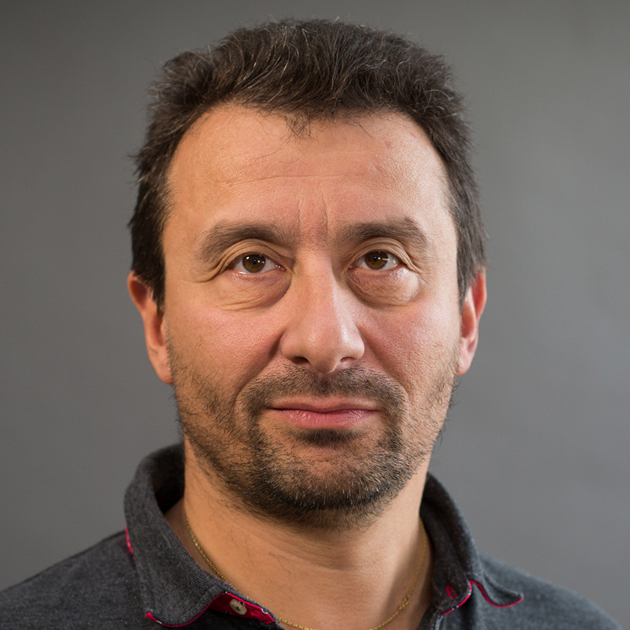
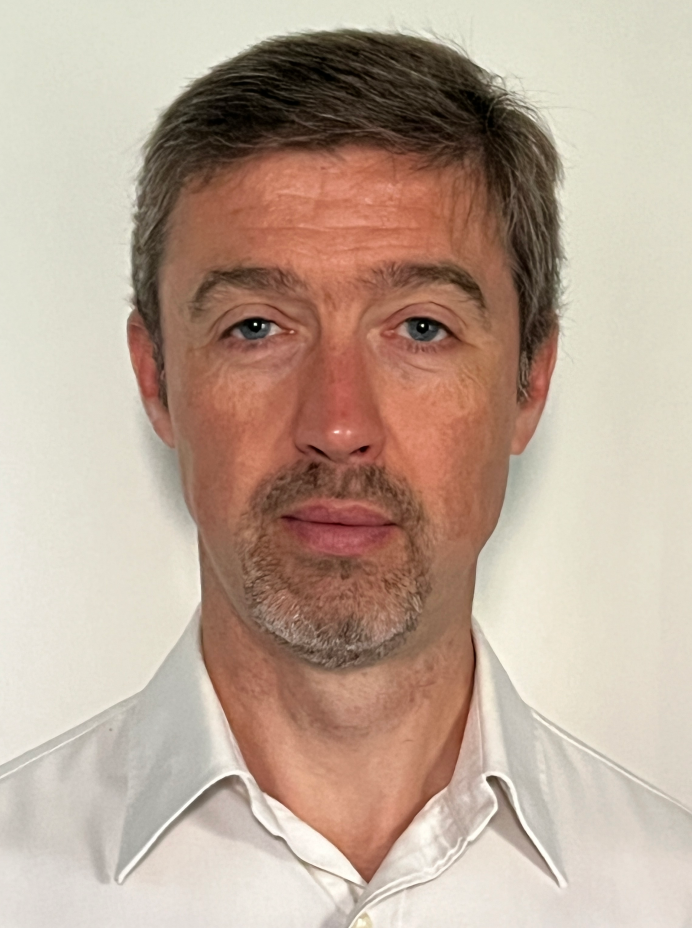
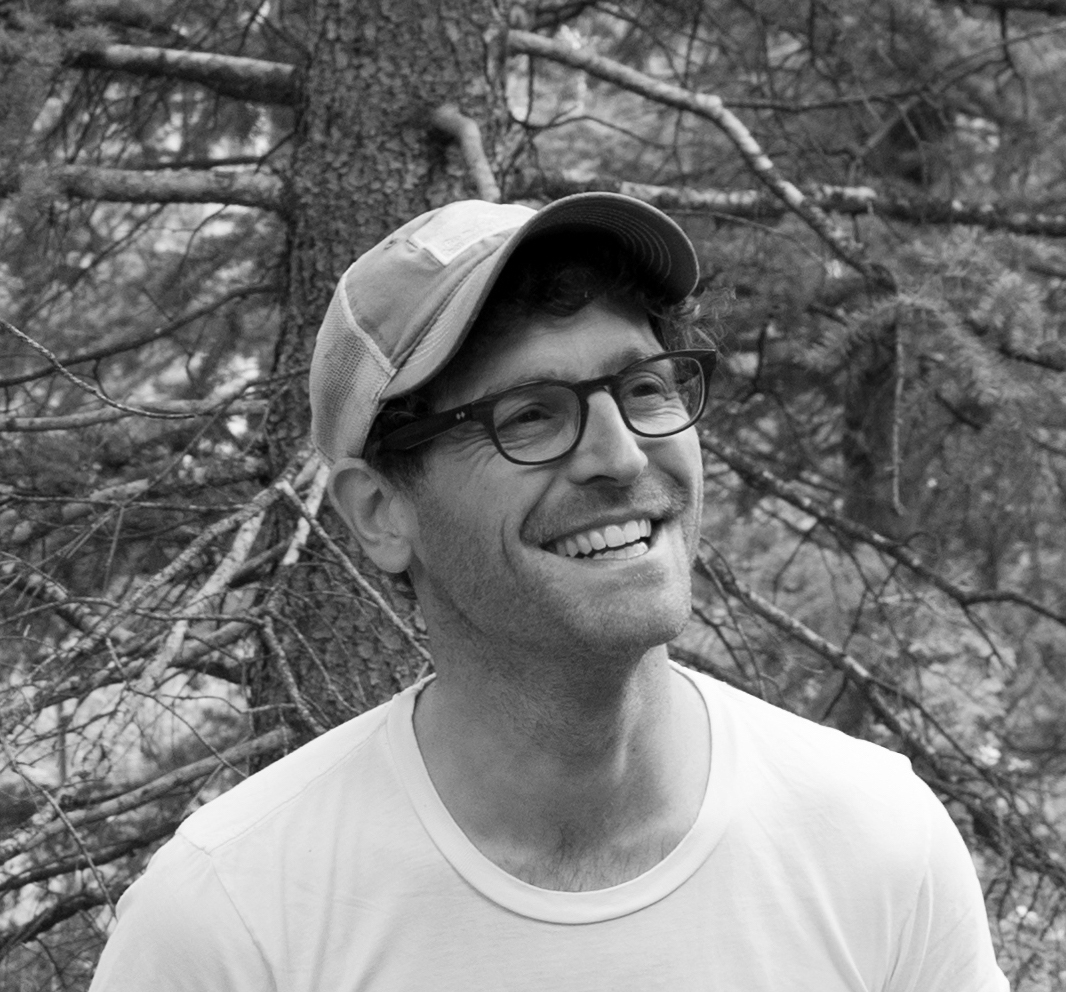
Laurent Decreusefond is a Professor of Mathematics at Télécom Paris , affiliated with the Information Processing and Communication Laboratory (LTCI) and the Network, Mobility and Services (RMS) research team. His work bridges probability theory and telecommunications, focusing on stochastic modeling, Malliavin calculus, and applications to wireless network performance. Research Interests: Probability, stochastic processes, determinantal point processes, simplicial homology for network coverage, and Malliavin calculus in telecommunications. Publications: Recent articles address UAV swarm deployment, Stein's method for stable processes, and optimal transport in wireless simulation. His work connects abstract mathematics to practical network optimization. Labs & Teams: Active in LTCI and RMS, he contributes to stochastic geometry and network modeling. No explicit awards or student advisement details provided in the data.
Johan Segers is a Full Professor at the Department of Mathematics, KU Leuven , and a Visiting Professor at the Institut de statistique, biostatistique et sciences actuarielles (UCLouvain). His research bridges extreme value theory , copulas , statistical learning , and optimal transport , with applications in finance, environmental risk analysis, and multivariate statistics. Research Trends : Focus on extremal dependence, vine copulas, and Monte Carlo methods. Recent Article Trends : Combines extreme value theory with graphical models and optimal transport for high-dimensional data analysis. Awards & Honors : Prix Adolphe Wetrems (2012–2013) from the Académie Royale des Sciences, des Lettres et des Beaux-arts de Belgique Fellow of the Institute for Mathematical Statistics (IMS) Elected Member of the International Statistical Institute (ISI) Editorial Roles : Associate Editor for Advances in Applied Probability , Bernoulli , Electronic Journal of Statistics , and others. He also contributes to software development, including the R-package spatialTailDep .
Geoff Smith is a Senior Researcher in Zooarchaeology at the University of Reading and a lead collaborator on the ERC/UKRI-funded COEXIST project. His research focuses on human subsistence behavior, dietary changes, and biomolecular methods in Paleolithic archaeology. He holds a PhD from University College London and has held postdoctoral positions at institutions including the Max Planck Institute for Evolutionary Anthropology. Education: BSc Archaeology (University of London), MSc Palaeoecology of Human Societies (University of London), PhD Palaeolithic Zooarchaeology (University College London) Research Interests: Zooarchaeology, biomolecular methods (ZooMS, ancient DNA), Neanderthal-Homo sapiens interactions, Pleistocene subsistence strategies His work integrates zooarchaeology with cutting-edge techniques like ZooMS and stable isotope analysis to reconstruct ancient diets and migration patterns. Recent projects include studying the earliest Homo sapiens in Central Europe and Neanderthal subsistence practices at sites like Bacho Kiro Cave (Bulgaria). He has co-supervised PhD students and contributed to interdisciplinary collaborations. Publications highlight advancements in Paleolithic archaeology, including the dispersal of Homo sapiens into Europe and the dietary adaptations of early humans. His research bridges traditional archaeology with biomolecular and isotope-based approaches.
Associate Professor Jianfeng Mao is an ARC Future Fellow (2024-2028) and Discipline/Program Lead in Materials Engineering at the University of Adelaide. He specializes in energy storage systems, particularly advanced electrolytes and materials for next-generation batteries, including zinc-ion, potassium-ion, and lithium-ion technologies. His research also addresses sustainable battery recycling and hydrogen storage. Mao holds a PhD from the University of Wollongong and has held appointments at institutions like the Max Planck Institute and the University of Maryland. Education: PhD in Materials Engineering, University of Wollongong (Best Faculty Postgraduate Thesis Award) Master's Degree, Chinese Academy of Sciences Bachelor's Degree, Jilin University Research Interests: Focuses on electrolyte engineering for high-performance batteries, including aqueous and solid-state systems. Key areas include: - Developing stable Zn/Potassium/Lithium metal anodes - Designing non-flammable electrolytes for safety - Green recycling of spent batteries - Hydrogen storage materials using novel composites. Grants & Awards: ARC Future Fellowship (FT230100598, $1.01M) ARC Discovery Projects (DP240102353, DP200101862) ARC Training Centre for Battery Recycling (IC230100042, $5M) Clarivate Highly Cited Researcher (2023/2024) Energy & Fuels Rising Star (2024) Labs & Teams: Leads the Electrolyte Design & Engineering Group at the School of Chemical Engineering. Collaborates with industry partners via the ARC Battery Recycling Centre. Active in editorial roles, including Associate Editor for Sustainable Materials and Technologies .
Max Berkelhammer is an Associate Professor in the Department of Earth and Environmental Sciences at the University of Illinois Chicago (UIC), housed within the College of Liberal Arts and Sciences. His research focuses on understanding interactions between the land surface and atmosphere, with a particular emphasis on water and carbon cycles. Key areas include paleoclimate reconstructions using isotopic proxies, real-time observations of environmental systems, and modeling future climate dynamics. Current projects involve Arctic ice sheet-atmosphere exchange at Summit Greenland, Rocky Mountain forest water use at Niwot Ridge LTER, and tropical monsoon dynamics in the Indian Ocean. Education: BA Geology from Pomona College (2002), PhD Earth Sciences from University of Southern California (2010), postdoctoral training in atmospheric sciences at University of Colorado Boulder (2013). He has secured over $6M in grants as Principal Investigator or Co-PI, including DOE awards for root dynamics modeling and NSF support for Eemian interglacial studies. Research Interests: Climate change impacts on hydrological cycles Stable isotope geochemistry as environmental indicators Urban ecohydrology and climate adaptation Education outreach for secondary science teachers Notable Achievements : 2018 Silver Circle Teaching Award (UIC) Woodrow Wilson Teaching Fellowship (2018-2019) Lead PI for 8+ federal/state research grants Labs/Teams: Directs the Atmosphere, Climate and Ecosystems Lab at UIC, collaborating with interdisciplinary teams on urban flux measurements (CROCUS project) and mountain observatories. Actively involved in the East River Watershed research consortium and NEON observatory collaborations.
Sergey Eliseev is a leading researcher at the Max Planck Institute for Nuclear Physics (MPIK) in Heidelberg, Germany, where he serves as a group leader for the MATS and PENTATRAP projects. His research is centered on high-precision Penning-trap mass spectrometry, enabling groundbreaking studies in neutrino physics, nuclear structure, and searches for physics beyond the Standard Model. His research interests span precision mass measurements, neutrino mass determination via electron capture in 163 Ho, tests of fundamental symmetries, and the search for new bosons and dark forces. He plays a key role in interdisciplinary collaborations such as SFB 1227 DQ-mat and IsoQuant, which aim to push the limits of precision physics. His work involves both experimental innovation and theoretical interpretation, particularly in the context of highly charged ions and atomic metrology. The recent articles highlight a strong trend toward using nonlinearities in King plots to constrain new bosons, measuring neutrino-related Q-values with eV-level precision, and probing nuclear structure through mass spectrometry of exotic isotopes. His publications frequently appear in high-impact journals such as Nature , Physical Review Letters , and Reviews of Modern Physics , often in collaboration with Klaus Blaum and other leaders in the field. He has been involved in numerous scientific advancements, including the development of ultra-stable voltage sources, cryogenic stopping cells, and digital feedback systems for ion manipulation. These technical innovations support the extreme precision required in modern atomic and nuclear experiments. As a group leader at MPIK, he mentors and collaborates with a broad team of researchers and students. Although no direct students are named in the provided text, his leadership in large collaborations implies significant advisory and team coordination roles. He has also contributed to major review articles and white papers, including one on keV sterile neutrino dark matter, indicating leadership in shaping future research directions. His laboratory work is centered around the PENTATRAP and SHIPTRAP spectrometers, which are at the forefront of high-precision mass measurements for highly charged and rare isotopes. These facilities are critical for advancing tests of fundamental physics and exploring the limits of the Standard Model.
Boris Jean Eudes Beranger is a Lecturer in Data Science at the School of Mathematics and Statistics, UNSW Sydney, and an Associate Investigator at the ARC Centre of Excellence for Mathematical and Statistical Frontiers (ACEMS). He holds a PhD in Statistics from Université Pierre and Marie Curie (Paris 6) and UNSW Sydney (2016), and an MSc in Mathematics from Université Pierre and Marie Curie (2011). His research focuses on Extreme Value Theory applied to environmental extremes (e.g., floods, heatwaves), Symbolic Data Analysis for complex datasets, and Statistical Theory for big data challenges. He has developed novel methods for analyzing histogram-valued data and max-stable processes in high dimensions, with applications in climate science and telecommunications. Key publications include work on tail density estimation using kernel methods, composite likelihood approaches for spatial extremes, and likelihood-based inference for aggregated data. His work emphasizes computational efficiency and robustness in extreme event modeling. Awards: J.B. Douglas Award (2014), Outreach Participation Award (2019) Grants: ACEMS Research Support Scheme (2018–2021), multiple industry collaborations Teaching: Courses include Data Science fundamentals, regression analysis, and extreme value theory Labs/Teams: UNSW Data Science Hub (uDASH), leading the UNSW Statistics Seminar Series
Dan Cooley is a Professor and Graduate Director in the Department of Statistics at Colorado State University. He is affiliated with the College of Natural Sciences and focuses on extreme value analysis, particularly tail dependence modeling and environmental risk assessment. Extreme value theory Multivariate extremes Heavy-tailed phenomena Spatial statistics Meteorological/environmental applications His research has been recognized with awards including ASA Fellow (2023), Distinguished Achievement Award from the ASA Section on Statistics and the Environment (2023), and the College of Natural Sciences Professor Laureate (2017-2019). Collaborations include work with the National Center for Atmospheric Research and Lawrence Berkeley National Labs. cooleyd@rams.colostate.edu Office: Statistics 217, Fort Collins, CO 80523-1877
Dr. Nicole Börner is a researcher at the Max Planck Institute for Biogeochemistry , where she leads project coordination for AI4PEX and EEBIOMASS. Her career spans scientific coordination roles at the Technische Universität Braunschweig (2017–2023) and research appointments in Germany, Canada, and China. Education : PhD in Geochemistry (2016, TU Braunschweig), Diplom in Biology with focus on Ecology/Zoology/Hydrology (2010–2016, Leibniz University Hannover) Research Interests : Paleoenvironmental reconstruction using ostracod shell chemistry , chironomid assemblages , and sedimentary ancient DNA to study Tibetan Plateau hydrology , monsoon dynamics , and Quaternary climate change . Publication Trends : Recent work focuses on multi-proxy comparisons (e.g., diatom vs. DNA data), elemental/isotopic analysis of microfossils, and high-altitude lake responses to 20th-century climate shifts. Scientific Awards : DAAD Scholarship (2013) Grants : Funded by DFG for her dissertation and OSL dating projects.
Dr. Soeren Ahmerkamp is a Researcher in the Department of Biogeochemistry at the Max Planck Institute for Marine Microbiology in Bremen, Germany. His research focuses on the interplay between transport mechanisms and microbial processes in marine environments, combining numerical modeling, field observations (e.g., via the 'LanceALot' benthic observatory), and laboratory experiments. Key projects include studies on subtidal sandy sediments, coral ciliary flows, beach biogeochemistry, and marine aggregates. His work integrates disciplines such as fluid dynamics, microbial ecology, and biogeochemical cycling. Recent studies highlight nitrogen loss in coastal sediments, oxygen dynamics in coral ecosystems, and polysaccharide-driven sediment stability. Ahmerkamp collaborates internationally, contributing to projects like the development of novel luminescence imaging techniques and flow-through stable isotope probing (Flow-SIP). He holds a Ph.D. and has published extensively on topics ranging from microbial respiration under anoxic conditions to the role of marine aggregates in carbon sequestration. His research bridges micro-scale microbial activities with macro-scale environmental impacts, emphasizing the importance of permeable sediments and hydrodynamic processes in global element cycles.
Dr. Ingo Schöning is a Researcher at the Max Planck Institute for Biogeochemistry in Jena, Germany, within the Department of Biogeochemical Processes. He leads the Soil Biogeochemistry research group and has held positions since 2006 in projects like the Biodiversity-Exploratories and CarboEurope. His work focuses on interactions between land use, biodiversity, and soil processes, with a strong emphasis on carbon and nutrient dynamics in soils and mechanisms of soil organic matter stabilization. Education includes a PhD in Soil Science from TU Munich (2005) and a Diploma in Geoecology from the University of Potsdam (2000). His research explores spatial patterns of soil carbon storage, mineral-associated organic matter formation, and the impacts of management practices on soil biogeochemistry. Key research themes include understanding how land use, biodiversity, and management intensity affect soil processes and ecosystem multifunctionality, particularly in grasslands and forests. Collaborations with institutions like Friedrich-Schiller-University highlight interdisciplinary approaches to environmental challenges. His lab’s work bridges biogeochemical processes with ecological dynamics, aiming to inform sustainable land management practices. No awards or grants are explicitly mentioned, but his extensive publication record demonstrates significant contributions to soil science and ecology.
Laurent Decreusefond is a Research Professor in Probability at the Department of Computer Science and Networks (INFRES), Networks, Mobility and Services (RMS) at Telecom Paris (part of Institut Polytechnique de Paris). He is affiliated with the Information Processing and Communication Laboratory (LTCI) and the Data, Intelligence and Graphs (DIG) team. His work bridges probability theory, stochastic geometry, and wireless network modeling. Research areas: Stochastic Geometry, Malliavin Calculus, Stein's Method, Wireless Sensor Networks, Determinantal Processes, and Extreme Value Theory. Recent articles focus on Stein's method applications, functional limit theorems, and wireless network optimization using stochastic models.
Susan Trumbore is a Full Professor of Earth System Science at the University of California, Irvine, and Director at the Max Planck Institute for Biogeochemistry in Germany. Her research focuses on applying radiocarbon to study carbon cycling in plants and soils, with emphasis on tropical ecosystems and climate change impacts. She earned a B.S. in Geology from the University of Delaware (1981) and a Ph.D. in Geochemistry from Columbia University (1989). Key Roles: Director at MPI-BGC (since 2009), Full Professor at UCI (2000–present) Research Initiatives: Collaborative Research Center AquaDiva, German Center for Integrative Biodiversity Research (iDiv), Brazilian/German ATTO project, ERC-funded 14Constraint project Trumbore’s research spans biogeochemical processes, climate feedbacks, and soil carbon dynamics. Her work includes studying Amazon rainforest resilience, peatland carbon stocks, and windthrow impacts. She has received prestigious awards such as the US National Academy of Sciences membership (2010), Balzan Prize (2020), and Benjamin Franklin Medal (2018). Awards: Marsh Award (2019), Fellowships from AGU and AAAS Collaborations: Woods Hole Research Center, IPAM (Amazon Environmental Research Institute), European Research Council Her recent studies highlight the vulnerability of Amazon forests to drought and fire, and the role of windthrow events in altering carbon stocks. Ongoing projects include the Tanguro Flux Project and investigations into groundwater microbiome resilience.
Anthony Christopher Davison is a Professor at the Institute of Mathematics within the School of Basic Sciences at École polytechnique fédérale de Lausanne (EPFL). He maintains an active research program in statistical methodology with a particular focus on extreme value theory and its applications across various domains including climate science, environmental statistics, and insurance. His work bridges theoretical developments with practical applications, addressing challenging problems in multivariate and spatial extremes. His research interests span Extreme Value Theory , Statistical Modeling , Multivariate Statistics , Spatial Statistics , and Bayesian Inference . Professor Davison has made significant contributions to the understanding of extremal dependence structures, developing novel methodologies for modeling multivariate extremes using structural equation models, graphical representations, and flexible nonparametric approaches. His work often addresses the challenges of non-stationarity in extreme events, particularly relevant in climate change contexts. Analysis of his recent publications reveals a consistent focus on advancing methodological frameworks for extreme value analysis while maintaining strong connections to real-world applications. His work demonstrates increasing sophistication in handling high-dimensional extremal dependence structures and addressing challenges in causal inference for extreme events. The publications span theoretical developments in statistical methodology alongside applications in climate science, environmental risk assessment, and insurance modeling. Professor Davison has supervised numerous doctoral students including Mario Krali, Timmy Rong Tian Tse, and Sonia Alouini, whose theses address cutting-edge problems in extreme value theory. His research has been supported by various funding bodies including the Swiss National Science Foundation and other Swiss foundations.
Laura M. Otter is a Research Fellow in the Research School of Earth Sciences at The Australian National University (ANU), specializing in Geochemistry. Her research focuses on biomineralization processes in marine organisms like mollusk shells, fish otoliths, corals, and pearls. She employs advanced analytical techniques including atom probe tomography, photo-induced force microscopy, and SIMS to study micro-to-nano-scale growth mechanisms and environmental applications. Education: PhD (Biomineralization & Geochemistry, Macquarie University, 2020), M.Sc. (Geosciences, Johannes Gutenberg University & Max Planck Institute for Chemistry, 2015), B.Sc. (Geosciences, Johannes Gutenberg University, 2012). Research Themes: Biomineralization dynamics, environmental archives in calcareous structures, and applications in aquaculture and gemology. Current projects include investigating nacre growth mechanics and developing high-resolution geochemical proxies for paleoclimatology. Key Contributions: Over 20 peer-reviewed publications on topics like nacre microstructure, pearl formation, and oxygen isotope analyses in marine shells. Supervised student Kushani Jayasoma.