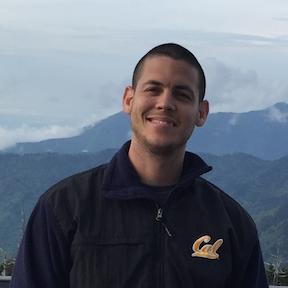
Fernando Lledo Macau is a Full Professor at the Department of Mathematics at University Carlos III of Madrid (UC3M) . His research focuses on Operator Algebras , Quantum Mechanics , and Spectral Theory , with applications to Graph Theory and Mathematical Physics . Recent publications highlight his work on spectral bracketing , magnetic graphs , and Følner sequences in operator algebras. He investigates discrete weighted graphs , quantum symmetries , and amenability in inverse semigroups. His 2025 article on Isospectral graphs and 2024 work on weighted digraphs reflect trends in geometric and spectral analysis. He supervises theses on topics like coarse geometry and magnetic Laplacian matrices , contributing to grants such as QUITEMAD-CM and 6G-INTEGRATION-3 . His collaborations span institutions in Barcelona , Durham , Münster , and ICMAT .
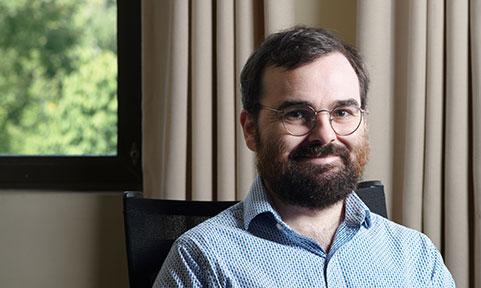
O. Deniz Akyildiz is an Assistant Professor in Statistics at the Department of Mathematics, Imperial College London. His research focuses on computational statistics, machine learning, and generative modelling, with applications to sampling, optimization, and inverse problems. He holds affiliations with the Artificial Intelligence Network and Mathematics research groups. Previously, he obtained degrees in Electronics and Communications Engineering from İTÜ, followed by a PhD in Signal Processing at Universidad Carlos III de Madrid. Before joining Imperial, he worked as a postdoctoral researcher at Warwick CS and The Alan Turing Institute. His research interests span diffusion-based parameter estimation, score-based generative models, Langevin dynamics for optimization, and adaptive importance samplers. Recent work includes contributions to latent diffusion models, Sinkhorn semigroups, and stochastic filtering techniques. Notable publications include works on statistical finite elements, interacting particle Langevin algorithms, and physics-informed deep generative models. His technical blog almost stochastic and GitHub repository provide further insights into his research.
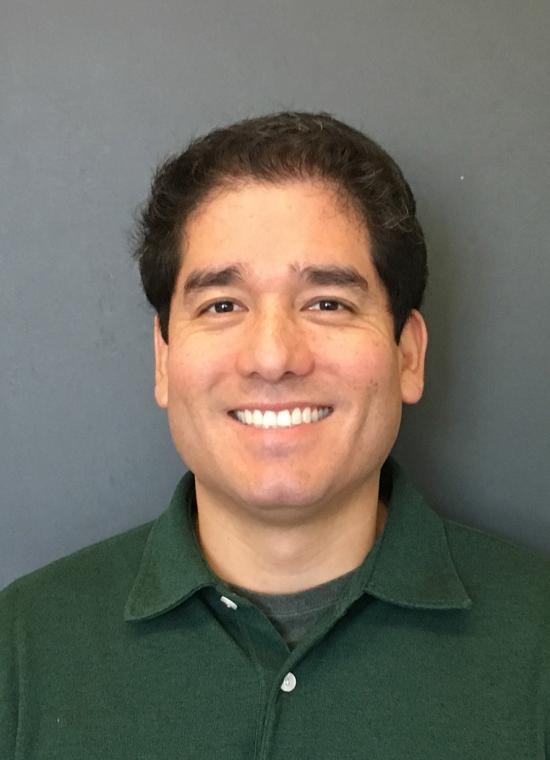
Wojciech Matysiak is an Assistant Professor in the Faculty of Mathematics and Information Science at Warsaw University of Technology. His research lies at the intersection of probability theory, quantum stochastic processes, and algebraic structures in mathematics. Institution: Warsaw University of Technology School: Faculty of Mathematics and Information Science Position: Assistant Professor of Mathematics Email: matysiak@mini.pw.edu.pl Office: 439, Mathematics Building, ul. Koszykowa 75, Warsaw, Poland His primary research interests include Probability Theory , Quantum Stochastic Processes , Orthogonal Polynomials , and Noncommutative Probability . He investigates structures such as quadratic harnesses, quantum Bessel processes, and random fields with linear regressions, often using operator-theoretic and algebraic methods. The analysis of his recent publications reveals a strong focus on the interplay between algebra and probability, particularly through q-commutation relations, martingale polynomials, and generalized stochastic processes. His work spans pure mathematics with applications in mathematical physics and has extended into interdisciplinary domains such as soil science and oncology. Wojciech Matysiak has published in prestigious journals including Transactions of the American Mathematical Society , Stochastic Processes and their Applications , and Journal of Theoretical Probability . His recent work continues to explore deep connections between algebraic identities and probabilistic models. He collaborates with researchers such as Włodzimierz Bryc, Jacek Wesołowski, and Marcin Świeca. He is involved in the Probability Seminar at his institution and contributes to teaching materials for mathematics and engineering students. No scientific awards or grants are mentioned in the provided texts. He maintains a research webpage and is actively publishing, indicating ongoing scholarly activity in mathematical probability and its applications.
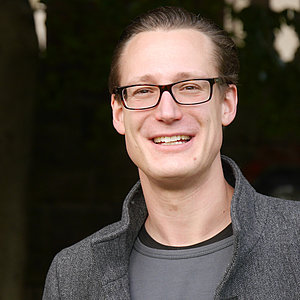
Felix Gotti is an NSF Postdoctoral Fellow and Instructor in Applied Mathematics at the Massachusetts Institute of Technology (MIT), Department of Mathematics within the School of Science. He earned his PhD in Mathematics from UC Berkeley in 2019 under the supervision of Prof. Lauren Williams. Prior to his position at MIT, he was an Exchange Graduate Scholar at Harvard University and a Postdoctoral Researcher at the University of Graz (Austria) and the University of Florida. His educational background includes: PhD in Mathematics, UC Berkeley (2019) Gotti's research centers on Algebra and Combinatorics, with a primary focus on the phenomenon of non-uniqueness of factorizations into irreducibles in integral domains and atomic monoids. He employs techniques from combinatorics, linear algebra, and number theory to investigate these structures. His combinatorial research focuses on posets and matroids, while he also maintains interests in polyhedral geometry and cluster algebras. His work bridges abstract algebraic theory with concrete combinatorial applications, creating connections between seemingly disparate mathematical domains. Analysis of Gotti's publication record reveals a consistent focus on factorization theory across algebraic structures. His research spans semigroup rings, Puiseux monoids, semirings, and polynomial rings, examining properties like atomicity, elasticity, and length-factoriality. The interdisciplinary nature of his work connects commutative algebra, combinatorics, and geometry, with applications in understanding the structural properties of various algebraic objects. His scientific recognition includes the prestigious NSF Postdoctoral Fellowship, which supports his research at MIT. NSF Postdoctoral Fellow Gotti is deeply committed to mentoring and advising students. He serves as the Group Research Coordinator of MIT PRIMES, a program introducing high school students to research in mathematics, computer science, and computational biology. He has supervised numerous students including Cecilia Aguilera, Khalid Ajran, Sofia Albizu-Campos, and others who have produced significant research papers. His mentees have received notable awards including the Spirit of Ramanujan Fellowship, Regeneron Science Talent Search recognition, and awards from the American Mathematical Society. Gotti also serves as the Lead Mentor of CrowdMath, a free year-long online research program open to high-schoolers and undergraduates worldwide. He has taught multiple courses at MIT including Combinatorial Analysis (18.211), Multivariable Calculus (18.02), and specialized topics like Ideal Theory and Prüfer Domains. As a member of the editorial board of Communications in Algebra, Gotti contributes to the scholarly community by reviewing mathematical research. His leadership in educational programs demonstrates his commitment to nurturing the next generation of mathematicians through structured research opportunities and mentorship.
Mathias Schulze is a Professor in the Department of Mathematics at the University of Kaiserslautern-Landau (RPTU), Germany, where he leads the research group AG Algebra, Geometry and Computer Algebra (AGAG) . His office is located in Building 48, Room 434, Gottlieb-Daimler-Straße, 67663 Kaiserslautern. Research Interests His research spans several core areas of algebraic geometry and commutative algebra, with particular emphasis on: Singularities of curves and hypersurfaces Hyperplane arrangements, configurations and matroids Differential forms, derivations and free divisors D-modules and hypergeometric systems Category theory and triangulated categories Gröbner basis theory and computational algebra Publications & Scholarly Output Schulze has authored or co-authored more than 50 refereed journal articles and several preprints since 2014. His most recent work (2024-2025) explores categorical matrix factorizations, triangulated functors and stable monomorphism categories, reflecting a modern categorical approach to classical singularity theory. Teaching He maintains an extensive teaching portfolio ranging from introductory algebra and linear algebra to specialized graduate courses such as Plane Algebraic Curves Depth and Cohen–Macaulay Rings Seminars on Topics in Algebra and Geometry Computer Algebra His courses are scheduled through Summer 2025, indicating active instructional duties. Software & Tools Beyond publications, Schulze has released several specialized software libraries for the computer-algebra system Singular , including gmspoly.lib gmssing.lib linalg.lib (with Ivor Saynisch) mondromy.lib These libraries support computations with Gauss–Manin systems, singularities and linear algebra.
Prof. Dr. Mathias Schulze is a full professor at the University of Kaiserslautern-Landau (RPTU) in the Department of Mathematics , leading the Algebra, Geometry and Computer Algebra (AGAG) group. His research spans a wide range of topics in algebraic geometry, singularity theory, and commutative algebra, with a particular focus on singularities of curves and hypersurfaces, hyperplane arrangements, D-modules, and category theory. Research Interests: Singularities of curves and hypersurfaces Hyperplane arrangements, configurations, and matroids Differential forms, derivations, and free divisors D-modules and hypergeometric systems Category theory Gröbner basis theory Recent Publications: His work has consistently contributed to foundational areas of algebraic geometry and singularity theory. Notable recent articles include studies on triangulated categories, matrix factorizations, and the structure of derived categories. His research often intersects with combinatorics and commutative algebra, as seen in his work on configuration polynomials and matroid theory. Teaching: Prof. Schulze teaches a broad spectrum of courses, from introductory algebra to advanced topics in algebraic geometry and singularity theory. His upcoming courses for SS 2025 include "Algebraic Structures," "Plane Algebraic Curves," and "Depth and Cohen-Macaulay Rings." Contact: Email: mschulze@rptu.de Office: Gottlieb-Daimler-Straße, Building 48, Room 434, 67663 Kaiserslautern Phone: +49 631 205 5489
Marianne Johnson is a Senior Lecturer in the School of Mathematics at the University of Manchester. She is a core member of the tropical mathematics research group and collaborates with institutions including Birmingham, Queen Mary University of London, and Warwick through an LMS Joint Research Network. Her research focuses on algebra and combinatorics, including free Lie algebras, representation theory, semigroup theory, and tropical algebra/geometry. She has contributed to EPSRC-funded projects such as 'Multiplicative Structure of Tropical Matrix Algebra' and 'Modular Lie Powers and Applications,' and participated in the CICADA interdisciplinary project. Her research interests span a wide array of algebraic topics: free Lie algebras explore the structure of non-associative algebras, while representation theory examines how algebraic structures act on vector spaces. Semigroup theory and tropical algebra involve studying combinatorial and geometric properties of matrices and monoids over semirings. Recent work includes studies on plactic-like monoids, tropical matrix identities, and linear functions preserving Green's relations. Johnson has co-authored over 29 publications, with recent trends emphasizing tropical algebra's applications to geometric and algorithmic problems, such as tropical matrix groups and hyperplane arrangements. Her work bridges pure mathematics with interdisciplinary fields like computational dynamics and healthcare through collaborations like CICADA. Notable projects include analyzing upper triangular tropical matrices and exploring NP-completeness in gossip monoids. She has advised three research students and contributed to grants involving EPSRC-funded projects. Her affiliations include the Data Science Institute, Algebra research group, and Tropical Mathematics cluster at Manchester. Her work also intersects with Digital Futures initiatives, reflecting her commitment to advancing computational and theoretical mathematics.
Adam Fuller is an Associate Professor and Undergraduate Chair in the Department of Mathematics at Ohio University, part of the College of Arts and Sciences. He is also affiliated with the Ohio University Center of Ring Theory and its Applications. His office is located in Morton Hall 561, and he can be reached via email at fullera@ohio.edu or by phone at 740-593-1284. Education: B.A., Trinity College Dublin, 2007 M.A.S., University of Cambridge, 2008 Ph.D., University of Waterloo, 2012 (supervised by Ken Davidson) Dr. Fuller's research lies at the intersection of operator algebras and multivariate operator theory. He investigates how algebraic structures such as graphs, semigroups, and groupoids can be used to describe analytic objects like operator algebras and their embeddings. A significant focus of his current work includes operator algebra inclusions and their associated dynamics, as well as recent contributions to non-commutative Choquet theory. His research bridges abstract algebra and functional analysis, with applications in non-selfadjoint operator algebras and dilation theory. The selected publications reflect a consistent trajectory in operator algebra theory, particularly in semicrossed products, 2-graph algebras, and hyperreflexivity. These works demonstrate deep engagement with structural properties of operator spaces and algebras, often in non-commutative settings. The keywords span functional analysis, algebraic dynamics, and non-selfadjoint operator theory, highlighting a cohesive research program centered on the interplay between algebra and analysis. Scientific Awards: Dr. Fuller has advised and collaborated with prominent researchers in the field, including Ken Davidson, Allan Donsig, David Pitts, and others. Prior to joining Ohio University in 2016, he served as an Assistant Professor at Cal State LA and was a Hitz Research Assistant Professor at the University of Nebraska-Lincoln from 2012 to 2015. There is no public mention of external grants or formal advisees in the provided text. He is a member of the Ohio University Center of Ring Theory and its Applications, contributing to a broader interdisciplinary research environment focused on algebraic structures and their applications.
Gabriele Gerlach is a Professor at the Carl von Ossietzky University of Oldenburg since 2007, affiliated with the Institute of Biology and Environmental Sciences and leading the Department of Biodiversity and Evolution of Animals. She also serves as an Adjunct Senior Scientist at the Marine Biological Laboratory (USA) and an Adjunct Professor at the Boston University Marine Program. Education : Ph.D. (1990) and Habilitation (2000) in Zoology and Ecology at the University of Constance, Germany. Research Interests : Biodiversity, evolutionary biology, and ecology combined with mathematical approaches. Her work focuses on operator theory, spectral analysis, and dynamical systems applied to biological and environmental questions. Publications : Recent contributions include mathematical frameworks for kernel operators, transition semigroups, and spectral convergence, bridging abstract analysis with computational biology.
Şerife Yılmaz is an Assistant Professor at the Department of Mathematics, Faculty of Science, Karadeniz Technical University. Her academic journey includes a PhD in Mathematics from Karadeniz Technical University (2011), a Master’s degree from Erciyes University (2004), and a Bachelor’s degree in Mathematics from Erciyes University (2002). Her research focuses on lattice theory, fuzzy mathematics, algebraic structures, and cryptography. She has contributed to triangular norms on lattices, fuzzy hyperstructures, and cryptographic methods. Her work spans over 27 publications, including articles in Information Sciences , Hacettepe Journal of Mathematics and Statistics , and Axioms . Educations: PhD in Mathematics, Karadeniz Technical University (2011) MSc in Mathematics, Erciyes University (2004) BSc in Mathematics, Erciyes University (2002) Research Interests: Triangular norms on bounded lattices Fuzzy hypermodules and subhyperstructures Cryptography using elliptic curves and matrices Algebraic hyperstructures and lattice theory Recent Contributions: Developed hybrid encryption methods combining RSA and elliptic curve-based matrices (2025) Explored lattice structures in multi-fuzzy soft sets (2025) Advanced filter theory in IL-algebras (2025) Awards & Grants: No awards explicitly mentioned. Active in academic service, including jury memberships in postgraduate evaluations (Giresun University, 2019) and university-level competitions in folk dances (2014–2016).
Stephan Ramon Garcia is the W.M. Keck Distinguished Service Professor and Professor of Mathematics and Statistics at Pomona College, part of The Claremont Colleges. He has been affiliated with Pomona since 2006 and holds a Ph.D. (2003) and B.A. (1997) in Mathematics from the University of California, Berkeley. His research focuses on operator theory, complex analysis, matrix analysis, number theory, analytic combinatorics, and discrete geometry. Garcia has authored over 120 research articles and five books, many with undergraduate coauthors. He has secured multiple NSF grants and serves on editorial boards of prominent journals. Research Highlights: Garcia’s work bridges pure and applied mathematics. Notable contributions include studies on complex symmetric operators, matrix norms, and factorization in numerical semigroups. His recent books include Operator Theory by Example (Oxford, 2023) and Matrix Mathematics: A Second Course in Linear Algebra (Cambridge, 2023). He has been recognized with the AMS Dolciani Prize (2019) and ILAS Hans Schneider Lectureship (2023). Grants & Leadership: Garcia has led NSF grants totaling over $500,000, including his latest 2025 RUI grant. He served as Department Chair from 2022 to 2025 and currently chairs the AWM Nominating Committee. His mentorship is evident through collaborative projects with students like Elena Kim ’21 and Gabe Udell ’21. Publications & Outreach: Garcia’s recent papers explore Frobenius norms, Artin L-functions, and matrix powers. He frequently lectures at international conferences and initiated programs like the Mentoring Math Minds lecture series. His work emphasizes undergraduate research, with over 50 student coauthored papers.
Dr. Moritz Gerlach is a researcher associated with the Institute of Mathematics at the University of Potsdam . His work focuses on operator theory, ergodic theory, and the asymptotic behavior of Markov processes. He collaborates on topics like kernel operators, positivity in Banach lattices, and spectral convergence in graph theory. PhD thesis: Semigroups of Kernel Operators (2014) Diploma thesis: The Asymptotic Behavior of Positive Semigroups (2010) Diploma thesis: Comparison of Time and Space Complexity (2008) Gerlach's research spans positive operator semigroups, their convergence properties, and applications to partial differential equations and stochastic processes. He has extended classical theorems by Doob, Lasota-Yorke, and Lévy, often eliminating restrictive continuity assumptions. His work on graph Laplacian convergence bridges machine learning and computational mathematics. His publications, including 10 peer-reviewed articles since 2012, emphasize abstract kernel operators, mixing properties, and lattice structures. While the website lists him as a freelancer, his university email ( gerlach@math.uni-potsdam.de ) suggests ongoing collaboration with the institute.
Irena Swanson is a Professor and Department Head of Mathematics at Purdue University. She holds a B.A. from Reed College (1987) and a Ph.D. from Purdue University (1992). Her research focuses on Commutative Algebra, with contributions to topics like integral closure, primary decompositions, and algebraic structures. She has advised several Ph.D. and Master’s students, including co-advised international collaborations. Her honors include being a Fellow of the American Mathematical Society (2019) and a Fulbright Fellowship (2018). She has held visiting positions at institutions such as the University of Rome III and the University of Ljubljana. Dr. Swanson serves on editorial boards, including the Journal of Commutative Algebra, and has organized workshops at the Park City Mathematics Institute. Her work spans theoretical research, textbook authorship, and mentorship in academia. Education: B.A., Reed College, 1987 Ph.D., Purdue University, 1992 Research Interests: Commutative Algebra Integral Closure of Ideals Primary Decompositions Algebraic Geometry Algebraic Statistics Her work explores foundational algebraic structures, with applications to geometry and statistics, often involving ideal theory and ring properties. Awards: Fellow of the American Mathematical Society (2019) Fulbright Fellowship (NAWI Graz, 2018) Purdue Mathematics Department Outstanding Alumna (2007–08) Advising & Grants: Supervised 7 Ph.D./Master’s students and co-advised international researchers. Secured grants for research in commutative algebra and education initiatives, including NSF and institutional funding for student projects. Active in promoting women in mathematics through professional development programs. Professional Service: Editorial board member of the Journal of Commutative Algebra, moderator of the arXiv’s commutative algebra section, and steering committee member of the Park City Mathematics Institute. Organized conferences and workshops on commutative algebra and algebraic geometry.
Professor Tze-Chien Sun serves as a faculty member in the Department of Mathematics within the College of Liberal Arts and Sciences at Wayne State University. Education: Ph.D. from Brown University Research Interests: His scholarly work centers on advanced mathematical frameworks including probability theory on semigroups, asymptotic behavior of random matrix products, and rigorous limit theorems. He specializes in both short-memory and long-memory time series analysis with associated simulation methodologies, while also contributing to computational mathematics and geometric surface design applications. Academic Service: Contactable via office phone 248-851-7416 and located in room 1241 FAB at Wayne State University.
James Worrell is a Professor of Computer Science at the University of Oxford, affiliated with Green Templeton College. He holds a prestigious UKRI Fellowship (equivalent to an ERC Advanced Grant) and an EPSRC Established-Career Fellowship. His research focuses on logic in computer science, linear dynamical systems, and automated verification, with applications to formal methods and decision procedures. He has held leadership roles on program committees for major conferences including POPL, CONCUR, FoSSaCS, and ICALP. Notable invited talks include the CRM Workshop on Fluid Dynamics and the MOD23 Summer School in Formal Verification. He currently advises PhD students like Julian D’Costa and collaborates with postdocs Bertrand Teguia and Jakub Konieczny. His research investigates decidability questions in linear systems, recurrence sequences, and matrix semigroups. He has pioneered techniques combining o-minimal geometry, automata theory, and model checking to analyze dynamical systems. Recent work addresses transcendence properties of numerical sequences and robustness in machine learning models. Awards include ERC and UKRI funding recognitions. He teaches advanced courses on logic and proof, automata theory, and computational learning theory at Oxford, with lecture materials available online. His work bridges theoretical computer science with applications in safety-critical systems and formal verification.