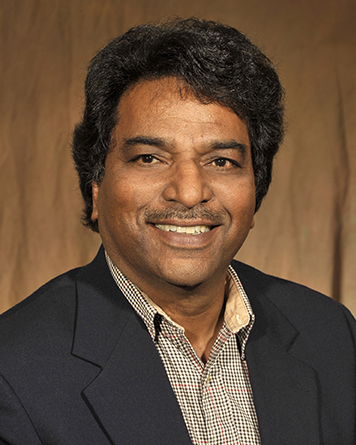
Madhu S. Madhukar is an Associate Professor in the Mechanical and Aerospace Engineering and Engineering Science Department at the University of Tennessee, Knoxville. With over three decades at the institution, his research focuses on polymer composites processing, residual stresses, mechanical behavior of composites, fiber-matrix interfaces, and heat transfer in composite materials. Education: PhD in Mechanical Engineering, Drexel University, 1986 MS in Mechanical Engineering, Drexel University, 1984 BS in Mechanical Engineering, IIT Kanpur, 1978 His work includes empirical modeling of cure-induced volume changes, stiffness development in thermosetting polymers, and optimization of composite manufacturing processes. Publications span cryogenic material testing, polymer curing dynamics, and stress relaxation analysis. Professional Service: Member of UT Faculty Senate and Faculty Advisor for the East Tennessee Chapter of SAMPE (Society for the Advancement of Material and Process Engineering).
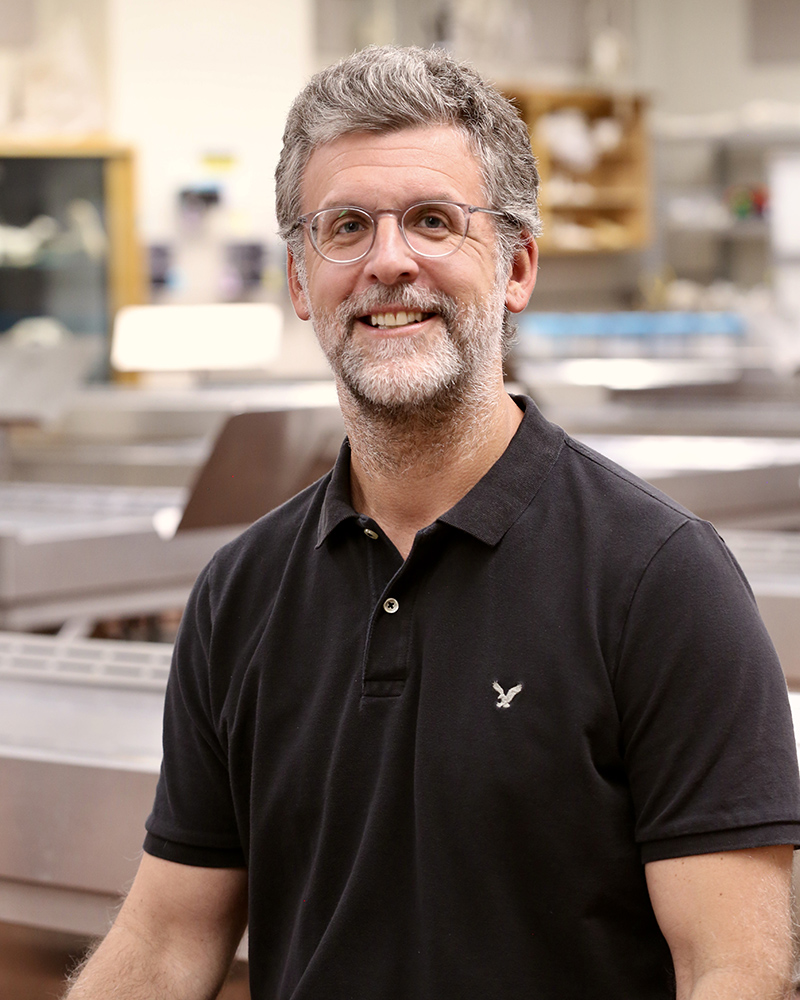
Brent Bobick is a Lecturer at the Department of Veterinary Biomedical Sciences, Western College of Veterinary Medicine, University of Saskatchewan. He serves as Director of the Anatomy Lab and coordinates courses such as VBMS 314.3 (comparative anatomy) and VBMS 250.9 (veterinary anatomy). His roles include delivering lectures, lab instruction, and training teaching assistants. Dr. Bobick holds a BSc (Hons) from the University of Saskatchewan, a PhD, and postdoctoral fellowships at institutions like NIH and the University of Calgary. His research and teaching focus on anatomy, developmental biology, and skeletal systems. He has developed innovative virtual anatomy resources, including 3D models of anatomical structures on Sketchfab. His work emphasizes hands-on training in gross anatomy and the application of molecular biology to understand skeletal development. Dr. Bobick has received numerous teaching awards, including the 2024 Western Canadian Veterinary Students’ Association Pre-Clinical Professor of the Year and the 2023 Zoetis Carl J. Norden Distinguished Teacher Award. He supervises student research projects and coordinates graduate seminars, fostering academic mentorship. His lab work integrates anatomical education with cutting-edge 3D visualization tools. Research interests span chondrogenesis, gene regulation in skeletal development, and biomechanical influences on joint formation. His publications explore signaling pathways like MEK-ERK and SHOX/Shox2 genes in limb and facial cartilage development.
John G Georgiadis is the Interim Chair and R. A. Pritzker Professor of Biomedical Engineering at Illinois Institute of Technology's Armour College of Engineering. He holds affiliations with the Illinois Tech Digital Medical Engineering and Technology (IDMET) Research and Education Center. His academic journey includes a Ph.D. (1987) and M.S. (1984) in Mechanical Engineering from UCLA, and a Diploma in Mechanical Engineering from the National Technical University of Athens (1983). Georgiadis’ research focuses on aging-related changes in the brain and skeletal muscle, leveraging MRI and computational models. Key projects include intramyocellular biotransport, cerebral microvasculature imaging, and multiscale brain mechanics. He has pioneered advancements in magnetic resonance elastography (MRE) for non-invasive tissue stiffness measurement, contributing to clinical applications in neurology and cardiology. His awards include the NSF Presidential Young Investigator Award (1991–1997) and Fellow status in the American Institute for Medical and Biological Engineering. Georgiadis has authored over 150 peer-reviewed publications and holds multiple patents in medical device technology and imaging techniques. His work bridges biomechanical engineering, computational imaging, and clinical diagnostics, with implications for aging populations and chronic disease management. Professional memberships include the Biomedical Engineering Society, IEEE, and AIMBE. His labs focus on translational research, integrating advanced imaging modalities with biomechanical principles to address complex biomedical challenges.
Chiara Sabatti is a Professor of Biomedical Data Science and Statistics at Stanford University, with affiliations to the Stanford Center for Computational, Evolutionary and Human Genomics (CEHG), Bio-X, and the Stanford Cancer Institute. She serves as Associate Director for Stanford Data Science and has led the development of the Data Science Major curriculum since 2012. Research Focus: Statistical models for high-throughput genomics data, causal inference in genetic studies, false discovery rate control, and knockoff methods for variable selection. Key Leadership: Associate Chair for Education and Training (2020-present), Vice Chair of Biomedical Data Science (2018-2019). Her work bridges statistical genetics with data science education, emphasizing robustness and interpretability in scientific findings. Recent publications highlight innovations in genome-wide association studies (GWAS), causal variant localization, and cost-effective sequencing techniques for underrepresented populations. Current projects include developing knockoff-based methods to address population structure and multi-resolution hypothesis testing. Scientific Awards: Institute of Mathematical Statistics (IMS) Fellow (2022) NSF CAREER Award (2003-2008) She mentors doctoral and graduate students in Biomedical Data Science, collaborates with the Data Studio on interdisciplinary projects, and actively recruits curious researchers to her lab. Her outreach efforts focus on expanding data science education and increasing research participation from underrepresented groups.
Dr. William Fitzgerald is a Lecturer in Probability at The University of Manchester, focusing on probability theory and mathematical physics models. His research includes random growth models, interacting particle systems, and random matrices. He holds a PhD from the University of Warwick (2019) and previously served as a Postdoctoral Research Fellow at the University of Sussex (2019–2021). Research interests span determinantal/Pfaffian point processes, non-colliding stochastic processes, and Brownian motion applications. His work combines rigorous mathematical analysis with probabilistic models from physics. Recent articles explore polynuclear growth dynamics, ordered exponential random walks, and Fredholm Pfaffians in interacting systems. He actively supervises PhD students and currently offers funded projects in probability theory. No scientific awards are explicitly mentioned in the profile. Academic history includes postdoctoral research at Sussex University and doctoral training at Warwick. Collaborations with researchers like Denisov, Tribe, and Zaboronski are evident in co-authored works. His research bridges theoretical probability with applications in particle systems and random matrix theory.
Mark Meckes is a Professor at Case Western Reserve University, affiliated with the Department of Mathematics, Applied Mathematics, and Statistics within the College of Arts and Sciences. His research focuses on Geometry of Metric Spaces and High-Dimensional Probability, with contributions to topics like metric magnitude, convex bodies, and random matrix theory. He is reachable via mark.meckes@case.edu . His research interests delve into the geometric and probabilistic structures of metric spaces, including intrinsic volumes, spectral analysis, and applications to quantum mechanics and ecology. Recent work explores extremal metric spaces, fluctuations in random matrix ensembles, and quenched limits in stochastic models. Publications since 2015 highlight trends in random matrix theory, geometric measure theory, and interdisciplinary applications. Notable topics include the circular law for complex Ginibre ensembles, self-similarity in unitary ensembles, and biodiversity optimization. No scientific awards are explicitly listed in the provided material. Advising and grant details are not specified, though his work suggests active participation in academic mentorship. No lab or team affiliations are noted here.
Oscar Mendez Maldonado is a Lecturer in Robotics and Artificial Intelligence at the University of Surrey's School of Computer Science and Electronic Engineering, affiliated with the Robotics Department and CVSSP Centre. He holds a PhD (2018) and BEng (2013) from the University of Surrey. His research focuses on Machine Learning, Computer Vision, and Robotics, with emphasis on autonomous systems, localisation, and SLAM applications. Key projects include the Autonomous Valet Parking (AVP) system for indoor navigation and the SMILE project for sign language assessment using AI. He has supervised students like James Ross (Autonomous Vehicles), Xihan Bian (Reinforcement Learning), and Nimet Kaygusuz (Visual Odometry). Notable achievements include the Sullivan Thesis Prize (2018) and impactful publications in IEEE conferences (e.g., ICRA, CVPR, IROS). Research spans topics like 3D hand pose estimation via diffusion models, graph-based visual odometry fusion, and Raman spectroscopy for localisation. He contributes to open-source tools (e.g., RaSpectLoc GitHub) and collaborates with industry partners like Parkopedia. His work bridges theoretical advances with real-world applications in autonomous systems and healthcare.
Arthur Lim is a Professor of the Practice Education in the Mathematics Department at the University of Notre Dame. His primary affiliations include teaching roles in calculus and dynamical systems courses, alongside research in algebraic structures and pedagogical innovation. Ph.D., University of Utah (2001) M.S., National University of Singapore (1994) His research explores combinatorial matrix analysis applied to Lie algebras and pedagogical strategies emphasizing historical context and critical thinking in mathematics education. Recent work bridges operations research with market dynamics and telecommunications policy. Selected publications span 1999–2019, addressing topics from orbital integral approximations to net neutrality debates. Teaching innovations focus on integrating historical narratives with technical rigor in undergraduate instruction.
Dr. Daniel Perales Anaya is a Visiting Assistant Professor in the Department of Mathematics at Texas A&M University, affiliated with the College of Arts & Sciences. He completed his Ph.D. in 2022 at the University of Waterloo under the supervision of Alexandru Nica. His research focuses on Finite Free Probability, a field at the intersection of free probability, random matrices, combinatorics, and non-commutative probability. He also investigates infinitesimal freeness, hypergeometric polynomials, and cumulant theory. He organizes the Free Probability and Operators Seminar at Texas A&M University and maintains an active research profile with contributions to journals like Transactions of the American Mathematical Society and Constructive Approximation . His work bridges classical analysis, operator algebras, and combinatorial structures, often leveraging finite free convolutions and non-crossing partitions. Publications span topics including infinitesimal distributions, hypergeometric polynomial zeros, and S-transforms in finite free probability. His research has been supported by institutions such as the Simons Foundation and Birkhäuser.
Chen Xu is an Associate Professor in the Department of Mathematics and Statistics at the University of Ottawa. He holds an M.A. from York University and a PhD from the University of British Columbia. His research focuses on sparse modeling, statistical learning, and big data processing, with an emphasis on both theoretical and computational advancements. Dr. Xu is affiliated with the Faculty of Science and contributes to editorial roles for journals such as the Journal of the American Statistical Association and Electronic Journal of Statistics. Education: M.A., York University PhD, University of British Columbia Research interests include feature selection, regularization methods, kernel methods, and high-dimensional regression. His work addresses computational challenges in big data, proposing efficient algorithms for tasks like singular value decomposition, clustering, and distributed feature screening. Recent publications highlight advancements in multiview PCA, low-tubal-rank tensor recovery, and model-free regression techniques. Publications span prestigious journals like the Journal of the American Statistical Association and IEEE Transactions series, focusing on statistical methodology, machine learning applications, and scalable computational solutions for complex data problems. Editorial Service: Associate Editor, Journal of American Statistical Association-T&M (2023–present) Associate Editor, Electronic Journal of Statistics (2023–present) Former Associate Editor, The Canadian Journal of Statistics (2019–2021) His research groups are Statistics and Biostatistics, and Data Science, Machine Learning, and Artificial Intelligence. He has no listed awards but maintains active editorial and academic collaborations in computational statistics and machine learning.
Soledad Villar is an Assistant Professor in the Department of Applied Mathematics and Statistics and a member of the Mathematical Institute for Data Science at Johns Hopkins University. She also contributes to the Data Science and AI Institute . Her research focuses on computational methods for extracting information from data, emphasizing optimization for data science, machine learning, equivariant representation learning, and graph neural networks. Dr. Villar holds a PhD in Mathematics from the University of Texas at Austin and has been a research fellow at New York University and the Simons Institute at UC Berkeley. Her work bridges theoretical foundations with practical applications in fields like scientific computing and political analysis. Awards include the National Science Foundation CAREER Award (2024). Her research has addressed topics such as gerrymandering detection, fluid dynamics modeling, and graph representation learning. She collaborates on interdisciplinary projects and organizes academic events like the One World MINDS Seminar and the Cibercoloquio Latinoamericano de Matemáticas . Her research interests span computational methods, equivariant machine learning frameworks, and graph neural networks, with applications in physics, engineering, and data-driven decision-making. She actively engages in advancing machine learning techniques for scientific and engineering challenges.
Dr. Jianqiang Cheng is an Associate Professor in the Department of Systems and Industrial Engineering at the University of Arizona, College of Engineering. He is also a member of the Graduate Faculty and affiliated with the Applied Mathematics and Statistics Graduate Interdisciplinary Programs. His research is centered on optimization under uncertainty with applications in energy systems and logistics. Research Interests: His primary research areas include stochastic programming, robust optimization, distributionally robust optimization, semidefinite programming, and chance-constrained optimization. He applies these methodologies to challenges in power systems, renewable energy integration, microgrid design, and resilient supply chains. The recent publications (2020–2022) reflect a strong trend toward data-driven and computationally efficient methods in optimization. Key themes include distributionally robust optimization under moment and Wasserstein ambiguity, chance-constrained AC optimal power flow, and resilient supply chain modeling under disruptions such as the COVID-19 pandemic. His work frequently appears in top journals like INFORMS Journal on Computing , IEEE Transactions on Power Systems , and European Journal of Operational Research . Scientific Awards: Best Short Paper Award, INFORMS Workshop on Data Science (Fall 2022) NSF CAREER Award, National Science Foundation (Spring 2022) Science Foundation Arizona's 2017 Bisgrove Scholar (Spring 2017) Dr. Cheng has secured significant research funding, including the NSF CAREER Award, supporting his work in data-driven optimization. He collaborates extensively with researchers in energy systems and operations research, including K. Pan, M. Cheramin, A. M. Fathabad, and A. Lisser. While specific advisees are not listed, his role as a member of the Graduate Faculty indicates active supervision of graduate students in systems engineering, applied mathematics, and statistics. His research contributes to the development of advanced optimization models for real-world systems affected by uncertainty, particularly in energy and logistics. Though no specific lab is mentioned, his work implies involvement in computational optimization and energy systems modeling research groups within the College of Engineering.
Silvia Jiménez Fernández is an Associate Professor in the Department of Signal Theory and Communications at Universidad Autónoma de Madrid. Her research focuses on optimization algorithms, smart grids, renewable energy systems, telemedicine, and machine learning applications. She holds a Ph.D. from Universidad Politécnica de Madrid (2009), supervised by Dr. Francisco del Pozo Guerrero and Dr. Paula de Toledo Heras. Her work integrates interdisciplinary approaches, such as combining evolutionary algorithms with engineering challenges in energy systems and healthcare. Key contributions include advancements in coral reefs optimization algorithms for energy management, machine learning for battery health estimation, and telemedicine systems for chronic disease monitoring. Recent research trends emphasize hybrid learning models in education, multi-objective optimization in renewable energy systems, and risk analysis in smart grids with electric vehicles. She is affiliated with the GHEODE Research Group (Modern Heuristics and Network Design).
Xiucai Ding is a tenured Associate Professor in the Department of Statistics at the University of California, Davis, starting in 2025. He is also affiliated with the Graduate Group in Applied Mathematics (GGAM) at UC Davis. Previously, he was an Assistant Professor in the same department from 2020 to 2025 and a Research Associate at Duke University from 2018 to 2020. PhD in Statistics, University of Toronto (2014–2018), advised by Jeremy Quastel Research Associate, Duke University (2018–2020), with Hau-Tieng Wu Assistant Professor, UC Davis (2020–2025) Associate Professor (tenured), UC Davis (starting 2025) His research focuses on mathematical statistics and statistical learning theory, particularly applied random matrix theory, high-dimensional statistics, non-stationary and functional time series analysis, statistical optimal transport, and the statistical foundations of machine learning algorithms. His methodological work emphasizes nonparametric and sieve-based estimation, inference under complex dependencies, and applications to noisy, high-dimensional data. The recent publications and software tools (such as RMT4DS, Sie2nts, SIMle) reflect a consistent trend in developing theoretically grounded, computationally feasible tools for analyzing complex time series and high-dimensional covariance structures. His work bridges theoretical statistics with practical data science. His research has been supported by the National Science Foundation (NSF). Estimation and inference for precision matrices of nonstationary time series (2020) Auto-regressive approximations to non-stationary time series (2021) On the partial autocorrelation function for locally stationary time series (2022) He advises students and researchers through his role in the Department of Statistics and GGAM. He has taught courses such as STA 108 (Regression Analysis), STA 137 (Applied Time Series Analysis), STA 135 (Multivariate Data Analysis), STA 221 (Big Data & High Performance Statistical Computing), and STA 250 (Topics in Applied and Computational Statistics) at UC Davis. He previously taught at Duke University and the University of Toronto. He has developed several open-source R packages for statistical methodology: RMT4DS : Random matrix tools for data scientists (CRAN/GitHub) Sie2nts : Sieve methods for non-stationary time series (CRAN/GitHub) SIMle : Estimation and inference for nonlinear and non-stationary regression (CRAN/GitHub) UHDtst : Two-sample tests for high-dimensional covariance matrices (GitHub)
Professor Xiao-Ping Zhang is a full-time Professor of Electrical Power Systems at the Department of Electronic, Electrical and Systems Engineering, School of Engineering, University of Birmingham, UK. He holds leadership roles as Director of Smart Grid at the Birmingham Energy Institute and Co-Director of the Birmingham Energy Storage Centre (sponsored by EPSRC), and leads the Electrical Power & Control Systems Group. PhD in Electrical Engineering, 1993 MSc in Electrical Engineering, 1990 BEng (Hons) in Electrical Engineering, 1988 His research focuses on the transformation of modern power systems, with core interests in Smart Grids, HVDC and FACTS technologies, renewable energy integration (wind and wave), control of PHEVs in power grids, energy markets using game theory, smart metering, distributed energy management, and wide-area grid awareness. He pioneered the concepts of 'Global Power & Energy Internet' and 'Energy Union,' the latter adopted by the European Commission, and envisioned the Midlands as the UK’s 'Energy Valley,' now realized through national initiatives. His recent publications reflect a strong trend in advancing HVDC/FACTS control, stability analysis in renewable-rich grids, energy storage integration, smart grid optimization, and market modeling. The articles span high-impact journals such as IEEE Transactions on Power Systems and IEEE Transactions on Smart Grid, demonstrating sustained leadership in electrical power engineering. IEEE Fellow IET Fellow Alexander-von-Humboldt Fellow Foreign Fellow of Chinese Society for Electrical Engineering (CSEE) Professor Zhang has secured substantial research grants from UK Government (Science City Initiative), EPSRC, FP7 EU Smart Energy Network Programme, and industry partners. He advises doctoral students in key areas of power systems and smart grids. He established two advanced laboratories at the University of Birmingham: the Smart Power Grid Laboratory and the Real-time Power Grid Simulation, Measurement, Protection and Control Laboratory. He also initiated the UK-China Smart Grid Workshop series, leading to 13 joint research projects. He is actively involved in professional leadership, serving as Editor for IEEE Transactions on Smart Grid and IEEE Transactions on Power Systems, IEEE PES Distinguished Lecturer, Secretary of IFAC Technical Committee on Power and Energy Systems Control, and Co-Chair of the IEEE PES Working Group on Test Systems for Economic Analysis. He has contributed to UK national energy policy, including reports for the Prime Minister’s Council for Science and Technology.