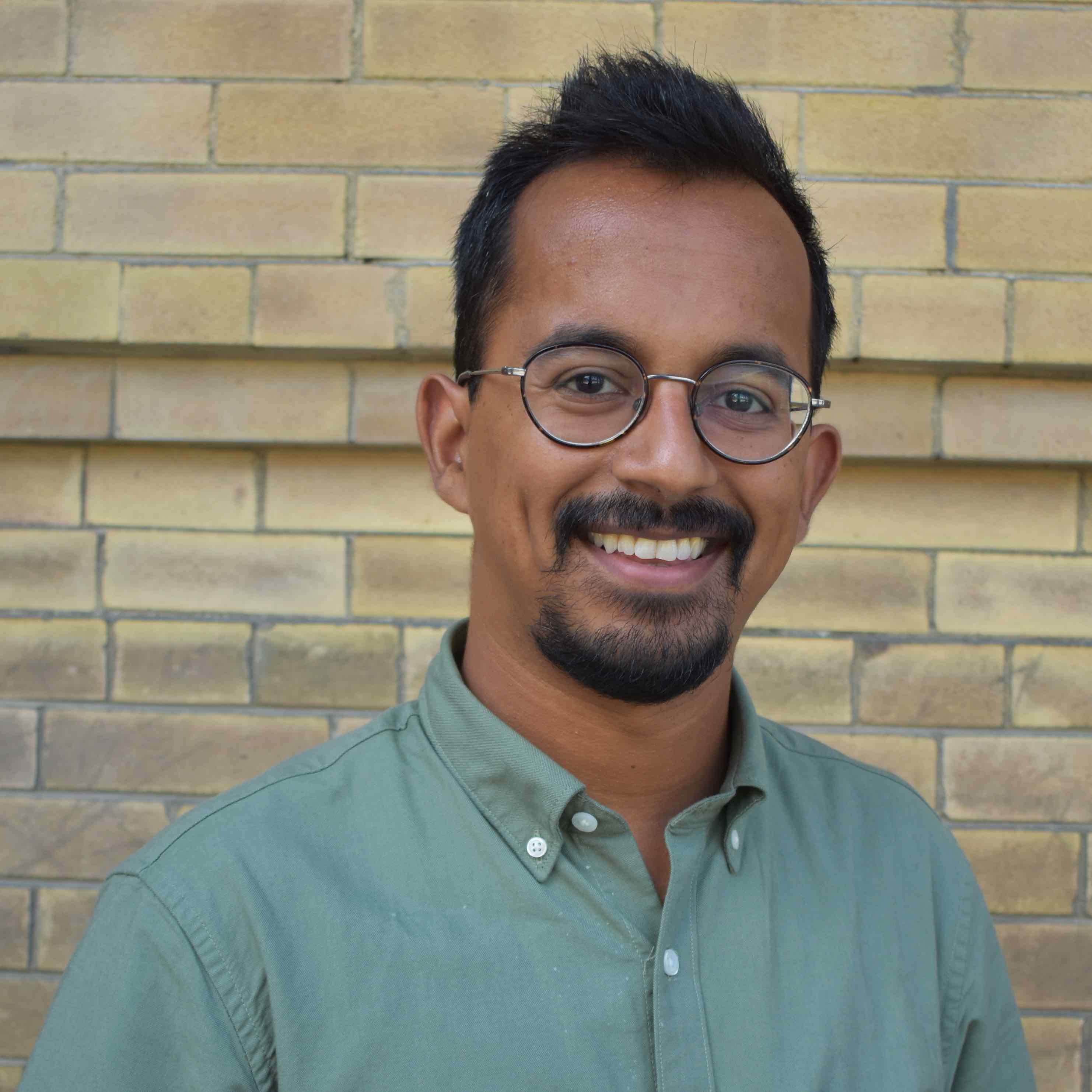
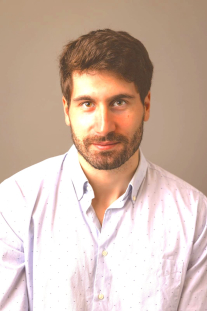
Asif Ali Zaman is an Associate Professor in the Department of Mathematics at the University of Toronto's Faculty of Arts and Science. He specializes in analytic and probabilistic number theory, with applications to algebraic structures and arithmetic statistics. His work intersects prime distribution, zeros of L-functions, Chebotarev density theorem, random multiplicative functions, and binary quadratic forms, extending to elliptic curves, modular forms, and mass equidistribution. PhD in Mathematics (2017), University of Toronto NSERC Postdoctoral Scholar (2017–2019), Stanford University MSc in Mathematics (2012), University of British Columbia BSc in Mathematics (2010), Simon Fraser University His research leverages log-free zero density estimates, Deuring-Heilbronn phenomenon, and Artin's holomorphy conjecture to derive bounds for primes, ℓ-torsion class groups, and equidistribution on modular surfaces. Recent publications (2025–2022) focus on Tauberian theorems, multiplicative chaos, and large sieve inequalities. Grants include sponsored research on L-functions (2022–2027) and computational projects (2025). He supervises Masters and PhD students in number theory and teaches multivariable calculus and cryptology courses.
Emilie Carretier is a Professor at Aix-Marseille University (AMU) , affiliated with the Procédés Membranaires research team. Her work focuses on membrane separation technologies, particularly for industrial applications in pharmaceuticals, water treatment, and nuclear waste management. Research Interests : Membrane processes (pervaporation, reverse osmosis), solvent regeneration, radioactive effluent treatment, catalyst recovery, and industrial sustainability. Publications highlight advancements in ceramic membranes, VOC removal, and membrane aging studies, with applications in pharmaceuticals, microelectronics, and nuclear industries. Laboratory : Active within the M2P2 research center, specializing in membrane process innovation for complex industrial matrices.
Dr. John F. Eberth is an Associate Professor at Drexel University's School of Biomedical Engineering, Science and Health Systems. As a cardiovascular engineer with expertise in mechanical controls, continuum biomechanics, and hydrogel-based extracellular matrix mimetics, he leads the Applied Biomechanics and Mechanobiology Lab (ABML) to investigate vascular behavior under mechanical stimuli. PhD in Biomedical Engineering from Texas A&M University (2008) MS in Mechanical Engineering from Clemson University (2004) BS in Mechanical Engineering from Clarkson University (2001) His research focuses on vascular pathology and mechanobiology, including: Aortopathy and aneurysm mechanics Endothelial dysfunction and arterial stiffening Hydrogel-based vascular grafts Calcification chelation therapy Coronary artery disease Perfusion tissue culture Recent publications demonstrate expertise in vascular imaging techniques, mechanical modeling, and therapeutic interventions. Key themes include drug-coated balloon development, collagen fiber mechanics, and bioreactor systems for vascular conditioning.
Dr. Amir K. Miri is an Assistant Professor in the Department of Biomedical Engineering at New Jersey Institute of Technology (NJIT) and Director of the Advanced Biofabrication Lab. His work focuses on additive manufacturing for biomedical applications, particularly bioprinting technologies for tissue regeneration and disease modeling. After receiving his PhD in Mechanical Engineering from McGill University (2013) and completing postdoctoral training at the MIT-Harvard Division of Health Sciences and Technology, he began his academic career at Rowan University before joining NJIT. PhD, Mechanical Engineering, McGill University (2013) MSc, Mechanical Engineering, Sharif University of Technology (2007) BSc, Mechanical Engineering, Iran University of Science and Technology (2005) Dr. Miri's research spans advanced bioprinting platforms, including multi-axial extrusion, handheld printers, and digital light projection systems. His work emphasizes the development of biomimetic models for cancer, vocal fold tissue, and vascular systems, with a particular focus on microfluidic integration and material optimization for bioprinting. He has pioneered low-cost prototyping solutions for resource-limited settings and explored the role of extracellular matrix mechanics in cellular behavior. Key trends in his publications include 3D bioprinting for tumor modeling, microfluidic device applications in drug screening, and the use of hydrogels like GelMA in cancer research. His group has also advanced acoustic metasurface technology for biomedical wave manipulation and investigated the interplay between biomaterial rheology and bioprinting resolution. Dr. Miri leads a research team at NJIT focused on biofabrication and microfluidics, though specific student advisees are not listed in the provided information. His lab emphasizes interdisciplinary collaboration, particularly in the development of multi-material and multi-scale tissue constructs.
Professor Simon Devitt is Research Director of the Centre for Quantum Software and Information (QSI) at the University of Technology Sydney's Faculty of Engineering and Information Technology, School of Computer Science. He also holds several prestigious international appointments including InstituteQ Visiting Chair of Excellence in Quantum Technologies at Aalto University, Finland, and visiting positions at RIKEN in Japan. As a leading figure in quantum computing research, he directs the Australian Quantum Software Network and co-founded quantum education startup Eigensystems Pty Ltd. His educational background includes: PhD in Physics from University of Melbourne (2004-2007) BSc (Hons) in Physics from University of Melbourne (2000-2003) Professor Devitt's research spans quantum software, quantum architecture, and quantum error correction, with a focus on making quantum computing practical at scale. His work addresses fundamental challenges in quantum computing architecture when scaled to millions or billions of qubits. He has pioneered approaches to quantum error correction, resource estimation, and quantum network design, particularly through his leadership of the Quantum Technology at Scale (QTS) research group. His research bridges theoretical foundations with practical implementation challenges, aiming to shape the evolution of quantum technology over the coming decades. His recent publications demonstrate a strong focus on practical quantum computing challenges, with particular emphasis on error correction techniques, resource estimation, and quantum architecture. A significant portion of his work addresses the surface code and its variants, exploring ways to optimize qubit usage and error rates. He has also made important contributions to quantum networking, particularly through the concept of "quantum sneakernet," and to quantum education and standardization efforts that will be critical for the emerging quantum industry. His notable awards and recognitions include: Fellow of the Australian Institute of Physics Fellow of the Royal Society of New South Wales Warren Prize from the Royal Society of NSW InstituteQ Visiting Chair of Excellence in Quantum Technology Professor Devitt actively mentors numerous PhD students, postdocs, and researchers through his Quantum Technology at Scale group. His research is supported by significant funding from diverse sources including Google Academic Research Awards, Sydney Quantum Academy, DARPA, and the Japanese Society for the Promotion of Science. He has led projects on quantum sneakernet networks, quantum algorithm benchmarking frameworks, and quantum software tools that address critical challenges in the field. He leads the Quantum Technology at Scale (QTS) research group at UTS, which focuses on the design and architectural challenges of quantum computing and communications technology at scale. The group includes researchers working on quantum computing architectures, quantum networking (Rottnest Quantum Sneakernet project), and quantum software (Quokka project). The team collaborates extensively with international partners including Aalto University in Finland, University of New South Wales, Keio University in Japan, and industry leaders like Rigetti Computing.
Caglar Oskay is an Associate Professor in the Department of Civil and Environmental Engineering at Vanderbilt University, where he has held academic positions since 2006. He specializes in multiscale computational mechanics, materials modeling, and failure analysis of heterogeneous materials. His research integrates advanced numerical methods such as the Extended Finite Element Method (XFEM), reduced-order homogenization, and variational multiscale enrichment to study composite materials, viscoelastic systems, and polycrystalline structures under extreme conditions. Dr. Oskay has been recognized with awards including the Chancellor Faculty Fellow (2016–2018) and ASCE ExCEEd Fellow (2011). Education: PhD (Civil Engineering, Rensselaer Polytechnic Institute, 2003), M.S. (Civil Engineering, Rensselaer Polytechnic Institute, 2000), M.S. (Applied Mathematics, Rensselaer Polytechnic Institute, 2000), B.S. (Civil Engineering, Middle East Technical University, 1998). Research focuses on predictive computational models for material behavior under mechanical, thermal, and chemical loading. Key areas include fatigue life prediction, damage accumulation in composites, and coupled transport-deformation phenomena. Recent work addresses multiscale modeling of nickel-based superalloys, polyurea-coated composites, and energetic materials under dynamic loading. His contributions span 100+ peer-reviewed publications, including seminal studies in International Journal for Multiscale Computational Engineering and Acta Materialia . His articles emphasize multiscale frameworks for heterogeneous materials, with trends in reduced-order methods, uncertainty quantification, and interdisciplinary applications (e.g., biology, energy systems). Awards highlight his educational and technical leadership. Advising and grants include collaborative projects on composite durability and energetic material simulation. Dr. Oskay leads the Multiscale Computational Mechanics Lab (MCML), advancing computational tools for engineering materials research.
Professor Bianxiao Cui is the Job and Gertrud Tamaki Professor of Chemistry at Stanford University and a fellow of the Wu Tsai Stanford Neuroscience Institute. Her research integrates biophysics, cell biology, chemistry, and nanotechnology to develop tools for studying the nano-bio interface, membrane curvature, electrophysiology, and signal transduction in health and disease. Ph.D. in Chemistry, University of Chicago (2002) B.S. in Material Science & Engineering, University of Science & Technology of China (1998) Her group bridges biochemistry, material science, and neuroscience to probe cellular processes at nanoscale. Key projects include: Mechanisms of Membrane Curvature: How nanoscale topography regulates integrin adhesions, ER-PM contacts, and ion channel activity. Electrophysiological Tools: Nanoelectrode arrays (NEAs) and electrochromic optical recording (ECORE) for scalable, label-free action potential monitoring. Protein Relocalization: Using shuttle proteins to rewire subcellular localization for disease intervention. Recent articles highlight advancements in 3D cell adhesion , AI-driven electrophysiology , and optogenetic pain models . Her work spans biochemical assays, nanofabrication, and in vivo studies . Scientific Awards: Ono Pharma Breakthrough Science Initiative Award (2022-2025) NIH New Innovator Award (2012-2017) NSF CAREER and INSPIRE Awards Packard and Searle Fellowships Teaching & Advising: She mentors PhD students in Chemistry and Biophysics, including Krishna Raghavan and Pengwei Sun , and supervises postdoctoral fellows like Dr. Wei Zhang . She teaches Biophysical Chemistry and advises on cellular nanomechanics and optogenetics . Labs & Collaborations: The Cui Lab collaborates with the Melosh and Khosla labs, focusing on cell-material interactions and neurotechnology development (e.g., Kirigami electronics for organoid stimulation).
Ashish Khisti is an Associate Professor at the University of Toronto's Department of Electrical and Computer Engineering (ECE), where he directs the Signals, Multimedia and Algorithms Laboratory (SMA Lab). He holds the Canada Research Chair (Tier II) and maintains affiliations with the Vector Institute for Artificial Intelligence. His research bridges communication systems, information-theoretic security, and machine learning, with a focus on real-time streaming and privacy-preserving algorithms. Research Trends: Recent publications emphasize streaming codes for latency-sensitive networks , machine learning-driven compression , and privacy mechanisms in federated learning . Scientific Recognition: Canada Research Chair (Tier II), 2012 and 2017 renewal Cisco Research Center Award, 2017 Ontario Early Researcher Award, 2012 Best Paper at NeurIPS 2021 Deep Generative Models Workshop Academic Contributions: Supervised PhD students Ahmed Badr, Farrokh Etezadi, and Si-Hyeon Lee. Served as Associate Editor for IEEE Transactions on Communications (2012-2015) and IEEE Transactions on Information Theory (2015-2018). Labs & Collaborations: Leads the Signals, Multimedia and Algorithms Laboratory, collaborating with institutions like KAUST, Texas A&M University (Qatar), and the Vector Institute. Organized workshops at BIRS and IEEE conferences.
Giorgio Satta is a Full Professor at the Department of Information Engineering , University of Padua, Italy. He received his Ph.D. in Computer Science from the University of Padua in 1990. His career includes research positions at Fondazione Bruno Kessler (Trento) and the University of Pennsylvania (IRCS). Research Focus : His work centers on computational linguistics and formal language theory , with emphasis on: Parsing algorithms (CCG, TAG, LCFRS) Computational complexity of grammar formalisms Probabilistic language modeling Dependency parsing and synchronization techniques Professional Service : He chaired the European Chapter of the ACL (2009-10), served on editorial boards for Computational Linguistics , Transactions of the ACL , and co-chaired ACL-2001/IWPT-2001. Teaching : Current courses include Automata, Languages, and Computation and Natural Language Processing (2024-25).
Haipeng Luo is an Associate Professor at the Thomas Lord Department of Computer Science, University of Southern California, holding the IBM Early Career Chair. He previously worked as a Postdoctoral Researcher at Microsoft Research, NYC, and has held visiting roles at Google and Amazon. His research focuses on developing practical machine learning algorithms with strong theoretical guarantees, particularly in online learning, bandit problems, reinforcement learning, and game theory. PhD in Computer Science, Princeton University (2011–2016) BSc in Computer Science, Peking University (2007–2011) His work spans adversarial and stochastic environments, addressing challenges in reinforcement learning, game dynamics, calibration, and omniprediction. Recent publications highlight advancements in regret minimization, game equilibrium computation, and robust optimization frameworks. Key contributions include algorithms for zero-sum games, bandit problems with feedback graphs, and theoretical analyses of convergence properties in multi-agent systems. Scientific accolades include Best Paper Awards at COLT 2021, COLT 2018, NeurIPS 2015, and ICML 2015. He has received prestigious grants such as the NSF CAREER Award (2020), Google Faculty Research Award (2020), and NSF CRII Award (2018). His students have secured academic and industry positions, and he actively teaches graduate courses in machine learning and online optimization.
Dr. Dima Alhadidi is an Associate Professor in the School of Computer Science at the University of Windsor. His research focuses on Cybersecurity, Data Privacy, Machine Learning, and their applications in Health Informatics, Cloud Computing, and Smart Grids. He holds a PhD in Computer Science and Software Engineering from Concordia University (2010). His research interests include secure federated learning frameworks, privacy-preserving techniques for genomic and health data, and adversarial machine learning defenses. Notable contributions include Trustformer (2025), secure aggregation methods in federated learning, and hybrid malware classification using deep learning. Recent work emphasizes mitigating membership inference attacks and developing privacy-preserving analytics for distributed systems. Dr. Alhadidi actively advises graduate students on topics like social network clustering (NICASN 2022) and federated learning security. No scientific awards are explicitly listed. His research spans theoretical frameworks (e.g., λ_AOP calculus) to applied systems in smart grids and healthcare informatics.
Federico Nutarelli is an Assistant Professor of Economics at the IMT School for Advanced Studies Lucca, Italy. His research focuses on the intersection of machine learning and economic analysis, particularly in international trade, health economics, and industrial organization. He holds a Ph.D. in Economics from IMT Lucca, and previously conducted postdoctoral research at Bocconi University. In 2024, he was a Visiting Scholar at MIT Sloan School of Management. Key research interests include causal machine learning methods to analyze heterogeneous firm responses to economic shocks, pharmaceutical market pricing strategies, and structural demand models. His work bridges methodological rigor with applied relevance, contributing to health economics, trade dynamics, and innovation policy. Recent publications (2020–2025) explore topics such as matrix completion for world trade analysis, machine learning applications in economic complexity, and modeling innovation ecosystems. His work often employs advanced statistical techniques like Shapley values and reinforced Bernoulli processes. No scientific awards were explicitly mentioned in the provided texts. Federico collaborates with institutions like Bocconi University and MIT Sloan, reflecting his interdisciplinary network in economics and data science.
Inbar Fijalkow is a Full Professor at the National School of Electronics and Computer Science (ENSEA) within CY Cergy Paris University. She is a member of the ETIS Research Unit (UMR 8051), focusing on signal processing for wireless communications, optimization, and machine learning applications. Her research bridges theoretical advancements with practical implementation in emerging communication systems. Education & Career: PhD in Signal Processing from TelecomParisTech (1993) Postdoctoral Fellow at Cornell University (1994–1995) Professor at ENSEA since 1999 Former Head of ETIS Research Unit (2004–2013) Research Interests: Signal processing for wireless communications Optimization techniques in massive MIMO and NOMA systems Machine learning applications in communication systems Nonlinear effects mitigation in high-power amplifiers Community & Awards: Member of CoNRS Section 7 (National Committee for Scientific Research) Chevalier de l’Ordre National du Mérite (2015) Founder of the CY Alliance Women in Science Prize (2017) Recent Projects: Active in ANR-funded initiatives (e.g., EcoBioH2, AI4code) and EU projects (e.g., PERSEUS). Her work emphasizes sustainability and AI-driven communication systems. Teaching: Teaches signal processing and wireless communications at ENSEA. Supervises PhD students and master’s theses in communication systems and signal processing.
Professor Jinho Choi is a Chair and Professor in Radio Frequency at the School of Electrical and Mechanical Engineering, University of Adelaide, Australia. He holds a B.E. (magna cum laude) from Sogang University, and M.S.E. and Ph.D. degrees from KAIST. His research focuses on advancing wireless communication and sensing technologies, particularly in IoT, 5G/6G, non-terrestrial networks, and cognitive satellite systems. He authored three books and has been recognized with the 1999 EURASIP Best Paper Award, IEEE Fellowship, and inclusion in Stanford's Top 2% Scientists list since 2020. He currently serves as a Senior Editor of IEEE Wireless Communications Letters and editorial roles in multiple journals. Education: B.E. (Electronics Engineering) - Sogang University, Seoul (1989) M.S.E. (Electrical Engineering) - KAIST (1991) Ph.D. (Electrical Engineering) - KAIST (1994) Research Interests: Professor Choi's work addresses connectivity challenges in non-terrestrial networks, leveraging statistical signal processing and machine learning. Current projects include UAV-assisted LEO satellite technologies, cognitive satellite radios, and semantic communication protocols. His research aims to enhance global connectivity and efficiency in terrestrial and satellite networks. Publications: His recent work spans semantic communication, satellite quantum key distribution, federated learning optimization, and coverage diversity in mega constellations. These studies reflect trends in 6G-ready technologies, AI-driven communication systems, and hybrid satellite-terrestrial networks. Awards: 1999 Best Paper Award for Signal Processing (EURASIP) IEEE Fellow (Leadership in technical excellence) World’s Top 2% Scientists (Stanford University, 2020–present) Grants & Supervision: As a senior academic, he oversees grants in wireless innovation and has advised numerous students on advanced communication systems. His lab focuses on next-generation networks, integrating theoretical insights with practical implementations. Labs/Teams: Active in interdisciplinary teams at the University of Adelaide, collaborating on projects funded by industry and government to bridge gaps between academic research and real-world applications.
Jared Duker Lichtman is a Szegö Assistant Professor at Stanford University's Department of Mathematics, beginning in the 2024-25 academic year. Previously, he served as an NSF Postdoctoral Fellow at Stanford under Prof. Kannan Soundararajan. He completed his PhD at the University of Oxford in 2023, focusing on multiplicative number theory. His research centers on prime number distribution, multiplicative structures, and analytic number theory. Notably, he established a world record in studying primes' distribution within arithmetic progressions. His work bridges classical number theory with modern techniques like sieve methods and L-function analysis. Jared's publications explore topics such as the abc conjecture, twin primes, and Erdős problems. While no formal awards are listed, his groundbreaking contributions to prime distribution and multiplicative number theory mark him as a rising star in the field. His academic trajectory includes a focus on primes in arithmetic progressions, Goldbach conjecture extensions, and probabilistic number theory applications. Ongoing research likely continues this trajectory, with potential implications for cryptography and additive number theory.