Heping Zhang is the Susan Dwight Bliss Professor of Biostatistics at the Yale School of Public Health , with secondary appointments in the Child Study Center , Department of Statistics and Data Science , and Department of Obstetrics, Gynecology, and Reproductive Sciences . He directs the Collaborative Center for Statistics in Science (C²S²) and leads the Reproductive Medicine Network data coordinating center. Education: PhD in Statistics, Stanford University (1991) Postdoctoral Fellow, Mathematical Science Research Institute (1991) Research Focus : Zhang specializes in biostatistical methodology for genomic data analysis , clinical trials , and reproductive medicine . His work bridges genetics , mental health , and maternal-child health through innovative statistical approaches. Awards : 2023 Web of Science Highly Cited Researcher 2023 International Chinese Statistical Association Distinguished Achievement Award 2022 Institute of Mathematical Statistics Neyman Award and Lecture 2011 Royan Institute International Research Award 2011 Institute of Mathematical Statistics Medallion Award 2008 Harvard School of Public Health Myrto Lefokopoulou Distinguished Lecturer Professional Roles : He served as President of the International Chinese Statistical Association (2019) and Former Editor of the Journal of the American Statistical Association - Applications and Case Studies . His lab develops open-source software tools like ABESS , STREE , and modSaRa for genomic and clinical data analysis.
Yiping Lu is an Assistant Professor in the Department of Industrial Engineering and Management Sciences at Northwestern University's McCormick School of Engineering. His research focuses on developing interdisciplinary approaches combining domain knowledge (differential equations, stochastic processes), machine learning, and experiments. Key interests include scientific machine learning (AI4Science), stochastic simulation, and robust machine learning. Education: Ph.D. in Applied and Computational Mathematics, Stanford University (2023) B.S. in Computational Mathematics, Peking University (2019) Research Highlights: Hybrid research integrating ML with scientific domains like PDEs and inverse problems Development of Physics-Informed Learning frameworks Contributions to deep learning theory (ResNets, neural collapse) Advances in kernel operator learning and adversarial robustness Awards: CPAL Rising Star Award (2024) University of Chicago Data Science Rising Star (2022) Stanford Interdisciplinary Graduate Fellowship (2021) Labs/Teams: SCALE Lab (Scientific Computation and Learning at Northwestern) Collaborations with NYU's Courant Institute and Stanford
Song Mei is an Assistant Professor in the Department of Statistics and Department of Electrical Engineering and Computer Sciences at the University of California, Berkeley. She received her Ph.D. from Stanford University in 2020 under Andrea Montanari and maintains active research collaborations with institutions including Amazon (as a 2023 Amazon Research Award recipient) and OpenAI (where she is currently on leave). Her research spans the intersection of statistics, machine learning, information theory, and computer science, with particular emphasis on foundational theories for modern AI systems. Key interests include language models, diffusion models, quantum algorithms, and high-dimensional statistics, often leveraging insights from statistical physics literature. Analysis of her recent publications reveals a strong focus on theoretical underpinnings of generative AI, with significant contributions to understanding contrastive pre-training (CLIP), attention mechanisms in LLMs, and mathematical foundations of diffusion models. Her work demonstrates consistent interdisciplinary connections between statistical theory and practical AI development. Sloan Research Fellowship (2025) Noether Early Career Scholar Award (2025) Google Research Scholar Award (2024) Amazon Research Award (2024) She actively advises graduate students through MA programs and has secured significant research grants including Amazon Research Awards. Her work with AGI Labs at Amazon demonstrates applied impact of theoretical research. Current projects focus on mechanistic interpretability of large language models and mathematical frameworks for generative AI. Professor Mei leads research on the statistical principles behind frontier AI models, with particular focus on developing rigorous theoretical frameworks for understanding emergent behaviors in large-scale systems.
Alfred O. Hero, III is the John H. Holland Distinguished University Professor of Electrical Engineering and Computer Science and the R. Jamison and Betty Williams Professor of Engineering at the University of Michigan, Ann Arbor. He is currently on leave from the University of Michigan as a Program Director in the CISE Directorate at the National Science Foundation. His primary appointment is in the Department of Electrical Engineering and Computer Science (EECS), with secondary appointments in the Department of Biomedical Engineering and the Department of Statistics. He is also affiliated with the UM Center for Computational Medicine and Bioinformatics (CCMB), the UM Graduate Program in Applied and Interdisciplinary Mathematics (AIM), the UM Applied Physics Program, and the Michigan Institute for Data Science (MIDAS), which he co-founded from 2015-2018. Hero's research focuses on data science, developing theory and algorithms for multimodality data collection, fusion, analysis and visualization that use statistical machine learning and distributed optimization. His work has applications in wearable technologies for personalized health and predictive medicine, spatio-temporal networks in biology, climate, and social discourse, anomaly detection, and data analysis for international security. His recent research interests include high dimensional spatio-temporal data analysis, multimodal data integration, statistical signal processing, and machine learning, with particular emphasis on predictive mathematical models for biological and physical sciences, social networks, network security and forensics, and personalized health and disease. His recent publications demonstrate a strong focus on high-dimensional statistical methods, contrastive learning, neural network optimization, change detection in temporal graphs, and applications in microbiome analysis and epidemic modeling. The research spans theoretical foundations in information theory and statistical learning while addressing practical applications across multiple domains. Scientific Awards: IEEE Signal Processing Society Best Paper Award (1998) Best Original Paper Award from Journal of Flow Cytometry (2008) Best Magazine Paper Award from IEEE Signal Processing Society (2010) SPIE Best Student Paper Award (2011) IEEE ICASSP Best Student Paper Award (2011) IEEE Signal Processing Society Technical Achievement Award (2014) IEEE Signal Processing Society Society Award (2015) IEEE Fourier Award (2020) University of Michigan Distinguished Faculty Achievement Award (2011) Hero has advised over 60 PhD students and 30 postdocs in areas including modeling, computation, and inference for large scale time varying data in the biosciences. He has received significant research funding from the Department of Energy, Army Research Office, Air Force Office of Scientific Research, and National Science Foundation. He has held leadership positions including President of the IEEE Signal Processing Society (2006-2007), Director of Division IX (Signals and Applications) on the IEEE Board of Directors (2009-2011), and Chair of the Committee on Applied and Theoretical Statistics of the US National Academies (2018-2020).
Professor Tulika Mitra is the Dean of the School of Computing and Vice Provost (Special Projects) at the National University of Singapore (NUS). She holds the Provost’s Chair Professor in the Department of Computer Science and has been instrumental in shaping academic policies and strategic initiatives at NUS since joining in 2001. PhD in Computer Science, Stony Brook University (2000) M.E. in Computer Science, Indian Institute of Science (1997) B.E. in Computer Science, Jadavpur University (1995) Her research focuses on hardware-software co-design for energy-efficient computing systems, particularly in real-time embedded systems, heterogeneous architectures, and AI accelerators. She leads major research programs such as the NRF Competitive Research Programme on Low-Power Edge Accelerators and the MOE Tier-3 Programme on Green AI , collaborating with industry leaders like ARM, AMD, and Meta. Her recent publications highlight innovations in CGRA optimization , sparse attention mechanisms , photonic-digital hybrid architectures , and low-power ML inference . These works often integrate compiler techniques, architectural design, and real-time constraints for edge computing applications. Scientific Awards : ESWEEK Test-of-Time Award (2022), ACM SIGDA Distinguished Service Award, IEEE CEDA Outstanding Service Recognition Award, Teaching Excellence Award (2006), and multiple best paper recognitions. Education Leadership : Spearheaded the Computer Engineering (CEG) Programme at NUS, a joint initiative between Engineering and Computing. As a mentor , she has supervised over 25 PhD students , many now in prominent academic or industrial roles. Her research group eCO Lab focuses on embedded computing challenges, while her grant collaborations include projects on 5G base stations, reconfigurable architectures, and IoT-optimized SoCs.
Vera Fischer is an Associate Professor and Privatdozent in the Department of Mathematics at the Faculty of Mathematics, University of Vienna. She has been an active researcher since 2008, with a strong publication record in mathematical logic and set theory. Her research centers on set-theoretic combinatorics , focusing on cardinal characteristics of the continuum, forcing, definability, and structures such as maximal almost disjoint families, cofinitary groups, and independent families. She investigates foundational questions in independence, spectra of combinatorial objects, and the interplay between definability and generic extensions. Her work often involves constructing models to separate cardinal invariants or to realize specific spectra under forcing. The recent publications show a consistent trend in combinatorial set theory , with a focus on tower spectra, tight families, mad families, and their behavior under various forcing notions like Cohen and Sacks forcing. Her research frequently explores the definability and destructibility of combinatorial families, often in collaboration with leading researchers such as Corey B. Switzer, Stefan Geschke, and Saharon Shelah. FWF START Prize, 2017 Förderungspreis der ÖMG, 2018 Förderungspreis, 2018 She leads and participates in research projects such as Comparing the Real Line to Combinatorics of the Uncountable and A Sacks-like model with large continuum , indicating active grant funding and supervision of research activities. She also organizes academic events like Colloquium Logicum and engages in public outreach on topics like infinity. Her research is conducted within the Set Theory Group at the University of Vienna, where she collaborates with other logicians and contributes to the academic community through publications, conferences, and mentorship.
Anders Rantzer is a Professor of Automatic Control at the Department of Control Engineering, Faculty of Engineering, Lund University, Sweden. He has held visiting positions at Caltech (2004–2005) and the University of Minnesota (2015–2016) as the Taylor Family Distinguished Visiting Professor. His academic journey began with a PhD from KTH Stockholm in 1991, followed by a postdoc at the Institute for Mathematics and its Applications (IMA), University of Minnesota. His research interests center on modeling, analysis, and synthesis of control systems , with a strong focus on scalability, adaptation, and applications in energy networks . He is particularly known for foundational work in positive systems and integral quadratic constraints (IQCs) . These theoretical frameworks are critical in analyzing stability and robustness of large-scale interconnected systems. His work bridges mathematical rigor with practical engineering applications, especially in sustainable energy and networked systems. The recent publications and lecture materials reflect a consistent trajectory in scalable and robust control, optimization, and distributed systems. Themes such as large-scale convex optimization , nonlinear and stochastic control , and network dynamics dominate his scholarly output, indicating a sustained commitment to advancing control theory for complex, real-world systems. Scientific honors include: Fellow of IEEE Member of the Royal Swedish Academy of Engineering Sciences (IVA) Chairman of the Swedish Scientific Council for Natural and Engineering Sciences Chairman of the Royal Physiographic Society of Lund Rantzer has supervised numerous students and contributed extensively to academic leadership and education. He has been involved in major national and international research initiatives such as WASP (Wallenberg AI, Autonomous Systems and Software Program) and ELLIIT. His work includes developing educational tools and courses in control, optimization, and machine learning. He leads and contributes to research projects on autonomous systems, cloud control, and smart energy networks. He is affiliated with the Control Lab at LTH and participates in collaborative efforts such as the Nordic University Hub on Industrial Internet of Things (HI2OT). His work integrates theoretical advances with practical implementations in robotics, biomedical systems, and industrial automation.
Andras Kis is a Full Professor at the École Polytechnique Fédérale de Lausanne (EPFL), affiliated with the School of Engineering (STI) across multiple institutes including the Institute of Electrical Engineering (IEL), Institute of Materials Science (IMX), and teaching programs in Electrical Engineering (SEL-ENS). He leads the Laboratory of Nanoscale Electronics and Structures (LANES) and serves on the PhD program committee for Microsystems and Microelectronics. PhD, EPFL (2003) MS, Physics, University of Zagreb (1999) Baccalaureate, MIOC High School Research Focus: Pioneering work on 2D materials for electronic and optoelectronic devices, particularly transition metal dichalcogenides like MoS2 and PtSe2. His research spans: Transistor design with atomically thin semiconductors Excitonic devices and valleytronics Nanofluidics and ionic logic Optical properties of 2D heterostructures Scalable fabrication of 2D materials Defect engineering and doping techniques Scientific Impact: Based on analysis of 15 most recent publications, his work focuses on advancing 2D materials for next-generation electronics through innovations in: Van der Waals heterostructures Thermoelectric and optoelectronic applications Nanofabrication techniques Spintronic and quantum transport phenomena Memristive and neuromorphic devices Characterization of electronic and optical properties Awards & Recognition: Fellow of the Institute of Electrical and Electronics Engineers (IEEE) Lotfi A. Zadeh Award for Emerging Technologies (2024) Highly Cited Researcher (Clarivate Analytics) Teaching & Academic Leadership: Currently teaching courses including Lab in Nanoelectronics , Physical Models for Micro and Nanosystems , and Semiconductor Devices II . He has supervised over 20 PhD students in his research group at EPFL. Laboratory & Collaborations: Directs the Laboratory of Nanoscale Electronics and Structures (LANES) which focuses on fundamental and applied research in 2D materials and nanoelectronic devices. His work bridges materials science, condensed matter physics, and microelectronics engineering.
Jonathan A. Kelner is a Professor of Applied Mathematics in the Department of Mathematics at the Massachusetts Institute of Technology (MIT) and a member of the MIT Computer Science and Artificial Intelligence Laboratory (CSAIL). His research focuses on applying techniques from pure mathematics to solve fundamental problems in algorithms and complexity theory, with the goal of developing practical algorithms for real-world questions. Dr. Kelner received his undergraduate degree from Harvard University and his Ph.D. in Computer Science from MIT in 2006. Before joining the MIT faculty, he spent a year as a member of the Institute for Advanced Study. His educational background has provided a strong foundation for his interdisciplinary research spanning mathematics and computer science. His research interests include combinatorial optimization, mathematical programming, spectral graph theory, distributed computing, machine learning, computational geometry and topology, computational biology, signal processing, and random matrix theory. Kelner's work demonstrates how deep theoretical insights can lead to practical algorithmic improvements, particularly in graph algorithms and optimization problems. His approach often involves connecting seemingly disparate areas of mathematics to create novel algorithmic techniques. Analysis of his recent publications reveals a strong focus on spectral graph theory, optimization algorithms, and the Sum-of-Squares method. His work frequently addresses fundamental questions in theoretical computer science with practical implications for algorithm design. A notable trend in his research is the development of nearly-linear-time algorithms for various graph problems, which represents significant improvements over previous approaches. NSF CAREER Award Alfred P. Sloan Research Fellowship NEC Award for Research in Computers and Communication Sprowls Doctoral Dissertation Award Best Student Paper Award at STOC 2004 Best Paper Award at STOC 2011 Kokusai Denshin Denwa Junior Faculty Chair 2008 Harold E. Edgerton Faculty Achievement Award 2011 School of Science Award for Excellence in Undergraduate Education 2012 Professor Kelner has been actively involved in mentoring students and has received recognition for his teaching excellence, including the School of Science Award for Excellence in Undergraduate Education in 2012. His research has been supported by prestigious grants including the NSF CAREER Award. He has collaborated extensively with researchers across multiple institutions, often working with other leading figures in theoretical computer science to produce groundbreaking results in algorithm design. At MIT, Kelner is part of both the Mathematics Department and CSAIL, positioning him at the intersection of theoretical mathematics and practical computer science. This dual affiliation reflects the interdisciplinary nature of his work, which bridges pure mathematical theory with concrete algorithmic applications.
Vladimir Spokoiny is a Professor at the Departments of Mathematics and Economics of the Humboldt University of Berlin and Head of the Research Group "Stochastic Algorithms and Nonparametric Statistics" at the Weierstrass Institute for Applied Analysis and Stochastics (WIAS) in Berlin, Germany. His research spans multiple areas of statistics, machine learning, and financial mathematics, with significant contributions to nonparametric statistics, high-dimensional data analysis, and statistical methods in finance. Spokoiny received his M.Sc. in applied mathematics from the Moscow Institute of Railway Engineering in 1981 and his Ph.D. in mathematics from Lomonosov Moscow State University in 1988. He completed his Habilitation at Humboldt University in 1996. His academic career includes positions at the All-Union Institute of Railway Transport in Moscow, the Institute for Information Transmission Problems in Moscow, and the Institute for Applied Analysis and Statistics in Berlin before joining the Weierstrass Institute and Humboldt University where he has been a professor since 2002. Spokoiny's research focuses on adaptive nonparametric smoothing and hypothesis testing, high dimensional data analysis, statistical methods in finance, image analysis with applications to medicine, classification, and nonlinear time series. His work often addresses the challenges of nonstationarity in time series data and develops innovative methods for volatility estimation and risk management. He has made significant contributions to the development of adaptive weights smoothing procedures, which have applications in image processing, community detection, and manifold learning. His recent work has expanded into high-dimensional statistics, Bayesian inference, and optimization methods for machine learning, with publications demonstrating novel approaches to Gaussian approximation, Laplace methods, and statistical inference in non-Euclidean spaces. Spokoiny has supervised numerous PhD students including Oliver Reiss, Danilo Mercurio, Ying Chen, Elmar Diederichs, and Mstislav Elagin, whose research has focused on mathematical finance, time series analysis, and statistical methods. He serves as an Associate Editor for The Annals of Statistics (since 2004) and Statistics and Decisions (since 2002), and has previously served on the editorial board of the Journal of Statistical Planning and Inference. His professional activities include reviewing for major statistical journals including Annals of Statistics, Bernoulli, Econometrica, and Journal of American Statistical Association, as well as reviewing grant proposals for the National Science Foundation (USA), German Research Foundation, and Netherlands Organisation for Scientific Research. Spokoiny is a member of several professional societies including the International Statistical Institute, American Statistical Association, Institute of Mathematical Statistics, and Bernoulli Society. He is fluent in Russian (mother tongue), English, and German, and has good knowledge of French. His research group at WIAS focuses on developing novel statistical methodologies with applications across various scientific domains, particularly emphasizing adaptivity and robustness in complex data environments. The group's work has significant implications for financial risk management, medical imaging, and machine learning applications, with recent publications addressing fundamental questions in high-dimensional statistics and nonparametric inference.
Professor Ian Davidson is a faculty member in the Department of Computer Science at the University of California Davis, College of Engineering. His research focuses on machine learning, data mining, and constraint programming, with applications in neuroscience, healthcare, and social networks. He emphasizes rigorous algorithm design and human-in-the-loop learning paradigms. Editorial Board Member: ACM TKDD, IEEE TKDE, Springer DMKD Conference Leadership: PC Chair (SDM 2012), Vice/Area Chair (IEEE ICDM, ACM KDD, SIAM DM, ECML/PKDD 2013-2015) Research Interests: Human-in-the-loop learning (active, transfer, and transductive frameworks) Constraint programming and spectral methods for clustering and classification Applications in neuroimaging analysis, intelligent tutoring systems, and social impact domains Fairness in machine learning and clustering algorithms Tensor decomposition and matrix factorization techniques Interdisciplinary collaborations in neuroscience and healthcare Recent publications highlight his work on fairness-aware clustering with constraint programming, advanced spectral methods for brain connectivity analysis, and explainable AI frameworks. His research often combines theoretical rigor with practical applications in clinical domains. Scientific Awards: Best Paper Award, SIAM Data Mining Conference 2005 Best Paper Award, ECML/PKDD 2006 Best Paper Award, ICDM 2006 Students & Collaborators: Former students: Xiang Wang (IBM Watson), Buyue Qian (Xi'an Jiaotong University), Tom Kuo (Google), Sean Gilpin (Google) Current advisees: Aubrey Guess, Zilong Bai, Erin McGinnis, Zheng Fang, Hongjing Zhang
Prof. Hans van Lint is a Professor of Traffic Simulation and Computing at Delft University of Technology (TU Delft), where he holds the Anthony van Leeuwenhoek Chair since 2013. He is affiliated with the Department of Transport & Planning within the Faculty of Civil Engineering and Geosciences. His research focuses on the intersection of traffic flow theory, data analytics, and traffic simulation, with applications in estimating and predicting traffic states in networks. He has supervised numerous PhD students and contributed to valorization projects translating research into practical solutions. Van Lint earned his MSc in Civil Engineering in 1997 and returned to TU Delft for his PhD, which he completed in 2004 on 'Freeway Travel Time Prediction.' He has held roles including Assistant Professor (until 2009), Associate Professor, and has served as Director of Education for the MSc Transport, Infrastructure and Logistics program from 2010–2016. His research interests include traffic simulation frameworks, data assimilation techniques, and the development of tools for traffic state estimation. He has authored influential papers on topics such as microscopic traffic modeling, congestion pattern analysis, and macroscopic fundamental diagrams. His work emphasizes bridging theoretical models with real-world applications, enhancing traffic management and infrastructure planning. Van Lint teaches courses like 'Transport & Planning' and 'Interdisciplinary Fundamentals,' reflecting his commitment to both research and education. He actively contributes to TU Delft's labs, including the Traffic Dynamics, Modelling and Control Lab, advancing interdisciplinary approaches to mobility challenges.
Michael Murrell is an Associate Professor of Biomedical Engineering at Yale University, with additional appointments in the Physics Department and the Molecular, Cellular and Developmental Biology Track. He holds a B.S. from Johns Hopkins University and a Ph.D. from MIT. His research focuses on understanding cellular mechanics through biomimetic systems and soft matter physics, aiming to bridge biological principles with technological innovation. Key interests include the mechanical basis of cell division, migration, and energy dynamics in cytoskeletal networks. Selected honors include the Postdoctoral Fellowship from the Institute for Complex Adaptive Matter (2010–2012), an NIH Biotechnology Training Grant (2005–2008), and the MIT Presidential Fellowship (2004). His lab, the Laboratory of Living Matter, investigates how physical properties of cells drive life processes, using tools from synthetic biology and computational modeling. Recent work explores energy localization in cytoskeletal networks and mechanical memory in actin systems. Publications highlight advancements in actomyosin contractility, cortical flows, and biophysical energy conversion. The lab actively seeks PhD students and postdocs to join interdisciplinary projects at the Yale Systems Biology Institute and the Physical Engineering and Biology Program.
Dr. Wenwu Xu is an Associate Professor in the Department of Mechanical Engineering at San Diego State University (SDSU), affiliated with the College of Engineering. His research focuses on advanced materials science, nanotechnology, and computational modeling of material behavior. He specializes in investigating dislocation dynamics, electric field effects on materials, and the development of novel processing techniques for metallic and ceramic composites. His work spans topics such as hydrogen embrittlement, nanocrystalline material properties, and 3D printing of bioinspired structures. He employs molecular dynamics simulations, atomistic modeling, and experimental validation to study material deformation, sintering mechanisms, and phase stability. Xu’s contributions include pioneering quasi-instantaneous materials processing via high-intensity electrical nano-pulsing and designing recyclable piezoelectric composites for wearable sensors. His research has been published in over 40 peer-reviewed articles since 2007, reflecting a sustained focus on nanoscale material behavior, thermodynamic stability, and industrial applications. While no awards are explicitly listed, his extensive publication record underscores his expertise in materials engineering and computational methods. Dr. Xu’s lab (via mmm.sdsu.edu ) likely explores cutting-edge materials processing and characterization techniques, though specific grants or advising roles are not detailed in the provided text.
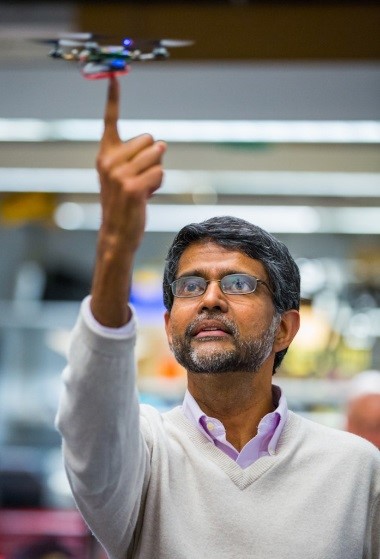
Vijay Kumar is the Nemirovsky Family Dean of Penn Engineering at the University of Pennsylvania, with faculty appointments in the Departments of Mechanical Engineering, Computer and Information Science, and Electrical and Systems Engineering. He is a leading figure in robotics and computer architecture research. Research Interests include robotics, particularly multi-robot systems and micro aerial vehicles (MAVs), as well as computer architecture innovations for machine learning, GPU acceleration, and datacenter efficiency. His work spans theoretical foundations and practical applications in autonomous systems and hardware optimization. Scientific Awards include: 1991 NSF Presidential Young Investigator Award 1996 Lindback Award for Distinguished Teaching 2012 ASME Mechanisms and Robotics Award 2014 Engelberger Robotics Award 2017 IEEE George Saridis Leadership Award Multiple best paper awards at DARS, ICRA, and RSS conferences Editorial Leadership includes serving as Editor of the ASME Journal of Mechanisms and Robotics and Advisory Board Member of AAAS Science Robotics Journal . His GRASP Lab team developed foundational frameworks for micro UAV testbeds and swarm robotics.