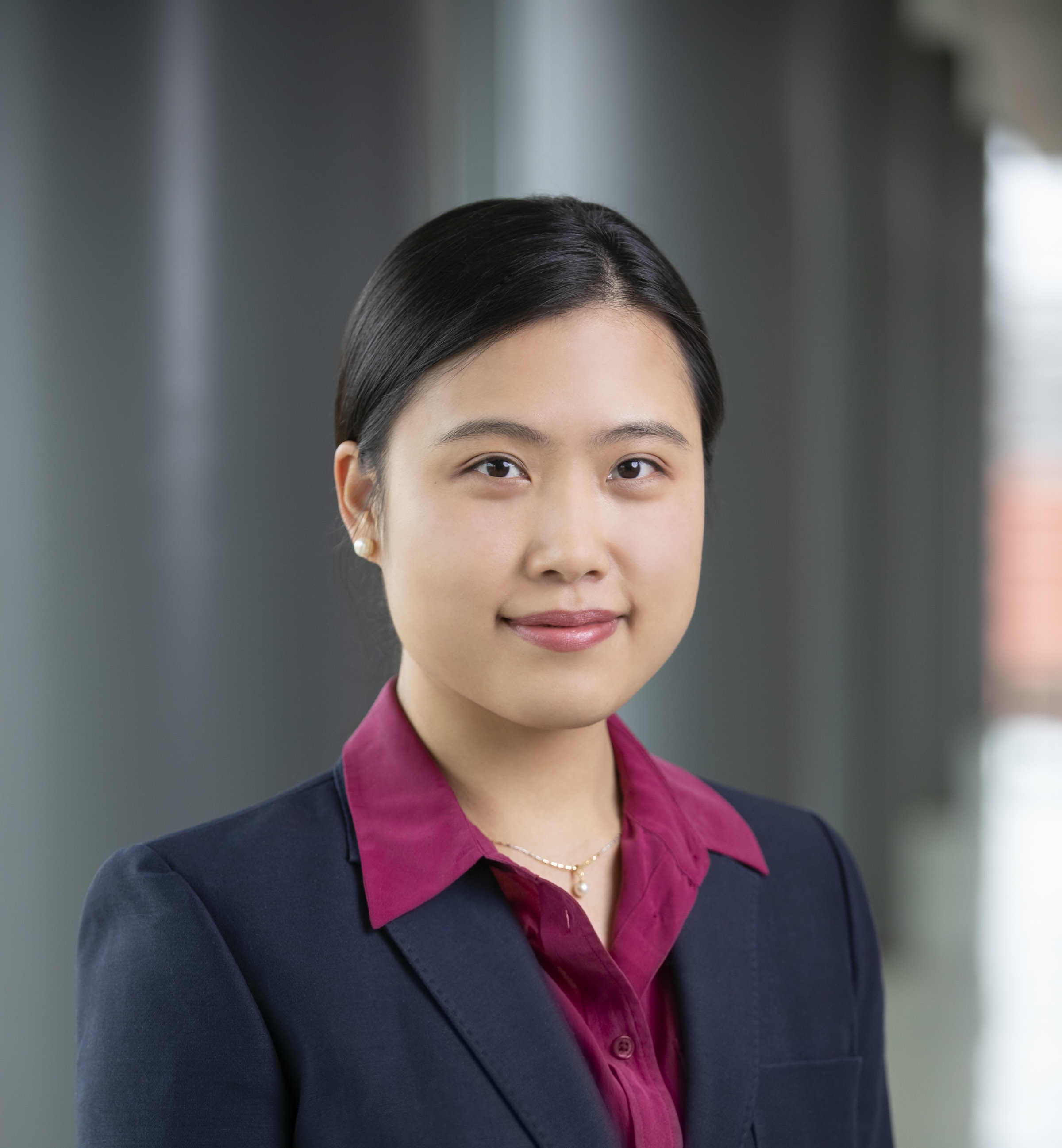
Susana Borges Furtado is an Associate Professor at the Faculty of Economics , University of Porto. She has been active in academic roles since completing her PhD in Mathematics at the University of Lisbon in 2000. Education : Degree in Applied Mathematics in Computer Science (1990) from the Faculty of Sciences, University of Porto. Master's in Mathematics Applied to Economics and Management (Statistics and Econometrics, 1994) from the Higher Institute of Economics and Management, Technical University of Lisbon. PhD in Mathematics (Algebra, Logic, and Fundamentals, 2000) from the University of Lisbon. Research Interests : Linear Algebra and Combinatorics, with a focus on matrix completion problems, invariants of matrix products, matrix congruence, and polynomial matrix linearizations. Applications of mathematical theories to Decision Theory. Research Affiliation : Member of the Center for Mathematics, Fundamental Applications and Operational Research (CMAFcIO) at the University of Lisbon.
Nicolas Ducros is a Professor in the Department of Electrical Engineering at INSA Lyon and a researcher at the Biomedical Imaging Laboratory (CREATIS), University of Lyon, France. He is also a junior member of the Academic Institute of France. Habilitation à Diriger des Recherches (HDR) focusing on computational methods for medical imaging over the last decade His research focuses on image processing and inverse problems in medical imaging, with recent contributions to hyperspectral imaging and single-pixel imaging systems. His work integrates advanced mathematical techniques for optimizing image reconstruction algorithms. Notable contributions include: Development of SPIRiT (Single-Pixel Image Reconstruction Toolbox), enabling simulation of single-pixel camera acquisition/reconstruction pipelines Creation of Bayesian completion methods for missing data reconstruction (2020) Innovations in semi-nonnegative matrix factorization for pattern generalization (2018) Adaptive basis scan techniques using wavelet prediction (2017) His publications demonstrate expertise in merging computational imaging with machine learning approaches, particularly for biomedical applications. The work has been disseminated through open-source software tools in MATLAB. Scientific recognition includes: Best Thesis Award from IEEE EMBS (2010) Best Thesis Award from SFGBM (2010) Contact: nicolas.ducros@insa-lyon.fr
Anil Aswani serves as an Associate Professor and Head Undergraduate Advisor in the Department of Industrial Engineering and Operations Research (IEOR) at the University of California, Berkeley's College of Engineering. His work centers on developing statistical and optimization techniques for big data to model human behavior in complex systems, enabling better system design and management across healthcare, energy, and social domains. Education: Ph.D. in Electrical Engineering and Computer Sciences, UC Berkeley (2010) Research interests include operations research, machine learning, optimization, and statistical modeling, with applications in healthcare systems (e.g., personalized disease management, mechanical ventilation), energy systems (e.g., EV charging, HVAC), and human behavior analytics. His methods integrate causal inference, reinforcement learning, and tensor completion to address real-world challenges in resource allocation and system optimization. Analysis of recent publications reveals dominant trends in applying reinforcement learning to healthcare (mechanical ventilation, disease management), contract design for end-of-life care and cybersecurity, and fair decision-making frameworks. Key methodological themes include off-policy evaluation, tensor completion for high-dimensional data, and optimization under uncertainty across dynamic systems. Scientific Awards: NSF CAREER Award (2019) for "Data-Driven Personalized Chronic Disease Management" As Head Undergraduate Advisor, Aswani guides academic planning and curriculum development for IEOR students. His research is primarily funded by the NSF CAREER award, focusing on data-driven healthcare optimization, with additional support for interdisciplinary projects like food assistance program analysis and medical data privacy. Collaborations span public health, medicine, and engineering domains. His interdisciplinary team bridges operations research, computer science, and domain-specific applications, evidenced by joint studies on nutritional assistance programs, NICU admissions prediction, and step-tracker re-identification. Current work emphasizes scalable methods for personalized interventions in complex socio-technical systems.
Dr. Mareike Dressler is a Senior Lecturer (Assistant Professor, tenure-track) at the School of Mathematics and Statistics, UNSW Sydney. She holds a PhD in Mathematics from Goethe University Frankfurt (2018) and has held postdoctoral positions at Max Planck Institute for Mathematics in the Sciences (Leipzig) and University of California, San Diego. Education: PhD (Mathematics, 2018), M.Sc. (2013), B.Sc. (2010) from Goethe University Frankfurt Prior Affiliations: Postdoctoral researcher at MPI MiS (Leipzig), Stefan E. Warschawski Assistant Professor at UCSD, Semester Postdoctoral Fellow at Brown University (ICERM) Her research focuses on Real and Computational Algebraic Geometry, Polynomial and Convex Optimization, Matrix and Tensor Computation, and their applications in Data Science and Machine Learning. She has developed optimization techniques using sums of nonnegative circuit polynomials and explored connections between convex geometry and algebraic structures. Her recent publications span topics including multivariate Chebyshev polynomials, matrix completion ranks, SONC cone duality, and applications of semidefinite programming. Collaborations include work with Venkat Chandrasekaran, Bernd Sturmfels, and Roland Lasserre, with methodological contributions to polynomial optimization and tensor analysis. At UNSW Sydney, she teaches undergraduate and postgraduate courses including MATH 1131 (Mathematics 1A, Algebra) and MATH 5185 (Special Topic: Nonnegativity and Polynomial Optimization). Her research group engages with both theoretical and applied problems in optimization and algebraic methods.
Professor MÜBERRA NAMLI KALEM serves as a full Professor in the Department of Obstetrics and Gynecology at Istinye University Faculty of Medicine. A graduate of Istanbul University Cerrahpaşa Faculty of Medicine (1993), she completed specialist training at Ankara University (1995-2000) before establishing her academic career. Her clinical and research focus centers on surgical obstetrics and reproductive medicine. Research Interests: Recurrent pregnancy loss and implantation failure mechanisms Optimization of IVF protocols including frozen embryo transfer Inflammatory biomarkers (NLR/PLR) in gynecologic disorders Genetic factors in reproductive system (ADAMTS genes) Surgical innovations for cesarean sections and hysteroscopic procedures Her publication record shows consistent output since 2015 with increasing emphasis on clinical trials after 2018, particularly in surgical techniques and diagnostic biomarkers. Recent work demonstrates translational focus from molecular mechanisms to practical clinical applications. Awards: Best Oral Presentation Third Place (2016) Professor Namli Kalem maintains active clinical research through randomized controlled trials and retrospective analyses, evidenced by her co-authorship of the surgical reference text 'Gynecologic and Obstetric Surgical Problems and Management Options'. Her work bridges molecular research with direct patient care applications in reproductive medicine.
Ting Kei Pong is a Professor in the Department of Applied Mathematics at the Hong Kong Polytechnic University, where he has been employed since August 1, 2014. His research focuses on continuous optimization, with particular expertise in convex relaxations and first-order methods for large-scale optimization problems. Dr. Pong received his Bachelor's degree in 2004 and MPhil degree in 2006 from the Department of Mathematics at the Chinese University of Hong Kong. He completed his PhD in 2011 from the Department of Mathematics at the University of Washington under the supervision of Professor Paul Tseng, with co-advisement from Professors Maryam Fazel and Rekha Thomas after Professor Tseng's disappearance. His postdoctoral training included positions at the University of Waterloo (2011-2013) and the University of British Columbia (2013-2014) as a PIMS postdoctoral fellow. His research interests span Continuous Optimization , with current focus on convex relaxations and first-order methods for large-scale problems. He also investigates constraint qualifications for convex optimization, statistical computation, and robust optimization. His work bridges theoretical foundations with practical applications in areas such as compressed sensing, sensor network localization, and machine learning. Dr. Pong's publication record demonstrates consistent high-impact contributions to optimization theory. His recent work (2022-2025) shows a strong focus on convergence analysis, error bounds for conic optimization problems, and development of efficient algorithms for nonconvex optimization. His research often combines theoretical analysis with practical implementation, as evidenced by the availability of code for many of his publications. He serves as Associate Editor for Mathematics of Operations Research (since 2019) and on the editorial boards of Computational Optimization and Applications, Pacific Journal of Optimization, and Open Journal of Mathematical Optimization. Dr. Pong actively mentors students and postdocs, currently supervising PhD students Yanbo Wang and Hao Zhang, and postdoc Jiefeng Xu. His former students have secured positions at institutions including the University of Texas Arlington, University of Hong Kong, and Sun Yat-Sen University. His advising reflects his research expertise, with students working on topics in nonconvex optimization, compressed sensing, and matrix factorization. He maintains an active research schedule, regularly presenting at major optimization conferences including ICCOPT, ISMP, and SIAM Optimization. His upcoming talks in 2025 demonstrate continued research productivity in error bounds for log-determinant cones and single-loop proximal-conditional gradient methods.
Fernando Granha Jeronimo is an Assistant Professor at the Siebel School of Computing and Data Science, University of Illinois Urbana-Champaign. His research explores theoretical computer science with emphases on coding theory, expander graphs, quantum computing, and optimization. He holds a PhD from the University of Chicago, M.Sc./B.Sc. degrees from Unicamp (Brazil), and an engineering degree from Telecom Paris. His work investigates interactions between complexity theory, pseudorandomness, quantum algorithms, and high-dimensional expanders. Recent studies focus on explicit code constructions near information-theoretic bounds, quantum-classical complexity separations, and efficient decoding algorithms leveraging expander properties. Publications demonstrate consistent focus on coding theory (explicit codes, list decoding), quantum complexity (unentangled proofs, pseudoentanglement), and optimization (LP/SDP hierarchies). A trend toward quantum applications is evident in recent works on quantum LDPC codes and property testing. Awards & Fellowships: Simons-Berkeley Fellow Google Research Fellow TA Prize, University of Chicago (awarded twice) Advising & Grants: Actively recruits graduate students for his research group. Previously supported by Simons Institute and Google Research Fellowship during postdoctoral work at IAS. Current courses include quantum computing (CS 498) and advanced topics in codes/optimization (CS 598). Leads the Local-to-Global TCS Mentorship Program and research groups focused on coding theory, quantum complexity, and expander applications.
Chayne Planiden is a Senior Lecturer in the School of Mathematics and Applied Statistics at the University of Wollongong, where he has been appointed since 2022. His research focuses on mathematical optimization, particularly nonsmooth optimization techniques including regularization methods, derivative-free algorithms, and the VU-algorithm. He specializes in proximal mappings, simplex gradient approximations, and Hessian approximation methods. Dr. Planiden's research spans both theoretical and applied mathematics, with significant applications in energy market modeling. His work addresses renewable energy integration, microgrid management, and electricity market design using optimization frameworks. Key methodologies include derivative-free optimization techniques and numerical analysis approaches for complex systems. In terms of research supervision, Dr. Planiden currently mentors three PhD students working on projects involving optimization algorithms, reaction-diffusion equations, and financial option pricing. He has successfully supervised one PhD candidate to completion on decarbonized electric grid frameworks. No scientific awards or honors are mentioned in the available information.
Weihua Geng is a Professor and Director of Undergraduate Studies in the Department of Mathematics at Southern Methodist University. He earned his Ph.D. from Michigan State University in 2008 and completed postdoctoral research at the University of Michigan. His research focuses on numerical methods for partial differential equations and integral equations, with applications in structural and systems biology. Professor Geng develops advanced computational techniques including matched interface and boundary methods, boundary integral formulations, and treecode-accelerated algorithms for electrostatics and biomolecular simulations. His work combines mathematical modeling with high-performance computing to study protein interactions, chromatin folding, and circadian rhythm systems. His recent publications demonstrate a strong focus on enhancing Poisson-Boltzmann solvers through machine learning integration, parallel computing optimizations, and novel regularization techniques. These developments advance computational capabilities for electrostatic analysis in biological systems. Professor Geng has mentored numerous graduate and undergraduate researchers in computational mathematics. His collaborative projects involve researchers from multiple institutions including University of Michigan, Pacific Northwest National Laboratory, and University of Alabama.
Karen Meagher is a Professor and Chair of the Graduate Studies Committee in the Department of Mathematics and Statistics at the University of Regina's Faculty of Science. Her research focuses on combinatorics and algebraic graph theory, with particular emphasis on Erdős-Ko-Rado theorems and their extensions. Her primary research interests include: Combinatorics and algebraic graph theory Erdős-Ko-Rado theorem generalizations Design theory and covering arrays Extremal set theory applied to partitions and permutations Zero-forcing sets and metric dimension of graphs Applications of algebraic methods to combinatorial problems Analysis of her recent publications reveals a consistent focus on extending Erdős-Ko-Rado theory to various combinatorial structures including graphs, permutation groups, and set partitions. Her work frequently employs algebraic graph theory techniques and has significant applications in design theory and extremal combinatorics. Meagher leads the Discrete Math Research Group at the University of Regina, which includes faculty members Shaun Fallat and Allen Herman, multiple post-doctoral fellows, and graduate students. She has supervised three PhD students to completion: Alison Purdy (2014), Fatemeh Alinaghipour (2013), and Bahman Ahmadi (2013), with Alison Purdy also completing a Master's under her supervision in 2010. Outside of mathematics, Meagher maintains a 'super-nerdy hobby' of mathematical quilting, creating designs based on combinatorial structures like Greco-Latin squares.
Richard Y Zhang is an Assistant Professor in the Department of Electrical and Computer Engineering at the University of Illinois, affiliated with the Coordinated Science Lab. His research focuses on optimization theory, nonconvex optimization, semidefinite programming, and their applications in power systems, machine learning, and control systems. Key topics include low-rank matrix recovery, spurious local minima analysis, and robust optimization methods. He has received the NSF CAREER Award in 2021 for early career achievements. Research Interests: Nonconvex Optimization Semidefinite Programming Power System Analysis Low-Rank Matrix Recovery Machine Learning Algorithms Control Systems Design Recent work emphasizes certified optimization methods with global guarantees, adversarial machine learning robustness, and efficient algorithms for large-scale systems. His publications explore topics like phase synchronization in power systems, preconditioned gradient descent techniques, and sparse semidefinite program optimizations. Scientific Awards: NSF CAREER Award (2021) Advising and Grants: While specific student names aren’t listed, his research group focuses on cutting-edge optimization theory with applications to energy systems and data science. Collaborations include work on power grid stability, neural network certification, and large-scale convex/nonconvex problem solving. Labs/Teams: Active in the Coordinated Science Lab’s optimization and control research clusters.>
Sebastian Urrutia is a Professor in the Faculty of Logistics at Molde University College (HiMolde), specializing in Operations Research and Optimization. He holds a PhD in Computer Science from Pontifical Catholic University of Rio de Janeiro (2005) and a BSc in Computer Science from the University of Buenos Aires (2001). His research focuses on Integer Programming, Approximation Algorithms, Graph Theory, and applications in Healthcare Logistics, Transportation, and Sports Scheduling. Key research interests include optimization methods for healthcare systems, maritime inventory routing, and algorithmic solutions for complex scheduling problems. His work bridges theoretical advancements in combinatorial optimization with practical applications in logistics and transportation. Recent publications emphasize Benders decomposition for healthcare logistics, polynomial-time graph algorithms, and maritime routing optimization. He has contributed to over 40 peer-reviewed articles in journals like European Journal of Operational Research and Networks . Urrutia’s academic contributions include developing exact and heuristic methods for NP-hard problems, with notable work on the Double Traveling Salesman Problem with Multiple Stacks and token swapping algorithms on cographs.
Shahla Nasserasr is an Assistant Professor in the School of Mathematics and Statistics at the Rochester Institute of Technology (RIT), within the College of Science. Her research focuses on combinatorial matrix theory, spectral graph theory, and the inverse eigenvalue problem in graphs, with applications to totally positive matrices and graph theory. She actively contributes to the mathematics community, currently serving as Chair of the Outreach and Membership Committee for the International Linear Algebra Society (ILAS). Teaching responsibilities include courses such as Discrete Mathematics for Computing, Linear Algebra, and Undergraduate Research in Mathematical Sciences. Her work bridges theoretical foundations with practical applications, emphasizing spectral properties of graphs and eigenvalue problems. Over 20+ published articles span topics from graph colorings and matrix completions to quantum-inspired graph diagonalization techniques. Research trends highlight her contributions to understanding graph spectra, eigenvalue multiplicity constraints, and innovative applications like q-analogues of zero forcing. While no awards are explicitly listed, her leadership in ILAS underscores her dedication to advancing linear algebra education and research globally. Her advising and mentoring extend through RIT’s undergraduate research programs, fostering student engagement in mathematical sciences. Collaborative work includes exploring sparsity properties in graphs and the structural implications of spectral arbitrariness. Current research directions aim to deepen insights into graph eigenvalue problems and their computational applications.
Zhizhen Jane Zhao is an Associate Professor in the Department of Electrical and Computer Engineering at the University of Illinois at Urbana-Champaign, where she holds the William L. Everitt Faculty Fellow position. She is affiliated with the Coordinated Science Laboratory and the National Center for Supercomputing Applications, and serves as an affiliate faculty member in both the Department of Mathematics and the Department of Statistics. Dr. Zhao received her PhD in Physics from Princeton University in 2013, working with Amit Singer. She completed her bachelor's and master's degrees in Physics at Trinity College, Cambridge University, graduating in 2008. Prior to joining the University of Illinois in 2016, she was a Courant Instructor at the Courant Institute of Mathematical Sciences at New York University. Her research focuses on geometric data analysis, dimensionality reduction, mathematical signal processing, scientific computing, and machine learning, with applications to imaging sciences and inverse problems. Specific application areas include cryo-electron microscopy image processing, data-driven methods for dynamical systems, and uncertainty quantification. Her methodology bridges theoretical mathematics with practical applications in biomedical imaging and scientific computing. Analysis of Dr. Zhao's recent publications reveals a strong focus on machine learning approaches to imaging science problems, particularly in cryo-electron microscopy. She has developed innovative methods using geometric analysis, flow matching models, and multi-frequency approaches to solve inverse problems. Her research increasingly integrates physics-driven constraints with deep learning frameworks, creating more robust and interpretable models for scientific applications across biomedical imaging, climate science, and quantum computing. Dr. Zhao has received several notable honors including: William L. Everitt Faculty Fellow Dr. Zhao actively teaches courses ranging from foundational signal processing to advanced topics in machine learning and high-dimensional geometric data analysis. She has mentored numerous graduate students and postdocs working on problems at the intersection of mathematics, computer science, and domain-specific applications. Her research has been supported by various grants enabling interdisciplinary collaborations across engineering, mathematics, and computational sciences. She is an active member of the Coordinated Science Laboratory research community at UIUC, collaborating with researchers across disciplines on projects involving imaging science, machine learning, and computational methods. Her work often involves interdisciplinary teams combining expertise in mathematics, computer science, and domain-specific applications in biomedical imaging, climate science, and quantum physics.
Andreas Wallo is an Associate Professor in Education at Linköping University, where he is affiliated with the Department of Behavioural Sciences and Learning and the Division of Education and Sociology. He serves as the Deputy Centre Director and Research Leader of the HELIX Competence Centre, a partnership for interactive work life research focused on creating conditions for learning and development in organizations. His academic journey includes progression from Senior Lecturer (2009-2018) to Associate Professor (2018-present), with his doctoral degree in Education completed in 2008. Deputy Centre Director and Research Leader, HELIX Competence Centre (2019-present) Associate Professor in Education, Linköping University (2018-present) Coordinator, HELIX Competence Centre (2017-2018) Docent in Education, Linköping University (2014) Senior Lecturer, Linköping University (2009-2018) PhD in Education, Linköping University (2008) Dr. Wallo's research centers on leadership and managerial work, workplace learning, and human resource management and development. He investigates how managers, leaders, and HR specialists promote employee learning and development in daily work, examining both enabling and hindering factors. His theoretical framework integrates workplace learning, leadership theory, HRM, HRD, and organizational theory to understand complex organizational dynamics. He employs an interactive research methodology emphasizing egalitarian cooperation between researchers and practitioners to address common problems. This approach ensures practical relevance while generating theoretical insights, particularly valuable for understanding contemporary workplace challenges including hybrid work arrangements and crisis management. His recent work increasingly focuses on sustainable HR practices and organizational resilience in uncertain environments. Analysis of Dr. Wallo's publication history reveals a consistent focus on learning-oriented leadership, with recent work expanding into sustainable HRM, hybrid work leadership challenges, and crisis management. His research spans both theoretical development and practical applications across diverse organizational contexts, with particular attention to small and medium-sized enterprises and public sector organizations. Dr. Wallo leads several major research initiatives: Leadership for Learning and Innovation (2017-present) Value-adding Human Resource Management and Development Practices (2017-present) Learning in Small and Medium-sized Enterprises and Organisations (2017-present) Performance Measurement and Learning in Organisations (2016-present) Leadership, Management and Co-workership in the University (MedLed) (2016-present) He maintains active involvement in key research networks: ESREA Network on Working Life and Learning Research (as Convenor) Centre for Global Human Resource Management Swedish Interactive Research Association (SIRA)