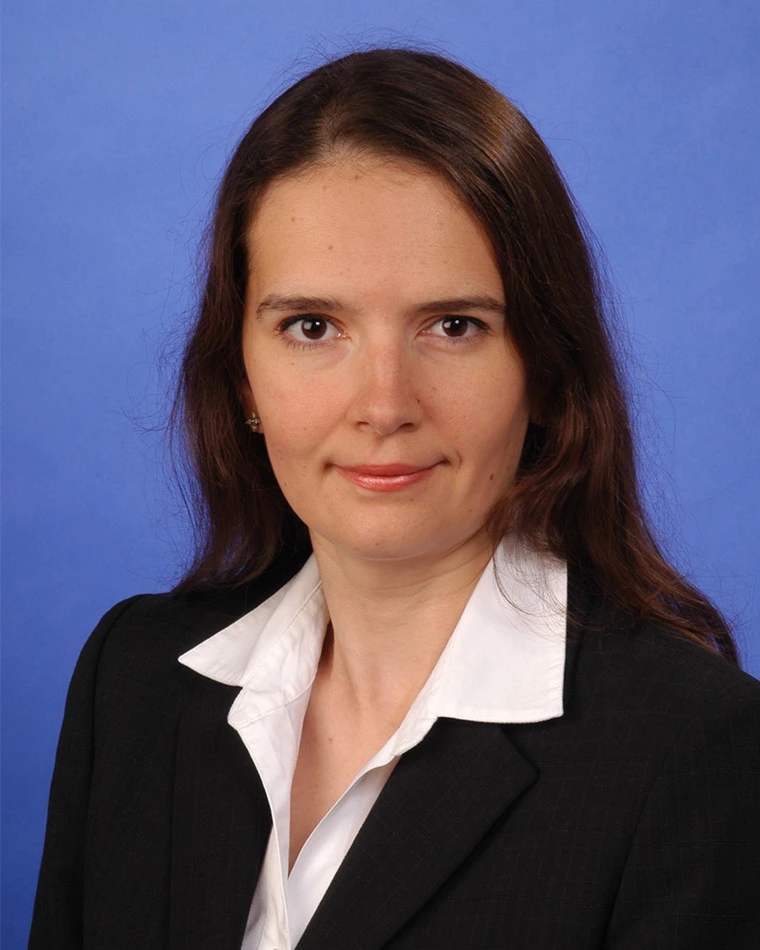
Catherine E. Costello is the William Fairfield Warren Distinguished Professor and Director of the Center for Biomedical Mass Spectrometry Education at Boston University School of Medicine. She holds a PhD and MS from Georgetown University. Her research focuses on biopolymer structural studies and mass spectrometry method development, particularly in glycobiology. Her lab is an NIH-funded Resource Center advancing glycan characterization and structural analysis. Key research interests include carbohydrate conjugate analysis, glycoproteomics, and applications in disease mechanisms like cancer, infection, and immune response. Collaborations span institutions globally, addressing complex biomolecules and their roles in health and disease. Recent publications highlight advancements in glycoproteomic characterization, ion mobility spectrometry, and glycan identification. Awards include the distinguished professor title. Lab members include postdoctoral associates, research staff, and visiting scientists from institutions like MGH and Nutricia Research.
Frédéric Vrins is a Professor at the Louvain School of Management (LSM) , UCLouvain , affiliated with the Louvain Institute of Data Analysis and Modeling in economics and statistics (LIDAM) and Louvain Finance (LFIN). His work bridges theoretical and applied finance, with a focus on risk modeling, portfolio optimization, and machine learning applications. His research interests include: Quantitative Finance: Derivatives pricing, stochastic processes, and model calibration. Risk Management: Credit concentration risk, recovery rates, and wrong-way risk in financial markets. Portfolio Optimization: Mean-variance strategies, diversification metrics, and robustness under parameter uncertainty. Machine Learning in Finance: Applications to recovery rate prediction and option pricing frameworks. Recent publications highlight trends in: Credit risk modeling for Collateralized Loan Obligations (CLOs) and consumer credit. Machine learning integration in derivatives pricing and portfolio construction. Stochastic methods for Brownian bridges, CDS spreads, and recovery rates. Empirical studies on Loan-to-Value policies and business cycle impacts. Affiliations and locations: Louvain School of Management (LSM) - Building B, Chaussée de Binche 151, 7000 Mons Louvain Finance (LFIN) - Traverse d'Esope 1, 1348 Louvain-la-Neuve Louvain School of Management (LSM) - BATA Building, Chaussée de Binche 151, 7000 Mons
Prof. Dr. Laura Nyström is a Full Professor of Food Biochemistry at ETH Zurich's Department of Health Sciences and Technology (D-HEST), part of the Institute of Food, Nutrition and Health (IFNH). She leads a research group focused on sustainable food systems, dietary fiber mechanisms, and plant-based material utilization. Her career includes tenure as Assistant Professor (2009–2016) and Associate Professor (2016–2021) before her promotion to Full Professor in 2022. She also chairs the D-HEST department since 2022. Education: MSc (2002) and DSc (2008) in Food Sciences from the University of Helsinki, Finland. Postdoctoral research (2008–2009) in Cereal Technology at the same institution. Research Interests: Healthy and sustainable foods via plant-based materials Health-promoting dietary fiber interactions Genetic diversity of grains and crop utilization Antioxidant extraction from olive mill waste (co-founding Gaia Technologies GmbH) Development of analytical methods for food chemistry Scientific Contributions: Over 70 publications, 3 book chapters, and 2 patents ERC Starting Grant (2015), AOCS Young Scientist Award (2017), and ETH Zurich Leadership Award (2018) Advising & Innovation: Guided interdisciplinary research teams on food chemistry and sustainability Co-developed industrial partnerships for food waste valorization Labs & Initiatives: EPNOE (European Polysaccharide Network) collaborations HealthFerm citizen science project on sourdough fermentation
Jennifer G. Cromley is a Professor in the Department of Educational Psychology at the University of Illinois at Urbana-Champaign. Her research focuses on comprehension of illustrated scientific text and the achievement and retention of undergraduate students in STEM majors. She employs both basic (eye tracking, think-aloud protocols) and applied research methods (randomized control trials, quasi-experiments) across educational settings from middle school to undergraduate programs. PhD in Human Development from University of Maryland, College Park Her work spans experimental and technology-delivered instruction, funded by the US Department of Education, National Science Foundation, and university grant programs. She has been recognized twice as one of the world's most productive Educational Psychologists. Research areas: STEM Education Learning Theories Instructional Design Student Motivation Educational Research Methodology Key Collaborations: ASEE (American Society for Engineering Education) University of Illinois Urbana-Champaign Scientific Awards & Funding National Science Foundation Grants US Department of Education Awards University Grant Programs World's Most Productive Educational Psychologist Recognition (x2) She mentors graduate students through an apprenticeship model, integrating them into active research projects for authorship opportunities in peer-reviewed publications.
Zeda Li is an Assistant Professor of Statistics at the Paul H. Chook Department of Information Systems and Statistics in the Zicklin School of Business at Baruch College, CUNY. She holds a PhD in Statistics from Temple University (2018) and advanced degrees in Biostatistics and Electrical Engineering.
Dr. Tim Oates is a Professor in the Department of Computer Science and Electrical Engineering at the University of Maryland, Baltimore County . His research spans machine learning, artificial intelligence, and brain-machine interfaces, with a focus on weakly supervised methods, human-in-the-loop reinforcement learning, and grounded policy development for robotics. Ph.D., Computer Science, University of Massachusetts, Amherst, 2000 M.S., Computer Science, University of Massachusetts, Amherst, 1997 B.S., Computer Science and Electrical Engineering, 1989 Current research threads include: Developing non-invasive brain injury severity assessment via medical time series Modeling human brain development through computational frameworks Designing algorithms for autonomous robotic learning Recent publications highlight AI security mechanisms (backdoor detection via tensor decomposition, matrix factorization) Medical applications (3D artery reconstruction, skin lesion diagnosis, EEG denoising) Neuro-symbolic integration (holographic representations, language-guided reinforcement learning) Mathematical reasoning (schema-based problem solving, subitizing algorithms) Contact: oates@cs.umbc.edu | Office: 336 Information Technology and Engineering (ITE) Building
Chris Monico is an Associate Professor in the Department of Mathematics & Statistics at Texas Tech University . He has been a faculty member there since 2003, following post-doctoral research at the University of Notre Dame. Education B.S. in Mathematics – Monmouth University M.S. in Mathematics – University of Notre Dame Ph.D. in Mathematics – University of Notre Dame Research Focus Monico’s scholarship centers on the intersection of cryptology , computational algebra , and number theory . A significant recent thrust has been the application of machine-learning techniques to mathematical finance , evidenced by work on random-forest models for option pricing and high-frequency trading risk metrics. Parallel lines of inquiry include post-quantum cryptographic schemes built on tropical algebra and semigroup actions, as well as classical problems in Ramsey theory and combinatorial semigroups . Publication Trends Between 2015 and 2025 Monico has published prolifically, with a clear shift around 2020 toward mathematical finance and machine-learning applications , alongside continued output in algebraic cryptanalysis and combinatorics . His 2024–2025 articles emphasize data-driven models in trading, whereas 2020–2021 works concentrate on cryptanalyses of tropical and group-based key-exchange systems. Earlier contributions focus on computational number theory and semigroup-based cryptography. Contact Information Email: c.monico@ttu.edu Phone: 806-834-4144 Office: Department of Mathematics & Statistics, Texas Tech University, 1108 Memorial Circle, Lubbock, TX 79409-1042 Advising & Grants No specific doctoral or master’s students, funded grants, or named awards are detailed in the provided text. Laboratory or Research Group The text does not mention any dedicated laboratory or research group.
Zeev Rudnick is a Professor of Mathematics at Tel Aviv University, holding the Cissie and Aaron Beare Chair in Number Theory since 2012. He is affiliated with the School of Mathematical Sciences and the Department of Theoretical Mathematics. Education: Ph.D., Yale University, 1990 M.Sc. summa cum laude, The Hebrew University, 1985 B.Sc. summa cum laude, Bar-Ilan University, 1984 Research Interests: Professor Rudnick's work focuses on the interface of Number Theory and Mathematical Physics, particularly Quantum Chaos. His research includes eigenvalue distribution, zeros of L-functions, quantum unique ergodicity, arithmetic problems in function fields, lattice point counting, and spectral statistics. Recent publications explore zeros of modular forms, quantum models, sparse exponential sums, and spectral properties of geometric domains. Awards and Honors: Heilbronn Distinguished Visiting Professor (2019) David Rees Distinguished Visiting Fellowship (2017) Aisenstadt Chair (2014) Invited Speaker at ICM 2014 ERC Advanced Grants (2013–2024) Fellow of the AMS (2012–) AHP Distinguished Paper Award (2011) Erdős Prize (2001) Alon Fellowship (1995) Sloan Dissertation Fellowship (1989/90) Advising and Grants: He has supervised 28 Ph.D. and M.Sc. students in number theory and mathematical physics. His research is supported by an ERC Advanced Grant (RMAST, 2019–2024), following a previous ERC grant (2013–2018). He currently teaches graduate/undergraduate seminars and analytic number theory.
Cristian Gómez Canela is a Full Professor in the Department of Analytical and Applied Chemistry at IQS School of Engineering (IQS - Institut Químic de Sarrià), specializing in environmental analytical chemistry with a focus on neurotoxicology and aquatic toxicology. He leads the Environmental Process Engineering and Simulation Group and maintains an active research profile with significant h-index metrics reflecting substantial scholarly impact. His research interests center on environmental toxicology, particularly neurotoxicology of pharmaceuticals and other contaminants in aquatic systems. Using advanced analytical techniques including liquid chromatography and tandem mass spectrometry, his work examines the effects of neuroactive compounds on model organisms like zebrafish and Daphnia magna . His fingerprint reveals strong expertise in neurotransmitter analysis (66%), Daphnia magna toxicology (64%), serotonin-related research (27%), and neurotoxicity mechanisms (21%). His publication record shows consistent productivity with 92 scientific outputs, demonstrating increasing research activity from 2011 to the present, with particularly strong output in recent years (15 publications in 2024 alone). His work spans environmental chemistry, toxicology, and analytical methodology development, with a clear trajectory toward understanding the neurological impacts of environmental contaminants. Zebra Fish neurotoxicology (100%) Neurotransmitter analysis (66%) Daphnia magna toxicology (64%) Behavioral neuroscience (33%) Serotonin-related research (27%) Liquid chromatography methods (27%) Dr. Gómez Canela actively supervises doctoral research through the FI-2025 Joan Oró program and leads multiple significant research projects including CHEMIPARK (as Principal Investigator) and the GESPA environmental process engineering group. His current projects extend through 2028, indicating ongoing research activity and leadership in his field.
Samuel Kou is the Chair of the Department of Statistics and a Professor of Biostatistics at Harvard University. He holds dual affiliations with the Harvard T.H. Chan School of Public Health and the Department of Statistics, Faculty of Arts and Sciences. With a Ph.D. in Statistics from Stanford University (2001), he has held academic positions at Harvard since 2001, advancing from Assistant Professor (2001–2005) to John L. Loeb Associate Professor (2005–2008), and ultimately Professor (2008–present). His research focuses on stochastic inference in biophysics, Bayesian modeling, nonparametric methods, and Monte Carlo techniques, with applications in single-molecule biophysics, financial modeling, and big data analytics. Notable contributions include the development of the equi-energy sampler and foundational work on stochastic networks in nanoscale biophysics. Publications span high-impact journals like the Journal of the American Statistical Association and Biometrika, with a consistent emphasis on bridging statistical theory and real-world applications in biology and finance. His work often integrates computational methods to address complex systems at the molecular and macroeconomic scales. Administratively, he oversees the Department of Statistics and collaborates across interdisciplinary initiatives. His educational background includes a B.S. in Computational Mathematics from Peking University (1997) and an M.S. in Statistics from Stanford (2000).
Dr. Olesya Zhupanska is a Professor in the Department of Aerospace and Mechanical Engineering at the University of Arizona, where she holds a faculty position and is a member of the Graduate Faculty. Her research focuses on the mechanics of composite materials, especially under extreme multi-field conditions involving mechanical, thermal, and electromagnetic loads. Education: PhD in Mechanics of Solids and Applied Mathematics, Taras Shevchenko National University of Kyiv, Ukraine, 2000 BS/MS in Mechanics and Applied Mathematics (with Highest Honors), Taras Shevchenko National University of Kyiv, Ukraine, 1996 Her research interests span mechanics of composites, impact and damage, micromechanics, multi-field effects, and structural health monitoring, with applications in aerospace, wind energy, and smart materials. She has made significant contributions to understanding lightning strike damage, electrified composites, and thermostructural response of advanced materials. Her work integrates experimental, analytical, and computational methods to solve complex engineering problems. The 15 most recent publications highlight a strong trend in composite materials under electrical and thermal loads, with a focus on damage mechanisms, contact mechanics, and predictive modeling. Her research bridges mechanics, materials science, and electromagnetics, with increasing integration of machine learning for damage detection. Applications span aerospace structures, hypersonic vehicles, and wind turbine blades. Scientific Awards and Honors: DARPA Young Faculty Award (2011) Elsevier Young Composites Researcher Award (2008) ASME/Boeing Structures & Materials Award (2007) Multiple ASC Best Paper Awards National Research Council Senior Research Associateship Award (2022, 2015) Air Force Summer Faculty Fellowships (multiple years) Woman of Impact Award, University of Arizona (2022) Fellow, ASME Associate Fellow, AIAA ASME Dedicated Service Award (2023) Dr. Zhupanska has advised numerous graduate students, many of whom have won prestigious awards such as the DoD SMART Scholarship and NASA Fellowships. Her research has been funded by DARPA, NSF, NASA, AFOSR, AFRL, and industry partners. She has served on technical review boards including ARL and actively promotes engineering education and inclusion through NSF-funded initiatives. She holds leadership roles in professional societies, currently serving as President of the American Society for Composites (ASC) and as a member of the ASME IMECE Steering Committee Senate. She also serves as a Topic Editor for Composites and Advanced Materials and on the editorial board of Applied Composite Materials.
Moumita Das is a Professor at the School of Physics and Astronomy within the College of Science at Rochester Institute of Technology (RIT). A Fellow of the American Physical Society, her work bridges statistical physics, biophysics, and soft matter to study cellular and tissue mechanics. She holds affiliations with both the School of Physics and Astronomy and the School of Mathematics and Statistics at RIT. Education: BS, MS, Jadavpur University (India) PhD, Indian Institute of Science (India) Postdoctoral training at Harvard University, UCLA, and Vrije Universiteit Amsterdam (The Netherlands) Moumita Das specializes in uncovering the physical principles underlying the resilience and adaptability of biological cells and tissues. Her research employs statistical and soft matter physics, mechanics, and quantitative biology to develop mathematical models of network-like structures such as the cytoskeleton of cells and extracellular matrix of soft tissues. By studying their emergent properties through analytical and computational methods, her work aims to understand the biophysical rules of life and replicate them in synthetic materials via experimental collaborations. Her areas of expertise include Physics, Mathematics, Life Sciences, Color Science, Imaging Science, Statistical Physics, Soft Matter, and Biophysics. She teaches graduate and undergraduate courses such as Thermal and Statistical Physics, Research Preparation, Capstone Project I, and Graduate Research & Thesis. Scientific Awards: Fellow, American Physical Society (2024) Das has contributed to groundbreaking research, including a 2022 Science Advances paper co-authored with RIT and Cornell University colleagues on developing a biophysical model to improve osteoarthritis diagnosis and treatment. She is also involved in initiatives to expand access to soft matter physics education for diverse scholars. Her work has been highlighted in RIT's Upstate NY soft matter workshop (2022) and collaborative projects with experimentalists on synthetic material development.
Jouni Paltakari is a Professor in Bioproducts and Biosystems at Aalto University. His research focuses on paper converting and packaging technology, with particular interest in value-added fiber-based substrates, nanocellulose applications, and intelligent packaging solutions. He leads research activities in material characterization, composite modeling, and sustainable manufacturing processes. Institution: Aalto University Department: Bioproducts and Biosystems Research Areas: Paper converting, Packaging technology, Nanocellulose, Sustainable composites Email: jouni.paltakari@aalto.fi
Slava Rychkov is a Permanent Professor of Theoretical Physics at the Institut des Hautes Études Scientifiques (IHES), a position he has held since 2017. He specializes in strongly coupled quantum and conformal field theories, with applications across high energy physics, statistical mechanics, and condensed matter physics. His current research focuses on the conformal bootstrap and renormalization group techniques, including both perturbative and nonperturbative methods like tensor network renormalization. Education: Ph.D. in Physics, Princeton University (2002) Master of Science, Moscow Institute of Physics and Technology (1996) Recent research highlights include a groundbreaking connection between Deligne categories and symmetries of probabilistic loop ensembles in statistical physics, and a novel method for analytic continuation of Euclidean CFTs to Lorentzian signature. His work on the 2+ϵ expansion challenges established assumptions about critical exponents in 3D systems. Publications span topics from tensor renormalization group methods to rigorous mathematical approaches in the conformal bootstrap program. Scientific Awards: Jacques Solvay International Chair in Physics (2025) Grand Prix Mergier-Bourdeix, French Academy of Sciences (2019) New Horizons in Physics Prize (2014) As Deputy Director of the Simons Collaboration on the Nonperturbative Bootstrap, Rychkov leads efforts to rigorously analyze conformal field theories. His former advisees include prominent researchers at institutions like EPFL, Princeton, and Università di Genova. Current projects focus on resolving fundamental questions about critical phenomena and phase transitions using advanced mathematical physics tools.
Anubhav Pratap-Singh is an Associate Professor in the Food, Nutrition and Health department within the Faculty of Land and Food Systems at the University of British Columbia, where he holds the Food and Beverage Innovation Professorship. He leads the UBC Food Process Engineering Laboratory and his research spans environmental and natural resources economics, food chemistry (including fermentation), and natural resource management. His primary research interests focus on agri-food transformation, cold plasma food engineering, food processing, functional foods, heat transfer, high pressure mass transfer, novel non-thermal processing, nutraceuticals, pasteurization, and pulsed light sterilization. Dr. Pratap-Singh's work addresses fundamental questions about the impact of food processing on food quality, how technology can maximize desirable effects while minimizing deleterious ones to feed the growing global population, and how to ensure food safety and nutrition for all socioeconomic groups. His research program is organized around three main pillars: developing novel processing technologies for food preservation, developing technologies for food fortification, and modeling the human GI tract to understand the interaction between food processing and human health. He has made significant contributions to sonic mixing technology for thermal processing and pulsed UV light processing for food surface decontamination, with particular expertise in processing of liquid particulate matter. Dr. Pratap-Singh has received numerous prestigious awards throughout his career, including the Banting Fellowship (2016) and Green College Leading Scholar award (2017). His work has been recognized with the Young Entrepreneur Award (2009), IFTPS Graduate Scholar designation (2014), and Gold Medal from the Institute for Thermal Processing Specialists (2014), among other fellowships and honors. He is affiliated with the BioProducts Institute and Materials and Manufacturing Research Institute at UBC, and supervises graduate students in Food Science (MSc and PhD programs). His laboratory focuses on interdisciplinary research that addresses critical challenges in food science, with implications for feeding the projected 10 billion people by 2050 while countering negative public perceptions around processed foods.