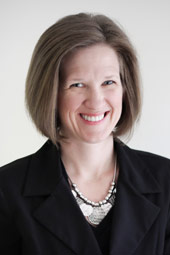
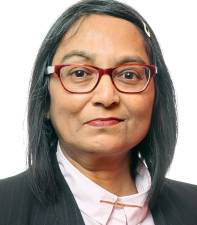
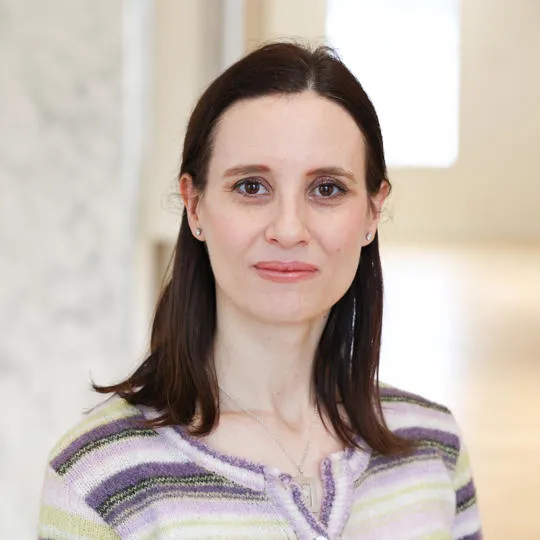
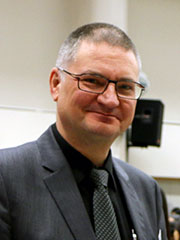
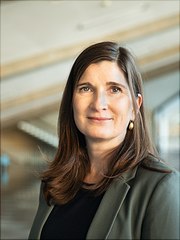
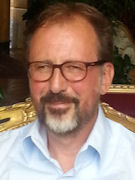
Dr. Sarah Rowe is an Assistant Professor of Psychology at the University of Detroit Mercy's College of Humanities, Arts & Social Sciences. A Nationally Certified School Psychologist, her research focuses on universal screening practices, evidence-based instructional methods, and educational systems reform to address inequities in student outcomes. Her publications examine teacher acceptability of assessment tools, math fluency interventions, and career transitions for practitioners moving into academia. Research emphasizes practical applications for improving learning outcomes through effective progress monitoring and system-level educational changes.
Dr Yosheen Pillay is a Senior Lecturer and Psychologist in Educational Counselling at the University of Southern Queensland (USQ) since 2016. Affiliated with the School of Education and the Centre for Health Research, her work focuses on autism, mental health, disability, and inclusive education. She holds a BMusic (Natal, 1988), BSc(Hons) (USQ, 2014), MMusic (Natal, 1994), and PhD (USQ, 2018) in Education. Pillay leads and co-supervises doctoral research on topics like trauma-informed practices, autism transition services, and sandplay therapy. Her teaching expertise includes educational counselling and multiliteracies. Education: BMusic, University of Natal, 1988 BSc(Hons), USQ, 2014 MMusic, University of Natal, 1994 PhD, USQ, 2018 Research Interests: Pillay’s work centers on autism spectrum disorder (ASD) transition services, mental health in education, inclusive practices, and ethics in research. She explores strategies to support autistic youth transitioning into adulthood, the role of technologies in education, and respectful school environments. Her studies often involve mixed-methods approaches and collaboration with communities. Publications reflect trends in autism support systems, mental health education strategies, and ethics review processes. Key themes include: 1) Transition planning for neurodiverse youth, 2) Technology-enhanced learning in higher education, and 3) Improving ethics review frameworks for interdisciplinary research. Awards: No scientific awards explicitly stated. Supervision: Pillay leads projects like ‘Autistic girls: Lived experiences on transition from primary to secondary school’ and co-supervises studies on renewable assignments and Panopto video analytics. She also contributes to ethics review processes at USQ. Labs/Teams: Active in the School of Education’s research clusters, particularly those focused on disability studies and educational technology. Collaborates with the Centre for Health Research on mental health initiatives.
Dr. Ekta Sharma is a Lecturer (Mathematics) and Researcher (Artificial Intelligence) at the University of Southern Queensland (USQ), specializing in applied AI for atmospheric science and satellite sustainability. She holds a PhD in AI from USQ (2022) and advanced degrees from Delhi. Her research focuses on air quality prediction, satellite communication, and AI-driven solutions for environmental challenges. She has received prestigious awards, including the 2025 ECR Joint Fellowship (India-Australia) and 2024 Women in AI APAC award. Dr. Sharma has led grants from the Australian Department of Defence, ONI, and AMSI, totaling over AUD 400,000. She teaches undergraduate and postgraduate courses in mathematics, operations research, and machine learning. Her supervisory roles include overseeing doctoral and masters projects on AI for disaster management and wireless networks. She has authored seven non-profit books promoting women in STEM, published globally since 2018. Professional Memberships: IEEE, CASANZ, ACEMS, AMSI Key Collaborations: DSTG, ONI, Bureau of Meteorology, Swiss Telecom Media Features: SBS, ABC, Mirage News, LinkedIn Her work bridges AI innovation with real-world applications, including early warning systems for air quality and strategic projects for the Australian Government. She advocates for gender diversity in STEMM, contributing to global initiatives like the Australia India Women Researchers' Collaboration.
Mark R. Wilson is a Professor at the University of California, Berkeley's Graduate School of Education, specializing in Educational Measurement and Statistics. He chairs the National Research Council's committee on science achievement assessment and is the founding editor of the journal Measurement: Interdisciplinary Research and Perspectives . His work focuses on psychometrics, statistical modeling of educational assessments, and the development of measurement frameworks for science education, child development, and policy. Wilson's research interests span measurement theory, applied statistics, and the integration of assessment into educational practices. Notably, he has authored influential books such as Constructing Measures: An Item Response Modeling Approach and co-edited works on explanatory item response models. His contributions include advancing methodologies for evaluating learning progressions, classroom assessments, and large-scale educational accountability systems. His publications emphasize interdisciplinary applications, with articles addressing core measurement principles, latent growth modeling, and the challenges of balancing statistical rigor with scientific relevance. Wilson collaborates internationally on projects like the BEAR Assessment System, aiming to align classroom assessments with broader educational goals. His work bridges theoretical psychometrics with practical educational policy, ensuring assessments are both valid and actionable. Wilson's expertise is further highlighted through his role in developing assessment tools such as the Desired Results Developmental Profile (DRDP) and contributions to international initiatives like PISA. His research consistently advocates for coherence between assessment practices and educational outcomes, emphasizing the importance of meaningful measurement in education and health sciences.
John Beam is a Professor at the University of Wisconsin Oshkosh, located on the Oshkosh Campus. He is affiliated with the Swart Building (Room 110) and can be reached at beam@uwosh.edu. His research focuses on mathematics education, particularly in developing curricula and pedagogical strategies for future elementary and middle school teachers. Key interests include mathematical knowledge for teaching, probability and statistics education, and addressing educational equity for marginalized student populations. Beam's work emphasizes bridging theoretical mathematical concepts with practical classroom applications. His research explores topics like algebraic reasoning, probabilistic thinking progression from elementary to graduate levels, and closing achievement gaps for Native American students with learning disabilities. His recent articles highlight innovations in teacher training and curriculum design. While no specific grants or advising records are listed, his articles suggest sustained engagement with mathematics education reform and teacher professional development. No scientific awards are mentioned in the provided materials.
Dr. Dariusz Mikułowski is an Assistant Professor at the Institute of Computer Science, Faculty of Natural Sciences, University of Siedlce. His primary research focuses on developing assistive technologies to enhance communication, education, and daily functioning for people with disabilities, particularly the visually impaired. He leads research teams and has contributed to over 56 publications, achieving an h-index of 3 in Scopus and Web of Science. His research areas include Assistive technologies for navigation and spatial orientation Accessibility in education and e-learning Multimodal interfaces for visually impaired users Ontology-based systems for semantic mapping Audio-based mathematics instruction tools Key projects include the Blind-enT system for object visibility assistance, the WPad BVI multilingual knowledge exchange tool, and Virtual Cubarithms for arithmetic education. His work emphasizes inclusive design principles and cross-disciplinary collaboration. Dr. Mikułowski actively participates in academic communities through Google Scholar, Scopus, and Web of Science profiles, and contributes to initiatives like Science Poland. His research has been recognized for addressing critical gaps in accessibility technologies for disabled populations.
Prof. Wenny Rahayu is the current Dean of the School of Computing, Engineering & Mathematical Sciences (SCEMS) at La Trobe University, Australia. Previously, she held leadership roles including Head of the Department of Computer Science and Information Technology (2012–2014) and Head of School for Engineering and Mathematical Sciences (2015–2021). Her research focuses on data engineering, cybersecurity, IoT systems, and predictive analytics, with over 300 publications and 7,500+ citations. She has led major grants from the Australian Research Council (ARC), industry partners like Airservices Australia, and international collaborations. Prof. Rahayu has supervised 30 PhD students, now working globally in academia and industry. Her work spans IoT security frameworks, privacy preservation, and smart manufacturing solutions. Research Highlights: Data Integration & Optimization Cybersecurity for IoT and Cloud Environments Predictive Maintenance in Industry 4.0 Privacy-Preserving Technologies Adaptive Learning Systems Grants & Collaborations: ARC Industry Linkages and International Grants (Open Geospatial Consortium, Japan JSPS) Industry Partners: IPL, CSIRO, Army Research Victorian Government Technology Innovation Programs Awards & Roles: Appointed as Lead Assessor for New Zealand MBIE Endeavour Fund (2019–present). Recognized for contributions to data science and interdisciplinary research. Labs & Teams: Leads cross-disciplinary teams in SCEMS focusing on IoT, cybersecurity, and smart systems. Collaborates with global partners on industrial and health-related projects.
Ron Salden is an Associate Professor in the School of Social Sciences at Heriot-Watt University, holding a joint appointment in the Department of Psychology. He earned his PhD in Educational Science from the Open University of the Netherlands (2005) and completed a postdoctoral fellowship at Carnegie Mellon University (2009), where his work earned the Cognition and Student Learning Prize at the 2008 CogSci conference. His research focuses on educational technology, cognitive learning processes, and interdisciplinary learning applications in aviation, mathematics, and scuba diving therapy. He currently serves as Undergraduate Programme Director for Psychology, leading the department to BPS accreditation in 2023. Additional roles include EmPOWER Impact Coach and membership in the university’s Mental Health Response Team. Key contributions include developing partnerships with Diveheart for scuba therapy initiatives and achieving SHEA certification in 2023. His work aligns with UN Sustainable Development Goals related to quality education and mental health. Recent research explores therapeutic applications of scuba diving, metacognitive support in intelligent tutoring systems, and adaptive instruction strategies. Over 14 peer-reviewed publications and active speaking engagements at conferences demonstrate his commitment to advancing learning science and practical educational innovations. Awards: Two Cognition and Student Learning Prizes (2008) Grants/Partnerships: Diveheart collaboration, SHEA certification His research bridges theoretical cognitive science with real-world educational applications, emphasizing both quantitative and qualitative methodologies to enhance learning outcomes across diverse contexts.
Dr. Drishty Sobnath is an Assistant Professor in Computer Science at the School of Mathematical & Computer Sciences, Heriot-Watt University. Previously, she held roles as Senior Lecturer and Programme Leader at Solent University, overseeing BSc Computer Science, BSc Software Engineering, and MSc Computer Engineering programs. She earned her PhD in Software Engineering (mHealth) from Kingston University, London. Her research focuses on mHealth, IoT, and AI-driven solutions for healthcare management, including projects like the EU-funded WELCOME initiative for COPD patients and the CANAdvice cancer treatment app. She is also a co-investigator on the Office for Students' AI/Data Science scholarship project addressing workforce digital skills gaps. Research interests span AI in healthcare diagnostics, smart city technologies, and inclusive education strategies. She teaches Data Science and AI at undergraduate/postgraduate levels, contributing to UN Sustainable Development Goals related to health and education equity. Notable achievements include Best Paper Awards (2018, 2019) and a 2021 teaching award nomination. Her work integrates interdisciplinary approaches, combining technical innovation with societal impact through projects like the DAP framework for data-driven daily living and AI-driven PPE monitoring systems. Grants and collaborations include EU FP7 funding, industry partnerships on smart city solutions, and initiatives promoting diversity in STEM education. She advises on postgraduate conversion course design and has authored over 20 peer-reviewed articles, focusing on healthcare tech, computer vision applications, and learning analytics.
Derek Berg is an Associate Professor at the Faculty of Education, Queen's University. His research focuses on mathematical cognition, learning disabilities, childhood depression, and inclusive education. He holds a BAH from Dalhousie University, a B.Ed. from Mount Saint Vincent University, and both an MEd and PhD from Queen's University. His academic background includes advanced studies in education and psychology, with a strong emphasis on special education and disability. Research interests further extend to gender psychology, gender and health relationships, and educational pedagogy. No publications or grants are explicitly listed in the provided text. His professional profile includes an office at Duncan McArthur A316 and contact details via email and phone extension 77413.
Johan Malmqvist is a Professor at Linnaeus University's Department of Education, Faculty of Social Sciences. He co-leads the Research in Inclusion, Democracy and Equity (RIDE) research environment, focusing on special education, inclusion, and equity. His work addresses schools' capacity to meet diverse student needs and develops methodologies for inclusive practices. Current projects include the 'Connected Children' initiative for knowledge-based prevention strategies. Education Background: Holds a doctoral degree in education from Gothenburg University (2001), with prior research on mobility-impaired students' learning. Research Interests: Special education policy, inclusion/exclusion dynamics, educational equity, and qualitative methodology. He emphasizes theory development and practical applications for marginalized learners. Publications: Over 30 peer-reviewed articles and book chapters since 1999, focusing on ADHD education, school segregation, and support systems. Recent work critiques pilot study neglect in qualitative research and explores student experiences with severe impairments. Labs/Teams: Leads RIDE, collaborating with experts in special and social pedagogy. Active in interdisciplinary projects like the EU-funded 'BroTIn' (Transitions in Inclusion).
Dr. Barbara McGillivray is a Lecturer in Digital Humanities and Cultural Computation at King's College London, part of the Department of Digital Humanities within the Faculty of Arts & Humanities. Prior to joining King's in 2021, she was a Turing Research Fellow at the Alan Turing Institute and the University of Cambridge (2017–2021), and held roles in academic publishing at Oxford University Press and Springer Nature. She holds a PhD in Computational Linguistics from the University of Pisa (2010), alongside a Master's in Mathematics and a Bachelor's in Classics from the University of Florence. Her research focuses on computational methods applied to humanities questions, particularly semantic change analysis in ancient and contemporary texts, time-aware NLP, and open data publishing. She leads the 'Computational Humanities Research Group' and co-leads the Living with Machines project, exploring 19th-century language of technology. She is Editor-in-Chief of the Journal of Open Humanities Data and convenor of King’s MA in Digital Humanities. Research Interests : Computational models of word meaning, semantic change in ancient languages (Latin/Greek), historical texts, and contemporary data; time-aware NLP; computational lexicography; open science advocacy. Teaching : Text processing, quantitative text analysis, data visualization, Python/R programming, natural language processing, and quantitative methods in the humanities. Grants & Awards : £2M UKRI Horizon Europe funding (2025), Inter Circle U. Prize for interdisciplinary research (2022), Best Paper Award (2024) for Deep Impact: A Study on Data Papers in Humanities . Projects : COALA (Latin semantic annotation), MuseIT (multisensory cultural experiences), Living with Machines (19th-century language analysis). Collaborates internationally on semantic change, linked open data, and historical language modeling.
Prof. Dr. Sven Degenhardt is a Professor of Educational Science at the University of Hamburg’s Faculty of Education, specializing in pedagogy for individuals with visual impairments and blindness. Affiliated with the Department of Pedagogy for People with Disabilities and Disadvantages, he holds honorary professorships in China and has led numerous international projects. His research focuses on barrier-free education, low-vision rehabilitation, and inclusive design. Degenhardt has held administrative roles including Vice Dean for Research (2003–2005) and chair roles in national and international organizations like the VBS (Association for Pedagogy of the Blind and Visually Impaired). He has authored over 100 publications and received the Golden Ehrennadel (2023) for his contributions to inclusive education. Education: 1980–1984: Diploma in Mathematics/Physics Education (Humboldt University Berlin) 1987: PhD in Educational Science (Humboldt University Berlin) 1990: Diploma in Education for the Visually Impaired (Humboldt University Berlin) Research Interests: Degenhardt’s work centers on media accessibility for the visually impaired, empirical studies on educational practices, and policy development for inclusive education systems. Key themes include universal design for learning, low-vision rehabilitation technologies, and cross-cultural education projects with China, Japan, and Taiwan. Awards & Recognition: Golden Ehrennadel (VBS, 2023) DAAD-funded international collaboration projects (2014–2025) Multiple honorary professorships in China Leadership & Advocacy: Degenhardt chairs the Master’s program in Special Education, leads accessibility initiatives at Hamburg University, and advises national and international bodies on inclusive education policies. His work bridges academic research with practical implementation, emphasizing infrastructure adaptation and teacher training for inclusive settings.
Prof. Dr. Barbara Hänel-Faulhaber is a Professor of Education, specializing in sign language and audio pedagogy, and serves as Vice Dean for Research and Academic Career Paths at the University of Hamburg's Faculty of Education. Her research focuses on the acquisition and processing of German and German Sign Language (DGS), particularly among diverse learner groups, with interdisciplinary collaborations in biological psychology and neuropsychology. She leads the Deafness, Language and Learning Lab (D2L) and is affiliated with the Institute for German Sign Language and Communication of Deaf People (IDGS). Her work emphasizes bilingual approaches, inclusive education, and cognitive development in deaf and hearing-impaired populations. Education: PhD in Linguistics (2003), University of Hamburg Master's in Deaf Education (1999), LMU Munich Research Interests: Sign language acquisition and literacy Inclusive education strategies Cognitive and linguistic development in deaf children Labs/Teams: Deafness, Language and Learning Lab (D2L) Her funded projects explore visual communication in early childhood settings and the impact of sign language on learning outcomes. She has held academic positions since 2000, including professorships at the University of Cologne and the Hochschule Rhein-Waal, and has received research stipends from institutions like the Wilhelm-Stiftung.
Prof. Dr. André Frank Zimpel is a Professor of Intellectual Development and Pedagogy for People with Disabilities at the University of Hamburg's Faculty of Education. His primary affiliation is the Department of School and Primary School Pedagogy, Social Pedagogy, and Pedagogy for People with Disabilities and Disadvantages (EW 2). He holds a habilitation in Special Education and Diagnostic Psychology from the University of Bremen and has held visiting professorships at Goethe University Frankfurt and Kiel University. His research focuses on neurodiversity, neuropsychology, and the cognitive potential of individuals with intellectual disabilities such as Trisomy 21. He leads the Zentrum für Neuro-Diversitäts-Forschung (ZNDF) and has conducted large-scale studies funded by €1.1 million from institutions like the Hermann Reemtsma Stiftung. His work emphasizes the societal value of neurodivergent cognition, particularly in collaboration with artificial intelligence. Zimpel has authored numerous books and articles, including the 2025 monograph Wahnsinnig intelligent , exploring the untapped potentials of neurodivergent minds. His research bridges education, neuroscience, and social policy, advocating for inclusive systems that leverage cognitive diversity. Education: Studied Mathematics, Art, Special Education, Psychology, and Neurology in Magdeburg, Leipzig, and Berlin. Earned his Ph.D. in Psychology (1985) and habilitation (1993). Grants & Projects: Led studies involving 1,294 participants across Germany, Austria, and Switzerland. Key projects include Trisomy 21 learning improvement and neurodiversity-attention system research. Awards: Karl H. Ditze Prize (2015), First Place Inklusionspreis Niedersachsen, Cornelsen Zukunftspreis (2018), Comenius-EduMedia-Siegel (2019). Labs/Teams: Directs the ZNDF and collaborates with the Zirkus Regenbogen project promoting neurodivergent inclusion.