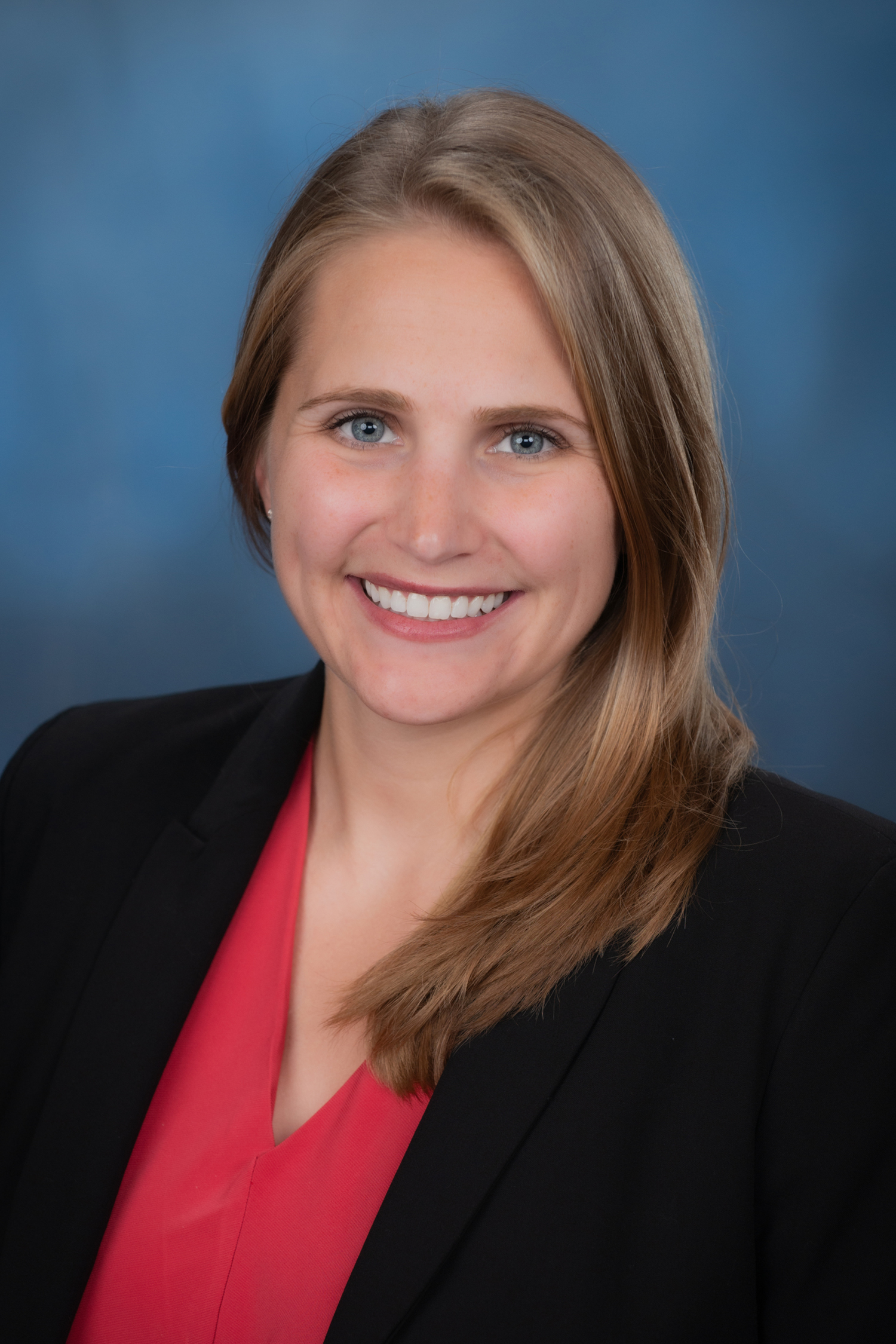
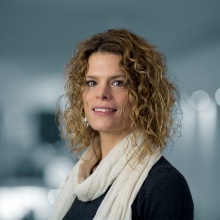
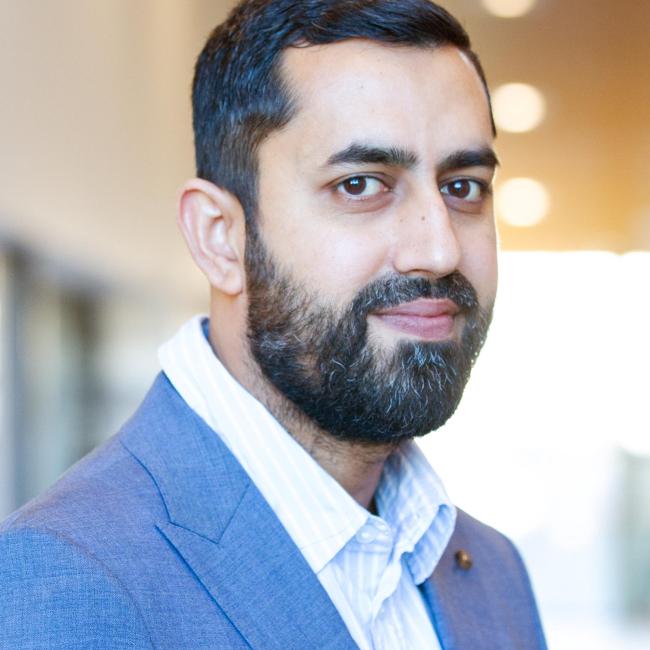
Dr. Shalece Kohnke is an Assistant Professor in the Department of Special Education, Rehabilitation, and Counseling at Auburn University's College of Education. She specializes in improving outcomes for students with disabilities in inclusive secondary and post-secondary STEM settings through evidence-based practices and learning sciences frameworks. B.S. in Interdisciplinary Studies with emphasis on Special Education, Texas A&M-Corpus Christi M.Ed. in Special Education with concentration in Learning Behavior Disorders, University of Louisville Ph.D. in Education with specialization in Exceptional Education, University of Central Florida Her research focuses on technology integration in education, particularly through concrete-representational-abstract sequences , virtual reality , and artificial intelligence to bridge achievement gaps. Recent publications highlight immersive learning environments and universal design for learning in science education. Scientific Awards: 2022 DRK-12 CADRE Fellow Dr. Kohnke supports educators in implementing inclusive pedagogies and has contributed to understanding technology's role in managing complex educational landscapes. Her work addresses STEM accessibility challenges and promotes equitable learning opportunities.
Prof. Dr. Maarten Delbeke serves as Full Professor at ETH Zurich's Department of Architecture and Deputy Head of the Institute for the History and Theory of Architecture. His academic career spans Ghent University, where he was appointed Full Professor in 2014, and University of Leiden, before joining ETH Zurich in 2017. At ETH, he leads the Chair for History and Theory of Architecture with a focus on examining architectural history c.1400-1900 and its relevance to contemporary architectural practice. Delbeke received his PhD from Ghent University in 2001 after studying Architecture at the Faculty of Architecture and Engineering. His academic development included fellowships at the Belgian Historical Institute in Rome, Worcester College in Oxford (2001-2003), and the Canadian Centre for Architecture. His career progressed from Assistant Professor positions at Ghent University (2005) and University of Leiden (2006), where he secured a Vidi-grant from NWO for 'The Quest for the Legitimacy of Architecture in Europe, 1750-1850' (2010-2015). His research centers on early modern art and architecture across Europe, particularly examining the interface between religion and aesthetics, architectural representation in literature and print media, and origin myths. Delbeke has made significant contributions to Baroque studies through publications on Bernini, Algardi, and Sforza Pallavicino, and has investigated architectural theory from the 17th-19th centuries through works on the Perrault brothers, Fischer von Erlach, Piranesi, and Victor Hugo. His current work increasingly focuses on Swiss and German Rococo architecture and identity formation in architectural discourse. Delbeke's extensive publication record shows a clear trajectory from focused Baroque studies toward broader investigations of architectural identity, legitimacy, and character across European contexts. His recent works demonstrate growing integration of digital humanities approaches, while maintaining his core interest in how architecture constructs meaning through historical narratives and aesthetic concepts. He has secured significant research funding including current Swiss National Science Foundation projects 'Building Identity: Character in Architectural Debate and Design, 1750-1850' and 'Swiss Rococo Cultures: Idioms of ornament and the architecture of East Switzerland.' As founding Editor-in-Chief of 'Architectural Histories' (EAHN), he has shaped scholarly discourse in architectural history. Delbeke actively contributes to research infrastructure as board member of SARI (Swiss Art Research Infrastructure) and international core member of Copenhagen's Centre for Privacy Studies. His 'Graph' project with Benoît Seguin and ETH Library exemplifies his commitment to methodological innovation in architectural history, while his upcoming Herbstsemester 2025 courses demonstrate his active engagement in architectural education.
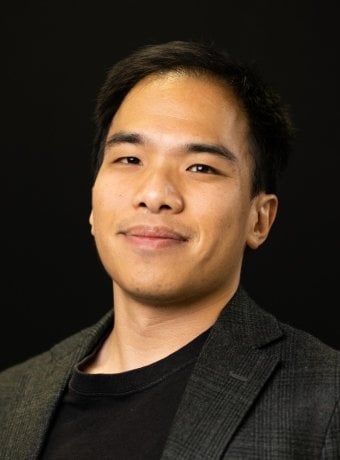
Vinh Nguyen is an Assistant Professor in the Department of Mechanical and Aerospace Engineering at Michigan Technological University, where he directs the Michigan Tech Center for AI and coordinates the NIST-PREP program. His research focuses on advanced manufacturing through Industry 4.0, human-robot-machine interaction, and physics-based/data-driven modeling. He has developed solutions for machining, additive manufacturing, metal forming, and robotic assembly to promote smart and sustainable manufacturing. Prior to joining Michigan Tech in 2022, he was a National Research Council Postdoctoral Fellow at NIST (2020–2022). Dr. Nguyen earned his PhD (2020), MS in Mechanical Engineering (2017), and MS in Electrical & Computer Engineering (2017) from Georgia Institute of Technology. He received dual bachelor’s degrees in Electrical and Mechanical Engineering from Rensselaer Polytechnic Institute (2014). His research portfolio spans Advanced Manufacturing Industry 4.0 and 5.0 Human-Robot Interaction Physics-Based/Data-Driven Modeling Industrial Automation based on his lab’s interdisciplinary focus on human-centric, resilient solutions. His recent publications address trends in Machine Learning for Manufacturing Autonomous Vehicle Sensors Hybrid Additive/Subtractive Manufacturing Augmented/Mixed Reality Interfaces Industrial Robot Diagnostics Material-Specific Machining with keywords spanning Robotics, Data Science, and Industrial Engineering.
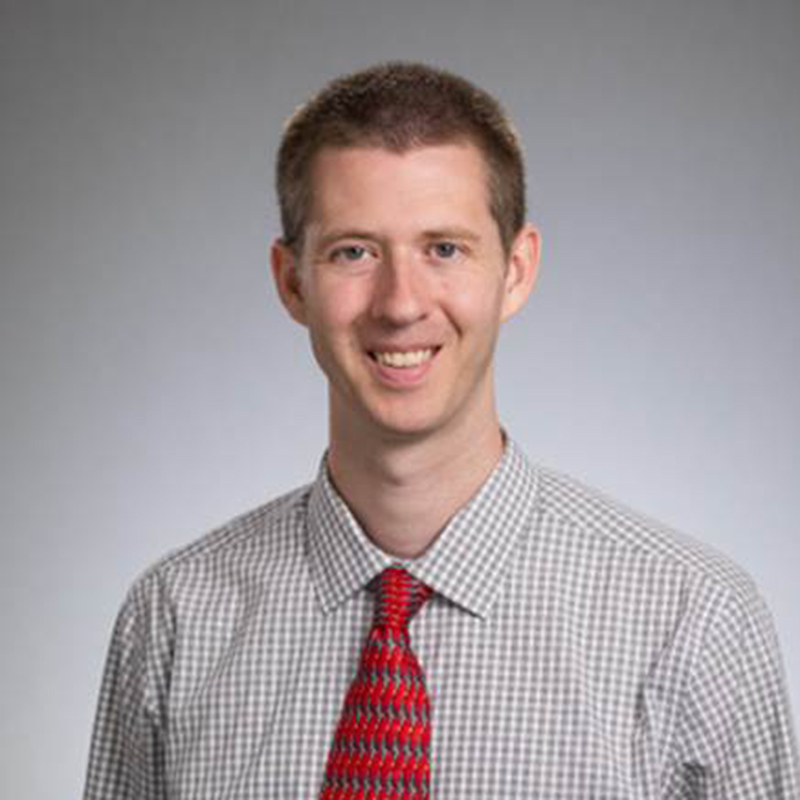
Dan Cox serves as Dean of Natural Sciences in The College of Liberal Arts and Sciences and Professor in the School of Life Sciences at Arizona State University. He holds a B.S. in Biology from Wake Forest University and a Ph.D. in Cell Biology from Duke University, where he was an NIH pre-doctoral fellow. His postdoctoral training included a Jane Coffin Childs Fellowship and HHMI Research Associate position at UCSF. His educational trajectory includes: B.S. magna cum laude with honors in Biology, Wake Forest University (1992) Ph.D. in Cell Biology, Duke University Medical Center (1999) Postdoctoral training: Jane Coffin Childs Fellow & HHMI Research Associate, UCSF (2000-2004) Cox leads an internationally recognized neuroscience research program focused on neuronal diversity, circuit construction, and neural mechanisms of behavior—particularly pain perception and sensory neuropathies. His expertise spans neurobiology, cell biology, genetics, and computational modeling, with emphasis on multimodal sensory processing and brain plasticity. His lab has maintained continuous NIH funding for 20 years. His recent publications reveal dual research thrusts: fluid dynamics studies on drag reduction in pipe flows (examining vortex dynamics, Reynolds number effects, and wall oscillation techniques) and genetic engineering work including CRISPR-Cas9 delivery systems for immune system gene screening. This combination reflects interdisciplinary collaboration across engineering and biological domains. Key recognitions include: NIH pre-doctoral fellowship Jane Coffin Childs Fellowship for Medical Research HHMI Research Associate appointment Cox demonstrates exceptional commitment to mentoring across career stages and advancing student success through innovative pedagogies. His leadership extends to directing research centers, imaging facilities, and graduate programs—including roles as Director of the Center for Neuromics and Neuroscience Institute at Georgia State University. His NIH-funded research supports extensive interdisciplinary collaboration and training initiatives. Throughout his career, Cox has cultivated collaborative research environments through leadership in core facilities and interdisciplinary clusters, notably directing the 2CI Neurogenomics Fellowship and Brains & Behavior initiatives. His current deanship emphasizes cross-college research integration within ASU's liberal arts framework.
Clément Pit-Claudel is an Assistant Professor at École Polytechnique Fédérale de Lausanne (EPFL), leading the SYSTEMF lab focused on programming languages, formal methods, and systems engineering. His work bridges mathematical formalisms with practical system development to achieve full assurance in critical software and hardware. PhD in Computer Science from MIT (2016) William A. Martin Memorial Thesis Award recipient Former Senior Applied Scientist at Amazon AWS Teaching accolades including the Frederick C. Hennie III Teaching Award Research spans three axes: extensible proof-producing compilers for performance-critical systems, verified hardware compilation with cycle-accurate semantics, and interactive theorem prover tooling for democratizing verification technology. Key projects include Kôika for hardware verification, Alectryon for Coq proof visualization, and Fiat for correct-by-construction program synthesis. Recent publications address JavaScript regex verification (ICFP 2024), cryptographic server integration (PLDI 2024), and hardware simulation optimization (ASPLOS 2021). Articles demonstrate expertise in functional-to-imperative translation, domain-specific compiler extensions, and hardware-software co-verification. Scientific contributions recognized through: Distinguished artifact award (SLE 2020) MIT William A. Martin Thesis Award Frederick C. Hennie III Teaching Award Teaching philosophy emphasizes hands-on lab instruction , oral assessment , and automated tooling . Courses taught include Software Construction (undergraduate) and Interactive Theorem Proving (graduate) at EPFL. Research service includes program committee roles at Dafny, POPL, and SPLASH conferences.
Andrey Vladimirovich Savchenko is a prominent researcher and educator in computer vision and artificial intelligence at the National Research University Higher School of Economics (HSE) in Nizhny Novgorod. He holds multiple positions including Professor at the Faculty of Informatics, Mathematics, and Computer Science, Leading Researcher at the Faculty of Computer Science and Institute of Artificial Intelligence and Digital Sciences, and Academic Director of the "Artificial Intelligence and Computer Vision" educational program. His educational background includes: 2016: Doctor of Technical Sciences from Nizhny Novgorod State Technical University 2015: Academic title of Associate Professor 2011: Candidate of Technical Sciences 2008: Specialist degree in Applied Mathematics and Computer Science Savchenko's research focuses on computer vision, pattern recognition, and artificial intelligence, with particular emphasis on facial recognition, emotion analysis, and efficient deep learning algorithms. His work bridges theoretical foundations with practical applications, especially in mobile computing environments where computational resources are limited. He has developed innovative methods for making AI systems more efficient without significant loss in accuracy. His recent publications demonstrate a strong trend toward multimodal analysis, combining visual, audio, and textual data for more robust recognition systems. There's a clear emphasis on making AI systems more efficient, especially for mobile devices, and on developing methods that can work with limited computational resources while maintaining high accuracy. His work spans fundamental research on neural network architectures and practical applications in education, healthcare, and human-computer interaction. Among his notable scientific achievements: Gratitude from the Governor of Nizhny Novgorod region (2022) Multiple gratitude awards from HSE (2021-2022) Best Teacher Award (2018-2019) Leaders of IT Industry Award from NEYMARK IT Campus (2023) Academic Success Bonus at HSE (2011-2013) Savchenko has successfully supervised numerous master's students and currently mentors PhD candidates working on cutting-edge topics like large language models for recommendation systems and document analysis. He has secured significant research funding, including projects with Huawei, Sberbank, and the Russian Science Foundation, totaling millions of rubles. His laboratory focuses on developing efficient algorithms for computer vision and multimodal data analysis. He leads the Laboratory of Theoretical Foundations of Artificial Intelligence Models and has established strong industry partnerships that ensure his research has practical impact. His NVIDIA Deep Learning Institute certification demonstrates his commitment to staying current with the latest AI technologies.
Will Townes is an Assistant Professor in the Department of Statistics and Data Science at Carnegie Mellon University's Dietrich College of Humanities and Social Sciences. He joined CMU in 2022 after completing a postdoctoral fellowship in computer science at Princeton University with Barbara Engelhardt. His academic journey includes a Ph.D. in biostatistics from Harvard University under Rafael Irizarry's supervision, an M.S. in math and statistics from Georgetown, and earlier work in tropical ecology fieldwork in the Philippines. Dr. Townes specializes in applied statistics with primary focus areas in biomedical and public health domains. His research centers on wastewater-based epidemiology, wearable devices, and auxiliary signals for infectious disease tracking and forecasting as part of the Delphi research group. He has developed normalization, feature selection, and dimension reduction methods for single cell RNA-Seq and spatial transcriptomics data analysis. His broader research interests span biostatistics, epidemiology, genomics, time series forecasting, and theoretical aspects of Tweedie distributions. His recent publications reveal a strong emphasis on wastewater surveillance methodologies, single-cell data analysis techniques, and infectious disease forecasting models. The research demonstrates a consistent focus on computational scalability and efficiency through approximate inference techniques. Dr. Townes approaches statistical problems with a pragmatic perspective, comfortable with probabilistic (Bayesian) models while drawing inspiration from diverse statistical perspectives. Member of DELPHI Lab Group at CMU Active contributor to genomics and biostatistics research Focus on computational efficiency in statistical methods Dr. Townes mentors several students including Gabrielle Thivierge (PhD candidate working on infectious disease forecasting methods), Julia Elrod, and Anna Rosengart. He teaches data science courses at CMU, including a field course in Costa Rica where students work with community partners on real-world data projects involving water quality indicators, spring flow rates, and ecological monitoring.
Patrick Lam is an Associate Professor in the Department of Electrical and Computer Engineering at the University of Waterloo, with a cross-appointment to the Cheriton School of Computer Science. His research focuses on applications of programming languages and static analysis to software engineering challenges, emphasizing verifiable software specifications and program understanding. Dr. Lam has held significant grants from NSERC and is recognized for his impactful work, including the First Decade High Impact Paper award for his Soot framework. Education: Doctorate in Computer Science, Massachusetts Institute of Technology, 2007 Master's in Computer Science, McGill University, 2000 Bachelor's in Joint Honours Mathematics and Computer Science, McGill University, 1999 Research Interests: His primary areas include static program analysis, verifiable software specifications, and compiler design, with a focus on linking high-level software designs to low-level implementations. He explores techniques like lightweight specifications and domain-specific languages to enhance software reliability and efficiency. Recent work also addresses empirical studies of programming practices and security through modularization. Publications: Dr. Lam's recent publications span advancements in static analysis tools (e.g., WasmWalker for WebAssembly), formal verification of code generated by AI tools like GitHub Copilot, and empirical studies on C++ immutability usage. His work bridges theoretical programming language research with practical software engineering applications, emphasizing tools for developer productivity and code reliability. Awards and Recognition: First Decade High Impact Paper recognition for "Soot – A Java Optimization Framework" (2010) Teaching and Grants: He has taught courses such as CS 447, ECE 453, and ECE 459 on software testing and performance programming. Active in grant-funded research, he secured NSERC Engage Grant (2013) and an ongoing NSERC Discovery Grant (2013–2018). Lam has also advised graduate students and contributed to the Software Engineering Program at Waterloo as its Director (2016–2019). Labs and Teams: His research group explores topics in program analysis and software engineering, with collaborations on projects like abstract debugging tools (GobPie) and static analysis frameworks (Soot). He maintains an open-source repository on GitHub, contributing to educational materials and research tools.
Yannis Konstas is an Associate Professor (Reader in the UK system) at Heriot-Watt University’s School of Mathematical & Computer Sciences, Department of Computer Science. He co-leads the Safe and Secure AI for Robotics (SAIR) theme at the National Robotarium. His research focuses on Responsible, Safe, and Explainable AI applications using NLP, including Gender-Based Violence (GBV) detection via LLMs, Social Behavior Modeling, and Vision-Language-Action (VLA) models for robotics. He holds a PhD from the University of Edinburgh (2013), supervised by Mirella Lapata, and has held postdoctoral roles at the University of Washington and the University of Edinburgh. Research interests include Natural Language Generation (NLG), representations, modeling, and evaluation across domains like math problems and dialogue systems. His work spans Psycholinguistics, semantics, and Information Retrieval. He actively explores new fields, such as LLM interpretability and instruction-driven robotic manipulation. He accepts PhD students and collaborates on interdisciplinary projects, including regulatory compliance digitalization and embodied AI for egocentric video understanding. Education: PhD in Computer Science (2013), University of Edinburgh; Postdoctoral Researcher at University of Washington (2015–2017) and University of Edinburgh.
Andrea Barth is a W3-Professor of Computational Methods for Uncertainty Quantification at the University of Stuttgart, leading the Research Group for Computational Methods for Uncertainty Quantification within the Excellence Cluster for Simulation Technology. She holds a Ph.D. from the University of Oslo (2009) and has held positions at ETH Zürich and the University of Stuttgart. Her work focuses on stochastic partial differential equations, numerical methods for uncertainty quantification, and applications in engineering and natural sciences. Education: Ph.D. in Mathematics, University of Oslo (2006–2009) Lecturer/Postdoc at ETH Zürich (2010–2013) Junior Professor at University of Stuttgart (2013–2017) Research Interests: Stochastic PDEs, uncertainty quantification, Monte Carlo methods, Bayesian inverse problems, and numerical analysis of random fields. Her work bridges stochastic analysis and numerical simulations, addressing challenges in modeling and simulating complex systems with uncertainties. Grants & Funding: Principal Investigator in projects like 'Data-Integrated Simulation Science' (ExC 2075) and 'Quantitative Methods for Visual Computing' (SFB/TRR 161). Her research also explores applications in porous media, carbon dioxide storage, and optical flow analysis. Supervision: Advised PhD students including Oliver König, Fabio Musco, and Robin Merkle. Current students focus on topics like deep learning for stochastic PDEs and continuous level Monte Carlo methods.
Luke Olson is a Professor in the Department of Computer Science at the University of Illinois at Urbana-Champaign (UIUC), part of the College of Engineering. He holds an affiliate appointment in the Department of Mechanical Science and Engineering. His research focuses on numerical methods, high-performance computing, and parallel algorithms, particularly algebraic multigrid (AMG) solvers and sparse matrix computations. He leads the development of open-source libraries like PyAMG and RAPtor, advancing computational tools for scientific and engineering applications. Education: Ph.D. in Applied Mathematics from the University of Colorado Boulder (2003), M.S. in Mathematics from the University of Iowa (1999), and B.A. in Mathematics and Physics from Luther College (1997). Research Interests: Algebraic multigrid methods and preconditioners High-performance computing and parallel algorithms Numerical solutions to partial differential equations Scientific computing and software development Machine learning integration in numerical simulations Recent Articles Trends: Recent work merges machine learning with traditional numerical methods, such as neural network closures for turbulent combustion and reduced basis approximations using neural networks. Ongoing contributions include optimizing multigrid methods for exascale architectures and enhancing communication efficiency in distributed systems. Awards: Recognized with the NSF CAREER Award (2007), UIUC Campus Award for Excellence in Teaching (2024), and the Donald Biggar Willett Faculty Scholar distinction (2016). Active in conference organization, including the Copper Mountain Conference on Multigrid Methods. Teaching & Grants: Teaches courses like Numerical Methods for PDEs and Scientific Machine Learning. Leads projects funded by NSF and industry collaborations, emphasizing education innovation through the AE3 fellowship (2014–2016). Labs/Teams: Directs the Scientific Computing Group at UIUC and contributes to interdisciplinary initiatives like the Center for Exascale-enabled Scramjet Design (CEESD).
David Albertson is an Associate Professor of Religion at the University of Southern California , specializing in medieval and early modern Christianity, Christian mysticism, and the interplay between religion and visual culture. He serves as a faculty member in the Department of Religion and is affiliated with the Nova Forum for Catholic Thought. Albertson holds a B.A. in Religion from Stanford University, an M.Div. in Theology from the University of Chicago, and a Ph.D. in Religion from the University of Chicago. Research Interests : Albertson’s work bridges medieval and early modern philosophy with theological inquiry, focusing on figures like Nicholas of Cusa and Thierry of Chartres. He explores mystical contemplation, the mathematical dimensions of theology, and the visual representation of sacred concepts. His research also intersects with continental philosophy, particularly in analyzing modern thinkers like Emmanuel Falque and Gilles Deleuze alongside medieval traditions. Publications : Albertson’s recent work (2024–2025) examines Cusanus’s relevance today, Deleuze’s engagement with Christian Neoplatonism, and the mystical philosophies of Hadewijch and Falque. His scholarship often integrates interdisciplinary approaches, merging theology with mathematics, aesthetics, and existential thought. Scientific Awards : Alexander von Humboldt Fellowship (2021–2022) NEH Scholarly Editions and Translations Grant (2016–2021) Charles A. Ryskamp Fellowship (2015–2016) NEH Enduring Questions Grant (2010–2011) Grants & Teaching : Albertson has secured multiple USC research grants and was honored with the USC General Education Teaching Award in 2009. He has also held visiting professorships, including the J. E. & Lillian Byrne Tipton Distinguished Visiting Professorship at UC Santa Barbara in 2025.
Dr. Muhammad Usman is a Senior Lecturer at the Department of Mathematics and Computer Science, Karlstad University, Sweden. His research focuses on cloud and edge computing, distributed systems, performance observability, DevOps automation, and networked systems. He holds a B.S. from NUST (Pakistan), and integrated M.S./Ph.D. from GIST (South Korea). He teaches master's-level courses in Distributed Systems and Cloud Computing. His research interests include optimizing container orchestration for edge-IoT workloads, developing AI-driven frameworks for industrial IoT (e.g., AIDA), and enhancing observability of distributed systems through frameworks like DESK and SmartX. His work often addresses challenges in resource efficiency, scalability, and fault detection in edge and cloud environments. Notable contributions include benchmarking lightweight container orchestration platforms, designing cost-effective testbeds for DevSecOps, and creating visualization frameworks for SDN-enabled clouds. His publications span topics from IIoT lifecycle management to intent-based network control. Usman actively collaborates internationally, with projects involving institutions like GIST, Aalto University, and the IEEE community. His work bridges theoretical research and practical applications in edge computing and cloud-native systems.
Prof. Dr. Philipp Baumann is a Professor at the University of Bern, affiliated with the Group for Business Analytics, Operations Research and Quantitative Methods. His research focuses on optimization algorithms, clustering techniques, and operations research applications. He has contributed to advancements in constraint-based clustering, fault-tolerant facility location, and fair-capacitated clustering, leveraging mathematical programming and heuristic methods. His work bridges theoretical optimization and practical applications in industries like printing and healthcare. Research interests include combinatorial optimization, algorithm design for machine learning, and large-scale data mining. Notable contributions include the MPFCC algorithm for fair clustering and FT-KMEANS for fault-tolerant systems. His recent publications emphasize scalable solutions for real-world scheduling and resource allocation challenges. No scientific awards are explicitly mentioned. He advises students on thesis guidelines (Bachelor and Master levels) but no specific advisees are listed. His research group collaborates on projects involving mathematical programming in operations and finance, with applications to production scheduling and portfolio optimization.
Dr. Mercedes Sheen is an Associate Professor at the Department of Psychology within the School of Social Sciences at Heriot-Watt University. Since joining in 2019, she has served as Academic Head of Psychology in Dubai. She holds a PhD from the University of Canterbury, New Zealand, where her research on false memories led to the coining of 'disputed memories' arising from twin memory conflicts. Her current research focuses on social cognition, particularly facial attractiveness perception influenced by cultural and religious factors like the hijab. Her academic contributions span cognitive psychology, social perception, and educational technology. Notable studies include exploring mental health stigma among Arab and South Asian communities, implicit associations in Arabic numerals, and the effectiveness of online discussion boards in health psychology education. She has been recognized with the 2023 Academic Community Award and Student Voice Award for her impactful teaching and community engagement. Research collaborations include multi-cultural studies on gendered perceptions and typographic influences. Her work intersects with UN Sustainable Development Goals related to quality education and reduced inequalities through culturally responsive mental health and education practices.