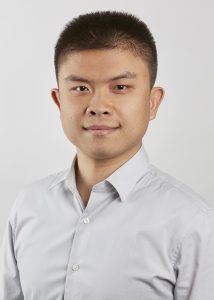
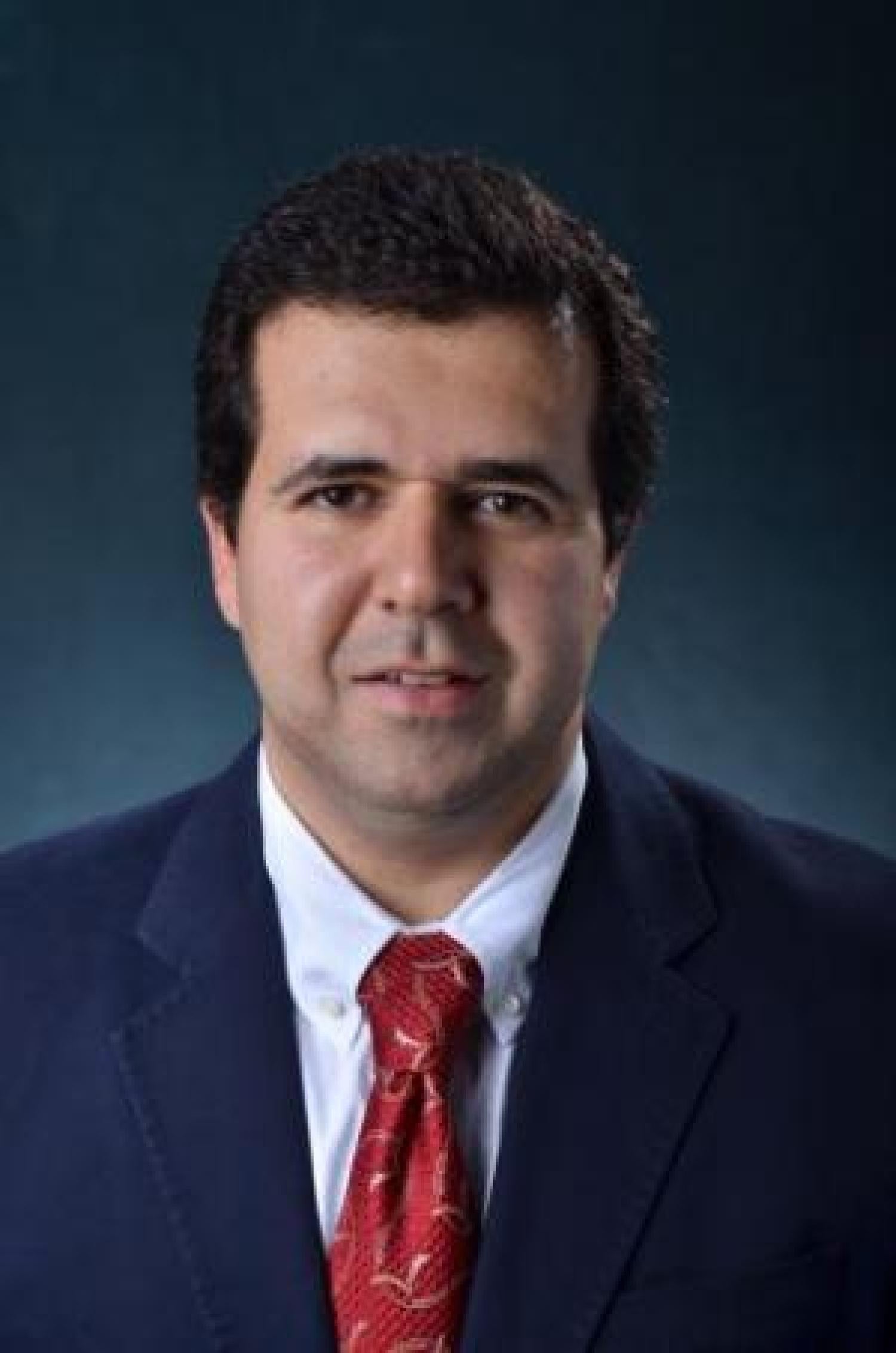
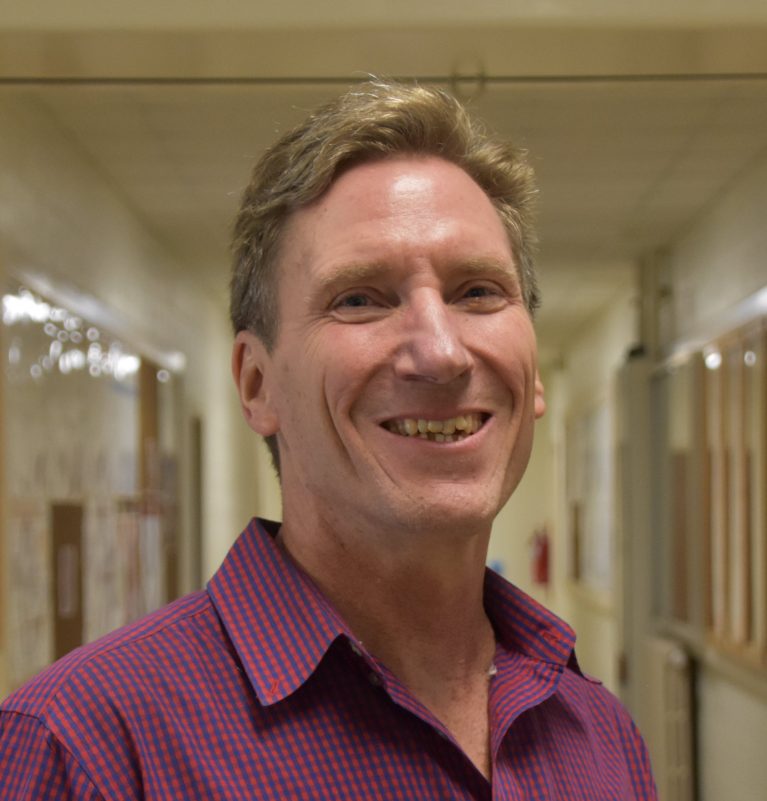
Thomas Berger is a Professor at the University of Hohenheim , affiliated with the Faculty of Agricultural Sciences and leading the Department of Economics of Land Use . He also contributes to the Computational Science Hub and Hohenheim Tropics initiatives. Focus Areas: Climate change adaptation, land-use modeling, biodiversity-productivity trade-offs, agent-based simulation, and machine learning in agricultural systems. Key Projects: Simulation frameworks for smallholder resilience in Ethiopia, bioeconomic modeling in the Amazon, and hybrid intelligence applications in European agricultural policy. Recent Publications: 2025 study on climate change effects on insecticide reduction in Germany, 2024 work on reconciling biodiversity with productivity via hybrid models, and 2023 methodological contributions to surrogate modeling and seasonal forecast integration. Research Trends: Interdisciplinary integration of climate science, agricultural economics, and computational modeling, with increasing emphasis on AI-assisted decision support systems and sustainability policy validation. Teaching & Outreach: Offers Agricultural Economics seminars and Hohenheim Tropics discussions, requiring advance email registration for office hours.
Rafał Latała is a distinguished Professor at the Institute of Mathematics, Faculty of Mathematics, Informatics and Mechanics, University of Warsaw, where he has held a full professorship since 2013. He is also a Corresponding Member of the Polish Academy of Sciences since 2016 and an AMS Fellow since 2013. His academic career spans over 25 years at the University of Warsaw, progressing from Instructor (1994-1997) to Assistant Professor (1997-2003), Associate Professor (2003-2012), and finally to his current position as Professor. Additionally, he held a part-time professorship at the Institute of Mathematics of the Polish Academy of Sciences from 2009-2012. His educational background includes a PhD in Mathematics from the University of Warsaw (1997) with a dissertation on estimation of moments of sums of independent random variables under the supervision of Professor Stanisław Kwapien, a Habilitation degree in Mathematics (2002), and the title of Professor awarded by the President of Poland (2009). He completed his MSc in Mathematics at the University of Warsaw in 1994. Latała's research focuses on the intersection of probability theory and geometric analysis, with particular expertise in convex geometry, functional analysis, asymptotic geometric analysis, and the theory of log-concave measures. His work bridges theoretical mathematics with applications in high-dimensional statistics and random matrix theory. He has made significant contributions to understanding moment inequalities, concentration phenomena, and the geometric structure of high-dimensional random objects. His recent work demonstrates increasing sophistication in handling complex relationships between different norms of random vectors and matrices. His publication record shows a consistent focus on probabilistic methods in geometric settings, with recent articles demonstrating advanced techniques for analyzing random matrices, log-concave measures, and canonical processes. The research trajectory reveals increasingly sophisticated methods for bounding norms and moments in high-dimensional spaces, with applications spanning theoretical mathematics to statistical learning theory. Kolmogorov Lecture 2024 Prize of the Foundation for Polish Science in mathematics, physics, and engineering sciences 2023 Orlicz Lecture 2023 Institute of Mathematics of the Polish Academy of Sciences Prize 2014 AMS Fellow since 2013 Foundation for Polish Science Grant Mistrz 2007-2011 Prime Minister Award for Habilitation Thesis 2003 Invited Speaker at International Congress of Mathematicians 2002 Latała has supervised five PhD students to completion (Rafal Meller, Marta Strzelecka, Jakub Wojtaszczyk, Radoslaw Adamczak, and Rafal Lochowski) and four MSc students (Maciej Bartczak, Dariusz Matlak, Tomasz Tkocz, and Marcin Lis). His editorial service includes positions at Probability Surveys (2024-26), The Annals of Probability (2015-20), and Studia Mathematica (2006-present). He has organized numerous international conferences including the High Dimensional Probability X conference in 2023 and served on various professional committees including the Central Commission for Academic Degrees and Titles.
Dr. Eleonora Di Valentino is a Senior Research Fellow at the University of Sheffield's School of Mathematical and Physical Sciences, specializing in cosmology and fundamental physics. Her research focuses on resolving cosmological tensions, particularly the Hubble constant discrepancy, by exploring dynamical dark energy models, dark matter interactions, and cosmic microwave background (CMB) anomalies. She leads analyses combining cutting-edge datasets like DESI BAO and gravitational wave observations to probe the universe's evolution. Key research interests include: Interacting dark energy models and their observational signatures CMB anisotropies and their implications for early universe physics Neutrino mass constraints and dark matter thermodynamics Modified gravity approaches to cosmological tensions Multimessenger cosmology using BAO and gravitational wave data Her work highlights trends in addressing the Hubble tension via late-time dark sector interactions and non-standard dark matter behavior. She actively contributes to collaborative projects like the CosmoVerse initiative and the Dark Energy Survey (DES). Dr. Di Valentino's research group affiliation is the Cosmology, Relativity, and Gravitation (CRAG) group, where she develops novel methodologies for cosmological parameter estimation and model testing.
Prof. Douglas Sheil is a Chairholder in Forest Ecology and Forest Management at Wageningen University & Research. He holds a MA in Natural Sciences from Cambridge and an MSc in Forestry from Oxford. His career includes roles at the University of Oxford, CIFOR (Indonesia), the Institute for Tropical Forest Conservation in Uganda, and the Norwegian University of Life Sciences (NMBU). His research focuses on tropical forest ecology, biodiversity conservation, and human-forest interactions, with over 200 publications. He co-authored the influential textbook Tropical Rain Forests: Ecology, Diversity, and Conservation (2010). Awards include the Biotropica Prize (2004) and the Queen’s Award for Forestry (2015). Education: MA (Natural Sciences, Cambridge), MSc (Forestry, Oxford) Key Roles: Director of Institute for Tropical Forest Conservation (2008–2012), Professor at NMBU (2013–2020) Research Interests: Tropical forest dynamics, climate change impacts, conservation strategies, and the socio-ecological dimensions of forest management. His work spans field studies in Africa, Southeast Asia, and Oceania, emphasizing interdisciplinary approaches to address deforestation, biodiversity loss, and sustainable land use. Recent Trends in Articles: Focus on mycorrhizal networks, oil palm impacts, lightning disturbance, and mammal population responses to human activity. He explores mechanisms linking forest structure to ecosystem services, such as carbon sequestration and water regulation, often integrating remote sensing and global datasets. Awards: Biotropica Prize, Queen’s Award for Forestry Grants/Projects: Studies on lightning effects in African forests, camera trap mammal surveys, and policy analyses for vegetable oil sustainability. Labs/Teams: Leads interdisciplinary groups at Wageningen, collaborating with CIFOR and international networks. Active in IUCN committees to translate science into conservation policy.
Neil Lambert is a Professor of Theoretical Physics at King's College London's Department of Mathematics within the Faculty of Natural, Mathematical & Engineering Sciences. He previously held a PPARC Advanced Fellowship at King's and worked at CERN from 2010-2013. His research focuses on supersymmetry, string theory, and M-theory, particularly studying M2 and M5 branes, non-relativistic field theories, and non-Lorentzian spacetime symmetries. Education: BSc in Mathematics and Physics from the University of Toronto (1992), PhD in String Theory and Branes from the University of Cambridge (1996). Postdoctoral roles included positions at King's, ENS Paris, and Rutgers University. Recent work explores non-relativistic brane dynamics, AdS/CFT correspondence, and M-theory's microscopic degrees of freedom. He chairs the STFC-funded Fundamental Physics UK virtual centre and edits Physics Letters B . Key contributions include the BLG model for M2-branes and advances in understanding non-supersymmetric branes. Publications emphasize topics like null reductions of M5-branes, conformal field theories in 5D/6D, and non-Lorentzian symmetries. His research bridges string theory, quantum field theory, and geometry, with applications in holography and gauge-gravity duality.
Chee-Ming Ting is an Associate Professor in the School of Information Technology at Monash University Malaysia. His expertise lies in machine learning, data science, and biomedical engineering, with a focus on signal processing, computational neuroimaging, and computer-aided detection. Previously, he held positions at King Abdullah University of Science and Technology (Research Scientist) and Universiti Teknologi Malaysia (Senior Lecturer). He has authored over 26 journal papers and 43 conference papers, and has secured research grants totaling RM2.5 million as PI/Co-PI. Education: PhD in Mathematics - Statistics, Master of Engineering in Electrical Engineering, and Bachelor of Engineering (Hons.) in Electrical & Electronics Engineering. Research interests include biomedical signal/image analysis, deep learning, spatio-temporal modeling, and neuroimaging applications for disease prediction and patient monitoring. He has supervised 9 graduate students (4 PhD, 5 Masters) and currently oversees 10 PhD candidates. Awards include the IEEE Signal Processing Society Malaysia's Research Excellence Award (2019, 2022) and several national/international innovation awards. His work contributes to UN Sustainable Development Goals related to health and technological advancement. Key projects include frameworks for neurological disease prediction using brain networks and generative adversarial networks for medical imaging enhancement.
Professor Steffen Dereich is a leading researcher in mathematical stochastics at the University of Münster's Faculty of Mathematics and Computer Science, where he serves as Professor at the Institute of Mathematical Stochastics. He is an active investigator in the Mathematics Münster cluster of excellence, contributing significantly to the fields of stochastic processes and machine learning theory. His primary research interests span Stochastic Processes , Machine Learning , Deep Learning , Complex Networks , and Stochastic Analysis . Dereich has developed a unique research program that bridges classical probability theory with modern machine learning challenges, particularly focusing on the mathematical foundations of optimization algorithms used in deep learning. His work on stochastic gradient descent methods, especially the Adam optimizer, has provided crucial theoretical insights into convergence properties and optimization landscapes. The 15 most recent publications reveal a strong trend toward mathematical analysis of deep learning, with approximately 70% of his work focusing on neural network optimization, convergence analysis, and theoretical foundations of machine learning algorithms. The remaining publications continue his earlier work on complex networks, stochastic processes, and branching structures, demonstrating how he has successfully connected his foundational work in probability with cutting-edge machine learning research. Professor Dereich actively supervises PhD students and maintains productive collaborations, particularly with Arnulf Jentzen and Sebastian Kassing. His research group at Münster has secured significant funding through the Mathematics Münster cluster, supporting multiple projects including T8: Random discrete structures and their limits, and T10: Deep learning and surrogate methods. His teaching portfolio includes advanced courses on Probability Theory, Stochastic Analysis, Markov Chains, and specialized seminars on Machine Learning and Financial Mathematics, reflecting his dual expertise in theoretical mathematics and applied data science.
Rune Haugseng is a Professor in the Department of Mathematical Sciences at NTNU in Trondheim, Norway, and a member of the Geometry and Topology research group. His work focuses on higher category theory, homotopy theory, and their applications to derived algebraic geometry and topological quantum field theories. He teaches courses such as a 2025 PhD course on higher categories and has supervised multiple PhD and Master’s students, including Louis Martini, Fredrik Bakke, and Tallak Manum. His research explores foundational aspects of ∞-categories and ∞-operads, with contributions to topics like symmetric monoidal structures, Segal spaces, and bispans. His articles often bridge abstract categorical frameworks with concrete applications in algebraic topology and mathematical physics. Haugseng has authored over 20 academic articles in journals such as Advances in Mathematics , Journal of Topology , and Publicacions Matemàtiques . He has also developed lecture notes on ∞-categories and operads, emphasizing pedagogical approaches to advanced topics. He is actively involved in academic collaborations, including with David Gepner, Joachim Kock, and Claudia Scheimbauer. His current teaching and supervision reflect a commitment to advancing research in higher categorical structures and their interdisciplinary applications.
Kurt Maute is a Professor and Palmer Engineering Chair at the University of Colorado Boulder’s College of Engineering and Applied Science (CEAS). He currently serves as Associate Dean for Undergraduate Education. His academic journey includes a PhD in Civil Engineering (University of Stuttgart, 1998) and a Dipl.-Ing. in Aerospace Engineering (University of Stuttgart, 1992). He has held progressively senior roles at CU Boulder, including Associate Dean for Research (2012–2014), Associate Professor (2006–2012), and Assistant Professor (2000–2006). Maute’s research focuses on structural topology optimization, multi-disciplinary optimization, and aeroelastic systems. He has pioneered methods integrating XFEM, level-set techniques, and isogeometric analysis for complex engineering problems. His work spans fluid-structure interaction, hypersonic vehicle design, and additive manufacturing. His notable contributions include advancements in immersed boundary methods, multi-material optimization, and uncertainty quantification. Awards include the NSF Career Award (2004) and Palmer Endowed Chair (2016–present). Maute’s lab (Aerospace Mechanics Research Center, AMREC) addresses challenges in computational mechanics and multi-physics systems. He has advised numerous students and led grants in battery modeling, topology optimization, and aerospace systems. His research bridges theory and application, emphasizing industrial relevance and computational innovation.
Stefan Vandewalle is a full professor at the Department of Computer Science, Faculty of Engineering Sciences, KU Leuven. His research focuses on numerical analysis, applied mathematics, and computational methods for stochastic differential equations, wind energy modeling, and uncertainty quantification. Department Chair, KU Leuven Member, Subdivision Numerical Analysis and Applied Mathematics Member, iSi Health Institute Observer, Faculty Council of Sciences Chair, Department Council for Computer Science His recent work explores multiscale modeling, Monte Carlo methods, and data assimilation techniques. Projects include micro-macro Parareal algorithms, wind turbine aeroelasticity, and turbulent flow reconstruction for wind farms. He supervises PhD candidates and collaborates on interdisciplinary studies involving structural mechanics and renewable energy systems. Publications highlight advancements in parallel-in-time methods, stochastic optimization for tokamak reactors, and DNS-based control of turbulent flows. Key keywords: Multiscale numerical methods Uncertainty quantification Wind energy simulation Monte Carlo algorithms PDE-constrained optimization Stochastic differential equations He contributes to academic governance as a member of extended faculty boards and evaluation committees.
Hubert Saleur is a Professor of Physics and Astronomy at the University of Southern California and holds a Director of Research position at the IPhT CEA Saclay in France. His work bridges hard condensed matter physics and high-energy physics , with interdisciplinary focus on low-dimensional quantum field theories and statistical mechanics . He has led DOE-funded projects on quantum quench dynamics and non-equilibrium transport in nanostructures, and his research involves advanced mathematical techniques including non-semisimple representation theory . Education: Ph.D. in Physics, University of Paris (1987) Research interests span non-perturbative effects , transport out of equilibrium , topological defects , and AdS/CFT correspondence . Recent work includes geometrical correlation functions in Potts models and quantum simulation of conformal field theories on analog quantum computers. His scientific awards include: Jean Ricard Prize, French Physical Society (2018-2019) ERC Advanced Grant (2015-2016) Silver Medal, CNRS (2011-2012) Humboldt Senior Scientist Award (2001-2008) Packard Foundation Fellowship (1991-2001) Doisteau-Blutel Prize, French Academy of Sciences (1987) As an advisor, Saleur has mentored 15+ students/postdocs now in permanent research or academic roles at institutions like CNRS Paris , Imperial College , and Quantinuum Munich . He co-organizes international conferences such as Quantum Theory and Symmetry XI and serves on editorial boards for Physics Open , SIGMA , and SciPost . Recent courses include Introduction to Topological Phases and Criticality and the Renormalization Group .
Zhe Liu is an Assistant Professor in the Analytics & Operations group at Imperial College Business School, where he also serves as PhD Director. He holds a PhD in Operations Management from Columbia Business School and a BS in Industrial Engineering from Tsinghua University. His research focuses on revenue management and supply chain optimization, with specialized interests in sharing economy platforms and multi-sourcing strategies. Liu's work examines operational challenges in modern business environments through mathematical modeling, including queueing systems, pricing optimization, and risk management in volatile supply chains. His publications demonstrate consistent themes in platform operations, stochastic optimization, and behavioral interactions within multi-agent systems. Recognized with numerous honors, Liu received the 1st Place Service Science Best Cluster Paper Award (2024), 2nd Place CSAMSE Best Paper Award (2024), and was a finalist in the George Nicholson Student Paper Competition. He actively mentors PhD students and serves as judge for international paper competitions and conference program committees.
Che-Wei Chang is an Assistant Professor in the Department of Ocean Engineering at the University of Rhode Island (URI) , where he joined in August 2023. Prior to URI, he was an Assistant Professor at the Disaster Prevention Research Institute of Kyoto University in Japan. He earned his Ph.D. in Civil and Environmental Engineering from Cornell University in 2017, along with an M.S. in Civil Engineering from National Taiwan University (2008) and a B.S. in Soil and Water Conservation from National Chung Hsing University (2006). Ph.D., Civil and Environmental Engineering, Cornell University, 2017 M.S., Civil Engineering, National Taiwan University, 2008 B.S., Soil and Water Conservation, National Chung Hsing University, 2006 Dr. Chang specializes in coastal engineering , coastal resilience , and nature-based solutions for mitigating coastal hazards. His research focuses on water waves and nearshore hydrodynamics , particularly how mangroves and other natural features reduce wave impacts from tsunamis, storm surges, and rising sea levels. He integrates numerical modeling , laboratory flume experiments , and field observations to advance understanding of coastal morphodynamics under climate change. His recent work, including 2025 publications on SPH simulations and field studies , emphasizes mangrove resilience against breaking wave forces and critical wave conditions leading to mangrove failure. Earlier studies (2015–2022) explore Boussinesq modeling , wave-vegetation interactions , and coastal forest functional evaluation . These articles highlight his commitment to sustainable shoreline management and science-based coastal design. Dr. Chang received the Coastal Engineering Journal (CEJ) Citation Award 2024 for his impactful review paper and was appointed a Senior Fellow of the Coastal Institute (URI) in 2025 . He actively mentors graduate students like Felipe Espinoza and Ramin Safari , who investigate wave-mangrove dynamics and vegetation impacts on coastal systems . His lab at URI, the Chang Coastal Lab , collaborates on conferences (e.g., ICCE 2024) and NSF-funded projects like NHERI RAPID Facility workshops.
Mahmoud Hussein is a Professor in the Department of Aerospace Engineering Sciences at the University of Colorado Boulder, affiliated with the College of Engineering and Applied Science. He holds the Alvah and Harriet Hovlid Professorship and leads the Aerospace Mechanics Research Center (AMReC). His research focuses on phononics, nanophononic metamaterials, thermal transport, and fluid-structure interaction. He has pioneered advancements in controlling heat and flow using phononic crystals and metamaterials, with applications in energy efficiency and aerospace systems. Education: PhD, Mechanical Engineering, University of Michigan-Ann Arbor, 2004 MS, Mathematics, University of Michigan-Ann Arbor, 2002 MS, Applied Mechanics, University of Michigan-Ann Arbor, 1999 MS, Mechanical Engineering, Imperial College London, 1995 BS, Mechanical Engineering, The American University in Cairo, 1994 Research Interests: His work includes theoretical and experimental studies of dispersive waves, periodic materials, and phononic subsurfaces for thermal and flow control. Key areas include nanoscale thermal transport, metamaterials for thermoelectricity, and turbulence reduction in aerodynamics. He co-founded the International Phononics Society and organizes the Phononics conference series. Scientific Awards: Fellow of the American Society of Mechanical Engineers (2018) NSF CAREER Award (2013) ARPA-E Grant ($2.5M, 2018) Multiple university and national awards for research and teaching Grants & Collaborations: Recipient of multidisciplinary Defense Department grants and a $2.5M ARPA-E award for nanophononic thermoelectric devices. Collaborates with NIST, JILA, and CU’s Physics and Mechanical Engineering departments on experimental validations. Labs & Teams: Leads the Phononics research group within AMReC, focusing on metamaterials and their applications in aerospace and energy systems. Active in interdisciplinary projects with industry and national labs.
David M. Higdon is a Professor and Department Head of the Department of Statistics at Virginia Tech within the College of Science. He specializes in Bayesian statistical modeling of environmental and physical systems, focusing on integrating physical observations with computer simulations for prediction and inference. Previously, he spent 14 years at Los Alamos National Laboratory as a scientist and group leader in the Statistical Sciences Group. Education: Ph.D. in Statistics, University of Washington, 1994 M.A. in Mathematics, University of California San Diego, 1989 B.A. in Mathematics, University of California San Diego, 1987 Research Interests: Higdon’s work spans space-time modeling , inverse problems in hydrology and imaging , statistical modeling in ecology and environmental science , and multiscale models . He develops methods for parallel processing in posterior exploration , statistical computing , and Monte Carlo simulations . His research addresses critical challenges in uncertainty quantification (UQ), including climate modeling, nuclear density functional theory, and geophysical imaging. Publications Trends: His recent articles emphasize Bayesian methodologies applied to complex systems, such as climate forecasting, materials science, and cosmology. A recurring theme is the development of emulators and surrogate models to handle computationally intensive simulations. Awards: Fellow of the American Statistical Association Advising & Grants: While no specific advisees are listed, Higdon has contributed to interdisciplinary collaborations in UQ and statistical modeling. His work has been supported by grants from agencies such as the National Science Foundation and Department of Energy. Labs/Teams: He leads the Statistics Department’s efforts in UQ and computational statistics, fostering collaborations across engineering, environmental science, and physics.