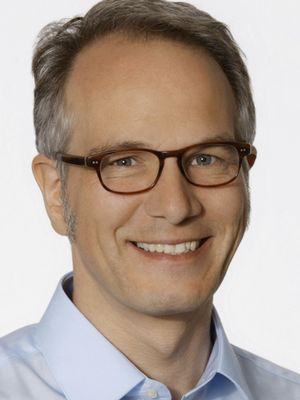
Dessislava Georgieva Petrova-Antonova is a Professor at Sofia University's Faculty of Mathematics and Informatics , specializing in the Department of Software Technologies . Her work focuses on service-oriented architectures, web services, and big data systems for smart cities. She holds a PhD in Software Technologies from Technical University of Sofia (2007) and an MSc in Computer Systems and Control (2000). PhD: Technical University of Sofia, Faculty of Computer Systems and Control (2007) MSc: Technical University of Sofia, Faculty of Computer Systems and Control (2000) Research Interests: She pioneers methodologies for testing web service compositions (e.g., TASSA ), develops big data platforms for smart governance, and explores digital twin modeling for urban environments. Her projects integrate IoT, quality of service (QoS) frameworks, and data-driven policy tools. Projects: Leads initiatives like National CogniTwin (National Science Fund, 2019–2022) and Big4Smart (NSF, 2017–2020). Collaborates in EU programs such as Digital Twin Cities Centre (2020–2025) and People Network+ (FP7, 2012–2013). Labs & Collaborations: Affiliated with the GATE Center of Excellence and contributes to international teams in big data and smart city research. Her work bridges academia and industry through tools like TESSI (Web Service Testing Tool) and faultInjector (BPEL Fault Injection Tool).
Qi Si serves as an Assistant Professor in the School of Teacher Education & Leadership at Utah State University's Emma Eccles Jones College of Education and Human Services. Based in EDUC 376 on the Logan, Utah campus, Dr. Si's work bridges teacher preparation with innovative literacy and technology integration practices for K-12 classrooms. Research focuses prominently on multimodal literacies and technology-enhanced instruction across elementary subject areas. Current investigations examine self-regulated multimodal composition frameworks, scaffolding coding through literacy development, and teachers' use of language as epistemic tools in science education. The research program consistently addresses practical classroom applications while emphasizing emergent bilingual learners' needs and pandemic-era remote/hybrid instructional adaptations. Analysis of recent publications reveals a cohesive trajectory in elementary teacher education, with 7 of 11 articles published since 2023 concentrating on technology integration in literacy and STEM. Recurring methodological approaches include case studies, survey research, and scoping reviews, all oriented toward practical implementation in diverse classroom settings. The work demonstrates particular strength in connecting multimodal composition with disciplinary literacy across science, mathematics, and reading instruction. While specific grant funding and advising activities aren't detailed in public directories, the active publication record in high-impact educational journals suggests ongoing mentorship of graduate researchers and potential external research support. The scholarly output reflects strong engagement with contemporary challenges in elementary teacher preparation and digital-age literacy instruction.
Sangyoung Park is an Assistant Professor of Smart Mobility Systems at the Faculty of Mechanical Engineering and Transport Systems, Technical University of Berlin, and is co-affiliated with the Einstein Center for Digital Future. His research focuses on two main areas: enhancing vehicle safety through digitalization and connectivity, and advancing the electrification of the transport sector with emphasis on electric vehicle battery systems design and management. He leads the Chair of Smart Mobility Systems at TU Berlin, where his team investigates how vehicle connectivity can improve energy efficiency, traffic flow, and safety in autonomous vehicle systems. Dr. Park completed his PhD in Electrical Engineering and Computer Science at Seoul National University in Korea, where he focused on energy management techniques for hybrid energy storage systems in electric vehicles. Before joining TU Berlin in 2018, he conducted postdoctoral research at the Technical University of Munich, working on energy management for smartphones in collaboration with Google and studying battery aging processes. His research interests span smart mobility systems, electric vehicle battery management, energy consumption optimization, vehicle connectivity, and autonomous driving systems. Park's work bridges the gap between design engineers and software engineers, investigating how different energy storage components (fuel cells, supercapacitors, lithium-ion batteries) should be interconnected and managed together for maximum efficiency. His research also addresses the design of charging infrastructure for electric vehicles. Analysis of Dr. Park's recent publications reveals a strong focus on digital twin technology for teleoperated driving, battery management systems for electric vehicles, and vehicle connectivity for improved safety and efficiency. His research increasingly integrates cybersecurity aspects of connected vehicles and explores novel approaches to extend battery lifespan through advanced cell balancing techniques. The interdisciplinary nature of his work connects electrical engineering, computer science, transportation systems, and urban infrastructure planning. Dr. Park supervises multiple doctoral students, including Philipp Kremer, Ongun Türkçüoglu, Kil Young Lee, Maria Claudia Miguel de Priego, Muzaffer Citir, Andrea Reindl, Subhendu Bhadra, and Hueseyin Türkyilmaz. His research is supported by various funding sources including the ECDF grant, DAAD projects (ide3a), and government scholarships. He collaborates with institutions including OTH Regensburg and Siemens Mobility. His laboratory, the Smart Mobility Systems group, focuses on developing system-level approaches for measuring, analyzing, and balancing energy consumption in battery-powered mobile systems. The team investigates how direct communication among autonomous vehicles can enable control scenarios that improve energy efficiency, traffic flow, and safety beyond what human drivers or isolated autonomous vehicles can achieve.
Marc Hellmuth is an Associate Professor of Computational Mathematics at the Department of Mathematics, Stockholm University, Sweden. His academic career includes previous positions as Junior Professor for Biomathematics and Computer Science at University of Greifswald, Germany (2015-2020), Lecturer at School of Computing, University of Leeds, UK (2020), and PostDoc positions at Saarland University and Max-Planck Institutes. Dr. Hellmuth earned his PhD in Computer Science from University of Leipzig, Germany (2007-2010, summa cum laude), supervised by Peter F. Stadler, and completed his Venia Legendi (habilitation) at Saarland University, Germany (2016). His research spans the interface of discrete mathematics, computer science, and life sciences with emphasis on: Discrete Mathematics including Graph Theory, Combinatorics, and Optimization Algorithm Design and Complexity Theory Mathematical and Computational Biology Phylogenomics and Evolutionary Analysis Computational Chemistry and Atom Tracking His publication record demonstrates a consistent focus on developing mathematical frameworks and efficient algorithms for biological problems, particularly in phylogenomics, orthology detection, and evolutionary analysis. His work bridges theoretical computer science with practical applications in biology and chemistry, often resulting in open-source software tools. Dr. Hellmuth has developed numerous software tools including AsymmeTree for phylogenetic simulation, tralda for tree algorithms, and specialized tools for phylogenomics, atom tracking, and graph analysis. His collaborative work extends internationally with research visits to institutions including Yale University, University of Leoben, Vienna University of Economics, University of Southern Denmark, Université de Montréal, and institutions in China.
Sandra Brigance, PhD , is a Professor in the Department of Mathematics at Ferris State University's College of Arts, Sciences and Education. She specializes in mathematics education and instructional design, particularly focusing on online learning environments, teaching strategies, and assessment methodologies. PhD in Education (Instructional Design for Online Learning), Capella University MA in Mathematics, Western Michigan University BS in Secondary Mathematics Education, Western Michigan University Her research emphasizes the intersection of mathematics instruction and digital pedagogy, including the development of tools like the Asynchronous Discussion Instruction Tool (ADIT) to enhance student engagement. She explores how learning outcomes differ from objectives and assesses student valuation of semester-long learning experiences. Brigance's publications and presentations highlight trends in online education leadership, learner-centered rubrics, and integrating information literacy into mathematics courses. She has presented at conferences such as the Lilly Conference, AECT International Convention, and the ICTCM.
Sorin Mitran is a Professor in the Department of Mathematics at the University of North Carolina at Chapel Hill. His research focuses on computational simulation of multiscale and multiphysics systems, data-driven constitutive relations for hyperelastic materials, and information geometry for reduced stochastic models. PhD in Aerospace Engineering from Politehnica University Bucharest (1995) Professional background includes fellowships at University of Tokyo (1993), Karlsruhe Institute of Technology (1998-1999), and University of Washington (1999-2002) His research develops numerical tools to predict macro-scale behavior from micro-scale interactions, such as plastic deformation of metals from lattice defect dynamics, microtubule mechanics from molecular dynamics, and protein folding from atomic-level simulations. Mathematical approaches include adaptive computation, machine learning for constitutive law prediction, and information geometry for stochastic process analysis. Recent publications (2023-2018) span computational biology, multiscale fluid dynamics, and medical applications of continuum mechanics. Articles frequently explore data-driven modeling, wave propagation in biological systems, and GPU-accelerated numerical methods like Lattice Boltzmann and Lattice Fokker-Planck formulations.
Prof. Dr. Ahmet Bildiren is a faculty member at Aydın Adnan Menderes University's Faculty of Education, specializing in Special Education and Education for the Specially Gifted. His academic career spans over two decades, with a focus on identifying gifted children through non-verbal cognitive assessments and addressing dual exceptionalities (giftedness and learning disabilities). Education: Licence from Marmara University (Classroom Teaching, 1999), MA in Guidance and Psychological Counseling from Dokuz Eylul University (2003), PhD in Special Education from Ankara University (2016) His research dominates two key areas: Development and validation of non-verbal cognitive ability tests like BNV-II and TONI-3 Analyzing learning disabilities diagnosis accuracy in Turkish education systems Recent publications highlight his work on STEM interventions for students with learning challenges, early childhood gifted identification, and preschool teacher perspectives on dual exceptionalities. He has also contributed to software tools for gifted education and standardized testing for 0-9 age groups.
Rimantas Vaicekauskas is a Professor at the Faculty of Mathematics and Informatics, Vilnius University. He has taught consistently since at least the 2016/2017 academic year, with scheduled courses through 2025/2026. His instructional responsibilities include delivering lectures on Logic Programming and leading practical exercises in Object-Oriented Programming with JAVA . His academic focus spans: Core computer science principles Programming language design and implementation Formal logic applications in computing Object-oriented software development methodologies
Prof. Dr. Hüseyin Emre Becer is a Professor at the Faculty of Fine Arts , Graphic Design Department , Yeditepe University since 2018. He previously held academic positions at Marmara University (1989–2005), İhsan Doğramacı Bilkent University (1986–1989), and Dokuz Eylül University (1983–1986). Education: Doctorate from Marmara University (1982–1986), Master’s in Graphic Arts (1982–1986), and Undergraduate in Graphic Arts (1976–1980). His research focuses on Fine Arts Core Field , Design , and Graphic Design , with emphasis on typography, visual hierarchy, and historical design principles. His work explores the application of mathematical concepts like the Golden Ratio in graphic design, modernist typography , and interdisciplinary art practices such as collage. Prof. Becer’s recent publications analyze trends in typography , graphic design education , and visual communication , bridging traditional and digital design methodologies. He has contributed to academic discourse on packaging design , advertising strategies , and design pedagogy . Scientific Awards: Birincilik Ödülü (First Prize) - Philatelic Music Circle, İNGİLTERE İkincilik Ödülü (Second Prize) - TÜRKİYE Şeref Mansiyonu (Honorable Mention) - Aydın Doğan Vakfı, TÜRKİYE Özel Ödül (Special Award) - Çankaya Belediyesi, TÜRKİYE He has guided over 20 Master’s and PhD theses, including studies on corporate identity design , digital typography , and political poster analysis . Currently, he teaches courses in Typography , Packaging Design , and Graphic Design Theory , while organizing workshops on visual communication and design education .
Professor Noah Linden is a faculty member in the School of Mathematics at the University of Bristol , holding the title of Professor of Theoretical Physics. His research focuses on Quantum Information Theory , Mathematical Physics , and related areas in quantum computing and thermodynamics. He has contributed to 105 research outputs and leads projects such as Reliable and Robust Quantum Computing and Compilation and Verification of Quantum Software . Key research themes include quantum scrambling, entanglement dynamics, and applications in biophysics. His work has been cited in studies on quantum dots, qubit manipulation, and nonlocality limits. He has also contributed datasets on exciton dynamics in purple bacteria and collaborated on projects analyzing decoherence and disorder effects in photosynthetic systems. Professor Linden serves as an editor for the Journal of Physics A: Mathematical and General and maintains active collaborations across quantum information, quantum computing, and interdisciplinary physics. His research output includes foundational studies on quantum error correction, measurement theory, and computational advantages.
Prof. Dr.-Ing. Sergio Montenegro is a Professor of Aerospace Information Technology at Julius-Maximilians-University Würzburg, where he leads the Chair of Computer Science VIII. His academic journey includes a Bachelor's in Computer Science from Universidad del Valle de Guatemala (1978-1982), a Diploma from Technische Universität Berlin (1983-1985), and a Dr.-Ing. from TU Berlin (1989). Prior to joining academia, he held positions as a software developer (1979-1982), research coordinator at Fraunhofer Gesellschaft (1985-2007), and Head of Department at DLR (2007-2010). His research focuses on dependable distributed systems for aerospace applications, including satellite networks, real-time operating systems (RODOS), UAV swarm control, fault-tolerant architectures, and space mission software. Key projects span satellite formation flight (TET, AsteroidFinder), solar sail missions, distributed avionics (VIDANA), and medical IoT systems. Recent publications (2018) demonstrate strong emphasis on distributed spacecraft systems, UAV navigation, fault tolerance, and software engineering for space applications. Trends include miniaturized satellite technologies, decentralized control algorithms, real-time OS verification, and Java-based space systems. He leads research in distributed computing networks and UAV laboratories, supervising projects like VaMEx-LaOLA (Mars exploration) and ultra-wideband positioning systems. Though no awards are documented, he has coordinated over 100 projects including ESA and DLR missions.
Valery Vladimirovich Shilov is a Professor at the Department of Software Engineering within the Faculty of Computer Science at the National Research University Higher School of Economics (HSE University) in Moscow. He began working at HSE in 2015 and has extensive scientific and teaching experience spanning several decades across various prestigious institutions in Russia. His educational background includes a degree in Applied Mathematics from Lomonosov Moscow State University (1976), qualification as a Lawyer from the Higher Institute of Management (2001), and the academic title of Candidate of Technical Sciences (1989). His professional journey began at Central Research Institute 45 of the Ministry of Defense of the USSR (1976-1989), continued at the USSR Academy of Sciences Computing Center (1989-1997), and included professorial positions at MATI - Russian State Technological University named after K.E. Tsiolkovsky (1997-2015), where he also served as Head of the Department of Design of Computing Complexes and Deputy Dean of the Engineering and Economic Faculty for Science. Professor Shilov's research focuses on parallel computing, parallel architectures, and the history of informatics, with particular emphasis on Soviet and Russian computing history. His scholarly output demonstrates deep engagement with historical aspects of computing technology, including early mechanical calculators, Soviet-era computer development, and the evolution of computing in Eastern Europe. His publications reveal a consistent pattern of examining how computing technologies evolved within specific historical, political, and economic contexts, with special attention to Russian and Soviet contributions. His numerous scientific awards reflect significant recognition in his field, including honors from the Ministry of Education and Science of Russia, the Russian Section of IEEE Computer Society, the Polytechnic Museum, and multiple awards from HSE University. His leadership in organizing academic conferences, particularly those focused on the history of computing in Russia and former Soviet states, has been instrumental in preserving and advancing knowledge in this specialized area. Professor Shilov has supervised multiple PhD students focusing on software engineering, processor architecture, and parallel computing algorithms. His grant activities include leading an RFBR project on the history of domestic computing and informatics (1946-1960), demonstrating his commitment to documenting and analyzing the historical development of computing in Russia. He remains actively involved in academic service as a member of editorial boards for several journals and as a participant in numerous international conferences.
Alexey Vladimirovich Khoroshilov is an Associate Professor at the Faculty of Computer Science of the National Research University Higher School of Economics (HSE), affiliated with the Basic Department "System Programming" of the Institute for System Programming named after V.P. Ivannikov of the Russian Academy of Sciences (ISP RAS). He joined HSE in 2015, bringing 20 years of scientific and teaching experience to his position. His academic background includes a Candidate of Physical and Mathematical Sciences degree (2006) and a specialty in Applied Mathematics and Computer Science from Moscow State University named after M.V. Lomonosov (2001), with the qualification of Mathematician and Systems Programmer. His primary research interests focus on formal methods of software engineering, particularly in the verification and validation of critical systems. He specializes in methods for designing and developing critical systems, formal verification techniques, model-based testing, and requirements analysis. His work has significant applications in operating systems security, real-time systems, and safety-critical software development. His recent publications demonstrate a strong focus on operating system verification, with particular emphasis on abstract model-based runtime verification, security policy integration, and multi-level requirements compliance. His research often combines theoretical formal methods with practical applications in operating system security and verification. The recurring themes across his work include component-based verification approaches, thread-modular analysis techniques, and formal modeling of security policies. Khoroshilov maintains a strong connection with the Institute for System Programming of the Russian Academy of Sciences, where he has worked since 1999 and held the position of leading research fellow as of 2014. He also teaches at Moscow State University's Department of System Programming within the Faculty of Computational Mathematics and Cybernetics since 2009. His teaching focuses on operating system development, particularly courses on the design of operating system kernels for both bachelor's and master's programs. His technical expertise includes verification of operating system components, security policy implementation, and requirements management for critical systems. He has contributed to significant projects related to aviation real-time operating systems, formal security models, and Linux kernel verification.
Matthias Baitsch serves as Professor of Construction Informatics and Numerical Methods in the Department of Civil and Environmental Engineering at Bochum University of Applied Sciences, where he concurrently heads the BIM Institute. His academic trajectory includes research assistant and senior engineer roles at Ruhr-University Bochum (2000-2009), academic coordination at the Vietnamese-German University (2009-2012), and an acting professorship at the University of Kassel (2012-2014). His educational foundation comprises: Civil Engineering studies at the University of Dortmund (1991-1997) under the interdisciplinary "Dortmund Model" Doctorate from Ruhr-University Bochum (2003) on geometric imperfection-based optimization of compressive beam structures Professor Baitsch's research integrates computational mechanics with civil engineering practice, specializing in construction informatics, numerical optimization, and high-order finite element methods. His work pioneers distributed optimization frameworks, structural health monitoring for wind energy infrastructure, and BIM-based construction informatics. Key methodological contributions include hp-FEM implementations, parallel optimization algorithms, and mobile structural analysis tools. Analysis of his recent publications reveals three dominant research trajectories: (1) Advanced numerical methods for structural optimization under uncertainty, (2) Health monitoring-driven lifetime prediction for wind turbine systems, and (3) Computational modeling of tunnel environments using viscoacoustic inversion techniques. These threads demonstrate consistent focus on robust numerical implementations and real-world civil engineering applications. As Head of the BIM Institute, he leads institutional efforts in digital construction technologies, fostering industry-academia collaboration on building information modeling standards and applications. His teaching portfolio spans foundational mathematics, numerical methods, and computer science for civil engineering students, emphasizing practical computational skills.
Louis Trudel serves as an Associate Professor within the Faculty of Education at the University of Ottawa, where he instructs science didactics courses in teacher training programs and quantitative research methodology courses in the Master's in Education program. His scholarly work focuses on advancing science education through innovative pedagogical approaches, particularly in minority language contexts and technology-integrated learning environments. Education Background: Doctorate in Education, Université du Québec à Montréal Research Focus: Dr. Trudel's research program centers on identifying and addressing student misconceptions in physics concepts (electricity, heat, motion), developing diagnostic assessment tools like two-tier tests, and designing technology-enhanced learning sequences. His work emphasizes science education in French-speaking minority communities, exploring how formal and informal educational settings interact to strengthen science pedagogy. He actively investigates the application of ICT in science teaching, distance learning models for science educators, and conditions for effective implementation of science curricula. Publication Analysis: Examination of his 15 most recent publications reveals a consistent focus on physics education research, with 80% addressing student misconceptions in core concepts. His methodology prominently features diagnostic testing (particularly two-tier instruments) and technology-mediated learning environments. A distinctive thread throughout his work is the adaptation of science pedagogy for minority-language contexts, especially Francophone communities in Canada, demonstrating his commitment to equitable science education across diverse settings. Scientific Recognition: No specific awards or fellowships were documented in the provided materials. Academic Mentorship: As an active instructor in both teacher certification and graduate programs, Dr. Trudel undoubtedly supervises student research, though particular advisees and grant-funded projects remain unspecified in the available documentation. His leadership in organizing international conferences and editing scholarly volumes indicates significant contribution to academic community building. Research Infrastructure: While no dedicated laboratory facilities are mentioned, his publications referencing computer-assisted investigations and hybrid learning environments suggest utilization of technology-enhanced research spaces, potentially within the Faculty of Education's instructional technology resources.