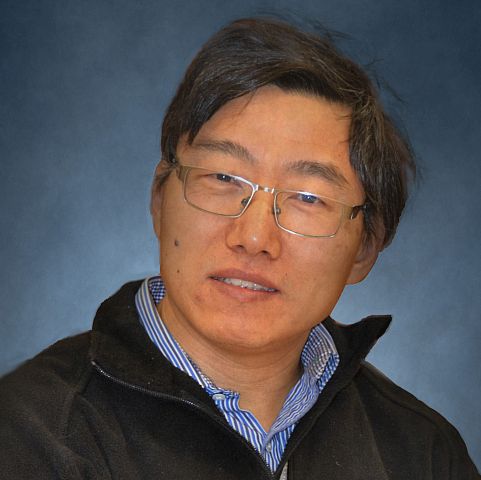
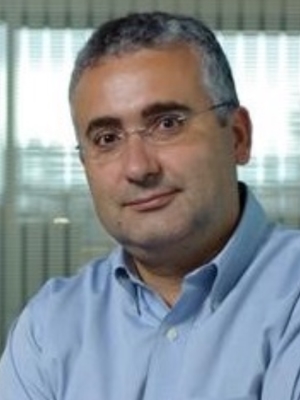
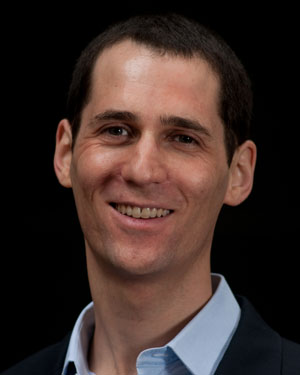
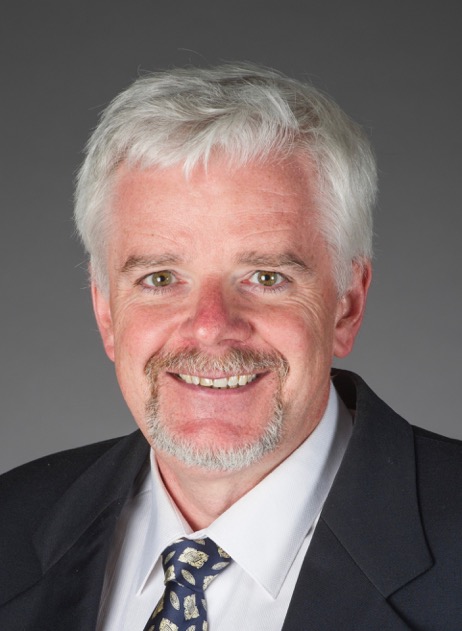
Bharat Lohani is a Professor at the Department of Civil Engineering in Indian Institute of Technology Kanpur . His work focuses on Geoinformatics , utilizing LiDAR and GIS for 3D modeling and spatial analysis. Education : PhD (University of Reading, UK), ME (IIT Roorkee), BE (MMM Engineering College Gorakhpur) Research Interests : LiDAR simulation, motion correction in scanning, flood propagation modeling, historical urban mapping, GPS signal analysis, agricultural land consolidation Article Trends : His publications emphasize LiDAR data processing , sensor integration , and optimization algorithms for geospatial applications. Scientific Awards : ISRS National Award (2012), Best Paper at INCA Congress (2012), Silver Award at ISPRS (2008) Advising : Mentored 8+ students in LiDAR and spatial data analysis Labs/Teams : Leads a research group at IITK including Aswani Kumar Munnangi and Salil Goel, affiliated with the Wadhwani School of AI & Intelligent Systems .
Aaron Tohuvavohu is a Research Fellow in the Division of Physics, Mathematics, and Astronomy at the California Institute of Technology. His work focuses on high-energy astrophysics, particularly gamma-ray bursts (GRBs) and multi-messenger astronomy. He is deeply involved in the Neil Gehrels Swift Observatory mission, specializing in real-time localization of transient events using the BAT-GUANO pipeline and collaborating with gravitational-wave detectors like LIGO/Virgo/KAGRA. His research emphasizes rapid-response observations of GRBs and gravitational-wave events, leveraging the Interplanetary Network (IPN) for precise localization. He has contributed to studies of short-hard GRBs associated with compact object mergers and long-duration GRBs linked to hypernovae. Notable projects include the CASTOR mission concept for UV photometry and detector characterization for next-generation astronomical instruments. Aaron's recent work includes analyzing Swift/XRT and UVOT observations of GRB afterglows, setting upper limits for electromagnetic counterparts to gravitational-wave triggers, and improving IPN triangulation algorithms. His publications reflect a systematic approach to transient astronomy, integrating data from multiple observatories for comprehensive event characterization.
Oscar P. Bruno is a Professor of Applied and Computational Mathematics at the California Institute of Technology (Caltech). He holds a Licenciado from the University of Buenos Aires (1982) and a Ph.D. in Mathematics from New York University's Courant Institute (1989). Since 1998, he has been a Professor at Caltech, previously serving as Associate Professor (1995–98) and Executive Officer for Applied Mathematics (1998–2000). His research focuses on developing high-performance numerical methods for solving partial differential equations (PDEs), addressing challenges in complex geometries, singularities, and high-frequency phenomena. Key contributions include the Fourier Continuation (FC) method and integral-equation techniques, enabling solutions to previously intractable PDE problems in science and engineering. Prof. Bruno's expertise spans computational electromagnetics, computational fluid dynamics (CFD), solid mechanics, and mathematical physics. His work integrates numerical analysis, multiphysics modeling, and computational science to solve real-world problems in geophysics, optics, and fluid dynamics. He has received numerous awards, including membership in the National Academy of Sciences of Argentina (2020), the Vannevar Bush National Security Science and Engineering Fellowship (2016), and SIAM Fellow (2013). Bruno serves on editorial boards for journals like SIAM Journal on Scientific Computing and SIAM Journal on Applied Mathematics, and participates in national science advisory roles. His teaching includes advanced courses on applied mathematics methods (ACM/IDS 101 ab), emphasizing theoretical foundations and numerical techniques for PDEs. His research group develops cutting-edge solvers with applications in shock dynamics, optical tomography, and geophysical fluid dynamics.
Assoc Prof Ng Teng Yong is an Associate Professor at the School of Mechanical & Aerospace Engineering (NTU), specializing in numerical modeling and simulation. With a background as Research Manager at A*STAR Institute of High Performance Computing, his work spans materials science, nanotechnology, and aerospace engineering. Current focus on graphene-based desalination membranes Expertise in molecular dynamics simulations Investigates nanoscale fluid mechanics and structural dynamics Recent publications highlight advancements in energy-efficient electrodialysis, smart robotics, and nonlinear vibration analysis. His interdisciplinary approach integrates computational methods with experimental validation in additive manufacturing and soft material mechanics.
Qingguo Li is a Professor and Associate Head at the Department of Mechanical and Materials Engineering , Queen's University , and a member of the Ingenuity Labs Research Institute . He specializes in biomechanical system design, energy harvesting, wearable sensors, gait analysis, and load carriage systems. His research integrates robotics, biomedical engineering, and sensor technology to develop human-centric devices and mobility aids. Current Roles : Professor, Associate Head, Queen's University Research Institute : Ingenuity Labs Research Institute Lab : Bio-Mechatronics and Robotics Laboratory His work focuses on biomechanical energy harvesting , IMU-based motion analysis , and assistive device development . Key applications include stroke rehabilitation, gait monitoring, and wearable power generation systems. Articles span cable-driven robots , smart walkers , and 3D printing mechanisms , emphasizing human-robot interaction and dynamic modeling . The lab explores sensor calibration , adaptive control algorithms , and human movement optimization . Areas of impact include rehabilitation engineering , load carriage stability , wearable sensor accuracy , and assistive robotics . His team develops solutions for gait asymmetry detection , post-stroke mobility , and low-cost energy systems , leveraging machine learning and kinetic modeling .
Emilio Frazzoli is a Full Professor at ETH Zurich’s Department of Mechanical and Process Engineering. He leads the Institute for Dynamic Systems and Control and the Center for Sustainable Future Mobility, focusing on autonomous systems, robotics, and socio-technical control frameworks. Current affiliations: ETH Zurich (Dynamic Systems and Control, Sustainable Future Mobility) Research: Autonomous mobility-on-demand, game theory for resource allocation, and safety verification in multi-agent systems His work bridges robotics, control theory, and economics, with projects like the open-source AMoDeus simulation framework for autonomous taxis and karma-based resource allocation systems. Recent publications emphasize trustworthy AI, reproducibility in autonomous vehicle control, and human-robot interaction challenges. Notable projects include nuReality (VR-based pedestrian interaction studies) and CARSI II (context-driven vehicle interfaces).
Ron Dror is the Cheriton Family Professor of Computer Science at the Stanford Artificial Intelligence Lab , with courtesy appointments in Structural Biology and Molecular & Cellular Physiology . He also holds affiliations with Bio-X, the Institute for Human-Centered Artificial Intelligence (HAI), the Institute for Computational and Mathematical Engineering (ICME), Sarafan ChEM-H, and the Wu Tsai Neurosciences Institute. Education: PhD in Electrical Engineering and Computer Science, MIT MPhil in Biological Sciences, University of Cambridge (Churchill Scholar) BS in Mathematics and Electrical & Computer Engineering, Rice University (summa cum laude) Ron leads a multidisciplinary research group that combines molecular simulation and machine learning to study biomolecular structure, dynamics, and function. His work focuses on developing computational methods to accelerate drug discovery by predicting molecular interactions and designing more effective therapeutics. Current projects include the PENSA software library for analyzing biomolecular ensembles and FRAME framework for structure-based ligand design. His research has produced groundbreaking work on G-protein-coupled receptors (GPCRs) , RNA structure prediction , and mitochondrial transport mechanisms . Key publications highlight applications of geometric deep learning and molecular dynamics simulations in structural biology. Scientific Awards: Cheriton Family Professorship (2023) Two Gordon Bell Prizes (2014, 2009) Best Paper Awards at NeurIPS (2021), IPDPS (2013), SC11 (2011), SC09 (2009), SC06 (2006) Science Magazine Top 10 Breakthrough (2010) Fulbright Scholarship , NSF Fellowship , DoD Fellowship , Whitaker Foundation Fellowship Ron has advised numerous doctoral and master’s students including EJ Fine , Masha Karelina , and Briana Sobecks . His lab collaborates with experimentalists across academia and industry, applying computational methods to diverse biomedical problems such as RNA structure prediction , GPCR signaling , and mitochondrial metabolism .
Yang Weng is an Associate Professor at the School of Electrical, Computer and Energy Engineering, Arizona State University. He leads the U.S.-Israel International Consortium on Energy Cyber Initiative on Cybersecurity R&D and directs a research lab focused on smart grid resilience and machine learning applications. Previously, he was a TomKat Postdoctoral Scholar at Stanford University. Education: Ph.D. in Electrical and Computer Engineering, Carnegie Mellon University M.S. in Machine Learning, Carnegie Mellon University Research: His interdisciplinary work bridges power systems, machine learning, and cybersecurity, emphasizing renewable integration, grid optimization, and cyber-physical resilience. Key themes include physics-informed AI, adversarial robustness in energy infrastructure, and real-time control algorithms for dynamic grids. Publications: Recent articles (2024–2025) demonstrate strong trends in AI-driven grid security, adaptive control under uncertainty, and climate-impact modeling. Dominant domains include neural network applications for stability guarantees, cyber-attack mitigation, and data-efficient renewable integration. Awards: NSF CAREER Award (2021), Amazon Research Award (2023) Best Paper Awards at IEEE SmartGridComm (2012, 2013), PES GM (2014), PMAPS (2016) IEEE Senior Member, Sun Award (ASU), Centennial Award (ASU) Grants & Leadership: Secured DOE, NSF, and AFOSR funding for projects on AI-enhanced grid resilience. Advises PhD/postdoc candidates and chairs the U.S.-Israel Energy Center consortium. Organized international workshops (e.g., ICRDE 2023) and validated research via hardware-in-the-loop experiments. Lab & Team: Directs a research group developing deployable ML solutions for utilities (e.g., OPAL-RT collaborations). Focus areas: cybersecurity toolchains, reinforcement learning for grid control, and anomaly detection architectures.
Prof. Martin Haenggi is the Frank M. Freimann Professor of Electrical Engineering and Concurrent Professor in the Department of Applied and Computational Mathematics and Statistics at the University of Notre Dame. He holds a Dr.sc.techn. (Ph.D.) from ETH Zurich and has been at Notre Dame since 2000. His research focuses on stochastic geometry and wireless networks, including cellular, heterogeneous, vehicular, and millimeter-wave systems. He has held sabbaticals at UCSD (2007–2008), EPFL (2014–2015), and ETH Zurich (2021–2022). Education: Dipl.-Ing. (M.Sc.), ETH Zurich, 1995 Dr.sc.techn. (Ph.D.), ETH Zurich, 1999 Research interests emphasize stochastic geometry for analyzing network performance, including coverage, interference, and reliability in wireless systems. Key areas include meta distributions, spatial-temporal analysis, and network optimization. His work has been recognized with IEEE Fellow status, Clarivate Highly Cited Researcher distinction, and NSF CAREER Award (2005). Grants and Awards: NSF Award (Deep Stochastic Geometry: 2020–2023) NSF Award (Toward a Stochastic Geometry for Cellular Systems: 2015–2019) Rice Prize (2017), Best Survey Paper Award (2017), and Best Tutorial Paper Award (2010) from IEEE Communications Society Teaching includes advanced courses on stochastic geometry, wireless networks, and signal processing. His lab focuses on theoretical and applied aspects of network modeling, with collaborations in industry and academia.
Damek Davis serves as an Associate Professor of Statistics and Data Science and Co-Academic Director of the Dual Master's Degree in Statistics at the Wharton School, University of Pennsylvania. His academic base is the Department of Statistics and Data Science within the Wharton School, with his office located at the Academic Research Building in Philadelphia, PA. His research expertise centers on optimization theory for data science, with deep specialization in nonsmooth and stochastic optimization problems. Key focus areas include convergence analysis of first-order methods, variance reduction techniques, and theoretical guarantees for algorithms in nonconvex settings. His work bridges mathematical rigor with practical applications in machine learning and statistical inference, particularly in developing efficient computational frameworks for large-scale data analysis. Analysis of his 2022-2024 publications reveals dominant themes in optimization for modern data challenges: nonsmooth stochastic approximation, linear convergence under sharpness conditions, and global optimality in mixture models. His research consistently appears in premier venues across optimization (Mathematical Programming, SIAM Journal), statistics (The Annals of Statistics), and machine learning (IEEE Transactions), demonstrating cross-disciplinary impact in both theoretical foundations and computational methodologies.
Alfred O. Hero, III is the John H. Holland Distinguished University Professor of Electrical Engineering and Computer Science and the R. Jamison and Betty Williams Professor of Engineering at the University of Michigan, Ann Arbor. He is currently on leave from the University of Michigan as a Program Director in the CISE Directorate at the National Science Foundation. His primary appointment is in the Department of Electrical Engineering and Computer Science (EECS), with secondary appointments in the Department of Biomedical Engineering and the Department of Statistics. He is also affiliated with the UM Center for Computational Medicine and Bioinformatics (CCMB), the UM Graduate Program in Applied and Interdisciplinary Mathematics (AIM), the UM Applied Physics Program, and the Michigan Institute for Data Science (MIDAS), which he co-founded from 2015-2018. Hero's research focuses on data science, developing theory and algorithms for multimodality data collection, fusion, analysis and visualization that use statistical machine learning and distributed optimization. His work has applications in wearable technologies for personalized health and predictive medicine, spatio-temporal networks in biology, climate, and social discourse, anomaly detection, and data analysis for international security. His recent research interests include high dimensional spatio-temporal data analysis, multimodal data integration, statistical signal processing, and machine learning, with particular emphasis on predictive mathematical models for biological and physical sciences, social networks, network security and forensics, and personalized health and disease. His recent publications demonstrate a strong focus on high-dimensional statistical methods, contrastive learning, neural network optimization, change detection in temporal graphs, and applications in microbiome analysis and epidemic modeling. The research spans theoretical foundations in information theory and statistical learning while addressing practical applications across multiple domains. Scientific Awards: IEEE Signal Processing Society Best Paper Award (1998) Best Original Paper Award from Journal of Flow Cytometry (2008) Best Magazine Paper Award from IEEE Signal Processing Society (2010) SPIE Best Student Paper Award (2011) IEEE ICASSP Best Student Paper Award (2011) IEEE Signal Processing Society Technical Achievement Award (2014) IEEE Signal Processing Society Society Award (2015) IEEE Fourier Award (2020) University of Michigan Distinguished Faculty Achievement Award (2011) Hero has advised over 60 PhD students and 30 postdocs in areas including modeling, computation, and inference for large scale time varying data in the biosciences. He has received significant research funding from the Department of Energy, Army Research Office, Air Force Office of Scientific Research, and National Science Foundation. He has held leadership positions including President of the IEEE Signal Processing Society (2006-2007), Director of Division IX (Signals and Applications) on the IEEE Board of Directors (2009-2011), and Chair of the Committee on Applied and Theoretical Statistics of the US National Academies (2018-2020).
Prof. Dr. Michael Ulbrich is a full professor and Chair of Mathematical Optimization at the Technical University of Munich (TUM), within the School of Computation, Information and Technology. He has held this position since 2006 and previously served as Dean of Studies (2007–2010) and Vice Dean of the Faculty of Mathematics (2012–2015). His research focuses on nonlinear optimization, optimal control, and numerical analysis, with applications in fluid dynamics, shape optimization, and PDE-constrained systems. He leads projects in the DFG SPP 1962 and IGDK 1754, and has received prestigious awards including the Howard Rosenbrock Prize (2015) and the Doctoral Award from the TUM Association of Friends (1996). Ulbrich is Editor-in-Chief of Optimization and Engineering and contributes to multiple journals. His work bridges theoretical foundations and practical applications, including CO2 sequestration, fluid-structure interaction, and distributed optimization algorithms. Education: PhD (1996), Habilitation (2002) in Mathematics at TUM. Research stays at Rice University (USA) under DFG funding. Research Areas: Semismooth Newton methods, PDE-constrained optimization, optimal control of Navier-Stokes equations, and distributed parameter systems. Awards: Rosenbrock Prize, Teaching Excellence Awards, and recognition for doctoral work. Leadership Roles: Department Head of Mathematics (2022–), Member of TUM Senate (2019–2022), and Co-Chair of GAMM 2018. Ulbrich has authored influential textbooks like Semismooth Newton Methods for Variational Inequalities and Nichtlineare Optimierung . His recent projects include OptiGeoS (2024–2026) and collaborations on nonsmooth optimization and stochastic algorithms. His academic contributions span over 100 publications, emphasizing both algorithmic innovation and rigorous mathematical analysis.
Giorgio Grisetti is a Full Professor at Sapienza University of Rome within the Department of Systems and Computer Science, maintaining active research roles in the RoCoCo lab at Sapienza since November 2010 and the Autonomous Intelligent Systems Lab at Freiburg University where he previously served as a Post Doc under Wolfram Burgard starting in 2006. His educational background includes a M.Sc. in Computer Engineering from the University of Rome (2001) and a Ph.D. from Sapienza University of Rome's Intelligent Systems Lab (2006), supervised by Daniele Nardi. His doctoral thesis focused on SLAM using Rao-Blackwellized particle filters. Dr. Grisetti's research centers on mobile robotics with emphasis on robust solutions for autonomous navigation systems. His work spans theoretical and practical advancements in Simultaneous Localization and Mapping (SLAM), robot localization, path planning, and sensor fusion, particularly leveraging LiDAR and multi-sensor configurations. Recent publications demonstrate strong focus on optimization techniques, sensor calibration, and real-time performance for autonomous systems operating in complex environments. His publication trends reveal deep specialization in LiDAR-based SLAM (7 of 15 recent articles), bundle adjustment methods (4 articles), and sensor calibration/perception (3 articles), with consistent contributions to top robotics venues like IEEE Robotics and Automation Letters and ICRA. Key recognitions include: Nomination for the best IROS paper award (2010) Open Source achievement award from Willow Garage (2010) Best paper award at the International Conference and Exhibition on Unmanned Areal Vehicles (2010) Best Paper award at ICRA 2009 (2009) His research is conducted through the RoCoCo lab at Sapienza University of Rome and the Autonomous Intelligent Systems Lab at Freiburg University, focusing on developing foundational algorithms for mobile robot autonomy. Current projects emphasize robust perception systems, optimization frameworks for sensor fusion, and practical implementations for real-world navigation challenges.
Anders Rantzer is a Professor of Automatic Control at the Department of Control Engineering, Faculty of Engineering, Lund University, Sweden. He has held visiting positions at Caltech (2004–2005) and the University of Minnesota (2015–2016) as the Taylor Family Distinguished Visiting Professor. His academic journey began with a PhD from KTH Stockholm in 1991, followed by a postdoc at the Institute for Mathematics and its Applications (IMA), University of Minnesota. His research interests center on modeling, analysis, and synthesis of control systems , with a strong focus on scalability, adaptation, and applications in energy networks . He is particularly known for foundational work in positive systems and integral quadratic constraints (IQCs) . These theoretical frameworks are critical in analyzing stability and robustness of large-scale interconnected systems. His work bridges mathematical rigor with practical engineering applications, especially in sustainable energy and networked systems. The recent publications and lecture materials reflect a consistent trajectory in scalable and robust control, optimization, and distributed systems. Themes such as large-scale convex optimization , nonlinear and stochastic control , and network dynamics dominate his scholarly output, indicating a sustained commitment to advancing control theory for complex, real-world systems. Scientific honors include: Fellow of IEEE Member of the Royal Swedish Academy of Engineering Sciences (IVA) Chairman of the Swedish Scientific Council for Natural and Engineering Sciences Chairman of the Royal Physiographic Society of Lund Rantzer has supervised numerous students and contributed extensively to academic leadership and education. He has been involved in major national and international research initiatives such as WASP (Wallenberg AI, Autonomous Systems and Software Program) and ELLIIT. His work includes developing educational tools and courses in control, optimization, and machine learning. He leads and contributes to research projects on autonomous systems, cloud control, and smart energy networks. He is affiliated with the Control Lab at LTH and participates in collaborative efforts such as the Nordic University Hub on Industrial Internet of Things (HI2OT). His work integrates theoretical advances with practical implementations in robotics, biomedical systems, and industrial automation.
Jonathan A. Kelner is a Professor of Applied Mathematics in the Department of Mathematics at the Massachusetts Institute of Technology (MIT) and a member of the MIT Computer Science and Artificial Intelligence Laboratory (CSAIL). His research focuses on applying techniques from pure mathematics to solve fundamental problems in algorithms and complexity theory, with the goal of developing practical algorithms for real-world questions. Dr. Kelner received his undergraduate degree from Harvard University and his Ph.D. in Computer Science from MIT in 2006. Before joining the MIT faculty, he spent a year as a member of the Institute for Advanced Study. His educational background has provided a strong foundation for his interdisciplinary research spanning mathematics and computer science. His research interests include combinatorial optimization, mathematical programming, spectral graph theory, distributed computing, machine learning, computational geometry and topology, computational biology, signal processing, and random matrix theory. Kelner's work demonstrates how deep theoretical insights can lead to practical algorithmic improvements, particularly in graph algorithms and optimization problems. His approach often involves connecting seemingly disparate areas of mathematics to create novel algorithmic techniques. Analysis of his recent publications reveals a strong focus on spectral graph theory, optimization algorithms, and the Sum-of-Squares method. His work frequently addresses fundamental questions in theoretical computer science with practical implications for algorithm design. A notable trend in his research is the development of nearly-linear-time algorithms for various graph problems, which represents significant improvements over previous approaches. NSF CAREER Award Alfred P. Sloan Research Fellowship NEC Award for Research in Computers and Communication Sprowls Doctoral Dissertation Award Best Student Paper Award at STOC 2004 Best Paper Award at STOC 2011 Kokusai Denshin Denwa Junior Faculty Chair 2008 Harold E. Edgerton Faculty Achievement Award 2011 School of Science Award for Excellence in Undergraduate Education 2012 Professor Kelner has been actively involved in mentoring students and has received recognition for his teaching excellence, including the School of Science Award for Excellence in Undergraduate Education in 2012. His research has been supported by prestigious grants including the NSF CAREER Award. He has collaborated extensively with researchers across multiple institutions, often working with other leading figures in theoretical computer science to produce groundbreaking results in algorithm design. At MIT, Kelner is part of both the Mathematics Department and CSAIL, positioning him at the intersection of theoretical mathematics and practical computer science. This dual affiliation reflects the interdisciplinary nature of his work, which bridges pure mathematical theory with concrete algorithmic applications.