Xavier Serra is a Full Professor at the Department of Engineering at Universitat Pompeu Fabra (UPF), Barcelona. He is the founder and director of the Music Technology Group (MTG), and leads the UPF-BMAT Chair on AI and Music. He also coordinates the Master in Sound and Music Computing and serves as President of the Phonos Foundation. His research focuses on audio signal processing, sound and music computing, and computational musicology, emphasizing open science and open innovation. Education: BSc in Biology, University of Barcelona (1981) Master in Music, Florida State University (1983) PhD in Computer Music, Stanford University (1989) Research Interests: Audio Signal Processing Data-Driven and Knowledge-Driven Methodologies Music Information Retrieval Cultural Music Analysis (e.g., Carnatic/Turkish/Andalusian Music) Music Education Technology Notable Projects: CompMusic (ERC Advanced Grant, 2010-2017): Multicultural computational music analysis Open datasets: Freesound, Saraga, FSD50K Technologies: Reactable, Vocaloid, Essentia API Recent Trends in Articles: Focus on AI-driven audio processing (neural fingerprints, generative models), cross-cultural music analysis, and explainable music difficulty estimation. Awards: ERC Advanced Grant (2010) for CompMusic Project. Labs/Teams: Director of MTG, Phonos Foundation, and UPF-BMAT Chair. Active in open-source projects and international collaborations.
Jacob D. Leshno is an Associate Professor of Economics and Robert H. Topel Faculty Scholar at the University of Chicago Booth School of Business. His research employs game theory, applied mathematics, and microeconomic theory to study allocation mechanisms and marketplace design, with applications spanning school choice systems, patient assignments to nursing homes, and decentralized cryptocurrency protocols. Professor Leshno's academic background includes: PhD in Economics from Harvard University, completed under Nobel laureate Alvin Roth M.Sc. in Pure Mathematics from Tel Aviv University B.Sc. in Pure Mathematics from Tel Aviv University His research program centers on market design theory with two primary strands. The first focuses on matching markets, where he developed tractable cutoff characterizations that clarify market structures for college admissions and medical residency matching (NRMP). His work demonstrates how price discovery mechanisms can streamline inefficient processes like college applications and subsidized housing allocation. The second strand examines cryptocurrencies and blockchain technology, investigating how open-source computer code functions as market rules in decentralized systems. This research explores both the economic security of permissionless consensus and fundamental limitations of proof-of-work protocols. Professor Leshno's publications reveal a cohesive research trajectory applying economic theory to increasingly complex market structures. His work consistently bridges theoretical rigor with practical implementation, evolving from traditional matching markets to the frontier of decentralized digital systems. Publications in top journals like American Economic Review and Journal of Political Economy demonstrate both analytical depth and real-world relevance across education, healthcare, and financial technology sectors. Professor Leshno has received significant recognition for his contributions: ACM SIGecom Test of Time Award for foundational work in matching markets INFORMS Frederick W. Lanchester Prize for outstanding contributions to operations research Prior to Chicago Booth, Professor Leshno served as Assistant Professor at Columbia Business School and completed a postdoctoral fellowship at Microsoft Research New England, following industry experience at Yahoo! and IBM. He teaches MBA courses in Competitive Strategy and Market Design, and developed a PhD seminar bridging computer science theory with economic principles for distributed systems. His research continues to influence both academic theory and practical implementations of market mechanisms across multiple sectors. Professor Leshno maintains active collaborations with leading researchers including Itai Ashlagi, Irene Lo, and Gur Huberman, advancing the theoretical foundations of market design while addressing contemporary challenges in digital marketplaces and allocation systems.
Albert Atserias is a Professor in the Department of Computer Science at the Universitat Politècnica de Catalunya (UPC), affiliated with the Faculty of Informatics of Barcelona (FIB) and the ALBCOM research group (Algorithms, Bioinformatics, Complexity, and Formal Methods). He is also associated with the Institut de Matemàtiques de la UPC-BarcelonaTech. His research is central to theoretical computer science, with a strong emphasis on logic and complexity. Atserias's research interests span Computational Complexity, Logic in Computer Science, Finite Model Theory, Proof Complexity, and Constraint Satisfaction Problems . His work explores the fundamental limits of computation, the expressive power of logical languages over finite structures, and the complexity of proving mathematical statements. He investigates the algebraic and combinatorial properties of proof systems, the limits of efficient algorithms for constraint solving, and the theoretical foundations of databases. His research often bridges logic, algebra, and combinatorics to provide deep insights into computational phenomena. The trends in his recent publications show a sustained focus on the logical and algebraic underpinnings of computational problems. Key themes include the consistency and complexity of database queries , the power and limitations of proof systems (like resolution and sum-of-squares), and the expressive power of homomorphism counts in graph theory. His work on the hardness of automating resolution and the development of circular proof systems are particularly significant contributions to proof complexity. The 2024 PODS Best Paper Award for work on relational consistency underscores the impact and timeliness of his research. Among his notable scientific awards are the prestigious ICREA Acadèmia , the PODS 2024 Best Paper Award , the Premi Extraordinari de Doctorat (Extraordinary Doctoral Prize), and the Kleene Award for Best Student Paper . These accolades reflect both the excellence of his early work and his continued leadership in the field. Atserias has been a principal investigator on numerous competitive research projects, including funding from the European Research Council (ERC) and the Spanish Ministry of Science. He has advised doctoral students, such as Toni Hakoniemi, whose thesis on proof complexity he supervised. His extensive collaborative network includes leading researchers like Phokion Kolaitis, Anuj Dawar, and Victor Dalmau. He has also served on the scientific committees of major conferences, contributing to the academic community. He is a core member of the ALBCOM research group , a leading team at UPC focused on theoretical aspects of computer science, which provides a vibrant environment for research in algorithms, complexity, and formal methods. His work is also connected to the broader Institut de Matemàtiques de la UPC, fostering interdisciplinary collaboration between computer science and mathematics.
Carles Padro Laimon is a Professor at the Universitat Politècnica de Catalunya (UPC), affiliated with the Department of Mathematics and the School of Telecommunications Engineering. He is a leading researcher in cryptography and information security, focusing on secret sharing schemes, combinatorial structures, and cryptographic protocols. His work integrates discrete mathematics, coding theory, and algorithmic design to address security challenges in digital systems. Padro leads the MAK Research Group (Mathematics Applied to Cryptography) and the ISG-MAK Information Security Group. He has been involved in numerous competitive research projects, including initiatives on post-quantum cryptography and secure multi-user systems. His contributions span over 211 documented activities, including articles, theses, and conference participations. His research interests include the theoretical foundations of cryptography, with a focus on optimizing secret sharing schemes, analyzing matroid-based structures, and developing secure communication protocols. He has collaborated extensively with institutions like the UPC and European research networks, contributing to both academic and practical advancements in cybersecurity. Padro holds a PhD in Mathematics from UPC and has supervised doctoral theses and mentored researchers in his field. His work frequently appears in top journals like IEEE Transactions on Information Theory, Designs, Codes and Cryptography, and SIAM Journal on Discrete Mathematics.
Francisco Javier Murillo Torrecilla is a Professor of Research Methods and Evaluation in Education at the Autonomous University of Madrid (UAM). He serves as Director of multiple educational journals ( REICE , Revista Iberoamericana de Evaluación Educativa , Revista Internacional de Educación para la Justicia Social ) and leads research groups like 'Educational Change for Social Justice' (GICE) and the Ibero-American Research Network on School Change and Effectiveness (RINACE). His work focuses on Education for Social Justice , School Segregation , and Educational Leadership . He holds degrees in Mathematics and Education Sciences, and a PhD in Education Sciences from Universidad Complutense de Madrid. With 5 research sexenios and over 200 publications, his citations exceed 25,000 (h-index: 84) in Google Scholar. He has led 25 competitive research projects, including the 'Network of Excellence' RILME (EDU2017-90606-REDT). Coordinated UNESCO's Latin American Laboratory for Educational Quality Evaluation (LLECE) Former Director of Spain's Centre for Educational Research and Documentation (CIDE) Director of UAM's UNESCO Chair in Education for Social Justice and Institute DEMOSPAZ His research projects on social justice in education include five consecutive Spanish State Program grants (2010-2021) and books like La investigación sobre eficacia escolar (2005). He has consulted for UNESCO, OECD, and governments in Latin America.
Danel Ahman is an Associate Professor at the Institute of Computer Science , University of Tartu , Estonia, specializing in programming language theory . His research focuses on dependent/refinement types , computational effects , and verified software . Education PhD in Theoretical Computer Science (University of Edinburgh, 2017) MPhil in Advanced Computer Science (University of Cambridge, 2012) BSc in Informatics (Tallinn University of Technology, 2010) Research Interests : Danel investigates programming languages with algebraic effects and effect handlers for verified software, exploring denotational/operational semantics and fibrational approaches to effects. His work bridges theoretical computer science with practical formal verification. Scientific Awards : Estonian Research Council grant (2025) Marie Skłodowska-Curie Fellowship (2019) PhD dissertation prize (2018) Google/Citrix dissertation awards (2012) Teaching & Supervision : He teaches courses like Logic in Computer Science and Functional Programming at the University of Tartu, and supervised BSc/MSc theses on topics including asynchronous effects and formal verification. Danel also organizes research seminars and guest lectures on F*.
Karina Gibert is a Full Professor at Universitat Politècnica de Catalunya (UPC), specifically at the Faculty of Computer Science of Barcelona (FIB) in the Department of Statistics and Operations Research. With a permanent teaching position since 1990, she contributes to research and education with a focus on Data Science, Artificial Intelligence, Explainable AI, and Ethics in AI. Full Professor, UPC (since 1990) PhD in Informatics Engineering Postgraduate in Higher Education Teaching Director and co-founder of IDEAI research center Dean of the Official Professional College on Informatics Engineering of Catalonia Active in bridging the gender gap in STEAM through multiple initiatives Her research focuses on extracting strategic knowledge from data and intelligent systems with ethical and explainable perspectives. She has led various projects including Diet4You for personalized diets, INSESS-COVID19 for social vulnerability analysis, Top Rosies Talent for female AI development, and ciutadanIA for AI culture promotion. Her work spans health, environment, sustainability, tourism, and social technology applications. As an editor of Environmental Modeling and Software journal and active academic, she contributes to international conferences, working groups, and research collaborations. Her service includes membership on various ethics and AI strategy committees and advisory boards. Women Tech Award 2023 National Informatics Engineering Award in Digital Dissemination 2022 Ada Byron Award 2022 Honorific Mention of Creu Casas award 2021 donaTIC 2018 Award Finalist at AMETIC Awards 2021 Finalist of European Social Services Awards 2021
Marta Casanellas is a full professor in the Department of Mathematics at the Polytechnic University of Catalonia (UPC) and a researcher at the Centre de Recerca Matemàtica. She teaches at the Faculty of Mathematics and Statistics, ETSEIB, and FIB. She earned her PhD in mathematics from the University of Barcelona under RM Miró-Roig, focusing on algebraic geometry and liaison theory. After completing a postdoc at UC Berkeley with a Fulbright Scholarship, she shifted her research to applications of algebraic geometry in computational biology, particularly phylogenetics. Her educational background includes a PhD from the University of Barcelona (2002), followed by a postdoctoral fellowship at UC Berkeley (2002-2003) supported by a Fulbright Scholarship. She obtained a prestigious Ramón y Cajal contract at UPC in 2003, which marked her transition to interdisciplinary research at the intersection of mathematics and biology. Casanellas' research focuses on applying algebraic and geometric techniques to phylogenetics, with particular emphasis on evolutionary models, phylogenetic invariants, and computational methods for genomic data analysis. Her work bridges pure mathematics (particularly algebraic geometry) with biological applications, developing mathematical frameworks to reconstruct evolutionary histories and understand genomic relationships. She has published extensively in both mathematics journals like Advances in Mathematics and biology journals like Molecular Biology and Evolution. Her recent publications demonstrate a consistent focus on developing algebraic methods for phylogenetic analysis, with increasing attention to heterogeneous evolutionary processes across lineages, time-reversible models, and computational implementations of theoretical results. The trend shows progression from theoretical foundations in algebraic geometry toward increasingly sophisticated and applicable computational methods for biological data. Fulbright Scholarship for postdoctoral research at UC Berkeley Ramón y Cajal contract (2003) Casanellas has supervised PhD students including A. Kedzierska (co-supervised with R. Guigó of the CRG). She has served as principal investigator for three competitive Spanish government projects involving fifteen researchers each. She has held significant academic leadership roles including Deputy Director of Research of the Department of Mathematics at UPC (2015-2018), head of studies for the Degree in Data Science and Engineering at UPC (2018-2022), and currently coordinates UPC's PhD in Bioinformatics program and Bachelor's Degree in Bioinformatics. She leads the BIO-GEOMAP research group focused on applying mathematical techniques to biological problems.
Rafael Villena Taranilla is a Professor at Camilo José Cela University (UCJC) and the International University of La Rioja (UNIR), teaching in master's programs on advanced teaching competencies, digital technology in teaching, and inclusive education. He concurrently serves as a primary school teacher, integrating practical classroom experience with academic research in educational technology. His academic credentials include: PhD in Education from the University of Castilla-La Mancha (Outstanding Cum Laude), focusing on Virtual Reality for Social Studies in Primary Education Master's degree in Educational Research and Innovation from the University of Castilla-La Mancha Bachelor's degree in Primary Education with specialization in History, Culture, and Heritage Villena Taranilla's research centers on emerging technologies in education, particularly virtual reality, augmented reality, educational robotics, and artificial intelligence applications for primary education. He investigates their impact on learning outcomes, historical thinking development, and teacher digital competence, with significant contributions to motivation studies and technology acceptance models in educational contexts. His recent publications (2022-2025) demonstrate a concentrated focus on virtual reality for history and social sciences education in primary schools, supported by rigorous meta-analyses and technology acceptance frameworks. The work shows progressive expansion into gamification for historical thinking, augmented reality for geometry instruction, and robotics for computational thinking, reflecting a cohesive interdisciplinary approach bridging education, cognitive science, and technology innovation. His scientific recognition includes: Second prize in the 'Thesis in three minutes' contest (UCLM, 2020) National finalist in the #HiloTesis contest (CRUE Universidades) Villena Taranilla has supervised numerous Master's theses and academic internships across educational innovation programs. He has secured research funding from prestigious entities including FECYT, La Caixa Foundation, and the University of Valencia, while contributing to teacher training initiatives as a digital competence tutor with Castilla-La Mancha's Regional Teacher Training Center. He is an active member of the Labintic research group at the University of Castilla-La Mancha, dedicated to critical ICT integration in teaching. His collaborative research extends to the University of Valencia, where he completed a 2024 research stay and has scheduled another for June-September 2025 under Dr. Pascual D. Diago Nebot's supervision.
Borjan Geshkovski is a Researcher affiliated with the Universidad Autónoma de Madrid (UAM) under a Marie Skłodowska-Curie fellowship at the Conflex Project. He has been associated with institutions such as FAU Erlangen-Nürnberg, University of Deusto, and the DyCon team during his academic journey. PhD in Control Theory (2021, UAM) MSc in Applied Mathematics (2016–2018, University of Bordeaux) BSc in Applied Mathematics and Computer Science (2012–2016, University of Bordeaux) His research focuses on the intersection of Control Theory and Free Boundary Problems in fluid mechanics, with recent explorations into Deep Learning from a mathematical control perspective. Key contributions include work on turnpike properties, optimal actuator design, and controllability of nonlinear PDEs. Scientific awards include the Best Review and Presentation Prize at the 2nd ConFlex workshop (2019). His publications span topics like neural ODEs, porous medium flows, and obstacle problems, reflecting collaborations with the DyCon team and ConFlex consortium.
Gonzalo Manzano Paule is a Ramón y Cajal tenure-track researcher at IFISC (Instituto de Física Interdisciplinar y Sistemas Complejos), a joint research institute of CSIC (Consejo Superior de Investigaciones Científicas) and UIB (University of the Balearic Islands), where he has been working since January 2023. He previously held a Juan de la Cierva Incorporation fellowship (2021-2023), was an ESQ Postdoc at IQOQI Vienna (2020-2021), and a Postdoc at ICTP Trieste (2018-2020) funded by Scuola Normale Superiore. He obtained his PhD in Physics from Universidad Complutense de Madrid in July 2017, followed by a short Postdoc at IFISC (2017-2018). His research interests focus on quantum and stochastic thermodynamics, open quantum systems, information theory, and the foundations of nonequilibrium statistical physics and quantum mechanics. He is particularly interested in applying concepts from nonequilibrium thermodynamics to understand classical and quantum complex systems. While his work is primarily theoretical, he actively seeks collaborations with experimentalists. His research has been featured in popular science journals including Physics, Quanta Magazine, and Diario de Mallorca. He has also collaborated with artist Evarist Torres to merge art and science and has written a popular science article for Investigación y Ciencia (Scientific American). Manzano Paule's recent publications demonstrate a strong focus on quantum thermodynamics, fluctuation theorems, and quantum information processing. His work spans theoretical foundations of quantum thermodynamics to applications in quantum heat engines and molecular motors. A notable pattern in his research is the exploration of how quantum effects can enhance thermodynamic processes and the relationship between information theory and thermodynamics. His scientific achievements have been recognized through prestigious fellowships including the Ramón y Cajal program, Juan de la Cierva Incorporation fellowship, and ESQ Postdoc fellowship. His work has also garnered attention in popular science media, indicating its broader impact beyond academic circles. As an educator, Manzano Paule supervises Master's students and teaches advanced courses including Open Quantum Systems for the Master's Degree in Advanced Physics and Applied Mathematics and the Master's Degree in Physics of Complex Systems. His teaching portfolio also includes Quantum Collective Phenomena, Quantum and Nonlinear Optics, Thermodynamics, and Atomic and Molecular Physics. He currently leads the research project 'QTD-InFlexity Quantum thermodynamics: information, fluctuations and complexity' and participates in the 'CoQuSy Complex Quantum Systems' project. He is also part of the María de Maeztu Unit of Excellence at IFISC, which has received continuous funding since 2008.
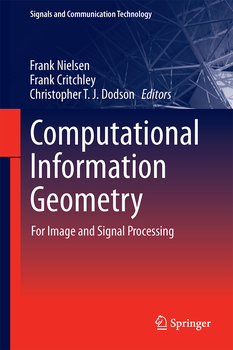
Frank NIELSEN is a Professor at École Polytechnique with expertise in information geometry, data science, and machine learning. He holds a PhD (1996) and HDR (2006) in computer science and has established himself as a leading researcher in geometric approaches to information science. His educational background includes a PhD in computer science (1996) followed by a Habilitation à Diriger des Recherches (HDR) in 2006, the highest academic qualification in France that qualifies one to supervise doctoral candidates. Dr. NIELSEN's research focuses on the Geometric Science of Information , where he develops theoretical frameworks for understanding data through geometric and information-theoretic lenses. His work bridges Computational information geometry Statistical manifold theory Bregman divergences and their applications Machine learning with geometric foundations High-dimensional data analysis He aims to address the challenge of inappropriate data representation in current Data Science by building a theory of Computational Information Geometry to enable Intrinsic Data Science with principled distances. His extensive publication record shows a clear trend toward developing geometric frameworks for understanding statistical divergences, with recent work focusing on Bregman geometry, Fisher-Rao metrics, and their applications in machine learning. His research spans theoretical developments in information geometry to practical implementations like the pyBregMan Python library, demonstrating both theoretical depth and practical relevance. Dr. NIELSEN has made significant contributions through his teaching and publications. He has taught courses at École Polytechnique including INF442, INF517, and INF591. His authored textbooks include Introduction to HPC with MPI for Data Science (2016), A Concise and Practical Introduction to Programming Algorithms in Java (2009), and Visual Computing: Geometry, Graphics, and Vision (2005). He has also edited influential volumes such as Computational Information Geometry for Image and Signal Processing (2016) and Geometric Theory of Information (2014). He actively organizes and participates in academic events, serving on program committees for major conferences including GSI (Geometric Science of Information), CVPR, and ICCV. His work has established him as a key figure in the growing field of geometric approaches to information science.
Sonia Vanier is a Professor in the Department of Computer Science at École Polytechnique, where she holds multiple leadership positions: Head of the 'Trusted and Responsible AI' Chair (X/Crédit Agricole), Head of the 'Optimization and AI for Mobility' Chair (X/SNCF), Head of 3A, and Scientific Manager of Industrial Relations for both the Department and the Computer Science Laboratory (LIX). She coordinates the GdT OR (Network Optimization) working group and leads the REST (Energy, Services and Transport Networks) research axis of the CNRS GDROD, while serving on its scientific council. Her research develops decision support tools for complex industrial problems through hybrid approaches combining Artificial Intelligence and Operations Research , with focus areas including Network Optimization, ethical AI systems, sustainable computing, and trustworthy AI frameworks. Her work bridges theoretical foundations with applications in telecommunications, transportation, and cybersecurity. Publications demonstrate strong emphasis on optimization techniques (branch-and-price, cutting planes) applied to wireless networks, AI safety, and security challenges. Recent works explore LLM memorization, signomial programming, and multi-commodity flow problems, showing consistent integration of OR with machine learning for industrial-scale problems. Awards: Research Award and Innovation Award, Telecom Valley Association ALOES Orange Innovation Project She leads major industrial-academic partnerships through the Crédit Agricole and SNCF chairs, managing research grants focused on responsible AI deployment and mobility optimization. As Scientific Manager of Industrial Relations, she oversees industry collaborations for LIX laboratory. Affiliated with the Computer Science Laboratory (LIX), she directs the 3A research group and contributes to national initiatives through CNRS GDROD, coordinating research in network optimization and sustainable systems.
Mateo Valero Cortés is a renowned Professor of Computer Architecture at the Polytechnic University of Catalonia and Director of the Barcelona Supercomputing Center (BSC). He has held academic and leadership roles since 1974, advancing high-performance computing (HPC) and computer architecture research. His work includes pioneering contributions to vector architectures, multithreading, and instruction-level parallelism. Education includes a Telecommunications Engineering degree from the Polytechnic University of Madrid (1974) and a PhD in Telecommunications Engineering from the Polytechnic University of Catalonia (1980). His research spans over 700 publications, focusing on HPC systems, parallel computing, and supercomputing infrastructure. Key research interests include vector processing, super-scalar processors, and task-based programming models. Recent work emphasizes scalable architectures for exascale computing and energy-efficient hardware-software co-design. Notable achievements include the Eckert-Mauchly Prize (highest in computer architecture), Seymour Cray Award, and Charles Babbage Prize. He has led initiatives like the Spanish Supercomputing Network (RES) and PRACE (European HPC partnership). Academic affiliations include the Royal Academy of Engineering of Spain, ACM Fellow, and IEEE Fellow. He has received 13 honorary doctorates and awards such as Mexico’s Order of the Aztec Eagle. Current projects include the Mont-Blanc HPC prototype and ERC-funded research on multi-core chip design. His BSC oversees over 300 researchers and manages MareNostrum supercomputers.
Florin George Călian is a researcher at the Center for Ecumenical Research within the Lucian Blaga University of Sibiu , with a focus on the intersection of history of philosophy , religious studies , and classical philology . He co-founded the Dan Slușanschi School of Classical and Oriental Languages , which offers Latin, Ancient Greek, Biblical Hebrew, and Sahidic Coptic to international students. Călian’s editorial work includes coordinating the Review of Ecumenical Studies (RES) and the Ratio publishing series. Education : Master’s in Greco-Roman History (University of Bucharest), Master’s in Medieval Studies (Central European University), PhD in Philosophy (Central European University, supervised by Gabor Betegh). Research Areas : Ontology of numbers in Plato, sacred space politics, Neoplatonic theology, historiography of alchemy, and interdisciplinary links between philosophy and Eastern Orthodox Christianity. Recent Publications include analyses of Plato’s mathematical ontology, critiques of Hagia Sophia’s reconversion, and editorials on the problem of evil. His 2021 monograph Numbers, Ontologically Speaking: Plato on Numerosity reinterprets Platonic dialogues through mathematical philosophy. Academic Engagements span roles as a coordinator for the Dan Slușanschi School, editorial board member for RES and SCHOLÉ , and organizer of conferences bridging theology and philosophy.