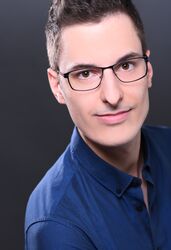
Daniel Weidner is a researcher at the Chair of Computer Science VI (Artificial Intelligence and Knowledge Systems) within the Faculty of Mathematics and Computer Science at the University of Würzburg. His work spans declarative programming, database systems, and artificial intelligence applications. Primary affiliation: Chair of Computer Science VI, University of Würzburg Research focus: AI-driven database systems and logic programming His research interests include declarative technologies, logic programming, and their applications in data mining, tennis analytics, and NoSQL databases. He has extensively contributed to the development of tools that bridge Prolog and Python environments. Weidner has supervised multiple theses and seminar papers, including works on tennis trajectory recognition, heating system data analysis, and declarative program evaluation. His projects often involve Python-based implementations of deductive database systems. Supervised: 4 bachelor's, 2 master's theses Teaching roles: Logic programming, database exercises, and advanced database seminars Scientific awards: No explicit honors mentioned in available records.
Dr. Jayesh Badwaik is a Scientific Researcher at the Jülich Supercomputing Center (JSC) within Forschungszentrum Jülich, a leading interdisciplinary research center in Europe. His work is centered in the Accelerating Devices Lab, where he focuses on high-performance computing architectures and computational methods for scientific applications. Dr. Badwaik's research spans multiple disciplines at the intersection of computer science, physics, and mathematics. His primary research interests include: Computational Physics and numerical methods for scientific computing High Performance Computing (HPC) with focus on exascale systems GPU programming models and accelerated computing Software engineering for large-scale scientific applications Lattice Boltzmann Methods for fluid dynamics simulations Parallel numerical algorithms for conservation laws Analysis of Dr. Badwaik's publication record reveals a clear evolution from theoretical numerical methods toward practical implementation on cutting-edge computing architectures. His early work (2016-2020) focused on mathematical foundations of numerical schemes for conservation laws, while his recent publications (2023-2024) demonstrate increasing emphasis on exascale computing challenges. His contributions to the JUPITER benchmark suite represent significant work in evaluating next-generation supercomputing systems. A substantial portion of his research centers on scaling the Lattice Boltzmann Method to exascale platforms, addressing critical challenges in computational fluid dynamics at unprecedented scales. His expertise in GPU programming is evident from his practical overview of programming models, which provides valuable insights for the HPC community. Dr. Badwaik is actively involved in the Accelerating Devices Lab at JSC, contributing to Europe's high-performance computing ecosystem. His work bridges theoretical numerical analysis with practical implementation on advanced computing architectures, making significant contributions to scientific computing at scale. His research has implications for multiple scientific domains that rely on large-scale simulations, including climate modeling, materials science, and computational fluid dynamics.
Kerstin Rubarth, Ph.D. is a Researcher at the Institute of Biometry and Clinical Epidemiology at Charité - University Medicine Berlin, specializing in methodological research, study planning, and statistical analysis for clinical applications. Education: Doctoral studies in Health Data Science (2019–2023), Charité - Universitätsmedizin Berlin Master's degree in Mathematical Biometrics (2016–2019), University of Ulm Bachelor's degree in Mathematical Biometrics (2012–2016), University of Ulm Research Interests: Kerstin focuses on statistical methodologies including nonparametric methods, resampling techniques, imputation of missing values, and multiple testing. Her clinical focus spans preclinical and translational research in neurology, cardiology, and radiology. Professional Engagement: Active member of the German Society for Medical Informatics, Biometry and Epidemiology (GMDS) and the International Biometric Society, German Region (IBS-DR). Proficient in R and SAS programming languages.
Daniel Seeler is a doctoral student at the University of Potsdam , affiliated with the PharMetrX Research+ Program . His research focuses on understanding vascular (dys)regulation by integrating endothelial cell morphology, blood vessel geometry, and blood flow response signaling. Education MSc in Bioinformatics, Freie Universität Berlin (2016–2019) BSc in Bioinformatics, Freie Universität Berlin (2013–2016) He is supervised by Prof. Wilhelm Huisinga and co-supervised by Prof. Charlotte Kloft . His project employs 3D reconstruction of blood vessel segments and qualitative systems biology modeling to link fluid shear stress, EC genotype, and morphological changes. Mentored by AbbVie , his work aims to improve understanding of physiological and pathological vascular remodeling. Current Roles & Collaborations PhD student (2019–present), University of Potsdam Junior Research Group Systems Pharmacology & Disease Control, Freie Universität Berlin (during MSc thesis and assistant roles) Research Experience Student Assistant, Einstein Center for Regenerative Therapies, Charité Berlin (2017) Student Assistant, Freie Universität Berlin (2018–2019)
Bernhard Fisseni is a Researcher in German Studies/Linguistics and Medieval Studies at the University of Duisburg-Essen, Faculty of Humanities. He is affiliated with the Department of Edition and Edition Technology (AEET) and contributes to Korpora.org, a collection of German-language corpora including the Bonn Early New High German Corpus. His work spans computational linguistics, text technology, and research on the semi-formal language of mathematics through the Naproche project. Dr. Fisseni earned his Magister Artium from the University of Bonn in 2003 with a thesis on creating a markup language for natural language mathematical proofs. He completed his doctoral studies at the University of Duisburg-Essen in 2011 with a dissertation titled "Focus: Interpretation? Empirical Investigations on Focus Interpretation," which empirically evaluated formal-semantic and pragmatic focus theories. His research focuses on computational linguistics, text technology, and digital edition techniques. Dr. Fisseni applies empirical methods and formal models to study semantics, pragmatics, and narratology. A significant portion of his work examines the language of mathematics, particularly through the Naproche project which investigates semi-formal mathematical language. He also conducts research on Afrikaans in relation to German and Dutch languages, and maintains expertise in corpus linguistics with the Bonn Early New High German Corpus. Dr. Fisseni's recent publications demonstrate strong interdisciplinary work bridging computational linguistics, digital humanities, and mathematical logic. His research often focuses on formal frameworks for understanding language structures, particularly in mathematical texts and historical corpora. He has made significant contributions to research data management, digital archiving standards, and the development of computational tools for linguistic analysis. As an active member of academic communities, Dr. Fisseni serves as secretary of the German Society of Computational Linguistics (GSCL) since 2012. He has participated in numerous research projects including CLARIN-D and CLARIAH-DE, and has contributed to the development of web services for linguistic corpora. His technical expertise spans multiple programming languages including Python, Java, and XSLT, which he applies to create tools for linguistic research and digital editions. Dr. Fisseni is involved with the Department of Edition and Edition Technology (AEET) at the University of Duisburg-Essen, where he contributes to projects like the Archive of the Counts von Platen. He also participates in the Naproche project, which develops controlled natural language processing tools for mathematical texts. His work often involves collaboration across disciplines, connecting linguistics with computer science, mathematics, and digital humanities.
Francisco Javier Esparza Estaun (born 1964) is a Professor at the Technical University of Munich, holding the Chair for Foundations of Software Reliability and Theoretical Computer Science within the Department of Computer Science at the TUM School of Computation, Information and Technology. He has held academic positions at Edinburgh University (2001-2003) and the University of Stuttgart (2003-2007) prior to his current appointment at TUM since 2007. Prof. Esparza's research spans theoretical computer science with a focus on formal methods for software verification. His primary interests include algorithms and tools for the design and verification of reactive and distributed systems, verification of systems with infinitely many states, software model checking, program analysis, formal models for distributed systems (particularly Petri nets and process algebras), logic and automata theory, and analysis of probabilistic systems. His work applies mathematical techniques including logic, automata theory and complexity theory to develop methods for locating and eliminating errors in software systems or verifying their correctness. His research output shows consistent contributions to verification techniques, with recent publications focusing on parameterized verification, population protocols, and novel approaches to model checking. His work bridges theoretical foundations with practical verification tools, demonstrating how deep theoretical insights can lead to efficient verification algorithms. ERC Advanced Grant (2018) Honorary Doctor of Masaryk University, Brno, Czech Republic (2009) Member of Academia Europaea (2011) Prof. Esparza has supervised numerous PhD students who have gone on to successful careers in academia and industry. His current research projects include the Continuous Verification of Cyber-Physical Systems (ConVeY) funded by a DFG Research Training Group. Previously, he led the Parameterized Verification and Synthesis (PaVeS) project funded by an ERC Advanced Grant. His research group has developed several influential verification tools including Rabinizer (for LTL translation), Strix (for LTL synthesis), Peregrine (for population protocol verification), and Owl (for omega-automata). His laboratory focuses on developing theoretical foundations for software verification while creating practical tools that implement these theories. The group maintains active collaborations with researchers worldwide and contributes to major verification conferences and journals.
Dr. Michael Schlottke-Lakemper is a Professor of High-Performance Scientific Computing at the University of Augsburg, Faculty of Mathematics, Natural Sciences, and Materials Engineering. He previously held positions as an Interim Professor of Computational Mathematics at RWTH Aachen University (2022–2024) and led a research group at the High-Performance Computing Center Stuttgart (HLRS) from 2021 to 2024. His career includes postdoctoral roles at the University of Cologne and RWTH Aachen University/FZ Jülich. Education: Ph.D. in Mechanical Engineering, RWTH Aachen University (2017) Diplom in Aerospace Engineering, University of Stuttgart (2011) His research focuses on adaptive multi-physics simulations, research software engineering for high-performance computing (HPC), and scientific machine learning. Applications span fluid mechanics, aeroacoustics, and astrophysics, with recent work emphasizing robust high-order summation-by-parts methods and Julia-based computational frameworks like Trixi.jl and TrixiParticles.jl. His publications highlight advancements in discontinuous Galerkin methods, entropy stable schemes, and HPC optimization for compressible flows. Scientific contributions include Developing dynamic load balancing algorithms for multiphysics simulations Creating hybrid computational aeroacoustics methods Advancing Julia's adoption in HPC communities Improving error-based step size control in numerical solvers Current teaching activities include graduate seminars on Maschinelles Lernen in Theorie und Praxis and undergraduate courses in Numerische Lineare Algebra . He leads a research team at the University of Augsburg with collaborators across Germany, including Simon Candelaresi, Valentin Churavy, and Niklas Neher.
Peter K. Friz is a Professor of Mathematics at the Technical University of Berlin and affiliated with the Weierstrass Institute for Applied Analysis and Stochastics . His research focuses on stochastic analysis , rough path theory , and quantitative finance , particularly volatility modeling . Key Affiliations: Institute of Mathematics, TU-Berlin Weierstrass Institute Major Grants: ERC Starting Grant (2010-2016) ERC Consolidator Grant (2016-2021) DFG Research Unit Coordination (2016-2019) Einstein Foundation Grant His work bridges rough path theory with stochastic differential equations and financial mathematics . Recent publications emphasize rough volatility models , nonlinear SPDEs , and pathwise analysis . He co-authored the book Multidimensional Stochastic Processes as Rough Paths with Nicolas Victoir. Scientific Awards: ERC Starting Grant ERC Consolidator Grant Einstein Professorship Friz has organized major conferences like 5ECM, SPA, and Newton Institute workshops. He has mentored PhD students in areas related to stochastic analysis and rough paths , though specific names are not listed here.
Martin Wahl is a Professor (W2) in the Faculty of Mathematics at Bielefeld University, appointed in 2023. He obtained his doctorate from Heidelberg University in 2015, followed by postdoctoral research at Humboldt University of Berlin (2015-2022) and a Feodor Lynen Research Fellowship at Georgia Tech. His research centers on mathematical statistics with emphasis on: High-dimensional statistics and probability theory Statistical learning theory and dimension reduction techniques Nonparametric estimation and minimax optimality Spectral methods for covariance operators and random matrices His recent articles (2020-2025) demonstrate strong focus on spectral methods, perturbation analysis, and error bounds in high-dimensional settings, with applications spanning manifold learning, PCA optimization, and stochastic PDEs. Theoretical developments in minimax estimation and concentration inequalities form consistent themes. Awards: Feodor Lynen Research Fellowship (Georgia Tech) He leads the project "Convexity and Grassmann Manifolds in Statistical Inference" (2027) under the Priority Program "Combinatorial Synergies". He is affiliated with the Bielefeld Graduate School in Theoretical Sciences and the Center for Statistics.
Sönke Hartmann is Professor for Operations Research and Logistics at the Hamburg School of Business Administration (HSBA) since 2007. His academic work focuses on optimization algorithms, resource-constrained project scheduling, and container terminal optimization. He teaches courses in Operations Research, Statistics, Mathematics, Computer Science Foundations, AI & Data Science, and Data Analysis. Professor Hartmann completed his Computer Science studies at the University of Kiel and earned his PhD in Economics with a specialization in Operations Research. His doctoral research laid the foundation for his subsequent work in mathematical optimization and scheduling problems. His research spans multiple areas within operations research and logistics. Dr. Hartmann has made significant contributions to resource-constrained project scheduling, developing algorithms that address complex resource allocation challenges. His work on container terminal optimization has practical applications in port logistics, focusing on improving efficiency through simulation and mathematical models. He has also explored applications of mathematical programming to solve logic puzzles and smartphone applications, demonstrating the versatility of optimization techniques across different domains. Professor Hartmann's publication record shows a clear evolution from theoretical scheduling algorithms to practical applications in container terminals. His recent work (2025) provides a comprehensive review of fifty years of research on resource-constrained project scheduling, while his earlier publications established foundational work in genetic algorithms for project scheduling. The journal distribution shows strong representation in top-tier operations research journals like European Journal of Operational Research. As an active member of the academic community, Professor Hartmann serves as a reviewer for more than 30 scientific journals, contributing his expertise to maintain scholarly standards in operations research and logistics publications. His research has practical implications for container terminal operations, with applications in scheduling equipment and manpower, optimizing container movements, and improving overall terminal efficiency through simulation models. This industry-focused research demonstrates the real-world impact of his academic work.
David Russell Luke is a Professor of Continuous Optimization at the Institute for Numerical and Applied Mathematics, University of Göttingen, where he also serves as Managing Director of the Institute. He holds editorial positions as Area Editor for the Open Journal of Mathematical Optimization and Associate Editor for multiple prestigious journals including Journal of Optimization Theory and Applications, ESAIM: Control, Optimization and Calculus of Variations, SIAM Journal on Optimization, and Advances in Computational Mathematics. Dr. Luke earned his BSc with honors in Applied Mathematics from the University of California, Berkeley in 1991, followed by an MSc (1997) and PhD (2001) in Applied Mathematics from the University of Washington under James Burke. His academic journey included positions at the University of Göttingen (2001-2003), Simon Fraser University (2002-2004), and University of Delaware (2004-2009) before returning to Göttingen. His research focuses on Continuous Optimization, Variational Analysis, and Inverse Problems , with particular expertise in nonsmooth and nonconvex optimization, phase retrieval, and computational imaging. His work bridges theoretical mathematics with practical applications in photonic imaging, tomography, and adaptive optics. Current research projects include atomic orbital tomography, stochastic computed tomography for X-FEL imaging, probabilistic analysis in fixed point theory, and topological optimization for tree structure analysis. Analysis of his recent publications reveals a strong trend toward computational methods for imaging science, particularly phase retrieval problems, with increasing focus on three-dimensional reconstruction techniques and applications in photoemission orbital tomography. His work consistently integrates theoretical convergence analysis with practical algorithm development, often implemented in the ProxToolbox software framework. NASA/GSFC Graduate Student Research Fellow (1998-2001) Editorial roles with multiple leading optimization journals Principal investigator on numerous DFG-funded research projects Dr. Luke has advised several PhD students including Patrick Neumann and Thao Nguyen. His research has been supported by significant grants from the National Science Foundation, German Research Foundation (including Collaborative Research Center 755, Graduiertenkolleg 2088), Bundesministerium fuer Bildung und Forschung, German Israeli Foundation, and Australian Research Council. He leads the Working Group on Continuous Optimization, Variational Analysis and Inverse Problems at the University of Göttingen, which maintains the ProxToolbox software laboratory for proximal algorithms and optimization methods. The group actively develops computational tools for inverse problems and optimization, with applications ranging from space telescope wavefront reconstruction to atomic-scale imaging. Current projects are organized within the Collaborative Research Center 1456 and Graduiertenkolleg 2088 frameworks, focusing on mathematical modeling of complex imaging scenarios and developing efficient numerical algorithms for large-scale optimization problems.
Professor Balázs Kovács is a full Professor (W3) of Mathematics and its Applications at the University of Paderborn since July 2023, where he leads research in the Numerical Analysis of Partial Differential Equations group within the Institute of Mathematics, part of the Faculty of Electrical Engineering, Computer Science and Mathematics. University of Paderborn (2023-present): Full Professor (W3) University of Regensburg (2020-2023): DFG Heisenberg Fellow Technical University of Munich (2022): Substitute Professor (W2) Eberhard Karls University of Tübingen (2015-2020): PostDoc ELTE Eötvös Loránd University (2006-2011): Bachelor and Master in Mathematics Prof. Kovács specializes in numerical analysis of algorithms for geometric surface flows and evolving surface partial differential equations, with particular expertise in mean curvature flow, Willmore flow, and inverse mean curvature flow. His research focuses on time discretization methods, numerical approaches for parabolic and wave-type problems with dynamic boundary conditions, and numerical analysis for Maxwell's equations. His work bridges theoretical mathematics with practical computational methods for solving complex geometric evolution problems. His recent publications demonstrate consistent output in top computational mathematics journals, with a focus on evolving surface PDEs, tumor growth modeling, and error analysis for numerical methods. The publications reveal a strong emphasis on theoretical numerical analysis combined with practical computational implementations. DFG Heisenberg Fellowship (2020-2026): Numerical analysis of geometric flows and evolving surface partial differential equations (Project ID: 446431602) DFG Research Training Group 2339 (2022-2023): Interfaces, Complex Structures, and Singular Limits (Project ID: 321821685) DFG Research Group 3013 (2023-2025): Vector- and Tensor-Valued Surface PDEs (Project ID: 417223351) Prof. Kovács actively contributes to academic service, having served on the Faculty Council at the University of Regensburg from 2021-2023. His teaching portfolio includes advanced courses in numerical methods for stationary equations and specialized seminars like the Coding Challenge. His research program represents a significant contribution to the field of numerical analysis for geometric evolution equations, with ongoing projects funded through prestigious German Research Foundation programs.
Tatiana von Landesberger is a Professor of Computer Science Visualization at the Institute of Computer Science, University of Cologne. She serves as Deputy Head of the Institute, Member of the Faculty Council (Mathematics-Natural Sciences Faculty), Doctoral Representative, and Member of the Exam Office for the Master of Computer Science program. Her research spans multiple domains including medicine, biology, finance, and transportation. Research Interests: Visual Graph Analysis Time Series Analysis Visual Analysis of Movement Data Information Visualization Perception issues in Visualization Interaction Design for Visual Analytics Scientific Awards: Burgen Scholar Award (2015) Reviewer Award IEEE Transactions on Visualization and Computer Graphics (2014) Paper awards at IEEE VIS (2020), CGA (2017, 2015), VDA (2010) Poster award at IEEE VIS (2016) Leadership Roles: Full Chair of EuroVis conference Deputy Head of Institute of Computer Science Doctoral Representative at University of Cologne
Prof. Jan Flusser is a distinguished researcher and professor specializing in digital image processing and pattern recognition. He serves as the research deputy director at the Institute of Information Theory and Automation of the Czech Academy of Sciences (UTIA CAS) since 2017, having previously served as director from 2007-2017. He is actively involved in teaching at Charles University's Faculty of Mathematics and Physics (MFF UK) and Czech Technical University's Faculty of Nuclear Sciences and Physical Engineering (FJFI ČVUT). His research focuses on digital image processing, object recognition, and artificial intelligence, with specific expertise in image fusion, moment invariants for object recognition, image registration, and blind deconvolution. Prof. Flusser has authored or co-authored over 200 scientific publications including two major monographs: "Moments and Moment Invariants in Pattern Recognition" (Wiley, 2009) and "2D and 3D Image Analysis by Moments" (Wiley, 2016). His work has received over 21,000 Google Scholar citations and 11,500 SCOPUS citations (H-index 47 and 37 respectively). Prof. Flusser has led more than 20 basic research projects (both national and international) as well as applied projects, particularly in computer vision, astronomy, remote sensing, and medicine. From 2015-2018, he coordinated the research program "Hope and Risks of the Digital Age" as part of the AV21 Strategy. His research has been recognized with several prestigious awards including the Czech Academy of Sciences Award in category "A", the Chairman of the Czech Science Foundation Award, and the Elsevier "SCOPUS 1000 Award". Cena AV ČR v kategorii "A" za přínos k teorii fúze digitálních obrazů (2007) Cena předsedy GA ČR za výsledky v oblasti rekonstrukce obrazů v astronomii (2007) Cena nakladatelství Elsevier "SCOPUS 1000 Award" (2010) Felberova medaile ČVUT II. stupně (2015) Akademická prémie AV ČR (2017) Senior Member IEEE Prof. Flusser has successfully supervised 14 PhD students (including 2 international students as of 2024) and has been instrumental in establishing doctoral programs in computer graphics and image analysis. He serves on multiple committees for final state examinations and PhD dissertation defenses, and chairs the committee for DSc. dissertation defenses at the Czech Academy of Sciences in the field of Informatics and Cybernetics.
Prof. Dr. Thomas Rauber is a Professor at the University of Bayreuth in the Faculty of Mathematics, Physics and Computer Science, where he leads the Chair of Applied Computer Science II – Parallel and Distributed Systems. His research spans several decades with continuous scholarly output, demonstrating significant contributions to parallel computing, high-performance systems, and energy-efficient computation. Rauber maintains strong collaborative relationships with researchers including Gudula Rünger and Matthias Korch, with whom he has co-authored numerous publications. His primary research interests include parallel and distributed systems, high-performance computing, task scheduling, energy efficiency in computing, scientific computing with focus on Runge-Kutta methods and ODE solvers, and performance modeling. Rauber's work has evolved from foundational parallel programming concepts to contemporary concerns about energy consumption in computing systems. His research addresses both theoretical aspects of parallel algorithms and practical implementation challenges on modern architectures. Rauber's publication record shows a clear trend toward energy-aware computing, with recent work focusing on the trade-offs between performance, energy consumption, and solution accuracy. His 2023-2025 publications demonstrate continued innovation in task scheduling, software-defined environments for cloud applications, and optimization of numerical methods for modern multicore processors. His textbook "Parallel Programming for Multicore and Cluster Systems" (now in its third edition) has become a standard reference in the field. While specific grant information isn't detailed in the provided text, Rauber's extensive publication record across multiple decades suggests sustained research funding. His work on projects like TGrid (Runtime environment for heterogeneous systems and grid systems) and investigations into task pools for dynamic load balancing indicates involvement in significant research initiatives. Rauber maintains an active research laboratory focused on parallel and distributed systems, with ongoing projects examining communicating multiprocessor tasks, runtime environments for heterogeneous systems, and self-adaptation techniques for time-step-based simulations on heterogeneous HPC systems. His research group continues to produce influential work at the intersection of theoretical computer science and practical high-performance computing applications.