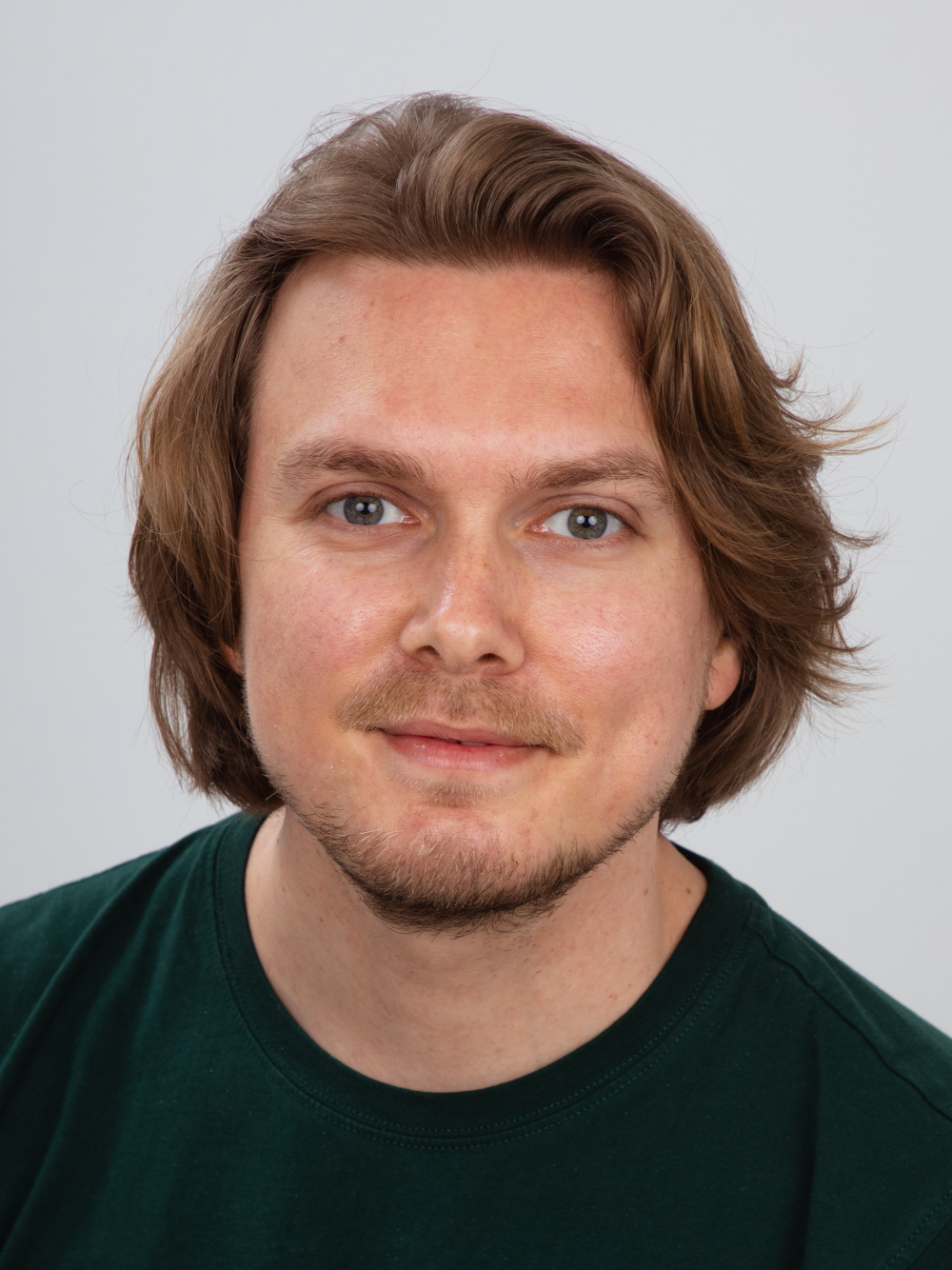
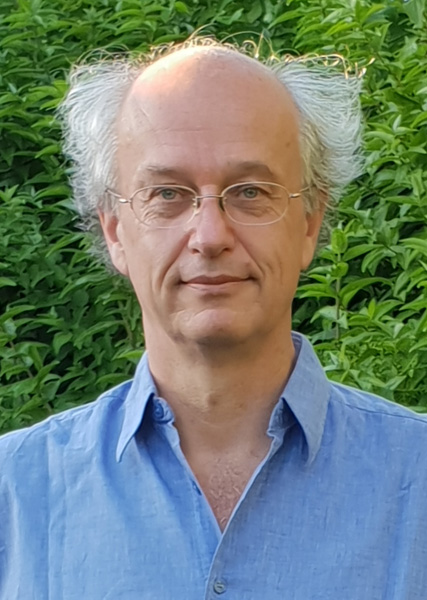
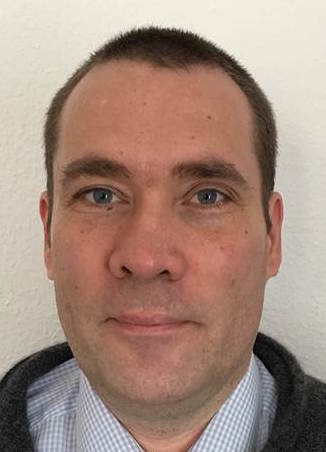
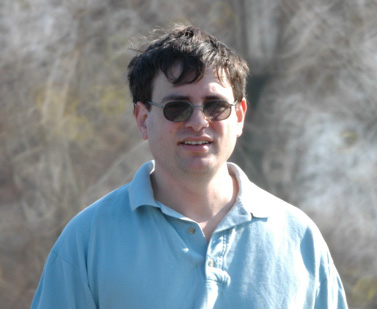
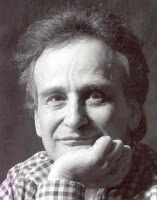
Jan Dreier is a Research Fellow at the Institute of Logic and Computation at Vienna University of Technology. His research centers on structural graph theory and algorithmic meta-theorems, particularly exploring the boundaries of tractability for model checking problems. Dreier's work bridges theoretical computer science and discrete mathematics, focusing on graph decompositions, parameterized complexity, and logical expressiveness. Key research themes include monadic stability in graph classes, applications of model theory to computer science, and efficient algorithms for logical queries on structured graphs. His publication record shows consistent focus on graph sparsity concepts and algorithmic applications of logic, with recent work expanding into approximation methods for counting queries. Research demonstrates sophisticated applications of combinatorial methods to fundamental problems in computational complexity.
Huamin Qu is a Chair Professor in the Department of Computer Science and Engineering at the Hong Kong University of Science and Technology (HKUST). He serves as the Founding Dean of the Academy of Interdisciplinary Studies (AIS), Founding Head of the Division of Emerging Interdisciplinary Areas (EMIA), and was the Founding Acting Head of Computational Media and Arts (CMA) at HKUST(GZ). Qu directs the VisLab and coordinates the Human-Computer Interaction (HCI) group. He obtained his BS in Mathematics from Xi'an Jiaotong University and MS/PhD in Computer Science from Stony Brook University. Qu's research integrates Data Visualization , Human-Computer Interaction , and Human-Centered AI , with applications in urban informatics, social networks, and explainable AI. His work focuses on developing interactive systems for big data analytics, visual storytelling, and AI-driven decision support. Research extends to multimodal communication, fintech, and augmented reality applications. His publications emphasize visual analytics for complex datasets (mobility, social media, financial), interaction techniques for immersive environments, and AI-enhanced visualization tools. Recent works explore explainable AI interfaces and large-scale data communication frameworks. IEEE Visualization Academy (2020) IEEE VGTC Technical Achievement Award AI 2000 Most Influential Scholar (2019, 2023, 2024) 21 Best Paper/Honorable Mention awards IBM Faculty Award (2009) APICTA Merit Award (2015) Yelp Dataset Grand Prize (2018) Qu has advised 48 PhD graduates (21 now faculty at institutions like UC Davis, University of Minnesota, Texas A&M) and 30 MPhil students. He secured major grants including RGC theme-based projects (digital citizenship, air pollution), UGC AoE (slope safety), and China's 973 Program. As VisLab director, he leads 20+ researchers in visualization/HCI projects adopted by Microsoft, IBM, Huawei, and Tencent.
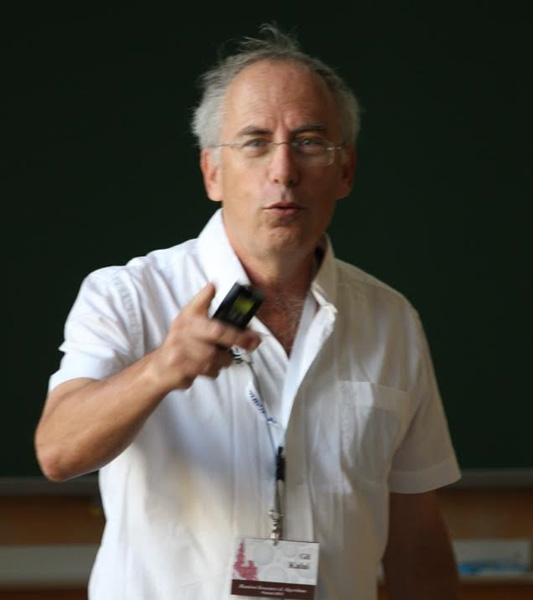
Gil Kalai is a Professor of Mathematics at the Hebrew University of Jerusalem since 1992, where he holds the Henry and Manya Noskwith Chair. He also serves as an Adjunct Professor of Mathematics and Computer Science at Yale University since 2004 in a long-term part-time visiting position. His academic career includes visiting positions at prestigious institutions including MIT, Cornell, IAS Princeton, Berkeley, Bell-labs, IBM, and Microsoft. Professor Kalai's research spans multiple areas within mathematics and theoretical computer science. His work in combinatorics encompasses geometric, probabilistic, and topological approaches. He has made significant contributions to the study of convex sets and polytopes, linear programming, and theoretical computer science. His influential 1988 paper with Kahn and Linial on Boolean functions pioneered applications of Fourier analysis in theoretical computer science. Kalai's research has evolved to include the application of Fourier analysis to thresholds, influences, symmetries, noise, percolation, and social choice. He has developed theories in algebraic shifting and studied face-numbers and other combinatorial invariants of polytopes. His work on the diameter of polytopes and randomized simplex algorithms has been influential in optimization theory. In 1993, his collaboration with Kahn produced a groundbreaking counterexample to Borsuk's Conjecture in 1325 dimensions. Professor Kalai's publications reveal a consistent focus on the intersection of combinatorics, geometry, and theoretical computer science. His work shows a progression from foundational combinatorial geometry to increasingly sophisticated applications of harmonic analysis in discrete mathematics. The recurring themes across his 30+ year career include Boolean functions, polytope theory, and probabilistic methods in combinatorics, demonstrating remarkable coherence in his research trajectory. 2016 European congress of Mathematics, plenary speaker 2013 ERC advanced grant 2012 Rothschild Prize 1994 International Congress of Mathematicians invited section talk, Zurich 1994 Fulkerson Prize 1993 Erdos Prize 1992 Polya Prize Though specific details of his advising are not provided in the source material, Kalai has written over 70 scientific papers and maintains an active research blog entitled "Combinatorics and More." His 2013 ERC advanced grant indicates significant research funding for his work. His extensive collaborations with researchers across multiple institutions suggest a robust research program with numerous PhD students and postdoctoral researchers, though specific names are not mentioned in the provided texts. Professor Kalai maintains active research connections across multiple institutions including Hebrew University, Yale, and various research centers worldwide. His work bridges pure mathematics and theoretical computer science, creating a unique interdisciplinary research environment that influences both fields.
Olaf Steinbach is a University Professor (Univ.-Prof.) at the Institute of Applied Mathematics at Graz University of Technology. His academic career spans over three decades with continuous research activity from 1992 to the present, including publications scheduled for 2026. He serves as a project manager for several research initiatives including the Special Research Area (SFB) F90 Computational Electric Machine Laboratory, which runs from 2022 to 2026. Professor Steinbach's research interests primarily focus on Numerical Analysis and Computational Mathematics . His work centers around developing and analyzing advanced numerical methods, particularly Finite Element Methods (FEM) and Boundary Element Methods (BEM), for solving partial differential equations (PDEs) and optimal control problems. His research spans both theoretical aspects (such as error analysis, stability, and convergence) and practical applications (including electric machines, electromagnetics, and biomechanics). He has made significant contributions to space-time finite element methods, which treat time as an additional dimension in the discretization process, leading to more robust and efficient solvers for time-dependent problems. Analysis of his recent publications (2021-2026) reveals a strong focus on optimal control problems governed by partial differential equations, with particular emphasis on elliptic, parabolic, and hyperbolic PDEs. His work demonstrates a consistent pattern of developing robust numerical methods with rigorous error analysis, often incorporating regularization techniques to handle challenging constraints. The applications span computational electromagnetics (particularly electric machines), fluid dynamics, and wave propagation problems. His research increasingly incorporates advanced computational techniques including parallel computing and isogeometric analysis. Professor Steinbach has supervised numerous doctoral students and has been actively involved in organizing academic events, including summer schools on Boundary Element Methods. His collaborative network extends across multiple disciplines and institutions, reflecting the interdisciplinary nature of his work in computational mathematics. His research has been supported through multiple significant projects including DK-W1244 Doctoral Program on Partial Differential Equations, the EU CASOPT project on optimization of industrial devices, and the ongoing Special Research Area on Computational Electric Machine Laboratory. These projects demonstrate his leadership in establishing research frameworks that bridge theoretical mathematics with practical engineering applications. Professor Steinbach maintains an active research group within the Institute of Applied Mathematics, collaborating closely with researchers in computational engineering, electrical engineering, and biomechanics. His work on the Computational Electric Machine Laboratory represents a particularly strong interdisciplinary effort combining mathematical theory with electrical engineering applications.
Luca Cardelli is a Principal Researcher and Assistant Director at Microsoft Research Cambridge, UK, since 1997. He holds visiting professorships at Imperial College London (Department of Computing, 2004–2009) and the University of Trento (2005–2007). He earned his PhD in Computer Science from the University of Edinburgh in 1982. His research spans type theory , molecular programming , and principles of programming languages , with applications to systems biology and concurrency theory. Notable contributions include formal frameworks for modeling biochemical systems (e.g., the stochastic π-calculus) and designing DNA-based circuits. Key achievements include the AITO Dahl-Nygaard Senior Prize (2007) and multiple Most Influential Paper Awards at POPL and ETAPS. His work bridges computer science and biology, advancing both theoretical foundations and practical molecular computing.
Emmanuel Kowalski is a Professor of Mathematics at ETH Zurich , where he has been since 2008. Previously, he held professorships at Université Bordeaux I (2000–2007) and was a Veblen Research Instructor at Princeton University and the Institute for Advanced Study (1998–2000). His research focuses on analytic number theory, automorphic forms, and algebraic geometry. Education: École Normale Supérieure de Lyon (1989–1992); PhD in Mathematics from Rutgers University (1998). Research Interests include automorphic forms, L-functions, sieve methods, exponential sums, and probabilistic number theory. His work often bridges number theory with algebraic geometry and harmonic analysis. He has authored over 70 research papers and 6 books, including the influential Analytic Number Theory (2004) with Henryk Iwaniec. Scientific Awards and Invitations include the von Neumann Visiting Fellowship at IAS Princeton (2009), membership in the Board of the Institut des Hautes Études Scientifiques (2016–present), and four invitations to lecture at the prestigious Bourbaki Seminar. He has also delivered key lectures at the Riemann International School of Mathematics and conferences honoring major mathematicians. Grants and Leadership He has organized numerous conferences and research programs, including the 2019 Arithmetic, geometry and modular forms conference at FIM and the 2022 goMath program on Women in Mathematics. He co-leads projects funded by the Swiss National Science Foundation (SNF), such as Trace functions and arithmetic Fourier transforms .
Alessandro Astolfi is a Professor of Nonlinear Control Theory in the Department of Electrical and Electronic Engineering at Imperial College London, where he has been faculty since 1996. He also holds a professorship at the Department of Civil Engineering and Computer Science Engineering at the University of Rome Tor Vergata since 2005. From 2022 to 2025, he serves as College Consul for the Faculty of Engineering and Business School, and previously served as Head of the Control and Power Group from 2010 to 2022. His research expertise spans multiple areas of control theory: Nonlinear control theory Adaptive and robust control Discontinuous stabilization Model reduction Geometric control theory Observer design Astolfi's work has produced significant applications across diverse fields including aerospace systems (under-actuated satellites, autonomous aircraft), power systems (multi-machine systems), game theory (population dynamics, multi-agent systems), and industrial processes (model reduction applications). His research contributions have been recognized with numerous prestigious awards: 2003 Philip Leverhulme Prize for outstanding research achievements of young scholars 2007 IEEE Control Systems Society Antonio Ruberti Young Researcher Prize 2009 IEEE Fellow for contributions to nonlinear control theory 2009 Googol Best New Application Paper Award 2012 George S. Axelby Outstanding Paper Award 2012 IEEE CSS Distinguished Member Award 2015 Sir Harold Hartley Medal from the Institute of Measurement and Control (UK) Professor Astolfi has authored more than 120 journal papers, 30 book chapters, and over 240 conference papers. He co-authored the monograph 'Nonlinear and Adaptive Control with Applications' (Springer-Verlag). He currently serves as Chair of the IEEE CSS Conference Editorial Board and has participated in program committees of numerous international conferences. His research group at Imperial College London maintains strong connections with academic institutions worldwide including ETH Zurich, Rice University, and SUPELEC, with whom he has established visiting lecturer relationships spanning decades.
Philipp Eichmeir is a Researcher at the Research Center Wels within the Upper Austria University of Applied Sciences . His work focuses on optimal control , multibody dynamics , and adjoint methods applied to robotics and automotive systems. Expertise in adjoint gradient computation for extremal value optimization Active in automotive/mobility and smart production domains Philipp's research spans computational mathematics , robotics , and mechanical engineering , utilizing advanced numerical methods and simulation modeling for complex dynamic systems. His recent publications focus on multibody dynamics , adjoint optimization , and inequality constraint handling in control systems. Collaborative projects include IOMMS (Innovative Optimization Methods for Multibody Systems) and JR-Centre for Thermal NDE of Composites . Scientific Awards Best Paper Award (2020) Automatisierte Körperschallauswertung (2015)
Pierre Colmez is a French mathematician affiliated with the École Polytechnique (1993-2010) and the National Center for Scientific Research (CNRS) at the Institut de Mathématiques de Jussieu since 2010. His academic journey includes postdoctoral positions at the Institut Joseph Fourier (Grenoble) and the Max Planck Institute for Mathematics (Bonn). Ph.D. in 1988 (Grenoble) under Jean-Marc Fontaine and John Coates École Polytechnique: Professor (2006-2010), Teaching Professor (1993-2005) Colmez’s research lies at the intersection of arithmetic geometry , Galois representations , p-adic Hodge theory , and the Langlands program . His work explores connections between automorphic forms, p-adic analysis, and cohomological structures in number theory. His most recent publications focus on p-adic cohomology, Drinfeld towers, and syntomic complexes, reflecting his expertise in advanced topics of nonarchimedean geometry and Galois cohomology . Collaborations with Gabriel Dospinescu and Wiesława Nizioł highlight his contributions to modern arithmetic geometry. Prix Léonid Frank (2016) Aisenstadt Chair (2015) Prix Fermat (2005) Prix Gabrielle Sand et Guido Triossi (1999) Colmez has held editorial roles at Astérisque (1999-2004), directed the SMF Mathematical Documents collection (2001-2016), and served on editorial boards for Annales de l'ENS and Publications de l'IHES . His academic network includes collaborations with Laurent Berger, Christophe Breuil, and Jean-Pierre Serre.
Tamas Hausel is a Professor at the Institute of Science and Technology Austria (IST Austria) , holding this position since 2016. He previously served as a Professor and Chair of Geometry at École Polytechnique Fédérale de Lausanne (EPFL) from 2012 to 2016, and held academic roles at the University of Oxford, University of Texas at Austin, University of California, Berkeley, and the Institute for Advanced Study, Princeton. PhD in Mathematics (University of Cambridge, 1999) Diploma in Mathematics (Eötvös Loránd University, Budapest, 1995) Research Focus: Hausel's work bridges algebraic geometry, geometric representation theory, and mathematical physics. His research explores moduli spaces in gauge theory, Higgs bundles, hyperkähler geometry, and the geometric Langlands duality. He has led major projects funded by the European Research Council and other prestigious bodies. Scientific Recognition: Hausel has been awarded two ERC Advanced Grants , the Whitehead Prize , and the Alfred Sloan Research Fellowship . He has delivered invited talks at the International Congress of Mathematicians and the International Congress on Mathematical Physics . 2026-2031: ERC Advanced Grant (EUR 2.5M) 2022-2025: FWF Standalone Grant (EUR 378K) 2013-2018: ERC Advanced Grant (EUR 1.3M) 2009-2013: EPSRC First Grant (GBP 414k) 2005-2013: Royal Society University Research Fellowship (GBP 530k) 2006-2010: NSF Standard Grant (USD 242k)
Dr. Alexander Linsbichler serves as Senior Postdoc and Principal Investigator at the Institute of Philosophy and Scientific Method at Johannes Kepler University Linz. He leads the FWF ESPRIT project 'Adverse Allies: Logical Empiricism and Austrian Economics' and will assume Principal Investigator duties for the OeNB (Austrian National Bank) Anniversary Fund Project 'Carl Menger as a Central Banker?' starting January 2025. Concurrently, he holds faculty appointments at the Vienna Doctoral School of Philosophy (University of Vienna) and the Department of International Economics (Vienna International School), and lectures at multiple economics departments across Vienna and Graz institutions. Dr. Linsbichler earned his doctorate in Philosophy from the University of Vienna with highest distinction in September 2020 through the Doctoral Program 'The Sciences in Historical, Philosophical and Cultural Contexts.' His academic foundation includes an MA in History and Philosophy of Science (2014) and a Mag.rer.nat. in Mathematics: Mathematical Logic and Foundations (2012), both completed with highest distinction from the University of Vienna and Vienna University of Technology. His research centers on the philosophical foundations of economics, with particular emphasis on the Austrian School of Economics within historical context. Dr. Linsbichler investigates the complex relationship between Logical Empiricism and Austrian Economics, the evolution of economic methodology, and the history of economic thought from Viennese Enlightenment through 20th century debates. His work frequently examines intellectual connections between figures like Otto Neurath, Ludwig von Mises, and members of both the Vienna Circle and Mises Circle, challenging conventional narratives about these philosophical and economic traditions. Analysis of his recent publications reveals a scholarly trajectory focused on re-examining foundational assumptions in economic thought, particularly regarding the socialist calculation debates, the role of formal methods in economics, and the historical development of Viennese economic philosophy. His interdisciplinary approach integrates philosophy of science, economic methodology, and historical analysis to provide nuanced perspectives on longstanding debates in economic theory. 2nd place RHETM Paper Prize 2020 for 'Rationalities and Their Limits: Reconstructing Neurath's and Mises's Prerequisites in the Early Socialist Calculation Debates' As Principal Investigator of major research projects funded by the Austrian Science Fund (FWF) and the Austrian National Bank, Dr. Linsbichler manages substantial research resources. His FWF ESPRIT project 'Adverse Allies' explores historical connections between Logical Empiricism and Austrian Economics, while his upcoming OeNB project will investigate Carl Menger's central banking contributions. These projects demonstrate his ability to secure competitive funding and lead interdisciplinary research teams examining foundational questions in economic thought. Dr. Linsbichler actively participates in multiple research initiatives including 'Adverse Allies: Logical Empiricism and Austrian Economics' (FWF), 'Carl Menger as a Central Banker?' (OeNB), and 'Normative Framework for Measuring Lifespan Inequity' (NORM_LIFE). These projects unite scholars from philosophy, economics, and history to investigate methodological questions in economic theory and policy formation, with particular attention to how philosophical frameworks shape economic reasoning.
Hans Irschik is a Full Professor and Head of the Institute of Technical Mechanics at Johannes Kepler University of Linz, Austria. He has held key academic roles, including Vice-Rector for Research (1995-2001) and Chair of the Senate (2009-2013) at JKU, and serves as Editor-in-Chief of Acta Mechanica . His work bridges structural mechanics, mechatronics, and control systems. Education: Studied Civil Engineering at Vienna University of Technology, earned Doctor of Technical Sciences (1981) and Habilitation in Mechanics (1986). Research interests include structural control, continuum mechanics, and smart materials. His contributions span theoretical developments and applied control strategies for aging structures. Recent articles focus on Lagrangian formulations, piezoelectric sensors, and beam theories, reflecting his expertise in mechanics and structural health monitoring. Scientific Awards & Memberships: Full Member, Austrian Academy of Sciences (since 2011) Honorary Doctorate, St. Petersburg Polytechnical University (2009) President, European Association of Structural Control and Health Monitoring (2008-2012) Fellow, Japanese Society for the Promotion of Science (2006) City of Vienna Award (1988) Kardinal Innitzer-Award (1988) Grants & Projects: Led Austrian Science Fund (FWF) research since 1993. Key researcher in the K2-Austrian Center of Competence in Mechatronics (since 2001). Participated in EUROMECH committees and European Science Foundation programs.
Elon Lindenstrauss is a Professor at Hebrew University since 2008 and previously held faculty positions at Princeton University (2004-2010) and Stanford University (2001-2003). He is a member of the Academia Europaea (elected 2012) and has been affiliated with prestigious institutions including the Institute for Advanced Study (Princeton) and Courant Institute (NYU). Fields Medal recipient (2010) ERC Advanced Grant awardee (2011) Recipient of multiple fellowships including Clay Mathematics Institute (2003-2005) and Clore Fellowship (1998-1999) His research focuses span multiple mathematical disciplines: Ergodic theory and dynamical systems Homogeneous spaces and equidistribution Connections between number theory and quantum chaos Additive combinatorics and random walks As a leading mathematician, he has organized major conferences, including: 2013-14 Semester program at Hebrew University 2010 Oberwolfach workshop on Homogeneous Dynamics 2007 Clay Summer School on Homogeneous Flows
Victor Vianu is a Professor of Computer Science and Engineering at the University of California, San Diego and holds the INRIA International Chair at INRIA-Saclay in Paris. He has maintained continuous faculty status at UC San Diego since 1983 while developing extensive international collaborations, particularly with French research institutions including INRIA, ENST-Paris, ENS-Paris, and the University of Paris. His academic credentials include a Ph.D. in Computer Science from the University of Southern California (1983) and undergraduate studies in Mathematics and Informatics at the University of Bucharest (1974-1977). Professor Vianu's research spans computational logic, database systems and theory, and automatic verification. His work uniquely bridges theoretical foundations with practical applications in XML processing, workflow systems, and data-driven applications. He has made seminal contributions to understanding the theoretical underpinnings of database query languages and their expressive power, particularly in the context of XML technologies and workflow systems. His research demonstrates a consistent trajectory from theoretical computer science to practical database systems applications. His publication record reveals significant contributions to database theory spanning over three decades, with particular emphasis on XML technologies, workflow systems, and formal methods for data-driven applications. His work shows a clear evolution from foundational theoretical work to practical applications in business processes and web technologies. INRIA International Chair (2013) Fellow of the American Association for the Advancement of Science (AAAS) (2013) ACM PODS Alberto O. Mendelzon Test-of-Time Award (2010) Fellow of the Association for Computing Machinery (ACM) (2006) Professor Vianu has held significant leadership roles including Editor-in-Chief of the prestigious Journal of the ACM, numerous program committee chair positions for major database conferences (PODS, ICDT, ASIAN), and General Chair for ACM SIGMOD conferences. He has served on the executive committees of SIGMOD (1998-2000) and PODS (1993-2004), and was a member of the ICDT Council (1997-2007), demonstrating sustained influence in the theoretical database community. His extensive invited talks at major conferences including College de France, ACM PODS, and International Conference on Database Theory highlight his international recognition.
Saharon Shelah is an Israeli mathematician renowned for his groundbreaking work in mathematical logic and set theory. He currently holds the Robinson Chair for Mathematical Logic at Hebrew University, a position he has held since 1978, and has been a Professor at Hebrew University since 1974. Additionally, he serves as a Distinguished Visiting Professor at Rutgers University since 1986. His educational background includes: B.Sc. from Tel Aviv University (1964) M.Sc. from Tel Aviv University (1967) M.Sc. from Hebrew University (1968) Ph.D. from Hebrew University of Jerusalem (1969), summa cum laude, supervised by Michael Rabin Shelah's research primarily focuses on mathematical logic, particularly model theory and set theory. His work has revolutionized these fields through the development of stability theory, PCF theory, and proper forcing. He has made significant contributions to understanding the connections between logic and other mathematical disciplines including algebra, computer science, and combinatorics. His approach often involves creating general frameworks that solve multiple problems simultaneously, demonstrating extraordinary depth and breadth in mathematical thinking. An analysis of Shelah's extensive publication record reveals consistent innovation across mathematical logic. His work shows a progression from foundational model theory in the 1970s through the development of stability theory, to groundbreaking set theory results in the 1980s and 1990s, particularly in cardinal arithmetic and PCF theory. Recent publications continue to expand abstract model theory while finding new applications across mathematics. His research demonstrates remarkable consistency in quality and originality over five decades. Shelah's exceptional contributions have been recognized with numerous prestigious awards: 2013 AMS Steele Prize 2011 EMET Prize in Mathematics 2001 Wolf Prize in Mathematics 2000 Bolyai Prize 1998 Israel Prize for Mathematics 1992 SIAM George Pólya Prize 1991 Honorary Foreign Member of the American Academy of Arts and Sciences 1988 Member of the Israel Academy of Sciences and Humanities 1983 Karp Prize 1982 Rothshild Prize 1977 Erdös Prize Throughout his career, Shelah has mentored numerous students and collaborated with over 200 coauthors. His research has been supported by multiple grants from prestigious organizations including the Israel Science Foundation and the National Science Foundation. Shelah's work has fundamentally shaped modern mathematical logic, with his classification theory providing frameworks that continue to guide research directions. His ability to connect seemingly disparate areas of mathematics through logical structures has made his contributions exceptionally influential. Shelah maintains an active research group at Hebrew University, where he continues to supervise doctoral students and postdoctoral researchers. His research program, known for its depth and technical sophistication, continues to generate new directions in mathematical logic. The Shelah Archive (http://shelah.logic.at) serves as a comprehensive repository of his extensive publication record, which surpassed 1190 papers by the end of 2024.