Silas Alben is a Professor in the Department of Mathematics at the University of Michigan, affiliated with the College of Literature, Science, and the Arts. His research focuses on applied mathematics and mathematical biology, particularly fluid-structure interactions in biological systems. He employs computational simulations and laboratory experiments to study fundamental physics of flexible bodies in fluids. Research interests include biomechanics of swimming organisms, vortex dynamics in fluid-structure interactions, and thermal transport optimization. His work bridges mathematical modeling with experimental validation to understand complex physical phenomena. Publications demonstrate strong focus on fluid dynamics applications, including vortex-enhanced heat transfer, membrane flutter dynamics, and bio-inspired locomotion. Recurring themes include optimization of fluid-structure systems, vortex wake interactions, and computational methods for aeroelastic problems.
Paul Wilson serves as the Grainger Professor of Nuclear Engineering and Chair of the Department of Nuclear Engineering & Engineering Physics at the University of Wisconsin-Madison. His research develops computational tools for modeling nuclear energy systems with applications in radiation shielding, waste management, non-proliferation, and energy policy. Education: PhD in Nuclear Engineering, University of Wisconsin-Madison (1999) Dr.-Ing in Mechanical Engineering, Technical University of Karlsruhe (1998) MS in Nuclear Engineering, University of Wisconsin-Madison (1995) B.A.Sc. in Engineering Science (Nuclear Power option), University of Toronto (1992) Wilson's research spans computational nuclear engineering with emphasis on Monte Carlo methods, nuclear fuel cycles, and proliferation analysis. His Computational Nuclear Engineering Research Group (CNERG) develops simulation tools for radiation transport, waste transmutation, and fusion systems. Key projects include the Infinity Two fusion pilot plant design and Cyclus nuclear fuel cycle simulator. Recent publications reveal strong focus on fusion energy systems (particularly stellarator-based designs like Infinity Two), machine learning applications in nuclear security, and advanced neutronics modeling. His work bridges computational methods with real-world nuclear challenges including waste management and non-proliferation. Scientific awards: Fellow of the American Nuclear Society (2023) American Nuclear Society Young Member Advancement Award (2019) American Nuclear Society Arthur Holly Compton Award (2018) Grainger Professor of Nuclear Engineering (2016) American Nuclear Society Presidential Citation (1996) Wilson advises graduate students through thesis research courses (N E 790/890/990) and has secured significant funding from the U.S. Department of Energy. His consultancy roles include work with CEA Saclay, Karlsruhe Institute of Technology, and the Blue Ribbon Commission on America’s Nuclear Energy Future. He previously served on the Generation IV Technology Roadmap Committee (2001-2003). He leads the Computational Nuclear Engineering Research Group (CNERG), which develops open-source tools including PyNE and Cyclus. The group's work spans fusion pilot plant design, nuclear security applications, and fuel cycle simulation for next-generation nuclear systems.
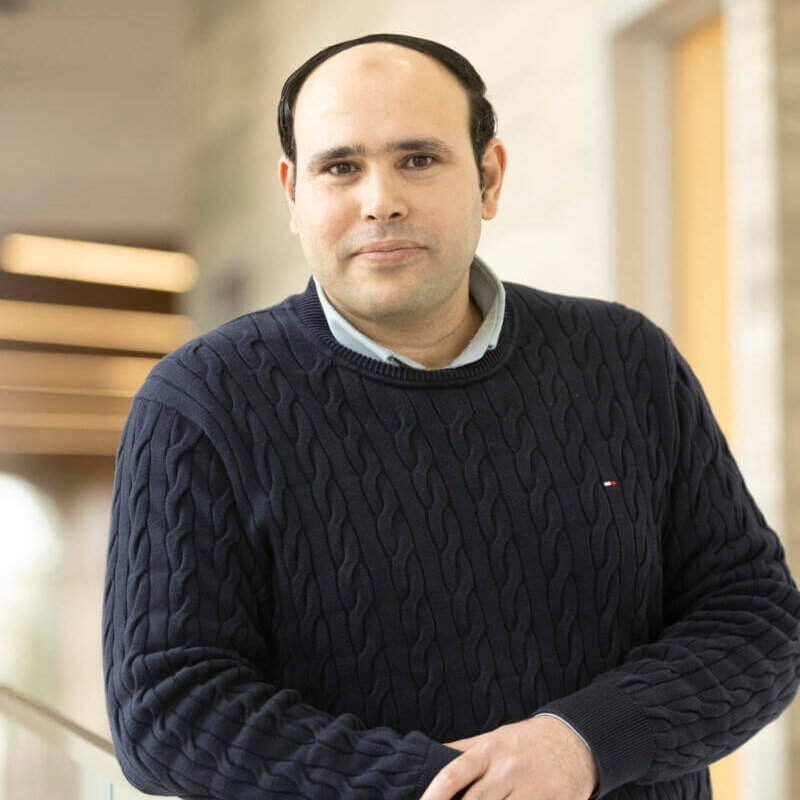
Mohamed Shaat is an Assistant Professor of Mechanical Engineering in the Engineering Department at St. Mary's University, San Antonio, Texas. Holding a Ph.D. from New Mexico State University (2017), he previously served as Assistant Professor at Abu Dhabi University (2019-2021) and held postdoctoral positions at Southern Methodist University (2022-2024) and Boston University (2021-2022). His research bridges energy storage systems, active matter physics, and advanced materials engineering. His educational foundation includes: Ph.D. in Mechanical Engineering, New Mexico State University, 2017 M.Sc. in Mechanical Engineering, New Mexico State University, 2016 M.Sc., Zagazig University (Egypt), 2012 B.Sc., Zagazig University (Egypt), 2007 Dr. Shaat's research program focuses on interdisciplinary innovation in energy storage (SOFCs & ASSBs), mechanics of active matter, nano-confined fluids, chiral metamaterials, and topological/non-Hermitian mechanics. He integrates machine learning with continuum mechanics to optimize electrochemical systems and additive manufacturing, exploring nontraditional phenomena in complex materials for next-generation engineering applications. Analysis of his 60+ journal articles reveals a dominant trajectory in nonlocal elasticity theory and topological mechanics, with increasing integration of machine learning (2020-2024). His work spans nanostructure mechanics, metamaterial design, and energy storage optimization, demonstrating consistent innovation in theoretical frameworks for complex material systems. His scholarly recognition includes: World's Top 2% Scientist (Stanford University, Mechanical Engineering & Transports, since 2019) Outstanding Graduate Award, New Mexico State University (2017) Merit-Based Enhancement Fellowship, New Mexico State University (2017) Best Master's Thesis Award, Zagazig University (2013) Committed to academic service, Dr. Shaat serves on the editorial board of Scientific Reports and as Specialty Associate Editor for Frontiers in Mechanical Engineering. His extensive peer review for Nature, Nature Communications, and Applied Physics Letters reflects his field authority. While specific grant details aren't disclosed, his postdoctoral appointments and publication volume indicate successful research funding. His teaching includes Materials Engineering and Materials Laboratory courses, emphasizing hands-on student mentorship. Though laboratory infrastructure isn't explicitly detailed, his research scope suggests computational modeling expertise and likely collaboration with experimental teams for materials characterization in energy storage and metamaterials development.
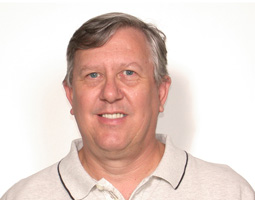
Dennis Duke is a Professor of Physics at the Florida State University (FSU), affiliated with the College of Arts and Sciences and the Department of Scientific Computing. His academic career spans over four decades, with roles including Director of the Supercomputer Computations Research Institute (SCRI) and leadership in numerous national and international computing initiatives. He holds a B.S. from Vanderbilt University (1970) and a D.Phil. from Iowa State University (1974). His research focuses on High Performance Computing, Computational Ancient Astronomy, and Nonlinear Dynamics. Notable contributions include reconstructing ancient astronomical models (e.g., Ptolemaic planetary systems) and analyzing historical star catalogs. He has authored over 150 publications, including seminal work on Babylonian-Greek mathematical transmission and Indian astronomical traditions. Awards include multiple COFRS Awards (1985, 1986) and the President's Continuing Education Award (1992). Duke has organized major supercomputing conferences (e.g., SC98) and served on committees for DOE supercomputing initiatives. His work bridges computational science with historical scholarship, exemplified by animations of ancient planetary models and statistical analyses of precession effects. Professional affiliations include the American Physical Society and Sigma Xi.
Julie Clutterbuck is an Associate Professor in the School of Mathematics at Monash University. Her research focuses on geometric analysis, partial differential equations, and spectral theory. She has led major projects funded by the Australian Research Council, including studies on curvature flows, spectral estimates, and optimal shapes. Clutterbuck has been recognized with the Gavin Brown Prize (2014) for outstanding mathematical research. She contributes to academic activities as a conference organizer and speaker, including roles at the AMSI Winter School and the New Zealand Mathematical Society Colloquium. Her teaching commitments include advanced courses in metric spaces and multivariable calculus. Her research explores geometric evolution equations, eigenvalue problems, and capillary surfaces. Notable projects include analyzing the fundamental gap conjecture and studying ancient solutions to curvature flows. Collaborations span international institutions, reflecting her contributions to global mathematical research networks.
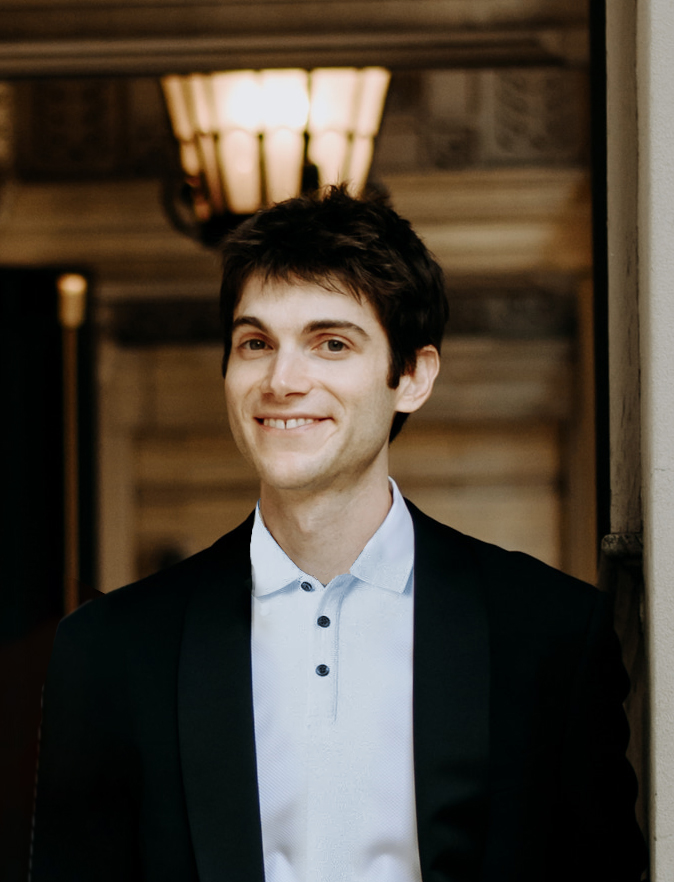
Carl D'Apolito-Dworkin serves as a Design Critic in Architecture at Harvard University's Graduate School of Design and is an associate partner/project architect at Preston Scott Cohen, Inc. His professional practice has produced significant public buildings including the Temple Beth Shalom Synagogue (2024), Anhui Province Museum of Science and Technology (2023), and Taubman College of Architecture at the University of Michigan (2016). Education: M. Arch from Harvard Graduate School of Design (AIA Henry Adams Medal recipient) B.A. summa cum laude from Yale University (Louis Sudler Prize for the Arts) His research centers on translating between physical matter and mathematical models to transform architectural construction processes. He investigates dual modes of material behavior, fabrication systems, and environmental conditions to manage indeterminacy in building projects through constraint modeling and geometric innovation. Specific research foci include facade component standardization across fabrication systems, airflow simulation, developable approximation of complex forms, and social geometries governing site-lines, acoustics, accessibility, and ritual practices within architectural spaces. Scientific Awards: AIA Henry Adams Medal Louis Sudler Prize for the Arts While no formal student advising relationships are documented, his teaching portfolio includes core architecture studios and specialized courses such as Architectural Representation II and Digital Media: Environmental Geometries at Harvard GSD, along with part-time lecturing roles at Penn and Northeastern. At Preston Scott Cohen, Inc., he leads multidisciplinary project teams in delivering complex public buildings, integrating computational design with construction innovation through collaborations with engineers, fabricators, and environmental consultants.
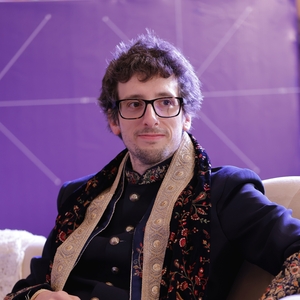
Stefano Gogioso is a Departmental Lecturer at the University of Oxford , specializing in quantum theory and quantum software. He holds a DPhil in Computer Science from Oxford (2013–2017) and advanced degrees from Cambridge (MASt, BA) and the University of Genova (MSc, BSc). As a Fellow at Kellogg College and co-founder of Hashberg Ltd , he develops quantum programming tools and focuses on quantum causal structures, quantum field theory, and natural language processing applications. His research bridges foundational quantum theory with practical applications, including near-term quantum computing and educational outreach through visual methods like Quantum in Pictures . Research Interests: Quantum foundations, quantum software, categorical quantum mechanics, quantum field theory, and quantum causality. His work emphasizes pictorial formalisms and compositional methods, with contributions to indefinite causality, quantum cellular automata, and quantum natural language processing (QNLP). Key Contributions: Published over 25 papers, including works on causal polytopes, categorical Feynman diagrams, and QNLP pipelines. Co-developed Hashberg 's quantum programming tools and serves as a mentor for AI initiatives at CDL-Oxford. His thesis introduced dynamics in categorical quantum mechanics, addressing symmetry and quantum clocks. Teaching: Teaches quantum computing courses for MSc/MFoCS students, professionals, and continued education. Courses include Quantum Software , Quantum Computing for Software Engineers , and bespoke corporate training. Labs/Teams: Part of the Oxford Quantum Group and involved in collaborative projects with industry and academia. Advising: Supervised students like Nicola Pinzani (causal orders) and Maria Stasinou (quantum field theory). Grants/Awards: Not explicitly listed, but recognized for contributions to quantum foundations and education.
Vitaly Bergelson is a Professor of Mathematics and Physical Sciences at The Ohio State University, affiliated with the Department of Mathematics within the College of Arts and Sciences. His work focuses on Ergodic Theory , Combinatorics , Ergodic Ramsey Theory , Polynomial Szemerédi Theorems , and Number Theory . He holds a PhD from the Hebrew University of Jerusalem (1984). His research explores the interplay between ergodic systems, combinatorial structures, and number-theoretic phenomena. Notable contributions include polynomial extensions of Szemerédi's theorem and foundational work on ergodic Ramsey theory. Recent articles address topics like multiplicative functions, Diophantine approximations, and quasirandom group structures. His work often bridges abstract mathematical frameworks with concrete combinatorial problems, yielding applications in additive combinatorics and symbolic dynamics. Publications highlight advancements in recurrence properties, uniform distribution, and the structure of algebraic dynamical systems. Collaborations with scholars like A. Leibman, N. Hindman, and J. Moreira underscore his interdisciplinary approach. His research is disseminated through top-tier journals such as Inventiones Mathematicae and Journal d'Analyse Mathématique .
Selma Yildirim is an Associate Instructional Professor at the University of Chicago's Department of Mathematics. Her research primarily focuses on mathematical analysis, partial differential equations, spectral theory, and mathematical physics, with an emphasis on eigenvalue problems. She has taught a wide range of courses including Calculus, Mathematical Methods in Physical Sciences, Linear Algebra, and Numerical Analysis. Her pedagogical approach incorporates blended synchronous teaching formats and educational technology like GeoGebra and Python. Her publications consistently explore eigenvalue estimation techniques for operators such as the fractional Laplacian and Klein-Gordon operators, with applications to quantum mechanics and fluid dynamics. She has also developed educational resources on metacognition and data science.
Massachusetts Institute of TechnologyUnited States
Youssef M. Marzouk is the Breene M. Kerr (1951) Professor of Aeronautics and Astronautics at MIT and co-director of the MIT Center for Computational Science and Engineering (CCSE). He is affiliated with the MIT Schwarzman College of Computing, the Statistics and Data Science Center, and the Aerospace Computational Design Laboratory. His research focuses on computational science and engineering, with an emphasis on uncertainty quantification, Bayesian modeling, data assimilation, and machine learning applied to physical systems. He holds a Ph.D. in Mechanical Engineering from MIT (2004), preceded by S.M. (1999) and S.B. (1997) degrees in Aeronautics and Astronautics from the same institution. Marzouk’s work bridges computational mathematics, statistical inference, and fluid dynamics, addressing challenges in energy systems and environmental modeling. He has received numerous awards, including the 2018 AIAA Associate Fellowship and the 2012 MIT Class of 1942 Career Development Chair. His teaching spans computational mathematics, fluid dynamics, and uncertainty quantification. Key collaborations involve the MIT CCSE and external institutions, with funding from DOE and NSF. He advises students on topics like stochastic modeling and inverse problems, and his research lab explores advanced computational methods for high-dimensional systems.
Victor H. Moll is a Professor of Mathematics at Tulane University, New Orleans, Louisiana. He holds a Ph.D. and M.S. in Mathematics from New York University (1984/1982) and a B.S. in Mathematics from Universidad Santa Maria (1978). His research focuses on Classical Analysis, Symbolic Computation, Special Functions, and Number Theory. He has held visiting positions at Universidad Santa Maria (Chile) and the Courant Institute (NYU), and served as a postdoctoral researcher at Temple University. Moll has contributed extensively to integral evaluations, particularly through the Gradshteyn and Ryzhik series and the method of brackets for definite integrals. His work bridges pure mathematics with applications in physics and combinatorics. His research spans asymptotic analysis of polynomials, valuation theory of number sequences, and symbolic computation techniques. Notable contributions include studies on Jacobi polynomials, Catalan numbers, and hypergeometric inequalities. Moll has collaborated on projects involving Feynman diagrams and modular-type transformations, showcasing interdisciplinary reach. His academic journey includes roles from Assistant Professor (1986–1992) to full Professor (2001–present) at Tulane. While no specific grants or awards are listed, his prolific publication record (over 200 articles from 2015–2025) highlights sustained academic engagement. His work often explores connections between classical mathematical analysis and modern computational methods.
Sebastian Throm is an Assistant Professor at the Department of Mathematics and Mathematical Statistics, Umeå University. His research focuses on mathematical analysis of partial differential equations, dynamical systems, and modeling of complex networks. His work explores the relaxation properties of Sobolev spaces, spectral gap analysis for dissipative Boltzmann equations with Maxwell interactions, and stability of self-similar solutions in inelastic kinetic models. He also investigates space-fractional Swift–Hohenberg equations for pattern formation and nonlinear dynamics. Recent publications highlight his contributions to spectral gap theory for Boltzmann equations, stability analysis of self-similar profiles in 1D inelastic collisions, and amplitude equations for fractional pattern-forming systems. These studies span mathematical physics, nonlinear analysis, and applied mathematics.
Tengfei Ma is an Assistant Professor in the Department of Biomedical Informatics at Stony Brook University, with affiliations to Computer Science and Applied Mathematics & Statistics. He holds a Ph.D. from The University of Tokyo, M.S. from Peking University, and B.E. from Tsinghua University. Previously, he was a Research Scientist at IBM T.J. Watson Research Center. His research focuses on machine learning, natural language processing (NLP), and biomedical informatics, particularly deep graph learning, scalable graph methods, and healthcare applications. He has contributed to frameworks like EvolveGCN for dynamic graphs and IGB datasets for graph benchmarks. Key awards include ISWC 2021 Best Paper (Research Track) and IBM Outstanding Research Accomplishments (2019, 2022). His work bridges theory and practice, addressing challenges like over-dilution in GNNs and interpretable time series analysis. Collaborations span interdisciplinary areas, such as AI for wound monitoring and code summarization. He teaches BMI530: Software Development for Biomedical Informatics and is open to graduate students from CS, BMI, and AMS departments. Research highlights include: Deep Graph Learning: Scalability (FastGCN, IGB), dynamic graphs (EvolveGCN), and topology-enhanced GNNs. Healthcare: Models for EHR analysis, medication recommendation (GAMENet), and wearable wound monitoring. NLP: Document summarization, code summarization (CP-BCS), and commonsense generation via knowledge graph compression. Recent projects include AI tools like Influencer for promotional content creation and neural-symbolic models for interpretable time series analysis. His lab explores foundational AI for healthcare, code analysis, and graph systems.
Subhabrata Sen is an Assistant Professor of Statistics at Harvard University, located in Science Center 713, Cambridge. His research focuses on Applied Probability, Statistics of Networks, Signal Detection, and Machine Learning. He holds a PhD from Stanford University (2017), advised by Amir Dembo and Andrea Montanari, and prior degrees from the Indian Statistical Institute, Kolkata. His work bridges statistical theory, high-dimensional data analysis, and applications in networks and physics-inspired methods. Key contributions include foundational studies on spin glasses, community detection, and causal inference in complex systems. His research often employs mean-field techniques and explores universality principles in estimation problems. Selected awards and recognition are not explicitly mentioned in the provided text. His advising and grants include postdoctoral mentoring at Microsoft Research and MIT (2017-19). He collaborates on projects involving spectral methods, random matrix theory, and multi-layer network analysis. Labs/teams: Active in Harvard's Statistics Department research groups focused on statistical theory and network science. Maintains an academic website with preprints and resources.
Yang Zhang is a Visiting Assistant Professor in the Department of Mathematics at the University of California, Irvine (UCI), working under Prof. Katya Krupchyk. His research focuses on inverse problems in imaging sciences, nonlinear hyperbolic equations, and medical imaging applications. He previously held a postdoctoral position at the University of Washington, Seattle, under Prof. Gunther Uhlmann. His work integrates microlocal analysis and partial differential equations to address challenges in wave propagation, nonlinear acoustics, and elasticity. Education & Career: PhD from Purdue University (advisor: Prof. Plamen Stefanov) Postdoc: University of Washington, Seattle (2020–2024) Research Interests: Dr. Zhang's work spans inverse problems for nonlinear hyperbolic equations, acoustic imaging, and integral transforms in medical contexts. He develops novel methodologies using multi-fold linearization, wave interactions, and advanced calculus techniques. His studies on Rayleigh and Stoneley waves in elasticity further demonstrate his expertise in microlocal analysis. Key Contributions: His research bridges theoretical mathematics and applied imaging, with notable publications on inverse scattering, damping effects in wave equations, and Compton camera imaging. He is an active member of the Inverse Problems International Association (IPIA). Grants & Collaborations: Collaborations with prominent figures like Prof. Gunther Uhlmann and Prof. Katya Krupchyk highlight his network in inverse problems. His work often involves both analytical and computational approaches, with applications in medical diagnostics and geophysics.