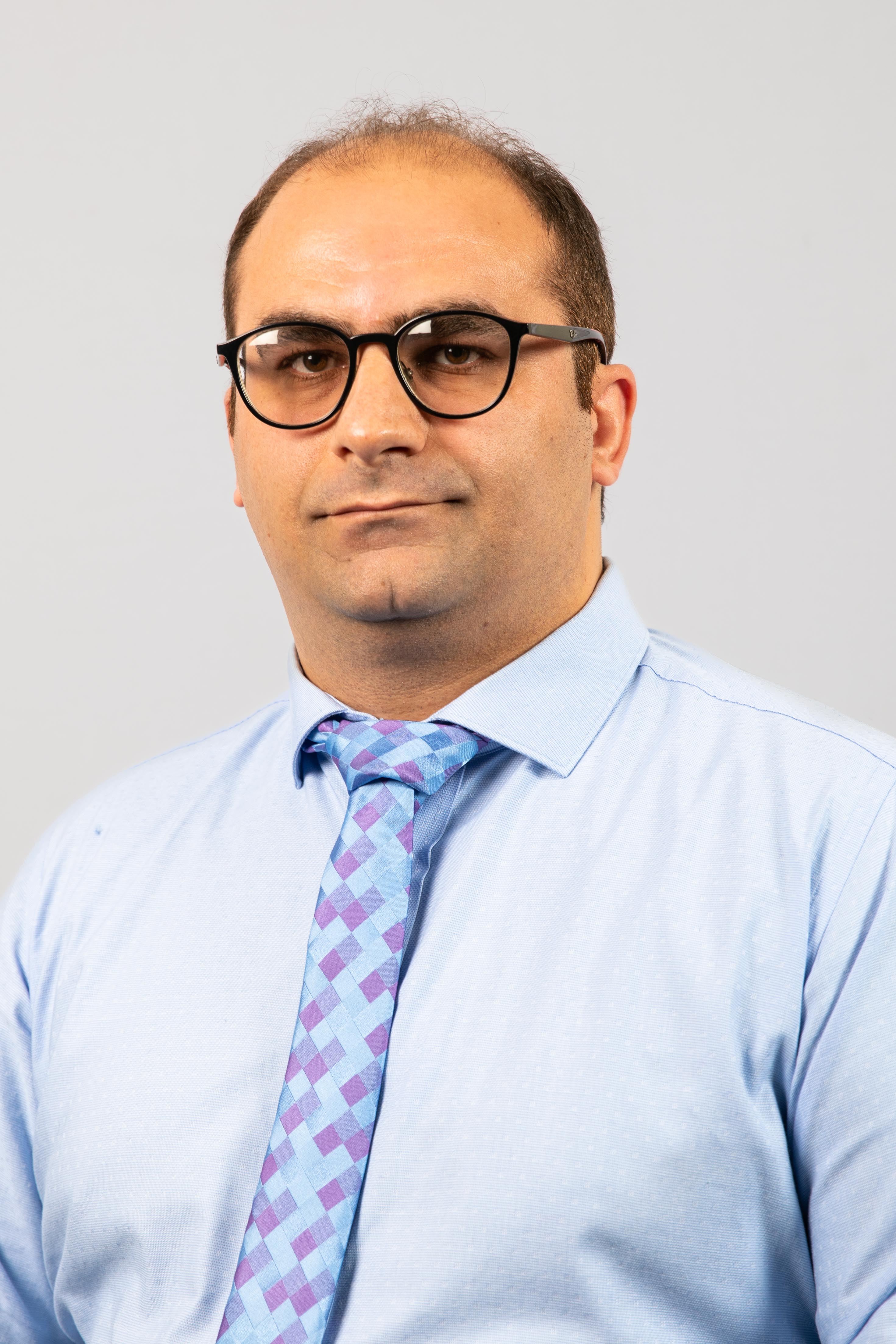
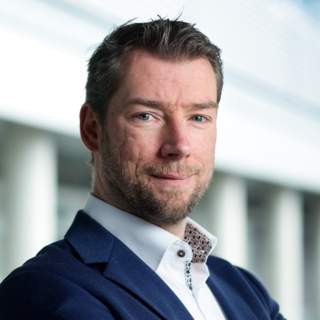
Dr. Ehsan Pashajavid is a Senior Lecturer at Curtin University's School of Electrical Engineering, Computing and Mathematical Sciences, within the Faculty of Science and Engineering. His research focuses on stochastic optimization, renewable energy integration, microgrid control, and electric vehicle systems. Research interests include: Microgrid and smart grid control algorithms Renewable energy resource management Power system stability and operation Energy storage optimization Electric vehicle-grid integration His publications demonstrate significant contributions to power system resilience, with recent work emphasizing battery storage economics, fault-tolerant converters, and model predictive control for grid stability. Article trends show strong focus on renewable integration challenges and optimization techniques for modern energy systems. Awards include Senior Member status in IEEE and its Power & Energy, Industrial Applications, and Power Electronics societies. Teaching responsibilities encompass graduate courses in Renewable Power Generation Systems, Smart Grid Control, and Renewable Energy Principles.
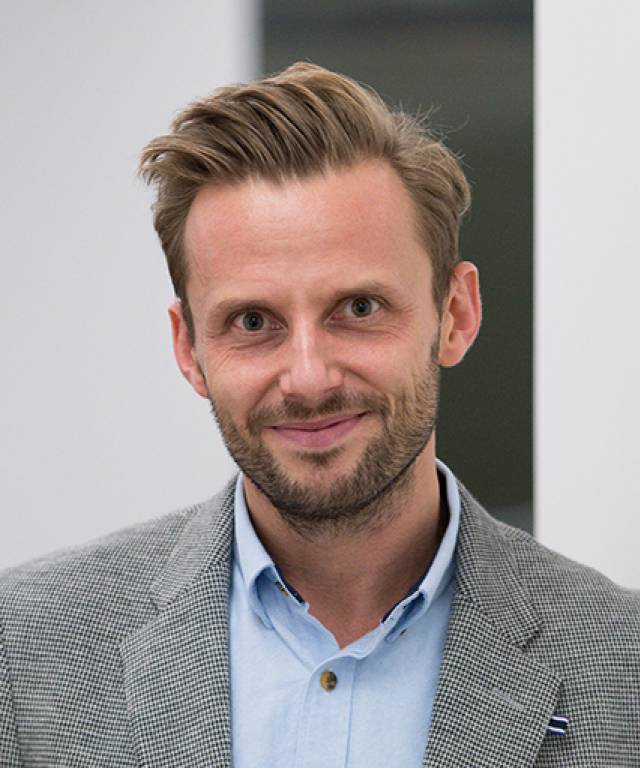
Lukasz Szpruch serves as Professor at the University of Edinburgh's School of Mathematics and Programme Director for Finance and Economics at The Alan Turing Institute. He leads the FAIR research programme on responsible AI adoption in financial services and co-investigates the UK Centre for Greening Finance & Investment (CGFI), directing partnerships with the National Office for Statistics, Accenture, Bill & Melinda Gates Foundation, and HSBC. He maintains affiliations with the Oxford-Man Institute for Quantitative Finance. His research focuses on probability theory , stochastic analysis , and theoretical machine learning , with current investigations into deep learning foundations, mean-field models, reinforcement learning, game theory, multiagent systems, and computational optimal transport. These theoretical frameworks are rigorously applied to financial economics problems including market dynamics, risk modeling, and regulatory compliance, emphasizing mathematical precision in AI system design. Recent publications reveal a strategic shift toward responsible AI deployment in finance , addressing large language model governance, synthetic data privacy, and non-asymptotic sampling theory. His work consistently bridges abstract mathematics with financial sector applications, particularly through the FAIR programme's industry collaborations that translate theoretical advances into practical frameworks for trustworthy AI adoption. As Principal Investigator of FAIR and CGFI co-Investigator, Szpruch manages significant research funding streams focused on AI ethics in financial services and sustainable finance. His academic leadership drives cross-sector initiatives where theoretical research directly informs regulatory policy development and industry best practices, though specific student mentoring details remain unspecified in source materials. Szpruch operates at the nexus of three critical research ecosystems: the FAIR programme's industry partnerships, CGFI's sustainability-focused finance research, and the Oxford-Man Institute's quantitative finance initiatives. These interconnected teams combine mathematical rigor with real-world financial applications, developing frameworks for AI assurance, green finance metrics, and synthetic data validation that address systemic challenges in modern financial systems.
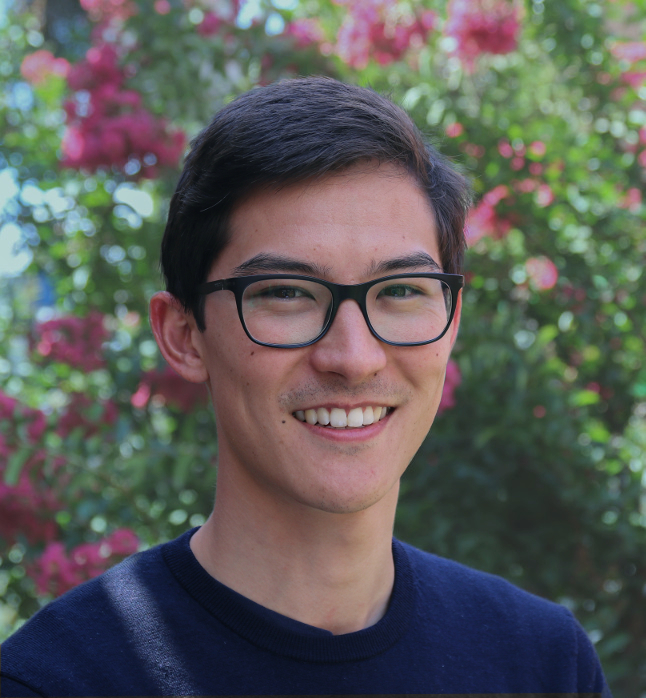
Matthew K. Tam is an Associate Professor at the School of Mathematics and Statistics, The University of Melbourne, specializing in Operations Research. He is also an investigator at the Melbourne Centre for Data Science and an associate investigator in the ARC Training Centre OPTIMA. PhD in Mathematics (2016) from University of Newcastle under Jonathan Borwein Postdoctoral research at University of Göttingen with RTG-2088 and Alexander von Humboldt Foundation Junior Professor at University of Göttingen (2017-2020) His research focuses on continuous optimization, monotone operator theory, and variational analysis, with applications in wavelet construction and inverse problems. Key trends include distributed algorithms, resolvent splitting, and convergence analysis for feasibility problems. Discovery Early Career Researcher Award (DECRA) Alexander von Humboldt Fellowship He collaborates with institutions like ANZIAM, Springer, and IEEE, with publications spanning mathematical optimization, harmonic analysis, and computational mathematics. His work emphasizes algorithmic design for complex data systems and real-world applications in imaging and industrial modeling.
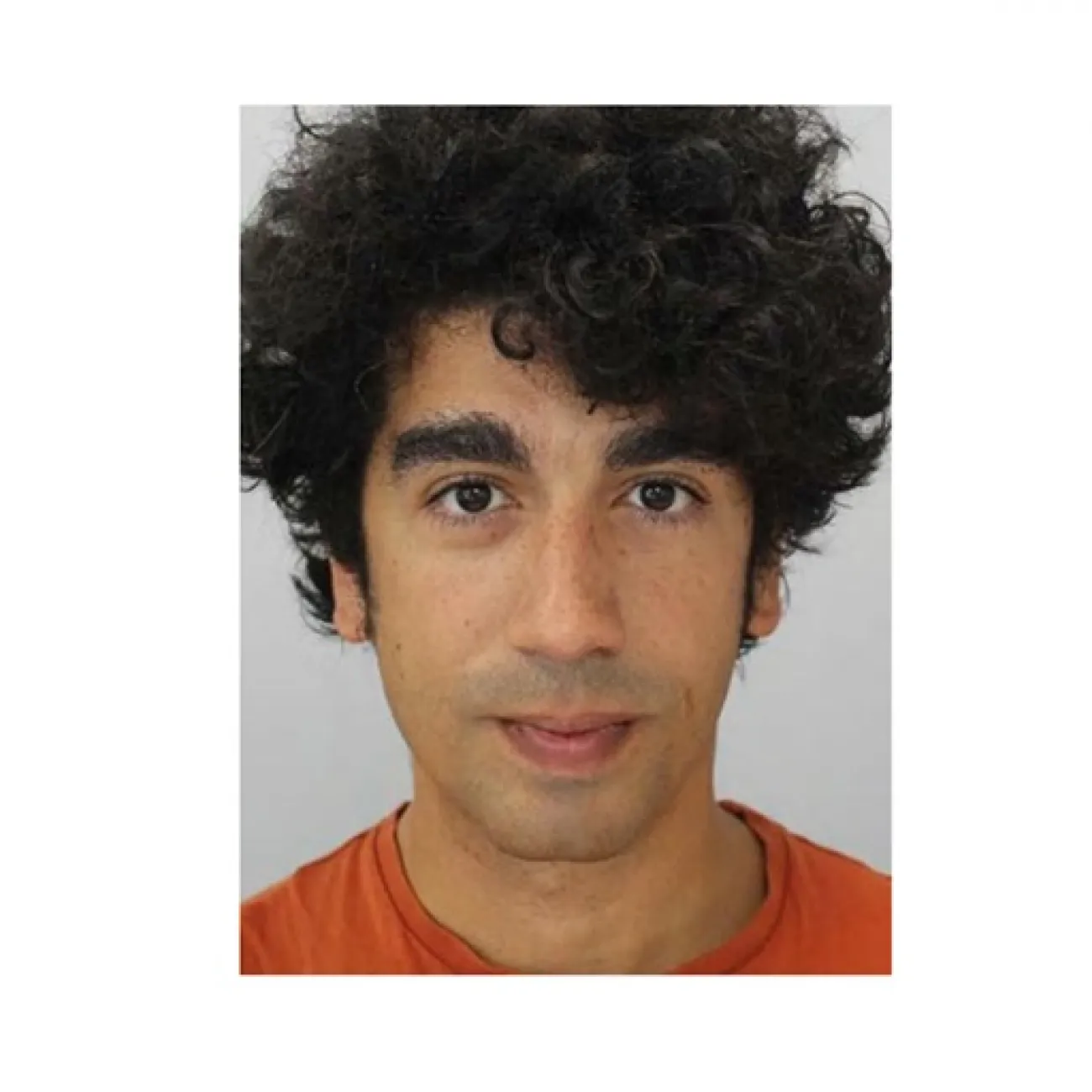
Standa Živný is a Professor of Computer Science at the University of Oxford and a Fellow and Tutor at Merton College. He has been a faculty member at Oxford since 2013 and was promoted to full professor in 2021. His research spans theoretical computer science and discrete mathematics, with a focus on algorithms, computational complexity, and constraint satisfaction problems (CSPs) in various forms, including optimisation, counting, and approximation. His research interests include the power and limitations of convex relaxations, sparsification, submodularity, and the algebraic and logical foundations of tractability in combinatorial problems. He has made significant contributions to understanding when and why certain problems can or cannot be efficiently solved using linear programming and other algorithmic paradigms. The recent trends in his publications show a deep engagement with approximation algorithms, hardness results, sparsification techniques, and the complexity of counting and promise problems. His work often lies at the intersection of algebra, logic, and optimisation, demonstrating the power of interdisciplinary approaches in theoretical computer science. ERC Consolidator Grant (NAASP, 2022–2027) ERC Starting Grant (PowAlgDO, 2017–2022) Royal Society University Research Fellowship (2013–2021) He actively supervises a large cohort of postdoctoral researchers and students, including PhD candidates, master’s, and undergraduate students. His leadership extends to academic service, where he serves as Editor-in-Chief of the SIAM Journal on Discrete Mathematics and holds editorial and committee positions in major journals and funding bodies. He has organised numerous workshops and research programmes at institutions such as Dagstuhl, the Isaac Newton Institute, and AIM. He is involved in major research initiatives, including a Simons Programme on symmetry in computation and an American Institute of Mathematics SQuARE on relaxations for promise CSPs.
Dr. Behrang Vand Alimohammadisagvand is a Lecturer at the School of Computing, Engineering and the Built Environment, Edinburgh Napier University. His research focuses on sustainable energy systems, building performance, and smart energy management, with strong international collaboration across Iran, China, Finland, and the UK. B.Sc. and M.Sc. in Mechanical and Energy Engineering Ph.D. in Energy and Building Technology His research interests include sustainable development, low-carbon technologies, energy policy, thermal comfort in buildings, and energy management systems at multiple scales. He actively investigates model predictive control (MPC), demand response, energy sharing in communities, and low-temperature heating networks. His work bridges theoretical modeling and practical implementation in real-world buildings. Dr. Vand's recent publications highlight trends in integrated energy management , smart grid optimization , and decarbonization of building heating systems . His articles emphasize mathematical modeling, simulation, and control strategies to improve energy efficiency and reduce carbon emissions in the built environment. He supervises doctoral students working on smart IoT systems and low-temperature heat networks. His research is supported by funders such as the Academy of Finland and Energy Technology Partnership. Active supervisor for PhD project on smart IoT systems with real-time deep learning (since 2022) Director of Studies for PhD on heating Scottish public buildings with low-temperature networks (2018–2024) He is affiliated with the Institute for Sustainable Construction and contributes to the research theme Culture and Communities . His work aligns with global efforts toward net-zero emissions and sustainable urban development.
Anders C. Hansen is Professor of Mathematics at the University of Cambridge (Faculty of Mathematics, Department of Applied Mathematics and Theoretical Physics) and Professor II at the University of Oslo. He leads the Applied Functional and Harmonic Analysis group and holds a Royal Society University Research Fellowship. His research bridges pure mathematics and cutting-edge applications in AI, computational harmonic analysis, inverse problems, and compressed sensing. Education: PhD from the University of Cambridge, MA from UC Berkeley, and BA from the Norwegian University of Science and Technology. Research Interests: Hansen's work centers on foundational challenges in computational mathematics, including the Solvability Complexity Index hierarchy for classifying computational problems, instability phenomena in deep learning, and theoretical advances in compressed sensing. His group develops rigorous frameworks for high-dimensional data analysis, medical imaging, and AI safety, often exposing paradoxes in algorithmic reliability. Publication Trends: Recent articles focus on the limits of deep learning (e.g., Smale's 18th problem, instability in image reconstruction), mathematical foundations of AI (trustworthiness, feature selection, LLMs), and advanced compressed sensing (asymptotic incoherence, spectral computations). His work consistently intersects functional analysis with computational feasibility. Awards: PROSE Award Finalist (2022) Whitehead Prize (2019) IMA Prize in Mathematics and Applications (2018) Leverhulme Prize (2017) Royal Society University Research Fellow (2012) Advising & Leadership: Hansen has supervised 17 PhD students and 8 postdocs. He leads the Applied Functional and Harmonic Analysis group, coordinating interdisciplinary projects in mathematical data science. His editorial roles include SIAM Journal on Imaging Sciences and Proceedings of the Royal Society A .
Professor Siobhan Banks is a Research Professor and Director of the Behaviour-Brain-Body Research Centre at the University of South Australia (UniSA), affiliated with UniSA Justice & Society. She holds a Ph.D. from Flinders University (2004) and conducted postdoctoral research at the University of Pennsylvania. Her work focuses on the interplay between sleep, fatigue, and human performance, particularly in shift workers and high-stakes operational environments. Research interests include circadian rhythms, fatigue countermeasures, and the design of habitable spaces to enhance cognitive performance. Key areas of research include the impact of sleep deprivation on team performance, the metabolic consequences of shift work, and the application of human-centered design in maritime and aerospace environments. She collaborates with organizations like the Australian Defence Science and Technology Group and the Alliance for Research in Exercise, Nutrition and Activity (ARENA). Publications emphasize fatigue risk management, circadian-aligned interventions, and the physiological effects of altered eating schedules during shift work. Her work bridges basic science and applied solutions, aiming to improve workplace safety and productivity through evidence-based strategies.
Dimitrios Gkamas is a Lecturer in Finance at the ICMA Centre, Henley Business School, University of Reading. He holds a PhD from Manchester Business School and an MSc from the ICMA Centre, with a focus on quantitative finance and risk management. Research interests: His work centers on capital markets, investment portfolio management, derivatives, and portfolio optimization strategies. He bridges theoretical finance with practical industry applications. Professional background: With over 25 years in financial services, he has held roles at institutions like BNP Paribas, Citi, and Towers Watson. He founded Ameru Financial Limited, a consultancy specializing in asset-liability management and derivatives strategies. Teaching: He serves as Convenor of the MSc Investment Portfolio Management Module (Module Code: ICM340), covering investment styles and optimal portfolio construction techniques.
Sonja Wogrin is a University Professor (Univ.-Prof.) at Graz University of Technology (TU Graz), where she has been heading the Institute for Electricity Economics and Energy Innovation since August 2021. She holds a Dipl.-Ing. in Technical Mathematics from TU Graz (2008), a Master of Science in Computation for Design and Optimization from MIT (2008), and a doctorate in Electricity Systems from Universidad Pontificia Comillas (2013). Her educational background includes: Doctorate in Electricity Systems, Universidad Pontificia de Comillas (June 2013) Dipl.-Ing. in Technical Mathematics, Graz University of Technology (October 2008) Master of Science in Computation for Design and Optimization, MIT (June 2008) Professor Wogrin's research focuses on decision support systems in the energy sector, optimization methodologies, and particularly the problem of generation capacity expansion. Her work spans several key areas including bilevel programming, capacity expansion planning, energy storage systems, and time series aggregation for energy system optimization. She has made significant contributions to understanding how to integrate renewable energy sources into power systems while maintaining economic efficiency and grid stability. Her research often addresses the challenges of decarbonizing electricity systems through advanced mathematical modeling and optimization techniques. Her recent publications demonstrate a strong focus on improving the computational efficiency of energy system models while maintaining accuracy, with particular attention to the integration of renewable energy sources, energy storage systems, and the development of resilient energy communities. She has pioneered work on time series aggregation methods that balance computational tractability with model accuracy, which is crucial for long-term energy planning under uncertainty. Professor Wogrin has received several prestigious awards and fellowships including: 4th EASE Student Award for "Co-Optimisation of energy storage technologies in tactical and strategic planning models" (2019) Beca de movilidad para investigadores "NILS Ciencia y Sostenibilidad" (2015) Beca Erasmus "Personal Docente/Investigador" de formación (2016) Beca Iberdrola de ayuda a la investigación en energía y medio ambiente (2020) She leads multiple significant research projects including EU - NetZero-Opt, RINGs, iKlimET, V2G-QUESTS, and CIDEAL, which focus on optimizing energy systems for net-zero emissions, resilient energy networks, climate and energy system modeling, vehicle-to-grid integration, and industrial decarbonization. Her work has substantial practical implications for energy policy and grid operations in Austria and beyond. Professor Wogrin collaborates extensively with industry partners including Austrian Power Grid AG, KELAG, and Netz Niederösterreich, ensuring her research addresses real-world energy challenges. Professor Wogrin leads the research group at the Institute for Electricity Economics and Energy Innovation, which develops advanced optimization models for energy systems. Her team has created the LEGO (Low-carbon Expansion Generation Optimization) model, an open-source tool for energy system optimization that has gained international recognition. The group's work spans from fundamental optimization methods to practical applications in energy system planning and operation, with a strong emphasis on computational efficiency and model accuracy.
Dr. Siul Ruiz is a Lecturer at the University of Southampton, affiliated with the Bioengineering Group. His research focuses on physical processes in soils and biological systems, including solid/fluid mechanics, mass/energy transport, and imaging techniques like X-ray computed tomography (XCT) and neutron radiography. He develops mathematical models to study soil biomechanics, biofilm dynamics in plants, and the impact of fertilisers on crop nutrition. Current projects include quantifying soil biomechanics via X-ray diffraction and modeling olive tree resistance to Xylella fastidiosa. Funded by the Royal Society and BBSRC, his work bridges applied mathematics, mechanical engineering, and environmental science. Education: MSc in applied mathematics and mechanical engineering (focus on soft robotics). Research Interests: Soil-plant interactions, biofilm modeling, and biophysical constraints in ecological systems. His recent publications explore topics like phosphate removal mechanisms in soil, Xylella fastidiosa biofilm spread in olive trees, and high-throughput analysis of plant stem structures. He supervises two PhD students in Engineering and the Environment. Dr. Ruiz aims to extend biomechanical quantification techniques for broader applications, leveraging interdisciplinary approaches.
Andrea Meilán-Vila is an Assistant Professor in the Department of Statistics at Universidad Carlos III de Madrid since 2021, holding a Juan de la Cierva Fellowship since 2023. She earned her PhD in Statistics from Universidade da Coruña (2021) and previously served as a Postdoctoral Fellow at Universidade de Santiago de Compostela's Department of Statistics, Mathematical Analysis and Optimisation. Her research focuses on nonparametric methods for analyzing complex data types, including directional, spatial, and functional data. Key areas include kernel smoothing techniques, goodness-of-fit testing for regression models, and spatial trend estimation. She serves as an Associate Editor for the Journal of Nonparametric Statistics . Recent work emphasizes applications in climate science (temperature curve modeling), fluid dynamics (wake flow control), and biomedical imaging (hippocampus shape analysis). Her methodologies address challenges like sparse data estimation and spatial correlation in regression frameworks. Key Projects: STENED (Stein-based goodness-of-fit tests for non-Euclidean data) Awards: Juan de la Cierva Fellowship (2023) Publications span journals like Journal of Fluid Mechanics , Statistical Papers , and TEST , with a focus on methodological advancements in statistical modeling and computational validation.
Dr Francesca Pianosi is an Associate Professor in Water & Environmental Engineering at the University of Bristol 's School of Civil, Aerospace and Design Engineering. She contributes to the Cabot Institute for the Environment and leads research on data analysis, mathematical modelling, and uncertainty quantification for hydrology and water engineering. Specialises in simulation and optimisation methods for water resource management Focuses on uncertainty propagation in natural hazard models Developed the open-source SAFE Toolbox for sensitivity analysis Research Trends Her recent publications (2023-2025) demonstrate expertise in: Groundwater flow and recharge in data-scarce regions Digital Twin applications for watershed management Climate change impact on landslides and droughts Multi-objective optimisation for reservoir operations Integration of machine learning with hydrological models Scientific Awards Arne Richter Award for Outstanding Young Scientists (2015) Best Research Oriented Paper - Journal of Water Resources Planning and Management (2024) Early Career Research Excellence (ECRE) award (2014) Francesca leads the Water Management and Adaptation based on Watershed Digital Twins project (2024-2027) and contributes to the USARIS project on uncertainty quantification for infrastructure systems (2023-2025).
Professor Nicholas Warren is a Chair in Sustainable Materials at the School of Chemical, Materials and Biological Engineering at the University of Sheffield. With a PhD from Sheffield and academic experience at Leeds University (2016-2024), his research integrates polymer chemistry with automation technologies. Education: University of Bristol (2005), University of Sheffield (PhD) Academic Positions: Postdoc at Sheffield (2005-2016), University Academic Fellow at Leeds (2016-2024), Associate Professor (2021-2024) Current Role: Chair in Sustainable Materials (2024-present) Research focuses on polymer science with flow chemistry , online monitoring , and artificial intelligence to advance sustainable materials. Key article trends include self-driving laboratories , multi-objective optimization , and nanostructured polymer systems . Scientific recognitions include: 2022 Macro Group UK Young Researchers Medal 2023 RSC Reaction Chemistry & Engineering Outstanding Early Career Paper Award Advisees span current and alumni PhD students like Dr Stephen Knox , Anna Morrell , and Dr Charlotte Pugsley . His team employs self-driving lab platforms that combine robotics, AI, and online analytics for accelerated materials discovery.
Dr Smitha Gopinath is a Lecturer in the School of Chemical, Materials and Biological Engineering at the University of Sheffield , where she leads research in sustainable engineering systems within the Sustainable Design Laboratory (SDL) . Education & Career Path PhD in Chemical Engineering, Imperial College London Post-doctoral researcher, Applied Mathematics and Plasma Physics Group, Los Alamos National Laboratory Research Focus Dr Gopinath’s interdisciplinary work centres on the design, calibration and operation of sustainable engineering systems . She develops high-fidelity models and large-scale optimisation algorithms tailored to energy and materials challenges. Core interests include: Thermo-mechanical energy conversion devices (heat pumps, organic Rankine cycles) Carbon-capture utilisation and storage (CCUS) via novel solvents and separation systems Power-grid expansion and operation for renewable integration and decarbonisation Methodologically, she integrates Integrated Molecular and Process Synthesis (IMPS) with Optimisation Accelerated by domain Knowledge (OAK) to co-design molecules, materials and flowsheets that meet stringent energy and environmental targets. Publication Landscape Across 2015–2025 her publications reveal a clear trajectory from fundamental thermodynamic measurements and molecular design toward rigorous optimisation of large-scale energy systems. Early work concentrated on CO₂ solubility and carbonation kinetics of steel slag, providing essential data for carbon-sequestration schemes. Subsequent papers introduced advanced optimisation frameworks—outer-approximation algorithms, exact reformulations and feasibility-based methods—applied to solvent-based CO₂ capture, organic Rankine cycle working-fluid selection and AC optimal power flow (ACOPF). Recent contributions benchmark global optimality certificates for ACOPF problems, underscoring her drive to bridge chemical process systems engineering with electrical power systems optimisation. Teaching & Mentoring Dr Gopinath teaches undergraduate modules: CPE440 (Particle Technology) CPE170 (Particle Technology) She actively invites prospective PhD students to join the Sustainable Design Laboratory, offering supervision on projects spanning sustainable process design, renewable energy systems and algorithmic optimisation. Laboratory & Collaborative Networks She directs the Sustainable Design Laboratory (SDL), a multidisciplinary team leveraging systems engineering, multi-scale modelling, process simulation and optimisation to re-imagine a sustainable chemical and energy industry. The SDL collaborates with international partners, including Los Alamos National Laboratory and leading researchers in applied mathematics and power systems engineering.
Martijn Mes is a full professor of Transportation and Logistics Management and chair of the Industrial Engineering & Business Information Systems section at the University of Twente, Netherlands. He leads research and education initiatives that integrate AI, simulation and optimisation into logistics and supply-chain innovation. Education: Ph.D. in Operations Research, University of Twente – 2008 M.Sc. in Applied Mathematics, University of Twente – 2002 Post-doctoral researcher, Princeton University, Dept. of Operations Research & Financial Engineering Research focus: Mes develops quantitative models and AI techniques for strategic, tactical and operational logistics challenges. His work spans three application pillars: Emergency & humanitarian logistics – rapid relief distribution with trucks and UAVs Urban logistics – city distribution, self-organising systems and last-mile innovations Sustainable logistics – synchromodal transport, green ports and electric/autonomous fleets Methodologically he combines approximate dynamic programming, reinforcement learning, multi-agent simulation, discrete-event simulation and stochastic optimisation to create decision-support tools for industry and government. Publications trend: Recent articles (2025-2022) exhibit a strong emphasis on integrating reinforcement learning and stochastic optimisation into dynamic vehicle routing, drone-assisted delivery and post-disaster inventory allocation, signalling a shift towards data-driven, real-time logistic systems. Grants & projects: Mes has coordinated and participated in numerous national and European projects on sustainable logistics, urban distribution, port optimisation and healthcare logistics, frequently collaborating with industry partners and public bodies. Teaching & supervision: He coordinates and lectures in the BSc and MSc programmes Industrial Engineering & Management, offering courses on simulation, queueing theory, dynamic programming, Markov chains, transportation management and technology management. He has authored a widely used Plant Simulation tutorial and supervises PhD candidates working on AI-driven logistics, autonomous vehicles and digital twins.