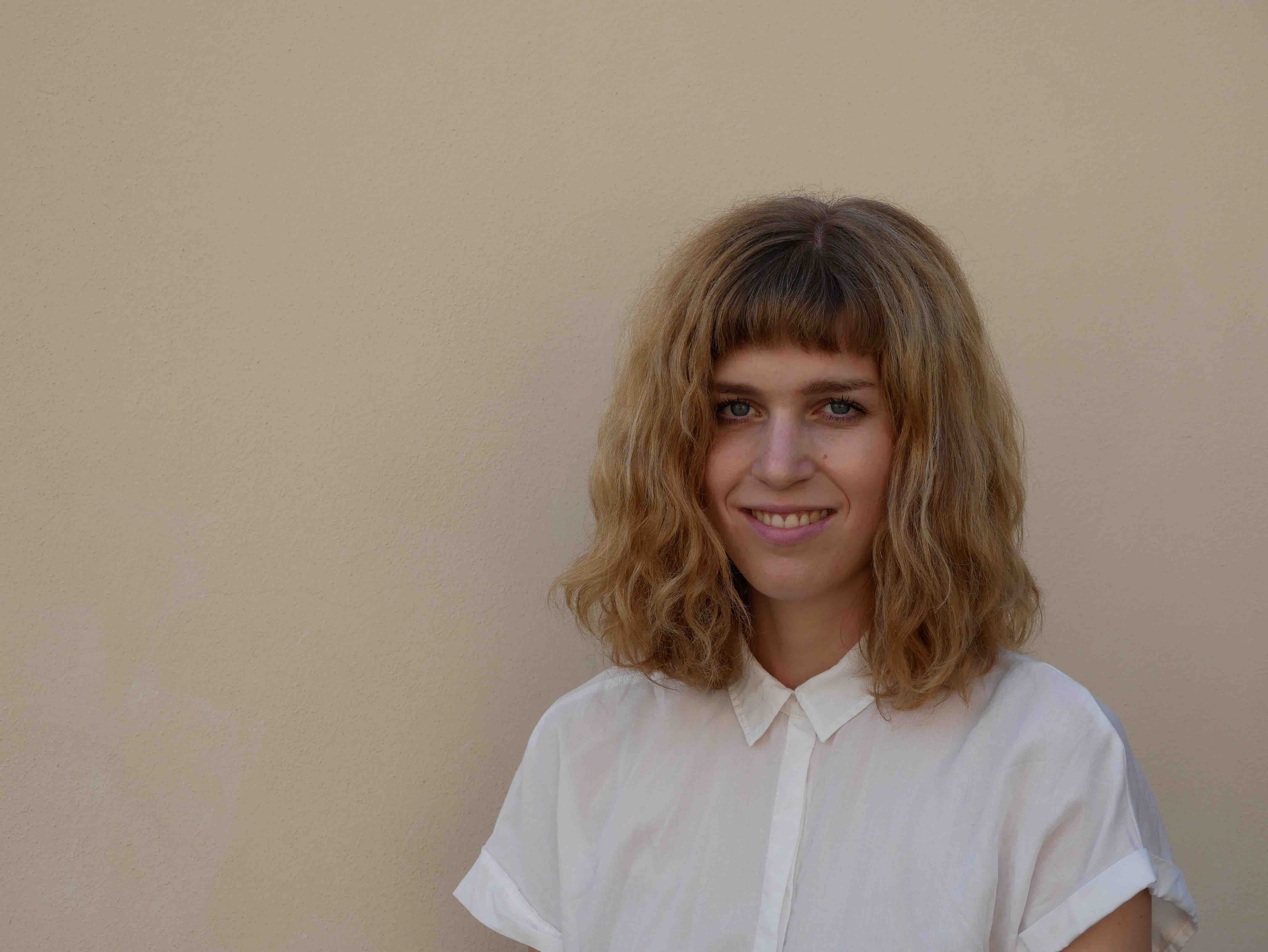
Dr. Sarah A.M. Loos is a Research Fellow at the Department of Applied Mathematics and Theoretical Physics (DAMTP) at the University of Cambridge and a Research Fellow at Corpus Christi College, Cambridge. She holds a PhD in Physics (summa cum laude) from TU Berlin (2020), with postdoctoral research at ICTP (Trieste) and Leipzig University. Her research focuses on stochastic thermodynamics, non-Markovian processes, and nonreciprocal systems. She has received major awards including the Royal Society of Chemistry Early Career Award (2024) and Marie Skłodowska Curie Fellowship (2023). Education: PhD in Physics (2020, TU Berlin), Master's in Physics (2015, TU Berlin), Bachelor's in Physics (2012, TU Berlin). Research interests include entropy production in nonreciprocal systems, active matter, and control theory. She has organized workshops on adaptive dynamical systems and contributed to KITP programs on active solids. Publications span topics like optimal control at microscale, PT symmetry in non-Hermitian systems, and nonreciprocal heat transfer. Her work bridges statistical physics and nonlinear dynamics, with applications in biological and nanoscale systems. Awards: 8 major prizes including DPG and RSC recognitions Grants: MSCA Fellowship (€200k), DFG Walter-Benjamin Fellowship Labs/Teams: Active Matter Group at DAMTP, collaborations with Édgar Roldán and Klaus Kroy
Professor Dylan Jones is a Professor of Operational Research at the University of Portsmouth within the School of Mathematics and Physics. He holds dual affiliations with the Centre for Operational Research and Logistics and the Centre of Excellence in Defence, Risk & Resilience. His academic journey includes a BSc (Hons) in Mathematics with Operational Research from the University of Southampton and a PhD in Operational Research from the University of Portsmouth. Specializing in Multi-Criteria Decision Making (MCDM), his research spans logistics, healthcare, renewable energy, and defense applications. He has led over 18 PhD theses and secured EU funding for projects focused on offshore wind energy and sustainable logistics. Professor Jones is also the Director of the Centre for Operational Research and Logistics, emphasizing strategic port development and disaster risk reduction. His work integrates advanced methodologies like goal programming and mixed modeling to address complex real-world challenges. Recent contributions include frameworks for offshore wind farm logistics, sustainable port selection, and resilience-based maintenance strategies. Education: BSc (Hons) in Mathematics with Operational Research, University of Southampton PhD in Operational Research, University of Portsmouth Research interests revolve around applying operational research principles to solve multi-objective problems in logistics, healthcare systems, and renewable energy sectors. His work emphasizes sustainability, decision-making under uncertainty, and optimizing resource allocation. Key projects include developing methodologies for offshore wind energy infrastructure and analyzing risk in maritime logistics. His research outputs (109+ publications) focus on advancing operational research techniques, with notable contributions to goal programming, logistics optimization, and multi-criteria decision analysis. He collaborates internationally, particularly in Brazil, France, Spain, and Portugal, to address global challenges in sustainable energy and infrastructure. Labs/Teams: Centre for Operational Research and Logistics Centre of Excellence in Defence, Risk & Resilience
Jaime S. Cardoso is an Associate Professor with Habilitation at the Faculty of Engineering of the University of Porto (FEUP) and a Senior Researcher in the 'Information Processing and Pattern Recognition' Area at INESC TEC's Telecommunications and Multimedia Unit. He has been serving as Research Coordinator since September 15, 1998, and is a Senior Member of IEEE as well as co-founder of ClusterMedia Labs. His educational background includes a Licenciatura in Electrical and Computer Engineering (1999), an MSc in Mathematical Engineering (2005), and a Ph.D. in Computer Vision (2006), all from the University of Porto. Cardoso's research focuses on three major areas: computer vision, machine learning, and decision support systems. His work spans medical image analysis, explainable AI, semantic audio-visual analysis, and pattern recognition. He has co-authored over 150 papers, with more than 50 published in international journals, and has accumulated over 6,500 citations. His recent publications demonstrate expertise in cell nuclei segmentation, ordinal regression for CNNs, semantic segmentation with ordinal relationships, face recognition using synthetic data, and explainable vision language models for medical applications. Honorable Mention in the Exame Informática Award 2011 for 'Semantic PACS' First Place in the ICDAR 2013 Music Scores Competition Cardoso has supervised numerous graduate students at UP-FEUP, with recent theses focusing on multimodal explanations, autonomous driving, medical diagnosis, and explainable AI. His research group works at the intersection of computer vision, machine learning, and practical applications in healthcare and autonomous systems.
Xuan Liang is a Lecturer in Statistics at the Research School of Finance, Actuarial Studies and Statistics (RSFAS), Australian National University. With a PhD from Peking University and postdoctoral experience at Monash University, his research focuses on spatial statistics, nonparametric modeling, and environmental data analysis. Education: PhD in Statistics (Peking University, 2017), BSc in Statistics (Zhejiang University, 2012) His work addresses methodological challenges in spatial panel data analysis, network modeling, and air pollution quantification. He has developed novel techniques for meteorological confounder adjustment in air quality assessments and contributed to distributed data analysis methods. Recent research trends include: Advancing quasi-score matching for spatial econometric models Improving subbagging algorithms for big data Creating robust distributed data aggregation frameworks Refining spatial autoregressive panel data methodologies Scientific contributions include: ANU Vice-Chancellor’s Citation for Outstanding Contribution to Student Learning (Early Career), 2022 CBE Teaching Commendation for Outstanding Teaching, 2020 Co-development of the ggmatplot R package for matrix visualization Co-inventor of Chinese patent 201811183512.0 for air quality assessment He teaches advanced courses in time series analysis, regression modeling, and mathematical statistics at ANU, while maintaining active research collaborations in econometrics and environmental statistics.
Leslie Valiant is the T. Jefferson Coolidge Professor of Computer Science and Applied Mathematics in Harvard University's School of Engineering and Applied Sciences, where he has held a faculty position since 1982. A foundational figure in theoretical computer science, his work bridges artificial and natural computational phenomena across multiple disciplines. His academic background includes education at: King's College, Cambridge Imperial College, London Ph.D. in Computer Science from Warwick University (1974) Valiant's research spans computational complexity , machine learning theory , parallel systems , and computational neuroscience . He pioneered the PAC (Probably Approximately Correct) learning framework that established computational learning theory as a rigorous field. His holographic algorithms work revealed deep connections between computational complexity and statistical physics, while his neuroidal model and evolvability theory provide computational explanations for cognitive processes and biological evolution. Current investigations focus on cortical computation primitives and knowledge infusion architectures. His publication trends show increasing integration of neuroscience with computational theory since 2010, with dominant themes in holographic computation (2006-2018), cortical modeling (2012-2018), and evolvability (2009-2017). The work consistently applies computational complexity analysis to biological and cognitive systems. Major recognitions include: Nevanlinna Prize (1986) for mathematical aspects of computer science Knuth Award (1997) for foundational algorithms contributions EATCS Award (2008) for theoretical computer science impact Turing Award (2010) for computational learning theory and complexity Fellowship in the Royal Society and National Academy of Sciences Valiant's research has been supported by NSF and international grants enabling cross-disciplinary work in computational neuroscience and evolutionary algorithms. While specific advisees aren't documented in source materials, his theoretical frameworks have shaped generations of researchers in machine learning and complexity theory. His current research group explores neuroidal architectures for cognitive computation, investigating how cortical circuits achieve robust information processing through in-circuit testing methodologies. Ongoing projects aim to identify fundamental computational primitives in neural systems and develop biologically inspired AI frameworks.
Il Memming Park is a Professor and Group Leader at the Centre for Restorative Neurotechnology within the Champalimaud Research division of the Champalimaud Foundation in Lisbon, Portugal. His work bridges computational neuroscience, machine learning, and statistical modeling to understand neural dynamics and computation. Dr. Park's research focuses on developing statistical and machine learning methods for analyzing neural time series data. His lab investigates the appropriate language for neural dynamics that can explain and generate specific predictions on neural data and behavior. He builds on foundations of dynamical systems and stochastic processes to create models of neural computation tightly tied to biology. His publications reveal a strong emphasis on developing methods like variational latent Gaussian processes and exponential family dynamical systems to extract meaningful patterns from complex neural recordings. His work spans both theoretical developments in computational methods and their application to real neural data from areas like visual cortex, parietal cortex, and other brain regions involved in perception and decision making. Dr. Park has previously held positions at Stony Brook University and the University of Texas at Austin, where he was affiliated with departments of Neurobiology and Behavior, Applied Mathematics and Statistics, Psychology, and Neuroscience. His lab at Champalimaud includes multiple PhD students, postdoctoral researchers, and research staff working collaboratively on various aspects of neural data analysis and modeling. The team employs an interdisciplinary approach combining neuroscience, statistics, machine learning, and dynamical systems theory.
Ali Lazrak is an Associate Professor at the Sauder School of Business , University of British Columbia , specializing in Finance . He holds the Peter Lusztig Professorship in Finance and teaches courses such as International Financial Markets and Institutions and Theory of Finance (2024-2025). His research bridges Political Economy , Asset Pricing , and Behavioral Finance , with a focus on ESG concerns , Voting Theory , and Time Inconsistency . Education: ENSAE (B.Sc.), Sorbonne (M.Sc.), Toulouse (Ph.D.) Contact: Henry Angus Building (HA 872), +1 604.822.9481, ali.lazrak@sauder.ubc.ca His work explores group decision-making in corporate investment, green finance (e.g., the green premium in ESG markets), and time-inconsistent preferences in continuous games. Recent publications highlight how responsible consumption and demand elasticity shape asset prices, and how institutional divestiture impacts harmful asset stranding through informational and economic channels. Scientific accolades include the Jacob Gold & Associates Best Paper Prize (2019), Best Paper Awards at HEC-McGill, UBC, Luxembourg, and Stanford conferences, and the Peter Lusztig Professorship . His methodological expertise spans stochastic control , recursive utility , and dynamic equilibrium analysis .
Daniel Kifer is a Professor in the Computer Science and Engineering department at Pennsylvania State University, with affiliations to the Huck Institutes of the Life Sciences. His work bridges computer science, privacy-preserving machine learning, and geoscience applications. With over 10,000 citations and a high h-index, he focuses on methods to unify theoretical and applied research. Research Interests: Differential Privacy, Privacy-Preserving Machine Learning, Physics-Informed Neural Networks, Landslide Prediction, and Formal Verification of Privacy Systems. Recent projects include grants from the National Science Foundation: SaTC: CORE: Small (2024): privacy-preserving user data embedding in machine learning pipelines. SaTC: CORE: Medium (2017-2023): formal methods for differential privacy and accuracy optimization. His research outputs span domains like geoscience, database systems, and policy analysis, emphasizing precision and scalability of privacy-preserving algorithms.
Dr. Benjamin Busam is a Senior Research Scientist at the Technical University of Munich , affiliated with the Chair for Computer Science Applications in Medicine under Prof. Nassir Navab. Starting September 2025, he will hold the Professorship for Photogrammetry and Remote Sensing at TUM. His career includes leadership roles at FRAMOS Imaging Systems and Huawei Research in London. Education: Mathematics (TUM), Mathematics and Physics (ParisTech, University of Melbourne), PhD in Mathematics (TUM, 2014) His research focuses on 3D computer vision , multi-modal sensor fusion , and their applications in collaborative robotics and augmented reality . He specializes in projective geometry , 6D pose estimation , and neural radiance fields , with a particular emphasis on photometrically challenging environments. Recent publications highlight advancements in 3D scene understanding , neural rendering , and medical imaging , often leveraging machine learning and vision-language models . His work has been recognized through awards like the EMVA Young Professional Award (2015) and Innovation Pioneer of the Year (2019) , along with multiple Outstanding Reviewer distinctions at leading conferences. Dr. Busam has supervised numerous PhD and MSc students on topics including 6D pose estimation , medical augmented reality , and robotic ultrasound , collaborating with institutions like MIT , École Polytechnique , and University of Padova .
Amy Childress is Dean's Professor of Civil and Environmental Engineering at the University of Southern California's Viterbi School of Engineering. She serves as director of the Civil and Environmental Engineering Department's environmental engineering program and leads the Center for Water Reuse (ReWater). Dr. Childress has been with USC since summer 2013 and previously served as professor and chair of the Civil and Environmental Engineering Department at the University of Nevada, Reno. Dr. Childress earned her educational degrees from the following institutions: Bachelor's Degree in Civil Engineering from the University of Maryland College Park Master's Degree in Civil Engineering from the University of California - Los Angeles Doctoral Degree in Civil Engineering from the University of California - Los Angeles For over 20 years, Professor Childress' research has focused on membrane processes for addressing global water scarcity challenges. Her current research interests include membrane contactor processes for innovative solutions to contaminant and energy challenges; pressure-driven membrane processes as industry standards for desalination and water reuse; membrane bioreactor technology; and colloidal and interfacial aspects of membrane processes. She emphasizes process sustainability through reduction of discharge by-products, limiting chemical and material consumption, and minimizing energy, carbon, and infrastructure footprints of treatment systems. Her work explores the water-energy nexus to develop holistic solutions for finite water and energy resources. Professor Childress' recent publications demonstrate a consistent focus on advancing membrane technologies for water treatment and desalination. Her research spans fundamental studies of membrane properties and performance to applied research on system integration and optimization. Key themes include improving membrane wetting resistance, developing mathematical models for water blending, understanding morphological changes in membranes, exploring power density limitations in osmotic processes, and investigating long-term operational effects on membrane performance. Her work consistently addresses the technical challenges of water scarcity while considering sustainability and energy efficiency. Her scientific achievements have been recognized with numerous awards and honors: National Science Foundation CAREER Award (2001) NAE Frontiers of Engineering Invited speaker (2007) AEESP President (2008) Multiple fellowships and scholarships from UCLA, AWRA, ACS, and water districts UNR Student Chapter of AWRA Excellence in Teaching Honorable Mention Award (2001) Clair A. Hill Scholarship (1995) Larson Aquatic Research Support (LARS) Scholarship (1996) Professor Childress has directed research projects funded by numerous prestigious organizations including the U.S. Bureau of Reclamation, NSF, NASA, Office of Naval Research, U.S. Department of Energy, California Energy Commission, California Department of Water Resources, the U.S. EPA, and SERDP, as well as local and private agencies. She leads a productive research group that has generated numerous peer-reviewed publications, proceeding papers, and patents. Her leadership extends to service on the AEESP Foundation Board of Directors and previously as AEESP President. She also serves on the Advisory Board of Desalination journal. Dr. Childress leads the Childress Research Group at USC, which focuses on fundamental and applied aspects of membrane processes for water treatment and desalination. The group maintains laboratory facilities in Biegler Hall (BHE) at USC and conducts both experimental and modeling research to advance water treatment technologies. Their work addresses critical challenges in southern California and around the world related to wastewater reclamation and seawater desalination.
Sean Howe is an Assistant Professor in the Department of Mathematics at the University of Utah, where he has been employed since July 2019. His research is supported by NSF grants DMS-2201112 and DMS-2501816. In the academic year 2023-2024, he was a Friends of the Institute for Advanced Study Member at the special year on p-adic arithmetic geometry at the Institute for Advanced Study. Dr. Howe received his PhD from the University of Chicago in 2017 under the supervision of Matt Emerton. Prior to his position at Utah, he was an NSF Postdoctoral Scholar at Stanford University from September 2017 to June 2019. He earned a joint master's degree from Leiden University and Universite Paris-Sud 11 through the ALGANT program in 2012 and completed his undergraduate studies at the University of Arizona. Dr. Howe's research spans arithmetic and algebraic geometry, representation theory, and number theory, with a particular focus on p-adic aspects. His work often explores the connections between geometry and number theory through the lens of p-adic methods, including p-adic Hodge theory, perfectoid spaces, and the Langlands program. He has made significant contributions to understanding cohomological structures in mixed characteristic settings, the geometry of moduli spaces, and the statistical properties of L-functions. His extensive publication record demonstrates a strong trajectory in advancing p-adic geometry and its applications. Recent work shows increasing focus on cohomological smoothness in mixed characteristic, p-adic periods, and the interplay between random matrix theory and arithmetic statistics. His research often bridges abstract theoretical frameworks with concrete computational approaches. NSF Postdoctoral Scholar NSF grants DMS-2201112 and DMS-2501816 Dr. Howe is an active mentor, currently advising five PhD students: Minhua Cheng, Madison Delmoe, Shea Engle, Abhay Goel, and Suo Jun Tan. He has successfully graduated two PhD students: Matthew Bertucci (2025) and Hanlin Cai (2024). He also regularly mentors undergraduate researchers, with notable projects including Emil Geisler's work on stable multiplicities in configuration space cohomology and Daniel Koizumi's software for computing braid monodromy of cubic surfaces. His teaching portfolio includes advanced courses in algebraic topology, number theory, and algebra, reflecting his broad expertise across pure mathematics. He has taught courses such as Math 6950 (Topics in Algebraic Topology), Math 4400 (Introduction to Number Theory), and Math 6320 (Modern Algebra II).
Professor Joseph Wu is a faculty member at The University of Hong Kong , specializing in mathematical and statistical modeling of diseases. His research focuses on developing practical analytics for disease control, translating findings into public health policies, and addressing global health challenges through AI technology and tools. He leads the Laboratory of Data Discovery for Health (D²⁴H) and has directed significant educational initiatives, including HKU’s Epidemics MOOC and the Croucher Summer Course in Vaccinology . His research spans epidemiology , infectious disease modeling , and public health policy . He has contributed to understanding COVID-19 , influenza , and yellow fever dynamics, with a focus on vaccine hesitancy and epidemic forecasting. His work has been published in high-impact journals such as Nature Medicine and The Lancet . Scientific Awards: Fellow of the UK Faculty of Public Health Professor Wu serves as co-editor-in-chief of Epidemics and associate editor for PLOS Computational Biology and PLOS Neglected Tropical Diseases . He contributes to global health through membership in the WHO Advisory Committee on Immunization and Vaccines-related Implementation Research (IVIR-AC) , the MIT SOLVE Challenge Leadership Group , and the MIT HK Innovation Node .
Jean-Pierre Fouque is a Professor in the Department of Statistics and Applied Probability (PSTAT) at the University of California, Santa Barbara. His research focuses on stochastic processes, financial mathematics, systemic risk, and reinforcement learning, with a particular emphasis on mean field games and multi-scale stochastic models. He explores applications in portfolio optimization, risk management, and algorithmic finance. His work combines theoretical advancements in stochastic analysis with practical applications in economics and finance. Notable contributions include developing models for systemic risk in financial networks, analyzing reinforcement learning algorithms in mean-field frameworks, and studying stochastic volatility effects in derivatives pricing. Recent research trends include integrating deep learning techniques for systemic risk quantification, advancing multi-scale asymptotic methods for portfolio optimization, and investigating strategic interactions in financial systems using game-theoretic approaches. His publications frequently address topics such as stochastic volatility calibration, optimal investment strategies under uncertainty, and the dynamics of financial markets under stress scenarios. Dr. Fouque has contributed to foundational textbooks and edited volumes on systemic risk and mean field games. His interdisciplinary work bridges probability theory, mathematical finance, and computational methods, impacting both academic research and practical risk management practices.
Jesse D. Jenkins is an Associate Professor of Mechanical and Aerospace Engineering and the Andlinger Center for Energy and the Environment at Princeton University. His joint appointment bridges the School of Engineering and Applied Science and the Andlinger Center, focusing on macro-scale energy systems engineering. He holds a Ph.D. in Engineering Systems from MIT (2018) and completed a postdoctoral fellowship at Harvard Kennedy School. Research Interests: Energy systems modeling, deep decarbonization pathways, low-carbon technologies, and energy policy. He leads the Princeton ZERO Lab, which develops optimization-based models to evaluate clean energy transitions and inform policy. Key Awards: Howard B. Wentz Jr. Junior Faculty Award, Princeton Engineering Teaching Excellence Award, TIME100 Next (2024), and recognition in ENR's 2022 Top 25 Newsmakers for leadership in climate policy analysis. Professional Contributions: Serves on advisory boards for Eavor Technologies, Rondo Energy, and Dig Energy. Co-hosts the podcast Shift Key on energy transition strategies. Labs/Teams: Directs the ZERO Lab and co-leads the REPEAT Project, analyzing U.S. decarbonization pathways and federal policy impacts.
Kaighin McColl is an Associate Professor at Harvard University with joint appointments in the Department of Earth and Planetary Sciences and the School of Engineering and Applied Sciences. His research focuses on the terrestrial water cycle and its interactions with weather and climate over land. PhD from MIT (2017) with NSF Graduate Research Fellowship Bachelor's degrees in environmental engineering and applied mathematics from University of Melbourne (2009) Research interests include: Water limitation effects on evapotranspiration Surface energy balance dynamics Atmospheric boundary layer behavior Convective precipitation mechanisms Applications to storm, drought, and heatwave forecasting Scientific contributions span 15 recent articles analyzing soil moisture dynamics, climate engineering impacts, and land-atmosphere interactions. His work has practical implications for wildfire prediction and climate adaptation strategies. Scientific Awards: Sloan Research Fellowship in Earth System Science NSF CAREER award Kavli Fellow by the National Academy of Sciences McColl advises graduate students including Tara Gallagher, Aidan Matthews, and Mariya Pershyna. His lab emphasizes international collaboration and interdisciplinary research requiring physics, mathematics, and climate science expertise. Teaching responsibilities include two different undergraduate course teaching fellowships during PhD training.