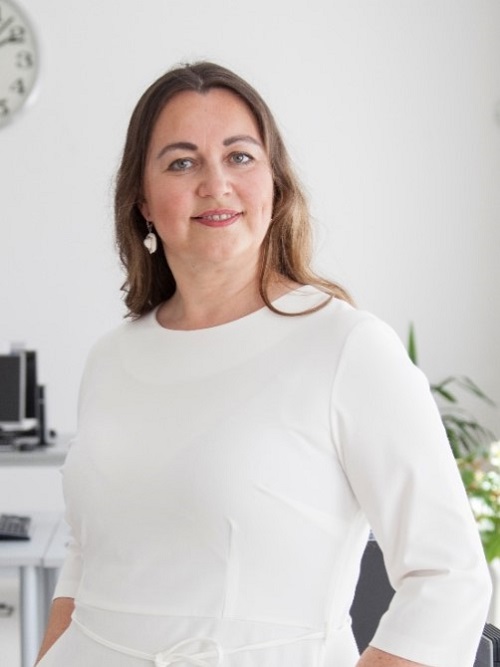
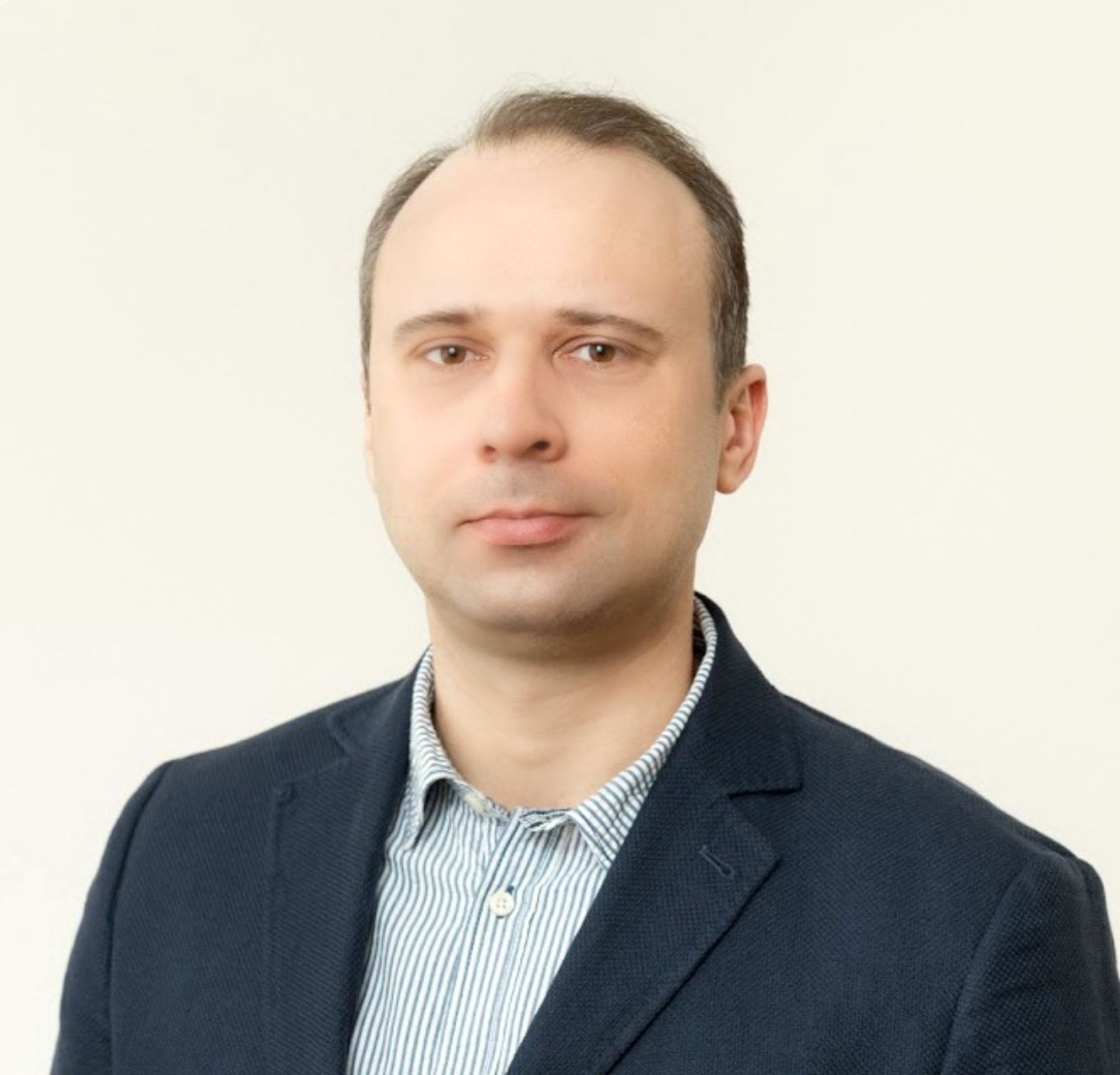
Saulius Grigaitis is an Associate Professor at the Faculty of Mathematics and Informatics, Vilnius University . His research and teaching focus on Blockchain Technology , with contributions to Distributed Systems and broader Computer Science disciplines. His scholarly work highlights critical trends and challenges in blockchain technology, including simulator development, platform evaluation, and systemic scalability issues. Key sub-fields of his research include decentralized ledger frameworks, consensus mechanisms, and future directions for blockchain applications.
Darius Plikynas is a Senior Researcher at the Smart Technologies Research Group within the Institute of Data Science and Digital Technologies at Vilnius University . His research integrates computational intelligence methods with agent-based simulation to model cognitive and social processes. Position: Senior Researcher, Chief Researcher in the Project Address: Akademijos St. 4, room 224, Vilnius Contact: +370 5 210 9333, +370 620 95101 Email: darius.plikynas@mif.vu.lt Personal page: http://www.dariusplikynas.eu Dr. Plikynas' research spans interdisciplinary domains including neuroscience, physics methods, complexity theory, and distributed cognitive systems. He led the 2017–2019 project "Development of a metric, conceptual and simulation model of the social impact of cultural processes" under the LMT Research Group Funding Program. His recent publications (2016–2025) reflect trends in combining machine learning with social science questions (fake news analysis, propaganda detection) and agent-based modeling of cultural/social capital dynamics. Key collaborations include Leonidas Sakalauskas, Rimvydas Laužikas, and Arunas Miliauskas. Scientific supervision includes doctoral students: Andrius Budrionis (University of Tromsø, Norway) Ieva Rizgelienė (PhD topic: "Propaganda detection and classification in social media using hybrid deep learning") He also serves as an expert at Vilnius University and has contributed to projects involving: 2D financial market visualization Neural oscillation-based cognitive modeling Indoor navigation for blind individuals Cultural participation impact on social capital
Roles and Affiliations: Currently holds the rank of Professor at Vilnius University Šiauliai Academy, within the Faculty of Education's Department of Education. Previously served as Dean of the Faculty of Education at Šiauliai University (2008–2013) and held academic roles such as Associate Professor and Head of various departments related to education and mathematics didactics. Education: Earned a Doctor of Social Sciences (Education) degree. Extensive academic background in educational theory and practice, with specialization in mathematics education and pedagogical methodologies. Research Interests: Focuses on teaching and learning processes, early mathematical education, self-directed and personalized learning, and educational quality management. Her work emphasizes sustainable education practices, teacher training innovations, and the integration of critical thinking in digital contexts. Key areas include social media literacy for educators, flipped classroom models, and interdisciplinary mathematics curricula. Publications Trends: Recent work explores the impact of social media on teacher education, critical thinking development, and sustainable educational practices. Prominent contributions include co-authored books on self-directed learning systems and methodological guides for educators. Research often addresses teacher well-being, resilience, and systemic challenges in education quality. Consulting and Grants: Played a pivotal role in creating Lithuania's pre-school education programs and competence frameworks. Involved in EU-funded projects like 'INTERPEARL' (teacher education innovation) and 'CTIS' (critical thinking in education). Active in national and international educational networks, including the Lithuanian Educational Research Association (LERA) and European Educational Research Association (EERA). Professional Networks: Board member of LERA and Chair of the General Education Network. Member of global organizations such as the World Education Research Association (WERA) and European Alliance for Social Sciences and Humanities (EASSH). Engaged in strategic educational initiatives like Researchers' Excellence Network (RENET).
Boleslovas Dapkūnas is a Lecturer at Vilnius University's Faculty of Mathematics and Informatics, actively teaching Internet technologies since the 2016/2017 academic year with scheduled instruction extending through the 2025/2026 semester. His teaching responsibilities include conducting exercise sessions for subgroup MIF-Wholesale (2,317) in Internet technologies. His research focuses on interdisciplinary mathematical modeling at the intersection of biology and physics, with core expertise in: Mathematical and computational modeling of bacterial growth dynamics Pattern formation mechanisms in microbial populations Self-organization phenomena across biological scales Environmental factor effects (oxygen, gravity) on bacterial systems His work demonstrates how mathematical frameworks can unify understanding of biological processes from bacterial colonies to human societies. No scientific awards or honors were documented in the provided materials. Available information indicates active teaching responsibilities but provides no details regarding student supervision, research grants, or laboratory affiliations.
Linas Martišauskas is an Associate Professor at the Department of Mathematics and Statistics within the Faculty of Informatics , Vytautas Magnus University , Lithuania. His work focuses on statistical methods, energy security, and reliability analysis. Academic Rank: Associate Professor Department: Mathematics and Statistics University: Vytautas Magnus University Cluster: Security, Reliability, and Risk Analysis Methods Research Interests His research spans statistical modeling , energy system forecasting , and reliability analysis . Key areas include: Applied machine learning for sales and energy production forecasting Neural networks and ARIMA/SARIMA time series models Renewable energy integration and risk assessment Climate data analysis and temperature prediction Academic Contributions He has supervised 6 theses (2020-2025) on topics like photovoltaic energy forecasting ( ARIMA models ), lithium battery degradation ( nonlinear regression ), and meteorological data prediction using neural networks and hybrid methods . Labs & Teams Active in the Cluster of Reliability, Security, and Risk Analysis Methods , focusing on multidisciplinary applications.
Mindaugas Bloznelis is a Professor at Vilnius University's Faculty of Mathematics and Informatics. His academic career spans decades, with active involvement in teaching and research as evidenced by his continuous presence in the university's schedules from 2016/2017 to 2025/2026. Professor Bloznelis specializes in Random Graph Theory , Network Analysis , and Probability Theory . His research focuses on connectivity thresholds, clustering coefficients, and statistical approximations in complex networks. Recent work includes advancements in modeling sparse and clustered dynamic networks, connectivity thresholds for Bernoulli random graph superpositions, and Edgeworth approximations for symmetric statistics. He co-authored the 2025 Modelling and Mining Networks workshop proceedings, highlighting his leadership in network analysis. His publications demonstrate deep expertise in stochastic processes, asymptotic theory, and finite population statistics. While no formal awards or student advisories are listed in the provided texts, his extensive publication record underscores significant contributions to probability and network science.
Dr. Vytautas Čyras serves as an Associate Professor at Vilnius University's Faculty of Mathematics and Informatics, specifically within the Institute of Computer Science and Department of Software Engineering. With over three decades of academic experience since 1984, he bridges computer science and legal theory through groundbreaking interdisciplinary research. Education: Master's in Applied Mathematics (Computer Science) from Vilnius University (1979) Doctorate from Moscow State University's Faculty of Computational Mathematics and Cybernetics (1985) Second Master's in Law from Vilnius University and German Law Centre (2007) Dr. Čyras' research spans legal informatics, information systems, and computer science. His primary focus includes artificial intelligence and law, regulatory compliance, legal requirements, and pioneering work in legal visualization. His Structural Blanks approach to programming with recurrences demonstrates deep expertise in both foundational computer science and legal applications. His research explores how visual and multisensory approaches can transform legal reasoning and compliance in digital environments. His publication trajectory reveals an evolution from technical computer science topics toward sophisticated legal informatics applications. Recent work emphasizes multisensory legal machines, legal visualization frameworks, and the integration of AI with legal reasoning systems. He has made significant contributions to understanding how legal norms can be transformed into operational rules for virtual environments and digital governance systems. Professional Activities: Active participant and organizer of major legal informatics conferences including IRIS, Baltic DB&IS, and EGOVIS Contributor to European Framework Programme projects including VirtualLife and SKY-Scanner Longstanding member of the Lithuanian Computer Society and its Intellectics Section Dr. Čyras teaches courses including Artificial Intelligence, Knowledge Representation, and Human-Computer Interaction. His interdisciplinary background enables him to bridge theoretical legal concepts with practical applications in regulatory compliance systems and legal technology development.
Fernando Garcia is a Professor at the Universitat Politècnica de València , affiliated with the School of Economics and Social Sciences. His research focuses on Financial Economics, Portfolio Optimization, Risk Management, and Sustainable Finance, with a strong emphasis on Multicriteria Decision Analysis and Computational Finance. PhD in Business Administration and Management (Universitat Politècnica de València, 2005) Licenciado in Business Administration and Management (Universitat de València, 1999) Diplom. Kaufmann (Hochschule für Wirtschaft Bremen, 1998) His publications highlight trends in socially responsible investing, index tracking, and credit risk management using advanced methodologies like fuzzy logic, neural networks, and goal programming. He has collaborated extensively with researchers such as Jairo González-Bueno, Francisco Guijarro, and Javier Oliver across 21 works since 2009.
Vilius Bartninkas is an Associate Professor at Vilnius University’s Faculty of Philology, serving as Head of the Department of Classical Philology. He holds a PhD in Philosophy from the University of Cambridge (2019) and teaches in BA and MPhil programmes in Classical Philology and Political Science. University: Vilnius University School: Faculty of Philology Department: Department of Classical Philology Academic Rank: Associate Professor His research focuses on ancient philosophy , theology , and political theory , with particular emphasis on Plato’s works, ancient cosmology, and contemporary applications of classical ideas. He has published extensively on Platonic dialogues, including critical editions of Alcibiades and Lysis , and explores intersections between religion, mathematics, and politics in classical thought. His recent monograph, Traditional and Cosmic Gods in Later Plato and the Early Academy (Cambridge University Press, 2023), examines theological and cosmological evolution in Plato’s Academy. Key article trends include Platonic political models , ancient Greek theology , and cosmology’s societal role . 2023 : Manfred Lautenschlaeger Award for Theological Promise 2023 : Lithuanian Parliament Independence Scholarship 2022 : Vilnius University Rector’s Diploma for Teacher of the Year He supervises postdoctoral and student research projects, including grants from the Research Council of Lithuania and Vilnius University Research Facilitation Fund . His outreach includes media appearances and public lectures in Lithuania, emphasizing the relevance of classical philosophy to modern challenges.
Dr. Ilya Inishev is a Professor at the Academic Department of Social Sciences, European Humanities University. His work focuses on hermeneutics, phenomenology, film theory, and media studies. He is also a prolific scholar with publications spanning philosophy, cultural theory, and interdisciplinary studies. Research interests include the interplay of materiality and interpretation in Gadamer’s hermeneutics, Heidegger’s influence on Russian philosophy, and the role of visual perception in contemporary culture. His recent work explores distributed imagery, speculative media, and cultural practices. Publications highlight themes like the material dimension of interpretive experience, existential analysis, and comparative philosophy. His interdisciplinary approach bridges aesthetics, technology, and historical studies, as seen in works on AI origins and church-state dynamics under Catherine the Great.
Romas Baronas serves as a Professor at the Faculty of Mathematics and Informatics, Vilnius University, actively teaching Database Management Systems and supervising Master's thesis research as evidenced by his current teaching schedule extending through the 2025/2026 academic year. His academic profile demonstrates sustained engagement in both educational and research activities within the university's mathematics and informatics framework. Professor Baronas' research centers on advanced mathematical modeling of biological systems, with primary focus areas including biosensor optimization, bacterial self-organization phenomena, enzyme kinetics, and bioreactor design. His work employs computational analysis to investigate diffusion limitations, pattern formation in microbial populations, and reaction-diffusion dynamics, bridging theoretical mathematics with practical biotechnological applications. The interdisciplinary nature of his research integrates microbiology, electrochemistry, and nanotechnology to develop predictive models for complex biological processes. Analysis of his 15 most recent publications (2020-2025) reveals consistent thematic progression in mathematical biosensor modeling, with increasing emphasis on bacterial pattern formation, oxygen consumption dynamics, and multi-layer system optimization. His scholarly output demonstrates methodological evolution from foundational biosensor modeling toward sophisticated investigations of bacterial self-organization across scales, incorporating fractal analysis and gravity effects. The research consistently applies nonlinear dynamics and computational simulation to address challenges in bioreactor efficiency and biosensor sensitivity. Professor Baronas has supervised Master's students through thesis preparation activities, though specific student names and grant details are not documented in the provided materials. His academic service includes editorial contributions as a referee for INFORMATICA journal, reflecting his standing in the scholarly community. While laboratory affiliations are not explicitly stated, his research methodology suggests involvement with computational modeling facilities supporting his extensive publication record in mathematical biosciences.
Viktor Medvedev is an Associate Professor and Senior Researcher at Vilnius University's Institute of Data Science and Digital Technologies, where he serves as Project Lead Researcher in the Blockchain and Quantum Technologies Group. His work focuses on the intersection of machine learning, data visualization, and cybersecurity applications. Dr. Medvedev earned his Doctor of Science in Computer Science Engineering in 2007 from Vilnius Gediminas Technical University and the Institute of Mathematics and Informatics. His doctoral research centered on 'Research on the application of feedforward neural networks for multidimensional data visualization,' establishing the foundation for his continued work in data analysis and visualization techniques. His research interests span machine learning , deep learning , data visualization , and cybersecurity applications . Specifically, he has made significant contributions to keystroke dynamics authentication , behavioral biometrics , dimensionality reduction techniques , and medical data analysis . His work often bridges theoretical computer science with practical applications in security and healthcare domains. Dr. Medvedev's publication record demonstrates a consistent trajectory of research excellence, with recent work focusing on advanced authentication systems using deep learning, pancreatic cancer detection through machine learning, and innovative approaches to data visualization. His research shows a clear evolution from foundational work in neural networks for data visualization to contemporary applications in cybersecurity and medical diagnostics. ICAISC'06 - Best Presentation Award (The 8th International Conference on Artificial Intelligence and Soft Computing) ICANNGA 2007 - Best Young Researcher Paper Award in Neural Networks DAMSS 2021, 2022, 2023 - Best Poster Awards As a Project Lead Researcher in the Blockchain and Quantum Technologies Group, Dr. Medvedev oversees research initiatives that combine cutting-edge technologies with practical applications. His work in cybersecurity has particular relevance to critical infrastructure protection, where insider threat detection using behavioral biometrics represents a significant contribution to the field.
Gintautas Grigas is an Associate Professor and Affiliated Scientist at the Institute of Mathematics and Informatics , Vilnius University, Lithuania, serving within the Educational Systems Group . Since joining the Institute in 1965, he has become one of Lithuania’s most prolific authors in computer science education and software localization. Education: 1959 – Graduated, Faculty of Electrical Engineering, Kaunas Polytechnic Institute (now Kaunas University of Technology) 1970 – Candidate of Technical Sciences (post-graduate), nostrified 1992 to Doctor of Mathematical Sciences Continuing education courses in programming languages, data types and programming technology at Vytautas Magnus University, Vilnius University and Vilnius Pedagogical University Research Interests Grigas’ scientific work centres on four tightly interwoven themes: abstract data types , programming teaching methodology , computer terminology , and software localization . His contributions range from theoretical analyses of data structures to practical guidelines for localizing major software suites into Lithuanian. He has also pioneered studies on how interface defects influence national language culture and on letter-frequency analyses supporting cryptography and linguistic research. Publication Trends Across more than 150 scholarly and professional works, a clear progression is evident: early focus on programming fundamentals and Lithuanian computing history, followed by intensive investigation of localization pedagogy, and more recently, mobile-device text input and cultural impacts of internationalization errors. Collaborative volumes such as the Encyclopedic Dictionary of Computing and the textbook Fundamentals of Software Localization have become standard references in Lithuanian computer science curricula. Awards & Recognition No specific competitive awards are listed; however, his sustained output—40 books, 100+ scientific articles, 250+ popular/professional articles—is itself a testament to national academic recognition. Doctoral Advising & Grants While individual doctoral students are not named, Grigas has long contributed to doctoral education through the Institute’s doctoral committees and study guides. His research has been supported by national projects on software localization and educational technology, although explicit grant numbers are not provided in the text. Labs & Teams He carries out his work within the Educational Systems Group , a subdivision of the Institute of Mathematics and Informatics, located at Akademijos St. 4, Vilnius. The group investigates learning technologies, curriculum design, and the societal impact of digital systems, providing a collaborative environment for his ongoing projects.
Gabrielė Stupurienė is a Researcher at the Educational Systems Group of Vilnius University. Her work focuses on computer science education , computational thinking , and concept-based learning tasks , with a growing emphasis on artificial intelligence in education . She contributes to international projects like STEAM-CT under Erasmus+ and leads initiatives such as the postdoctoral internship on integrated informatics teaching in Lithuania. PhD in Computer Science Engineering (Vilnius University, 2019) MSc in Mathematics with teaching qualification (Vilnius University, 2011) BSc in Mathematics (Vilnius University, 2009) Her research explores pedagogical differences in informatics instruction, AI literacy for primary students, and inclusive education models through the Bebras challenge. She has collaborated with institutions in Turkey, Portugal, Finland, and Belgium, and participated in EU structural funds projects related to machine translation systems and socially relevant software localization . Recent projects include integrated informatics teaching in primary schools, STEAM education frameworks , and digital competence analysis using the SELFIE tool across Estonia, Italy, and Portugal. Her work has been published in journals like Education and Information Technologies and Computer Science Education , and presented at conferences including Constructionism and ISSEP .
Prof. habil. dr. Jonas Kazys Sunklodas serves as an Affiliated Professor in the Interdisciplinary Statistical Research Group at Vilnius University's Institute of Data Science and Digital Technologies. His academic career spans decades of rigorous research in probability theory and mathematical statistics, maintaining an active publication record through 2023. His research focuses on asymptotic analysis of stochastic processes , particularly examining normal approximation techniques for various dependent and independent random variable structures. Key contributions include advancements in central limit theorems for φ-mixing processes, m-dependent sequences, and random sums with applications in theoretical statistics. Analysis of his 15 most recent publications reveals consistent specialization in convergence rates , distributional approximations , and limit theorems across diverse stochastic models. His methodological innovations frequently employ characteristic function analysis and L p norm convergence metrics. While no formal awards or student advisement records appear in the provided documentation, his sustained scholarly output demonstrates significant contributions to probability theory. His editorial work on Vytautas Statulevičius' Selected Mathematical Papers (2006) further establishes his standing in Lithuania's mathematical community. Professor Sunklodas maintains institutional affiliation through Vilnius University's Akademijos St. 4 facility (room 220), though no active research grants or laboratory affiliations are documented in the current materials. His textbook Tikimybių teorijos kursas (2003) remains a notable educational contribution to Lithuanian mathematics pedagogy.