Prof. Stanislav Hencl is a faculty member at the Department of Mathematical Analysis , Faculty of Mathematics and Physics , Charles University in Prague. His research focuses on mathematical analysis, particularly on Sobolev mappings, finite distortion theory, and their applications to nonlinear elasticity and geometric function theory. Research Interests : Sobolev spaces, geometric function theory, nonlinear elasticity, measure theory, and partial differential equations. Students : Supervised 18 PhD, master's, and bachelor's theses, including Jaromír Mielec (Sobolev mappings extensions), Ondřej Bouchala (noncompactness of Sobolev embeddings), and Anna Doležalová (nonlinear mapping classes). Key Publications : Monograph Lectures on mappings of finite distortion (Springer, 2014) and 15+ recent works on Sobolev homeomorphism properties, injectivity, and energy functionals. Contact : Office K255, Karlín campus, email Stanislav.Hencl@mff.cuni.cz and hencl@karlin.mff.cuni.cz .
Jiří Novotný is a Professor at the Faculty of Mathematics and Physics of Charles University in Prague, Czech Republic. He is affiliated with the Institute of Particle and Nuclear Physics , where his research focuses on theoretical particle physics, quantum field theory, and low-energy QCD phenomena. He is actively involved in teaching and research, with a strong publication record in high-impact journals. Research Interests Prof. Novotný's research spans a wide range of topics in theoretical physics, with a particular emphasis on: Quantum Field Theory : Anomalies, effective Lagrangians, and chiral perturbation theory. Low-Energy QCD : Chiral symmetry breaking, order parameters, and meson decays. Scattering Amplitudes : Soft theorems, celestial holography, and modern amplitude techniques. Effective Field Theories : Galileon theories, DBI actions, and their generalizations. Publications and Research Impact His recent work has significantly advanced the understanding of soft theorems in gauge and gravity theories, the structure of scattering amplitudes in chiral perturbation theory, and the application of celestial holography to flat-space physics. His publications often appear in top-tier journals such as Journal of High Energy Physics (JHEP) , Physical Review D , and Physical Review Letters . Teaching and Outreach Prof. Novotný teaches advanced courses in Quantum Field Theory I & II and Selected Parts of Quantum Field Theory . He is also involved in the Physics Olympiad to promote physics education among students.
Daniel Hlubinka is an Associate Professor at the Department of Probability and Mathematical Statistics, Faculty of Mathematics and Physics, Charles University. He has been an academic staff member since 1999 and was promoted to associate professor in 2007. His teaching includes courses like Statistics for Financial Mathematicians 2 (NMFM332) and Proseminar in Probability and Mathematical Statistics (NMSA262). He supervises bachelor's, diploma, and doctoral theses, with over 30 bachelor's, 20 diploma, and 5 doctoral theses supervised to date, including former students now working as associate professors. Education: Mathematical Physics (1989-1994) at Charles University; Erasmus stay at Limburgs Universitaire Center (1994-1995); Doctorate (1995-1999) under Professor Josef Štěpán. Research Interests: Statistics, theoretical foundations, multivariate functional processes, nonparametric asymptotics, data depth, optimal transport, and mathematics of chance. Academic Affiliations: Member of the Union of Czech Mathematicians and Physicists, Czech Mathematical Society, Czech Statistical Society, European Mathematical Society, Bernoulli Society, and Institute of Mathematical Statistics. Hlubinka's recent research focuses on functional data analysis, multivariate quantiles, and nonparametric testing. His work applies optimal transport theory, empirical characteristic functionals, and permutation tests to functional statistical problems. He contributes to methodological advancements in depth-based classification, time reversibility testing, and regression models.
Miroslav Bulíček is an Associate Professor at the Mathematical Institute of the Faculty of Mathematics and Physics, Charles University in Prague, Czech Republic. He has been with Charles University since 2006, progressing from Researcher to Senior Assistant Professor (2012-2021) and currently serving as Associate Professor since January 2022. He is also a Senior Researcher at the University Center for Mathematical Modeling, Applied Analysis and Computational Mathematics (MathMac) since 2014. His educational background includes a habilitation in Mathematics-Mathematical Analysis from Charles University (2021), a Ph.D. in Mathematical and Computational Modeling from Charles University (2003-2006), and a Master's degree in Mathematical modeling in physics and technology from Charles University (1998-2003). Bulíček's research focuses on Partial differential equations, Continuum thermodynamics, and Mathematical modelling . His work primarily addresses the mathematical analysis of nonlinear systems describing flows of incompressible fluids, with particular emphasis on thermodynamically compatible models, implicit constitutive relations, and viscoelastic rate-type fluids. He has made significant contributions to the understanding of existence, uniqueness, and regularity of solutions to complex fluid models, especially those describing far-from-equilibrium systems in continuum thermodynamics. His recent publications demonstrate a strong focus on advanced mathematical analysis of fluid models with applications in material sciences. The research trends show increasing sophistication in handling non-Newtonian fluids, stress-diffusion phenomena, and thermodynamically consistent models. His work bridges pure mathematical analysis with practical applications in continuum mechanics, particularly in the analysis of viscoelastic rate-type fluids with stress diffusion. NEURON Fund for Support of Science Award (2012) for the project "Qualitative analysis of incompressible Navier-Stokes-Fourier equations" Czech Mathematical Society Award for young researchers (2014) for publications during 2009-2013 Bulíček has successfully supervised multiple PhD students including Mark Dostalík, Michael Zelina, Michal Bathory, and Tomáš Los. He serves as principal investigator for the GAČR project 20-11027X "Mathematical analysis of partial differential equations describing far-from-equilibrium open systems in continuum thermodynamics" (2020-present). His research has been supported by various grants including GAČR project 18-12719S, GAČR 16-03230S, and ERC-CZ no. LL1202, demonstrating sustained funding for his research program. He is actively involved in the University Center for Mathematical Modeling (MathMac) and has organized several international conferences and workshops, including the "Modelling, partial differential equations analysis and computational mathematics in material sciences" conference in Prague (2024) and the "Mathematical Aspects of Fluid Flows" EMS School in Kácov (2024), contributing significantly to the mathematical community in fluid dynamics and partial differential equations.
Malte Laurens Kampschulte serves as Assistant Professor at the Department of Mathematical Analysis, Faculty of Mathematics and Physics, Charles University in Prague. He leads research within S. Schwarzacher's fluid structure interaction group and the OP JAK project FerrMion, following his role as Substitute Professor at the University of Leipzig during Summer 2024. His academic credentials include: B.Sc in Mathematics (2009) and Computer Science (2010) from RWTH Aachen M.Sc in Mathematics (2012) from RWTH Aachen Ph.D. in Mathematics (2018) with thesis "Gradient flows and a generalized Wasserstein distance in the space of Cartesian currents" Dr. Kampschulte's research centers on fluid structure interaction, calculus of variations, partial differential equations, and geometric measure theory. His work examines variational aspects of Eulerian-Lagrangian frameworks, relaxation methods for generalized solutions, topological invariants in PDEs, and current transport on manifolds. This integrated approach bridges theoretical analysis with physical applications in continuum mechanics. Analysis of his 2023-2024 publications reveals concentrated focus on three-dimensional fluid-structure systems with viscoelastic solids, compressible fluids, and self-collision phenomena. Key contributions include global weak solution frameworks for contact problems, variational approaches to hyperbolic evolutions, and regularity analysis for free surface dynamics—demonstrating both mathematical rigor and physical relevance. As Principal Investigator for the PRIMUS grant "Qualitative and quantitative Analysis for non-linear non-uniformly elliptic models" (previously held by Anna Balci), he oversees active research funding while mentoring through an open PostDoc position. His leadership extends to the FerrMion project where he develops mathematical frameworks for fluid-matter interactions. Based in the Department of Mathematical Analysis at Charles University, Dr. Kampschulte collaborates within S. Schwarzacher's research group to advance mathematical understanding of fluid-structure systems through both theoretical innovation and computational modeling.
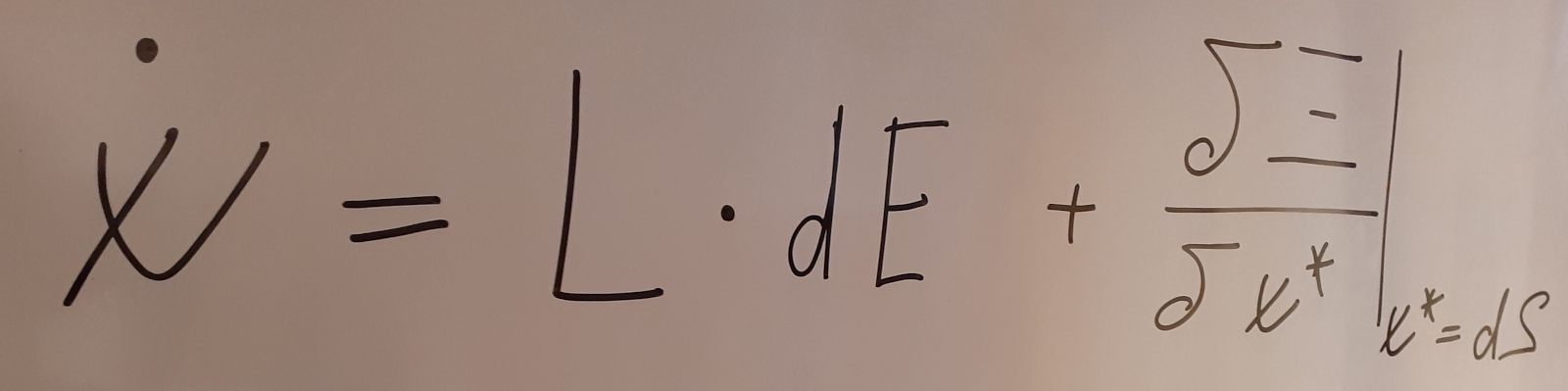
Michal Pavelka is an Associate Professor at the Division of Mathematical Modeling, Mathematical Institute, Faculty of Mathematics and Physics, Charles University, Prague, Czech Republic. His career spans roles from Postdoc (part time) at the Institute of Chemical Technology to positions at École Polytechnique de Montréal and New Technologies Research Centre. He earned his Ph.D. in 2015 and M.Sc. in 2012 at Charles University under František Maršík. Michal Pavelka's research integrates Non-equilibrium Thermodynamics , Geometric Mechanics , and Machine Learning . His work bridges advanced mathematical frameworks like GENERIC and Extended Irreversible Thermodynamics with practical applications in electrochemical systems (fuel cells, batteries) and quantum fluids . Notably, he has contributed to Smoothed Particle Hydrodynamics and Hamiltonian mechanics in complex systems. His recent publications focus on Multiscale Thermodynamics , Superfluid Modeling , and Machine Learning in Physics . Scientific awards include the Best paper award, Entropy (2021) and Czech Grant Agency President's award (2020). He has secured significant grants, including a €363k Czech Grant Agency award (2023–2025) for geometric multiscale thermodynamics of complex fluids. Scientific Awards: Best paper award, Entropy (2021) Czech Grant Agency President's award (2020) High quality monographs of Charles University competition (1st-3rd place, 2020) Current Projects: He leads research on geometric multiscale thermodynamics and co-supervises projects on zinc-air batteries and solid oxide fuel cells. His lab develops the SmoothedParticles.jl Julia package for fluid dynamics simulations.
Ondřej Bojar is an Associate Professor at the Institute of Formal and Applied Linguistics (UFAL), part of the Faculty of Mathematics and Physics at Charles University in Prague . He actively engages in research and teaching, with a focus on machine translation and computational linguistics. His work spans both theoretical and applied domains, involving collaborations with industry and academia.
Jan Rataj is a Professor at the Faculty of Mathematics and Physics , Charles University , specializing in Integral Geometry , Geometric Measure Theory , and Stochastic Geometry . He has been affiliated with Charles University since 1991 and has held visiting positions at universities in Jena, Karlsruhe, Ulm, and Aarhus. Research interests focus on geometric probability, convex geometry, and measure theory Teaches courses on Measure and Integration Theory , Geometry , and advanced topics in geometric measure theory Scientific contributions include coauthoring 2 monographs and ~50 research papers. His work explores: Random measurable sets and perimeter analysis Stochastic modeling of microstructures Geometric functionals and invariants Applications to spatial statistics and probability theory He supervises PhD students and leads the Seminar of Stochastic Geometry , which examines topics like: Max-stable random fields Convex body reconstruction Point process analysis
Prof. Radomír Kužel is a distinguished physicist at the Department of Condensed Matter Physics within the Faculty of Mathematics and Physics at Charles University . With a career spanning over three decades, he has made significant contributions to X-ray diffraction analysis and materials science. 1975: Secondary Education at Gymnasium Čakovice 1980: RNDr. in Solid State Physics, Charles University 1989: Ph.D. (CSc.) in X-ray Diffraction Analysis 2001: Docent Title 2015: Professor Appointment by the Czech Republic President His research focuses on X-ray diffraction studies of polycrystalline materials, thin films, and nanomaterials. Key areas include dislocation dynamics, residual stress analysis, texture development, and microstructural characterization using advanced diffraction techniques. He pioneered methods for dislocation type determination from line broadening and developed analytical approaches for microstructural parameters in nitrides and oxides. Recent publications highlight his work on TiO₂ thin films , hexaferrite synthesis , and ECAP-processed metals , demonstrating expertise in structure-property relationships and thermal stability of nanomaterials. His 2021 study on W-type hexaferrite thin films exemplifies his ongoing innovation in magnetic materials. Prague Convention Bureau Hybrid Congress Award (2022) Prof. Kužel has organized major international conferences, including the 25th IUCr Congress (2021) and multiple European Powder Diffraction Conferences . He serves on editorial boards (e.g., Materials Structure ) and leads the Czech Crystallographic Society.
Karol Kampf is a Professor at the Institute of Particle and Nuclear Physics within the Faculty of Mathematics and Physics at Charles University in Prague. His research bridges theoretical particle physics with experimental work at CERN, particularly through his leadership role in the NA62 experiment. He has held positions at prestigious institutions including Lund University, ETH Zurich, and CNRS in France before returning to Charles University. Ph.D. in Theoretical Particle Physics, Charles University (2004) Assistant Professor, Charles University (2005-2007) Chercheur associé at CNRS, IPN Orsay, France (2007) Post-doc at PSI ETH Villigen, Switzerland (2007-2009) Post-doc at Lund University, Sweden (2009-2011) Research Scientist, Charles University (2011-2016) Associate Professor (2016) Full Professor (2023) Kampf's research focuses on theoretical aspects of particle physics, particularly scattering amplitudes and effective field theories. His work spans from fundamental theoretical developments like soft theorems, classification of fundamental theories, and the soft bootstrap approach to phenomenological applications in Chiral Perturbation Theory, Resonance Chiral Theory, and Electroweak Theory. He has made significant contributions to the understanding of Goldstone bosons, pion physics, and string-inspired amplitude methods. His publication record shows a strong integration of theoretical developments with experimental applications, particularly through his involvement with the NA62 experiment at CERN. Recent work demonstrates a trend toward connecting abstract theoretical concepts like celestial amplitudes and double-copy relations with concrete experimental measurements in kaon physics. His research bridges the gap between high-energy theory and precision experimental physics, with applications to rare kaon decays and searches for physics beyond the Standard Model. Kampf serves as team leader for the NA62 experiment at CERN since 2012 and has chaired the doctoral study program in Particle and Nuclear Physics since 2018. He has organized numerous conferences including the Amplitudes 2022 Summer School, Amplitudes 2022, and Prague Spring Amplitudes 2023. His teaching includes courses on Electroweak Interactions, Modern Methods for Scattering Amplitudes, and Theory of Groups and Algebras in Particle Physics. At the Institute of Particle and Nuclear Physics, Kampf leads research efforts connecting theoretical amplitude methods with experimental kaon physics through the NA62 collaboration. His group works at the intersection of theoretical developments in scattering amplitudes and their application to precision measurements at CERN, creating a unique bridge between abstract theoretical physics and experimental particle physics.
Assoc. Prof. Ondřej Pejcha is an active researcher at the Institute of Theoretical Physics, Faculty of Mathematics and Physics, Charles University in Prague. His work focuses on connecting theoretical modeling, observational astronomy, and data science to understand time-domain phenomena in stellar systems, particularly binary stars and their evolution. Dr. Pejcha's research spans computational astrophysics, with emphasis on (radiation)(magneto)hydrodynamics simulations of binary star systems, common envelope evolution, and stellar mergers. His group develops advanced numerical methods to study transients such as stellar mergers and core-collapse supernovae, persistent variable sources including eclipsing binaries and pulsating stars, and stellar dynamics. They combine supercomputer simulations with semi-analytic models and machine learning techniques applied to astronomical data from surveys like ASAS-SN. The analysis of Dr. Pejcha's recent publications reveals a strong focus on computational approaches to binary star evolution, with increasing integration of machine learning methods in the latest works. His research addresses fundamental questions about common envelope evolution, mass transfer processes, and the connection between theoretical models and observational signatures in time-domain astronomy. ERC Consolidator grant for ROGALLO project (developing new simulation methods for binary stars) ERC Starting grant for Cat-In-hAT project (computational methods for binary star mergers) Czech Science Foundation grant for studying mass transfer in binaries Czech-American collaboration grant for ASAS-SN survey participation Primus award PRIMUS/SCI/17 from Charles University Dr. Pejcha actively mentors PhD students and postdocs, with recent advisees including Jakub Cehula and Milan Pešta. His group has secured substantial funding that supports internationally competitive salaries, dedicated computing resources including a specialized cluster with upcoming GPU enhancements, and travel funds. Alumni from his group have successfully obtained competitive postdoctoral positions and national/international fellowships. The group maintains strong international connections, regularly collaborating with institutions including Princeton University, Brown University, MPA Garching, and Warsaw University Observatory.
Dr. Jaroslav Hron is an Associate Professor at the Department of Numerical Mathematics within the Faculty of Mathematics and Physics at Charles University in Prague, Czech Republic. His primary research focuses on fluid mechanics, biomechanics, and numerical analysis, with particular expertise in fluid-structure interaction problems and their applications to cardiovascular mechanics. Dr. Hron's research interests span fluid mechanics, biomechanics, numerical analysis, and computational mathematics. His work primarily investigates fluid-structure interaction problems, particularly as they apply to cardiovascular mechanics and hemodynamics. He has made significant contributions to the understanding of non-Newtonian fluids, pressure-dependent viscosities, and the development of advanced numerical methods for solving complex fluid flow problems. His research often bridges the gap between theoretical mathematics and practical applications in biomedical engineering. Analysis of his recent publications reveals a strong focus on cardiovascular applications, particularly in determining pressure data from velocity measurements and modeling blood flow in complex geometries. His work demonstrates a consistent progression from theoretical considerations to practical applications in biomechanics, with increasing emphasis on computational methods for fluid-structure interaction problems. The research shows interdisciplinary collaboration across mathematics, engineering, and medical fields. Dr. Hron has been actively involved in academic advising and research supervision, contributing to the development of computational methods in fluid mechanics. His work has established important benchmarks in fluid-structure interaction simulation, particularly in hemodynamic applications. His laboratory work primarily focuses on computational fluid dynamics and fluid-structure interaction, with applications to cardiovascular mechanics. He has developed and refined numerical methods for simulating complex fluid behaviors, particularly those relevant to biological systems.
Dr. Jan Swart is a Professor at the Department of Probability and Mathematical Statistics within the Faculty of Mathematics and Physics at Charles University, and a researcher at the Institute of Information Theory and Automation (UTIA) of The Czech Academy of Sciences in Prague. His office is located at Pod vodarenskou vezi 4, 18200 Praha 8, Czech Republic, where he works in Room 112 of the Stochastic Informatics department. Professor Swart specializes in probability theory with particular expertise in interacting particle systems, stochastic processes, and their mathematical foundations. His research spans quantum probability, random matrix theory, Markov chains, large deviations, and Brownian continuum objects. He has developed significant theoretical frameworks for understanding complex stochastic systems and their scaling limits. His publication record shows a consistent focus on advancing the mathematical understanding of interacting systems, with lecture notes and research materials that have become valuable resources in the field. His work demonstrates strong connections between theoretical probability and applications in statistical physics and theoretical biology. Professor Swart has supervised numerous theses and taught a wide range of advanced courses including Quantum Probability Theory, Interacting Particle Systems, Random Matrix Theory, and Advanced Markov Chains. He has also created a comprehensive simulation library for interacting particle systems that enables numerical exploration of these complex models. Notably, Professor Swart has also contributed to mathematical education through creative works including a mathematical fairy tale titled "Roulette a la princess" that explores game theory and probability concepts in an engaging narrative format. His work on the Czech language demonstrates his integration into the local academic community while maintaining international scholarly connections.
Pavel Cejnar is a Professor at the Institute of Particle and Nuclear Physics, Faculty of Mathematics and Physics, Charles University in Prague. He has been a full professor since 2012, following his appointment as an associate professor in 2004 and assistant professor in 1995. His research focuses on quantum theory, particularly quantum phase transitions, quantum chaos, and nuclear structure models as laboratories for studying quantum phenomena. Cejnar received his Master's degree in nuclear physics from Charles University in 1988, his Ph.D. in 1995 with a thesis on "statistical modelling of nuclear processes," and his Doctor of Science (DSc.) in 2010. He has held research positions at several international institutions including the University of Fribourg, Yale University, Michigan State University, University of Stellenbosch, University of Cologne, and the European Center for Theoretical Studies in Nuclear Physics in Trento. His research interests span quantum chaos, quantum phase transitions, quantum entanglement, and quantum computing. He views nuclear-structure models as ideal laboratories for studying quantum effects. His work has significant implications for understanding fundamental quantum phenomena in many-body systems. Professor Cejnar's publications show a strong focus on excited-state quantum phase transitions, with numerous papers exploring the connections between quantum criticality, quantum dynamics, and many-body physics. His recent work has delved into quantum geometry, open quantum systems, and the application of quantum phase transitions to quantum information processing. Among his notable scientific contributions are the development of theoretical frameworks for understanding quantum phase transitions in nuclear models and their extensions to other quantum systems. His work bridges nuclear physics with broader quantum physics concepts. Cejnar has supervised numerous students at various levels, from bachelor's theses to PhD dissertations, with research topics centered around quantum phase transitions, quantum chaos, and quantum information. He is also actively involved in teaching quantum mechanics and related topics to both physics students and non-specialists. He has contributed significantly to science popularization, including co-authoring the book "Einstein again in Prague" and developing the "Physics as an Adventure of Knowledge" course, which introduces key concepts of modern physics to bachelor's students.
Ing. Petr Schwarz, Ph.D. , is an Assistant Professor at the Department of Computer Graphics and Multimedia, Faculty of Information Technology, Brno University of Technology. He specializes in speech recognition and biometric systems, with a focus on robustness in real-world conditions. Current roles: Assistant Professor, Researcher, Project Lead Key affiliations: Brno University of Technology (FIT), EU Horizon Europe, Czech Defense Research Program His research spans speech recognition , language identification , and multimodal datasets for security applications. Recent work includes AI-driven emergency call systems and tools to combat voice deepfakes. Notable projects include: Multilingual and Cross-cultural Dialogue Systems (EU Horizon Europe, 2024-2026) Voice Deepfake Detection (Czech Sectech Program, 2024-2026) His publications analyze Gaussian mixture models, i-vector migration, and phonetic search techniques. Trends emphasize robust algorithms for security-critical domains . Scientific accolades include the Silver Medal from BUT Rector (2006) and Brno FIT Bronze Medal (2022). He has contributed to open-source tools like Kaldi and developed systems for NIST evaluations.