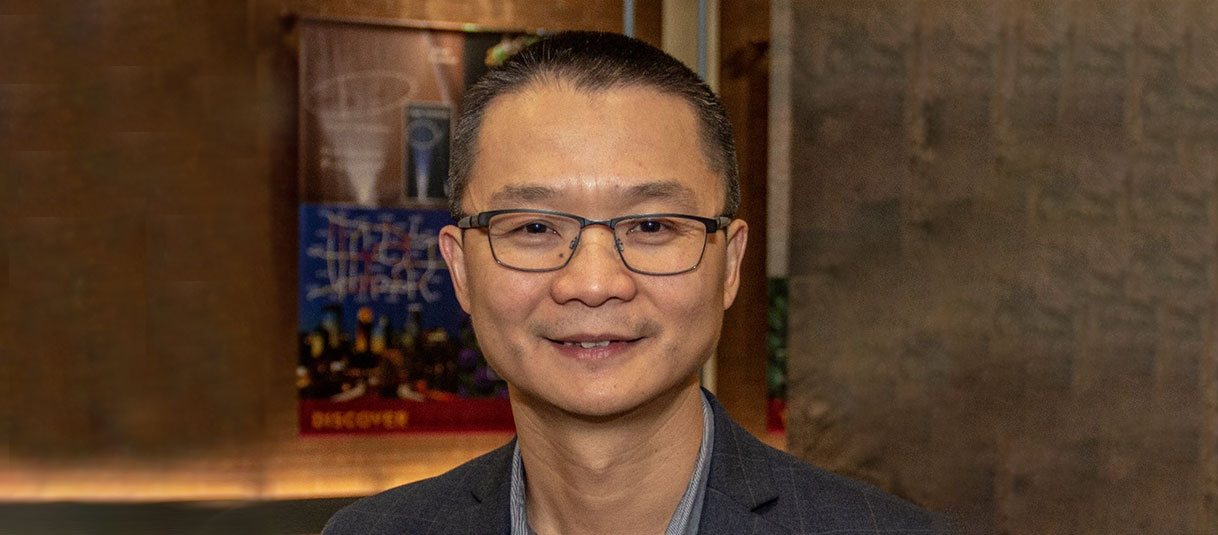
Dr. Saibal Mukhopadhyay is a Professor in the Department of Electrical and Computer Engineering at the Georgia Institute of Technology, where he joined in 2007. He holds the Joseph M. Pettit Professorship and is recognized as an IEEE Fellow for his contributions to low-power and reliable VLSI systems. Education: BEng (Jadavpur University, India), Ph.D. (Purdue University) Labs: Gigascale Reliable Energy Efficient Nanosystem (GREEN) Lab His research focuses on VLSI Systems , Nanotechnology , and Low-Power Electronics , with emphasis on technology-circuit co-design for energy-efficient computing. Recent work explores Compute-in-Memory (CIM) architectures and Spiking Neural Networks for edge AI. Key article themes include Transformer Model Acceleration , Quantum Computing Calibration , 3D Object Detection , and Device Aging Analysis , reflecting his interdisciplinary approach bridging hardware design and machine learning. Scientific Awards IEEE Fellow (2018) ONR Young Investigator (2012) NSF CAREER Award (2011) IBM Faculty Awards (2009, 2010) Best Paper Awards (IEEE-Nano 2003, ICCD 2004)
Benoît Lemaire is a permanent Lecturer at the University of Grenoble Alpes, affiliated with the Laboratoire de Psychologie et NeuroCognition (LPNC) and the CoMMet team (Consciousness, Memory and MetaCognition). His academic career spans computational cognitive modeling, with a focus on working memory, eye movement research, and educational technology applications. PhD in Computer Science/AI, Université Paris-Sud (1989-1992) Postdoctoral Research: University of Pittsburgh (1993), Swedish Institute of Computer Science (1994) Academic Roles: Maître de conférences (1996-), transitioning through Laboratoire des Sciences de l'Éducation (1994-1996), Laboratoire Leibniz (2004-2006), TIMC (2006-2010), and LPNC (2010-). Lemaire’s research integrates computational modeling with empirical studies across multiple domains: Working Memory : Time-based decay, interference effects, semantic compression, and attentional refreshing mechanisms. Eye Movements : Information search in texts, reading strategies, and visual-semantic integration. Educational Applications : Text assessment, metaphor comprehension, and adaptive learning systems. Inductive Learning : MDL-based models for concept learning and lexical knowledge acquisition. His recent publications (2021–2025) emphasize computational models of mental arithmetic, semantic knowledge impacts on memory, and similarity-based compression techniques. All work aligns with cognitive science and AI methodologies. Current affiliations include: Laboratoire de Psychologie et NeuroCognition (LPNC) – 2010- CoMMet team (Consciousness, Memory and MetaCognition) University of Grenoble Alpes – Permanent Lecturer
Ramavarapu S Sreenivas is a Professor in the Industrial and Enterprise Systems Engineering department at the University of Illinois at Urbana-Champaign , with research appointments at the Coordinated Science Laboratory (CSL) and the Information Trust Institute (ITI ). He holds a joint affiliation with the Electrical and Computer Engineering department and serves as the Arthur Davis Faculty Scholar since 2016. Ph.D. , Electrical and Computer Engineering, Carnegie Mellon University (1990) M.S.E.E. , Carnegie Mellon University (1987) B.Tech , Electrical Engineering, Indian Institute of Technology Madras (1985) His research focuses on Discrete-Event/Discrete-State (DEDS) systems , applying Coding Theory, Machine Learning, and Information Theory to develop near-optimal supervisory policies for applications in wireless networks, automated manufacturing, and healthcare systems . He leads the Center for Autonomous Construction and Manufacturing at Scale (CACMS) , established in 2023. Recent publications highlight advancements in liveness enforcement in Petri nets , fault-tolerant control , and IoT-based load scheduling . His work bridges theoretical rigor with practical implementations in Distributed Control, Network Coding , and Reinforcement Learning . UIUC Campus Award for Excellence in Graduate and Professional Teaching (2023) Arthur Davis Faculty Scholar (2016) Senior Member, IEEE (2002) James Franklin Sharp Outstanding Teaching Award in Industrial Engineering (2017, 2012) Sreenivas has taught graduate and undergraduate courses in Control Systems, Integer Programming, and Financial Computing since 1992. He co-instructed courses in Health Technology and contributed to the Master of Science in Financial Engineering (MSFE) program, which ranks 4th nationally.
Dr. Adel Aazami is an Assistant Professor at the Institute of Transport Economics and Logistics at Vienna University of Economics and Business (WU Vienna) since 2023. His academic journey began with a B.Sc. in Industrial Engineering from University of Tehran (2010-2014), followed by an M.Sc. (2014-2016) and Ph.D. (2016-2021) from Iran University of Science and Technology (IUST), Tehran. Prior to his current position, he worked as a Postdoctoral Researcher at Sharif University of Technology (2021-2022) and was a Visiting Researcher at the University of Toronto (2020). His educational background includes: Ph.D. in Industrial Engineering (2016-2021) - Iran University of Science and Technology (IUST), Tehran, Iran M.Sc. in Industrial Engineering (2014-2016) - Iran University of Science and Technology (IUST), Tehran, Iran B.Sc. in Industrial Engineering (2010-2014) - University of Tehran, Tehran, Iran Dr. Aazami's research spans multiple interconnected domains within operations research and supply chain management. His primary focus areas include Operations Research and Optimization, Supply Chain and Logistics, Production and Distribution/Transportation Planning, Competition and Game Theory, Stochastic Programming, and Decomposition Algorithms. His work demonstrates a strong emphasis on developing mathematical models and optimization algorithms for complex supply chain problems, particularly those involving perishable goods, competitive environments, and sustainability considerations. He has made significant contributions to integrating environmental factors into traditional logistics problems and developing robust optimization approaches for supply chain networks. Analysis of Dr. Aazami's publication record reveals a consistent trajectory of increasingly sophisticated research in supply chain optimization. His work shows a clear progression from foundational mathematical optimization techniques to increasingly complex integrated problems involving multiple stakeholders, uncertainty, and environmental considerations. A notable trend is his focus on perishable products within supply chains, developing models that account for limited product lifetimes while optimizing across multiple echelons of the supply chain. More recently, his research has expanded to incorporate green logistics considerations, developing algorithms that balance economic and environmental objectives in transportation and distribution problems. His notable scientific achievements include: Winner of the 'Best Student' award among nationwide students evaluated by the Iranian Ministry of Science (2020) Winner of the Iranian Nobel Prize (known as the Alborz National Foundation Prize) (2019) Winner of the Best Student Award at IUST (2018) Winner of the Top Researcher Award at IUST (2018) Annual Awards of the National Elites Foundation Iran (2015-2020) Dr. Aazami has extensive teaching experience across multiple Iranian universities including Tehran University, Amirkabir Technical University, Isfahan University, Yazd University, Zanjan University, Damghan University, Abrar University and Iran Technical University. His peer review activities include reviewing for prestigious journals such as Soft Computing, Expert Systems with Applications, and Annals of Operations Research. While specific grant information isn't detailed in the provided text, his research output suggests active engagement with complex optimization problems relevant to transportation and logistics industries. At WU Vienna, Dr. Aazami is part of the research team at the Institute of Transport Economics and Logistics, working alongside other faculty members including Prof. Kummer and Prof. Wakolbinger. His research integrates theoretical optimization methods with practical applications in transportation and logistics, contributing to the institute's focus on sustainable and efficient supply chain solutions.
Dr. Sirojan Tharmakulasingam serves as a Lecturer and Research and Development Coordinator at the Signals, Information & Machine Intelligence lab within the Faculty of Engineering at the University of New South Wales (UNSW) Sydney. His work bridges theoretical machine learning with practical applications in edge computing and high-performance systems. His research spans multiple cutting-edge domains including machine learning, artificial intelligence, data science, edge computing, and high-performance computing. Dr. Tharmakulasingam specializes in developing next-generation inference models by integrating machine learning, signal processing, mathematical modeling, and computing across diverse data types including images, video, audio, and quantum molecular data. His work has significant implications for scientific computing, telecommunications, and healthcare applications. Analysis of his publication trends reveals a strong focus on practical AI implementations, with increasing emphasis on edge computing solutions, quantum applications, and energy-efficient models. His recent work demonstrates progression from foundational machine learning techniques toward specialized applications in scientific computing and real-time systems. Dr. Tharmakulasingam holds a Doctor of Philosophy from UNSW Sydney and a Bachelor of Science of Engineering from the University of Moratuwa in Sri Lanka. His academic journey reflects a strong foundation in both theoretical and applied engineering principles. As Research and Development Coordinator for the Signals, Information & Machine Intelligence lab, he oversees critical research infrastructure and collaborations. His work location in Room 447 of the EE&T Building (G17) places him at the heart of UNSW's engineering research ecosystem, with access to the Mark Wainwright Analytical Centre's extensive facilities.
Nancy A. Lynch is the NEC Professor of Software Science and Engineering and Professor of Electrical Engineering and Computer Science at the Massachusetts Institute of Technology, where she heads the Theory of Distributed Systems (TDS) group within CSAIL. Research Interests Distributed computing algorithms and lower bounds Real-time and fault-tolerant systems Formal modelling and verification Wireless network algorithms Biological distributed algorithms Neural computation and spiking networks Across her work, Lynch blends rigorous theoretical analysis with practical relevance, tackling problems ranging from consensus and leader election in unreliable networks to modelling decision-making circuits in the brain. Publications & Trends Since 2020 she has published extensively on distributed algorithms , swarm robotics , neuromorphic architectures , and biologically-inspired computation . Notable recent directions include hierarchical concept learning in spiking neural networks, nanobot locomotion modelling for cancer detection, and superconducting nanowire platforms for energy-efficient neural hardware. Scientific Awards & Honors Best Paper Award, OPODIS 2018 Best Paper Award, IEEE NCA 2014 Highlight Paper, Neuromorphic Computing and Engineering 2022 Teaching & Advising Lynch teaches core graduate and undergraduate subjects at MIT including 6.042J Mathematics for Computer Science , 6.852J/18.437 Distributed Algorithms , and 6.885/6.006 Algorithms . She has supervised dozens of PhD students and post-docs whose names are listed on her Past Students page. Laboratory & Teams She leads the Theory of Distributed Systems (TDS) Group , a vibrant research team within MIT CSAIL . TDS is part of the larger Theory of Computation group and hosts weekly seminars, reading groups, and collaborative projects with partners across MIT and worldwide.
Dr Smitha Gopinath is a Lecturer in the School of Chemical, Materials and Biological Engineering at the University of Sheffield , where she leads research in sustainable engineering systems within the Sustainable Design Laboratory (SDL) . Education & Career Path PhD in Chemical Engineering, Imperial College London Post-doctoral researcher, Applied Mathematics and Plasma Physics Group, Los Alamos National Laboratory Research Focus Dr Gopinath’s interdisciplinary work centres on the design, calibration and operation of sustainable engineering systems . She develops high-fidelity models and large-scale optimisation algorithms tailored to energy and materials challenges. Core interests include: Thermo-mechanical energy conversion devices (heat pumps, organic Rankine cycles) Carbon-capture utilisation and storage (CCUS) via novel solvents and separation systems Power-grid expansion and operation for renewable integration and decarbonisation Methodologically, she integrates Integrated Molecular and Process Synthesis (IMPS) with Optimisation Accelerated by domain Knowledge (OAK) to co-design molecules, materials and flowsheets that meet stringent energy and environmental targets. Publication Landscape Across 2015–2025 her publications reveal a clear trajectory from fundamental thermodynamic measurements and molecular design toward rigorous optimisation of large-scale energy systems. Early work concentrated on CO₂ solubility and carbonation kinetics of steel slag, providing essential data for carbon-sequestration schemes. Subsequent papers introduced advanced optimisation frameworks—outer-approximation algorithms, exact reformulations and feasibility-based methods—applied to solvent-based CO₂ capture, organic Rankine cycle working-fluid selection and AC optimal power flow (ACOPF). Recent contributions benchmark global optimality certificates for ACOPF problems, underscoring her drive to bridge chemical process systems engineering with electrical power systems optimisation. Teaching & Mentoring Dr Gopinath teaches undergraduate modules: CPE440 (Particle Technology) CPE170 (Particle Technology) She actively invites prospective PhD students to join the Sustainable Design Laboratory, offering supervision on projects spanning sustainable process design, renewable energy systems and algorithmic optimisation. Laboratory & Collaborative Networks She directs the Sustainable Design Laboratory (SDL), a multidisciplinary team leveraging systems engineering, multi-scale modelling, process simulation and optimisation to re-imagine a sustainable chemical and energy industry. The SDL collaborates with international partners, including Los Alamos National Laboratory and leading researchers in applied mathematics and power systems engineering.
Georgios Zouraris is a Professor at the University of Crete, where he has maintained an active research profile since earning his Ph.D. from the same institution in 1995. His work is centered in the School of Science and Engineering, focusing on advanced computational mathematics with applications in physics and engineering. Education: Ph.D. in Mathematics, University of Crete, 1995 Professor Zouraris specializes in the development and rigorous analysis of numerical methods for partial differential equations. His research spans finite element and finite difference techniques for nonlinear Schrödinger equations, logarithmic heat equations, and stochastic PDEs with space-time white noise. Key contributions include error estimation frameworks for relaxation schemes, convergence analysis of Crank-Nicolson methods, and efficiency improvements for multilevel Monte Carlo simulations. His theoretical work consistently addresses singular nonlinearities and complex domain geometries, bridging mathematical rigor with computational practicality. Analysis of his 2020-2025 publications reveals a sustained focus on high-accuracy numerical schemes for challenging PDEs, particularly those involving logarithmic singularities and stochastic forcing. Recent work demonstrates increasing sophistication in handling noncylindrical domains and coupling strategies, with applications ranging from quantum systems to material science. The publications show consistent emphasis on provable convergence rates and computational efficiency. Information regarding student advising, research grants, and laboratory facilities is not documented in the available sources. His active publication record through 2025 indicates ongoing research leadership in computational mathematics.
Sophia Natasha Wilson is a Research Fellow in the Department of Computer Science (DIKU) at the University of Copenhagen, specializing in machine learning applications across interdisciplinary domains. She is affiliated with the SCIENCE AI Centre and holds a cross-departmental position at the Niels Bohr Institute . Her research bridges theoretical machine learning with practical implementations in healthcare, quantum computing, and environmental sustainability. University of Copenhagen Department of Computer Science (DIKU) Niels Bohr Institute SCIENCE AI Centre Her research focuses include: Quantum-enhanced machine learning algorithms Explainable AI for healthcare applications Environmental sustainability in computing Emotion-aware language models Quantum computing hardware optimization Public health risk modeling Her recent publications demonstrate cross-disciplinary work in quantum machine learning (hybrid optical processors, qubit stabilization), health informatics (hypothyroidism analysis, nursing values evaluation), and ethical AI (sustainable AI, fairness in recommender systems). Technical work also appears in non-Euclidean generative models and real-time adaptive systems . Current projects include quantum dot array simulation (QDarts platform) and federated learning for personalized medicine . She contributes to the TreeSense center for remote sensing of global tree resources and works on climate-aware AI frameworks.
Zahra Aminzare is an Associate Professor of Mathematics at the University of Iowa. She is affiliated with the Department of Mathematics within the College of Liberal Arts and Sciences. Her research focuses on Mathematical Biology and Dynamical Systems, with emphasis on modeling biological systems such as cellular homeostasis, insect locomotion, and neural oscillators. She holds a PhD from Rutgers University. Her work explores topics including synchronization in nonlinear networks, stochastic processes in biological systems, and the application of contraction theory to stability analysis. Notable contributions include studies on ion transport dynamics, bacterial chemotaxis, and phase reduction in noisy oscillators. Her research bridges mathematical methodologies with biological phenomena, addressing questions related to system robustness and emergent behaviors. Aminzare’s publications span across journals and conferences, with recent work addressing rhythmicity in insect locomotion, spike-generation mechanisms in multi-timescale systems, and stochastic synchronization in networked systems. She maintains an active research lab focused on interdisciplinary applications of dynamical systems theory.
Nicholas Ossi is a Visiting Assistant Professor in the Department of Mathematics at the University at Buffalo's College of Arts and Sciences. He holds a PhD in Applied Mathematics from Florida State University (2024) and a BS in Mathematics and Physics from the University of Central Florida (2018). His research focuses on integrable nonlinear partial differential and difference equations modeling wave propagation in dispersive media, particularly within the nonlinear Schrödinger (NLS) family. His work explores inverse scattering transforms for space-time-shifted integrable equations and investigates non-Hermitian systems with applications in wave dynamics and topological properties. Recent publications address discrete integrable systems, breather interactions, and effects of complex potentials. Office hours: Tuesday/Thursday 10:00-11:00am. Contact: 326 Mathematics Building, UB North Campus, Buffalo NY, 14260-2900; (904) 891-0164; nossi@buffalo.edu .
Ronald N. Miles is a Distinguished Professor in the Department of Mechanical Engineering at Binghamton University, part of the Watson School of Engineering and Applied Science. He has held various administrative roles including Director of Graduate Studies, Department Chair, and Associate Dean for Research. His expertise spans mechanics, acoustics, MEMS, neurobiology, and control systems, with a focus on bio-inspired microacoustic sensors for healthcare and consumer electronics. Educated at the University of California, Berkeley (BSEE) and the University of Washington (MS/PhD in Mechanical Engineering), Miles has over 40 years of academic and industry experience. His research has led to over 100 publications, 20 patents, and significant grants totaling $17 million. Notable achievements include the Chancellor's Award for Excellence in Teaching and the Research Foundation's Outstanding Inventor Award. Miles' research emphasizes bio-inspired sensor design, acoustic flow sensing, and MEMS technology. His team has developed innovative microphones mimicking insect hearing mechanisms, with applications in hearing aids and medical devices. Current projects include NIH-funded work on acoustic measurements in the human ear canal. Award highlights include recognition for teaching (1996-1997 Chancellor's Award) and research innovation, including the 2005 First Patent Award. His work bridges engineering and biology, with labs focused on acoustic core technologies and vibrations research. Miles also serves as Associate Editor for the ASME Journal of Vibration and Acoustics.
William L. Kath is the Margaret B. Fuller Boos Professor of Engineering Sciences and Applied Mathematics at Northwestern University's McCormick School of Engineering. He holds affiliations as Deputy Director of the National Institute for Theory and Mathematics in Biology, courtesy faculty in Neurobiology, and member of the Northwestern Institute on Complex Systems. His research bridges quantitative biology, neuroscience, and optics, focusing on dynamical models of biological systems and high-speed optical communication systems. Key projects include the EMBEDR algorithm for single-cell omics analysis and computational models of temperature sensing in Drosophila. Research interests emphasize quantitative and computational biology, particularly circadian rhythms, neuronal circuit modeling, and single-cell genomics. Collaborations include the Gallio lab (Drosophila thermosensation), Daniel Dombeck's lab (hippocampal neuron behavior), and Nelson Spruston's group (hippocampal microcircuits). His work on optics includes nonlinear pulse propagation and rare event analysis in fiber optics. Scientific awards include Fellowships from the Society for Industrial and Applied Mathematics and the Optical Society of America. He advises over 20 graduate students and has developed courses like ESAM 472 (RNA sequencing analysis) and ESAM 370 (Computational Neuroscience). Current students include Richard Suhendra and Nan Ding (jointly advised). Labs/teams: Leads the National Institute for Theory and Mathematics in Biology, co-leads the Gallio lab collaboration on thermosensory circuits, and maintains active projects in computational neuroscience and optics at Northwestern.
Marco Nie is a Professor and Chair of the Department of Civil and Environmental Engineering at Northwestern University, where he has been a faculty member since 2006. His research focuses on Transportation Systems Analysis, emphasizing interdisciplinary approaches that integrate optimization, network science, traffic flow theory, economics, and statistics to address complex interactions between human activities, infrastructure, and urban networks. He teaches three courses: an undergraduate/graduate introduction to transportation engineering, and two graduate courses on analytical and computational tools for surface transportation systems design. Education: Marco Nie earned a BS in Structural Engineering from Tsinghua University (Beijing), followed by graduate studies in Transportation at the National University of Singapore (NUS), and a PhD in Transportation from the University of California, Davis. Research interests include improving transportation efficiency, sustainability, and equity through policy and technology. Recent work explores autonomous vehicles, modular transit systems, congestion pricing, and data-driven solutions for EV charging and ride-hail platforms. He has expressed challenges in securing research funding, noting its critical role despite inherent flaws in evaluating research impact through monetary metrics. Scientific Awards: He received the 2021 Transportation Science Meritorious Service Awards . Marco also serves on editorial boards, including Service Science (2023), and actively publishes on topics like urban mobility, freight logistics, and policy analysis. Advising & Grants: While no specific students or grants are listed, he highlights the importance of funding mechanisms for research. His work often involves collaborations with sponsors and stakeholders to address real-world transportation challenges. Labs/Teams: Affiliated with the Center for Science and Protection of Engineered Environments and engages in interdisciplinary research groups focusing on sustainable and equitable urban systems.
Jane-Ling Wang is a Distinguished Professor in the Department of Statistics at the University of California, Davis. Her research focuses on advancing statistical methodologies for functional and longitudinal data analysis, deep learning applications, and survival analysis. She holds a Ph.D. from UC Berkeley and has contributed extensively to interdisciplinary fields including neuroscience, biostatistics, and machine learning. Wang has received numerous accolades, including being elected an Academician at Academia Sinica (2022), recipient of the Humboldt Research Award (2020), and the ICSA Distinguished Achievement Award (2018). Her work bridges theory and practice, addressing challenges in data sparsity, dynamic systems modeling, and high-dimensional statistical inference. Her recent publications emphasize innovative techniques such as SAND (Transformer-based data imputation) and adaptive basis layers for functional data analysis. These contributions underscore her expertise in integrating modern computational tools with classical statistical frameworks.