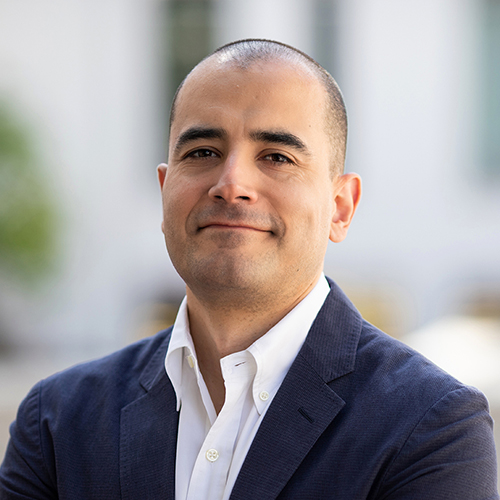
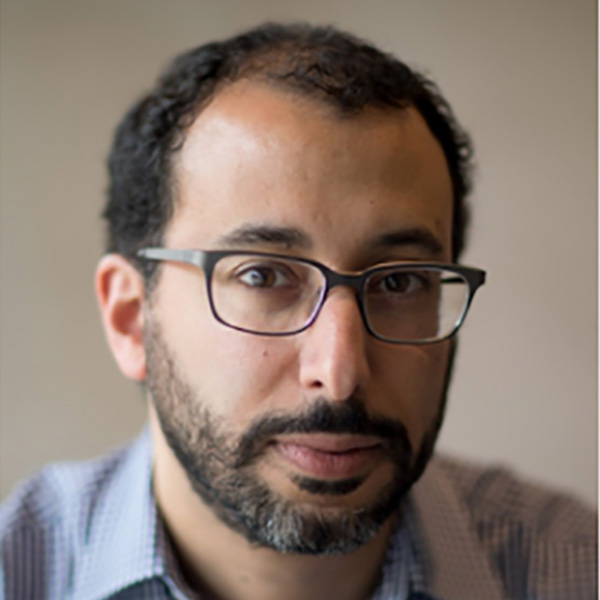
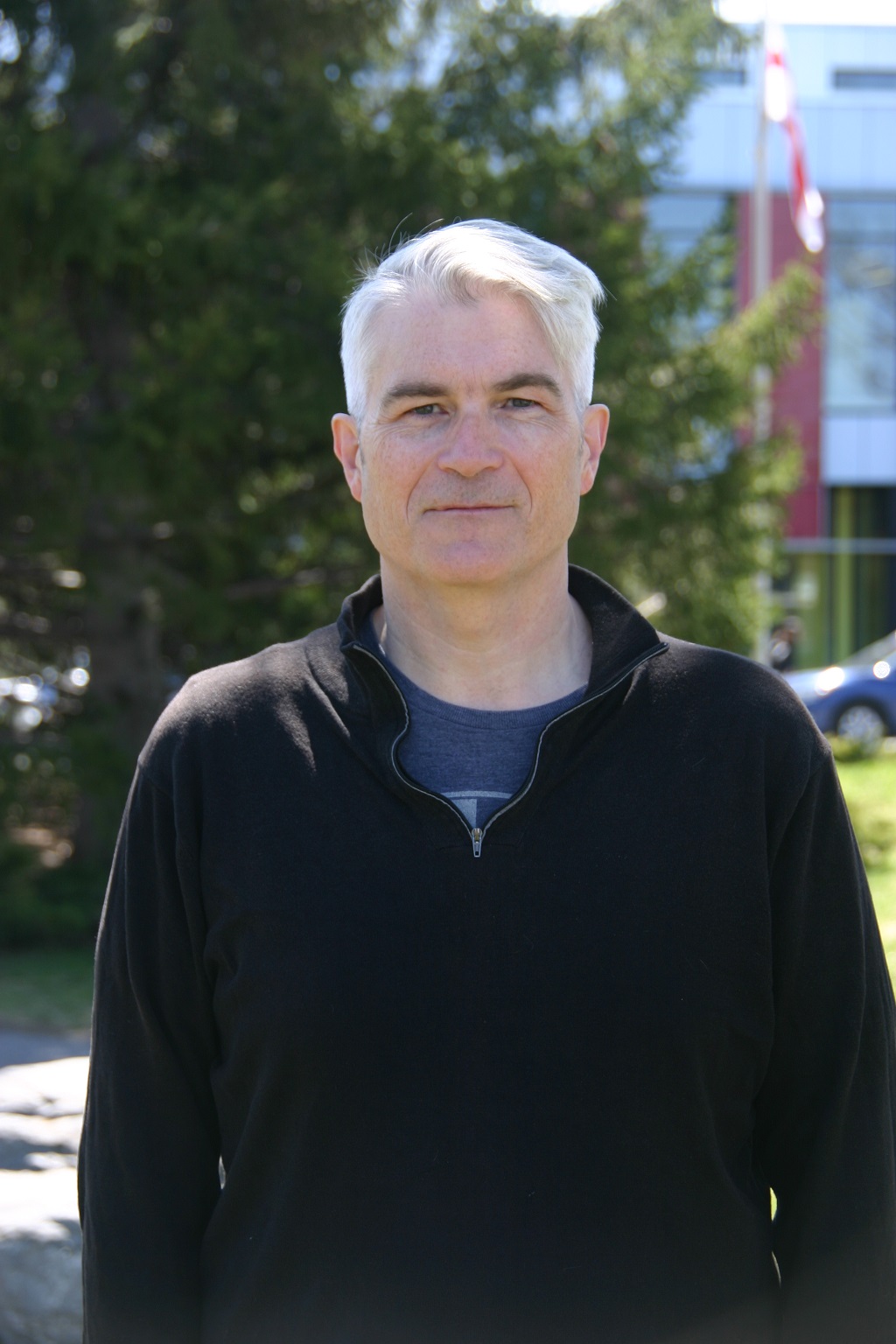
Miguel R. Rueda is an Associate Professor in the Department of Political Science at Emory University, specializing in electoral manipulation, civil conflict, money in politics, and political methodology. He holds a PhD from the University of Rochester (2014), an M.Sc. in Economics, and a B.Sc. in Economics and Mathematics from La Universidad de los Andes. Before Emory, he was a visiting scholar at Princeton University's Center for the Study of Democratic Politics (2013–2014). In Fall 2024, he will serve as a Visiting Associate Professor at Vanderbilt University. His research has been published in top journals like the American Political Science Review , American Journal of Political Science , and Journal of Conflict Resolution . Key themes include electoral fraud mechanisms, civil war dynamics, and the intersection of political methodology with empirical policy analysis. Rueda's work spans theoretical models of strategic behavior (e.g., foreign aid allocation, partisan poll-watching) and applied analyses of electoral systems, conflict outcomes, and governance challenges. His methodological contributions address econometric issues like post-instrument bias and omitted variable effects. Contact: miguel.rueda@emory.edu , 315 Tarbutton Hall, Emory University, Atlanta, GA 30322.
Selma Yildirim is an Associate Instructional Professor at the University of Chicago's Department of Mathematics. Her research primarily focuses on mathematical analysis, partial differential equations, spectral theory, and mathematical physics, with an emphasis on eigenvalue problems. She has taught a wide range of courses including Calculus, Mathematical Methods in Physical Sciences, Linear Algebra, and Numerical Analysis. Her pedagogical approach incorporates blended synchronous teaching formats and educational technology like GeoGebra and Python. Her publications consistently explore eigenvalue estimation techniques for operators such as the fractional Laplacian and Klein-Gordon operators, with applications to quantum mechanics and fluid dynamics. She has also developed educational resources on metacognition and data science.
Youssef M. Marzouk is the Breene M. Kerr (1951) Professor of Aeronautics and Astronautics at MIT and co-director of the MIT Center for Computational Science and Engineering (CCSE). He is affiliated with the MIT Schwarzman College of Computing, the Statistics and Data Science Center, and the Aerospace Computational Design Laboratory. His research focuses on computational science and engineering, with an emphasis on uncertainty quantification, Bayesian modeling, data assimilation, and machine learning applied to physical systems. He holds a Ph.D. in Mechanical Engineering from MIT (2004), preceded by S.M. (1999) and S.B. (1997) degrees in Aeronautics and Astronautics from the same institution. Marzouk’s work bridges computational mathematics, statistical inference, and fluid dynamics, addressing challenges in energy systems and environmental modeling. He has received numerous awards, including the 2018 AIAA Associate Fellowship and the 2012 MIT Class of 1942 Career Development Chair. His teaching spans computational mathematics, fluid dynamics, and uncertainty quantification. Key collaborations involve the MIT CCSE and external institutions, with funding from DOE and NSF. He advises students on topics like stochastic modeling and inverse problems, and his research lab explores advanced computational methods for high-dimensional systems.
Dr. Debraj Roy is a Visiting Professor at the University of Amsterdam (UvA), affiliated with the Faculty of Science, Mathematics and Computer Science and the Informatics Institute. His research focuses on agent-based modeling, socio-economic dynamics, environmental resilience, and blockchain technology. He investigates complex systems such as urban slums, disaster recovery, and climate adaptation using computational methods like remote sensing and machine learning. His work bridges theory and practice, offering insights into policy design for sustainable development and social equity. Key research interests include slum dynamics, poverty traps, and the application of blockchain oracles for decentralized systems. He employs advanced techniques such as global sensitivity analysis and manifold learning to explore multi-scale socio-environmental challenges. His recent articles highlight trends in carbon pricing, flood risk valuation, and multi-agent systems. Earlier work concentrated on urban inequality in cities like Bangalore and Mexico City, leveraging geospatial and statistical tools. No scientific awards or grants are explicitly listed. His advising and team collaborations are unspecified in the provided text.
Dr. Victoria C. P. Chen is a Professor in the Industrial, Manufacturing, and Systems Engineering (IMSE) department at The University of Texas at Arlington (UTA), where she has served since 2002. She previously held positions at the Georgia Institute of Technology from 1993-2001. Dr. Chen has held several leadership roles at UTA, including Interim Department Chair (2012-2014), Director of the Center on Stochastic Modeling, Optimization, & Statistics (COSMOS) (2008-2012, and again from 2017-present), and Director of Doctoral Studies (2019-present). She was also the George & Elizabeth Pickett Professor from 2015-2017 and was inducted into the UT Arlington Academy of Distinguished Teachers in 2019. Dr. Chen is actively involved with INFORMS (Institute for Operations Research and the Management Science), where she currently serves as Secretary on the Executive Board. Dr. Chen earned her B.S. in Mathematical Sciences from The Johns Hopkins University, and her M.S. and Ph.D. in Operations Research and Industrial Engineering from Cornell University. Her academic journey includes visiting professorships at the University of Genoa, Italy, and Iowa State University. Dr. Chen's research utilizes statistical perspectives to create new methodologies for operations research problems appearing in engineering and science. Her expertise includes the design of experiments, statistical modeling, and data mining, particularly for computer experiments and stochastic optimization. Through her statistics-based approach, she has developed computationally-tractable decision-making methods for many high-dimensional complex systems. Her work spans multiple domains including sustainability, energy, water management, healthcare, and law enforcement. Specific application areas include inventory forecasting, airline optimization, water reservoir networks, wastewater treatment, air quality monitoring, green building design, nurse assignment systems, and pain management programs. Her recent publications demonstrate continued innovation in mixed integer programming for electric vehicle charging stations, vacuum ultraviolet spectroscopy prediction, and sustainable building education. Senior Member, Institute for Operations Research and the Management Sciences (INFORMS) (2024) Data Mining Prize (Lifetime Achievement Award), INFORMS Society on Data Mining (2023) College of Engineering Teaching Award, UT Arlington (2021) Third Place Award, C3.ai COVID-19 Grand Challenge (2020) Academy of Distinguished Teachers, University of Texas at Arlington (2019) George & Elizabeth Pickett Professorship (2015-2017) As an educator and mentor, Dr. Chen has advised over 25 doctoral students across diverse research topics in operations research and systems engineering. She has secured substantial research funding from multiple sources including the National Science Foundation (over $1.5 million in active projects), Environmental Protection Agency, National Institute of Justice, and industry partners like Luminant and Dallas-Fort Worth International Airport. Her current research projects focus on decision analytics for sustainable urban environments, optimization for Texas water management, and statistical methods for pain management programs. She has served as Principal Investigator or Co-PI on more than 20 externally funded research projects totaling over $3 million in funding. Dr. Chen co-founded the Center on Stochastic Modeling, Optimization, & Statistics (COSMOS) at UTA with Dr. H. W. Corley. This research center brings together faculty and students from multiple disciplines to address complex problems through advanced statistical and optimization methods. She also leads interdisciplinary research teams working on projects related to sustainable infrastructure, energy systems, and healthcare optimization, frequently collaborating with researchers from civil engineering, environmental science, and medical fields.
Bryan Kian Hsiang Low serves as Associate Professor in the Department of Computer Science at the National University of Singapore's School of Computing, while simultaneously holding leadership positions as Director of AI Research at AI Singapore and Deputy Director of the NUS AI Institute. His academic journey includes a B.Sc. (2001) and M.Sc. (2002) in Computer Science from NUS, followed by a Ph.D. in Electrical & Computer Engineering from Carnegie Mellon University (2009). His research spans probabilistic machine learning, multi-agent systems, and trustworthy AI, with particular focus on Bayesian optimization , federated learning , and data-efficient methodologies . The Low Lab develops frameworks for collaborative AI, automated machine learning, and AI applications in scientific domains through the Group of Learning and Optimization Working in AI (GLOW.AI), which maintains a multi-disciplinary approach bridging computer science, mathematics, and engineering disciplines. Analysis of his recent publications reveals a consistent emphasis on data valuation , privacy-preserving collaborative learning , and robust optimization techniques , with increasing integration of large language models into his research framework. His work demonstrates strong theoretical foundations coupled with practical applications in computational sustainability and robotics. Andrew P. Sage Best Transactions Paper Award (2006) NUS Overseas Graduate Scholarship (2004-2009) Faculty Teaching Excellence Award (2017-2018) IEEE RAS Distinguished Lecturer (2019) World Economic Forum Global Future Councils Fellow (2016-2018) Dr. Low actively mentors PhD students including Rachael Sim, Quoc Phong Nguyen, and Zhongxiang Dai, while leading major initiatives like the AI Phenome Platform for plant breeding optimization. His research group GLOW.AI operates at the intersection of theory and practice, with strong industry engagement through AI Singapore. Current projects focus on scalable AI systems for scientific discovery and developing frameworks for equitable collaborative machine learning with robust privacy guarantees.
David A. Stephens is a Professor in the Department of Mathematics and Statistics at McGill University, Montreal. He served as Chair of the Department from 2015 to 2019 and as Vice-Dean in the Faculty of Science from 2019 to 2025. His research focuses on Bayesian inference, biostatistics, causal inference, bioinformatics, and statistical genetics. He holds prestigious fellowships: International Statistical Institute (2015), American Statistical Association (2019), and Royal Society of Canada (2024). His work addresses challenges in epidemiology, HIV transmission dynamics, and clinical trial design. Key research themes include: Bayesian hierarchical modeling for infectious diseases (e.g., SARS-CoV-2, HIV) Causal inference in dynamic treatment regimes Survival analysis and censored data methods Statistical genomics and epigenetics His publications analyze public health trends, such as HIV transmission clusters in Quebec and SARS-CoV-2 seroprevalence in Canada. Methodologically, he develops novel techniques for time-series analysis, recruitment forecasting in clinical trials, and computational statistics. Notable contributions include: Advancing phylogenetic cluster inference in HIV studies Optimizing warfarin dosing strategies via SMART trials Modeling gut microbiota impacts on growth faltering in infants His academic leadership includes roles at McGill and prior experience at Imperial College London. His work bridges statistical theory and practical healthcare applications, emphasizing interdisciplinary collaboration.
Christoph Müller is a Full Professor of Energy Science and Engineering at ETH Zürich's Department of Mechanical and Process Engineering. He leads the Laboratory of Energy Science and Engineering, focusing on sustainable energy generation, heterogeneous catalysis, and granular systems. His research integrates experimental methods like Magnetic Resonance Imaging (MRI) and Discrete Element Modelling (DEM) with mathematical modeling to address industrial energy challenges. Education: Dipl.-Ing. from Technical University of Munich (2004), PhD in Chemical Engineering from the University of Cambridge (2008). Notable awards include the Danckwerts-Pergamon Prize (2009) and DAAD Scholarship (2005). He teaches courses such as Thermodynamics I and Thermo- and Fluid Dynamics. Research interests span CO₂ capture via chemical looping, catalytic hydrogenation, and granular flow dynamics. Recent work explores catalyst design for propane dehydrogenation, MXene-based ammonia synthesis, and MgO-based CO₂ sorbents. His lab employs advanced techniques like operando X-ray absorption spectroscopy to study catalyst behavior under reaction conditions. Key achievements include developing stable PtGa propane dehydrogenation catalysts and advancing understanding of Na₂CO₃-promoted CO₂ sorbents. His work on fluidized bed hydrodynamics via MRI contributes to reactor design optimization. Müller's interdisciplinary approach bridges fundamental science and industrial application, addressing global energy sustainability challenges.
Prof. Iris F.A. Vis is a Professor of Industrial Engineering at the University of Groningen's Faculty of Economics and Business. She specializes in logistics and operations management, focusing on optimizing processes through quantitative and qualitative methods. Her work intersects logistics with sectors like healthcare, education, and energy. She leads major projects such as SMiLES (sustainable mobility-logistics integration) and designs logistics solutions for personalized learning systems in schools. She has advised over a dozen PhD students and collaborates with industry partners globally. Awards include Fellowship in the Netherlands Academy of Engineering. Education: M.Sc. Mathematics (Leiden University), PhD in Operations Management (Erasmus University Rotterdam) Roles: Captain of Science for Topsector Logistics, Member of multiple national advisory boards Research interests span sustainable transportation networks, port optimization, healthcare logistics, and educational logistics. Key projects include LNG supply chain design, offshore wind farm maintenance planning, and synchromodal transport networks. Over 45 peer-reviewed publications and 18 media engagements highlight her impactful contributions. Teaching includes courses on supply chain network design, technology-enabled innovation, and operations management at all academic levels. She advises on industrial partnerships and digital transformation initiatives in the Northern Netherlands region.
Ye Wang is an Assistant Professor in the Department of Political Science at the University of North Carolina at Chapel Hill since 2022. He previously held postdoctoral and predoctoral research positions at UC San Diego’s School of Global Policy and Strategy (2020–2022). His research bridges political methodology and comparative politics, focusing on statistical tools for policy spillover effects, research transparency, and social learning under non-democratic regimes. He also explores electoral dynamics in contentious political contexts. Ye earned a PhD in Political Science from New York University (2021), with a committee including Nathaniel Beck, Matthew Blackwell, Adam Przeworski, Cyrus Samii, and Joshua Tucker. He holds an MA in Economics from Peking University (2014) and a BS in Mathematics from Fudan University (2011). He withdrew voluntarily from a concurrent PhD in Economics at the University of Wisconsin-Madison (2014–2015). His research interests emphasize causal inference methodologies and their application to understanding political phenomena in non-democratic settings. He develops statistical techniques to address interference in temporal, spatial, and networked data, while also studying how protests and international tensions impact political systems and scientific collaboration. Recipient of the John T. Williams Dissertation Prize (2020), Chiang Ching-kuo doctoral fellowship (2020), and NYU’s MacCracken fellowship (2015–2020). In advising and teaching, Ye has served as a teaching assistant for courses in political methods, comparative politics, and quantitative methods at NYU and the City University of Hong Kong. He has also taught workshops on quantitative methods at Renmin University and contributed to academic seminars at institutions like Yale and Tsinghua. His programming skills include C++, R, Python, GIS, and Stata, complementing his work in methodological research.
Dr. Navid Izady is a Reader in Operations & Supply Chain at Bayes Business School, part of City St George's, University of London. His academic career includes a PhD from Lancaster University Management School (2010), and prior roles at the University of Southampton. He specializes in stochastic modelling for healthcare and manufacturing operations, collaborating with hospitals and healthcare organizations on sponsored research and consultancy projects. Dr. Izady holds qualifications in Industrial Engineering from Sharif University of Technology (BSc and MSc) and a PhD in Management Science. He teaches operations management, stochastic modelling, healthcare modelling, and decision analysis across BSc, MSc, and MBA programs. His research focuses on optimizing healthcare logistics, patient flow management, and resource allocation in hospitals. He has developed frameworks for managing pandemic and non-pandemic demand, reconfiguring inpatient services, and optimizing staffing and patient admission/discharge processes. His work bridges theoretical stochastic models with practical healthcare challenges, emphasizing operational efficiency and resilience. Notable contributions include studies on inpatient bed pressure reduction, sample pooling techniques for pandemic testing, and queueing theory applications in emergency departments and specialty clinics. His publications highlight innovations in healthcare operations management and simulation methods. Dr. Izady's expertise includes operations research, simulation, statistics, and stochastic processes. He supports industry partnerships and has supervised numerous research students, contributing to both academic and applied knowledge in healthcare and manufacturing systems.
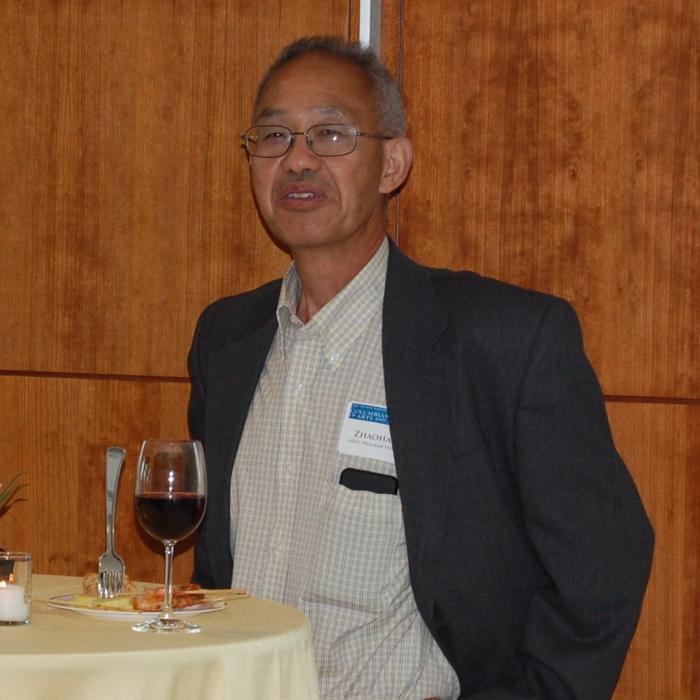
Dr. Zhaohai Li Professor of Statistics at George Washington University, specializing in statistical methodologies for genetic epidemiology and clinical biostatistics. His research focuses on meta-analysis techniques, empirical Bayes methods, and population-based study designs. He has contributed extensively to improving statistical approaches in clinical trials and addressing challenges in genetic association studies. Education: Ph.D. in Statistics, Columbia University, 1989 Research Interests: His work addresses critical issues in modern biostatistics including: Population stratification in genetic studies Hardy-Weinberg equilibrium testing Optimal experimental design for case-control studies Handling missing data in genetic linkage analysis Development of robust statistical tests for complex survey data Publications Overview: Dr. Li's recent work emphasizes methodological advancements in: Bayesian approaches to population genetics Meta-analytic frameworks for combining study results Statistical solutions for multi-stage clinical trials Algorithmic improvements for genome-wide association analyses Professional Contributions: His articles consistently address practical challenges in biomedical research, bridging theoretical statistics with real-world genetic and clinical applications.
Dr. Lorenzo Pellis is a Research Fellow at the University of Manchester, holding the Sir Henry Dale Fellowship, and a Visiting Fellow at the University of Warwick's Mathematics Institute and Zeeman Institute. He is also an Honorary Research Associate at the Medical Research Council (MRC) Centre for Outbreak Analysis and Modelling, within the Department of Infectious Disease Epidemiology at Imperial College London. His research bridges applied mathematics and epidemiology, focusing on developing models that inform public health decisions. He earned his Doctoral degree in Mathematical Biology from Imperial College London in 2009, with a dissertation titled Mathematical models for emerging infections in socially structured populations: the presence of households and other social structures II: Comparisons and implications for vaccination . Pellis's research interests include the development of novel deterministic and stochastic methods to model infection spread dynamics, particularly in human populations with complex social structures. He focuses on directly transmitted infections and the impact of co-infections on epidemiological and evolutionary outcomes. His work emphasizes multi-scale models integrating within-host and between-host processes, with applications to antimicrobial resistance, HIV-TB co-infections, and respiratory syncytial virus (RSV) transmission in Kenya. He also explores model comparison techniques to assess the utility of simple models in public health decision-making. His recent articles collectively explore mathematical modeling in infectious disease dynamics, with a focus on network-based approaches, multi-strain infections, and the integration of within-host and between-host processes. They highlight challenges in metapopulation and network models, as well as the evolutionary dynamics of HIV and TB co-infections. Sir Henry Dale Fellow , funded by the Wellcome Trust and Royal Society His grants include support for his Sir Henry Dale Fellowship, which funds research on co-infections and multi-scale models. He collaborates with Prof. Matt Keeling and Dr. Thomas House at Warwick and Prof. James Nokes on RSV studies in Kenya. His work also involves improving epidemic dynamics approximation methods on networks. He is affiliated with the applied Mathematics group at Manchester's School of Mathematics, the Zeeman Institute at Warwick, and the MRC Centre at Imperial College. His interdisciplinary collaborations span institutions and disciplines, including applied mathematics, epidemiology, and public health.
Assoc Prof Xiang Liming is an Associate Professor in the Division of Mathematical Sciences at Nanyang Technological University (NTU), Singapore, serving as Assistant Chair (Students). She holds editorial roles at *Computational Statistics & Data Analysis* and *Statistics in Medicine*. With a PhD in Statistics (City University of Hong Kong, 2002), her research focuses on survival analysis, longitudinal data analysis, and biostatistical methods. Notable contributions include methodologies for semi-competing risks, interval-censored data, and mixture models. Her work bridges statistical theory with biomedical applications, addressing challenges in clinical trials and public health. Awards include the 2009 IIE Transactions Best Paper Award and the Outstanding Research Thesis Award (2002–2003, CityU). Education: PhD in Statistics, City University of Hong Kong (2002) Postdoctoral Research: Hong Kong University of Science and Technology (2002–2003) and CityU (2003–2006) Research Interests: Survival analysis methodologies, including frailty models, cure models, and quantile regression for censored data. She develops robust statistical approaches for clustered/longitudinal data, addressing missingness and overdispersion. Applications span biomedical research, epidemiology, and quality management. Grants & Collaborations: Her grants include work on robotic-assisted stroke rehabilitation (2021) and LNG cold energy utilization systems (2017–2019). She collaborates with clinical teams on trials involving upper limb neurorehabilitation technologies. Labs & Teams: Leads statistical method development for multi-center clinical trials, particularly in biostatistics and survival analysis frameworks. Active in NTU’s School of Physical & Mathematical Sciences research initiatives.
Andrea Ianiro is a Full Professor in the Aerospace Engineering Department at Universidad Carlos III de Madrid (UC3M), where he leads research in fluid dynamics, turbulence, and heat transfer. His work bridges experimental techniques and machine learning applications for flow analysis and control. He serves as Associate Editor of the International Journal of Heat and Mass Transfer (2025-2028) and directs the EFM Lab (Experimental Fluid Mechanics Laboratory) at UC3M. Professor Ianiro's research focuses on turbulence characterization, boundary layer flows, and the application of machine learning to fluid mechanics problems. His work spans experimental techniques including Particle Image Velocimetry (PIV), infrared thermography, and advanced data processing methods. Recent research emphasizes data-driven approaches for flow field reconstruction, turbulence control, and heat transfer optimization in wall-bounded flows. His projects often combine theoretical, experimental, and computational approaches to address complex fluid mechanics challenges. The analysis of his recent publications reveals a strong trend toward integrating machine learning with traditional fluid mechanics. His work increasingly focuses on using deep learning techniques (particularly CNNs and GANs) for flow field prediction from limited measurements, developing meshless computational methods for flow analysis, and applying optimization techniques (including genetic algorithms) to heat transfer enhancement. His research maintains a strong experimental foundation while embracing data-driven approaches to tackle turbulence modeling challenges. Associate Editor of the International Journal of Heat and Mass Transfer (2025-2028) Professor Ianiro leads multiple significant research projects including SPANDRELS (SParse AND paRsimonious Event-based fLow Sensing, 2025-2030), HumanIC (Human-Centric Indoor Climate for Healthcare Facilities, 2024-2027), and EXCALIBUR (Extraction of machine learning strategies for turbulent flow control, 2023-2026). His work has attracted funding from the European Commission, Spanish National Research Agency, and industry partners including Airbus. He has supervised numerous theses on topics including AI-based sensing of turbulent flows, convective heat transfer control, and turbulent boundary layers. At UC3M, Professor Ianiro directs the Experimental Fluid Mechanics Laboratory (EFM Lab), which focuses on advanced measurement techniques for fluid flow and heat transfer characterization. The lab specializes in PIV/PTV techniques, infrared thermography, and the development of novel experimental approaches for turbulence research. Current research directions include machine learning applications for flow field reconstruction, plasma-based flow control, and heat transfer optimization in complex flow configurations.