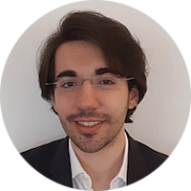
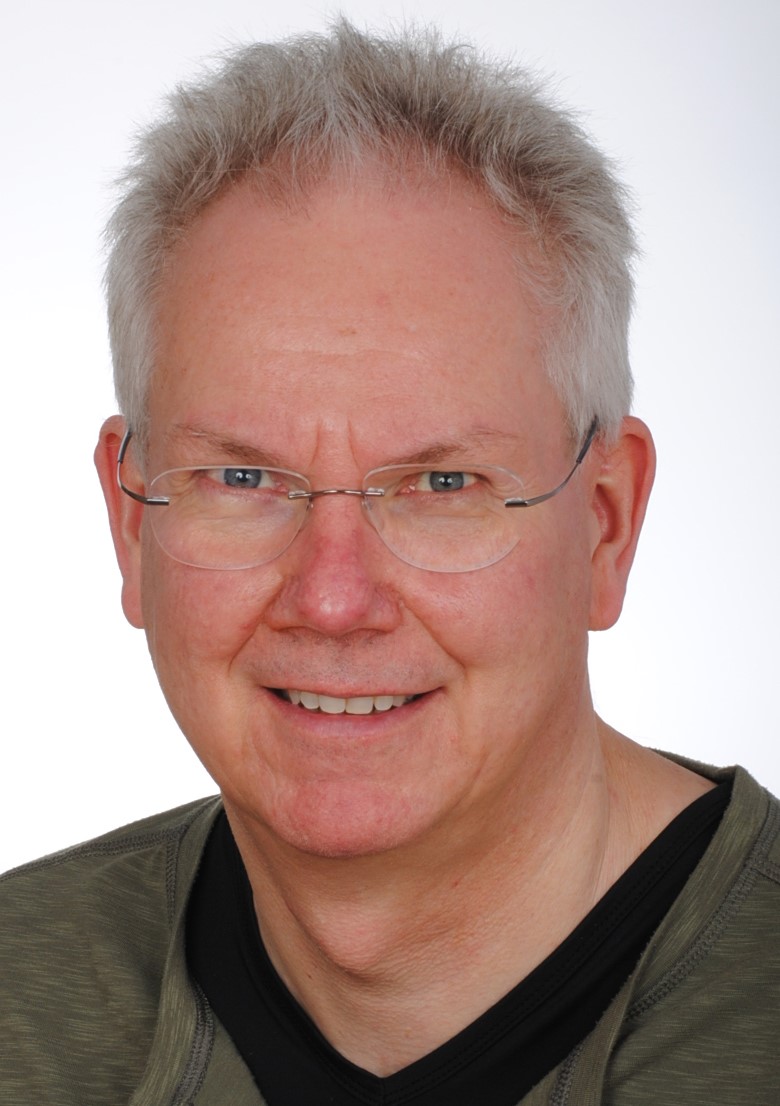
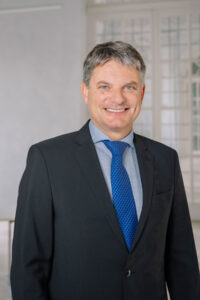
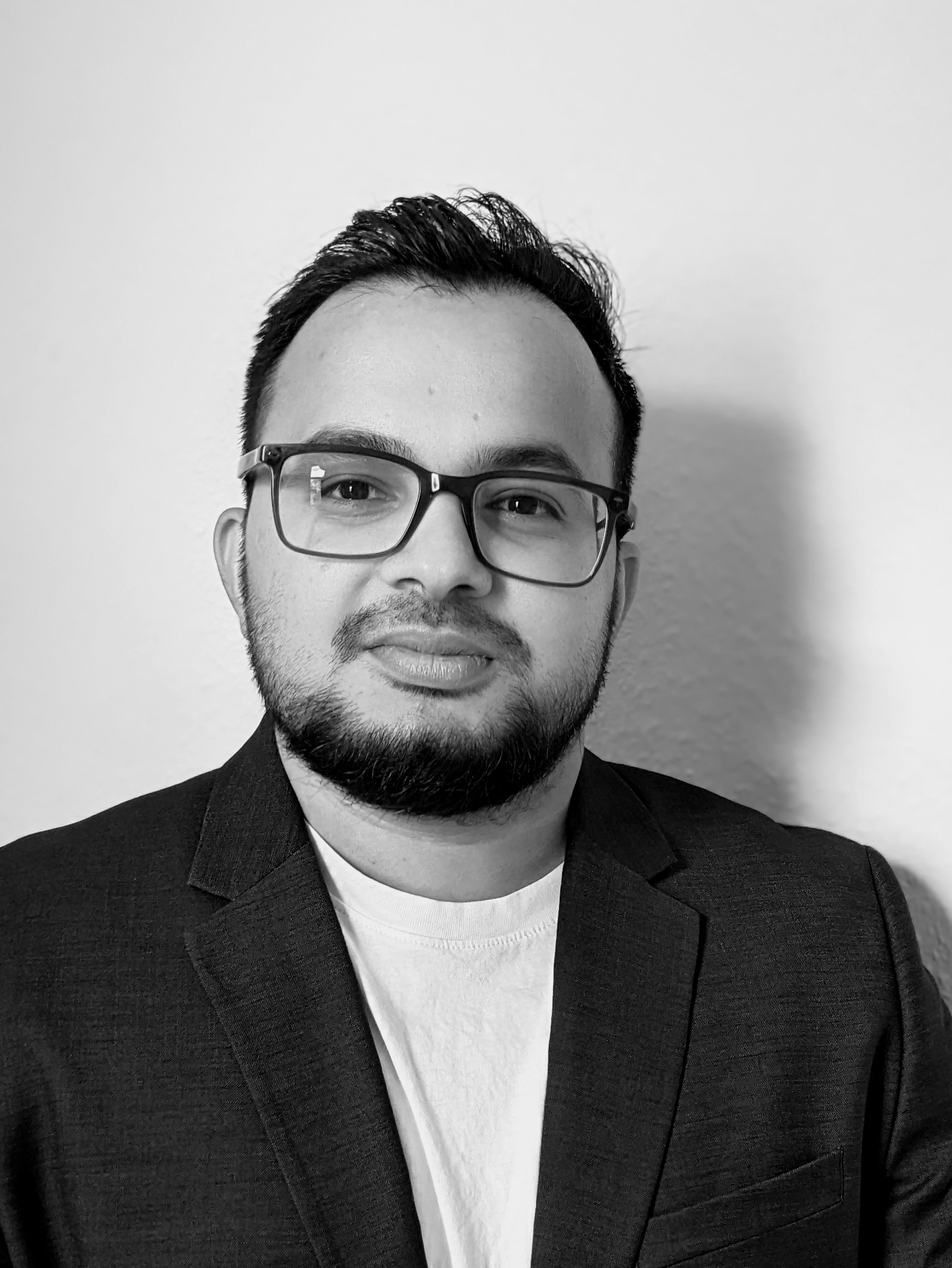
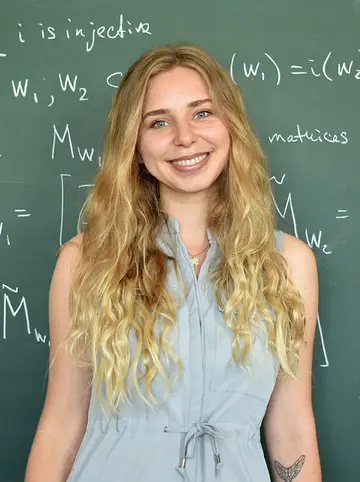
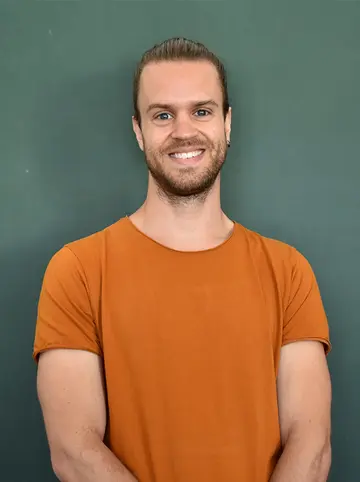
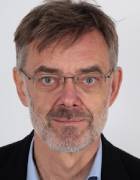
Gilles Mordant is a postdoctoral researcher in Axel Munk's group at the University of Göttingen, focusing on statistical applications of optimal transport to biophysical data. His work bridges theoretical and applied statistics, with a strong emphasis on interdisciplinary research in biophysics and imaging. Research Interests: Optimal transport theory and its applications in statistics and machine learning Dependence measures and copula theory Gaussian processes and concentration of measure phenomena Statistical challenges in biophysical imaging Manifold learning and diffusion-based methods Affiliations & Collaborators: Collaborates with leading researchers such as Alberto González Sanz, Marc Hallin, Axel Munk, and Johan Segers. Based at the University of Göttingen, his group focuses on mathematical stochastics and computational statistics. Personal: Fluent in French (native), English, and German, with intermediate Dutch. Enjoys cycling, bouldering, hiking, and gymnastics (formerly competitive).
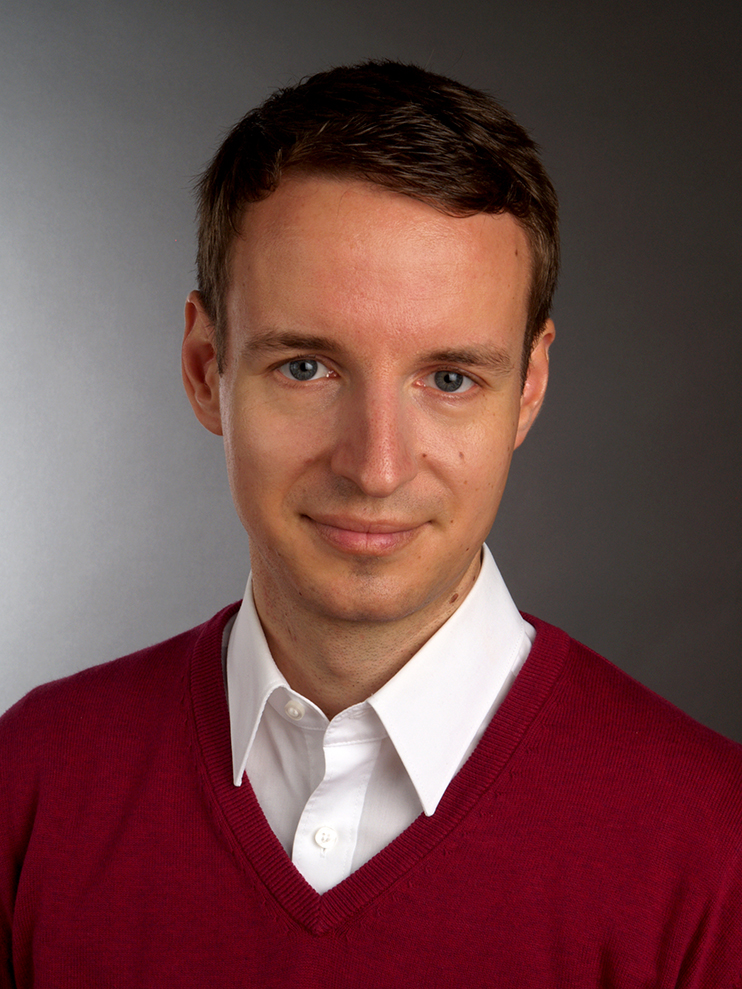
Dr. Hendrik Kleikamp is a Researcher at the Institute for Analysis and Numerical Analysis within the Department of Mathematics and Computer Science at the University of Münster. His research focuses on numerical analysis, machine learning, and scientific computing, with a particular emphasis on nonlinear model order reduction, optimal control of dynamical systems, and scientific machine learning techniques such as neural networks and kernel methods. He is actively involved in international conferences and workshops, including SIAM CSE and MATHMOD, where he has presented talks on topics like adaptive model hierarchies and certified machine learning approaches for parameterized problems. Kleikamp collaborates with institutions globally and contributes to open-source tools like pyMOR. His work bridges theoretical advancements and practical applications in computational science. His research interests include reducing computational complexity in transport-dominated problems, developing efficient algorithms for optimal control scenarios, and integrating machine learning into model reduction frameworks. Recent contributions involve certified algorithms for parametrized systems and knowledge graph development for applied mathematics models. He maintains an active publication record in journals such as ESAIM: Mathematical Modelling and Numerical Analysis and SIAM Journal on Scientific Computing. Kleikamp’s affiliations include Mathematics Münster and the ON-DEM COST Action, where he has conducted workshops on model order reduction. His technical contributions span software development, conference organization, and collaborative research on interdisciplinary computational challenges. Contact: hendrik.kleikamp@uni-muenster.de, Room 120.007.
Nicola De Nitti is an External Research Fellow at the Università di Pisa and holds a postdoctoral position there. He previously conducted research at the École Polytechnique Fédérale de Lausanne (EPFL) under Maria Colombo. He earned his PhD from the FAU DCN-AvH Chair for Dynamics, Control, Machine Learning, and Numerics at Friedrich-Alexander-Universität Erlangen-Nürnberg (FAU). His research focuses on the analysis and control of partial differential equations, particularly conservation laws, transport with rough velocity fields, flows on networks, and nonlocal parabolic PDEs. He explores free boundary problems and applies variational and topological methods to nonlinear problems. De Nitti has contributed to workshops and seminars, including the 2025 MLPDEs Workshop on Machine Learning and PDEs in Erlangen. His work bridges theoretical analysis and applied modeling, with recent articles addressing network control, singular limits, and exponential stability in dynamical systems. He has taught courses such as Transport Phenomena and Mathematical Modeling in the Life Sciences at FAU, reflecting his expertise in applied mathematical analysis and its interdisciplinary applications.
André Schlichting is a full professor at the University of Ulm, leading the Institute of Applied Analysis. His research focuses on stochastic processes, partial differential equations (PDEs), and optimal transport, with a particular emphasis on gradient flows, nonlocal dynamics, and mathematical physics. He investigates systems such as stochastic particle models, McKean-Vlasov equations, and metric graphs, often exploring their long-time behavior and discretization techniques. Collaborations include work on diffusive transport distances, porous medium equations, and manifold analysis. His recent contributions address topics like convergence of particle systems to continuous models, gradient flows on graphs with reservoirs, and stationary solutions on high-dimensional spheres. His work bridges theoretical analysis with applications in statistical mechanics and numerical methods. Education and affiliations are not explicitly detailed in the provided texts, but his current role highlights academic leadership in applied analysis. Key collaborations involve researchers such as Daniel Matthes, Eva-Maria Rott, and Jan-Frederik Pietschmann. His research group at the University of Ulm is expanding, focusing on advanced analytical techniques and their implications in interdisciplinary fields.
Sofiène Tahar is a Professor at Concordia University's Department of Electrical and Computer Engineering, affiliated with the Faculty of Engineering and Computer Science. His research focuses on formal verification, theorem proving, and their applications in cyber-physical systems, circuit design, and reliability engineering. He has authored over 300 publications in top-tier conferences and journals, including DATE, ICFEM, and FMCAD. Key research areas include formal methods for analog/digital circuits, approximate computing, stochastic systems, and safety-critical systems. His work bridges theoretical foundations (e.g., theorem proving in HOL) with practical engineering problems like circuit reliability and autonomous systems verification. Recent projects involve formal analysis of vehicular systems, energy-efficient approximators, and machine learning integration with formal verification frameworks. Tahar collaborates extensively with industry partners and holds leadership roles in international conferences, including co-chairing ICFEM 2023.
Dr. Anum Talpur is a Research Fellow at the University of Hamburg's Department of Computer Networks under Prof. Dr. Mathias Fischer. Her work focuses on Network Security, AI-driven cybersecurity solutions, and resilient infrastructure protection. She is affiliated with the Faculty of Mathematics, Informatics and Natural Sciences and contributes to projects like SOVEREIGN, a critical infrastructure security initiative. Research interests include intrusion detection systems, QUIC protocol security, and vehicular network security. Recent publications explore load balancing vulnerabilities, holistic infrastructure defense frameworks, and ML applications in vehicular networks. She collaborates with researchers such as Liliana Kistenmacher and Prof. Fischer on projects addressing cutting-edge cybersecurity challenges. Her work integrates theoretical advancements with practical implementations for modern networked systems.
Prof. Dr.-Ing. Fabian Duddeck is a Professor of Computational Mechanics at the Technical University of Munich (TUM), affiliated with the TUM School of Engineering and Design. His research focuses on numerical methods for structural simulation and optimization, including topology optimization for crashworthiness, material modeling for composites/biomaterials, and uncertainty quantification in multi-physics systems. He holds a Dr.-Ing. and Habilitation from TUM, with prior roles at BMW Group, Queen Mary University of London, and École des Ponts ParisTech. His work bridges academia and industry, addressing challenges in automotive and aerospace design. Education: Diplom (Civil Engineering, TUM 1990), Dr.-Ing. (Mechanics, TUM 1997), Habilitation (TUM 2002) Research Interests: Crash simulation optimization, composite materials, nonlinear dynamics, and uncertainty-aware design methodologies Scientific awards include the Spindler Award (1991). Over 50+ students have graduated under his supervision, with notable works in crashworthiness, composite structures, and multi-fidelity optimization. His lab collaborates internationally, integrating advanced algorithms with industrial applications.
Werner M. Seiler is a Professor for Algorithmic Algebra and Discrete Mathematics at the University of Kassel, affiliated with the Institute of Mathematics (Faculty of Mathematics and Natural Sciences). His research spans computational algebra, symbolic methods for differential equations, and machine learning applications in mathematical modeling. He leads a research group focusing on algorithmic algebra and discrete structures, with recent publications in journals like Journal of Symbolic Computation and Physical Review E . His work emphasizes: Algebraic techniques for Hilbert schemes and marked bases Machine learning for dynamical systems and conservation laws Numerical methods for singular differential equations Computational complexity in algebraic algorithms Seiler co-directs the DFG research training group Biological Clocks on Multiple Time Scales and organizes outreach programs in computer algebra for high school students since 2007.
Prof. Dr.-Ing. Joachim Hornegger is the President of Friedrich-Alexander-Universität Erlangen-Nürnberg (FAU) and holds the Chair of Pattern Recognition at the Faculty of Engineering. He is also a member of the FAU Medical Faculty, reflecting his interdisciplinary contributions to medical imaging and computer science. Education: Studied Computer Science with a minor in Mathematics at Friedrich-Alexander-Universität Erlangen-Nürnberg Ph.D. in 1996 on statistical object modeling and recognition Advanced Management Program, Duke University His research focuses on pattern recognition , medical image processing , and computer vision , bridging engineering and medical applications. His work has strong industrial ties, particularly through his leadership roles at Siemens Medical Solutions. Though no recent publications are listed, his career demonstrates sustained impact in imaging system development and academic leadership. Academic Leadership: Vice Dean for Computer Science (2009–2011) Vice President for Research and Early Career Researchers (2011–2015) President of FAU (since April 1, 2015) He has been offered multiple high-level academic positions, including a C4 professorship at RWTH Aachen and a lecturer role at Harvard, which he declined in favor of continuing his work at FAU. His career uniquely combines deep technical expertise with strategic university leadership. Grants and Advising: While specific grants and advisees are not listed, his role as Chair of Pattern Recognition and leadership in research at FAU suggests extensive involvement in funding acquisition and student mentorship. His industrial experience further enriches his academic supervision and collaborative research initiatives. Labs and Teams: As Chair of Pattern Recognition, he leads a research group focused on image analysis and machine learning applications in medicine. His leadership extends to university-wide initiatives in research and innovation, shaping FAU’s strategic direction in science and technology.
Sarath Menon is a computational materials scientist at Ruhr-University Bochum and Max-Planck-Institut für Eisenforschung GmbH. His work focuses on atomistic simulations, machine learning interatomic potentials, and thermodynamic property calculations. He contributes to open-source software like pyiron and pace. Doctor of Engineering, Mechanical Engineering (2021) Master of Science, Materials Science and Simulation (2018) Bachelor of Technology, Mechanical Engineering (2012) His research centers on developing machine learning potentials for thermodynamic modeling, with applications in phase diagrams and nucleation studies. He employs methods like transition path sampling and hyperdynamics. Menon teaches Python programming, electronic structure methods, and atomistic simulation techniques. He has organized workshops on reproducible workflows and quantum mechanics in solid-state physics. Key software contributions include: pyscal : Structural analysis tool for atomic environments pace : High-performance Atomic Cluster Expansion implementation calphy : Free energy calculation library atomRDF : Ontology-based structure manipulation
Srikantan S Nagarajan is a Professor in the Department of Radiology and Biomedical Imaging at the University of California, San Francisco (UCSF), with a strong interdisciplinary affiliation through the UCSF/UCB Joint Graduate Program. His research lies at the intersection of neuroscience, biomedical engineering, and computational modeling, focusing on brain imaging and neural dynamics. His research interests include neural oscillations , brain connectivity , magnetoencephalography (MEG) , and computational neuroscience . He investigates how brain networks function in health and disease, particularly in conditions such as Alzheimer’s disease , epilepsy , and tinnitus . His work integrates advanced signal processing, spectral graph theory, and hierarchical Bayesian models to decode brain activity. His recent publications demonstrate a consistent focus on brain network modeling , abnormal neuronal synchrony , and clinical neurophysiology . Themes include the role of subclinical epileptiform activity in dementia, spectral dynamics of brain oscillations, and computational models of vocal tract and brain networks. His work bridges theoretical neuroscience with clinical applications. Sri Nagarajan serves as Field Chief Editor for Frontiers in Human Neuroscience and as an Associate Editor for Frontiers in Neuroscience and Frontiers in Neuroimaging , highlighting his leadership in scientific publishing. He has made significant contributions through over 240 publications and active editorial roles. While specific grant details and advisees are not listed, his extensive collaborations suggest a robust research program involving interdisciplinary teams and trainees. He is likely involved in mentoring graduate students through the UCSF/UCB Joint Program. His work is supported by a network of collaborators across UCSF and beyond, particularly in neurology, radiology, and biomedical engineering. He is part of a larger ecosystem advancing brain imaging and neural signal processing at UCSF, contributing to both foundational and translational neuroscience.
Dr. Yulia Alexandr is a Hedrick Assistant Adjunct Professor at UCLA and a Postdoctoral Fellow in Applied Mathematics at Harvard University . She completed her PhD in Mathematics at UC Berkeley in 2023 under the supervision of Bernd Sturmfels and Serkan Hoşten , with a thesis titled "From Voronoi Cells to Algebraic Statistics" . She holds a Bachelor's degree in Mathematics from Wesleyan University (2019), where she was advised by Karen Collins .
Liam Solus serves as an Assistant Professor at KTH Royal Institute of Technology in Stockholm, Sweden, and was a visiting researcher at the Nonlinear Algebra Group of the Max Planck Institute for Mathematics in the Sciences (MPI Leipzig) from September 1 to November 30, 2019. His research centers on Combinatorics, specializing in combinatorial methods to analyze probability distributions—including symmetries, modality, and factorizations—with direct applications across Artificial Intelligence, Statistics, Algebra, and Geometry. He investigates graphical model combinatorics for causal inference in AI contexts while employing algebraic-analytic techniques to characterize discrete distributions emerging in geometric and algebraic frameworks. This interdisciplinary work bridges theoretical mathematics with data science and machine learning applications. Solus maintains active collaboration with the Nonlinear Algebra Group at MPI Leipzig, contributing to their research on algebraic-geometric approaches in data analysis during his 2019 visit.
Guido Montúfar is Assistant Professor at the University of California, Los Angeles (UCLA) in the Departments of Mathematics and Statistics, and Research Group Leader at the Max Planck Institute for Mathematics in the Sciences (MPI MIS). His work bridges mathematical machine learning, deep learning theory, and information geometry. Current affiliations: UCLA (since 2017) and MPI MIS (since 2018) ERC Starting Grant on Deep Learning Theory Research interests focus on the interplay between model capacity, optimization landscapes , and generalization in deep learning, combining tools from algebraic geometry , optimal transport , and information theory to analyze neural network behavior. Recent publications address tropical geometry of neural networks , algebraic optimization in reinforcement learning , and information-theoretic approaches to data representation . His work reveals connections between policy gradient methods and Wasserstein gradient flows . Scientific grants: ERC Starting Grant, DFG SPP 2298, NSF CAREER
Prof. Dr. Wolfgang Polifke is a Professor in the Department of Thermofluid Dynamics at the TUM School of Engineering and Design, Technische Universität München. His research focuses on thermoacoustic instabilities, aeroacoustics, and turbulent flow dynamics. He earned his doctorate from the City University of New York in 1990, specializing in turbulent flow helicity, and later held a research position at ABB in Switzerland. He joined TUM in 1999 and served as Editor-in-Chief of the International Journal of Spray and Combustion Dynamics (2016–2021). His awards include the ASME/IGTI Best Paper Award (2024), the School of Engineering Supervisory Award (2023), and Fellow of The Combustion Institute (2021). His work explores combustion instabilities, flame dynamics, and hydrogen-enriched fuels, with contributions to computational fluid dynamics and machine learning applications in combustion analysis. Education: Bachelor/Master studies in Physics at University of Regensburg, University of Colorado Boulder, and City University of New York (1981–1987) PhD in Physics from City University of New York (1990), dissertation on turbulent flow helicity Research Interests: Combustion instabilities, thermoacoustic modeling, aeroacoustics, turbulent flame dynamics, hydrogen-enriched combustion systems, and application of advanced numerical methods (e.g., LES, machine learning) to combustion analysis. Publications: Recent work addresses hydrogen effects on flame dynamics, entropy wave generation, and nonlinear flame behavior. Key trends include exploring sustainable fuels, improving combustion stability, and developing predictive models for industrial applications. Awards: Best Paper Award (Combustion, Fuels & Emissions Committee of ASME/IGTI) – 2024 Golden Apprenticeship Teaching Award – 2002/2004/2006 Fellow of The Combustion Institute – 2021 Grants & Labs: Leads the Thermofluid Dynamics group at TUM, focusing on experimental and numerical studies of combustion systems. Collaborates with industry on combustion instability mitigation and clean energy technologies.