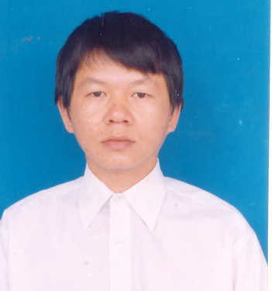
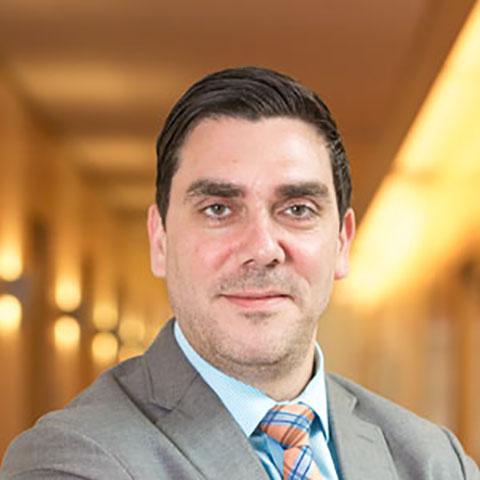
Professor Paul Sellin is a Professor of Physics at the University of Surrey's School of Mathematics and Physics, with visiting roles at UCL and the University of Wollongong. He holds a PhD in Nuclear Physics from the University of Edinburgh (1992) and a BSc (Hons) in Physics from the University of Birmingham (1988). His research focuses on radiation detector materials, including perovskites, semiconductors, and scintillators, with applications in medical imaging, nuclear security, and high-energy physics. Key interests include perovskite semiconductor development, neutron/gamma detection, and radiation-hard materials. His group collaborates internationally on projects like the DTRA Interaction of Ionizing Radiation with Matter (IIRM) University Research Alliance. Publications highlight advancements in X-ray detection using perovskite nanocomposites, Cu-doped crystals, and organic semiconductors. His work emphasizes material synthesis, charge transport optimization, and device fabrication for low-dose imaging and high-sensitivity detection. Professor Sellin has supervised over 30 postgraduate students, many contributing to seminal studies on perovskite detectors, plastic scintillators, and semiconductor characterization. His contributions span academic networks like the Nuclear Threat Reduction Network (NTR-net) and the STFC NuSec program.
Benjamin F. Hobbs serves as the Theodore M. and Kay W. Schad Professor of Environmental Management at Johns Hopkins University, holding a primary appointment in the Department of Environmental Health and Engineering and a joint appointment in the Department of Applied Mathematics and Statistics. He is co-director of the USEPA Yale-JHU SEARCH Center and director of the NSF-funded Electric Power Innovation for a Carbon-free Society (EPICS) Center, focusing on interdisciplinary research at the intersection of energy systems, environmental management, and public health. Hobbs' educational background includes a BS from South Dakota State University (1976), an MS in Resources Management and Policy from SUNY-Syracuse (1978), and a PhD in Environmental Systems Engineering from Cornell University (1983). Prior to joining Johns Hopkins in 1995, he worked at Brookhaven and Oak Ridge National Laboratories and served as a professor at Case Western Reserve University, with additional visiting appointments at institutions including Cambridge University. His research integrates systems analysis, economics, and optimization to address critical challenges in electric utility planning, renewable energy integration, and environmental resource management. Key focus areas include solar forecasting using AI, green infrastructure for urban water management, health impacts of energy transitions, and grid reliability under high renewable penetration. His work emphasizes practical applications through engineering-economic modeling with rich technological and environmental detail. Analysis of his recent publications reveals a strong trend toward addressing grid reliability in decarbonizing systems, with increasing emphasis on market design innovations, resource adequacy under uncertainty, and storage-transmission tradeoffs. His research consistently bridges theoretical optimization with real-world policy implementation, particularly evident in his leadership of the EPICS Center's 100% renewable grid initiatives. Lifetime Achievement Award by Energy Systems Integration Group (ESIG), 2024 Fellow of the Institute of Electrical and Electronics Engineers (IEEE) Fellow of the Institute for Operations Research and Management Science (INFORMS) Hobbs advises graduate students through Johns Hopkins' interdisciplinary programs, with alumni employed as energy consultants, policy analysts, and researchers. His current grants include leadership of the NSF Global Center EPICS and co-direction of the USEPA SEARCH Center, focusing on energy-air-climate-health interactions. He chairs the Market Surveillance Committee for the California Independent System Operator and serves on editorial boards for Energy Economics and other leading energy journals. He leads the Hobbs Energy & Environment Decisions Research Group, which collaborates with institutions including IBM, National Renewable Energy Laboratory, and University of Texas at Dallas. The group participates in the Global Power Systems Transformation Consortium and Columbia-JHU Future Power Markets Forum, conducting fieldwork initially in California and the central United States.
Robert C. Merton is the School of Management Distinguished Professor of Finance at MIT Sloan School of Management and John and Natty McArthur University Professor Emeritus at Harvard University. He holds a PhD in Economics from MIT (1970), with prior roles including George Fisher Baker Professor at Harvard Business School and J.C. Penney Professor of Management at MIT Sloan. His work revolutionized finance through the Black-Scholes-Merton options pricing model, earning the 1997 Nobel Prize in Economics. Current research focuses on lifecycle investing, systemic risk measurement, and financial innovation. Education: BS in Engineering Mathematics (Columbia), MS in Applied Mathematics (Caltech), PhD in Economics (MIT). Affiliated with MIT’s Golub Center for Finance and Policy and Harvard initiatives. Recognized via awards from CME Group, World Federation of Exchanges, and Risk magazine. Key publications include Continuous-Time Finance and co-authored works on financial systems and innovation. Research emphasizes translating theory into practice, with recent articles addressing volatility forecasting, trust in lending, bankruptcy frameworks, and performance fee valuation. A prolific academic leader, he advises on policy and systemic risk while maintaining ties to MIT’s finance community through roles like Killian Award recipient (2021).
Jana Kainerstorfer is a Professor of Biomedical Engineering at Carnegie Mellon University (CMU), with courtesy appointments in the Neuroscience Institute and Electrical & Computer Engineering. She serves as Associate Department Head for Faculty and Graduate Affairs within the College of Engineering. Her research focuses on developing non-invasive optical imaging methods for disease detection and treatment monitoring, particularly in diffuse optical imaging. Key areas include cerebral hemodynamic monitoring in traumatic brain injury and handheld devices for breast cancer imaging. Dr. Kainerstorfer holds senior membership in the Optical Society of America and has received prestigious awards such as the NIH Trailblazer Award and AHA Scientist Development Grant. She leads the Biophotonics Lab, which bridges engineering and clinical applications, emphasizing translational research. Education: PhD from University of Vienna/NIH (2010), Postdoc at Tufts University Research Interests Her work revolves around biomedical optics , neurophotonics , and medical device innovation . Current projects include: Non-invasive cerebral hemodynamic monitoring Transabdominal fetal pulse oximetry Optical imaging in extreme environments (e.g., freediving physiology) Her lab develops tools like wearable NIRS for marine mammals and self-calibrating pulse oximetry algorithms. Research spans clinical translation and physiological mechanism discovery , with emphasis on microvascular imaging. Awards & Recognition NIH Trailblazer Award (2020) AHA Scientist Development Grant SPIE Fellow (2022) George Tallman Ladd Award (CMU) Lab & Collaborations The Biophotonics Lab collaborates with neurosurgery, oncology, and marine biology teams. Projects address clinical needs in neurocritical care and fetal monitoring, leveraging optical technologies for real-time diagnostics. Ongoing work includes: Optical assessment of cerebral metabolic rates Non-invasive intracranial pressure estimation Multi-modal EEG-NIRS fusion for neural source localization
Professor Daniel Quevedo is a leading academic in Electrical and Computer Engineering at The University of Sydney. Previously, he held positions at Queensland University of Technology and Paderborn University, Germany, where he founded the Chair in Automatic Control. He earned his PhD from the University of Newcastle (Australia) and MSc/Ing. degrees from Universidad Técnica Federico Santa María (Chile). His research focuses on networked control systems, cyber-physical systems, and cybersecurity, with contributions to state estimation, control of power converters, and human-in-the-loop systems. He has pioneered work integrating machine learning, behavioral economics, and advanced mathematics to address challenges in interconnected digital-physical environments. Quevedo serves as Associate Editor for IEEE Transactions on Control of Networked Systems and IEEE Control Systems. He chairs the Committee of Experts for Germany’s Excellence Strategy on Digital Methods and has held leadership roles in IEEE technical committees. Notable awards include the IEEE Axelby Outstanding Paper Award (2018) and multiple fellowships. Teaching includes advanced control systems courses like Reinforcement Learning and Optimal Control. He is a Fellow of the IEEE and has published over 200 peer-reviewed articles, with recent work emphasizing privacy-preserving state estimation, resilient control systems, and energy-efficient wireless control. His research labs explore topics such as human-machine collaboration, cybersecurity in Industry 5.0, and data-driven control strategies. Current projects include secure remote state estimation frameworks and adaptive control under adversarial conditions.
Jonas Faleskog is a Professor in the Department of Materials and Structural Mechanics at KTH Royal Institute of Technology. His research focuses on mathematical modeling of material deformation and failure mechanisms, particularly in metallic and polymeric materials. Key areas include ductile and brittle fracture analysis, fracture mechanics, and computational modeling of material behavior under various stress conditions. He leads a research group collaborating internationally to develop models describing material failure at microscopic scales. Faleskog teaches courses such as Fracture Mechanics (SE2139) and Modeling in FEM (SE2860), emphasizing practical applications of theoretical models. His work spans experimental and numerical methods, addressing challenges in material heterogeneity, porosity effects, and environmental degradation. Notable contributions include advancements in weakest-link modeling for brittle failure, probabilistic fracture models, and strain gradient plasticity analysis. His research bridges material science, applied mechanics, and numerical methods to optimize material utilization in engineering systems like reactor tanks, aircraft, and vehicles. Key collaborations involve international teams exploring microstructural influences on fracture behavior. While no specific awards are listed, his extensive publication record reflects sustained contributions to mechanical and materials engineering.
Zhendong Su is a full professor in the Department of Computer Science at ETH Zurich since August 2018. Previously, he held a full professorship at UC Davis from 2003 until June 2019. He earned his Ph.D. in Computer Science from UC Berkeley and dual Bachelor’s degrees in Computer Science and Mathematics from UT Austin in 1995. Affiliations: ETH Zurich: Full Professor (since 2018) UC Davis: Full Professor and Chancellor’s Fellow (2003–2019) IEEE Fellow, ACM Fellow, and Member of Academia Europaea His research focuses on programming languages, compilers, software engineering, computer security, and education technologies . Key contributions include compiler validation (e.g., Project Yin-Yang for SMT solvers and DBMS testing), testing tools like SQLancer, and educational innovations such as the Algot visual programming language. Recent work emphasizes secure AI (e.g., CipherSteal for TEE-shielded models) and compiler reliability (e.g., Artemis/Apollo for JIT validation). He has pioneered techniques like metamorphic testing and equivalence modulo inputs (EMI) for compiler validation, uncovering thousands of bugs in GCC/LLVM and SMT solvers. Awards: ICSE MIP Award (2022), ACM SIGSOFT Impact Paper (2018), NSF CAREER Award, and multiple industrial awards. His students have won IEEE TCSE Rising Star and SIGSOFT Impact Paper awards, securing roles at top universities and companies like Google and NVIDIA. Service: Steering committee member of ISSTA and ESEC/FSE, ACM Distinguished Speaker, and Associate Editor for ACM TOSEM. Program chaired ISSTA 2012 and co-chaired FSE 2016. Labs/Teams: Leads research groups on compiler validation, secure AI, and education technologies. Projects include Yin-Yang (SMT testing), SQLancer (DBMS fuzzing), and Algot (visual programming for education).
Prof. Heinz Koeppl is a Professor in the Department of Electrical Engineering and Information Technology at TU Darmstadt. His research focuses on self-organizing systems, systems biology, and control theory, with applications in synthetic biology, robotics, and stochastic processes. He explores interdisciplinary topics such as genetic circuit design, UAV swarm dynamics, and machine learning-driven modeling of biochemical systems. Key research areas include the development of deep learning frameworks for kinetic modeling, Bayesian optimization for riboswitch design, and mean field control theory for sparse networks. His work bridges theoretical foundations with practical engineering solutions, addressing challenges in molecular communication, gene regulation, and robotic swarm coordination. Publications from 2023–2025 highlight advancements in bio-inspired algorithms, swarm intelligence, and computational biology. Notable contributions include studies on RNA-based circuits, active matter dynamics, and optimization strategies for large-scale systems. His research emphasizes interdisciplinary collaboration, leveraging tools from electrical engineering, mathematics, and life sciences. No scientific awards are explicitly listed in the provided text. Advising and grants details are not available. Prof. Koeppl’s lab focuses on integrating systems biology approaches with engineering principles to solve complex problems in healthcare, environmental sustainability, and technological innovation.
Professor Khac Duc Do is a faculty member at Curtin University, holding a position in the School of Civil and Mechanical Engineering within the Faculty of Science and Engineering. He serves in the Office of the Provost and is based at Curtin Perth campus. His research focuses on advanced control systems, nonlinear dynamics, and robotics applications in marine, aerospace, and mechanical systems. He earned a PhD with distinction in 2003 and has held prestigious fellowships including ARC Postdoctoral Fellow (2004) and ARC Australian Research Fellow (2009). His teaching includes courses like Advanced Control and Mechatronics, Navigation and Marine Control Systems, and Advanced Control Engineering. Key research interests encompass control of nonlinear systems, stochastic systems, formation control of mobile agents, fluid-structure interaction, and boundary control of PDE-governed systems. His funded projects include wave-energy converter development (2023-2026), inerter-based damper research (2019-2021), and ocean vehicle control systems. Scientific awards include ARC grants totaling over AUD 2 million. Current opportunities include scholarships in control systems/fluid-structure interaction and a postdoc position in wave-energy conversion.
Akanksha Agrawal is an Assistant Professor and Veena and Induprakas Keri Faculty Fellow at the Department of Computer Science and Engineering, Indian Institute of Technology Madras. Her research focuses on Parameterized Complexity & Algorithms, Graph Algorithms, Computational Geometry, Exact Algorithms, and Fine Grained Algorithms & Complexity. She has held postdoctoral positions at Ben-Gurion University of the Negev (Israel) and the Hungarian Academy of Sciences, funded by a PBC Fellowship. She earned her Ph.D. from the University of Bergen under Professors Saket Saurabh and Daniel Lokshtanov. Education: Ph.D., University of Bergen, Norway (2017-2021) Postdoctoral Researcher, Ben-Gurion University of the Negev, Israel (2021-2022) Postdoctoral Researcher, Hungarian Academy of Sciences, Hungary (2022-2023) Research Interests: Her work emphasizes parameterized complexity, graph algorithms, and computational geometry. She explores exact algorithms, fine-grained complexity, and algorithmic approaches to NP-hard problems. Her research bridges theoretical insights with practical algorithmic solutions. Recent Activities & Awards: ACM-India Eminent Speaker (2024-2026) Invited Talks: COMSNETS 2025, IISc Bengaluru (2024), Bali Parameterized Graph Algorithms (2024) Program Committee Roles: IPEC 2025 (Co-Chair), WG 2025, CALDAM 2025 Grants & Academic Services: Organizing Dagstuhl Seminar (Jan. 2025) with Maria Chudnovsky, Daniel Paulusma, and Oliver Schaudt Contributions to international conferences and workshops Teaching: Courses include Combinatorial Objects, Parameterized Algorithms, Design & Analysis of Algorithms, Approximation Algorithms, and Advanced Data Structures.
Mikkel N. Schmidt is an Associate Professor in the Department of Applied Mathematics and Computer Science at the Technical University of Denmark (DTU). His research focuses on statistical modeling, Bayesian methods, and their applications in science and industry. He has held visiting roles at Columbia University (2007) and Cambridge University (2008-2009). His work integrates probabilistic modeling with computational inference to address complex problems in diverse fields such as molecular discovery, optical communication, and brain connectivity analysis. Education highlights include visiting scholar and postdoctoral experiences at top-tier institutions. Research interests span statistical methodology development, machine learning applications, and interdisciplinary problem-solving. Current projects involve Bayesian neural networks for molecular discovery and federated learning optimization. Advising efforts include supervising multiple PhD students in areas like molecular discovery and denoising diffusion models. Notable collaborations involve work on materials science, quantum communication, and medical signal processing. His contributions bridge theoretical advancements with practical industrial applications, emphasizing interdisciplinary innovation.
Dirk Praetorius is a Professor of Numerics of Partial Differential Equations (PDEs) at the Technische Universität Wien (TU Wien) , affiliated with the Institute for Analysis and Scientific Computing (ASC) within the Faculty of Mathematics and Geoinformation . He leads the research group on Numerics of PDEs and has held various leadership roles, including Institute Director (since 2020) and head of the Numerics research area. His work focuses on numerical methods for PDEs, including Finite Element Methods (FEM), Boundary Element Methods (BEM), adaptive algorithms, and computational micromagnetics. Education and Career: Praetorius earned his Diplom in Mathematics (2000) and PhD in Applied Mathematics (2003) from TU Wien, followed by a Habilitation in Numerical Analysis (2005). He has been a faculty member at TU Wien since 2005, progressing from Assistant Professor to full Professor in 2017. He has also held visiting positions at institutions such as the University of Jyväskylä and RICAM (Linz). Research Interests: His research spans numerical analysis, adaptive FEM/BEM, a-posteriori error estimation, matrix compression, and computational micromagnetics. He has contributed to modeling spin dynamics, magnetic skyrmions, and multiscale systems. His work emphasizes efficient algorithms for large-scale problems and optimal computational complexity. Awards and Editorial Roles: Praetorius received the TU Best Teacher Award (2021) and TU Best Lecture Award (2019). He serves as Senior Editor for Computational Methods in Applied Mathematics (CMAM) and on the editorial board of Applied Numerical Mathematics (APNUM) . He co-founded the outreach initiative TUForMath to promote mathematics education. Grants and Projects: He leads or co-leads several research projects funded by the Austrian Science Fund (FWF), including the collaborative SFB "Taming Complexity in Partial Differential Systems" (2017–2025) and international collaborations with Germany. His work addresses topics like functional error estimates, nonlinear PDEs, and computational design of magnetic devices. Labs and Teams: He contributes to the ASC Institute and coordinates interdisciplinary projects involving computational physics and engineering. His team develops software tools like MooAFEM and Commics for micromagnetic simulations.
Gabriel A. Silva is a Professor in the Shu Chien-Gene Lay Department of Bioengineering at UC San Diego’s Jacobs School of Engineering, with a joint appointment as Assistant Professor in Ophthalmology. His research bridges neuroscience, theoretical physics, and applied mathematics to explore how the brain encodes and processes information, leveraging quantum logic and algorithms for advanced neural modeling. University: University of California, San Diego School: Jacobs School of Engineering Department: Shu Chien-Gene Lay Department of Bioengineering Academic Rank: Professor Joint Appointment: Assistant Professor in Ophthalmology Research Interests: Silva focuses on neural computation at cellular and network scales, aiming to abstract biological mechanisms into mathematical models that emulate brain-like processing. His work has implications for understanding neurological disorders, developing neural engineering nanotechnologies, and advancing AI systems through emergent complexity. Recent Article Trends: His publications span quantum-enhanced neural modeling, EEG-based disease detection, nonlinear dynamics in brain networks, and interdisciplinary applications of graph theory. Emerging themes include the integration of category theory for network analysis and AI optimization via emergence-promoting schemes. Labs & Teams: Affiliated with UC San Diego’s Institute of Engineering in Medicine, Silva leads research at the intersection of bioengineering, ophthalmology, and neural systems, fostering collaborations with neuroscience and quantum computing domains.
Dr. Eva-Maria Graefe is a Royal Society University Research Fellow and Senior Lecturer in the Department of Mathematics at Imperial College London. She specializes in quantum dynamics, focusing on the interplay between quantum and classical systems, particularly chaos and dissipation in non-Hermitian systems. Her research explores foundational questions such as how quantum motion relates to macroscopic physical laws and how dissipation can be engineered to control quantum behavior. Education: She earned her PhD in theoretical quantum physics from the Technical University of Kaiserslautern, Germany, followed by a postdoctoral position at the University of Bristol’s mathematical physics group. She joined Imperial College in 2010 as a Junior Research Fellow. Research Interests: Her work spans non-Hermitian quantum systems (e.g., PT-symmetric models), quantum chaos, semiclassical quantization, and Bose-Hubbard systems. She investigates exceptional points, Landau-Zener transitions, and the dynamics of open quantum systems with losses or gain. Her group is supported by the Royal Society and an ERC Starting Grant. Scientific Contributions: Notable achievements include studies on Husimi distributions in non-Hermitian systems, quantum-jump dynamics, and the semiclassical analysis of Bloch oscillations in dissipative lattices. Teaching & Outreach: She teaches quantum mechanics to undergraduates and Master’s students and engages in outreach to inspire high school students. She mentors a research group of PhD and Master’s students. Labs/Teams: Her lab focuses on theoretical and computational studies of quantum dynamics, supported by advanced grants and collaborations within Imperial’s Faculty of Natural Sciences.
Samuel Jean Bassetto is an Associate Professor in the Department of Mathematics and Industrial Engineering at Polytechnique Montréal. He serves as Director of the Continuous Improvement Laboratory (LABAC) and holds membership in multiple prestigious research groups including the Research Group on Globalisation and Management of Technology (GMT), Poly-Industries 4.0 Laboratory, Interuniversity Research Centre on Enterprise Networks, Logistics and Transportation (CIRRELT), and Institute for Data Valorization (IVADO). Dr. Bassetto's research spans multiple disciplines, focusing on continuous improvement through the integration of engineering, artificial intelligence, cognitive science, psychology, and design. His primary sphere of excellence is in New Frontiers in Information and Communication Technologies, with secondary expertise in Modeling and Artificial Intelligence and Human Health. He develops tools that place humans at the center of technology to enhance organizational performance while respecting human rhythms and cognitive limitations. His recent publication portfolio reveals a strong interdisciplinary approach, with research bridging industrial engineering, cognitive neuroscience, and AI ethics. His work addresses practical challenges in lean manufacturing assessment, racial bias in medical AI systems, cognitive data collection in natural environments, and condition monitoring for industrial machinery. The research consistently demonstrates a commitment to developing practical solutions that integrate human factors with technological innovation. NSERC Synergy Prize for Innovation recipient Principal investigator on multiple research grants from NSERC, FRQ, and MITACS Collaborations with over a dozen institutions across multiple countries Supervision of over 150 highly qualified personnel throughout his career Dr. Bassetto teaches specialized courses including CAP7011 (Creativity in Research), IND8444 (Continuous Improvement), IND8203 (Industrial Launch), and previously taught IND8178 (Production). His teaching philosophy emphasizes practical application, with courses featuring hands-on exercises, real-world scenarios, and gamification techniques to enhance learning. His supervision portfolio includes numerous Ph.D. and Master's students working on topics ranging from human-technology collaboration to reinforcement learning for production management. Through LABAC, Dr. Bassetto leads research initiatives focused on developing human-centered tools for continuous improvement in organizational settings. The laboratory conducts projects related to industrial IoT applications, cognitive aspects of process improvement, and the development of practical frameworks for organizations to enhance performance while maintaining respect for human rhythms and cognitive capabilities.