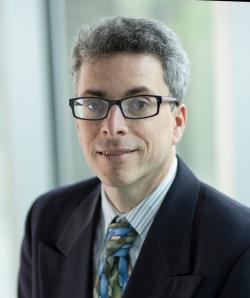
Anders Nymark ChristensenView profile
Associate Professor
Anders Nymark Christensen is an Associate Professor in the Department of Applied Mathematics and Computer Science at the Technical University of Denmark (DTU), specializing in Visual Computing. His work bridges computer vision, medical imaging, and materials science, with a strong focus on explainable AI in clinical applications and structural analysis of complex materials. Institution: Technical University of Denmark (DTU) School: Department of Applied Mathematics and Computer Science Department: Visual Computing Role: Associate Professor Christensen’s research interests include image analysis, computer vision, explainable AI, ultrasound imaging, fetal medicine, and fiber orientation in composites. He applies advanced computational techniques to solve real-world problems in healthcare and materials engineering, particularly through structure tensor analysis and deep learning. His recent publications highlight a strong trend in developing AI tools for clinical decision support in fetal medicine, structural analysis of food and composite materials, and ultrasound imaging. These works span journals such as Scientific Reports , Food Structure , and IEEE Access , reflecting interdisciplinary innovation. Clinical validation of explainable AI for fetal growth scans Characterization of anisotropy in mozzarella cheese Determining fetal orientations from ultrasound video Structure tensor analysis in composites He supervises several PhD students in projects related to AI in skin lesion analysis, cancer detection, and ultrasound imaging. His collaborative network includes key researchers at DTU such as Anders Bjorholm Dahl, Vedrana Andersen Dahl, and Mads Nielsen. He has been involved in significant research grants and is active in both medical and engineering domains, contributing to open datasets and reproducible research. Christensen leads and contributes to numerous active projects, including: Decision Support AI for Skin Lesions (2024–2027) Fighting Cancer with Generative AI (2024–2027) SONAI: Explainable AI in the Clinic (2022–2026) Deep learning for identifying biomarkers in medical images (2022–2025) His work supports UN Sustainable Development Goals related to health, innovation, and responsible consumption, particularly through advancements in medical diagnostics and sustainable materials.