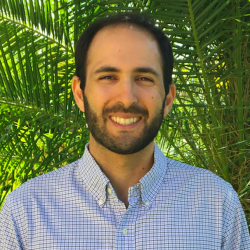
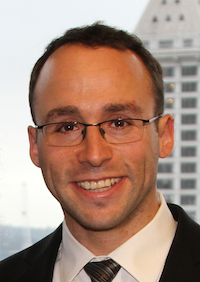
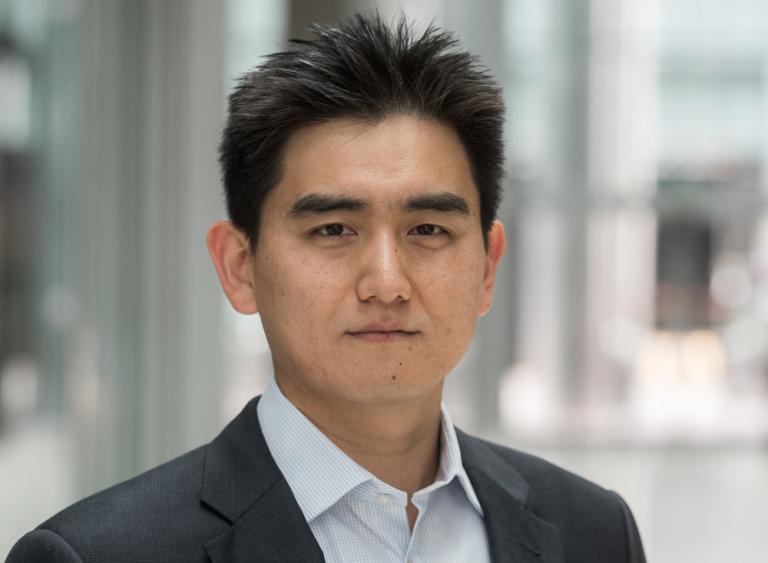
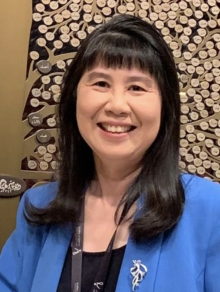
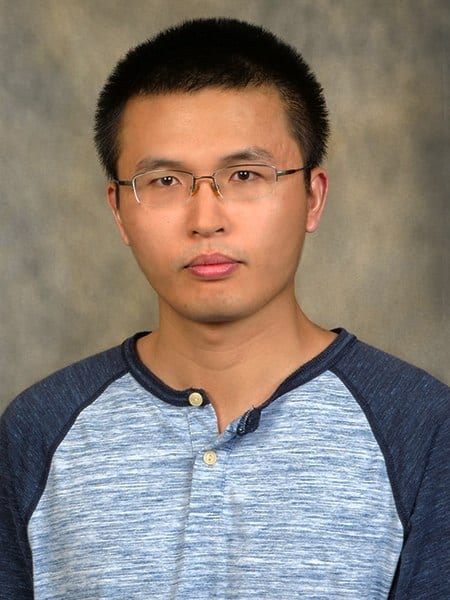
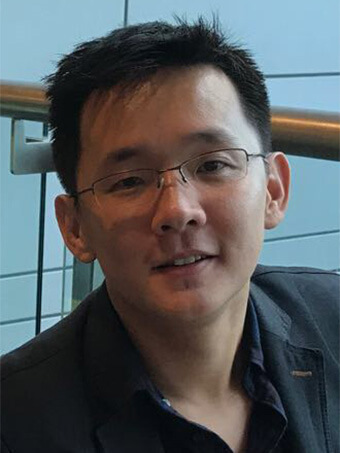
Remus Teodorescu is a Professor at AAU Energy , Aalborg University , specializing in Power Electronics System Integration and Materials . His work bridges Lithium-Ion Batteries , Modular Multilevel Converters , and Smart Battery Systems . Education : Not explicitly mentioned in the text. Research Interests focus on Battery Management Systems , AI-Driven Energy Optimization , and Power Electronics for renewable energy integration. Key projects include Digital Twin for Lithium-Ion Batteries and BMS-DC for Data Centers . Recent Publications (2025) emphasize Finite Set MPC , Gradient Descent Optimization , and AI in Battery Parameter Estimation . His 2024 work explores Physics-Informed Neural Networks and Fault-Tolerant Converters . Scientific Awards : Villum Foundation Grant (313 million kroner, 2021) Named world's best in electrical engineering (2023) Advising includes supervising PhD projects on AI-Accelerated Battery Twins and Data-Driven SOH Estimation . Collaborations span Energy Cluster Denmark and Villum Fonden .
Prof. Rama Cont is a Statutory Professor of Mathematics at the University of Oxford and a Professorial Fellow at St Hugh's College . He serves as Director of the Centre for Doctoral Training in Mathematics of Random Systems , Faculty Member of the Stochastic Analysis Group , and Senior Research Fellow at the Institute for New Economic Thinking . Additional roles include Director of the Oxford Martin Programme on Systemic Resilience , Principal Investigator at the Oxford Suzhou Centre for Advanced Research , and Editor-in-Chief of Mathematical Finance . His research interests span pathwise methods in stochastic analysis, rough analysis, functional Ito calculus, mathematical modeling in finance, systemic risk, and data-driven decision systems. Recent publications focus on causal transport, rough volatility, and deep residual networks, reflecting his interdisciplinary approach to mathematics and finance. Functional Ito calculus and pathwise integration Rough volatility and financial market dynamics Systemic risk in financial networks Deep learning applications to finance and stochastic processes He has received prestigious awards including the Louis Bachelier Prize , SIAM Fellowship, Royal Society APEX Award, and IMA Fellowship. His editorial roles and seminar leadership underscore his influence in mathematical finance and stochastic analysis.
Justin Sirignano is a Professor of Mathematics at the University of Oxford, affiliated with the Mathematical Institute. His research bridges Applied Mathematics, Machine Learning, and Financial Mathematics, developing novel mathematical frameworks and computational methods. Education: B.A. in Mathematics, Princeton University PhD in Mathematics, Stanford University Chapman Fellow, Imperial College London His research focuses on theoretical and applied aspects of machine learning, particularly in mean-field analysis of neural networks , deep learning for PDEs/SDEs , and scientific machine learning . He has pioneered methods for solving complex financial and scientific problems using data-driven approaches. His recent publications emphasize recurrent neural networks, reinforcement learning, and PDE closure models with applications in turbulence simulation and hypersonic flows. These works span numerical methods, optimization, and stochastic processes. Scientific Awards: 2014 SIAM Financial Mathematics and Engineering Conference Paper Prize Grants & Collaborations: He has secured over $16.5 million in funding from agencies like ONR, NSF-EPSRC, and DoE. His PhD students hold positions at J.P. Morgan, Bank of America, and other institutions. Labs & Teams: He leads research groups in Machine Learning and Mathematical Finance at Oxford, collaborating with institutions like Notre Dame, Boston University, and UIUC.
Talia Ringer is an Assistant Professor in the Department of Computer Science at the University of Illinois, where she is a member of the PL/FM/SE (Programming Languages/Formal Methods/Software Engineering) research group. She leads the Illinois Theorem Provers (ITP) lab, which focuses on advancing proof engineering technologies to make formal verification accessible to programmers of all skill levels across all domains. Research Interests Dr. Ringer's research spans multiple aspects of proof engineering with a strong focus on integrating techniques from dependent type theory, program transformations, and neural proof synthesis to solve real-world verification challenges. Her work addresses how to build systems that allow programmers to prove the absence of costly or dangerous bugs in software. She is particularly interested in proof repair, machine learning for proofs, and developing new methodologies that can drive the creation of large, secure, and robust verified software and hardware systems. Research Trends Dr. Ringer's recent publications demonstrate a strong shift toward integrating machine learning with formal verification, particularly in proof repair and synthesis. Her work explores how large language models can assist with theorem proving, how reinforcement learning can automate verification processes, and how to make proof engineering more practical for real humans. Many publications involve collaborations with students and researchers from multiple institutions, reflecting her commitment to interdisciplinary research. Awards and Recognition Distinguished Paper Award at ESEC/FSE 2023 for "Baldur: Whole-Proof Generation and Repair with Large Language Models" ACM SIGPLAN Distinguished Service Award in 2023 Mentoring and Service Dr. Ringer is a dedicated mentor who has advised numerous undergraduate and graduate students. She is the founder and president of the Computing Connections Fellowship, which provides transitional funding for computer science PhD students needing to escape unhealthy environments. She is also the founder and previous chair of the SIGPLAN Long-Term Mentoring Committee (SIGPLAN-M), which connects more than 200 mentors and 300 mentees across more than 44 countries. Her service work was formally recognized with the 2023 ACM SIGPLAN Distinguished Service Award. Laboratory and Collaborations Dr. Ringer leads the Illinois Theorem Provers (ITP) lab with current members including postdocs, PhD students, masters students, and undergraduates. She collaborates extensively with researchers at the University of Washington, UMass Amherst, Google Research, Galois, and other institutions on various proof engineering projects.
Aleksandr (Sasha) Aravkin is Associate Professor in the Department of Applied Mathematics and Adjunct Associate Professor of Health Metrics Sciences, Mathematics, and Statistics at the University of Washington. He serves as Director of Mathematical Sciences at the Institute for Health Metrics and Evaluation (IHME), where he leads the Mathematical Sciences and Computational Algorithms team and contributes to strategic direction for applying mathematical sciences to analytic challenges. Dr. Aravkin earned his PhD in Mathematics (Optimization) and MS in Statistics from the University of Washington in 2010, following a BSc in Mathematics and Computer Science in 2004. His educational background forms the foundation for his interdisciplinary research approach. His research expertise spans large scale optimization, machine learning, data science, convex and variational analysis, algorithm design, robust statistics, inverse problems, and uncertainty quantification . These methodologies are applied across diverse domains including health metrics, computational medicine, tracking and navigation, seismic imaging, computational finance, and neuroscience. Dr. Aravkin has pioneered approaches for fusing physics-based and data-driven models, enabling innovative solutions to complex problems. Dr. Aravkin's publication record demonstrates a strong focus on health metrics and Global Burden of Disease studies, with recent work emphasizing meta-analytic approaches for risk-outcome relationships. His research spans epidemiological modeling, health effects of various exposures, and forecasting disease burden across populations. The publications reveal a consistent pattern of high-impact work in top journals including The Lancet and Nature Medicine, often addressing critical public health questions through rigorous statistical and mathematical frameworks. At IHME, Dr. Aravkin has led significant projects including the Burden of Proof Studies (2019-2024) which analyzed 153 risk-outcome pairs, and COVID-19 Modeling (2020-2023) where his team developed forecasting models and excess mortality estimation methods. He has also been instrumental in developing the Evidence Score model, requiring novel algorithmic approaches. His work bridges theoretical mathematical sciences with practical applications to improve global health policy and practice.
Onesun Steve Yoo is a Professor of Operations and Marketing Analytics at the UCL School of Management, University College London, and Co-Director of the UCL Centre for Sustainable Business. He holds a PhD from UCLA Anderson School of Management, alongside advanced degrees in Electrical Engineering and Applied Mathematics from UC Berkeley and UCLA. His research focuses on innovation and entrepreneurship, examining operational and marketing strategies for firms launching innovative products/services. Key areas include consumer behavior analysis, pricing policies, sequential product launches, and the impact of technologies like surge pricing and AI-driven data analytics on business operations. Recent work integrates sustainability initiatives with AI to enhance operational transparency in supply chains and regulatory compliance. Yoo’s research has been published in top journals such as Marketing Science , Operations Research , and Manufacturing & Service Operations Management . His findings have been cited by US policymakers and featured in media outlets like the Wall Street Journal . He serves as a senior editor at Production and Operations Management and associate editor at Manufacturing & Service Operations Management . His academic service includes grants from Innovate-UK (UKRI) to collaborate with industry on sustainable business practices. Yoo’s work bridges theoretical research with practical applications, emphasizing data-driven decision-making and interdisciplinary collaboration between operations, marketing, and sustainability domains.
Roel Leus is a full professor at KU Leuven's Faculty of Economics and Business (FEB), part of the Operations Research and Statistics Research Group (ORSTAT). He holds roles such as Program Director for the Business Engineering programs and Chairman of the KU Leuven Advisory Committee for the Chinese Region. He earned his PhD in Applied Economics from KU Leuven in 2003, focusing on project planning under uncertainty. His research emphasizes operations research and management, particularly scheduling, project planning, and decision-making under uncertainty. Education: PhD in Applied Economics (KU Leuven, 2003); Master's in Business Engineering (Handelsingenieur, KU Leuven, 1998). He has held academic positions since 2003, including adjunct professorships at Beijing Jiaotong University. His administrative roles include heading ORSTAT research group (2012–2016) and program directorships. Research Interests: Sequencing and scheduling, project planning under uncertainty, discrete optimization, and practical quantitative decision support. He has supervised 12 graduated PhD students as primary supervisor and contributed to numerous publications in top journals like INFORMS Journal on Computing and European Journal of Operational Research. Teaching: Courses include 'Introduction to Operations Research,' 'Operations Research,' and 'Applications of Operations Research.' He coordinates master's theses in Data Science and Business Analytics, focusing on practical optimization problems. Grants and Projects: Acquired over €2 million in research funding from private companies, the National Bank of Belgium, and KU Leuven. His work spans satellite scheduling, supply chain management, and cross-docking logistics. Labs/Teams: Active in ORSTAT, collaborating on projects like drone-assisted delivery and robust scheduling algorithms. His research bridges theoretical advancements with real-world applications in logistics, manufacturing, and aerospace.
William Gropp is the Grainger Distinguished Chair and Director of the National Center for Supercomputing Applications (NCSA) at the University of Illinois Urbana-Champaign. He holds a Ph.D. in Computer Science from Stanford University (1982) and has contributed extensively to parallel computing, software for scientific computing, and numerical methods for PDEs. His research focuses on high performance computing, programming models, and scalable algorithms. Education: B.S. Mathematics (Case Western Reserve, 1977), M.S. Physics (University of Washington, 1978), Ph.D. Computer Science (Stanford, 1982). Research Interests: Gropp's work spans HPC, parallel computing, and numerical methods. He co-developed the MPI standard and MPICH implementation, and contributed to the PETSc library. His current projects include the Delta and DeltaAI supercomputers, Illinois Computes, and exascale initiatives. Scientific Awards: AAAS Fellow (2018), ACM/IEEE-CS Ken Kennedy Award (2016), SIAM/ACM Prize (2015), and 2024 ACM Software System Award. Member of the National Academy of Engineering. Grants & Leadership: Director of NCSA, leader of the Midwest Big Data Hub, and contributor to NSF-funded projects. His teams support AI/ML infrastructure and exascale computing. He advises on HPC policy and serves on committees like the Computing Community Consortium. Labs/Teams: NCSA, Siebel School research groups, collaborations with DOE, NSF, and industry partners. His work drives advancements in cyberinfrastructure and computational science.
Ming Lin is a Distinguished University Professor at the University of Maryland, College Park, holding joint appointments in Computer Science (Department of Computer Science), the Institute for Advanced Computer Studies (UMIACS), Electrical and Computer Engineering (ECE), and the Maryland Robotics Center. She holds the Dr. Barry Mersky and Capital One E-Nnovate Endowed Professorships. Her research focuses on physically-based modeling, virtual environments, haptics, robotics, and AI applications in healthcare and urban computing. Education: Ph.D., M.S., and B.S. in Electrical Engineering & Computer Sciences from UC Berkeley. She previously spent 20 years at UNC Chapel Hill before joining UMD in 2018. Research interests include collision detection algorithms (e.g., Lin-Canny algorithm), real-time physics simulation, virtual/augmented reality systems, and medical imaging applications. Her work has led to over 2 million downloads of her group's software tools and licenses with 60+ companies. Notable contributions include the Oculus Rift-related VR technologies and Amazon's virtual try-on system. Awards: IEEE Fellow (2012), ACM Fellow (2011), NAI Fellow (2022), and Washington Academy of Sciences Distinguished Career Award (2020). Active in professional service, she serves on the CRA Board and chairs the Committee on Widening Participation in Computing Research. Advising: Supervises 12+ PhD/Master's students. Her lab (GAMMA Group) focuses on AI-driven robotics, autonomous systems, and physically-based simulations. Key projects include traffic simulation frameworks, medical VR applications, and 3D garment modeling.
John Bagterp Jørgensen is a Professor at the Department of Applied Mathematics and Computer Science, Technical University of Denmark (DTU). His research focuses on computational methods for Model Predictive Control (MPC), numerical optimization, and dynamic optimization, with applications in industrial processes, biomedical systems, and sustainable energy. He holds leadership roles in 2-control ApS, a company developing advanced control solutions for industries such as cement production and oil recovery. Education: PhD and M.Sc. in Technical Sciences from DTU (1997–2005 and 1991–1997). Professional experience includes roles as an Assistant Professor at DTU and CTO/CEO at 2-control ApS. Research interests span MPC algorithms, numerical methods for differential equations, and system identification. His work bridges academia and industry, addressing challenges in energy efficiency, vaccine manufacturing, diabetes treatment, and cement production processes. His recent articles emphasize industrial applications of control systems, including cement rotary kiln dynamics, vaccine production optimization, and dual-hormone artificial pancreas development. He has received the Nordic Energy Research Award (1994) and contributed to UN Sustainable Development Goals related to affordable energy and industrial innovation. Advising and grants: Supervises multiple PhD projects on topics like electrification of industrial processes and sustainable SCP production. Collaborates with global institutions on energy and biomedical research. Labs/teams: Leads teams in DTU’s Scientific Computing and Center for Energy Resources Engineering, with active partnerships in industry and academia.
Yukun Li is an Associate Professor in the Department of Mathematics at the University of Central Florida (UCF), part of the College of Sciences. His research focuses on numerical analysis, stochastic partial differential equations, and computational finance. He holds a Ph.D. in Mathematics from the University of Tennessee, Knoxville (2010-2015), followed by postdoctoral roles at Penn State (2015-2016) and The Ohio State University (2016-2019). He has secured grants including NSF REU funding (2023-2026) and led an NSF-funded project on stochastic phase field models (2021-2025). Research interests include: Continuous/Discontinuous Finite Element Methods Numerical Solutions of Stochastic ODEs/PDEs Adaptive Algorithms and Fast Solvers Computational Finance Models Recent publications emphasize stochastic wave equations, phase field models, and financial mathematics. His work spans theoretical analysis and numerical methods for complex systems. Notable recognition includes the 2015 Achievement Award from the University of Tennessee's Mathematics Department. Teaching highlights include advanced graduate courses like Computational Methods for Financial Mathematics and Numerical Linear Algebra, alongside contributions to undergraduate mathematics education. He is proficient in computational tools including MATLAB, Python, FEniCS, and MPI.
Dr. Alvin J. K. Chua is an Assistant Professor at the National University of Singapore (NUS) under the NUS Presidential Young Professorship. He holds a joint appointment in the Department of Mathematics and a courtesy appointment in the Department of Statistics and Data Science. His research focuses on gravitational-wave astronomy , particularly extreme mass ratio inspirals (EMRIs) as key sources for the LISA mission. He develops computational and statistical methods for modeling GW sources and analyzing detector data, with recent work on machine learning and Bayesian inference techniques. His selected publications highlight advancements in modeling beyond-vacuum-GR effects in EMRIs non-local parameter degeneracies rapid relativistic waveform generation neural networks for GW inference statistical sampling on manifolds These works span gravitational-wave astrophysics , computational relativity , and applied statistics . Scientific recognition includes the NUS Presidential Young Professorship. He collaborates with the LISA Consortium and the North American Nanohertz Observatory for Gravitational Waves (NANOGrav).
Ben Bloem-Reddy is an Assistant Professor in the Department of Statistics at the University of British Columbia (UBC), Vancouver Campus. His research focuses on statistical theory and applications in machine learning, particularly in causal inference, Bayesian methods, neural networks, and probabilistic models. He advises current students Quanhan (Johnny) Xi, Kenny Chiu, and Gian Carlo Diluvi. His work bridges foundational statistical theory with practical machine learning challenges, including causal discovery, model identifiability, and uncertainty quantification. Recent research explores topics such as latent variable models, generative processes, and symmetry in data and algorithms. His contributions span interdisciplinary areas like particle physics applications and information theory-based compression techniques. Ben’s research trends emphasize advancing theoretical guarantees for modern machine learning systems while addressing real-world problems. His publications frequently intersect with algebraic topology (e.g., cocycles in causal inference) and nonparametric methods. He maintains an active lab within the Department of Statistics, fostering collaborations across UBC’s academic ecosystem. No scientific awards are explicitly listed in the provided information. His advising and grant activities focus on statistical methodology development, as evidenced by his student supervision and published work. His office is located in ESB 3168, and he can be reached at benbr@stat.ubc.ca.
David Simmons-Duffin is a Professor of Theoretical Physics at the California Institute of Technology (Caltech), where he has held positions since 2016. He is part of the Division of Physics, Mathematics and Astronomy, contributing to the Physics Department. His career progression includes roles as Visiting Associate (2016–17), Assistant Professor (2017–20), and Associate Professor (2020–21) before becoming full Professor in 2021. Education: A.B. and A.M. from Harvard University (2006), CASM from the University of Cambridge (2007), and Ph.D. from Harvard University (2012). His research focuses on conformal field theory (CFT), bootstrap methods, quantum field theory, and AdS/CFT correspondence. Key areas include precision computations in strongly coupled systems, critical phenomena, and applications to holography and quantum gravity. Research highlights include advancing the conformal bootstrap program, analyzing CFT data in 3D Ising models, and exploring connections between CFTs and gravitational theories. His work often bridges theoretical frameworks with numerical methods, yielding insights into operator product expansions (OPE), spectral gaps, and causality constraints. Affiliations include the Institute for Quantum Information and Matter (IQIM) and other Caltech research centers. His contributions have shaped modern approaches to understanding universality in critical systems and the geometric aspects of quantum field theories. Notable collaborations involve high-precision calculations, bootstrap island techniques, and studies of thermal QFT and light-ray operators. His work emphasizes interdisciplinary methods, combining analytic tools with computational advancements to tackle complex theoretical problems.
Greta Panova is a Gabilan Distinguished Professor of Science and Engineering and a Professor of Mathematics at the University of Southern California (USC). Her research focuses on Algebraic Combinatorics, with connections to representation theory, statistical mechanics, probability, and computational complexity theory. She also engages in molecular biology modeling. Panova holds editorial roles at journals including the Electronic Journal of Combinatorics, Arnold Mathematical Journal, and Communications of the American Mathematical Society. She is a writer/editor for the Putnam Mathematical Competition (2023-2025) and is currently supported by NSF grants in the CCF division. Her research interests span Algebraic Combinatorics, Representation Theory, Statistical Mechanics, Probability, and Computational Complexity Theory. Specific areas include Kronecker and Littlewood-Richardson coefficients, asymptotic behavior of combinatorial structures, and the interplay between algebraic structures and computational complexity. She also explores applications in molecular biology, particularly protein dynamics in DNA lesions. NSF grants in CCF division (current) Editorial roles at Electronic Journal of Combinatorics, Arnold Mathematical Journal, and others Contributor to the Putnam Mathematical Competition Panova's research is supported by NSF grants, focusing on computational complexity and algebraic combinatorics. She has advised students in areas related to her research, though specific names aren’t listed here. Grants have funded explorations into geometric complexity theory, asymptotic combinatorics, and molecular biology modeling. Her work involves collaborations across disciplines, including statistical mechanics and integrability, as highlighted in her white paper contributions.