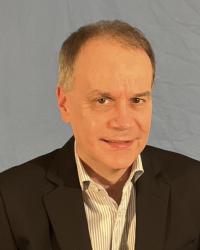
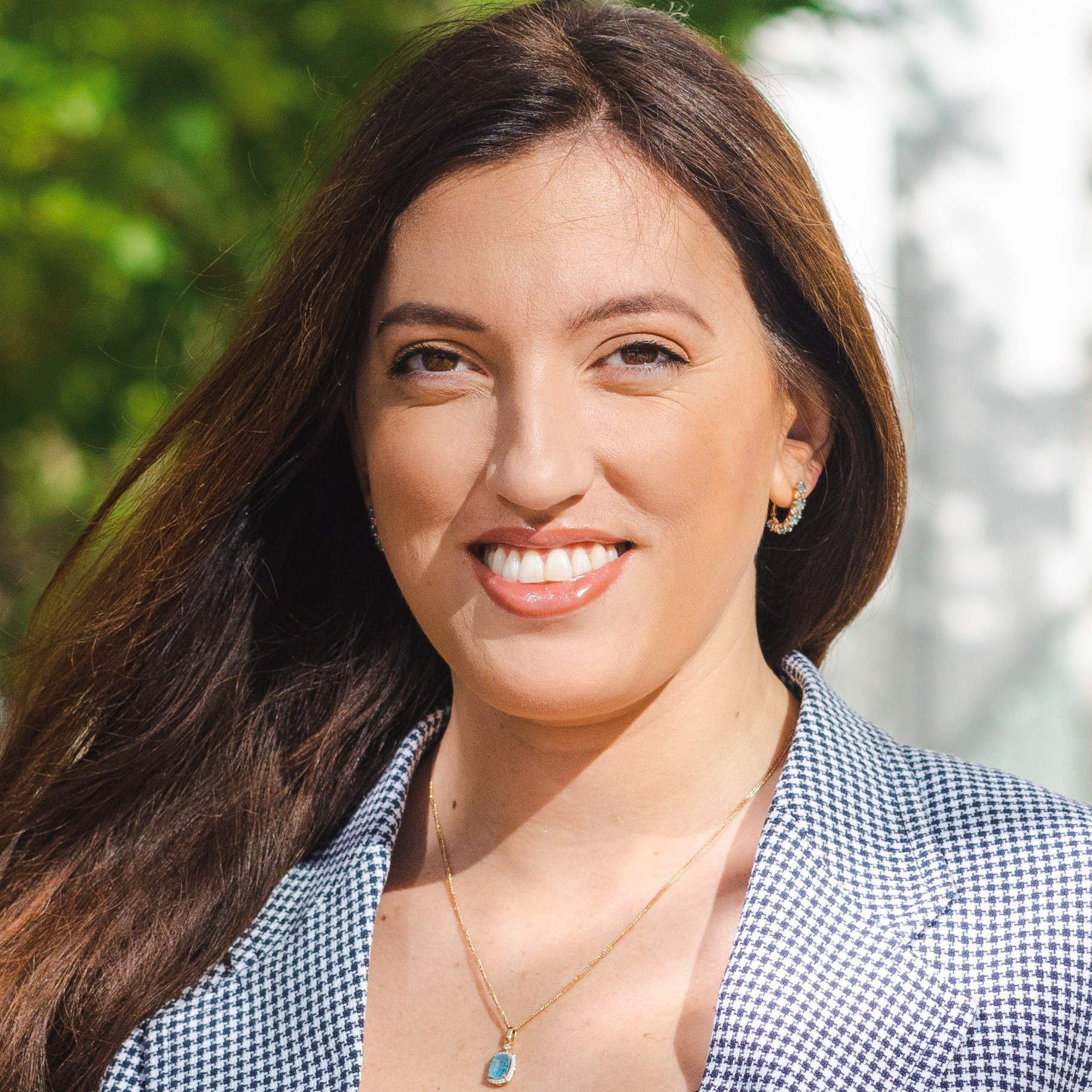
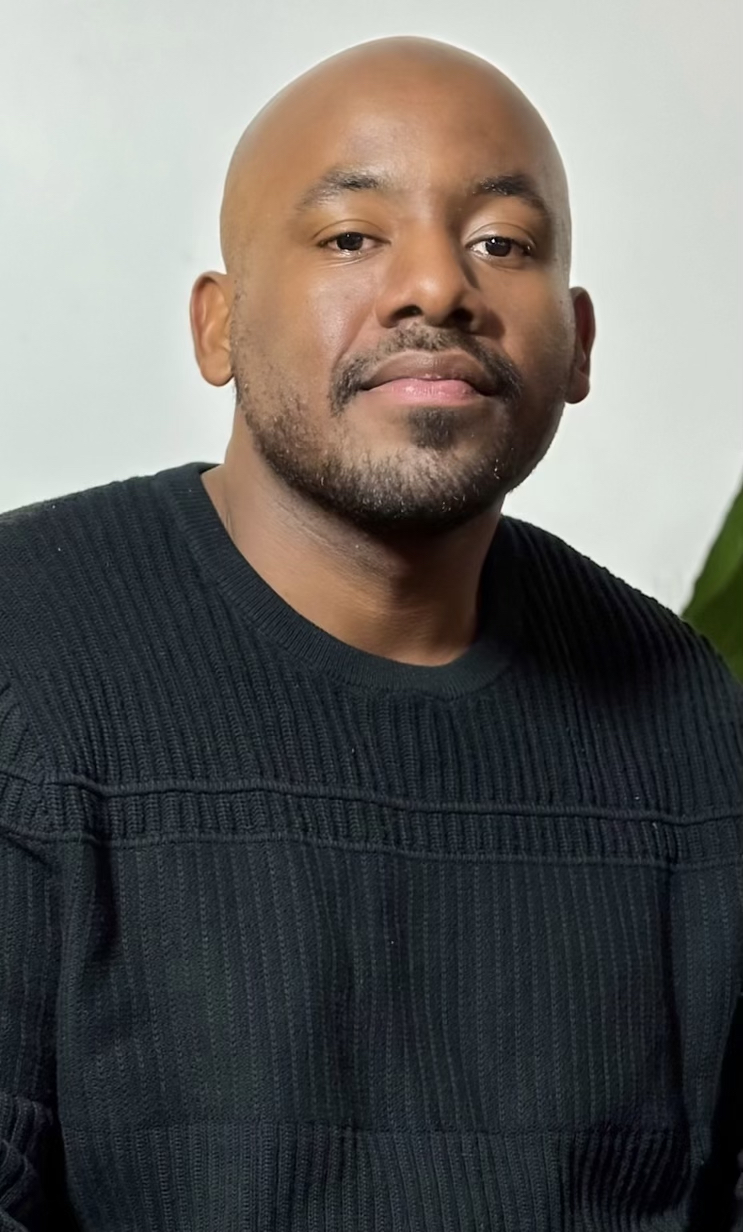
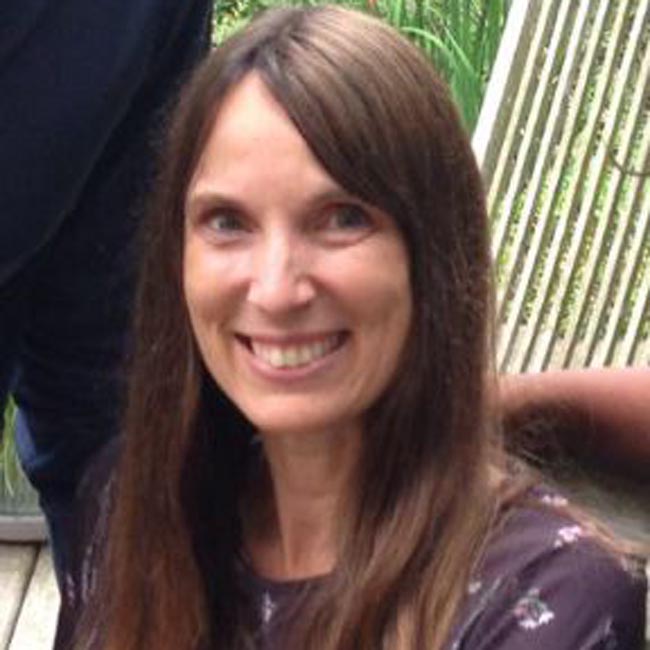
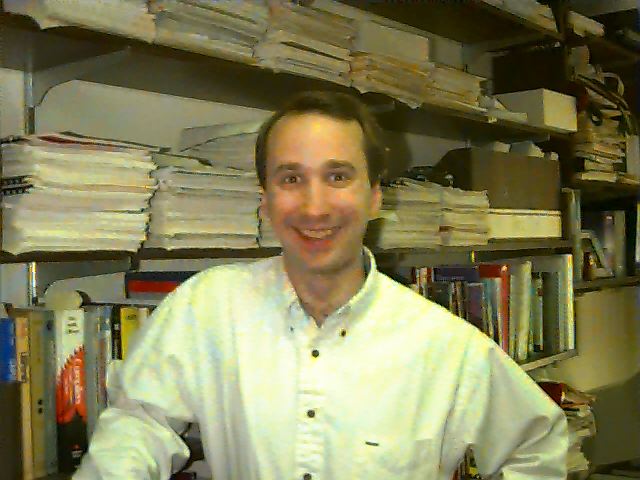
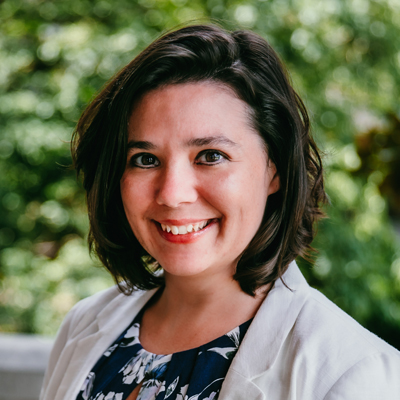
Mark Shepard is an Associate Professor of Public Policy at the Harvard Kennedy School of Government and a Faculty Research Fellow at the National Bureau of Economic Research (NBER). His research focuses on health care markets, particularly competition and policy design in health insurance markets, including public programs like Medicaid and the ACA exchanges. He holds a PhD in Economics (2015) and an A.B. in Applied Math (2008) from Harvard University. Before his academic role, he completed a postdoctoral fellowship at NBER and worked at the Brookings Institution. Teaching includes courses on public policy, health economics, and poverty analysis. His work examines topics such as insurance market regulation, enrollment barriers, and the economic implications of health care policies. Key affiliations include the Taubman Center for State and Local Government at HKS and NBER. Research highlights include studies on premium impacts, active purchasing policies, and universal coverage frameworks. Recent articles explore insurer responses to market regulations, the 'two-margin problem' in insurance markets, and the role of administrative burdens in coverage decisions. His policy-oriented work advocates for structured social safety nets and equitable healthcare financing models.
Hart Smith is a Professor in the Department of Mathematics at the University of Washington, affiliated with the College of Arts & Sciences. His research focuses on partial differential equations and real/harmonic analysis, with particular expertise in wave equations, spectral theory, and geometric analysis. He holds a Ph.D. from Princeton University (1989) and an A.B. from the University of California, Berkeley (1984). Education: Ph.D. in Mathematics, Princeton University, 1989 A.B. in Mathematics, University of California, Berkeley, 1984 Research Interests: Professor Smith’s work bridges harmonic analysis and partial differential equations, emphasizing topics such as dispersive estimates, spectral clusters, and the propagation of singularities in rough geometries. His contributions address challenges in wave dynamics on manifolds, scattering theory, and operator bounds in non-smooth settings. Recent Work Trends: His recent articles (2012-2024) explore decoupling of hyperbolic systems , resolvent estimates on manifolds , and quasimode bounds for Schrödinger operators . These studies highlight advancements in understanding wave behavior under low regularity conditions and geometric constraints. He has advised no formally listed students but contributes to graduate education through teaching and departmental leadership. His work is supported by grants from NSF and other agencies, though specific grants are not detailed here. Labs/Teams: Involved in interdisciplinary initiatives at the University of Washington, including outreach programs like the Washington Experimental Mathematics Lab (WXML) and the UW Math Circle.
Dr. Maria Kovaleva is a Research Fellow at Curtin Institute of Radio Astronomy (CIRA), affiliated with the School of Electrical Engineering, Computer, and Mathematical Sciences at Curtin University. She conducts research in antenna optimization, electromagnetic systems, and radio astronomy, with a focus on array antennas, mutual impedance matrices, and beamforming techniques. Her work contributes to the Square Kilometre Array (SKA) project, particularly in low-frequency radio telescope design and sensitivity analysis. Research Interests: Dr. Kovaleva’s expertise spans antenna optimization algorithms, metasurface technologies, and radio interferometry. She explores the impact of noise and faults on antenna performance, develops neural network-based beam prediction methods, and investigates signal processing techniques for large-scale arrays. Her recent work addresses challenges in the SKA-Low telescope’s sensitivity and array calibration. Publications Trends: Her publications (2017–2025) emphasize advancements in antenna array design, optimization methodologies, and radio astronomy instrumentation. Key themes include mutual impedance matrix extraction, embedded element pattern analysis, and low-frequency interferometer sensitivity. Recent work features collaborations on the SKA-Low prototype and neural network applications in beamforming. Labs & Teams: She is part of CIRA, contributing to projects like the Murchison Widefield Array and the SKA-Low telescope. Her research involves interdisciplinary teams focused on radio astronomy instrumentation and electromagnetic systems.
Laura Kathleen Matters Herold is a Teaching Associate Professor in the Department of Human Environmental Sciences within the College of Agricultural, Food and Life Sciences at the University of Arkansas, Fayetteville. She serves as the program leader of the Birth-Kindergarten Teacher Licensure Program, which she developed and achieved state approval for, recognizing that early childhood education is a science requiring specific skills and knowledge. Dr. Herold earned her Ph.D. and M.S. in Educational Studies, Language Literacy and Culture (with emphasis in Early Childhood Education) from the University of Michigan, and her B.A. in German Studies and Music History and Theory from Oberlin College, graduating with High Honors. Her educational background provides a strong foundation for her work in early childhood development and pedagogy. Her research focuses on early childhood education transitions, language and literacy development from birth through kindergarten, the impact of poverty on early knowledge development, and improving educational outcomes for at-risk preschoolers. She emphasizes playful pedagogy and discovery learning, advocating for developmentally appropriate environments that honor children's natural curiosity and learning processes. Her work spans teacher-child interactions, preschool professional development, children's literature, and reading preferences. Dr. Herold leads the US research team for the International Study of Social Emotional Early Transitions (ISSEET) and has co-authored multiple chapters in an upcoming Springer publication examining infant transitions across six countries. Her recent scholarly work reveals consistent themes in culturally responsive approaches to early childhood education and the importance of time, relationships, and material environments in successful transitions. Lucile Cornetet Individual Professional Development Award from Delta Kappa Gamma Educational Foundation Enabling Capability Platforms Opportunity Fund ($42,123.30 AU) for 'First Steps' project Honors College Faculty Equipment and Technology Grant ($5,000) Research in Teaching Grant ($5,000) As an educator, Dr. Herold teaches Developmental Assessment, Math and Science for the Young Child, Child Guidance, Curriculum and Assessment for 3 through Kindergarten, Field Experience courses, Language and Literacy Pedagogy, Parenting and Family Dynamics, and Public Policy Advocacy. She mentors future educators through their journey to become early childhood professionals, emphasizing the importance of play and discovery in learning. Her work extends to the Jean Tyson Child Development Study Center, a nationally accredited model childcare center and lab school that serves as both a training ground for educators and a research center.
David Patwin is a Lecturer in the Department of Mathematics at Wayne State University's College of Liberal Arts and Sciences, where he teaches courses including Calculus, Differential Equations, and Algebra. He completed his B.A. in Mathematics with a Minor in Computer Science in 2019, M.S. in Mathematics in 2021, and is expected to graduate with a Ph.D. in Mathematics in May 2025. Ph.D. in Mathematics, Wayne State University (2025) M.S. in Mathematics, Wayne State University (2021) B.A. in Mathematics, Minor in Computer Science, Wayne State University (2019) His research focuses on free boundary problems in partial differential equations, particularly existence, uniqueness, and regularity analysis of solutions for relativistic Brillouin flows. This work contributes to nonlinear elliptic equations and mathematical modeling for electron devices. David has taught courses such as MAT2010 (Calculus I), MAT2150 (Differential Equations and Matrix Algebra), and STA1020 (Elementary Statistics) since 2023. He emphasizes inclusive, community-oriented classrooms through values learned in the Wayne State University Math Corps program. Outstanding Graduate Teaching Assistant (2024) Dean’s Diversity Fellowship (2019–2022) Maurice J. Zelonka Endowed Scholarship (2023-2024) His recent publication under review explores relativistic Brillouin flows using analytical techniques for free boundary problems. He actively seeks collaborative opportunities to advance student success while developing generalizable methods for nonlinear PDEs.
Paul So is a Professor at George Mason University affiliated with the Department of Physics & Astronomy in the College of Science and the Neuroscience Program . He specializes in applying dynamical systems analysis and statistical physics to understand neuronal dynamics, information processing in the brain, and pathological conditions like epilepsy and Parkinson’s disease. Education : PhD in Nonlinear Dynamics from University of Maryland at College Park (1995) BS in Physics & Math from Harvey Mudd College (1988) His research focuses on high-dimensional chaotic systems, quantum chaos, synchronization, coherence, and unstable periodic orbit reconstruction for neural networks. He has published extensively on topics such as the Kuramoto model, chaotic synchronization, and dynamical interdependence in neural ensembles. Professor So has over 20 years of experience teaching introductory and advanced physics courses and advising graduate students at the university. His work bridges theoretical physics and neuroscience to uncover mechanisms underlying brain function and disease.
Chantal Buteau is a Professor of Mathematics at Brock University's Department of Mathematics and Statistics, within the Faculty of Mathematics and Science. Her research focuses on Mathematics Education and Mathematical Music Theory. In Mathematics Education, she explores the integration of digital technology, computational thinking, and programming in teaching and learning, particularly in university and teacher education contexts. She has led projects such as the SSHRC-funded 'Educating for the 21st Century' initiative and contributed to the Ontario Ministry-funded Mathematics Knowledge Network. Her work includes developing epistemic math computer games like E-Brock Bugs. In Mathematical Music Theory, she applies topological models to analyze musical compositions' motivic structures. Her academic achievements include the Brock University Award for Distinguished Teaching (2023) and the Brock Faculty of Mathematics and Science Distinguished Research Award (2022). Her research collaborations span international partnerships, including work with the Fields Institute and CRM (Montreal). She has published extensively in journals like Educational Studies in Mathematics and Journal of Mathematics and Music , focusing on instrumental genesis, programming in education, and computational music analysis. Buteau's teaching includes courses such as MICA (Mathematics Integrated with Computers and Applications) and Mathematics and Music. She has pioneered technology-driven learning environments, emphasizing student-designed computational tools for mathematical exploration. Her contributions extend to symposium organization, such as the 2023 PD-Day on Coding and Equity in Mathematics Education, and editorial roles in special journal issues on computational thinking and music analysis.
Lisa Ashmore is a Senior Lecturer in Early Years and Primary Mathematics at the University of Sheffield. She holds multiple qualifications including BA (Hons), BSc (Hons), PGCE, NPQSL, Cert HE, and Dip Institute of Linguists. With 18 years of teaching experience, she has served as a Leading Maths Teacher in London and a Specialist Leader in Education for mathematics in Sheffield. Her roles include teaching undergraduate/postgraduate mathematics, university link tutoring for trainees, and academic tutoring. Her specialist interests focus on transforming perceptions of mathematics in the UK and exploring cultural influences on mathematical achievement. She has contributed to school improvement initiatives, including raising a primary school from 'special measures' to 'good' by focusing on mathematics mastery pedagogy. She leads training for the Roadmap to Maths Mastery and collaborates with the South Yorkshire Maths Hub. Ms. Ashmore teaches on the BA Primary and Early Years and PGCE Primary and Early Years programs. Her professional qualifications emphasize educational leadership and raising attainment in mathematics.
Linda M. Platas is an Associate Professor and Chair in the Department of Child & Adolescent Development at San Francisco State University (SFSU). She holds a Ph.D. and M.A. in Education (Cognition and Development) from UC Berkeley, and a B.A. in Child and Adolescent Development from SFSU. Her expertise spans child development, early childhood education, early math and literacy, teacher education, and early childhood policy. Dr. Platas has 14 years of hands-on experience in early childhood education as a teacher and program director. She advises ministries of education in low-resource countries on curriculum development, early math/literacy assessments, and classroom quality measurement. She collaborates internationally with UNESCO, WHO, UNICEF, the World Bank, and serves on the DREME Network (Development and Research in Early Mathematics Education). Her research focuses on integrating social-emotional development with mathematical learning, global educational policy, and teacher training. Recent publications address early math assessment frameworks, school readiness in Tanzania, and cross-cultural educational strategies. She emphasizes practical applications of research to improve educational outcomes globally. Dr. Platas has no listed scientific awards but is recognized for her leadership in international educational initiatives. She advises students in early childhood development and has contributed to professional development programs for teachers. Her work bridges policy, practice, and research to enhance early childhood education worldwide.
Dr. Alex Schuster is a Professor at San Francisco State University (SFSU) and serves as an advisor for the Math Minor program. He holds a PhD in Mathematics from the University of Michigan (1997), specializing in complex analysis and functional analysis. His research focuses on Bergman spaces, interpolation theory, sampling sequences, and operator theory. He has collaborated with notable mathematicians like Peter Duren and D. Varolin. Recent work includes studies on weighted Fock spaces and Omega integration theory. Dr. Schuster's contributions span over two decades, with publications in prestigious journals like the Journal of Functional Analysis and the Proceedings of the American Mathematical Society. His work often bridges theoretical mathematics with applications in operator theory and geometric function analysis. Dr. Schuster has co-authored a seminal textbook, Bergman Spaces (2004), and has supervised numerous collaborative research projects. His current research includes finite-dimensional weighted spaces and generalizations of Bergman spaces. Though no formal awards are listed, his extensive publication record underscores his academic impact. While no lab affiliations are noted, his interdisciplinary interests occasionally intersect with genetics (e.g., phylogenetic studies). His office is located in TH 948, and he maintains a personal website highlighting both academic work and travel photography.
Stephanie Sisk-Hilton is a Professor in the Department of Elementary Education at San Francisco State University. She coordinates the One-year Multiple Subject Teaching Credential Program and the MA in Elementary Education for recent graduates. Her research focuses on children’s science learning, cognition, and collaborative teacher development. With over two decades of experience, she has taught in diverse school districts across the U.S. and leads Bay Area professional learning initiatives for K-8 teachers. Education: Ph.D., Cognition and Development (Education in Math, Science, and Technology), UC Berkeley (2005) MA, Education Policy and Administration, Stanford University (1997) BA, Cognitive Science, Johns Hopkins University (1993) Research Focus: Examines how young children grasp complex science concepts through inquiry-based methods and how teachers collaborate to improve science instruction. Current projects emphasize leveraging children’s intuitive thinking and fostering inclusive classroom environments. Publications Trends: Her work bridges theory and practice, with publications focusing on science education innovations, teacher professional development frameworks, and narrative inquiry methods in early childhood settings. Recent studies explore microevolution understanding in primary grades and natural selection pedagogy through hands-on investigations. Grants & Partnerships: Works closely with Bay Area elementary schools to build mentorship networks for future teachers. Former National Board Certified Teacher (NBCT) with K-8 classroom experience in multiple states.
Karen Edwards is an Assistant Professor in the Department of Computer Science at Tufts University's School of Engineering. With over 26 years of teaching experience across diverse institutions, she holds a PhD in low-dimensional geometric topology from UC Berkeley (2001) and a BA in Mathematics from the same institution (1992). Her research focuses on low-dimensional geometric topology , bridging mathematical rigor with computational applications. Professionally, she actively contributes to equity initiatives as an Equity and Inclusion Fellow (2021) and co-chairs Tufts' JEDI Committee (2020-2023). She coordinates office hours (2021-2023) and leads CS Department Online Task Force (2019). She has received notable recognition as valedictorian of UC Berkeley's Mathematics Department (1992), and secured grants including the Self-Paced Math Program Development (2008-2009) and Calculus Field Trips Project (2007-2009). Her teaching spans discrete mathematics, algorithms, and CS pedagogy.
Scott Vandenberg is a Professor of Computer Science at Siena College, where he has taught since 1993. He holds a PhD from the University of Wisconsin-Madison and a BA from Cornell University. His research focuses on database systems, computer science education, and scientific data management. He has authored multiple editions of textbooks such as Database Concepts and contributed to bioinformatics research, including studies on Mycobacterium tuberculosis complex and stem cell differentiation. Education: PhD and MS in Computer Science from University of Wisconsin-Madison; BA in Math and Computer Science from Cornell University. Professional Experience includes visiting roles at University of Washington and UMass Amherst. Research interests emphasize database applications, educational pedagogy, and interdisciplinary data science. Notable publications include works on tuberculosis lineage classification and osteogenic gene focusing in stem cells. Awards include the Jerome Walton Award for Excellence in Teaching (2012) and IBM Graduate Fellowships. Teaching includes introductory computer science and database systems courses. Collaborations involve institutions like Rensselaer Polytechnic Institute. Active in ACM SIGCSE and SIGMOD.
Jessica Kilday is a Postdoctoral Fellow in the Department of Educational, School & Counseling Psychology at the University of Missouri's College of Education & Human Development. She is affiliated with the Prosocial Development and Education Research Lab under Dr. Christi Bergin. Her work focuses on peer and teacher relationships in early adolescence and their impact on students' motivational beliefs and academic adjustment. Education: Ph.D. from the University of Michigan's Combined Program in Education and Psychology. Research Focus: Prosocial behavior, classroom climate, teacher professional development, and integrating social-emotional learning with mathematics education. Current Projects: Leads two grant-funded initiatives: the IES-funded ECHO project (telementoring for middle school educators) and the SEED-funded Math+SEL+E project (integrating SEL, equity, and math instruction). No awards or advisees listed in the provided text. Active in lab collaborations and outreach through the College's research centers.
Mark Marino is a Lecturer in the Department of Mathematics at the University at Buffalo, part of the College of Arts and Sciences. He holds a Master of Education (M.Ed.) from the University at Buffalo. His teaching excellence has been recognized with prestigious awards, including the SUNY Chancellor’s Award for Excellence in Teaching (2016), the Milton Plesur Award (2019), and the Friend of Educational Opportunity Program Award (2017). His research interests focus on Mathematics Education, Curriculum Development, and integrating technology into teaching. He has presented at national and international conferences, including the Cornell University Mathematics Teacher Professional Development Workshops, the Association of Mathematics Teachers of New York State Conference, and the College Board Advanced Placement events. Marino has held leadership roles in educational organizations, serving as President (2010–2014) and Vice President (2009–2010) of the Graduate School of Education Alumni Association at UB. He is currently a College-Level Representative on the Executive Board of the Association of Mathematics Teachers of New York State (2024–2026). Key Awards: SUNY Chancellor’s Award (2016), Milton Plesur Award (2019), Two Session’s Best Paper Awards at International Conferences Leadership: Executive Board roles in educational associations, alumni leadership Grants/Projects: College Board Advanced Placement Fellowship, AMATYC Project ACCCESS Fellowship His work emphasizes innovative teaching methods, including the use of AI in instruction, statistics in healthcare education, and transitioning online strategies to physical classrooms. He has also contributed to improving general education courses through technology-focused workshops.