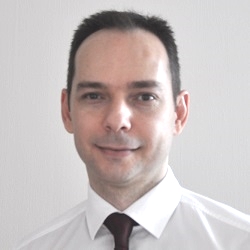
Apostolos Giannis is an Associate Professor in Municipal and Hazardous Solid Waste Management at the Technical University of Crete. His research focuses on waste-to-energy conversion, sewage sludge treatment, hazardous waste management, and circular economy approaches. Dr. Giannis leads the Toxic and Hazardous Waste Management Laboratory and serves in editorial roles for several journals including Waste Management and Journal of Environmental Chemical Engineering. His recent research explores: Advanced chemical looping combustion techniques for waste conversion Hydrometallurgical recovery of valuable metals from e-waste Catalytic plastic recycling processes Life cycle assessment of waste management systems He has received multiple distinctions including Top Cited Paper award and Marie-Curie Fellowship. Dr. Giannis currently supervises three PhD students and teaches undergraduate courses on solid waste management, hazardous waste treatment, and environmental technologies.
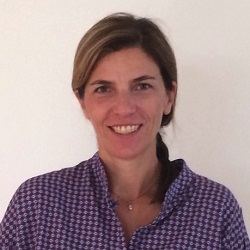
Andreas Boudouvis is a Professor at the National Technical University of Athens (NTUA), School of Chemical Engineering, in the Department of Analysis, Design and Development of Processes and Systems. He served as Rector of NTUA from October 2019 until November 2023 and previously as Dean of the Chemical Engineering School from March 2013. His research focuses on computational transport phenomena and fluid mechanics with applications in chemical vapor deposition, multiscale modeling, and reduced-order modeling techniques. His research aims at investigating causes and illuminating mechanisms of engineering systems based on first principles. His work emphasizes computational analysis of transport phenomena, particularly examining viscous, gravitational, interfacial, and electromagnetic forces in flow and transport systems. Boudouvis employs advanced computational methods including Galerkin/finite element methods and numerical linear algebra techniques for large-scale scientific computing. His recent publications demonstrate a strong focus on hybrid equation-based and data-driven computational workflows for industrial deposition processes, population balance modeling for pharmaceutical applications, and multiscale analysis of chemical vapor deposition systems. His research group has produced numerous PhD and graduate theses spanning computational mechanics, fluid dynamics, and materials processing. Scientific Awards: 2024 Award for Excellence in Academic Teaching from the Foundation for Research and Technology-Hellas Professor honoris causa of the University of West Attica (2023) Boudouvis has supervised over 40 doctoral and graduate students whose work has received numerous awards including the Léopold Escande Prize for best PhD theses. His research group maintains strong international collaborations with institutions including Johns Hopkins University, University of Luxembourg, and Institut National Polytechnique de Toulouse. His work bridges fundamental computational methods with practical industrial applications, particularly in materials processing and chemical engineering systems.
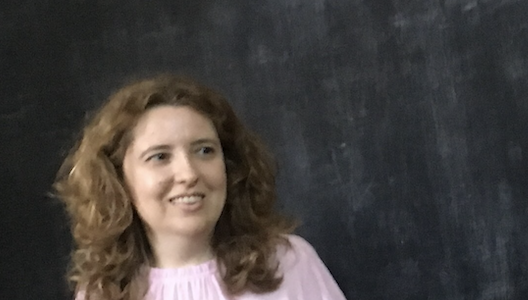
Georgios Sakellariou is an Assistant Professor at the Department of Chemistry , National and Kapodistrian University of Athens , Greece. He leads the Polymer Group, focusing on advanced polymer synthesis and characterization techniques. Roles: Assistant Professor, Researcher, Educator Location: Polymer Laboratory, 1st Floor, Office 4, Panepistimiopolis Zografou, Athens Research Interests include controlled radical polymerization methods (ATRP, NMP, RAFT), synthesis of complex macromolecular architectures, polymer characterization (DLS, SLS, viscometry), and applications in biomedical materials and energy storage. His work emphasizes precision in polymer design and functional material development. Recent Research Trends involve creating single-chain polymeric nanoparticles with tunable softness/rigidity via cross-linker optimization, star copolymers with high χ parameters for phase separation, and solid polymer electrolytes for Li-ion batteries. Collaborations span institutions like the University of Ioannina and Hebrew University of Jerusalem. Advising includes mentoring PhD and Master’s students such as Emmanouil Mygiakis, Maria-Malvina Stathouraki, and Anna Boura. His group engages in interdisciplinary projects with international researchers like Prof. Apostolos Avgeropoulos and Dr. Emmanouil Glynos . Laboratory & Team : The Polymer Group operates in the Industrial Chemistry Laboratory at the University of Athens, conducting courses like "Special Topics in Polymer Science" and "Polymer Characterization."
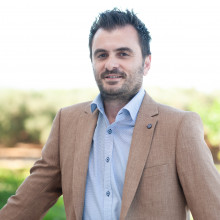
Σταλίκας Κωνσταντίνος is a Lecturer in Analytical Chemistry at the Department of Chemistry, University of Ioannina, Greece. He holds a PhD in Analytical Chemistry from the same university (1995) and has held post-doctoral research positions in Spain and Germany. His research focuses on analytical methods for environmental, food, and clinical analysis, with expertise in chromatography, spectrometry, and microextraction techniques. He has led numerous EU-funded projects and serves as a reviewer for high-impact journals like Analytical Chemistry and Environmental Science & Technology . Education: 1988: Chemistry Degree (University of Ioannina) 1995: PhD in Analytical Chemistry (University of Ioannina) Research Interests: Development of analytical methodologies for environmental pollutants, food contaminants, and clinical samples. Techniques include Flow Injection Analysis (FIA), Gas Chromatography (GC), High-Performance Liquid Chromatography (HPLC), and microextraction technologies. His work emphasizes applications in toxicology, phytochemical analysis, and nanomaterial-based sorbents. Publications: Over 70 peer-reviewed articles, primarily in Anal. Chem. , J. Chromatogr. A , and Environ. Sci. Technol. , focusing on analytical method development, environmental monitoring, and toxic compound degradation. Notable contributions include nanoscale sorbent materials for trace analysis and GC-MS protocols for pesticide residues. Awards: NATO Fellowship (1993–1995) Spanish Government Postdoctoral Fellowship (1997) DAAD Fellowship (Germany, 2001) Grants & Projects: Coordinated projects on environmental pollution (e.g., Lake Pamvotis studies) and led initiatives on olive oil wastewater treatment. Active in EU-funded programs like INTERREG and FAIR. Labs & Teams: Formerly affiliated with the European Environmental Research Institute (Ioannina) and collaborated with institutions in Spain (University of Cordoba) and Germany (Technical University of Munich).
Christos Pappas is a Professor at the Department of Food Science and Technology at the Agricultural University of Athens (AUA). His academic focus spans analytical chemistry, food chemistry, and agricultural biochemistry, with a strong emphasis on food authenticity, quality assurance, and natural product research. He teaches courses such as Instrumental Chemical Analysis, Natural Products Chemistry, and Organic Chemistry, integrating theoretical concepts with practical laboratory skills. Research Programs : Chemical characterization of Greek agricultural products (e.g., olive oil, pistachios, saffron) Development of innovative analytical techniques for food fraud detection Edible film technology using natural polymers Sustainable practices in olive cultivation and winemaking His research interests include spectroscopic methods (FTIR, GC-MS, Raman), multivariate analysis for food authentication, and optimization of agricultural processes. He has led projects funded by national and European grants, such as the aflatoxin management initiative in pistachios (€284k budget, 2023–2025). His work frequently addresses high-value Greek exports like honey and olive oil, ensuring product authenticity through cutting-edge analytical tools. Publications span over 30 years, with recent focus on: Food authentication via spectroscopic techniques Edible packaging materials Nutrient management in olive cultivation Phenolic compound analysis in honey and wine No formal awards are listed, though his contributions reflect sustained excellence in food science. He coordinates interdisciplinary teams and collaborates with industry partners to advance food technology and agricultural sustainability.
Gikas Petros is a Professor at the School of Chemical and Environmental Engineering (CEE) of the Technical University of Crete. His work focuses on advancing sustainable wastewater treatment, waste-to-energy systems, and environmental engineering solutions. Key areas of research include hydrocyclone efficiency in wastewater treatment, biosolids gasification, antibiotic resistance reduction in agricultural soils, and the impact of climate change on infrastructure. His research integrates cutting-edge technologies such as photocatalytic nanocomposites and advanced filtration systems. Recent work emphasizes circular economy principles, digitalization in waste management, and decarbonization strategies. He leads projects on resource recovery from municipal waste, including energy production from biosolids and plastic particle analysis in compost. Professor Petros collaborates internationally, with studies in Apulia (Italy) and Indonesia, addressing global challenges like energy-positive wastewater plants and landfill gas utilization. His lab, DEPLAB (www.deplab.tuc.gr/el/archi), develops innovative solutions for sustainable water and waste management. He holds a faculty position in the CHENVENG Building (K2) at TUC, with a focus on translating research into practical applications for environmental sustainability. His contributions bridge engineering, policy, and technology to tackle contemporary environmental issues.
Elia Psillakis is a Professor of Aquatic Chemistry at the Department of Environmental Engineering, Technical University of Crete. They lead the Aquatic Chemistry Laboratory and hold roles in the Division I of Environmental & Energy Management. Their work focuses on analytical chemistry methodologies for environmental pollutants and sustainable sample preparation practices. Education: PhD in Chemistry (1997), University of Bristol, UK MSc equivalent (1994), Université Montpellier II, France BSc equivalent (1993), Université Montpellier II Research Interests: Development of novel analytical procedures for detecting trace pollutants, fate studies of organic micropollutants, green chemistry innovations in sample preparation, and environmental biotransformation of synthetic materials. Recent work emphasizes vacuum-assisted extraction methods and environmental impact assessments of tobacco products. Key Contributions: Pioneered the AGREEprep greenness metric, authored influential papers on vacuum-enhanced sampling, and coordinated major projects like the IUPAC Green Sample Prep initiative. Their research bridges methodological innovation with real-world environmental challenges. Awards & Leadership: Editorial roles at Advances in Sample Preparation , Frontiers in Analytical Science , and Journal of Separation Science Featured in The Analytical Scientist's Top 100 (2021) Lead multiple EU and international research programs Advising & Grants: Supervises 3 PhD candidates and has secured €4+ million in funding, including FP7-KBBE grants and industry partnerships. Active in policy development through roles like Chair of IUPAC's Green Sample Prep project. Labs & Networks: Heads the Aquatic Chemistry Lab and manages the European Chemical Society's Sample Preparation Study Group. Coordinates Work-Group 4 in COST Action CA16215.
Georgia Karali is an Associate Professor in the Department of Mathematics at the National and Kapodistrian University of Athens, Greece. She previously held positions at the University of Crete, including Professor (2019–2024), Associate Professor (2013–2019), and Assistant Professor (2011–2013). Her research focuses on partial differential equations, stochastic differential equations, and multi-scale problems, with applications in phase transitions, nonlinear dynamics, and mathematical physics. Education: Ph.D. in Mathematics, University of Athens (2002; Advisor: Prof. N.D. Alikakos) M.Sc. in Mathematics, University of Athens (1999) B.Sc. in Mathematics, University of Athens (1997) Research Interests: Georgia's work spans stochastic and deterministic partial differential equations, with a focus on free boundary problems, phase-field models, and stochastic analysis. She explores phenomena such as interface dynamics, pattern formation, and singular perturbations, often bridging theoretical analysis with applications in materials science and mathematical biology. Recent projects include modeling financial systems through stochastic Stefan problems and investigating drug absorption kinetics using pharmacokinetic models. Grants & Leadership: Principal Investigator for multiple grants from the Hellenic Foundation for Research & Innovation, Greek Secretariat for Research & Innovation, and the EU Marie-Curie programs. Organized over 20 international workshops and conferences, including the Mathematical Challenges in Multi-Phase Materials (2009) and Advances in PDEs in Physics and Materials Science (2024). Affiliated with the Institute of Applied and Computational Mathematics (IACM/FORTH) in Heraklion, Crete. Professional Contributions: Her research has been published in top journals like Archive for Rational Mechanics and Analysis and SIAM Journal on Applied Dynamical Systems . She actively promotes interdisciplinary collaboration, co-authoring studies on pharmacokinetics and leading workshops on stochastic analysis and PDE applications.
Prof. Vassilios Binas is an Assistant Professor at the Department of Chemistry, Aristotle University of Thessaloniki, and an Associated Researcher at the Institute of Electronic Structure and Laser (IESL) of FORTH. He has held visiting roles at Imperial College London, Shenzhen’s New Energy Institute, and others. His research focuses on nanomaterials for energy and environmental applications, including photocatalytic systems for air/water quality, gas sensors, and energy storage. He has authored over 80 papers, holds 5 patents, and won 20+ innovation awards. His work includes designing low-power hydrogen sensors, thermochromic VO2 coatings, and eco-friendly photocatalytic paints. Research Interests His multidisciplinary work spans nanomaterial synthesis , additive manufacturing , and physicochemical property studies . Key areas include: Photocatalytic degradation of pollutants (e.g., methylparaben, sulfamethoxazole) Gas sensors for ozone, hydrogen, and toxic gases Thermochromic coatings for energy-efficient smart glazing Catalysts for CO₂ methanation and CO oxidation Key Achievements Selected as Young Researcher in 2013 and 2017 at World Materials Summits European Representative in Global Materials Network Co-developed a CuSCN hydrogen sensor operating at room temperature Pioneer in manganese-doped TiO₂ antibacterial fabrics Lab & Collaborations His research is conducted at IESL-FORTH and the Department of Physics (UoC). He collaborates with global institutions on projects like SMART geopolymers for sustainable materials and phase change composites for energy storage.
Prof. Minas M. Stylianakis is an Assistant Professor at the Department of Nursing, Hellenic Mediterranean University, and a Research Scientist at the Hybrid Nanostructures group at IESL-FORTH. His expertise spans nanomaterials synthesis, 2D materials, and their biomedical/environmental applications. He holds a PhD in Chemistry (University of Crete, 2015) and has authored 56+ peer-reviewed articles, achieving an h-index of 28 (Scopus) with 2235 citations. Research focuses include regenerative nanomedicine, self-healing coatings, energy storage systems, and organic solar cells. Key contributions involve graphene-based materials for drug delivery, antimicrobial coatings, and optoelectronics. He serves as a referee for high-impact journals and is a certified evaluator for Greece's General Secretariat for Research and Technology. His work bridges material science and biomedical engineering, with notable advancements in graphene derivatives for stem cell culture and water treatment technologies. Current projects explore 3D printing applications and nanomaterials for sustainable energy solutions.
Korfiatis Dimitrios is an Assistant Professor at the Department of Physics, University of Patras, specializing in Condensed Matter Physics. He holds a doctoral degree (2007) from the same institution, focusing on optically induced plasma in silicon. His research spans semiconductor device modeling, dye-sensitized solar cells, ultrafast laser-material interactions, and microplastics environmental impact. He teaches Physics Laboratory courses (I, III, IV) at the undergraduate level. Education: Doctoral Thesis: 'Optically Induced Plasma in Silicon and Applications' (2007) Research Interests: His work bridges computational physics and material science, addressing topics like laser processing of semiconductors, renewable energy materials, and environmental implications of microplastics. Recent studies explore microplastics transport mechanisms in marine environments, while earlier work focused on optimizing dye-sensitized solar cells through numerical simulations. Publications: Over 20 peer-reviewed articles and book chapters, including contributions to Applied Surface Science , Microelectronic Engineering , and Ionics . Recent focus areas include environmental science and nanotechnology applications. Grants & Awards: No specific awards listed, though his active research program suggests potential grant funding for interdisciplinary work. Labs/Teams: Engaged with computational modeling and experimental facilities at the University of Patras' Department of Physics, collaborating on projects involving semiconductor devices and environmental studies.
Peter Rakitzis is a Professor at the Department of Physics, University of Crete, and affiliated with FORTH/IESL. He holds an ERC Starting Grant (2008) for the TRICEPS project. His research focuses on spin-polarized particles, molecular photodissociation dynamics, and quantum mechanics applications in plasma and fusion physics. Education: Ph.D. from Stanford University (1997), specializing in atomic and molecular angular momentum. Career highlights include roles at Stanford University (1997–1998), FORTH/IESL (1999–2000), and promotions to Lecturer (2001), Assistant Professor (2006), and Professor (2016). Research Interests: Interference phenomena in molecular photodissociation, production of spin-polarized atoms, angular momentum dynamics, and cavity-enhanced spectroscopy. His work bridges fundamental quantum mechanics with applied fields like nuclear fusion and laser-driven systems. Articles Trends: Recent work emphasizes spin manipulation in plasmas, cavity ring-down spectroscopy for material characterization, and chiral sensing using PT-symmetric systems. His 2025 papers explore high-energy electron beams and spin-polarized molecular beams. ERC Starting Grant (2008): 'TRICEPS' for time-resolved spectroscopy PREFER Collaboration: Polarized fuel research for fusion reactors Advising & Grants: Leads the PREFER collaboration and has secured major grants. His lab develops novel techniques for spin-polarized particle production and optical sensing. Labs/Teams: Active in FORTH/IESL’s research groups and collaborates internationally on fusion and quantum optics projects.
Petros Gikas is a Professor of Environmental Engineering at the Technical University of Crete , currently serving as Dean of the School of Chemistry . His work focuses on energy-positive wastewater treatment, biosolids management, and nitrogen utilization via microorganisms, with leadership roles in European Commission working groups and editorial boards of journals like Journal of Environmental Management . Education: Ph.D. in Chemical Engineering from Imperial College London (1996) MSc in Chemical Engineering from National Technical University of Athens (1990) Research Interests span liquid/solid waste management , water reuse , heavy metal effects on microorganisms , and integrated water resource strategies . His projects emphasize sustainable technologies like gasification, anaerobic digestion, and microalgae-based CO₂ conversion. Article Trends highlight expertise in wastewater treatment , climate change adaptation , microplastics in compost , and digitalization for waste recycling , with collaborations across Europe and Indonesia. Funding includes the European Commission and Unified Waste Management Association of Crete. Scientific Leadership : Special Advisor to Greece’s Special Secretariat for Water Associate Editor for Journal of Environmental Management Editorial Board Member for Water , Heliyon , and others Labs & Collaborations : Leads the Environmental Process Design laboratory, collaborating on EU-funded initiatives like LIFE B2E4SustWWTP and CO₂-BioProducts. Projects include landfill gas utilization, advanced primary filtration, and biosolids-to-energy pilots.
Argiris Laskarakis is an Assistant Professor at the School of Physics, Aristotle University of Thessaloniki. His work focuses on nanotechnology methods, thin film science, and flexible organic electronics and photonics. Key research areas include fabrication of novel nanomaterials (organic semiconductors, plasmonic nanoparticles, graphene/2D materials) Expertise in vacuum deposition techniques (magnetron sputtering, thermal evaporation) and laser processing of nanomaterials Specializes in spectroscopic ellipsometry and optical modeling for thin film characterization His 15 most recent publications (2015-2021) cover topics in flexible OLEDs, plasmonic solar cells, gravure-printed OPV modules, and laser-based manufacturing of organic electronics. Articles emphasize optical metrology, morphology control in organic blends, and industrial scalability of nanomaterials. Scientific activity includes 82 journal publications, 5 book chapters, and participation in 15 European Commission R&D projects. He has presented extensively (113 international, 25 invited) and holds an h-index of 20 with over 1300 citations (Scopus 2020).
Petrakis Evangelos is an Assistant Professor at the Department of Mineral Exploitation within the School of Mineral Resources Engineering at the Technical University of Crete. His research focuses on modeling and optimization of material separation circuits, beneficiation of ores and industrial minerals, physicochemical characterization, and sustainable management of mining/metallurgical by-products through circular economy principles. Role: Assistant Professor Location: Office M2.015, Technical University of Crete, Chania, Crete Contact: Phone +30 28210 37608 | Email: evpetrakis@tuc.gr Research Interests: Modeling and optimization of material separation circuits Beneficiation research of ores, industrial minerals, and mining/metallurgical wastes Study of mechanical properties and physicochemical characterization Management and utilization of mining by-products Zero waste and circular economy applications Article Trends: Petrakis' publications demonstrate expertise in grinding process modeling, leaching technologies, waste valorization, and energy efficiency optimization. His work spans hard-rock lithium processing, alluvial gold mining history, and alkali activation of metallurgical residues. Projects: Involved in Horizon Europe's ENICON project (2022-2026) for sustainable processing of low-grade ores and the H2020 Metgrow+ project (2016-2020) focused on metal recovery from low-grade resources. Teaching Responsibilities: Instructs undergraduate courses in Industrial Ecology and ore processing, along with postgraduate studies in waste decontamination technologies.