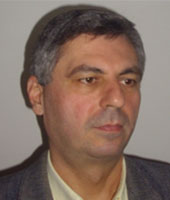
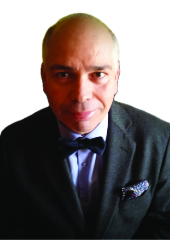
Elena Niculina Dragoi is a Lecturer at the Faculty of Chemical Engineering and Environmental Protection 'Cristofor Simionescu' at Gheorghe Asachi Technical University in Iasi, Romania. Her academic work integrates Artificial Intelligence and Machine Learning tools for solving complex problems in Chemical Engineering and Environmental Protection . With over 30 published papers and six active research projects, her contributions span process optimization, nanomaterials, and sustainable technologies. Teaches Applied Informatics (Years 1 & 4) and Artificial Intelligence at the Faculty of Chemical Engineering Contributes to Programming Engineering at the Faculty of Computer Science, University 'Alexandru Ioan Cuza' Engaged in interdisciplinary courses at the Faculty of Automatic Control and Computer Engineering Research Interests : Elena's work focuses on modelling and optimization (90% emphasis) of chemical processes using AI methodologies, with cross-disciplinary applications in environmental engineering (70%) and chemical engineering (95%). Her recent publications highlight innovations in: 3D-printed nanocomposite adsorbents for pollutant removal Metaheuristic optimization algorithms for industrial processes Hydrogen generation via nanocatalysts Electrochemical biosensors for environmental and health monitoring AI-driven wastewater treatment systems Green chemistry applications in pharmaceutical and dye removal
Praveen Agarwal is a Professor of Mathematics at the Department of Mathematics, International College of Engineering, located near Kanota, Agra Road, Jaipur-303012, Rajasthan, India. He also maintains a significant affiliation with the Lepage Research Institute in Slovakia. His academic profile demonstrates a strong international presence with collaborations spanning multiple continents. Dr. Agarwal's research expertise centers on Special functions , Fractional calculus , and Mathematical Physics . His work in fractional calculus represents cutting-edge contributions to this specialized mathematical field, developing theoretical frameworks with applications across diverse scientific disciplines. His research in special functions has led to numerous extensions and generalizations of classical mathematical constructs, creating innovative tools for solving complex differential equations. In mathematical physics, he applies rigorous analytical techniques to model physical phenomena, particularly those involving wave propagation, diffusion processes, and energy systems. Analysis of Dr. Agarwal's extensive publication record reveals a sophisticated approach to fractional-order differential equations with applications spanning viscoelastic wave behavior, neural networks, energy storage systems, and biomedical engineering. He frequently develops novel mathematical methods, including specialized integral transforms and polynomial-based solution techniques, to address complex nonlinear systems. His research consistently bridges pure mathematical theory with practical engineering applications, particularly in areas requiring precise modeling of memory effects and non-local phenomena. The interdisciplinary nature of his work is evident in publications addressing both theoretical mathematics and practical engineering challenges. Dr. Agarwal maintains active research collaborations with prestigious institutions worldwide, including The Union of Czech Mathematicians and Physicists, University of Prešov in Prešov, Eötvös Loránd University, Italian Society for General Relativity and Gravitation, Transilvania University of Brasov, VŠB-TU Ostrava, and Lodz University of Technology. These international partnerships reflect the global recognition of his contributions to mathematical sciences and demonstrate his ability to work across disciplinary boundaries to solve complex problems.
Dr. Aurelian Catalin GALCA is a Senior Researcher I at the National Institute of Materials Physics (NIMP) in Magurele, Romania, where he works in the Laboratory of Complex Heterostructures and Multifunctional Materials (HeCoMat). He serves as NIMP's responsible for international collaborations with the Agence universitaire de la Francophonie (AUF) since 2016, managing administrative procedures and educational, training, and research activities for foreign PhD students and postdocs. Dr. GALCA's educational background includes: PhD in Physics from the University of Twente, Netherlands (2006) Master's degree in Solid State Physics from the University of Bucharest, Romania (2002) Bachelor's degree in Physics from the University of Bucharest, Romania (2002) Dr. GALCA's research focuses on the non-destructive characterization of nanoscaled materials using advanced techniques including spectroscopic ellipsometry, X-ray diffraction, UV-Vis and infrared spectroscopy, and Raman spectroscopy. His work also encompasses the preparation of dielectric/semiconductor/metallic thin films by physical vapor deposition methods and the development and testing of optoelectronic devices . His expertise spans materials science, nanotechnology, photovoltaics, and magnetooptics, with particular emphasis on thin film characterization and engineering for solar cell applications, memory devices, and other electronic applications. Analysis of Dr. GALCA's recent publications reveals a strong focus on advanced materials for energy applications , particularly photovoltaics and energy storage. His work spans thin film solar cells (CZTS, CBTS), perovskite solar cells, supercapacitors, and magnetocaloric materials. A common thread is the precise engineering of material properties through composition control, phase transitions, and surface morphology optimization. His research increasingly incorporates computational methods to complement experimental findings, demonstrating an interdisciplinary approach to materials science. Dr. GALCA has received notable recognition for his work, including: RADU GRIGOROVICI prize awarded by the Romanian Academy in 2011 for contributions to the optical characterization of oxide systems As a research leader, Dr. GALCA has coordinated three national projects, two of which as Principal Investigator, including the "Science and engineering of kesterites for the next generation of solar cells" project. He has also contributed to economic projects with CyberSwarm Inc. and Honeywell Romania. His expertise is sought after as a scientific reviewer for top journals including Scientific Reports, ACS Applied Materials & Interfaces, and Applied Surface Science, and as an Expert Evaluator for the European Commission (H2020), ANR (France), CNR (Italy), and Romanian funding agencies. Dr. GALCA leads research activities at the Laboratory of Complex Heterostructures and Multifunctional Materials (HeCoMat) at NIMP, where his team focuses on the characterization and development of advanced materials for optoelectronic applications. The laboratory is equipped with state-of-the-art instrumentation for thin film deposition and characterization, supporting research in photovoltaics, memory devices, and other electronic applications. Dr. GALCA's team collaborates extensively with international partners, reflecting his role as NIMP's responsible for AUF collaborations.
Leonard Gabriel MITU is a Lecturer at the Department of Product Design, Mechatronics and Environment , part of the Faculty of Product Design and Environment at the Technical University of Brașov. His research focuses on biomaterials, mechatronic systems, and advanced manufacturing techniques. He is particularly active in developing biocomposite materials for orthopedic prosthetics and exploring applications in MEMS (Microelectromechanical Systems). His work integrates interdisciplinary approaches, combining materials science, mechanical engineering, and biomedical applications. Dr. MITU’s research interests include the characterization of biomaterials like hydroxyapatite and polymers (e.g., PLA), optimization of composite reinforcement using glass and carbon fibers, and the development of lightweight prosthetic solutions. He has contributed to studies on manufacturing processes such as photolithography for MEMS and microfabrication techniques. His recent work emphasizes nano and micro-scale manufacturing methods in mechanical engineering, alongside systemic analysis of material behavior in medical devices. His publications span over 20 years, with a focus on biomaterials, composite testing methods, and biomedical applications. Notable contributions include studies on hybrid biocomposites for orthopedics and vibration analysis in renewable energy systems. He has collaborated on projects funded by institutional grants and maintains an active research profile in biomaterials and mechatronics. His address is located at Building C, Room CI 14, 1 Universității Str, Brașov, Romania.
Claudia Steluta Martis is an Associate Professor at the Department of Electrical Machines, Marketing & Management , Technical University of Cluj-Napoca, Romania. Her expertise spans electrical machine design, electromagnetic compatibility, and motor control systems. Date of birth: 19 August 1967, Măcin, Tulcea, Romania Education Industrial High School, Măcin (1981-1985) Technical University of Cluj-Napoca, Electrical Engineering (1985-1990) Research interests focus on design and modeling of electrical machines , particularly doubly-salient permanent magnet motors and electric traction drives. She has contributed to electronically commutated small motor development and electromagnetic compatibility in electromechanical systems. Research projects include National Science Foundation collaborations on doubly-salient motor design, bilateral programs with Italy (University of Cassino), and grants from Romania's National Education Ministry for energy-efficient drives and real-time control systems. Professional experience includes engineering roles at SINTEROM SA and Dania Comprod SRL (1990-1996), followed by academic positions. International mobility includes Erasmus-Socrates stays at Helsinki University of Technology (1999) and University of Cassino (2000).
Natalia Alekseevna Evseeva serves as an Associate Professor at the Department of Automobiles, Heat Engines and Hybrid Power Plants within the Faculty of Transport at Zaporizhzhia Polytechnic National University. She has been active at the institution since 2001 and holds the academic title of Candidate of Technical Sciences. She also holds the prestigious position of Vice-Academician of the Academy of Technical Sciences of Ukraine. Her educational foundation includes a degree from Zaporizhia Industrial Institute (1993) with a specialty in 'Metallurgy of non-ferrous metals' and qualification as a 'metallurgical engineer'. She further solidified her academic credentials by defending her Candidate's thesis in 2015 titled 'Improving the mechanical and operational properties of special-purpose chromium-nickel-manganese steel'. Dr. Evseeva's research portfolio demonstrates significant expertise in internal combustion engines, heat engineering, and automotive systems. Her work particularly emphasizes engine cooling systems, thermal management, fuel injection technology, and alternative fuel systems. She has published 22 scientific papers, including a textbook and a patent, with her most recent publications appearing in 2025. Her scholarly contributions show a consistent progression toward more sophisticated modeling techniques and innovative solutions for engine performance optimization, particularly in the areas of electric pump integration for cooling systems and advanced fuel injection technologies. Certificate from the Department of Education and Science of Zaporizhzhia City Council (November 2023) Certificate from Oleksandrivska District Administration of Zaporizhzhia City Council (December 2019) Honorary Certificate from ZNTU (May 2016) Honorary Certificate from the Department of Education and Science of Zaporizhzhia Regional State Administration (2015) Honorary Certificate from Zhovtneva District Administration (2006) Dr. Evseeva actively contributes to academic governance as a member of the scientific and methodological council of the Faculty of Transport and the labor conference. She serves as the guarantor of the bachelor's educational program 'Internal Combustion Engines'. Her professional development includes internships at PJSC 'Zaporizhabraziv' (2020) and recent training in academic integrity (2025) and educational leadership (2025), reflecting her commitment to both research excellence and educational innovation.
Toșa Nicoleta Ioana is a senior researcher at the National Institute for Research and Development of Isotopic and Molecular Technologies (INCDTIM) in Cluj-Napoca, Romania, where she is affiliated with the Department of Isotopic and Molecular Technologies and the Laser Induced Processes research team. She obtained her PhD in Chemistry from Babeș-Bolyai University in 2009 and has been actively contributing to advanced materials and laser-based technologies research since 2006. Education: MSc in Heterocyclic Chemistry, Babeș-Bolyai University, Cluj-Napoca (1995) PhD in Chemistry, Babeș-Bolyai University, Cluj-Napoca (2009) Her research focuses on laser nanofabrication, plasmonics, spectroscopy, and functional materials , with applications spanning biosensing, environmental monitoring, and biomedical technologies. She specializes in photochemical synthesis of noble metal nanoparticles, direct laser writing, surface-enhanced Raman spectroscopy (SERS), and structural characterization in solid and solution phases. Her work bridges chemistry, physics, and engineering to develop innovative sensing platforms and nanomaterials. The recent articles highlight a strong trend in advanced optical sensing and nanofabrication , particularly in dual-mode biosensors (SERS/electrochemical), ultrafast photonics, high-density data storage, and supramolecular systems. Her projects often integrate simulation, nanofabrication, and spectroscopic validation to address challenges in healthcare and environmental science. Scientific Awards: No specific awards listed in the provided text. Dr. Toșa has played a key role in numerous national and international research projects, serving as a key expert in areas such as plasmonic biosensing, EUV photonics, and environmental pollutant detection, and as a partner team leader in projects on optical nanofabrication and petabyte-scale optical storage. She has secured significant research funding and collaborated with institutions across Romania and Europe. Her laboratory and research team focus on laser-induced processes and nanostructured materials , utilizing advanced facilities for optical characterization and nanofabrication within INCDTIM.
Mirel Cosulschi is an Associate Professor in the Department of Computer Science at the University of Craiova, Romania, where he has been a faculty member since 1997. He is affiliated with the Faculty of Automation, Computers and Electronics and teaches courses in Graph Algorithms, Software Engineering, Web Data Management, and Fundamentals of Programming at both undergraduate and master's levels. PhD in Computer Science, University of Craiova, 2006 MSc in Artificial Intelligence, University of Craiova, 1998 BSc in Computer Science, University of Craiova, 1997 His research interests include algorithms and complexity, software engineering, web data management, semantic web, distributed programming, and cloud computing. He has supervised numerous BSc and Master’s theses focusing on web applications, mobile development, data processing, and software modeling. His teaching emphasizes algorithmic thinking, structured programming, and modern software development practices. While no formal scientific publications are listed, his academic contributions include authored textbooks such as Algoritmica grafurilor si aplicatii (2014) and Practica programarii in C (2014), indicating active engagement in curriculum development and educational materials. He is involved with the MSDN Academic Alliance and utilizes tools like Windows Installer MSI and Advanced Web Ranking. Mirel Cosulschi has advised over 100 students in thesis projects related to software development, data management, and web technologies. Although no external grants or awards are mentioned, his long-standing academic career and consistent supervision reflect sustained scholarly activity. He maintains a professional web presence at http://inf.ucv.ro/~mirel and can be contacted via email at mirelc@central.ucv.ro . He is currently active in teaching and academic supervision, with no indication of retirement or part-time status.
Alexandra Cristina Blaga is an Associate Professor at the Faculty of Chemical Engineering and Environmental Protection 'Cristofor Simionescu' of Gheorghe Asachi Technical University of Iași, Romania. Her academic career spans over two decades, with roles including Assistant Professor (2008-2013) and Head of Works (2013-2022) before her current appointment in 2022. Education: PhD in Chemical Engineering (2012), Master in Bioprocesses in Agri-Food (2014), Biochemical Engineering BSc (2004) Her research focuses on unconventional separation processes for biosynthetic products, particularly reactive extraction and liquid membrane transport. She has contributed significantly to improving organic acid biosynthesis using microorganisms and developing biosorbents for environmental applications. Recent publications (2022-2025) highlight her expertise in: Reactive extraction of carboxylic acids using ionic liquids Biosorption of dyes using microbial biomass Green chemistry approaches for natural dye applications Modeling and optimization of separation processes She has directed multiple research projects, including grant TD47/2007 on unconventional extraction processes, and participated in 6 national and 3 international projects. Her editorial contributions include guest editing the Catalysts journal special issue on enzyme engineering.
Oleksiy Yevgenyevich Kapustyan is an Associate Professor and Head of the Department of Integrated Welding Technologies and Structural Modeling at Zaporizhzhia National Technical University. He has been active at the university since 2003 and holds the academic degree of Candidate of Technical Sciences in the specialty 05.02.01 "Materials Science". His educational background includes: Zaporizhia National Technical University, Faculty of Engineering and Physics, 2000 Diploma with honors in "Welding Technologies and Equipment" Qualification as "Mechanical Engineer" Candidate's thesis defended in 2018: "Improving the mechanical and service properties of welded joints of sintered structural titanium" Dr. Kapustyan's primary research interests focus on Materials Science with specialization in Titanium powder welding , Welding of dissimilar and composite materials , and development of resource-saving welding technologies . His work addresses critical challenges in metallurgy, particularly in the recycling of titanium waste materials and the development of new alloys for industrial applications. His research combines theoretical modeling with practical industrial implementation, focusing on improving material properties and extending the service life of welded components. Analysis of Dr. Kapustyan's recent publications reveals a consistent focus on titanium and steel materials processing. His work primarily investigates electroslag remelting technologies, wear resistance of welded joints, and development of new alloys. A significant portion of his research addresses practical industrial problems related to material recycling and resource efficiency. His collaborations span multiple Ukrainian institutions, demonstrating strong integration within the national materials science community. Dr. Kapustyan has authored over 90 scientific works, including 3 textbooks and 11 patents, demonstrating substantial contributions to the field of welding technologies and materials science. His work has been published in reputable journals including Modern Electrometallurgy and Problems of Tribology. As an educator, Dr. Kapustyan teaches several key courses including "Welding of dissimilar and composite materials," "History of technology and the foundations of scientific activity," "Welding and spraying," and "Machine repair." His teaching approach integrates current research findings with practical engineering applications. Dr. Kapustyan is actively involved in academic conferences and professional development within his field. His laboratory work focuses on integrated welding technologies and structural modeling, with particular emphasis on titanium processing and recycling of metal waste.
Dr. Alina CRISAN is a Scientific Researcher II at the Laboratory of Magnetism and Superconductivity within the National Institute of Materials Physics (INFIM) in Romania. Her research spans the interdisciplinary fields of superconductivity, magnetism, and advanced materials science with a particular focus on vortex dynamics in superconductors and rare earth-free permanent magnets. Her research interests encompass superconductivity (particularly high-temperature superconductors, iron-based superconductors, and MgB 2 ), magnetism (with emphasis on rare earth-free permanent magnets and nanomagnetism), materials science (focusing on FePt-based alloys, MnGa systems, and MAX phases), and condensed matter physics. Dr. CRISAN's work investigates fundamental phenomena such as flux pinning, vortex dynamics, magnetic phase transitions, and the structural properties of advanced magnetic materials. Analysis of her recent publications reveals a strong focus on both theoretical and experimental aspects of superconducting and magnetic materials. Her work demonstrates expertise in advanced characterization techniques including AC susceptibility measurements, X-ray diffraction, transmission electron microscopy, and SQUID magnetometry. A significant portion of her research addresses practical applications of superconductors in high-field environments and the development of alternative magnetic materials that don't rely on rare earth elements. Dr. CRISAN has been actively involved in numerous collaborative research projects, as evidenced by her extensive publication record in high-impact journals across physics and materials science. Her work contributes significantly to advancing our understanding of complex magnetic and superconducting phenomena while addressing practical challenges in materials development for technological applications.
Dr. Cristina BESLEAGA STAN is a Scientific Researcher II at the National Institute of Materials Physics (NIMP) since 2019, where she has been working since 2012. She leads research at the Laboratory of Complex Heterostructures and Multifunctional Materials, focusing on micro-electronics, opto-electronics, and solar cells development with significant contributions to semiconductor physics and device fabrication. Dr. Besleaga Stan earned her PhD in Solid-State Physics from the University of Bucharest in 2013, following a Master's degree in Solid-State Physics (2010) and undergraduate studies in Physics with specialization in Medical Physics (2007), all from the University of Bucharest. Her educational background established the foundation for her expertise in materials science and semiconductor physics. Her research spans micro-electronics, transport phenomena in semiconductors, and halide perovskite materials. She possesses extensive expertise in physical vapor deposition processes, particularly magnetron sputtering for thin film synthesis, and comprehensive characterization techniques including structural (XRD, XRR), morphological (AFM), optical (UV-Vis-IR), and electrical (resistivity, Hall effect) analysis. Her work bridges fundamental materials science with practical applications in energy harvesting and electronic devices. Dr. Besleaga Stan's publication record demonstrates consistent high-impact research across multiple domains including perovskite solar cells, thin film transistors, and self-cleaning surfaces. Her work shows a clear progression from fundamental semiconductor physics to applied device development, with recent publications emphasizing sustainable materials processing and advanced characterization techniques. Her scientific achievements have been recognized with numerous prestigious awards: "Ștefan Procopiu" prize from Romanian Academy (2018) Gold medal from EUROINVENT, Iași (2018) "Excellence" prize and gold medal from "Ștefan cel Mare" University (2018) Multiple "Excellence" prizes from ProInvent Exhibition Third prize "Young Researchers in Science and Engineering" (2019) Best poster presentation award at the "10th International Conference on Physics of Advanced Materials" (2014) Dr. Besleaga Stan has demonstrated exceptional leadership as principal investigator of multiple national research projects including PN-II-RU-TE-2014-4-1122, PN-III-P1-1.1-PD-2016-1546, PN-III-P1-1.1-TE-2019-0688, and PN-III-P2-2.1-PTE-2021-0150. She has secured substantial research funding and contributed to more than 16 national and international scientific projects, demonstrating strong grant-writing and project management capabilities. She leads a dynamic research team within the Laboratory of Complex Heterostructures and Multifunctional Materials at NIMP, collaborating extensively with international partners including University Nova de Lisboa (Portugal), University of Oslo (Norway), ARPES facility (Switzerland), and CVD/ALD AnnealSys company (France). Her laboratory specializes in clean room fabrication of electronic and optoelectronic devices and advanced materials characterization.
Olena Oleksandrivna Ostrohlyad serves as an Associate Professor at the Department of Transport Technologies, Zaporizhia National Technical University (also known as Zaporizhia Polytechnic University). She has been contributing to the university since 2020, specializing in transport logistics systems with a focus on metallurgical enterprises and international road transportation operations. Her academic background includes: Graduated with honors from Zaporizhia National Technical University, Faculty of Transport (2011) Specialty: "Organization of transportation and management in transport (automobile)" Qualification: "Master in organization of transportation and management in transport (automobile), transport engineer" Defended her Candidate's thesis (equivalent to Ph.D.) in 2019 at Dnipro National University of Railway Transport Dr. Ostrohlyad's research focuses on optimizing transport and warehouse logistics systems in industrial settings, particularly metallurgical enterprises. Her work addresses challenges such as cargo freezing in winter conditions, temperature control in rail transportation, and improving operational efficiency through simulation modeling. She has developed specialized approaches for handling bulk materials and analyzing freight flow patterns under variable external conditions. Analysis of her publication record reveals a consistent focus on practical applications of logistics principles in the metallurgical industry, with particular emphasis on integrated solutions that consider environmental factors. Her research spans multiple transportation modes including road and rail, demonstrating progression from theoretical models to practical implementations that enhance transport system resilience. Dr. Ostrohlyad teaches several key courses including Road transport companies, Organization and management of road freight transportation, Organization and management of railway transportation, and Teaching practice. Her practical experience complements her academic work, providing students with real-world insights into transportation management challenges in industrial contexts.
Tibor BEDO is an Associate Professor at the University of Transilvania of Brașov , affiliated with the Faculty of Materials Science and Engineering and its Department of Materials Science . His contact information includes Building W, Room WIII5, Brașov, Romania, and phone/fax +40 268 411877. Research Interests: thermal analysis, special metal casting technology, computer aided design Key Focus Areas: additive manufacturing, 3D printing, metallurgical processing His recent publications explore solar sintering applications, material consumption reduction in ABS silver printing, innovative polymer architectures, metastable aluminum alloys for additive manufacturing, and medical implant translation methods. These works emphasize thermal behavior, structural optimization, and material efficiency. Dr. BEDO's collaborations span international institutions including Italian Academic University of Modena and Reggio Emilia, Romanian Technical University of Brașov, and Hungarian research entities. His work integrates computational modeling with experimental validation in materials development.
Adrian TRIFAN is a Professor at the University of Brasov, affiliated with the Department of Finance, Accounting and Economic Theory within the Faculty of Economic Sciences and Business Administration. His research focuses on management accounting methodologies, performance measurement systems, and the integration of mathematical models into economic analysis. He also explores digitalization trends in Central and Eastern Europe, consumer behavior in e-commerce contexts, and sustainable development strategies driven by technological innovation. Trifan's academic contributions span over two decades, with notable work on accounting treatments for financial assets, inventory management practices, and the application of emerging technologies like Augmented Reality in corporate promotion. He has collaborated on projects analyzing health perception impacts of new technologies across EU nations and evaluating green consumption patterns among Romanian youth. His work bridges theoretical frameworks with practical business challenges, emphasizing empirical research in regional development and SME competitiveness. His publications demonstrate interdisciplinary reach, linking accounting practices to broader economic indicators and digital transformation. While no specific awards are listed, his extensive publication record reflects sustained academic impact in finance, management accounting, and tech-driven economic analysis. Advising activities are not detailed in the provided materials, though his research collaborations suggest involvement in guiding academic projects related to his core specialties.