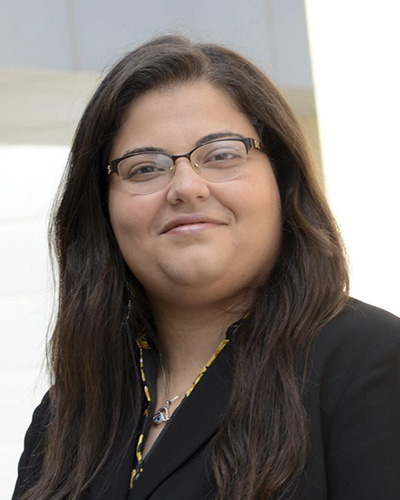
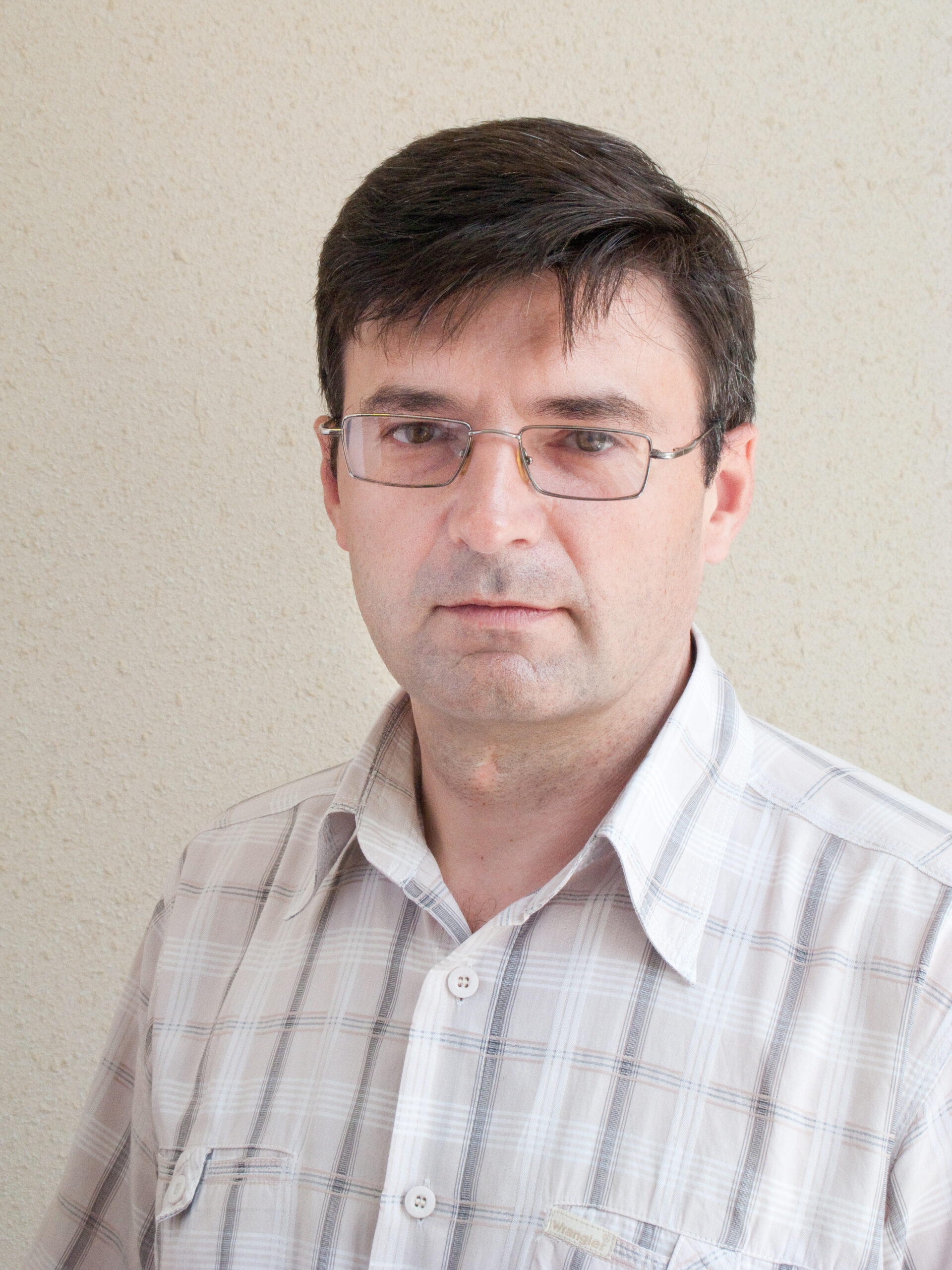
Patricia María Compañ Rosique is a full Professor in the Department of Computer Science and Artificial Intelligence at the University of Alicante , where she has served since 2008. She holds a PhD in Computer Science (University of Alicante, 2004) and a Computer Science Engineer degree (1994). Her career includes leadership roles such as Deputy Director of the Computer Science Degree Program (2009-2012) and Coordinating Deputy Director of the Higher Polytechnic School (2012-2013). Her research focuses on applying AI techniques across diverse domains: evolutionary algorithms for mathematical problems, neural networks in coastal engineering, and digital technologies in education. She leads the Research Group on Smart Learning Technologies and participates in the Santander-UA Chair of Digital Transformation. Recent publications highlight her work on: AI-driven concrete segregation analysis (2021) Evolutionary algorithms for matrix diagonalization (2019) Neural networks in coastal modeling (2018) Educational game development (2022) Impact of e-learning investments (2019) Scientific awards include: 3 triennial periods (sexenios) for research activity Member of AENUI (Spanish Association of University Computer Science Teachers) Contributions to educational innovation projects under EHEA She has directed 28 undergraduate/master's theses in the last 5 years and participated in 11 public research projects over the last 5 years, including grants from the Spanish Ministry of Economy and the Valencian Government.
Niels Seidel is a computer scientist and researcher at FernUniversität in Hagen, where he serves as the Lead of project APLE II at the CATALPA research center and as an alternate/deputy member of the CATALPA executive board. He works within the Faculty of Mathematics and Computer Science, focusing on the development of adaptive personalized learning environments for higher education. His work bridges computer science and educational technology, with particular emphasis on supporting self-regulated learning, reading comprehension, and assessment activities across diverse student populations. Seidel's research interests span multiple interconnected domains in educational technology. His primary focus is on Adaptive Learning Environments , where he designs, develops, and evaluates systems that support learners in self-regulated learning, reading, and assessment. His work in Learning Analytics involves analyzing and visualizing learning behavior at individual, group, and organizational levels while accounting for learner diversity. He has made significant contributions to Video-Based Learning , examining how video content can be structured and presented to optimize learning outcomes. His research increasingly incorporates Artificial Intelligence to create more responsive and personalized educational experiences, as evidenced by his recent work on generative AI applications for evaluating self-regulated learning skills. His publication record shows a clear trajectory toward increasingly sophisticated adaptive learning systems. Early work focused on foundational aspects of video-based learning and interaction design patterns, while recent publications demonstrate sophisticated integration of AI, learning analytics, and adaptive techniques. His research consistently addresses practical challenges in distance education while contributing to theoretical frameworks in educational technology. The 2024-2025 publications reveal particular emphasis on self-regulated learning assessment, reading comprehension support, and the application of generative AI in educational contexts. As an academic advisor, Seidel has supervised numerous bachelor's, master's, and diploma theses since 2018, mentoring students working on diverse projects related to educational technology. His current leadership roles include serving as spokesman for the Working Group Learning Analytics within the SIG Educational Technology of the German Informatics Society since 2021. He has secured funding for multiple projects, including the Google.org-funded Theresienstadt explained project and the BMBF-funded Life Long Learning Open Operating Platform (L³OOP). Seidel leads the APLE II project at CATALPA research center, which aims to develop domain-independent adaptive personalized learning environments for higher education. His work leverages the research infrastructure at FernUniversität in Hagen, particularly the Moodle-based learning management system, to implement and test innovative educational technologies with large student cohorts in real-world settings.
Markus Bohlin serves as Professor (on leave) at Mälardalen University within the School of Innovation, Design and Engineering's Division of Product Realisation. He concurrently holds leadership roles as Dean of the School of Business Society and Engineering, Division Manager for Product Realization, and School Director for the INDTECH Industrial Graduate School. His academic credentials include: Doctoral thesis defended at Mälardalen University (2009) Associate professorship (docent) granted at Mälardalen University (2013) Adjunct professorship in rail traffic systems analysis at KTH Royal Institute of Technology (2014) Full professorship in Computer Science with Applied AI focus at Mälardalen University (2019) Bohlin's research centers on Applied Artificial Intelligence across critical infrastructure domains. His primary focus areas include: Railway systems optimization and freight logistics Cyber-physical systems for construction automation Machine learning applications in manufacturing quality control Simulation-assisted decision support systems His work bridges theoretical AI with industrial implementation in transportation, production, and power systems. Recent publications demonstrate a clear trajectory toward integrating machine learning with simulation modeling for real-world problem solving, particularly in railway punctuality optimization, construction site autonomy, and manufacturing defect detection. This interdisciplinary approach consistently targets high-impact industrial applications. Bohlin has held significant leadership positions including: President of the Swedish Operations Research Association (2012-2016) Member of Trafikverket Board on Capacity in Railways Program chair for ICROMA 2019 and multiple national conferences His academic supervision includes 4 completed PhDs, 9 licentiate degrees, and 5 ongoing doctoral candidates. With 20+ years of experience managing organizations up to 60 employees and 40+ projects (including H2020 initiatives), he brings substantial operational expertise to research commercialization. Current leadership roles encompass the Product Realisation division and INDTECH Industrial Graduate School, driving industry-academia collaboration in innovation and engineering.
Lauren Linderman is an Associate Professor at the Department of Civil, Environmental, and Geo- Engineering within the University of Minnesota's College of Science and Engineering. She serves as the Director of the Multi-Axial Subassembledge Testing (MAST) Laboratory, focusing on cyber-physical systems to enhance structural performance under dynamic loads like earthquakes and wind. Ph.D. in Civil Engineering, University of Illinois at Urbana-Champaign, 2013 M.S. in Civil Engineering, University of Illinois at Urbana-Champaign, 2009 B.S. in Civil Engineering, Washington University in St. Louis, 2007 Her research emphasizes vibration mitigation strategies, decentralized control, wireless sensor systems, and data acquisition techniques. Current projects leverage wireless smart sensors for real-time structural control and health monitoring, enabling multitasking networks that integrate control and diagnostics. Recent publications highlight advancements in wind engineering, structural monitoring, and wireless sensor networks. Key topics include aerodynamic design for highway structures, polymer-based sensing technologies, and robust control frameworks for seismic resilience. While no specific awards are listed, her work is widely disseminated through journals and conferences. Linderman's group actively advises both undergraduate and graduate students, with alumni contributing to structural dynamics and sensor development. The MAST Laboratory collaborates with experts in civil engineering, materials science, and computational systems.
Mario Nervi is an Associate Professor at the University of Genoa in the Department of Naval, Electrical, Electronic, and Telecommunications Engineering (DITEN). He teaches core electrical engineering courses including Electric and Magnetic Fields, Circuit Complements, Basic Numerical Methods and Optimization Techniques for Electromagnetic Systems, and Circuit Theory and Electrical Laboratory across bachelor's and master's degree programs. His research focuses on: HVDC transmission systems and sea/ground electrodes Electromagnetic interference mitigation in power infrastructure Computational methods for electromagnetic field analysis Optimization techniques for power systems Marine energy transmission challenges Electrode material selection and corrosion management Publication analysis reveals consistent focus on HVDC electrode design, with recent work (2023-2025) addressing offshore electrode efficiency, interference mitigation, and cost-benefit analysis of submarine systems. Earlier work (2012-2021) established foundations in computational electromagnetics, electrode material science, and deep-water installation techniques. No awards or student advising information was found in available sources. Contact via mario.nervi@unige.it with appointment-based office hours (remote or in-person).
PD Dr. rer. nat. Patrick Bruns serves as Lab Manager at the Biological Psychology and Neuropsychology Department within the School of Psychology at the University of Hamburg. Holding a habilitation in Psychology (2020) and a doctorate summa cum laude (2010), he maintains an active research profile while overseeing laboratory operations. His academic trajectory includes a visiting scholar position at Brown University (2016-2018) and postdoctoral work on the EU-Project NOMS. Dr. Bruns' research centers on multisensory integration and perceptual learning , with particular focus on audiovisual spatial processing, crossmodal recalibration, and neuroplasticity mechanisms. His work spans diverse populations including congenitally blind individuals and examines how sensory experience shapes neural adaptation. Key methodologies involve psychophysical testing, EEG, and computational modeling of perceptual phenomena. Analysis of his recent publications (2020-2025) reveals consistent investigation into how multisensory experiences recalibrate spatial perception , with growing emphasis on conscious awareness in learning consolidation and cross-species conservation of sensory mechanisms . His work bridges fundamental cognitive neuroscience with clinical applications in psychosis research and sensory rehabilitation. While no formal awards are documented in available materials, his publication record demonstrates sustained productivity in high-impact journals including Trends in Cognitive Sciences , Current Biology , and European Journal of Neuroscience . As Lab Manager, he supports research infrastructure while maintaining his independent scholarly contributions. Dr. Bruns' laboratory work focuses on experimental paradigms examining spatial recalibration through audiovisual interactions, with particular attention to methodological innovations in measuring perceptual precision. His team investigates how sensory deprivation (e.g., congenital blindness) and training protocols alter fundamental perceptual mechanisms across the lifespan.
Prof. Krystyna Droździał-Szelest is a University Professor at the Faculty of English , Adam Mickiewicz University in Poznań, Poland, where she has served in multiple leadership roles including Head of the Department of Teaching English as a Foreign Language (1996-2005) and Coordinator of TEFL programs (1988-1997). She is based at Collegium Heliodori Święcicki, room 342. Education: MA in English, Poznań (1976) Ph.D. in English, Poznań (1983) D.Litt. in English applied linguistics, Poznań (1996) Research Focus: Prof. Droździał-Szelest's work centers on second language acquisition theory and foreign language teaching methodology , with particular emphasis on teacher education , ESP/CLIL instruction , and materials development . Her research spans language learning strategies , learner autonomy , and sociolinguistic/pragmatic aspects of language education. Publication Trends: Her extensive publication record (spanning 1993-2019) demonstrates sustained focus on language teaching methodologies , teacher professional development , and classroom-oriented research . Recent works explore motivational aspects of teacher development , innovation in language education , and CLIL implementation in technical universities . Scientific Recognition: AMU Rector's Prize for Research Achievement (1998) Medal of the Committee of National Education (2015) Professional Leadership & Service: Prof. Droździał-Szelest has held numerous influential positions including Head of Center for English Language Teaching Materials (1995-2000), Head of Postgraduate Studies for Teachers of English (2000-2005), and Vice-President of the Modern Language Association of Poland (2016-). She has served on national accreditation committees and editorial boards for multiple international journals including SSLLT and International Journal on Language, Literature and Culture in Education . International Engagement: She has been a Fulbright post-doctoral fellow at UCLA (1985-86), received British Council scholarships (London 1984, Canterbury 1990, Cambridge 1993), and participated in Erasmus/Socrates programs in Turkey and Germany. She has delivered invited plenary presentations at major conferences including IATEFL Poland and international classroom-oriented research conferences.
Jean-Marc Drouet is a Full Professor at Université de Sherbrooke since 2017, specializing in Vibration Analysis , Mechanical Engineering , and Sports Engineering . His career at Université de Sherbrooke spans from Lecturer (1995-2003) to Assistant Professor (2003-2008), Associate Professor (2008-2017), and currently Full Professor. PhD in Mechanical Engineering (2003), Université de Sherbrooke Master's in Mechanical Engineering (1994), Université de Sherbrooke Bachelor's in Mechanical Engineering (1991), Université de Sherbrooke Drouet's research explores: Vibration Analysis in road cycling, including perceptual thresholds and shock transmission to cyclists' hands Sports Engineering innovations like suspension stems and instrumented brake hoods for comfort assessment Structural Optimization using genetic algorithms for steel supports and bicycle frames Human Perception studies in dynamic comfort and biomechanical loads Ergonomic Design of cycling equipment and pedagogical tools for engineering education Key research trends from his publications include: Application of genetic algorithms to structural optimization challenges Development of dynamic comfort metrics for cycling equipment Integration of biomechanical measurements with structural analysis Focus on hand-arm vibration exposure and mitigation strategies Interdisciplinary approach combining mechanical engineering , psychophysics , and biomedical engineering Continued exploration of steel material properties in bicycle design Scientific recognitions: Institutional Teaching Excellence Award (2009-2010) Best Paper Award at The Engineering of Sport 11 (2016) His work has attracted significant funding through: NSERC Collaborative Research and Development Grant ($590,686) FRQSC Research Support ($196,544) CREAS Internal Infrastructure Funding ($157,000) CRIJEST Chair Collaborations ($830,000 total funding)
Sara Ahmed serves as an Associate Professor in the Department of Electrical and Computer Engineering at the Margie and Bill Klesse College of Engineering and Integrated Design, The University of Texas at San Antonio (UTSA). Her work bridges power systems engineering with transportation electrification, focusing on grid integration challenges posed by emerging technologies. With a Ph.D. from Virginia Tech (2011), she maintains active research in electric vehicle infrastructure and smart grid resilience. Education Ph.D., Electrical Engineering, Virginia Tech, 2011 Dr. Ahmed's research program confronts critical gaps in modern energy infrastructure through three interconnected pillars: electric vehicle charging ecosystems, inverter-based resource integration, and novel sensing technologies. Her methodology combines stochastic programming for fleet operations, deep reinforcement learning for dynamic control systems, and hardware-in-the-loop validation for grid protection schemes. Key innovations include self-powered weigh-in-motion systems using piezoelectric harvesting and adaptive inverter control for weak grid conditions, addressing both urban and rural infrastructure needs through cross-disciplinary approaches spanning power electronics, transportation engineering, and machine learning. Analysis of her 15 most recent publications (2023-2025) reveals a strategic concentration on commercial fleet electrification challenges, with 60% of works addressing depot charging optimization and grid impacts. A parallel theme explores protection coordination in inverter-dominated distribution systems, where 40% of recent papers develop solutions for sympathetic tripping and fault ride-through. Her methodology consistently integrates AI-driven approaches (35% of publications) with physical system validation, demonstrating a commitment to practical implementation through hardware-in-the-loop testing and roadway-embedded prototypes. Scientific Awards No specific awards were documented in the provided materials. Advising and Grants Dr. Ahmed's 2022 publication 'Closing the Loop: A 10-year Follow-up Survey for Evaluation of an NSF REU Site' confirms sustained mentorship of undergraduate researchers through National Science Foundation funding. While specific grant amounts remain undisclosed, her research trajectory indicates continuous federal support for electric vehicle-grid integration studies. Her advising extends to REU participants across electrical engineering disciplines, with emphasis on power systems and transportation electrification projects. Current work shows progression toward larger-scale infrastructure implementation, particularly in medium/heavy-duty fleet electrification and rural roadway monitoring systems.
Anna Lavelle serves as a Visiting Lecturer in the Department of Psychology at Salem State University, teaching graduate-level courses including PSY 705: Human Development Across the Lifespan and PSY 733: Principles of Psychological Testing from her office in Meier Hall 239. Her research expertise centers on Developmental Psychology and Psychological Assessment , with specialized focus on longitudinal human development trajectories and psychometric methodologies. She examines cognitive, emotional, and socioemotional changes throughout the lifespan while investigating test reliability, validity frameworks, and ethical applications in clinical measurement. No scientific awards, student advising records, or research grants are documented in available materials. Laboratory affiliations and collaborative research teams remain unspecified in current institutional records.
Radheshyam Tewari is a Teaching Professor in the Mechanical and Aerospace Engineering (MAE) department at Michigan Technological University . He earned his PhD and MS in Mechanical Engineering from Michigan Tech and holds a BS in Mechanical Engineering from Maulana Azad National Institute of Technology, India. PhD, Michigan Technological University MS, Michigan Technological University BS, Maulana Azad National Institute of Technology, India Tewari's research spans interdisciplinary domains including implantable medical devices , micro- and nano-biosensors , micromachining , and semiconductor fabrication . His recent publications focus on education research , biomedical device manufacturing , and microfluidics . Notably, he coordinates the MAE Graduate Seminar Series , emphasizing cross-disciplinary knowledge sharing. Scientific contributions include work on graphene-based biosensors , PLA packaging for implants , and microfabrication processes . His teaching expertise encompasses quality engineering , six-sigma , design of experiments , and sustainable manufacturing .
Ronette L Kolotkin serves as an Adjunct Professor in the Department of Family Medicine and Community Health at Duke University, where she maintains active research and consulting roles. A practicing psychologist with a Ph.D. from the University of Minnesota (1978), she is internationally recognized for developing the Impact of Weight on Quality of Life assessment suite (IWQOL-Lite, IWQOL-Lite-CT, and IWQOL-Kids) used globally in obesity research and clinical practice. Education Ph.D., University of Minnesota, Twin Cities (1978) Her research program centers on obesity-related quality-of-life measurement, with expertise spanning psychometric validation, clinical trial design, and patient-reported outcomes analysis. Dr. Kolotkin specializes in evaluating how pharmacological (e.g., semaglutide) and surgical (e.g., gastric bypass) obesity interventions impact physical functioning, mental health, and disease comorbidities. Her work bridges clinical psychology, endocrinology, and public health through collaborations with pharmaceutical companies and multinational research teams. Analysis of her 10 most recent publications reveals consistent focus on long-term obesity treatment outcomes, with particular emphasis on bariatric surgery durability (5-7 year follow-ups), pharmacotherapy efficacy across diverse populations (including East Asian cohorts), and instrument validation for clinical trials. The research demonstrates methodological rigor through randomized controlled trials, computer-adaptive testing, and cross-cultural adaptation studies. Dr. Kolotkin operates through Quality of Life Consulting, PLLC, providing specialized expertise to clinical trial sponsors for product development and regulatory submissions. Her consulting portfolio includes major studies like the STEP trials series and Oseberg trial, though specific grant funding details are not disclosed in available materials. She maintains active research engagement as evidenced by the 2025 Lancet publication, with ongoing work in suicide risk mediation analysis and digital mental health assessment tools for bariatric patients.
Patrick LESERF is an Associate Professor at ESTACA, a French engineering school specializing in transport systems, where he serves as a Teacher-researcher in ESTACA'Lab. Since joining in 2005, he has founded the embedded systems laboratory, developed academic programs including a specialized master's degree in Embedded Lighting Systems (with IOGS, Renault, and PSA), and led research collaborations with CEA-LIST on transport systems reliability using model-based approaches. His research centers on Model-Based Systems Engineering (MBSE) for embedded automotive systems, with expertise in SysML modeling, safety-security co-optimization, and AUTOSAR methodology. Key contributions include architecture optimization for critical systems, real-time communication networks (CAN/LIN/FlexRay), and embedded OS design. Recent work expands into intelligent transportation systems and electric vehicle powertrain optimization. Analysis of his 2023-2024 publications reveals a strategic shift toward AI-integrated solutions: neural architecture search for efficient deep learning models, predictive analytics for urban traffic optimization using Eclipse MOSAIC, and multi-objective optimization of battery/motor systems in electric vehicles. This evolution demonstrates integration of traditional embedded systems engineering with data-driven approaches. Scientific Awards: No major awards documented in source materials. Advising and Grants: Co-supervises PhD candidate Léo Pouy on MBSE for autonomous decision-making systems. Led the European Matelo project (statistical testing for embedded software) during industrial tenure and established ESTACA's joint research team with CEA-LIST. Directs curriculum development for embedded systems education across multiple specialized master's tracks. Labs and Teams: Founded ESTACA'Lab's embedded systems research group in 2005, scaling it to four teacher-researchers. The lab focuses on model engineering, transport communication networks, and software architecture optimization, supported by a 350-hour teaching program covering embedded networks, OS, and microcontrollers. Current activities include steer-by-wire systems and IoV applications.
Joyce Yamamoto is an Adjunct Teaching Assistant Professor in the Department of Biomedical and Translational Sciences at the University of Illinois, College of Medicine. She is actively engaged in research related to implantable medical devices, with a focus on hermetic feedthroughs, ceramic packaging, and RF telemetry systems. Her work bridges engineering and clinical applications, emphasizing device reliability and miniaturization. Her research interests lie at the intersection of biomedical engineering and materials science, particularly in the development of robust, miniaturized, and wireless implantable devices. Key areas include hermetic sealing, cofired ceramics, antenna design for implants, and electrical feedthrough reliability. Her work supports the advancement of long-term, safe, and efficient medical implants. The trend in her recent publications (2014–2019) shows a strong focus on solving engineering challenges in implantable device packaging and communication. Topics include high-reliability alumina-platinum systems, multilayer antennas, shielded feedthroughs, and cofired ceramic modules—all aimed at improving device longevity and performance. The research spans materials, fabrication, and electrical design, reflecting a systems-level approach to biomedical device innovation. Dr. Yamamoto has made significant contributions to the field through her extensive patent and technical publication record, though no formal scientific awards are mentioned in the available text. She advises on advanced fabrication techniques for medical devices and has contributed to numerous innovations in implantable electronics. While no specific grants or students are listed, her work implies collaboration with engineering and medical teams focused on translational device development. Her research likely involves interdisciplinary teams working on next-generation implantable systems, particularly those requiring long-term reliability and wireless functionality. Her laboratory or research group, while not explicitly described, is likely involved in microfabrication, materials testing, and RF characterization of implantable components. The focus on cofired ceramics and hermetic seals suggests a strong experimental and process-development component to her work, possibly within a translational engineering lab at the university.
Vadym Ivanovich Kubich serves as an Associate Professor at the Department of Automobiles, Heat Engines and Hybrid Power Plants within the Transport Faculty of Zaporizhia Polytechnic National University, where he has been active since 1998. He holds the academic title of Associate Professor and is recognized as a Senior Researcher in the specialty 05.02.04 – Friction and Wear in Cars, having earned his Candidate of Technical Sciences degree. His educational background includes graduating with honors from Ryazan Higher Military Automobile Engineering School in 1990 with a specialization in Automotive Engineering. Dr. Kubich teaches multiple courses including Basics of tractor design, Fundamentals of car engine design, Car transmissions, Chassis and vehicle control systems, Reliability of technical systems, and Operation and maintenance of machines. He is fluent in Ukrainian and Russian, with functional German language skills. Dr. Kubich's research centers on tribological aspects of increasing reliability in triboconnection elements operating under varying loading and lubrication conditions, with particular focus on how chemical composition and mechanical properties of structural materials affect performance. His recent publications demonstrate expertise in yttrium-containing sealing coatings, tribological testing methodologies, and mechanical properties analysis under operational conditions. His scholarly work shows consistent focus on coating technologies for high-temperature applications, with particular attention to gas-flame versus ion-plasma application methods and the effects of yttrium additives on wear resistance and mechanical fracture properties. His research bridges theoretical tribology with practical automotive engineering applications. Medal "For the Defense of the Motherland" (2022) Gratitude of the Zaporizhia Polytechnic National University (2022) Gratitude from the Zaporizhzhia Regional State Administration (2021) Certificate of Honor from the Department of Education and Science of the Zaporizhia Regional State Administration (2013) Certificate of Honor of the Executive Committee of the Zaporizhia City Council (2012) Certificate of the district administration of the Zaporizhia City Council for the Zhovtnevy district (2011) Breastplate "For Impeccable Work" III degree (2024) Dr. Kubich maintains active scholarly profiles with ORCID (0000-0001-6230-9263), Google Scholar, Scopus (57203875007), and Web of Science (FFC-3199-2022). He serves on the scientific and methodological council of the transport faculty and is the guarantor of the bachelor's educational program "Operation, testing and service of automobiles and tractors." His professional development includes internships at Zaporizhzhya Polytechnic (2022) and Dnipro State Technical University (2017), along with multiple certifications in academic leadership and integrity.